
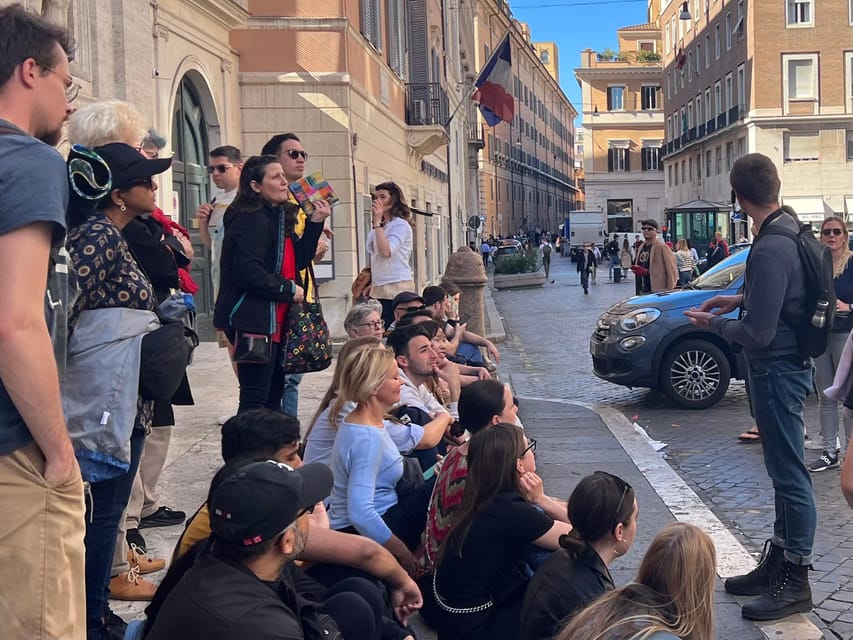
Reviewed · WALKING TOURS
Rome’s Baroque Art Walking Tour: Who Killed Caravaggio?
Caravaggio’s death story turns Rome into a crime scene. This baroque walking tour mixes catchy storytelling with church paintings in a way that makes you see familiar monuments like evidence on a case board.
What I like most is how the guide treats art like a lead to follow, not a lecture to endure. I also like the practical pace, open piazzas one minute, cool churches the next, so you can handle sun or a surprise shower without the whole day going sideways.
One thing to keep in mind: the humor can be dark, and the jokes can be politically incorrect, so this is best for travelers who are comfortable with that tone and still want the facts to land.
Key things to know before you go
- Pay-What-You-Want tipping model, with typical tips in the 10€ to 50$ range
- 2 hours that combine open piazzas, photo stops, and church interiors
- Caravaggio, Raphael, and Plautilla Bricci come up through the artworks you see
- True-crime style narration using historical evidence, eyewitness accounts, and modern theories
- The route includes Piazza della Minerva and ends at Palazzo Borghese
- Guides like Iván and Jacobo are repeatedly praised for passion and storytelling
True-crime baroque art in Rome, without the museum fog
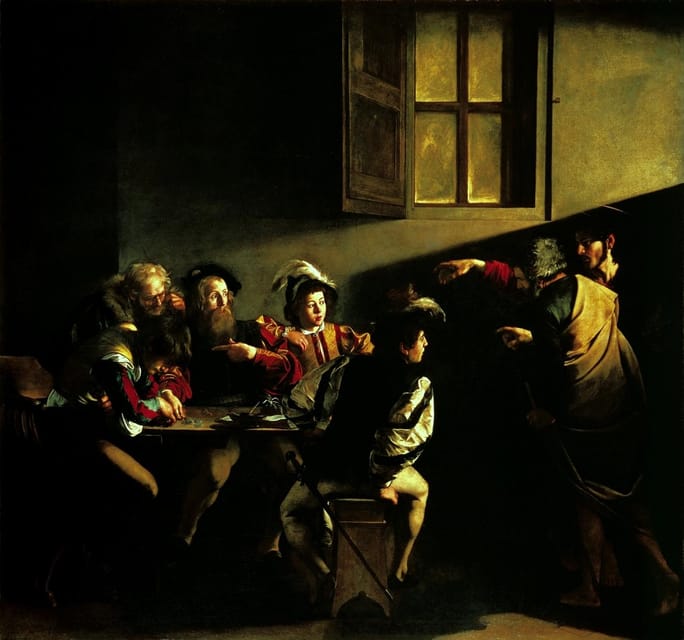
Rome is full of masterpieces, but most tours still feel like a checklist. This one feels like an investigation. You walk through monumental piazzas and baroque church rooms, then the guide frames each artwork and location as part of Caravaggio’s final chapter, where motives, rivalries, and street-level violence all matter.
I love that it’s not just art history talk. The stories connect the dots between his troubled life and the way his paintings shocked people. You’ll hear how street fights, powerful patrons, rival artists, and criminal enemies shaped his career and his fate, so the art becomes easier to interpret, even if you are not a specialist.
The tone is also a big part of the appeal. Expect dark humor and edgy, sometimes politically incorrect jokes. That might not be your thing, but if it is, the whole tour clicks because Caravaggio’s world was not polite.
You can also read our reviews of more walking tours in Rome

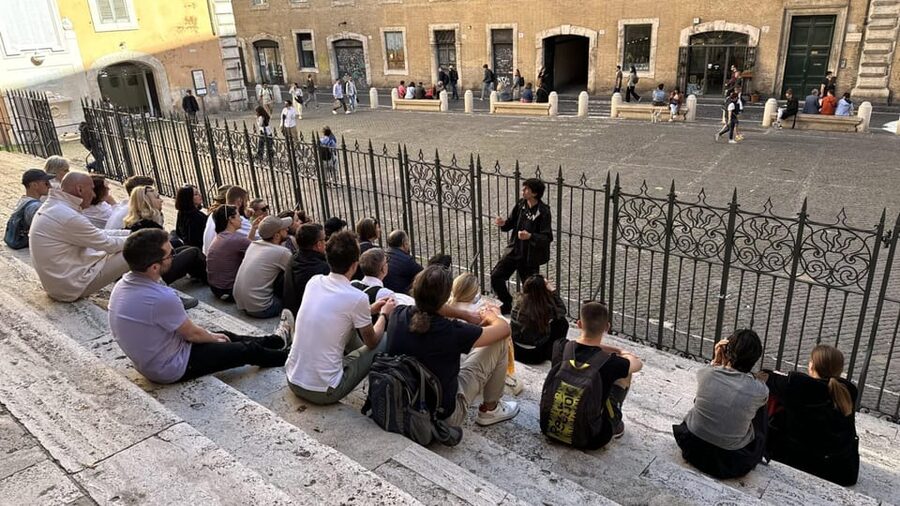
Piazza della Minerva, elephant statue, and your case file starts
The tour begins in Piazza della Minerva, by the elephant statue with the obelisk. This matters more than you might think. You start in a place that already feels like a riddle, then you get your bearings fast with a short photo stop and guided orientation.
You’ll spend about 15 minutes here, which is enough time to get oriented on foot and let the guide set the tone. I like this start because you are not launched into a church immediately. You get the street setting first, then you shift into places where the paintings and religious spaces do their work.
Also, the meeting setup is simple. You look for a sign with the tour name, so you are not left guessing in the middle of Rome’s busiest marble moments.
The Pantheon area quick pass, then you shift into church evidence
After the start, you have a brief walk segment, around five minutes, that links you toward the next key stops near major landmarks. This short connection stretch is useful because it keeps the tour from turning into one long, uniform slog.
Then you move into the part of Rome where baroque art really lives: inside churches. This tour intentionally alternates between open piazzas and cooler, more atmospheric interiors, with places to sit along the way. That is a practical advantage. If the Roman sun gets intense, you are not trapped in it. If rain shows up, you are not forced to abandon the plan.
If you care about comfort, this style of routing is smart. You get movement and views outside, then you get shade and shelter when the story needs close attention.
St. Louis of the French: where baroque art meets the drama
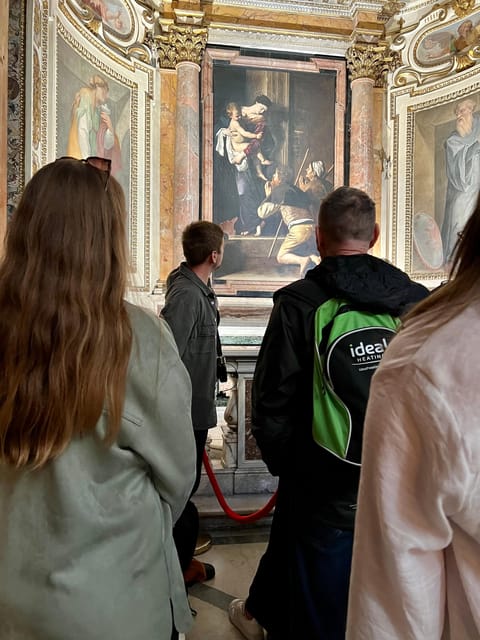
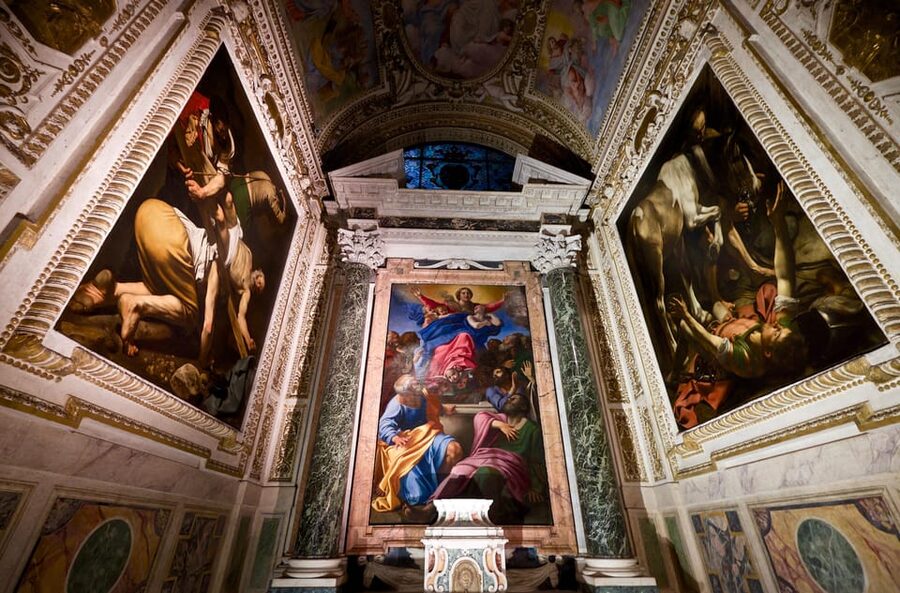
The Church of St. Louis of the French is one of the first big interior moments. You get a photo stop, then you visit and get a guided tour here for around 15 minutes.
Why this stop is so valuable is the way it sets up the tour’s core theme: Caravaggio’s life and death are treated as a narrative with motives and consequences, and the guide uses the church setting to help you read the paintings like part of the same plot.
Even if you do not know Caravaggio’s work already, you should be able to follow. The tour is designed to be a storytelling experience that uses historical evidence and eyewitness accounts, then adds modern theories to explain what remains unanswered. You are not only learning what happened, you are learning how people build arguments when the record is incomplete.
If you want to get the most out of this phase, slow down inside. Don’t just look at the biggest visual moments. Let the guide’s prompts point you toward details, because the tour promises hidden gems and lesser-known angles, not only the most obvious shots.
Basilica of St. Augustine and the point of looking closer
Next comes the Basilica of St. Augustine, again with a guided visit and about 15 minutes on-site. This is where you start feeling the tour’s real skill. The guide keeps your attention on interpretation, not memorization.
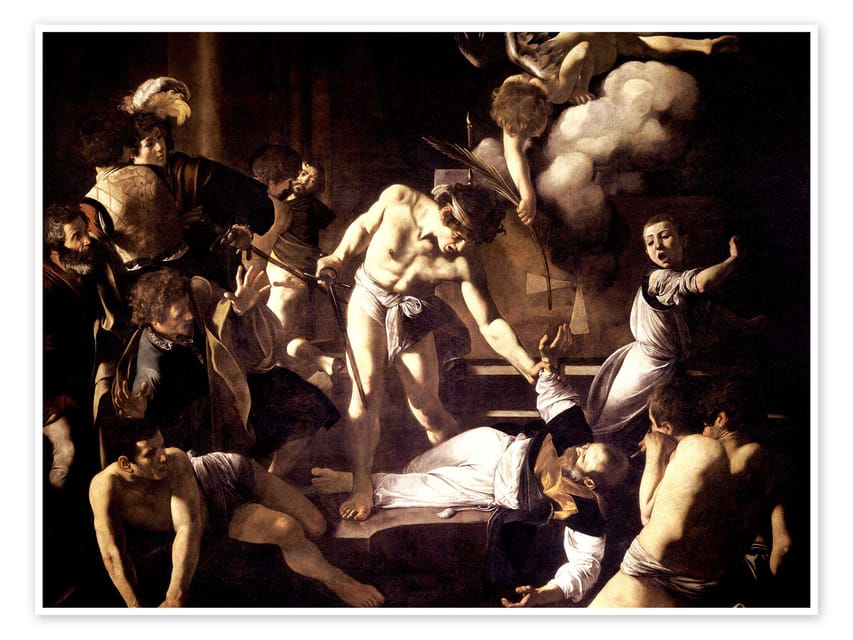
You’ll hear how Caravaggio’s reputation and relationships influenced both his career and the end of the line, then you connect that to what you see in the church spaces. The tour also brings in other major names, including Raphael and Plautilla Bricci, so you are not only stuck in one painter’s shadow. The contrast helps you understand why Caravaggio was treated like a shock to the system.
One practical note: since you are going into churches, dress matters. Plan for appropriate church entry clothing, meaning you should be ready with shoulders covered and clothing that is not too short or too casual. If you are unsure, carry a light layer that you can put on quickly.


The quieter in-between stops, and why the tour includes them
Your route also includes an additional church or guided segment that lasts around 10 minutes, but without a named location in the provided info. That slot is still important. It breaks up the heavy hitters so you do not burn out too early.
You’ll also have a short photo stop around five minutes later. These smaller moments are not filler. They help you reset your brain so the story stays sharp when you return to interpretation-heavy stops.
Rome can be overwhelming if every minute is another monument. The pacing here is built to keep you focused, even when you are standing in place, reading or listening.
Who the guide is makes the whole thing
This kind of tour depends heavily on the guide, and the feedback on this experience points in the same direction: the best part is the telling.
Past guides named Iván are praised for finding details in archives and books, then turning them into stories that feel like you are tracking clues in real time. Jacobo is also singled out as an art historian who introduces art history through the lens of Caravaggio’s life and works, with captivating story momentum.
If you love learning through narrative, you are in the right place. The tour’s biggest strength is that it treats art as communication. You are not only told what you are looking at, you are taught what to notice, and then you are given the context that makes those choices feel logical.
And yes, the tone can get edgy. That is part of the “crime” vibe. Just remember you still want to listen for the historical evidence and the reason the mystery remains unsolved.
Caravaggio’s unsolved end, and how the tour handles uncertainty
Caravaggio’s death is still shrouded in mystery, and this tour leans into that honestly. You are not getting a neat, final answer. Instead, you look at the last-days circumstances through historical evidence, eyewitness accounts, and modern theories.
That approach is valuable because it matches how you should think about old cases. Records are partial. People remembered things with biases. The truth can be both complicated and emotionally satisfying. This tour lets you feel that tension instead of pretending it has been solved.
The guide also connects his darker personal life to what he painted. Street fights and powerful patrons are not only biography facts. They become interpretive tools for how you read the intensity in the work.
If you usually find art history dry, this is the style that tends to work. It gives you stakes. It gives you character motives. Then it gives you a place to hang the evidence.
Palacio Borghese finish: the story lands where power lives
The tour wraps at Palazzo Borghese. You end with a photo stop and a guided visit around this location.
This ending makes sense in a symbolic way. Caravaggio’s story is about conflict with patrons and enemies, and the Borghese name carries serious weight in the Roman art world. Even without turning the walk into a formal lecture about noble families, the finish reinforces the idea that art life and political life were tangled.
You also get one last guided stretch here, so you are not left walking away with the case unresolved. Instead, you leave with a better sense of what you saw and why it matters to the larger narrative.
Price and the pay-what-you-want model, what value looks like
The listed price is shown as $3.77 per person, but the real operating model is tip-based, using a Pay-What-You-Want approach. The guide works for your tips alone.
So how do you think about value? For a 2-hour walking tour that includes live English guiding, multiple church interiors, and a story built around major artists like Caravaggio and Raphael, the cost structure can be a bargain if you tip well, and it can feel unfair if you do not.
You are told that typical tips fall between 10€ and 50$. That range is wide because it depends on your satisfaction. If you liked the storytelling, the pacing, and how clearly the mystery was explained, tip toward the higher end. If you felt it was not your style because of the dark humor or the crime-story framing, you can tip on the lower end, but still pay something that respects the work.
Also, because it is 2 hours, you should treat it like a focused paid experience, not a casual free walk. You are paying attention the whole time.
Weather, timing, and church etiquette that keeps the tour smooth
This experience is designed to work in different weather. The route moves between open piazzas and cool, atmospheric churches, offering shade, shelter, and even places to sit. That means you are not stuck indoors if the day is mild, and you are not stuck outside if rain hits.
Timing-wise, plan on the full 2 hours. If you schedule a long museum visit right after, you might feel rushed. Instead, treat it as a strong “one-two punch” with nearby sights. You’ll finish at Palazzo Borghese, a convenient anchor if you want to continue exploring on your own.
For church entry, dress appropriately. If you show up in very short sleeves or very short shorts, you might have friction inside. A simple solution is carrying something light you can add quickly.
Who should book, and who might want a different kind of tour
I think this works best for travelers who:
- Like stories more than lecture-style facts
- Want art history with personality and stakes
- Enjoy true-crime style narration, including darker humor
- Are curious about what makes Caravaggio such a controversial figure
It might not be the best fit if:
- You want a strictly family-friendly, neutral tone
- You dislike speculation-heavy narratives around unsolved mysteries
- You only want the most famous artworks without any modern theories or interpretive discussion
If you do enjoy a guided story, the recurring praise for guides like Iván and Jacobo is a strong sign that the experience lives or dies on good narration, and in this case it sounds like it delivers.
Should you book this Caravaggio walking tour?
Yes, if you want Roman baroque art with a crime-scene plot and you are comfortable mixing serious art with dark humor. The value is strongest because you get live guidance in English, a tight 2-hour format, and enough stops to keep you engaged without feeling trapped in one location.
Book it if you like interpreting paintings through context. Book it if you want your visit to feel different from a standard museum march. And tip thoughtfully, since the Pay-What-You-Want model means your guide depends on it.
If you hate edgy jokes or you only want strict, fully proven conclusions, you might prefer a more traditional art history route.
FAQ
Where does the tour start?
It starts in Piazza della Minerva, by the elephant statue with the obelisk. You will have a sign with the name of the tour.
How long is the tour?
The duration is 2 hours.
Is the tour in English?
Yes, it is a live tour with an English-speaking guide.
Is this a standard fixed-price tour?
No. It is tip-based using a Pay-What-You-Want model, meaning the guide works for your tips.
How much should I tip?
The guidance given is that tips are usually between 10€ and 50$.
What should I wear for church stops?
Dress appropriately for church entry.
More Walking Tours in Rome


More Tours in Rome
More Tour Reviews in Rome
Not for you? Here's more nearby things to do in Rome we have reviewed


Walking Tours, compared.
 ★ 4.9Trastevere & Campo de Fiori Street Food Walking TourFrom $512,768 reviews
 ★ 4.9Paranormal Night Walking Tour & Secret BackstreetsFrom $341,921 reviews
 ★ 4.4Guided City Center Evening Sightseeing Walking TourFrom $46953 reviews
 ★ 4.5Best of Rome Walking Tour including Trevi FountainFrom $4923 reviews
 ★ 4.8Under the Moonlight Evening Walking TourFrom $28852 reviews
 ★ 4.9Forbidden History Walking Tour & Pub Crawl with DrinksFrom $61688 reviews
 ★ 5.0Guided Small Group Walking Tour of City HighlightsFrom $30682 reviews
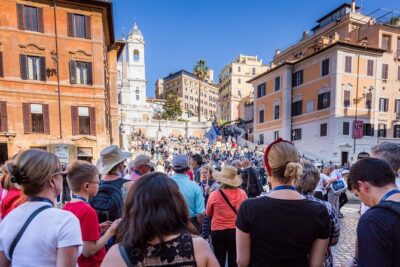 ★ 4.5Rome Walking Tour with Piazza Navona, Trevi Fountain and PantheonFrom $35676 reviews
Browse the lists this tour appears in