Reviewed · ROME
Haunted Rome & True Crime: The Cenci Curse Game
A dark-story game that turns Rome into a puzzle board. I like the no-map, no-GPS setup, plus the way each stop mixes spooky lore with real true-crime vibes. You follow clues, solve prompts, and keep moving from landmark to landmark at your own speed.
I also like the value. At $7.19 per person for about 1.5 to 2 hours, you get lifetime access and a private, group-only experience without paying for a live guide.
One thing to weigh first: you are doing real walking, and the route can feel back-and-forth, plus a couple starting areas may be affected by construction at some times.
Key things to know before you play
- App-led clues replace a traditional route map, so you spend time on the street, not staring at directions
- 10 eerie landmarks keep the story moving through multiple parts of central Rome
- Piazza del Popolo and Campo de’ Fiori show up as major clue territory, not just background scenery
- Ghost stories plus crime themes make it more than a standard haunted-walk trope
- Backtracking can happen, especially if a clue sends you toward a previous area
- Works on your pace, so you can pause, regroup, and solve as a team
Entering Rome’s Cenci Curse from Piazza del Popolo
This is not a classic guided ghost tour where one person tells a story while you file past monuments. Haunted Rome & True Crime: The Cenci Curse Game is a self-guided quest that plays like a walking puzzle, with Rome’s streets as the game board.
Your starting point is the Basilica Parrocchiale Santa Maria del Popolo, right in Piazza del Popolo (address: Piazza del Popolo, 11, 00187 Roma RM). From there, you work clue by clue, solving puzzles to unlock each next “stop” and its ghost story.
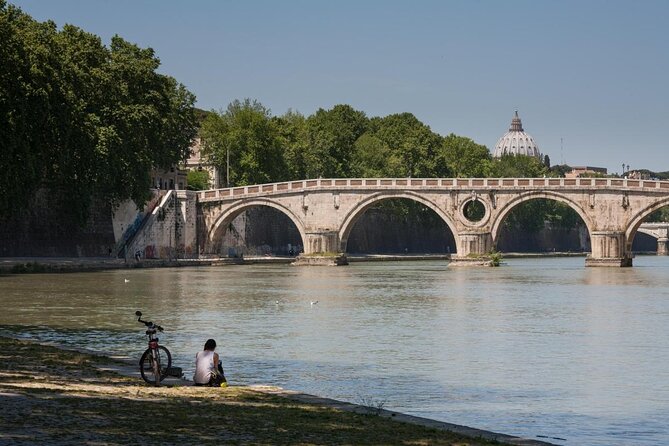
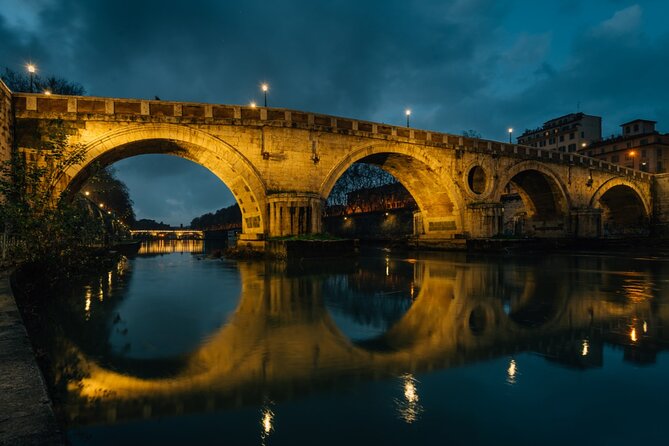
You end at Ponte Sisto (00153 Roma RM). That matters, because the game is designed so you finish in a part of town that is easy to connect from, instead of looping forever.
You can also read our reviews of more tours and experiences in Rome.



How the app-led game works, and why that’s a big deal

The core idea is simple: you follow clues, solve puzzles, and discover locations one at a time. There is no live tour guide, and the experience explicitly does not require a map, guide, or GPS.
In practice, you’ll use a downloadable app as your “game master.” At each landmark, you get a ghost story tied to the experience theme, and you also get instructions that point you to the next area. The time you save by skipping GPS is not just comfort, it can make the experience more fun. You’re looking at Rome like a detective, not like a tourist searching for the next pin.
Two other details make this work well for different travel styles:
- You control pacing. If you want to linger for photos or a closer look, you can. If you want to keep the momentum, you can.
- Lifetime access means you can replay later, or start again if you get interrupted.
One note from real-world feedback: if a first area is blocked or hard to access because of construction or an obstacle, you can lose early momentum. The game still wants you to generate the next location by answering a prompt, so getting stuck at the start can be frustrating.
Following clues through central Rome, not a straight line
The itinerary is built around a sequence of stops. Even though only the first few are listed in plain terms, the experience is described as a self-guided haunted quest through 10 eerie landmarks.
Here’s what you can expect from the structure:
- You reach Stop 1 by following a clue and solving a puzzle.
- Each stop introduces a different ghost and its story.
- After you complete the prompt, the app provides direction for where to go next.
You’ll see clue territory in areas like Piazza del Popolo and, later, Campo de’ Fiori. One fun detail: a Campo de’ Fiori puzzle can turn into a little team moment, with people helping solve the riddle so the game can continue.
Still, route flow is a real factor. One frustration that shows up in feedback is that some stops end up relatively close together, which can make the walk feel like repeated zigzags rather than a clean loop. If you hate backtracking, mentally prepare for some uneven walking patterns.
The landmarks and stories: what makes each stop worth your time
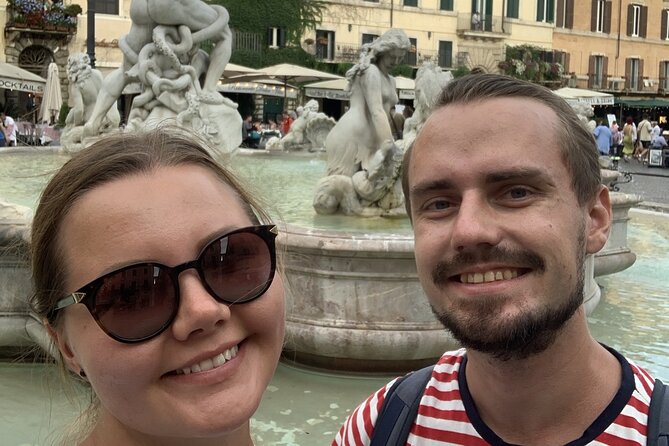
You will be moving through Rome’s street life, not just hitting postcards. The game is designed so each location comes with a story about curses, ghosts, and horrific crimes tied to the overall theme.
At each stop, you get two things: a narrative hook and a “next step” mechanic. That pairing is why this feels different from a standard walking tour.
Instead of you simply listening, you’re doing a small bit of thinking while you look around. That makes the experience feel more active and more memorable, especially if you’re traveling with friends or family.
Piazza del Popolo: a dramatic opening point
Your start area is Piazza del Popolo, anchored by Santa Maria del Popolo. Reviews and the clue structure suggest this is one of the big early touchpoints, so it’s not just a convenient meeting place. Expect the opening story and first puzzle to set the tone, then push you outward.
If the opening area is accessible, this is a great way to begin because the square gives you room to orient yourself before the route gets more puzzle-driven.






Campo de’ Fiori: where problem-solving meets atmosphere
Campo de’ Fiori comes up again in feedback as a place where the puzzle play gets social. If you’re the kind of person who likes collaborating on riddles, this is likely one of the moments you’ll remember most.
It’s also a strong neighborhood for this kind of game because the streets and sightlines make it easier to pause, look, and discuss the next clue.
The final stretch to Ponte Sisto
The game ends at Ponte Sisto. That matters because it gives you a clear finish line and a bridge location that is easy to re-route from if you want a late dinner or a quick walk to a transit stop afterward.
Even if you’re not chasing more sightseeing after the game, ending at a recognizable landmark can help your day feel complete.
Time, pacing, and the walking reality

The stated duration is about 1.5 to 2 hours. That sounds short, but in walking-game terms, it’s enough time to feel you’ve covered meaningful ground while still keeping it easy to pair with dinner plans.
Where you need to be honest with yourself is this: this is still a walking experience. The app may let you skip a live guide, but it does not eliminate movement between landmarks.
Also, you should plan for the possibility that a couple stops could be partially obscured or inaccessible at times due to construction. If that happens, you might end up waiting, looking for an alternate view, or dealing with the prompt reveal process. It’s not something you can fully predict, so I’d build a little buffer into your schedule.
Best travel strategy
If you want this to feel smooth, start when you have energy. Play it on a day when your legs are fresh, and avoid stacking it with a heavy museum block right beforehand.
And if you’re traveling with mixed mobility, think carefully. The experience says most travelers can participate, and service animals are allowed, but the game still expects you to physically reach clue locations.
Price and value: what $7.19 gets you, and what it doesn’t
At $7.19 per person, this is priced like a low-cost activity, not a premium guided tour. That’s the big win: you get lifetime access and a private experience structure without the cost of paying for a person to lead you.
You also get group discounts, plus the experience is offered in English. And because it is a mobile ticket with an app, you avoid the “where do we meet and who is holding the sign” stress.
What you are not getting is a live guide. That sounds obvious, but it affects expectations. If you want deeper historical context spoken aloud, with follow-up questions, you won’t get that here. Instead, you get a game narrative and prompts that carry the story for you.
So the best value comes when you enjoy puzzles and you’re happy exploring on your own.
Private experience, small-group vibe, and planning for 15+
The experience is described as private, meaning only your group participates. That can be a plus if you’d rather not share your pace with strangers.
One operational detail: if your group is over 15 people, you are asked to make multiple bookings. That’s useful to know early, because it affects how smoothly your group will move from stop to stop.
Also, average booking is about 9 days in advance. That suggests it’s popular enough to be smart about planning, especially if you have a tight trip window.
When to play it: daytime clarity or night atmosphere

The opening hours are listed as 12:00 AM to 11:30 PM, every day. So you can pick your timing.
If you like a more atmospheric walk, nighttime can work well. One reason this kind of quest often feels good after dark is that central Rome can be calmer, and you may find moments where you see places with more breathing room.
If you prefer easier navigation and fewer street distractions, daytime is also fine, since you’re not relying on GPS, you’re relying on clues. Either way, the key is to be comfortable walking between stops while reading prompts on your phone.
Who this is for, and who should choose a different format
I think this works best for people who want a mix of spooky fun and brainwork. If you enjoy solving puzzles as you move through a city, this will feel engaging rather than passive.
It also fits well for:
- Friends traveling together who like competitive or cooperative problem-solving
- Families looking for an activity that breaks up a sightseeing day
- People who want to explore parts of downtown Rome without committing to a long formal tour
It may be less ideal if you:
- Hate walking or want a fully sit-down experience
- Expect a traditional ghost tour with a storyteller
- Rely on audio playback as the main way to experience content, since there have been app playback issues reported
One feedback point worth taking seriously: one person couldn’t get the experience to play in the app and had to contact support. That won’t happen to everyone, but it is a reminder to test your app before you step off.
Should you book Haunted Rome & True Crime: The Cenci Curse Game?
Book it if you want a self-guided Rome activity that turns famous areas like Piazza del Popolo and key central neighborhoods like Campo de’ Fiori into a puzzle path, with ghost stories and true-crime themes at each step. The price is low enough that you can treat it as an extra layer of fun rather than a big bet, and lifetime access makes it forgiving if your schedule changes.
Skip it or pick a different style of tour if you need a seated experience, can’t handle walking between stops, or you specifically want a live guide to explain history out loud. Also, if your trip depends on absolutely reliable app audio, build in a backup plan.
If you’re the type who likes solving a riddle and then looking up from your phone to notice where you are, this game will feel like Rome on hard mode, in the best way.
FAQ
How long does the Cenci Curse Game take?
It’s listed as taking about 1 hour 30 minutes to 2 hours.
Where does the game start and end?
You start at Basilica Parrocchiale Santa Maria del Popolo, Piazza del Popolo, 11, 00187 Roma RM, Italy and it ends at Ponte Sisto, 00153 Roma RM, Italy.
Do I need a live guide for this experience?
No. It’s a 100% self-guided experience with no live tour guide.
Is it offered in English?
Yes, it’s offered in English.
How many landmarks are included?
The quest is described as going through 10 eerie landmarks.
Can I play it more than once?
Yes. It includes lifetime access, so you can play anytime.
Can I cancel for a refund?
Yes. You can cancel for a full refund if you cancel up to 24 hours in advance of the experience start time. Cancellation within 24 hours is not refunded.