Reviewed · ROME
Via Roma: A Journey Through Time
Rome looks different after dark. This Via Roma evening walk strings together iconic landmarks and smart photo stops, with the trompe-l’œil ceiling at St. Ignazio di Loyola as a true wow moment. I love how the route is paced for seeing a lot without feeling rushed, and I like that your guide keeps the explanations clear and practical. One drawback to plan for, it is a fair amount of walking on uneven old-street surfaces, so it is not for everyone.
You get a tight loop through Rome’s postcard zones and the quieter in-between corners. Expect Piazza Navona’s Baroque fountains, the Pantheon under its dome glow, and the Trevi Fountain coin moment, plus the walk to the Colosseum when the city feels cinematic. In my opinion, this is a strong option if you want Rome by night without spending your evening hunting down tickets or figuring out where to stand.
The tour is about 2 hours on paper, but with real-world stops it can run a bit longer, so plan for roughly 2 to 2.5 hours. Come prepared with comfortable shoes, water, and a camera, and note that flash photography is not allowed in certain areas.
Key highlights to look forward to
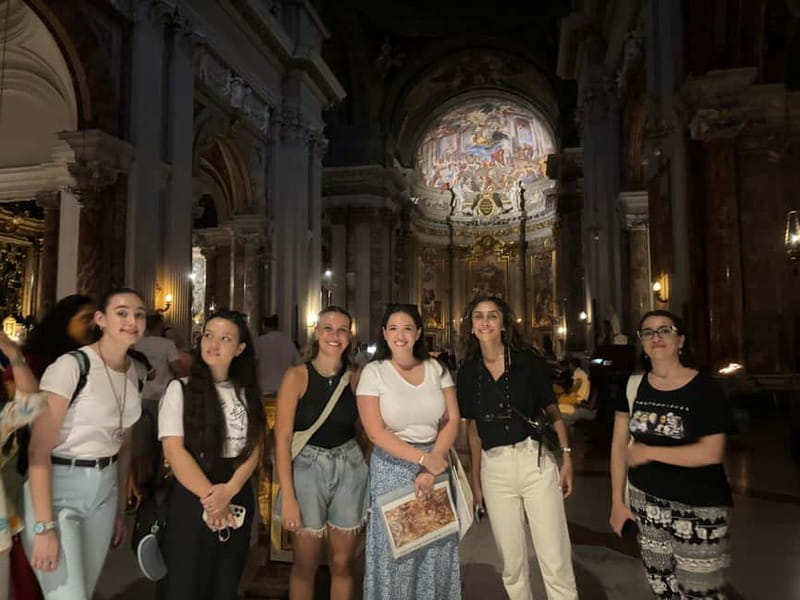
- A guided night route that hits the big names and the lesser known side streets
- Piazza Navona by evening light, especially the fountains’ dramatic look
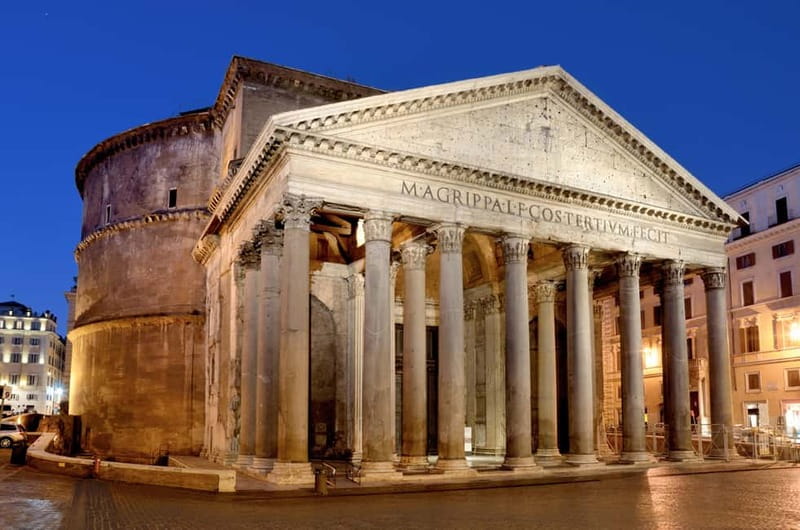
- The Pantheon’s oculus moment, where light changes how the dome feels
- St. Ignazio di Loyola interior optical illusion, the trompe-l’œil ceiling payoff
- Trevi Fountain and the coin toss, a classic stop handled with timing in mind
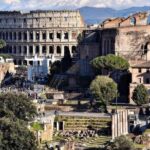
- A finishing stretch to the Colosseum, when it looks at its most dramatic
Starting in Piazza di S. Agostino, the calm opening
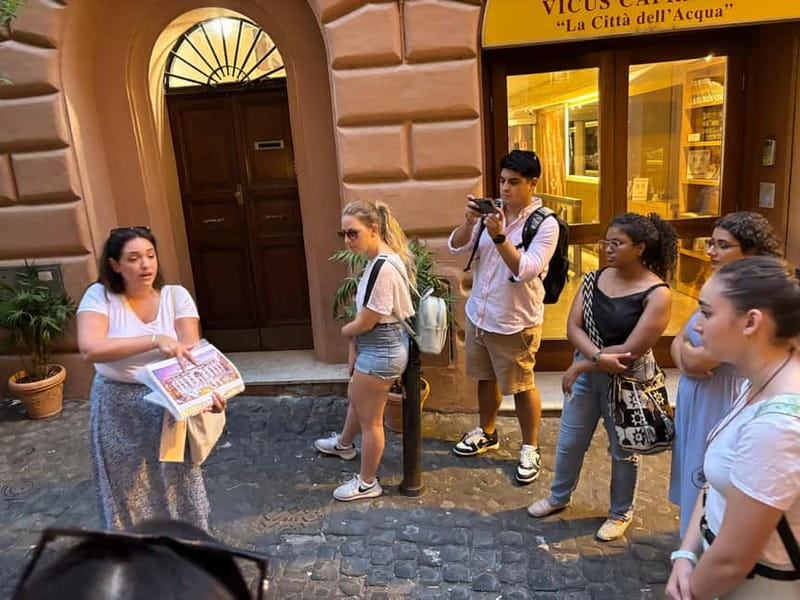
Your evening begins at Piazza di S. Agostino, and that matters more than you might think. You start in a quieter pocket with a Renaissance feel, so you are not immediately thrown into crowds and chaos. It sets the tone, slow enough to get your bearings, but focused enough to keep you moving toward the next landmark.
Meeting point details can vary depending on the exact option you book, so have a quick look at your confirmation and arrive a few minutes early. The tour ends back at the meeting point, which is helpful if you like a plan that does not strand you in a random neighborhood.
You can also read our reviews of more tours and experiences in Rome.
Piazza Navona at night, Baroque fountains done right
Piazza Navona is one of those places that looks great anytime, but at night it becomes more theatrical. Your guide brings you in when the square is calmer and the lighting makes the fountains feel crisp and dimensional. You’ll get the Baroque fountains up close, and the evening backdrop makes it easier to see the scale of the artwork and stonework.
If you want photos, this is a good moment to stop and think about angles. The fountains are the visual center, so position yourself so you are not blocking other people, then wait for a clean shot. Flash is not allowed in certain areas, so rely on evening light and your camera’s normal settings.
Pantheon under the dome, the oculus effect
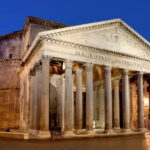
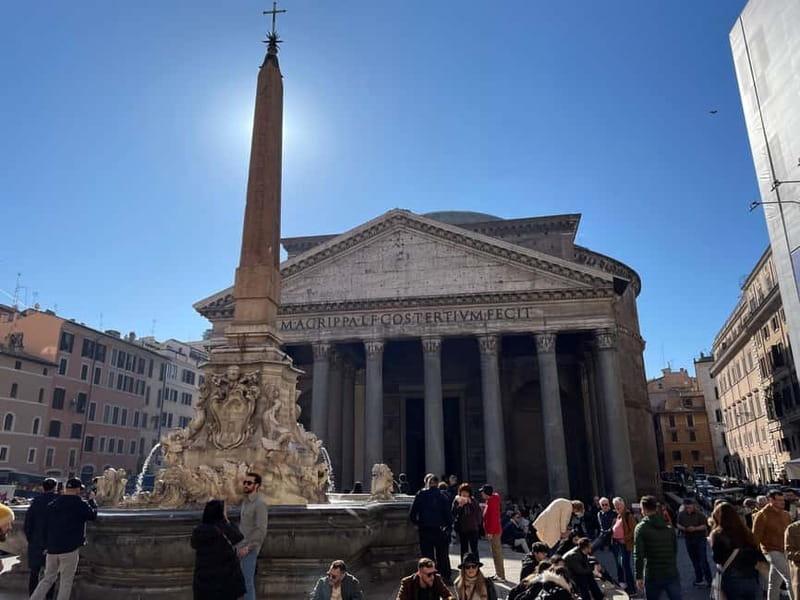
Next is the Pantheon, one of Rome’s most unforgettable interiors. The massive dome and the central oculus create a lighting effect that feels almost weightless. Even if you have seen pictures before, the scale hits differently once you are inside.
This stop is valuable because it is not just sightseeing, it is a lesson in how the building works. Your guide points out what to notice, and the oculus becomes the anchor for the whole interior experience. If you prefer quiet moments, it helps to listen to the guide first, then spend your time photographing after you know where to look.
St. Ignazio di Loyola, the trompe-l’œil ceiling moment
St. Ignazio di Loyola is often called the Instagram Roman Church, and yes, it earns the nickname. The big reason is the trompe-l’œil ceiling, an optical illusion that plays with perspective. In a dim interior with soft lighting, the artwork can look like it is expanding upward, not just sitting on a ceiling.
What I like most here is how the guide sets you up to see it correctly. It is easy to stand in the wrong spot and miss the illusion, so do what your guide suggests for where to place yourself. Also note that you’re still doing a walking tour, so do not overstay, just take in the full effect and keep your feet ready for the next leg.
Galleria Sciarra and Vicus Caprarius, the quieter detours
After the big-name landmarks, the tour includes a couple of surprises that break up the typical Rome pattern. One is Galleria Sciarra, an Art Nouveau passage with intricate frescoes that become more noticeable under evening light. This is a good time to slow down, look up, and appreciate details you might miss during the daytime rush.
Then you’ll shift to the ruins of Vicus Caprarius, known as the City of Water. This is where the tour adds variety, you go from grand interiors to a sense of old streets and ancient infrastructure. It is the kind of stop that makes the evening feel more than a checklist, because it reminds you Rome’s past was lived in, not just built as a monument.

Trevi Fountain coin toss, and how to handle photos
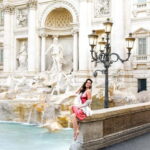
Trevi Fountain is next, and the classic ritual is part of the flow. You’ll toss a coin into the fountain as you take in the scene, which makes the stop feel purposeful rather than random. The trick is timing, the area can get busy, so keep your spot when the group moves and do not wander off.
For photos, plan to shoot without flash. That rule matters here, because lighting is darker at night and you might need steadier hands or a quick photo strategy. If your camera has a night mode, it can help, but the most reliable move is simply to take a couple of careful shots instead of blasting the shutter.
Also, keep an eye on where you are standing. The fountain is not just a backdrop, it is the center of attention, so give space to people moving through while you frame your shot.
Piazza Venezia, Vittoriano, and the walk along Via dei Fori Imperiali
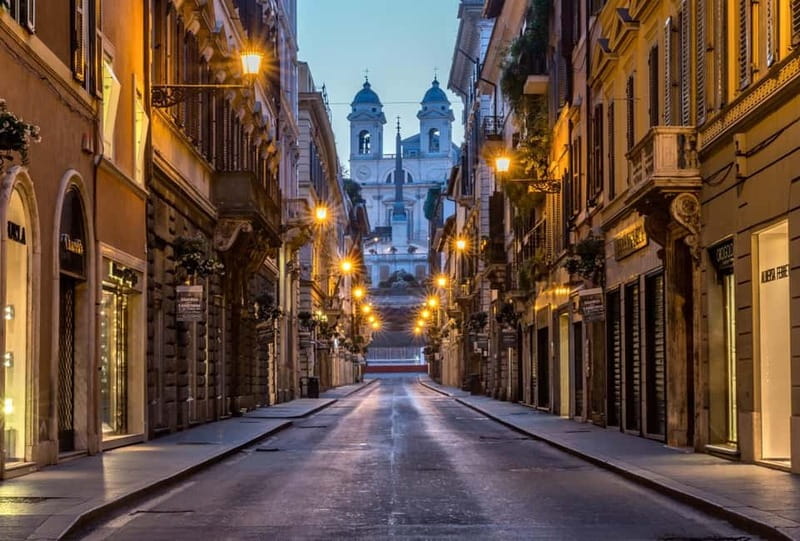
As you move along, you pass the Pontifical Gregorian University area and then reach Piazza Venezia. This section is about shifting scale, you go from intimate detail to the kind of big-sight viewpoint that helps you understand Rome’s layout. Piazza Venezia is a strong anchor before you tackle the Vittoriano Monument, which gives you a more panoramic feel of the illuminated city skyline.
The tour also highlights key palaces near the center, including Palazzo Venezia and Palazzo delle Assicurazioni Generali. These stops matter because they show how Rome is both political and architectural, not just ancient ruins and fountains. If you like knowing what you’re looking at, this part is usually where the guide’s storytelling really helps.
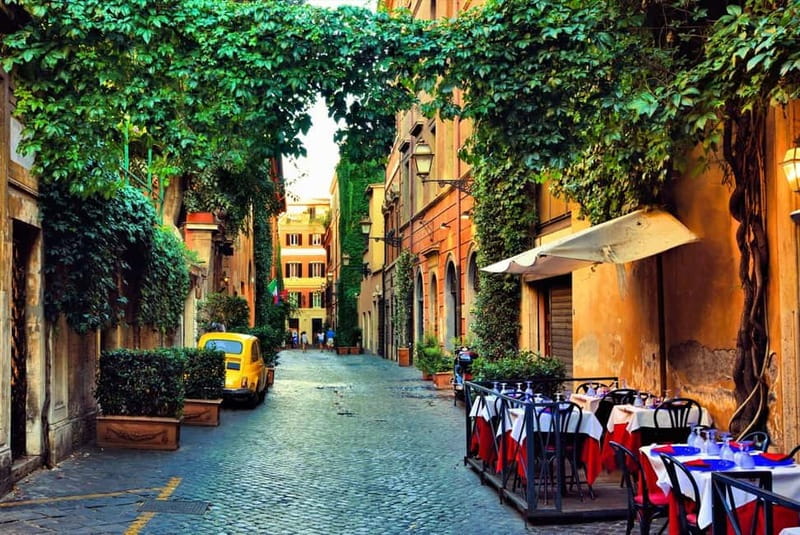
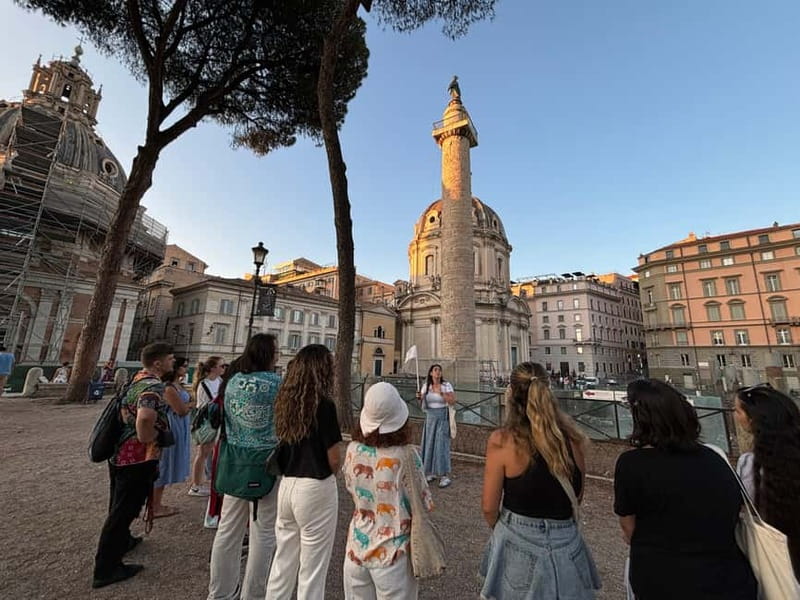
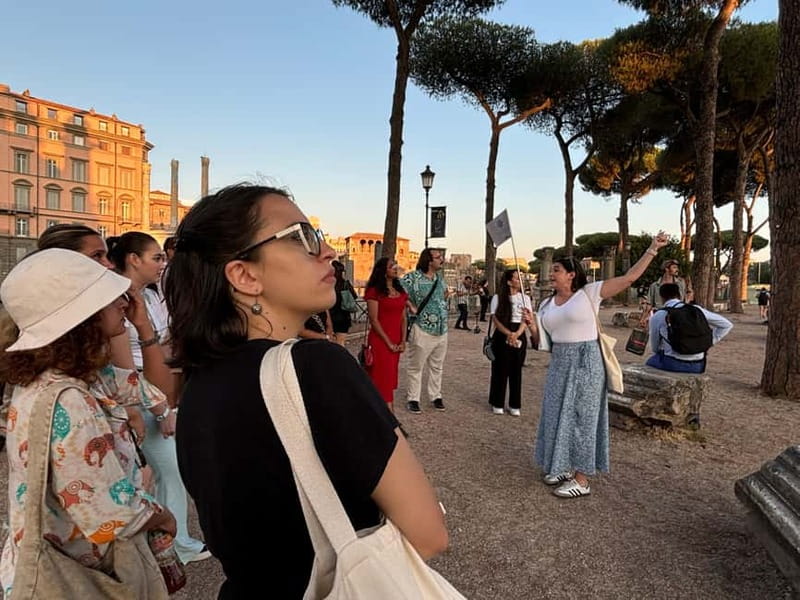
Then you walk along Via dei Fori Imperiali, where the remnants of ancient Rome feel close under the night sky. During this stretch, you also get into the area associated with Trajan’s Column and Market, which helps connect the dots between monuments instead of treating each one as a separate photo stop.
This is also where comfortable shoes pay off again. The streets are old, the surfaces can be uneven, and you want your footing before the final push.
Colosseum at night, finishing with impact
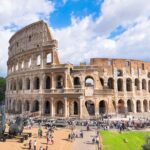
The evening ends with a visit to the Colosseum, and it is a strong finale. At night, the structure looks even more imposing, and the whole area has that movie-set feeling. If you like to photograph, this is your last big chance, so I’d keep your camera ready but not in the way.
The best approach is to take one or two moments to just look first. Then, once you know where the light is hitting, move to your photo spot and shoot. When the tour wraps, you return to the meeting point, so you are not left figuring out transit while tired.
Price and what you truly get for $32
At $32 per person for about 2 hours, this is mostly a pricing win because you are paying for structure. You’re getting a professional guide, a route through multiple major landmarks, and help understanding what matters at each stop. Entrance fees are not included, and food and drinks are not included, so you’ll want to plan an evening snack on your own or eat before you go.
That said, the value here comes from the way the route strings together big sights like the Pantheon, Trevi Fountain, and Colosseum with interior time at St. Ignazio di Loyola. If you tried to do all that alone, you’d spend extra time figuring out where to go and when to stand, especially at night.
One more practical note, flash photography is not allowed in certain areas. This affects your expectations and your gear choices more than many people realize, so set your camera up for low light rather than relying on a quick flash.
Who should book Via Roma: A Journey Through Time
I’d book this if you want an evening plan that covers the center of Rome without turning your trip into a logistics puzzle. It is also a good fit for solo travelers who like walking and want a guide to point out what you might miss on your own.
If you have mobility limitations or use a wheelchair, I would skip this one. It is not suitable for wheelchair users or people with mobility impairments, and the walking route can be demanding on uneven surfaces.
Before you go, simple prep that makes the tour better
Bring comfortable shoes and water, because you’re on foot for the whole experience. A camera helps, especially for the Pantheon dome interior and the Trevi Fountain stop, but remember flash is not allowed in certain areas. If you’re sensitive to crowds, you’ll likely enjoy the evening timing, but you still need patience around the most famous squares.
Also, plan for a bit more than exactly 2 hours. Some departures can run closer to about 2.5 hours depending on the flow and the time spent at stops.
Should you book this tour or not?
I’d book Via Roma if your goal is a guided night walkthrough of Rome’s top illuminated sights, with a couple of well-chosen detours that add depth. The route makes sense for an evening, it includes memorable interior time at St. Ignazio di Loyola, and the Colosseum finish is the kind of payoff that helps a first-time Rome visitor feel they really saw the city.
Skip it if you do not like walking, you need wheelchair-friendly access, or you want a more relaxed, longer schedule with lots of seated time. For an efficient, structured night out, this is a solid choice.
FAQ
How long is the Via Roma evening tour?
The duration is 2 hours. Starting times depend on availability, and in practice you should expect the experience to run a bit longer with the sightseeing stops.
Where does the tour start and end?
The tour starts at a meeting point that may vary depending on the option booked. It ends back at the meeting point.
What languages are the live guides?
The live tour guide offers Spanish and English.
Are food and drinks included?
No. Food and drinks are not included.
Are entrance fees included for attractions?
No. Entrance fees to attractions are not included.
Is flash photography allowed?
Flash photography is not allowed in certain areas.
Is the tour suitable for wheelchair users or mobility impairments?
No. It is not suitable for wheelchair users or people with mobility impairments.