
Reviewed · CYCLING TOURS
Appia Antica: Full Day Bike Rental with Customizable Routes
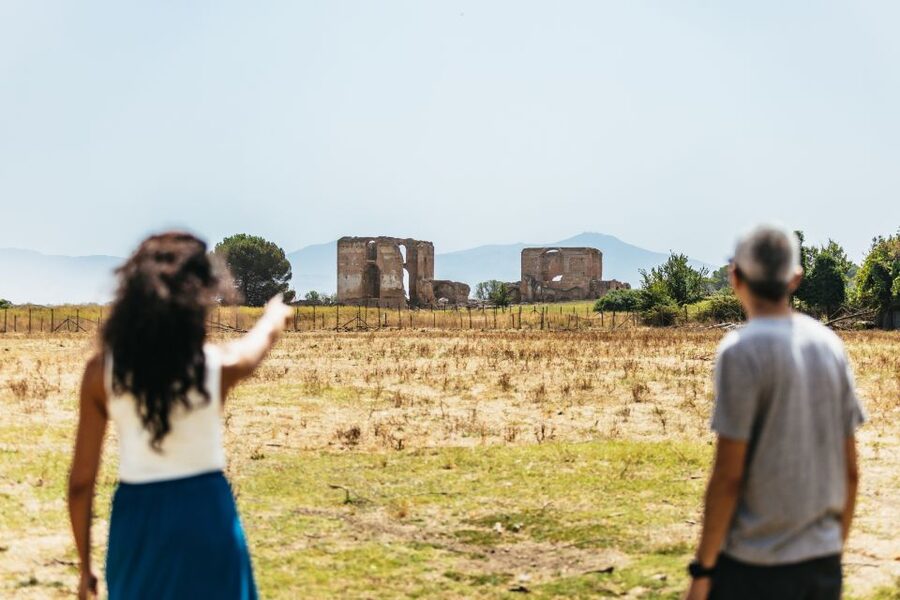
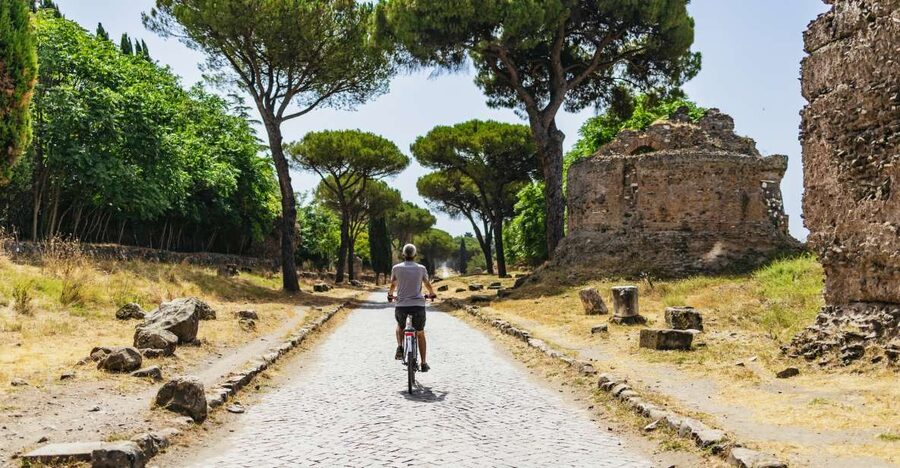
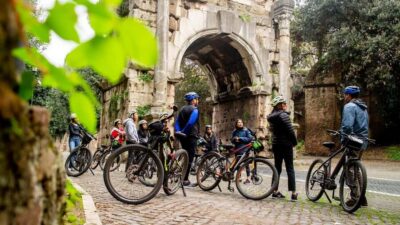
Ancient Rome, on two wheels. This full-day bike rental sends you into the Appia Antica Regional Park, where you ride past catacombs, tombs, and Roman road grooves with breathing room from the city crowds.
I love how flexible the day feels, because you can set your own pace and stop when the ruins pull your attention (yes, even when the bike route stays straight as an arrow). I also love that the bikes come with helmets and locks, so you can focus on pedaling, not gear. The main consideration is the terrain: parts of the route can be rough, bumpy, and wet, so you’ll want the right bike and a plan for water and snacks.
Key points before you go
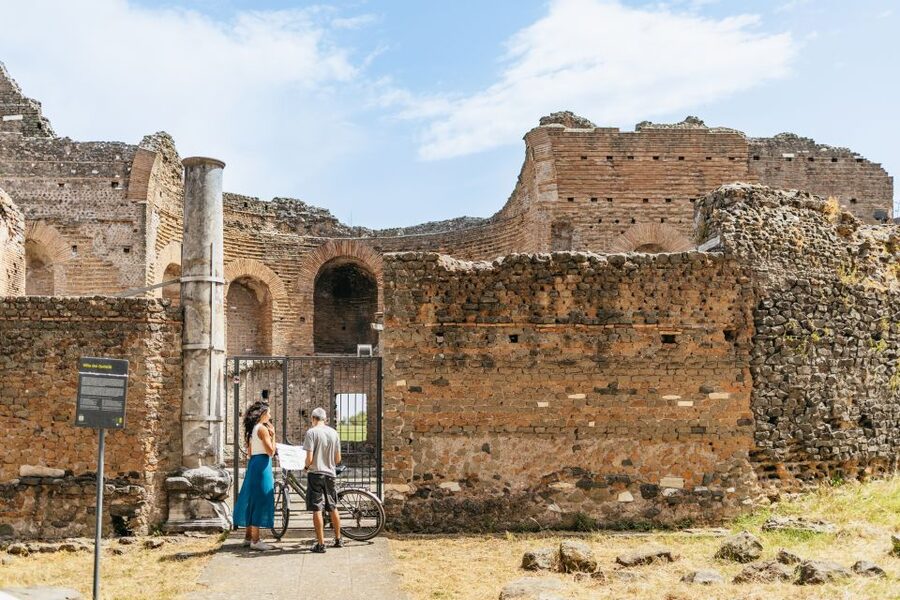
- Customizable pace on an ancient highway: ride, stop, and linger around the highlights that matter to you
- E-bike or mountain bike options: useful for rougher, rutted stretches along the historic road
- Two catacomb visits: guided time at San Callisto and San Sebastiano as built-in stops
- Roman ruins without the usual chaos: the road often feels calmer than central Rome
- Bring water and a simple food plan: food options can be limited, and fountains are not constant
Why the Appia Antica feels different from central Rome
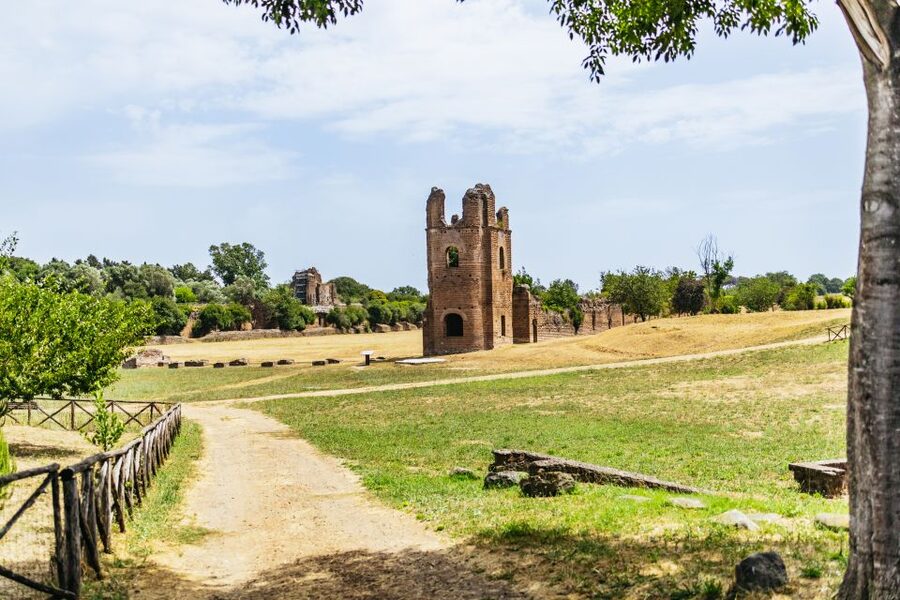
Rome is loud when you stay in the center. On the Appia Antica, the vibe shifts fast. You’re out in the Regional Park system, riding along one of the oldest Roman corridors, where the scenery turns rural and archaeological at the same time.
The appeal is more than just seeing famous ruins. You get to move through them like they were part of a route you could actually travel in ancient times. A lot of what makes this special is sensory: the stone under your wheels, the shade from trees along certain sections, and that slow feeling of leaving modern Rome behind.
Also, it’s a great “change of pace” day. If you’ve already done the big-ticket indoor sights, this gives you fresh air and outdoor history, with the freedom to adjust the day as you go.
You can also read our reviews of more cycling tours in Rome


Bikes, difficulty, and who should choose which model
You can rent a mountain bike, an electric bike, or a city bike. A city bike is not suggested, mainly because the historic road surface and side paths can get bumpy, rutted, and wet in places.
Here’s how I’d think about it:
- If you want easier energy and fewer struggles on rough stretches, choose an e-bike.
- If you prefer a more traditional workout and you’re comfortable on uneven ground, a mountain bike is a solid match.
- If you’re on a city bike, be ready for extra jolts when you hit original cobblestone sections and rutted areas.
It’s not ideal for everyone. The experience is not suitable for people who can’t ride a bike, people with back problems, pregnant women, babies under 1 year, and people over 264 lbs (120 kg). In plain terms: if you need a smooth surface and lots of breaks, you’ll likely find parts of the Appia Antica tiring.
One more practical note. Bikes are available to rent rain or shine, so plan layers. Even when the road looks fine, wet flagstones and shallow puddles can make the ground feel less predictable.
Where you start, what the pickup is like, and when to plan your timing
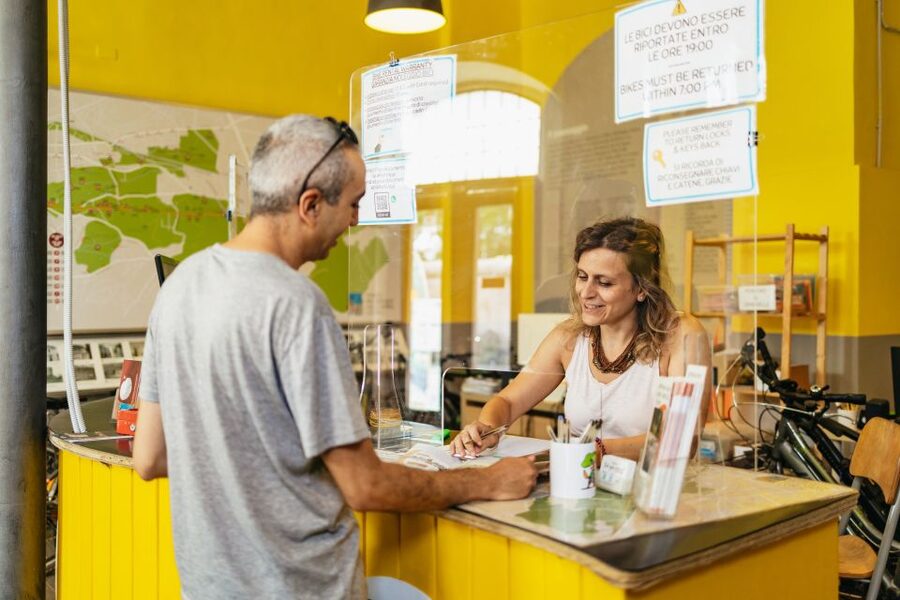
Bikes start at Via Appia Antica, 60, picked up inside the Tourist Information Office of the Appia Antica Park. The provider is EcoBike Roma – Parco Appia Antica, and the host or greeter is offered in English, French, Italian, and Spanish.
This pickup spot matters because it sets the tone of the day. Instead of fighting the center, you head directly to the park entrance area, get set up quickly, and get on the road.
Opening times are seasonal:
- Winter (end of October to end of March): Monday to Friday 9:30 AM to 1:00 PM, and 2:00 PM to 5:00 PM. Weekends or holidays 9:30 AM to 5:00 PM.
- Summer (end of March to end of October): Monday to Friday 9:30 AM to 6:00 PM. Weekends or holidays 9:30 AM to 7:00 PM.
If you’re doing catacombs plus multiple stops, don’t assume an afternoon start will stretch far. One rider who began at 4 PM found the time wasn’t enough. I’d aim for a mid-morning start if you want a leisurely pace and want to actually enjoy sitting down somewhere.
Domine Quo Vadis: the calm beginning before the ruins
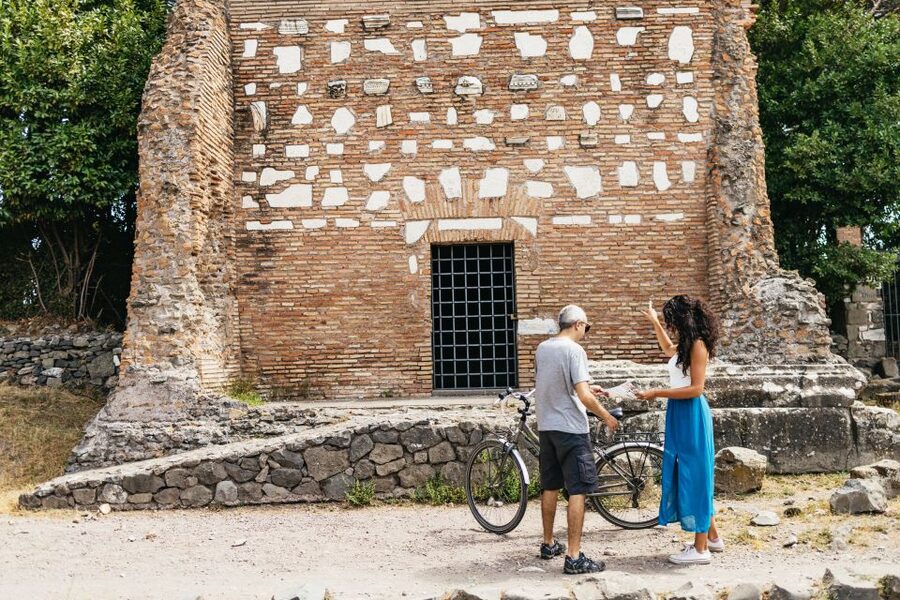
Your day begins with a visit to Church of Domine Quo Vadis. This is a good first stop because it brings you into the story of the area without throwing you immediately onto rough terrain.
Think of it as a mental warm-up. You arrive, slow down, see a landmark tied to the Appia area’s long cultural memory, then you’re ready for the big underground and ruin stops that follow.
If you’re the kind of traveler who likes context before you move, this works. If you don’t care much about churches, you can still treat this as a quick reset before the heavier history.
Catacombs of San Callisto: what the guided stop adds
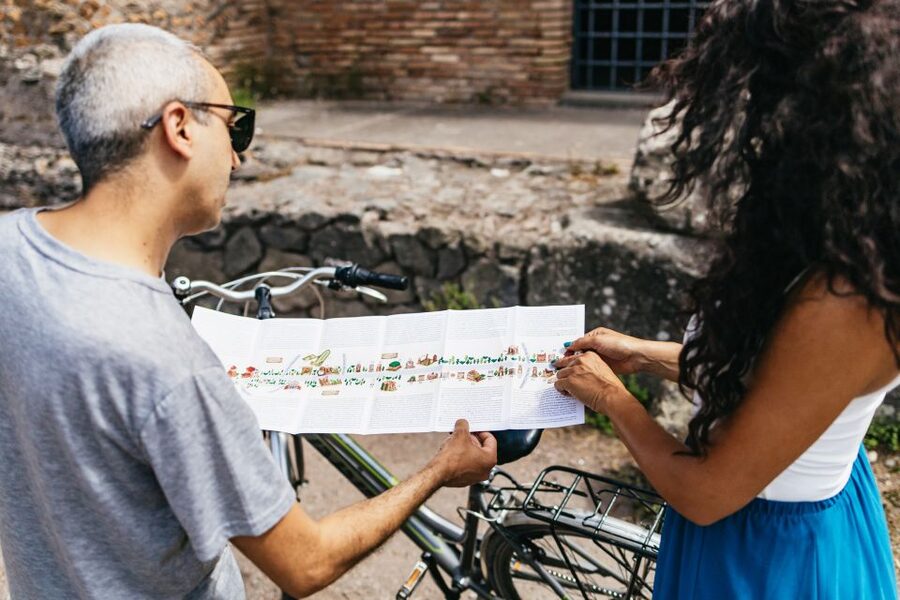
Next up is Catacombs of St. Callixtus with a guided tour around 40 minutes. This is one of the most intense stops of the day, because you’re not just looking at artifacts. You’re walking through corridors that were literally carved for burial.
What I like about having a timed guided visit here is structure. Catacombs can be easy to “just walk through” if you don’t know what you’re seeing. The guidance helps you make sense of what you’re looking at, which turns the visit from spooky hallway wandering into real understanding.
Two practical tips:
- Wear something comfortable for enclosed spaces and expect cool, damp air underground.
- Plan your pace so you don’t rush, because the rest of the ride will feel better if you’re not racing the clock.
A few more Rome tours and experiences worth a look


Catacombs of San Sebastiano: Bernini’s connection and why it matters
Then you shift to Catacombs of Saint Sebastian for a guided tour of about 45 minutes. This stop stands out because it’s linked to the late-career work of Gian Lorenzo Bernini, who created the last masterpiece after turning 80 years old.
This is a subtle but important difference. Catacombs are ancient by nature, but the Appia Antica story isn’t locked in the ancient past. It keeps getting interpreted, rebuilt, and honored across centuries.
After this stop, you’ll probably feel the day’s rhythm change. The guided visits are your “dense” moments. Everything after that works better if you treat the biking segments as a chance to breathe, soak in views, and let the ruins settle in.
Circus of Maxentius and Cecilia Metella: big silhouettes, easy biking breaks
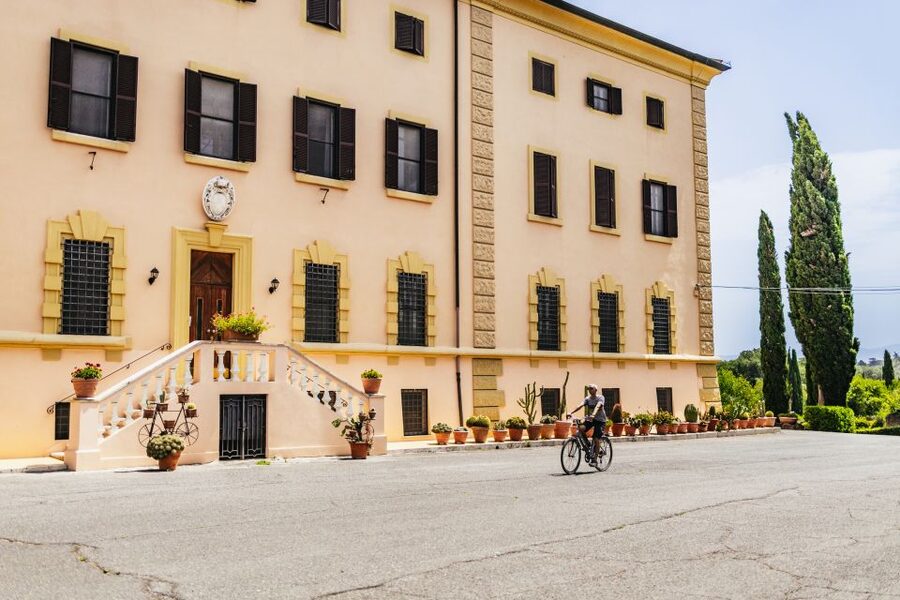
Once you’re above ground, the day opens up with Circus of Maxentius. You’re back to ruins and architecture that feel monumental, even if much is worn down by time.
Then you visit the Tomb of Cecilia Metella. Even if you only glance at it between bike stretches, it hits. It’s one of those structures that makes you understand scale quickly.
Here’s what I’d do: use these stops as your “picture breaks” and your “reset your legs” pauses. You can do a thoughtful look without turning every stop into a long detour. That matters because the ride adds up, and a good day is built from rhythm, not marathon energy.
Capo di Bove and Villa dei Quintili: when the road feels truly Roman
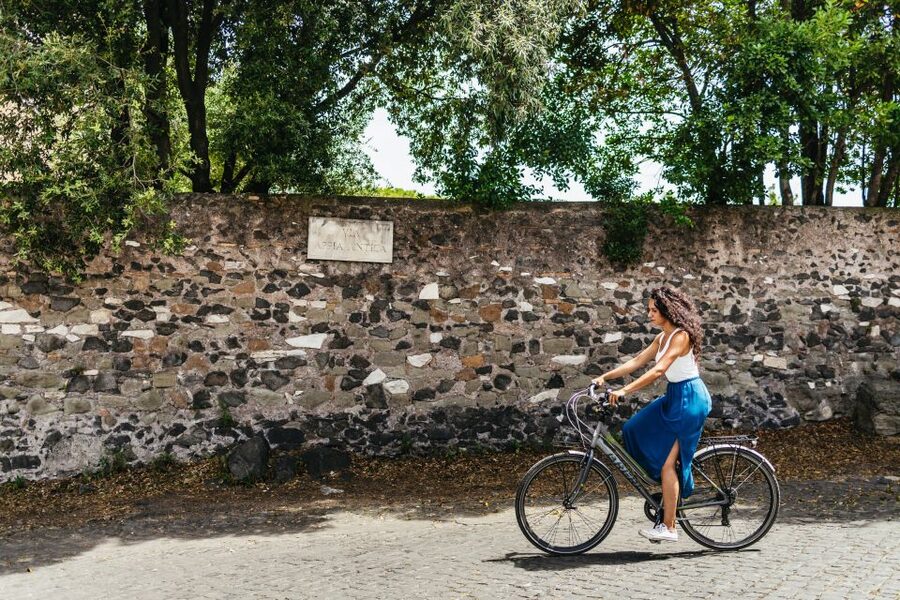
After the big monuments, you head toward Capo di Bove and then Villa dei Quintili.
Villa dei Quintili is one of the standouts in the overall area description because it’s associated with 24 hectares of estate space. In other words, this isn’t a single building you glance at. It’s a whole landscape of elite life and elite ambitions, which is why it feels like a destination in its own right.
This is also where you start noticing how the bike route changes your perception. Walking through ruins keeps you at one speed. On a bike, you understand placement and spacing. You start seeing how Rome’s grandeur was spread across corridors like this one.
Terrain can be a factor here. Some stretches are easier, then you hit older surfaces or uneven side paths. If your tires or confidence start to lag, riding the edges rather than charging straight over the roughest areas can keep the day enjoyable.
Caffarella Park and Parco degli Acquedotti: the open-air payoff
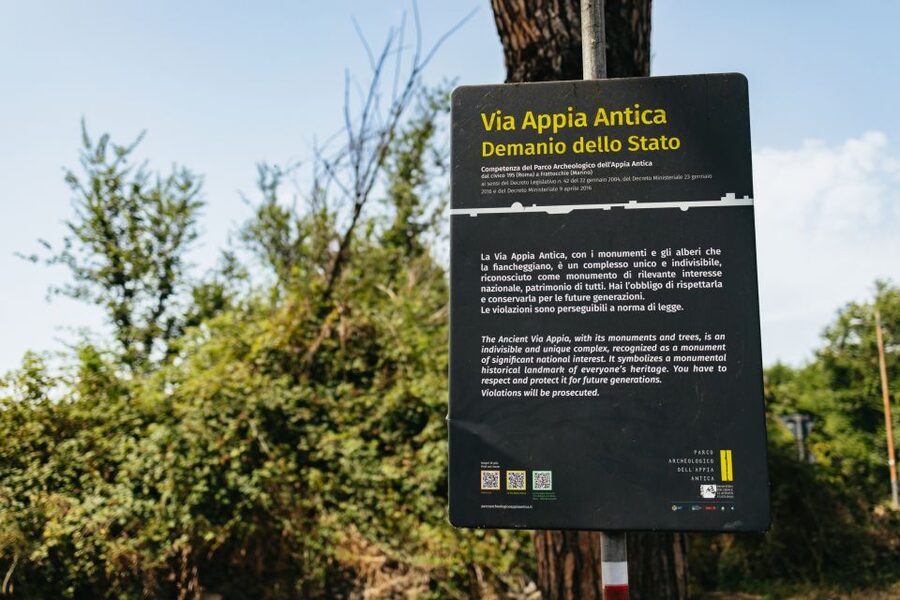
Two sections make the ride feel especially “worth it” when you’re happy to be outside: Caffarella Park (you pass by) and Parco degli Acquedotti (scenic views on the way).
Caffarella Park gives you that sense of green space next to antiquity. Even if you don’t stop for long here, passing through the zone keeps the day from becoming only ruins and museums.
Parco degli Acquedotti is where the views help you feel the area’s infrastructure story. Aqueduct country is a different kind of Rome. You’re looking at lines and structures designed to move water, which makes the older world feel practical, not just dramatic.
If you’re someone who likes to stop for photos often, this is where you’ll enjoy it. The scenery lets you take short pauses without feeling like you’re losing time.
The real question: how long and how far does a full day take?
You’re signing up for 1 day, but “1 day” can mean very different things depending on your pace and how long you stay in the catacombs.
Here’s the pattern I recommend planning around:
- If you want a relaxed day with the catacombs plus a handful of other stops, give yourself most of the opening hours.
- If you’re trying to see everything on a strict timeline, an earlier start matters a lot.
Distance in the real world varies. Some riders talk about an around 15 to 16 km round trip. Others mention about 20 km two-way. There are also reports of shorter rides if you only did part of the route and back.
So what should you do? Treat the route like a menu, not a checklist. Pick a few anchors (catacombs, one major ruin cluster, aqueduct views), then let the rest expand or shrink based on how your legs and attention feel.
Food, water, and comfort on an ancient road
Food and drinks are not included, so your plan matters. Water is a must. The simple advice is carry water and plan a snack or picnic, especially because food options are limited and water points aren’t constant.
A rider noted that there are a few places around the 4 km area to eat or drink, and another suggested picnic-style eating while sitting on grass or rocks. That’s a good signpost for how to plan: bring something easy to share, then treat a stop as your meal break rather than searching for restaurants mid-ride.
Also, don’t underestimate the heat. Multiple riders emphasized that it can get very hot, even with some shade. If you’re visiting in summer, start early and plan extra water. If you’re visiting in cooler months, bring a light layer because you’ll still be outside for long chunks.
One comfort note: there are no toilets along the way in the route experience described by a rider, with toilets only at the beginning. That’s a big deal. Use facilities before you start riding and plan to finish with enough time to return comfortably.
Is it good value at around $22 per person?
At $22 per person, the value depends on what you already plan to see and how you handle costs once you’re on the ground.
Here’s what you do get in the rental:
- Helmets
- Bike locks
That’s not flashy, but it’s practical. A helmet is smart anywhere, and a lock matters because you’ll stop and get off the bike during visits. What’s not included:
- Food and drinks
Some of the paid attractions on the route, like catacombs, may have separate entry costs depending on the day and ticket setup. One rider cited around €10 per person for the catacomb tour when they visited, so it’s worth budgeting separately if those guided underground visits are on your must-do list.
So how do you judge value? This is a great deal if:
- you actually ride the route and spend the day outside, and
- you’re comfortable navigating your stops, rather than needing constant guiding on the bike.
If you want constant commentary plus a very smooth surface experience, you might not feel the value as strongly. But if you want freedom, this pricing is fair for the bike time plus the essential safety gear.
Should you book this Appia Antica bike rental?
Yes, if you want a Rome day that feels quieter, older, and more active than the usual city sightseeing. It’s especially worth booking when you like self-guided freedom but still want the day anchored by guided catacomb visits.
Book it with confidence if:
- you can ride a bike comfortably on uneven surfaces,
- you’ll start early enough to enjoy stops without feeling rushed,
- you bring water and a simple food plan.
Skip it or reconsider if:
- you have back issues or any reason you can’t handle bumpy terrain,
- you hate the idea of uneven stone paths,
- you’re expecting a car-free road the whole time. Some parts can still have cars or motorbikes, so stay alert.
If you want Rome with fewer crowds and more “wow, I’m really here,” the Appia Antica on a bike is one of the better ways to do it.
More Scooter Rentals in Rome

More Cycling Tours in Rome
More Tour Reviews in Rome

Not for you? Here's more nearby things to do in Rome we have reviewed





Cycling Tours, compared.
 ★ 4.9Top Highlights & Hidden Gems Tour by Cannondale E-BikeFrom $851,760 reviews
 ★ 4.9Appian Way, Catacombs, & Roman Aqueducts E-bike TourFrom $851,421 reviews
 ★ 4.9Appian Way E-bike Tour with Catacombs, Aqueducts & FoodFrom $961,210 reviews
 ★ 4.9E-Bike Night Tour with Food and Wine TastingFrom $891,131 reviews
 ★ 5.0Appian Way Aqueducts Bike Tour (Catacombs & Lunch Option)From $78975 reviews
 ★ 5.0Appian Way, Catacombs and Aqueducts Park Tour with Top E-BikeFrom $102735 reviews
 ★ 4.6Appian Way E-Bike Tour Catacombs, Aqueducts & PicnicFrom $89727 reviews
 ★ 4.9Appian Way Aqueducts Bike Tour (UPG Catacombs & Lunch)From $81692 reviews
Browse the lists this tour appears in