
Reviewed · WORKSHOPS
Rome: Ancient Mosaic Making Workshop
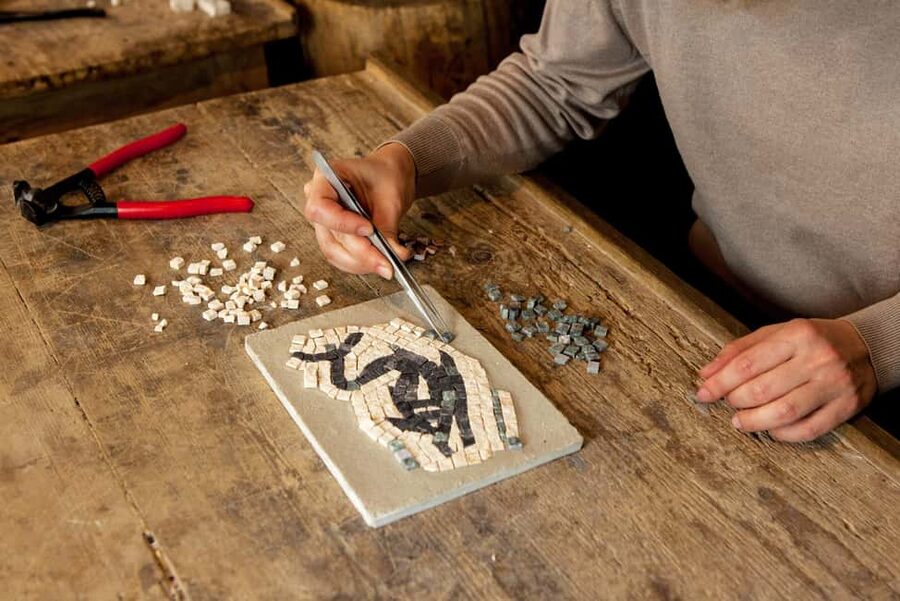
Five minutes in, you realize Rome is hands-on. I love learning from a master mosaicist in a real professional studio, and I love how you actually cut and place local marble tiles yourself. The one watch-out: it’s recommended for ages 12 and up, so it’s not a good fit if you’re traveling with younger kids.
You’ll be working in the historic Monti neighborhood, just a short walk from the Colosseum area, with the meeting point near Cavour Metro Line B. Expect a small group (limited to 9), a relaxed rhythm, and a hands-on lesson that ends with a framed mosaic and a sturdy box for the trip home.
Quick Highlights That Make This Class Worth Your Time
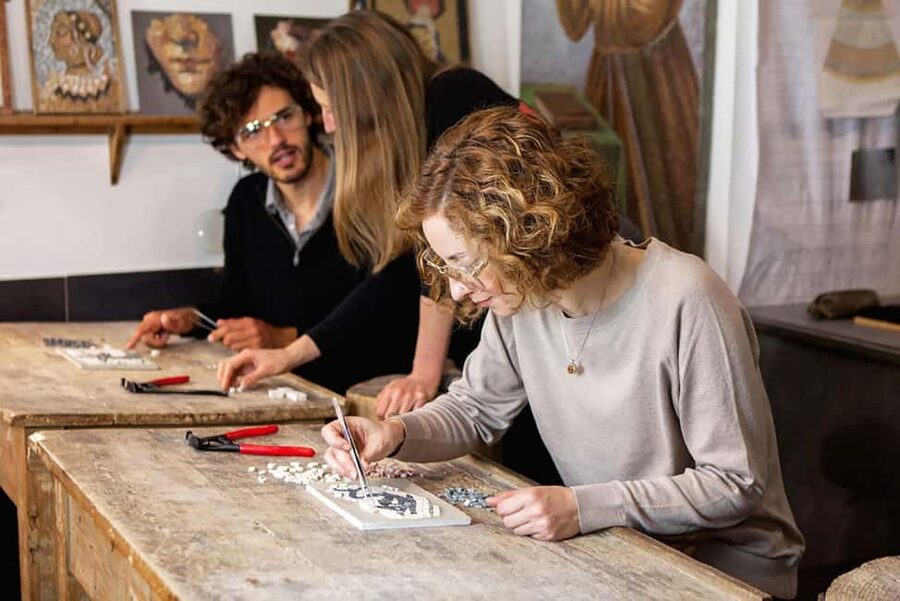
- Local marble and real mosaic tools: you work with natural stone, not plastic replicas
- Roman mosaic techniques, explained in plain, practical steps
- Small-group coaching: helpful guidance without feeling rushed
- Texture and composition practice: more than just “cut and glue”
- A true take-home souvenir: framed mosaic in protective packaging
- A studio break from Rome heat: a calm creative pause after sightseeing
Why Monti and Studio Cassio Beat a Typical Rome Souvenir Stop
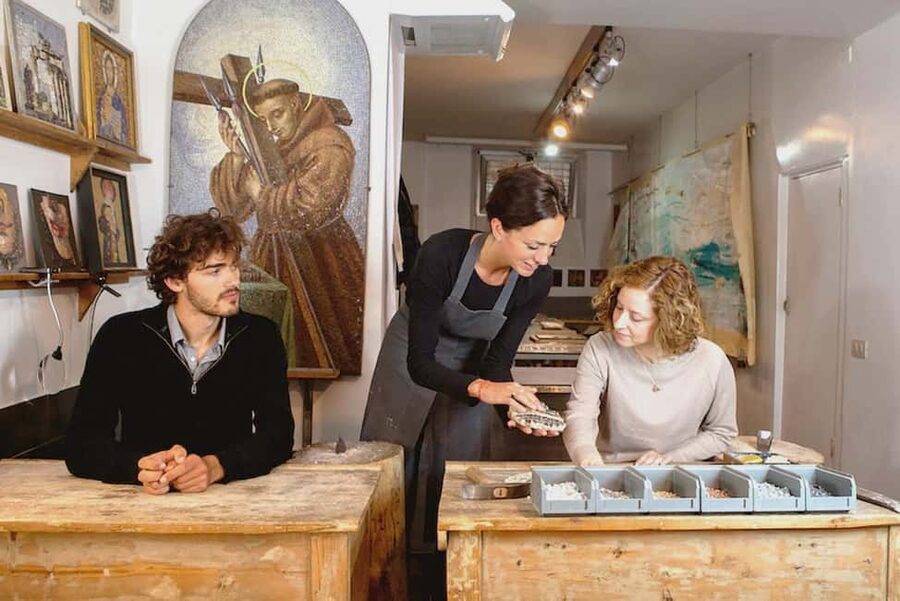
Rome has plenty of shopping. This is different. Instead of buying a postcard version of Roman art, you make one with your own hands in a working mosaic studio.
The workshop runs in the Monti neighborhood, and that matters. Monti feels like the everyday Rome you usually only catch glimpses of between major sights. And Studio Cassio is a professional space, not a demo table set up just for tourists. You’re surrounded by the tools and the workflow of mosaic craft, so you learn how this art really gets made.
The teaching style also feels grounded. You start with a short introduction to Roman mosaic techniques and the history of mosaics in Rome. Then you move straight to hands-on work, building your piece using the same basic principles mosaic artists rely on: texture, composition, and careful tile cutting.
You come away with something you can use in your home. A mosaic is not like a scarf you tuck in a drawer. It’s an object with weight, texture, and detail that holds up close.
A few more Rome tours and experiences worth a look



Getting There Near the Colosseum, Without Turning It Into a Mission
The meeting point is near the Colosseum, and it’s only a 2-minute walk from the Cavour stop on Metro Line B. That’s a big deal in Rome. You don’t want to spend your creative class doing map aerobics.
Plan this as a stand-alone block in your day. It’s 2.5 hours long. If you try to cram it between the Colosseum and another timed activity, you’ll be stressed before you even pick up a tool. If you can, schedule it when your brain wants a break from tickets and lines.
Also note what’s not included: transportation to and from the workshop. You’ll handle getting there yourself. Luckily, the central location makes that pretty straightforward with Metro Line B.
The 2.5 Hours at the Bench: What You Actually Do
The workshop follows a clear flow. It’s short enough to stay fun, long enough to finish something you’ll be proud to wrap and pack.
First, you get an introduction to Roman mosaic techniques and the history behind mosaics in Rome. This part isn’t meant to be a lecture marathon. It’s to help you understand what you’re making and why those old craftsmen cared so much about texture and placement.
Next comes the practical work. You’ll practice the principles of texture and composition, then move into marble tile cutting. This is the part where the class earns its keep. You’re not just watching someone else build the mosaic. You’re learning how to handle the tools and how to think in small pieces.
By the end, you create your own mosaic artwork, about 7 x 5 inches, weighing around 14 oz. You also get a frame for your final piece, plus a sturdy box designed to protect it for travel.
Small-group size makes the difference here. With only up to 9 participants, you’re more likely to get direct help when you need it, rather than waiting your turn.
Texture, Composition, and Marble Cutting: The Skills You’ll Keep
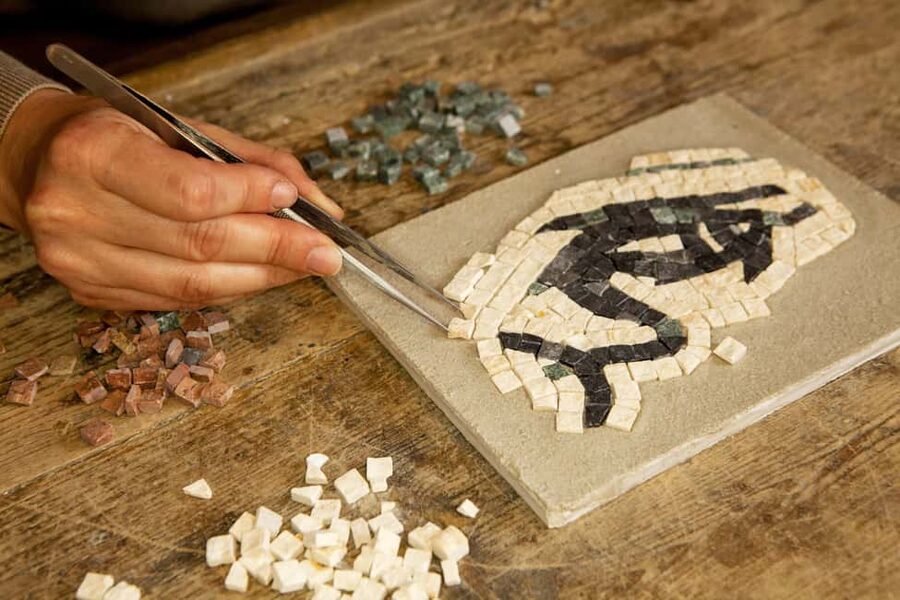
Roman mosaics look “simple” from far away. Up close, they’re all about micro-decisions: how light hits different surfaces, how pieces transition, and how the overall design holds together.
That’s why the class focuses on texture and composition. Texture is what makes the mosaic feel alive. Composition is what makes it read as a design rather than a pile of stone. You practice both, so you learn to think like a maker, not like a shopper.
Marble tile cutting is the real hands-on skill. The class emphasizes authentic techniques of Roman mosaic craftsmanship, using natural local marble and specific tools. The point isn’t to turn you into a studio apprentice. The point is to give you a working understanding of how mosaic artists shape stone and plan the final look.
You’ll also learn how mosaics became such a defining art form in Rome. That context helps your finished piece feel more meaningful. It stops being a random souvenir and becomes proof you understand an ancient technique well enough to recreate it.
Meet the Instructors in a Studio Setting, From Alex to Julia
In a class like this, the teacher matters as much as the materials. Here, the instruction is personal and encouraging.
You may work with English-speaking and Italian-speaking instructors, and you’ll see that they genuinely love mosaic craft. In the studio, you’ll feel the calm professionalism of a team that does this work every day, not just during a workshop window.
Names that come up: Alex is one of the instructors mentioned in bookings, and he’s credited with skillfully helping participants create their pieces and with making mosaic history fun. Other studio hosts named in experiences include Julia, Hope, and Ellie (sometimes written as Elandria). The common thread is hands-on coaching plus an easygoing vibe.
If it helps your confidence, take this seriously as a skill-building class, not an art exam. People describe it as relaxed, friendly, and supportive, and the studio environment seems designed to keep things comfortable even if you’ve never held mosaic tools before.
One extra human touch: if you’re celebrating a birthday, the studio has reportedly brought a small cake for birthday groups. That’s not something you should assume, but it’s a nice example of the warm, family-owned feel.






Your Finished Mosaic: Size, Weight, Frame, and Packing
This is a souvenir you’ll actually want to display.
Your finished mosaic artwork is approximately 7 x 5 inches and weighs about 14 oz. You get a frame, so you’re not stuck finding one at home. And you get a sturdy box built to protect the finished piece for the trip.
That packaging detail matters. Rome souvenirs often come fragile and loosely wrapped. Here, the studio wraps up your mosaic in travel-ready protection, which makes it easier to bring home without stress.
You also work directly with high-quality, natural, local marble and all necessary tools. That’s why the final result feels substantial. It isn’t just decorative. It has real stone texture and weight, which is hard to fake with cheaper materials.
If you’re the type who keeps travel photos but not much else, this one is different. Your mosaic becomes a physical memory you can hang, lean, or gift to someone who appreciates craft.
Is the $106 Price Good Value for Rome?
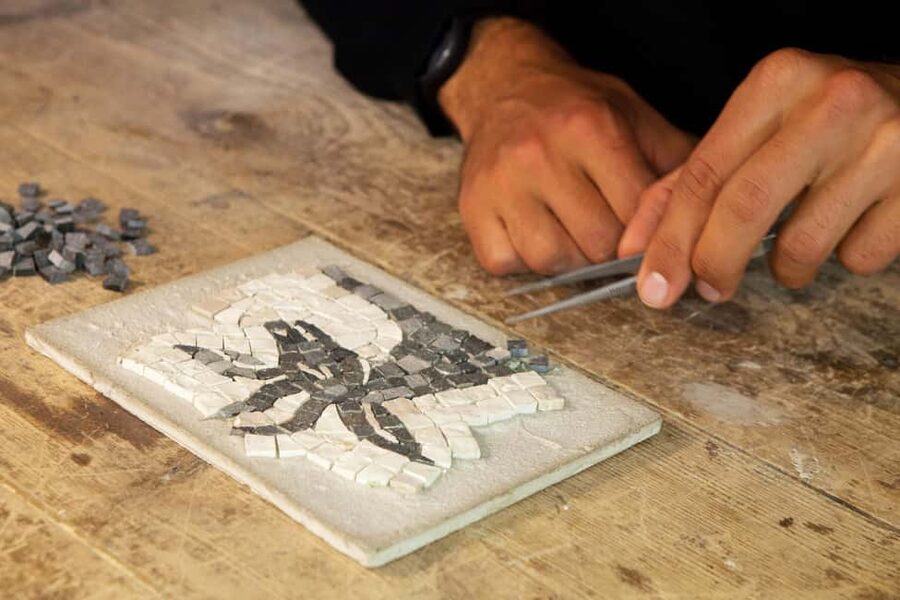
At $106 per person for a 2.5-hour workshop, you’re paying for several things at once: instruction, studio time, materials, tools, framing, and protective packing.
The value comes from the fact that you’re using local marble and professional tools under guidance from a master mosaicist. You’re also working in a small group capped at 9, which keeps the experience from turning into a rushed assembly line. And you’re not just making a simple craft. You’re learning principles like texture and composition that are central to Roman mosaic art.
You also get bottled water plus coffee and/or tea. That’s a small line item, but it helps you enjoy the class comfortably, especially if you’ve already been walking around the Colosseum area.
Compared to buying an imported mass-produced mosaic-style souvenir, this is usually the better deal. You’re not just paying for the object. You’re paying for the skill, the coaching, and the ability to bring home something personal that you made.
Who This Workshop Is Best For
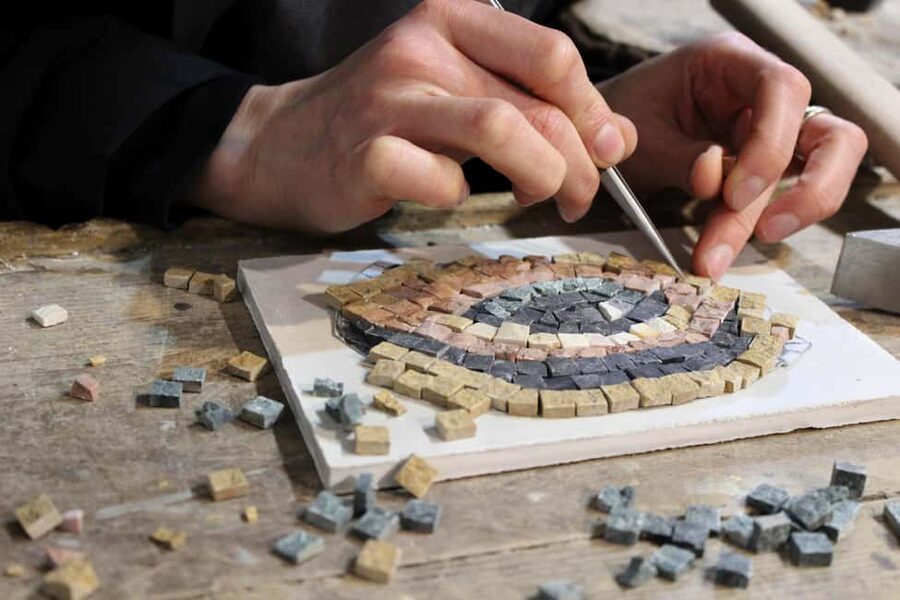
This is a strong fit if you:
- Want a creative break after seeing the big Roman sights
- Prefer hands-on experiences over long guided walks
- Enjoy art, design, or any craft that rewards patience
- Are traveling with a teen who is at least 12 (the class is recommended for 12 and up)
Many people like that the studio session is a calmer alternative after busy days. The mosaic workshop gives your brain a different kind of focus, and it turns the day into a story beyond photos.
It’s not a good fit if you’re traveling with kids under 12. Safety considerations are part of the reason, and the workshop explicitly recommends ages 12 and up.
Also consider your time. Two and a half hours sounds short, but it is a commitment. If your Rome day is already packed tightly, schedule this when you can fully be present at the workbench.
Practical Tips to Enjoy the Class More
Here’s how to make your mosaic experience feel easy and satisfying.
First, treat it like a workshop, not a museum visit. You’ll be working with tools and doing the steps yourself, so go in with a relaxed mindset. Your goal is progress and a finished piece you like, not perfection.
Second, pay attention during the intro. The history and technique overview are there for a reason. If you understand the idea of texture and composition, your decisions while placing and cutting pieces will start to feel natural.
Third, take your time with guidance. In a small group, you can ask questions and get real feedback. If you can, ask about how the instructors think about transitions between stone pieces, because that’s where the mosaic starts to look “Roman” up close.
Finally, plan your day around the take-home factor. You’ll leave with a framed mosaic and a sturdy box. That means you’ll want easy hands-free movement after class, so you’re not juggling lots of extra stops right away.
Should You Book This Rome Mosaic Workshop?
Yes, if you want a genuine, hands-on Rome experience that produces a real artifact you can display. This workshop is built around professional studio work, with natural local marble, small-group help, and a structured approach to Roman mosaic principles.
I’d skip it only if you’re traveling with a child under 12 or if your schedule is too tight for a 2.5-hour activity. If you can make space, this is one of those Rome moments that turns the city from something you look at into something you make.
FAQ
How long is the Rome Ancient Mosaic Making Workshop?
It lasts 2.5 hours.
What size mosaic will I take home?
Your mosaic artwork is approximately 7 x 5 inches and weighs about 14 oz.
Where is the meeting point?
It’s near the Colosseum, about a 2-minute walk from the Cavour stop on Metro Line B.
What is included in the price?
You get an introduction to Roman mosaic technique and history, access to high quality natural local marble and all necessary tools, a frame, a sturdy box to store and protect your artwork, bottled water plus coffee and/or tea, and your unique mosaic creation.
Is this workshop suitable for children?
For safety reasons, it’s recommended for ages 12 and up, and it is not suitable for children under 12.
What languages are used during the workshop?
The instructor teaches in English and Italian.
Is transportation to and from the workshop included?
No, transportation is not included.
More Workshops & Classes in Rome



More Tour Reviews in Rome



Not for you? Here's more nearby things to do in Rome we have reviewed












Workshops, compared.
 ★ 4.9Pasta & Tiramisu Class with Fine Wine by the VaticanFrom $414,852 reviews
 ★ 4.9Pasta Making Class with Wine, Limoncello, and DessertFrom $483,177 reviews
 ★ 4.93-in-1 Fettuccine, Ravioli, and Tiramisu Cooking ClassFrom $812,704 reviews
 ★ 4.8Fettuccine Pasta Cooking Class in Rome’s City CenterFrom $462,414 reviews
 ★ 5.0Traditional Pasta with Cocktails Cooking ClassFrom $1002,374 reviews
 ★ 4.8Fettuccine and Tiramisu Cooking Class with WineFrom $672,013 reviews
 ★ 4.8Pasta & Tiramisu Cooking Class near the Spanish StepsFrom $581,395 reviews
 ★ 4.7Traditional Pizza Cooking Class near Piazza NavonaFrom $461,241 reviews
Browse the lists this tour appears in