
Reviewed · ROME GOLF CART TOURS
Enjoy Rome Full day tour in Golf Cart with Catacombs
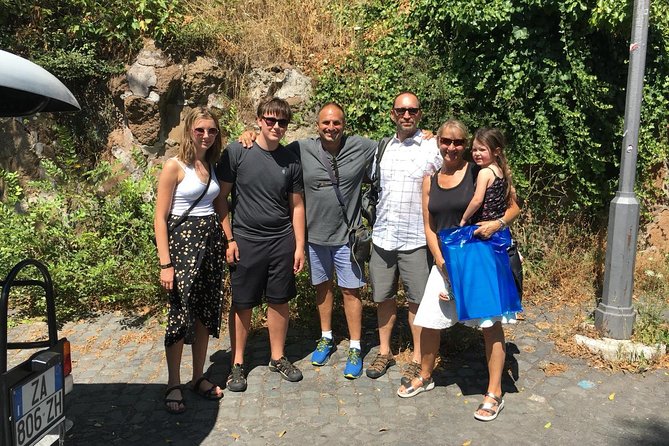
Rome in one day, without the traffic pain. This full-day golf cart tour strings together Rome’s big-name squares and monuments, then adds the San Callixtus Catacombs for a very different kind of sight. You get an English-speaking driver guide who handles the driving while you focus on photos, quick looks, and getting a feel for how the city flows.
What I like most is the balance of major stops with real breathing room. You’re not stuck in a long bus ride, and the pace lets you actually see each place. I also love that the guide is more than a facts person, guides like Achille, Eduardo, Eddie, Vallaria, and Valerio are praised for making history practical and fun, and for helping with logistics on busy streets.
One consideration: not everything is included. The Pantheon and the Catacombs have admission that is not included, and the stop times are short, so you should come ready to move quickly between photo breaks.
Key highlights worth knowing before you go
- Delux golf cart with your guide driving so you can relax between stops
- Tight but doable 6-hour route through Rome’s top piazzas and monuments
- Paid entry for the Pantheon and Catacombs since admission is not included
- Central historic centre hotel pickup (only if eligible) keeps the day smooth
- Jubilee-related restorations may affect monuments so stay flexible with timing
- Private group experience so you only share the cart with your group
Why a golf cart day works so well in Rome
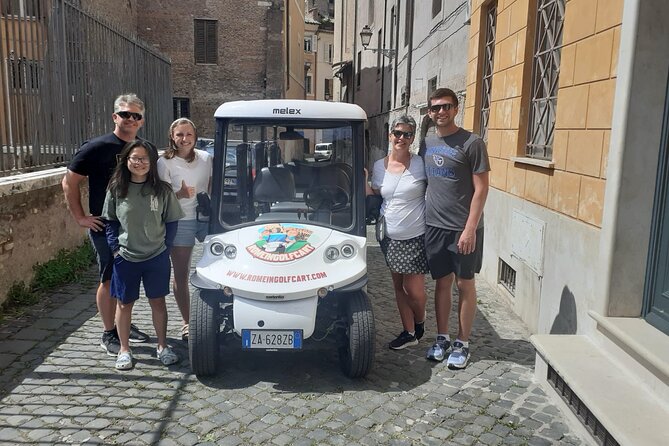
Rome can be tiring fast. Even when you know where you want to go, the city fights you with traffic, tight streets, and that constant need to reposition yourself. This tour solves a big chunk of that. You ride in a delux golf cart, and the driver guide handles the driving so you can keep your energy for actually looking at things.
The other big win is pacing. Each stop is brief, but not frantic. You’ll spend around 15 minutes at most of the classic outdoor sights, then about 20 minutes at the Catacombs area. In a city where “seeing Rome” can turn into waiting, walking, and doubling back, that focused timing is a gift.
Finally, it is a private tour, meaning your guide can shape the day to your group. The experience is designed so your time in the cart is not just transport, it’s part of the sightseeing, including history and local context as you move.
A few more Rome tours and experiences worth a look
A realistic look at the route and the rhythm of the day
This day is built as a chain of high-impact stops, moving from one iconic area to the next. You start with the historic streets of the Antico Quartiere Ebraico, then head into the core monuments like the Pantheon, followed by the great open spaces: Piazza Navona, the Spanish Steps, and Trevi Fountain. From there, you move toward ancient Rome with Palatine Hill, and finish with the otherworldly Catacombe di San Callisto.
Because the tour does not include guided walking tours inside the sites, you should think of it as “arrive close, park the sightseeing right in front of you, then take it from there.” That can be ideal if you want the freedom to snap photos, take a quick look, and decide how much time to spend at each place.
The good news: several of the locations are free to view. That helps you maximize what you get within the time window.
Antico Quartiere Ebraico: a fast intro to Rome’s Jewish district
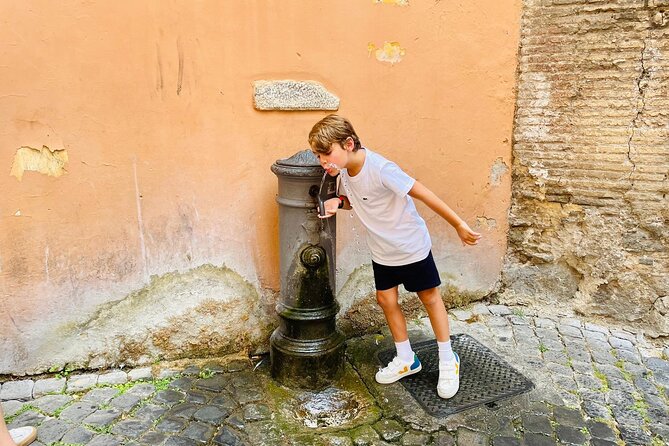
Your first stop is the Antico Quartiere Ebraico, a characteristic Jewish neighborhood in Rome. The time here is about 15 minutes, and it does not require an admission ticket, which makes it a low-pressure starting point.
In practice, this kind of opening stop matters. It gives you a sense of neighborhood texture right away, not just isolated monuments. You start the day with streets that feel lived-in, then you transition to major landmarks as the route moves into Rome’s busiest central zones. If you like architecture, street views, and the feel of daily life layered over history, this short stop is a good way to set the tone.
A drawback to plan for: because it’s brief, you will not have time for an in-depth neighborhood walk. You’ll get the highlight version.
Pantheon: iconic interior access, with admission on your side

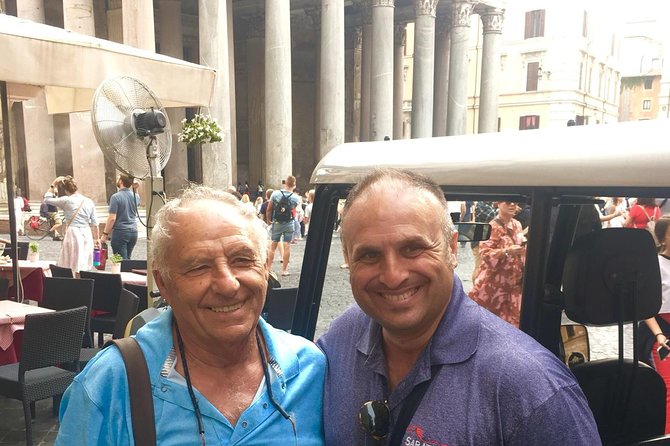
Next up is the Pantheon, one of the most famous monuments in Rome. The stop time is about 15 minutes, and admission is not included.
This is where your expectations should be dialed in. You’ll arrive close enough to make it easy to enter if you choose to go inside, but you need to budget for the ticket separately. Because the included time is short, you will want to decide quickly whether you want to prioritize the interior or just take in the exterior and move on.
Even if you have seen the Pantheon before, it’s the kind of place that rewards quick attention. The building is a masterclass in Roman engineering, and being there in person can make the scale feel real fast. If you’re traveling with kids or older relatives, the guide’s pacing helps, since you’re not stuck in a long walk with no plan.
Piazza Navona: Roman stadium shape in a lively square
Then you hit Piazza Navona, about a 15-minute stop with free admission. The square sits on the site of the Stadium of Domitian from the first century AD, and the shape follows that old stadium form.
This stop is valuable because it’s one of those places where Roman history is visible without you needing to “decode” everything. You can feel the curvature and layout, and you get great photo opportunities without paying a ticket.
What to watch for: Piazza Navona can be crowded at peak hours. You likely will not have a long linger, so aim for quick scenic shots and a short pause to take in the surroundings. If you’re chasing the best light, the guide may help time things as you move through the day.






Spanish Steps: where the route becomes a classic walking-photo moment
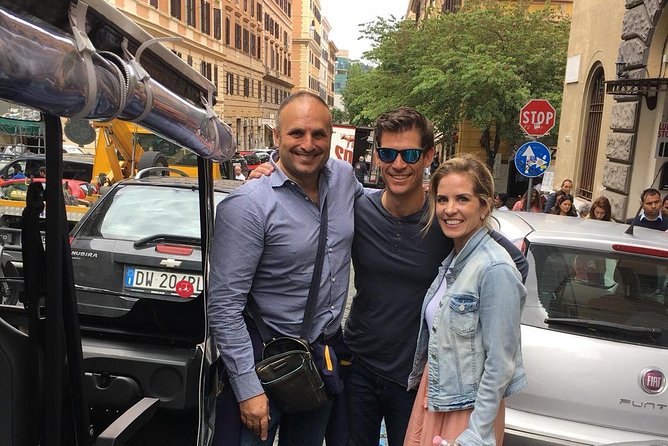
The Spanish Steps are another about 15-minute, free stop. The route description matters here: the steps climb between Piazza di Spagna at the bottom and Piazza Trinità dei Monti at the top, dominated by the church up the hill.
This is the kind of sight that looks different depending on where you stand. From the top, you can frame wider views and see the hill line. From the bottom, you get that iconic ascent and activity near Piazza di Spagna. In a short stop, you will probably want to pick your angle fast, then move.
If you do plan to walk up and down, go easy. This is not about hiking. It’s about using the 15 minutes wisely so you still make it back to the cart on time.
Trevi Fountain: quick timing, coin tradition, and the photo rush
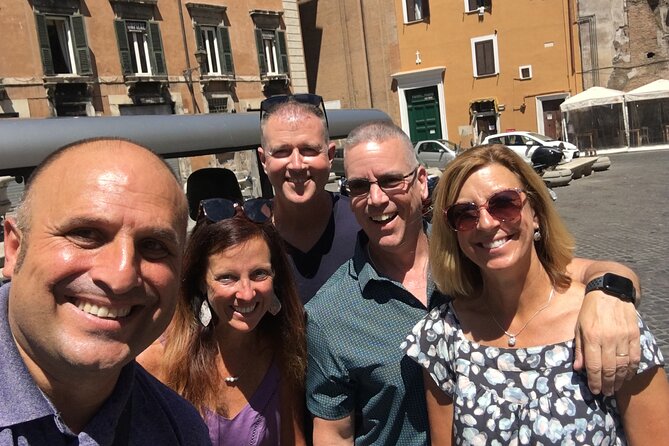
Next is Trevi Fountain, another free stop at around 15 minutes. The classic tip is simple: don’t forget the coin.
Even if you’ve heard all the stories, Trevi is still worth seeing because it’s loud with people and still manages to feel theatrical. The guide’s job here is important. They help you get positioned without wasting your time zigzagging through crowds.
Because the stop is short, treat it like a sprint with style. Get your photos early if the area starts to pack in. Take a moment to enjoy the details, then move along. If you arrive at the right time, you can capture the fountain with less background clutter.
Palatine Hill: a quick hit of Rome’s power center
You finish the outdoor high points with Palatine Hill, about 15 minutes and free admission. Palatine Hill is one of the Seven Hills of Rome, and the tour description places it between the Forum and the Campus Martius.
This stop is ideal if you want your day to include at least one “ancient Rome scale” moment. Even a short visit can give you a strong sense of how the city’s power geography worked, with hills and valleys acting like natural city planning tools.
What you should consider: 15 minutes on Palatine Hill is enough for overview impressions, not enough for a full archaeological exploration. If you love deep museum-style time at ruins, you’ll likely want to schedule a separate visit later. For this day, it’s a strategic stop that keeps the tour feeling like more than just modern Rome photo points.
San Callixtus Catacombs: what 20 minutes really means
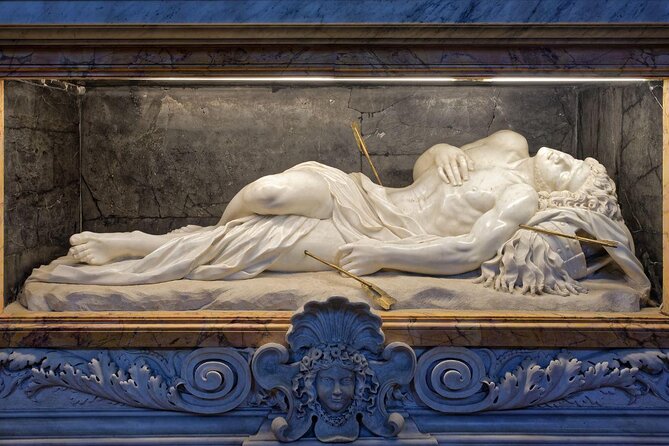
Finally, you’ll go to Catacombe di San Callisto (San Callixtus Catacombs). The stop time is about 20 minutes, and admission is not included.
This part of the day is your curveball. The catacombs are older and more atmospheric than the piazzas, and they can make the whole trip feel more complete, because you’re seeing how Rome looked underground and how communities organized beyond the street level.
One detail from the route description gives you context for the area: during ancient Roman times, the road linked to the port of Brindisi, and it was important for transporting troops. That adds a layer to what you’re seeing. You’re not only visiting a site, you’re connecting it to how Rome functioned.
One more practical note: guided walking tours at the sites are not included. The tour says you’ll stop close to each location, which means you can explore on your own once you arrive, but you should not expect a long structured walk inside every site from the driver guide. If you want deeper interpretation underground, you may want to add a separate catacombs-focused tour later.
What the driver guide experience feels like in real life
The driver guide is the difference between a list of stops and a day that actually works. The names that come up in the experience feedback are consistent: guides like Achille, Eduardo, Eddie, Valerio, and Vallaria are repeatedly praised for steering the experience with confidence and clarity.
Here’s what that tends to mean for you:
- You get help with timing and positioning at busy spots.
- You get local context as you ride, so the sights connect instead of feeling like disconnected postcards.
- You benefit from street know-how. Even if you love walking, Rome is a maze. A guide who knows where to drive helps you avoid unnecessary wandering.
There are also hints that guides pay attention to family needs. One family-friendly aspect you can count on is that the day is built for mixed ages since the route uses the cart to reduce long walking stretches.
English language, mobile tickets, and why small tech details matter
This tour is offered in English, and you’ll receive a mobile ticket. Those two points might sound minor, but on a day with multiple stops and at least two places that require separate admission, being able to quickly access what you need keeps things calm.
Also, the tour is described as being near public transportation. That matters if you have a meeting point question or if you need flexibility on how you get to the pickup area.
Hotel pickup: great if you’re in the historic centre
Hotel pickup and drop-off are included only if your accommodation is located in the historic centre of Rome. If you are outside that zone, you should plan to meet elsewhere, since pickup is not guaranteed.
Why that matters: the whole day is optimized around a smooth flow. If you have to spend extra time getting to the meeting point, you can lose some of your value from the short site stops. If you are staying centrally, you’ll likely feel the benefits more strongly.
Price and value: is $539.43 per person worth it?
At $539.43 per person for about six hours, this is not a budget tour. It is a convenience and access purchase, and that makes sense in Rome.
Here’s what you are paying for based on what’s included:
- A delux golf cart for your group
- Expert guidance from an English-speaking driver guide
- Hotel pickup and drop-off in the historic centre
- A private tour so it is only your group
- A mobile ticket for easier check-in
If your travel style is “I want to see the highlights in a limited number of hours,” then the math often improves fast. The cart reduces wasted time moving across the city, and the day touches several major landmarks plus the Catacombs, which can be tricky to time well on your own.
If you love slow travel, long museum visits, and lots of unplanned wandering, you may feel the time constraints. The Pantheon and Catacombs also have admission not included, so the final total depends on what you choose to enter.
One planning tip: the tour is commonly booked about 79 days in advance on average. If your dates matter, it’s smart to book early so you’re not scrambling for the cart option.
Best for: first-timers, families, and time-crunched days
This works especially well for you if:
- You want a first Rome overview without spending your day stuck in transit
- You’re traveling with kids or multiple generations, since the cart helps manage fatigue
- You want a private day with an English-speaking guide, not a large group shuffle
It may not be the best fit if:
- You want long, in-depth time at each monument
- You prefer guided walking tours inside every major site
- You are outside the historic centre pickup area and would need extra travel to meet the tour
Jubilee restorations: stay flexible about what you see
Because of the Jubilee, some monuments may be under restoration. That means you might see temporary changes, and the operator may send messages if plans shift.
This is another reason the cart day approach is useful. Even if one element changes, the overall route is still built to get you classic Rome sights plus the Catacombs, rather than hinging the day on one fragile itinerary point.
Should you book this Rome golf cart day?
If you want a structured but relaxed way to cover the major highlights plus the Catacombs, I think this is a strong choice. The golf cart approach is the real star, it saves energy, helps with positioning, and lets your guide add context while you move.
I’d especially book it if you are staying in the historic centre, because the hotel pickup smooths out the entire day. It also makes sense if you value a private, English-guided experience and you do not want to manage every ticket and route step yourself.
Pass or plan carefully if you want a slow, deep “day in one neighborhood,” or if you expect long guided walking tours at each site. With the included time being short, you will need to match your pace to the tour, not the other way around.
FAQ
How long is the Rome Full Day tour with Catacombs?
The tour lasts about 6 hours.
Is hotel pickup and drop-off included?
Hotel pickup and drop-off are included only if your hotel, B&B, or apartment is located in the historic centre of Rome.
Which parts have admission not included?
Admission is not included for the Pantheon and the Catacombe di San Callisto.
Is lunch included?
No, lunch and extras are not included.
What language is the tour offered in?
The tour is offered in English.
What happens if weather is bad?
This experience requires good weather. If it is canceled due to poor weather, you will be offered a different date or a full refund.
More Full-Day in Rome


More Tours in Rome



More Tour Reviews in Rome
Not for you? Here's more nearby things to do in Rome we have reviewed












Rome Golf Cart Tours, compared.
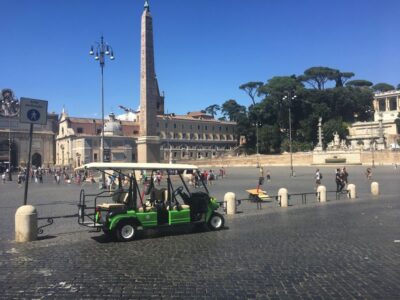 ★ 4.8Imperial City Tour by Golf Cart with Optional TransferFrom $1241,024 reviews
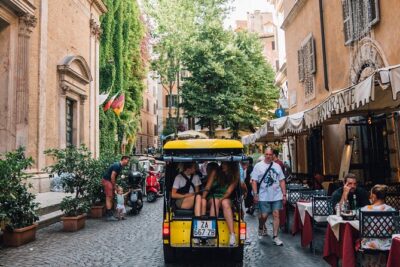 ★ 5.0Golf Cart Small-Group Guided Tour: Rome City HighlightsFrom $104907 reviews
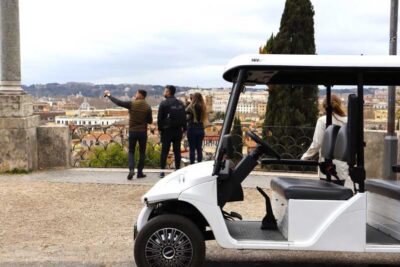 ★ 4.8City Highlights Golf Cart TourFrom $45857 reviews
 ★ 5.0Private/Group 4 Hours Golf Cart SightseeingTourFrom $168780 reviews
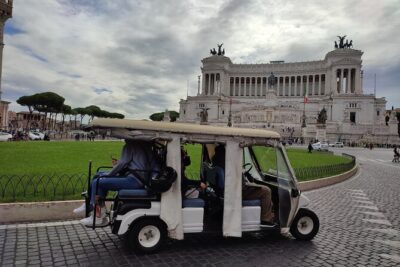 ★ 5.0Explore Rome on a Golf Cart: Private TourFrom $83757 reviews
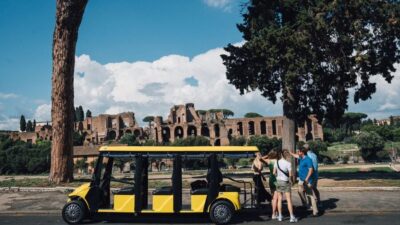 ★ 4.8City Highlights Golf Cart Tour with Local GuideFrom $71752 reviews
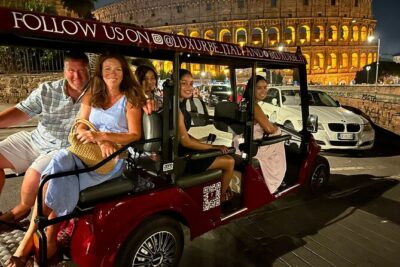 ★ 4.5Rome by Night: Golf Cart TourFrom $108688 reviews
 ★ 5.0Rome Catacomb & Appian Way Small-Group Tour by Golf CartFrom $107681 reviews
Browse the lists this tour appears in