
Reviewed · ROME GOLF CART TOURS
Rome: Imperial City Tour by Golf Cart with Optional Transfer
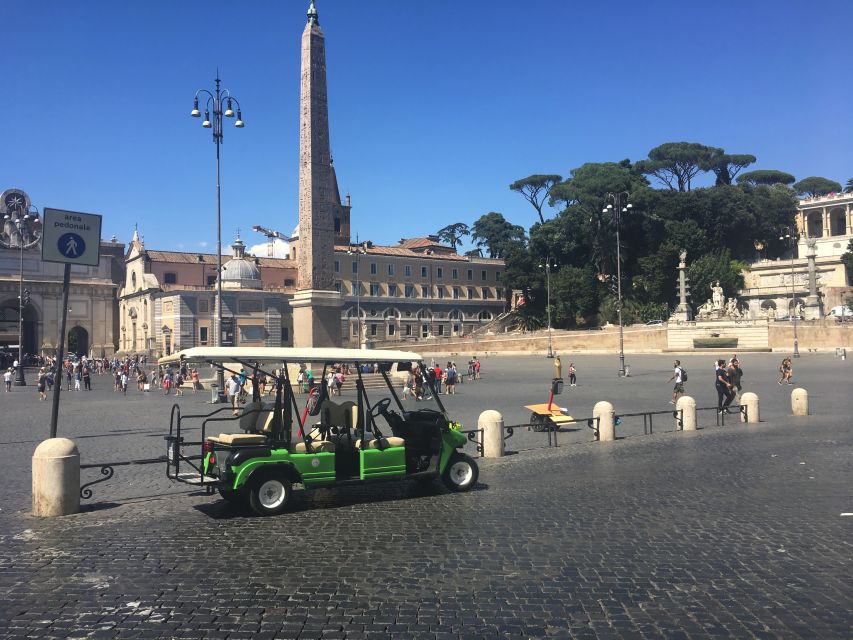
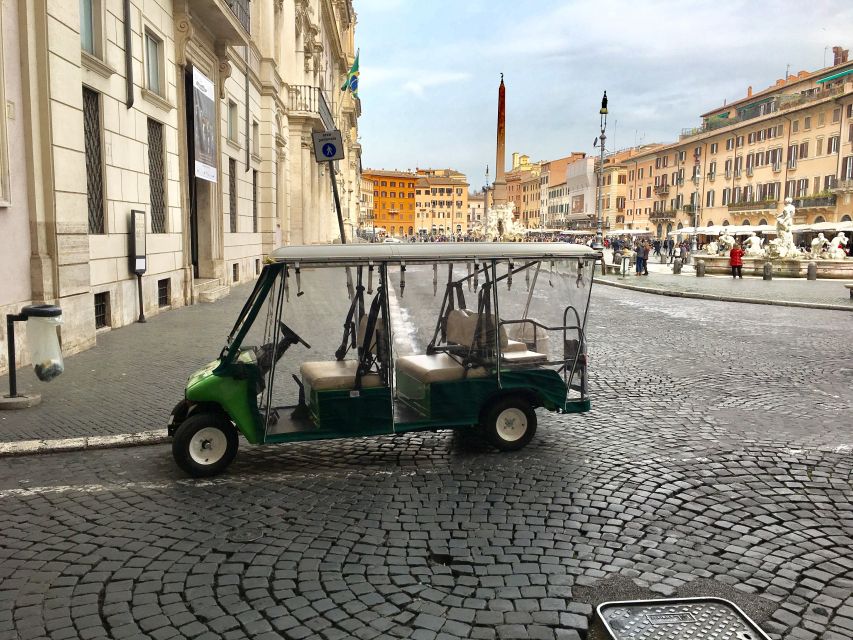
Rome can be a lot. This 3-hour golf cart tour is a smart way to see the big sights without burning your legs. You’ll ride right up to the Roman Forum, Colosseum, Circus Maximus, and the Pantheon, then slide through the elegant streets and classic photo corners that make Rome feel like Rome.
I love how the pace stays easy while the stories stay detailed. Guides like David and Vittorio are praised for good context, quick answers, and finding the angles for pictures, even when the city is packed.
One thing to consider: because you’re moving fast in a short window, you get highlights, not long, slow time inside every monument. If you love deep museum time, you’ll still want a separate plan for that.
Key highlights to know before you book
- Comfort-first sightseeing across multiple neighborhoods, without the same level of walking you’d do on foot
- Top monuments in one run, including the Roman Forum, Colosseum, Circus Maximus, and Pantheon
- Baroque stops that actually matter, with Trevi Fountain and Piazza Navona on the route
- Photo-friendly viewpoints called out by guides like Sa, Alessandro, and Alex
- Coffee break included, typically cappuccino at a café stop tied to the Villa Borghese area
- Private or small-group format, so you can ask questions and adjust the plan
Rome by golf cart: why this setup works
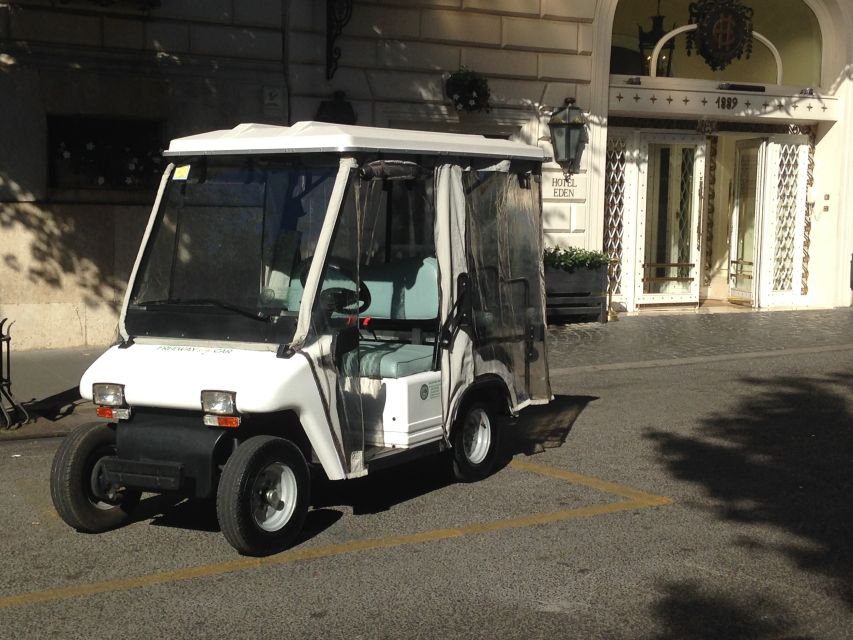
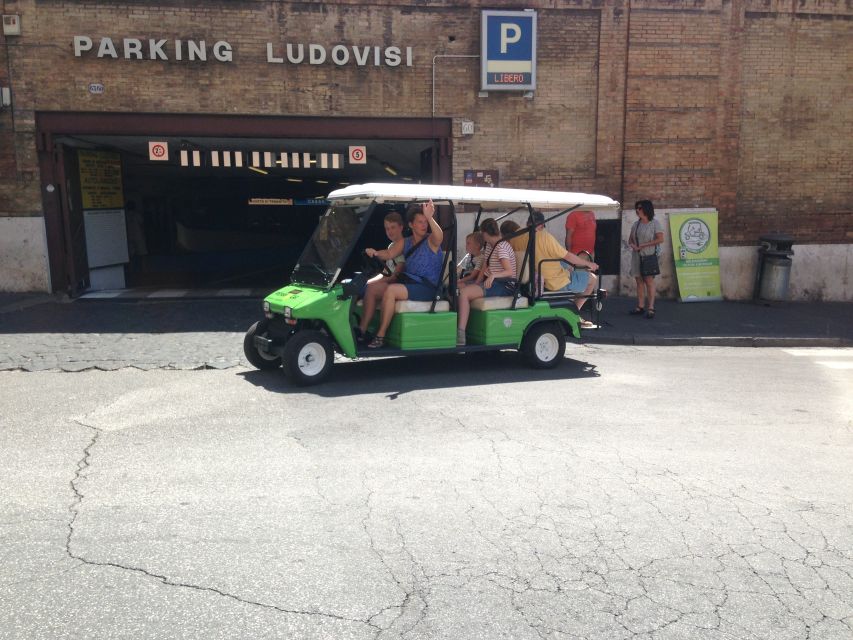
Rome is built for walking, but that does not mean you have to suffer. This tour uses a golf cart to connect major stops across the city so you spend less time stuck in pedestrian crushes and more time seeing the monuments.
In practical terms, you benefit in three ways. First, you cover a lot of ground in just 3 hours. Second, you get to move between neighborhoods without long transfers. Third, you arrive at the sites with time to look, take photos, and listen, instead of racing ahead just to keep your schedule.
And it’s fun. There’s something about cruising slowly past landmarks that turns the whole day from a checklist into a route. Several guides are noted for being engaging and interactive, like Sa (often mentioned as a standout) and Alessandro, who gets credit for keeping the facts human and easy to follow.
You can also read our reviews of more city tours in Rome


Meeting point at Via Ludovisi 60, and why you should arrive early
Your tour starts at the Freeway-car office via Ludovisi 60, which is about a 3-minute walk from Via Veneto and Square Barberini. If you choose hotel pickup, you’ll be instructed to wait in the hotel lobby or outside the entrance.
Here’s the practical side I’d plan for: even with a good map app, the exact office location can be tricky to spot. The fix is simple. Give yourself extra time to find Via Ludovisi 60, or message your provider if you’re unsure. When you start on time, the whole route feels smoother.
Also note that the tour ends back at the meeting point. That matters if you’re trying to line up dinner reservations or a next activity. A 3-hour tour plus a little buffer is usually the safe way to schedule Rome.
First big stops: Roman Forum and the Colosseum without the marathon
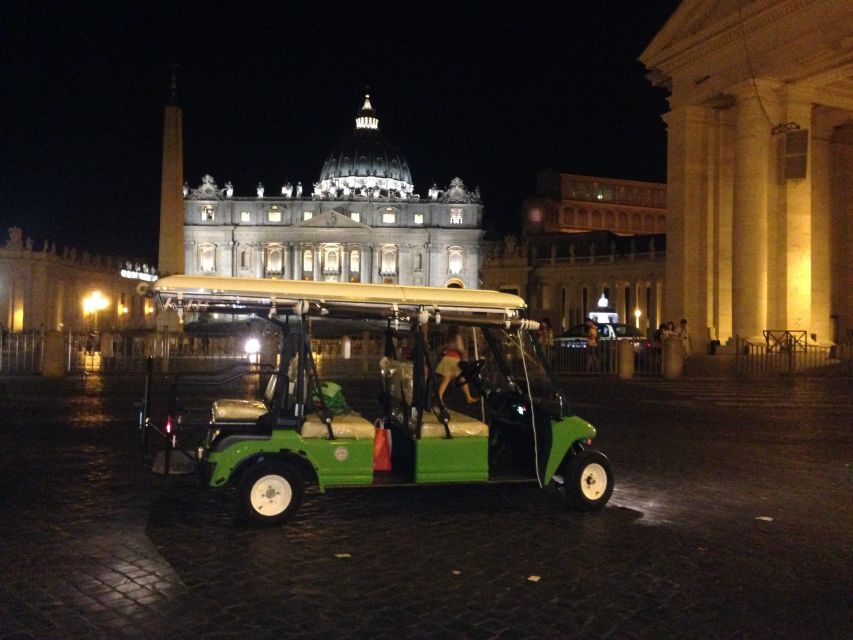
The Roman Forum and the Colosseum are the reason most people come to Rome in the first place. Doing them on a golf cart tour helps you avoid the worst of the walking bottlenecks between viewpoints.
What I like about this part of the route is that it sets the tone fast. You get the sense of Rome as an engine of power, politics, and spectacle, rather than seeing each site like a disconnected postcard. Guides are praised for explaining history in a way that stays relevant to what you’re actually seeing outside.
The Colosseum is a perfect example of why this works. The area can be crowded, and the lines for certain access can complicate a day. A cart tour keeps you focused on the big sight moments and the best angles, so you can still get the drama and the scale without turning your day into a long slog.
Circus Maximus and the Pantheon: seeing variety in the same window
The route doesn’t stop at the two biggest names. You also hit Circus Maximus and the Pantheon. That change of scenery is more than a bonus, it helps your brain connect different eras of Rome.
Circus Maximus gives you an idea of how public life moved at speed, with massive crowds built around entertainment and spectacle. The Pantheon, by contrast, brings you to a space that feels different immediately. Even if you’ve seen photos, standing near it changes how you understand the city’s architecture and engineering.
Because you have a live guide, you’re not just looking at buildings. You’re getting a way to interpret what you’re seeing on the ride and at the stops. Many guides are mentioned for answering questions and pointing out picture spots, which is especially useful when you’re not doing a separate guided visit at each monument.
Aventine, Villa Borghese Pincio Balcony, and that Rome-from-above feeling
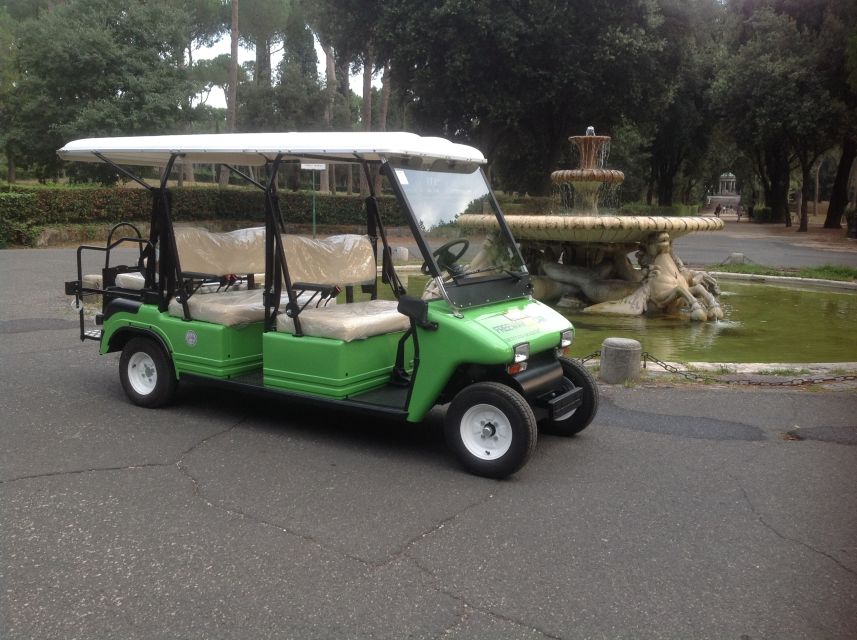
Not every Rome tour gives you that mix of viewpoints. This one includes stops for the Aventino and the Villa Borghese Pincio Balcony, which is one of the best ways to understand Rome’s layout in a few minutes.
If you’re only in Rome for a short visit, viewpoints are the shortcut. They help you see the city’s shape, not just its famous landmarks. They also set you up for better photos, because you’re capturing Rome in context instead of isolated monuments.
The cart makes these stops easier. Instead of stitching together long walks between scattered overlooks, you ride in, look around, and move on. If you’ve ever tried to do this on foot during peak hours, you’ll appreciate the smoother flow.
A few more Rome tours and experiences worth a look

Corso, Condotti, and the Spanish Steps: elegance plus real-world pacing
You also pass through classic shopping and landmark streets: Corso and Condotti, plus the Spanish Steps. This part of the tour works best when you treat it as a guided orientation walk from the cart.
The benefit is timing. You can enjoy the atmosphere and landmark spots while avoiding the full time commitment of walking every step. You still get the iconic sightline experience, but with less fatigue.
One practical note: the Spanish Steps area can be busy. So even if you love wandering, you may want to keep your expectations flexible. The value here is efficiency plus context, not a quiet stroll.
Baroque highlights: Trevi Fountain and Piazza Navona on the route
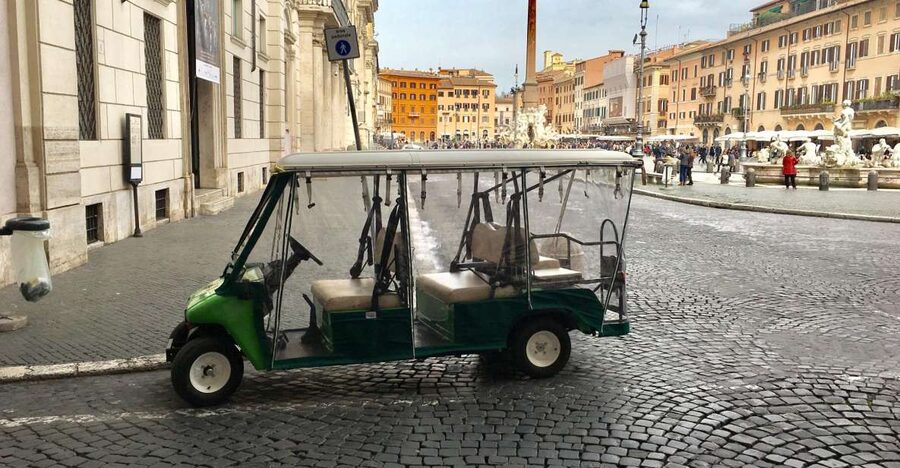
Rome’s Baroque era is where the city feels extra theatrical. This tour includes major Baroque moments, including Trevi Fountain and Navona Square (Piazza Navona).
I like this pairing because it shows different sides of the same style. Trevi is grand and sculptural, and it tends to be visually overwhelming in the best way. Piazza Navona feels lively and human-scaled, with fountains that bring motion to the scene.
You’ll also hear about Bernini’s fountains and sculptures as part of the route. That framing helps you understand the style as more than decoration. It’s part of a bigger idea of Rome as persuasion through art and public space.
Coffee or cappuccino stop: a smart break that keeps the day enjoyable
A tour can feel exhausting if it’s all monuments, all the time. This one balances big sights with a break. You’ll stop for a cup of coffee or cappuccino at an older café tied to the Villa Borghese Gardens area, and the tour also lists cappuccino or ice cream as included.
For most people, this becomes the moment you actually absorb the day. You’re not rushing. You can ask a final question of your guide, review what you saw, and decide what you want to revisit later.
And yes, it can be a mood upgrade. Several guides are mentioned for helping with food choices, and the tour route is built to make the middle feel like an actual pause, not a logistical pit stop.
Guide quality: what the best names teach you to expect
Your guide is the secret ingredient here. Reviews repeatedly mention guides by name, including David, Vittorio, Sa, Alessandro, and Alex/Alexander (SA). The common thread is not just facts. It’s how the guide handles your time and attention.
Here’s what you should look for when you arrive:
- They ask what you want to see, then shape the route to match
- They tell stories that connect to the monuments you’re standing near
- They help with photo angles and pacing when crowds thicken
- They answer questions in real time, not as a lecture you can’t interrupt
That last point matters. A cart tour works when the guide uses the ride for explanations and uses the stops for lived-in moments. When guides are interactive, you leave with a clearer picture of Rome, not just a set of photos.
If your guide recommends a specific place to grab coffee or a meal later, that’s a bonus. One of the best review patterns is that the guide doesn’t just finish the tour, they also help you keep the day going well.
Value and price: is $124.61 per person a good deal?
At $124.61 per person for a 3-hour private or small-group tour, the value comes from two things: time saved and stress reduced.
Time saved is obvious when you think about crossing multiple neighborhoods in Rome. You could do it on foot, but the city layout plus crowds make the walk time unpredictable. The cart keeps your schedule tighter, which is huge if you only have a day.
Stress reduced is less obvious until you try to manage it. Rome has pedestrian-heavy areas, and the most popular sights can feel like a constant squeeze. A golf cart reduces the walking burden, so you can spend your energy on looking and listening instead of endurance.
Now, a fair balance: if you love slow roaming and want to explore on your own, you might feel this tour is focused on highlights. If you want a classic orientation, quick wins, and a guided narrative, it’s a strong use of time.
Who this tour suits best, and who might want a different plan
This is a great match if you:
- Have limited time and want the main sites in one connected route
- Want a lighter walking day, especially if you’re balancing other activities
- Like guided context, especially for the history behind the monuments
- Prefer a private or small-group feel so you can ask questions
It may be less ideal if you:
- Want a long sit-down visit to specific sites
- Plan to spend most of your day in museums or deep interior exploration
- Prefer a totally on-foot, wandering-only style
That said, the cart route still helps you decide what to revisit later. After seeing the big picture, you’ll often know where you want to go back and spend more time.
Quick practical tips before you go
I’d treat this as a tour that optimizes your time, not a replacement for detailed site entry elsewhere. Bring the usual city essentials. Also, keep in mind that you’ll be riding and stopping multiple times, so comfortable shoes still matter, even if you’re walking less overall.
For photo lovers, you’ll likely appreciate when your guide points out picture spots. The route is built around major landmarks plus viewpoint stops, so having a guide help you choose angles can save time and frustration.
Finally, if you want your route to feel personal, start with your priorities. Many guides ask what you’re hoping to see, and that gives you a chance to steer the experience toward what you care about most.
Should you book this Rome Imperial City golf cart tour?
If your goal is to see Rome’s greatest hits in a 3-hour stretch, I’d book it. The combination of top monuments, Baroque stops like Trevi and Piazza Navona, and a café break is a practical way to make your day feel full without feeling wrecked.
The biggest green flag is the guide factor. Names like Sa, Alessandro, David, and Vittorio keep coming up for interaction and story quality, and that is what turns a route into a real experience. If you want structure, pacing, and help with photo angles, this tour fits well.
If you’re the kind of traveler who wants to linger forever in one place, plan other time for that. But for most people trying to cover a lot fast in Rome, this golf cart tour is a smart, enjoyable way to get your bearings and see the city’s most famous scenes.
FAQ
How long is the Rome Imperial City golf cart tour?
The tour lasts 3 hours. Starting times vary, so you’ll need to check availability for the time that fits your schedule.
Is hotel pickup included?
Hotel pickup is optional. If you choose it, you’ll wait in the hotel lobby or outside the entrance.
What are the main sights included on the route?
The tour includes stops at major sites such as the Roman Forum, Colosseum, Circus Maximus, and Pantheon, plus other areas like Villa Borghese Pincio Balcony, Spanish Steps, Trevi Fountain, and Piazza Navona.
Is this tour private or for small groups?
It can be private or small groups, depending on the option you select.
What’s included with the coffee or snack stop?
You get cappuccino or ice cream as part of the tour.
What languages do the live guides speak?
Live tour guides speak Spanish, English, Italian, French, and German.
Where does the tour start and end?
The meeting point is the Freeway-car office at via Ludovisi 60. The tour ends back at the meeting point.
More City Tours in Rome

More Tours in Rome


More Tour Reviews in Rome
Not for you? Here's more nearby things to do in Rome we have reviewed





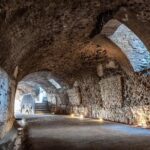


Rome Golf Cart Tours, compared.
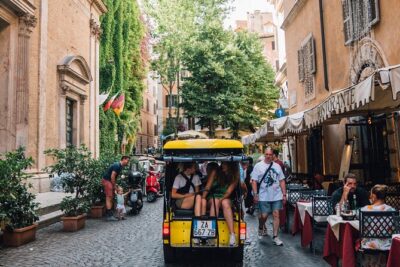 ★ 5.0Golf Cart Small-Group Guided Tour: Rome City HighlightsFrom $104907 reviews
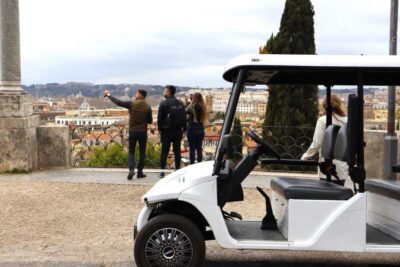 ★ 4.8City Highlights Golf Cart TourFrom $45857 reviews
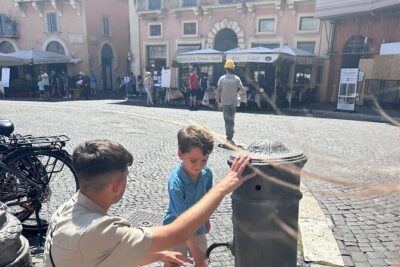 ★ 5.0Private/Group 4 Hours Golf Cart SightseeingTourFrom $168780 reviews
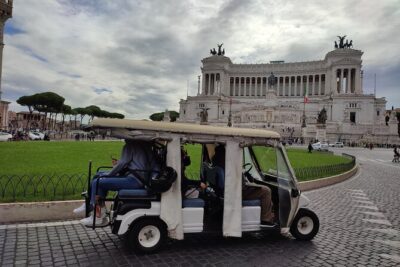 ★ 5.0Explore Rome on a Golf Cart: Private TourFrom $83757 reviews
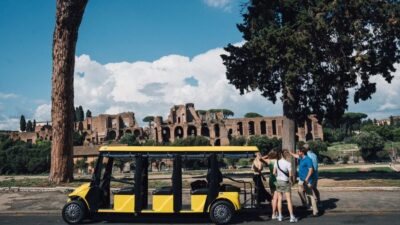 ★ 4.8City Highlights Golf Cart Tour with Local GuideFrom $71752 reviews
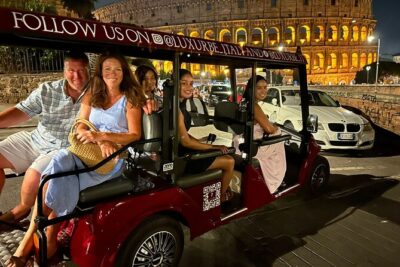 ★ 4.5Rome by Night: Golf Cart TourFrom $108688 reviews
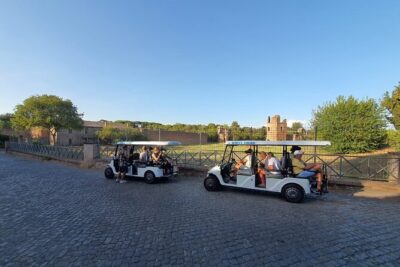 ★ 5.0Rome Catacomb & Appian Way Small-Group Tour by Golf CartFrom $107681 reviews
 ★ 5.0Evening Golf Cart Semi or Private Tour with AperitivoFrom $180672 reviews
Browse the lists this tour appears in