
Reviewed · VATICAN TOURS
Small-Group Pasta Making steps from the Vatican Museums
Rome’s pasta class starts with wine and flour.
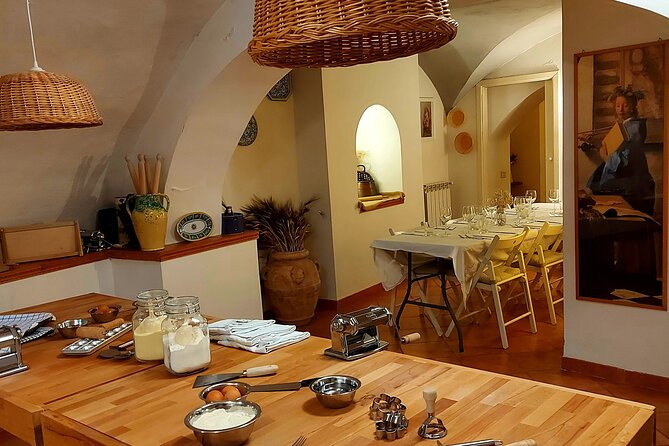
This small-group pasta making experience near the Vatican Museums is a very practical way to taste Roman life, not just read about it. You’ll learn fresh pasta techniques plus classic flavors like Amatriciana, Cacio e Pepe, and Carbonara, all in a kitchen with historical ties near St. Peter’s Basilica and even once connected to the Vatican granary.
Two things I really like: the small group size (max 8) and the fact that you start with sparkling wine and nibbles before you cook. One consideration: based on the class format, you may spend a fair chunk of time watching the host, not every step is guaranteed to be fully hands-on for each person.
Key Highlights You’ll Care About
- Max 8 travelers, so you actually get attention while you work the dough
- Starts with sparkling wine and nibbles, a relaxed way to begin your Roman afternoon
- Lunch or dinner class options, so you can fit it between Vatican time slots
- Roman classics on the menu, including Amatriciana, bruschetta, and dessert
- Kitchen location near St. Peter’s, in a workshop with historical value
Why Pasta Making Works So Well Near the Vatican Museums
Rome is great at turning everyday things into art. Pasta is one of those things. In this class, the food lessons feel tied to the city, not floating above it. You’re steps from St. Peter’s Basilica, and the kitchen itself has an old-world feel, with strong historical value and a connection to when it served as a Vatican granary.
That location matters more than it sounds. If you’re doing the Vatican Museums, you’re already in a part of town where you can feel how Rome layers centuries. A cooking class here gives you a break from crowds and museum fatigue. Instead of trying to force your brain to hold more fresco facts, you get something you can use at home.
English is available, and everything runs as a focused 3-hour experience. That timing is the sweet spot for a first cooking class. Long enough to learn technique, not so long that you lose the thread or your appetite.
You can also read our reviews of more museum experiences in Rome
Romina’s Kitchen: Small-Group Attention in a Cozy Workshop
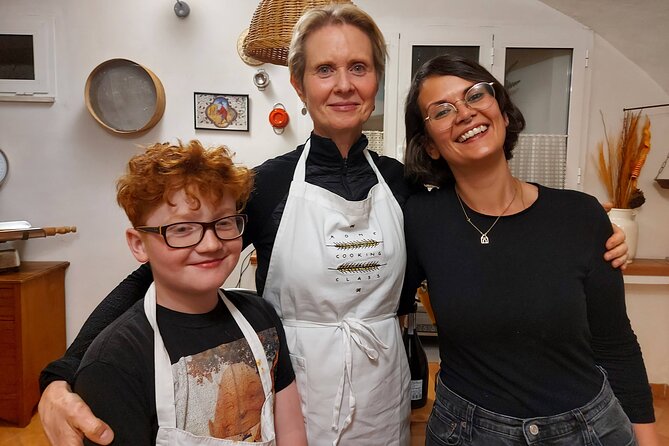
This is a small-group format with a maximum of 8 travelers, and that changes the whole experience. Pasta dough is finicky. If you only get quick glances at the process, you end up second-guessing every step when you’re back home with your own kitchen chaos.
With a group this size, you can ask questions while your hands are still warm and your dough is still cooperative. You also get a host who explains not just what to do, but why it matters in Italian cooking. The class is built around one-on-one guidance plus useful tips and historical context from local chefs.
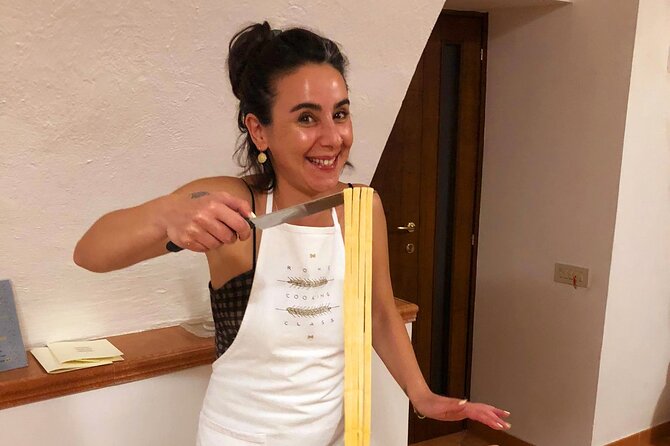
The host you’ll most often hear about is Romina. People consistently describe her as patient, fun, and very good at keeping the atmosphere light while teaching something technical. In practice, that means you’re more likely to feel comfortable making mistakes, which is how real learning happens.
One more practical point: the meeting point is at Borgo Angelico, 00193 Roma, and the activity ends back there. That makes it easier to plan your day if you’re bouncing between Vatican sights and dinner.
From Borgo Angelico to Aprons On: The 3-Hour Flow
Here’s the rhythm you can expect. You start at Borgo Angelico, then you get a warm welcome in a kitchen workshop setting. The first part is sparkling wine and nibbles, which is a clever way to settle everyone in. It also helps if you’re visiting Rome with a mix of cooking comfort levels. Nobody feels like they’ve walked into a test.
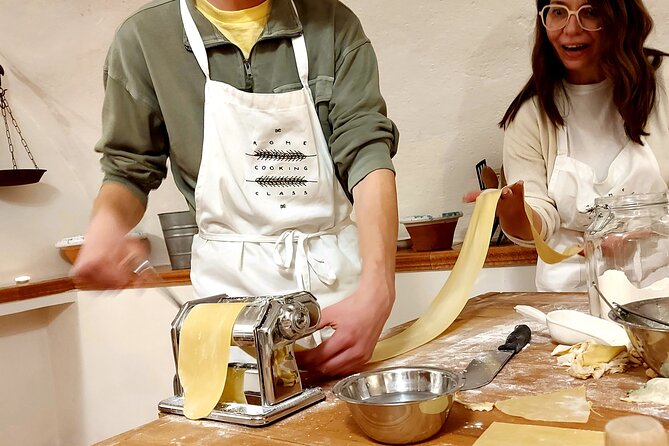
Then it’s aprons on, and the class shifts into hands-on work with fresh pasta. The format is guided, and you’ll get historical and food-culture context as you cook. Expect technique teaching plus practical timing so you can move from dough to finished pasta without losing track.
Finally, you sit down to eat what you made. The lesson wraps up by enjoying your pasta and other prepared items, paired with carefully selected local wine. The tone is friendly and social, not stiff and classroom-only.
If you book the lunch or dinner option, you’re choosing a different mealtime slot, but the core experience stays the same: drink to start, cook together, then eat with wine.
Ravioli and Fettuccine Skills: What You’ll Actually Learn
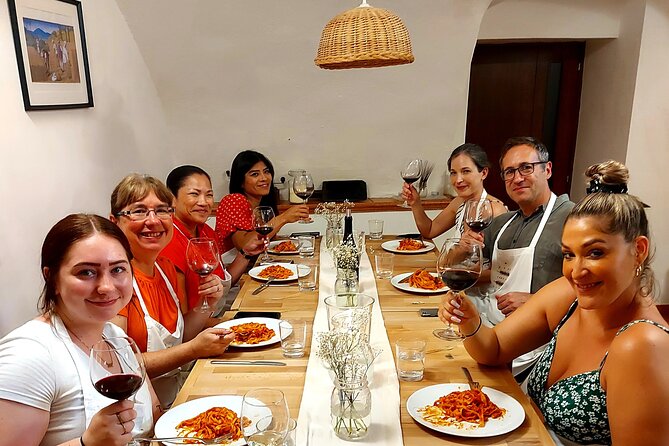
Let’s talk about what you’re here to do, the pasta. The class focuses on making fresh homemade pasta, and you’ll work through techniques that translate to real cooking at home.
In the menu example, you’ll be making:
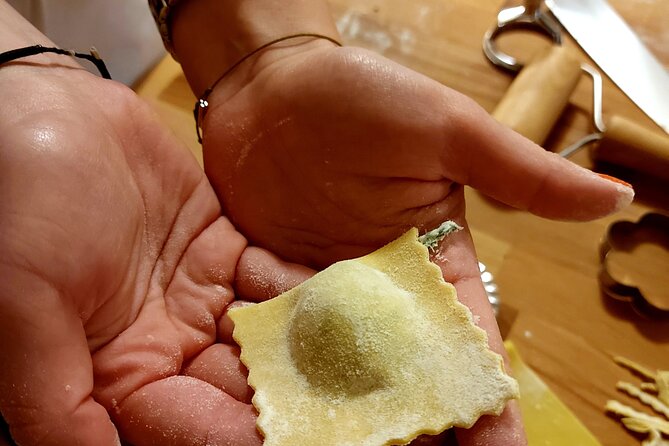
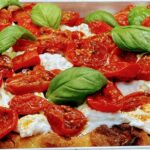
- Green ravioli filled with ricotta, pecorino, and lemon zest, served with fresh cherry tomato sauce and basil
- Homemade fettuccine served with traditional Amatriciana sauce
Now, here’s the honest consideration. One critical note people raise is that the class can feel less hands-on than you might expect for the price. In that style of setup, you may spend time rolling and preparing the pasta while the host handles some parts like sauce cooking. So you might not be doing every single component from scratch step-by-step.
If you want a class where everyone independently makes the sauce, you may want to temper expectations. But if your goal is learning pasta dough, shaping, rolling, and getting comfortable with fresh pasta basics, this class can be a strong first step.
The best way to think about it: you’re not just learning how to eat Italian food, you’re learning how to create pasta from scratch. That’s the core value, and it’s where you’ll feel confident later when you try it again.
Roman Classics on the Menu: Amatriciana, Bruschetta, and More
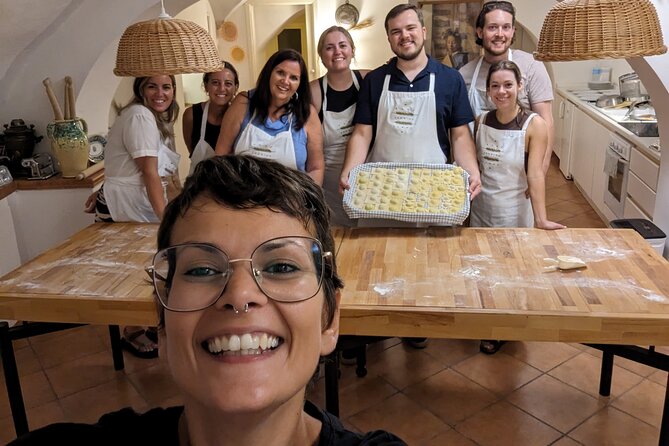
This class is built around traditional Roman flavors, and that’s what makes it more than just a pasta workshop. You get a starter, mains, and dessert, all tied to the same flavor world.
Sample menu includes:
- Starter: bruschetta with cheese, roast peppers, and olives
- Main 1: green ravioli with ricotta, pecorino, and lemon zest, plus cherry tomato sauce and basil
- Main 2: homemade fettuccine with Amatriciana sauce
- Dessert: tiramisù or strawberries and cream
That menu choice is smart for a class experience. Bruschetta is crowd-friendly and approachable. Amatriciana is a Roman staple with big flavor that’s easy to recognize and remember. Dessert gives you a sweet finish that feels like Italy, not a generic end to the meal.
Also, even if the day’s menu focuses on those specific dishes, the class description includes learning about traditional Roman dishes such as Amatriciana, Cacio e Pepe, and Carbonara. So you’ll likely get context on what makes them work, even when your plate is built around the menu items above.
You can also read our reviews of more cooking classes in Rome
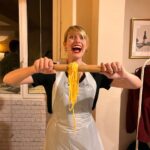
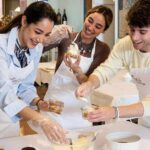
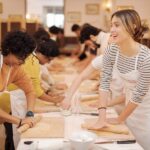

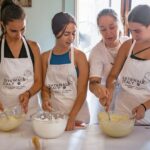
Wine, Nibbles, and the Best Part, Eating Your Work
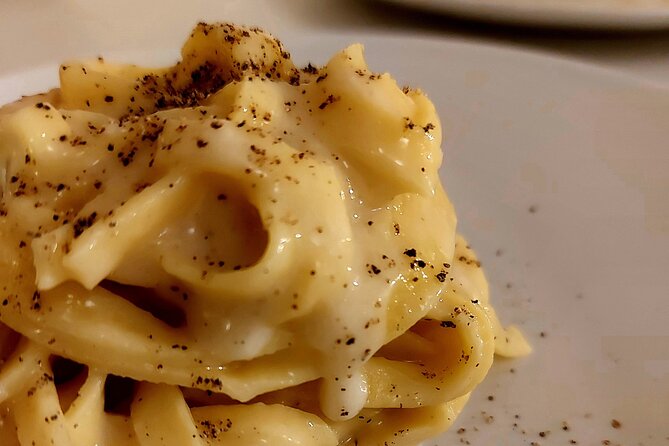
A good cooking class has two jobs: teach you something real, and make you want to repeat it. This one does both.
You start with sparkling wine and nibbles, which sets a relaxed tone. Then you cook, and at the end you eat the results. Getting to eat what you made is not a minor bonus. It’s how you learn. You can taste how the sauce clings to the pasta, how the filling balances, and what changes you’d try next time.
Wine is also part of the wrap-up, paired with your meal. That matters because Italian food is not only technique, it’s the whole rhythm of flavors and enjoyment. In a city that moves fast, sitting down to your meal right after cooking helps you feel like Rome, not a checklist.
And yes, it’s social. People talk about laughs during the class, which I take as a sign the host manages the pace well. Pasta making gets stressful only when nobody is guiding you.
Price and Value at $96.12: When It’s Worth It, When to Reconsider
At $96.12 per person for about 3 hours, you’re paying for three things:
1) Instruction and guidance
2) A guided meal with wine
3) The location and the historical setting near St. Peter’s
For many people, that adds up quickly. You’re not buying ingredients and fumbling your way through a first pasta attempt. You’re learning technique, eating a full menu, and doing it in a small group with attention from the host.
The high rating and strong recommendation rate suggest most people feel they got their money’s worth. People highlight that the kitchen setup is beautiful and the experience feels memorable, especially as a break between Vatican time blocks.
The main value concern is the hands-on level. If you want a class where you personally execute every step of every component, and you expect to fully make the sauces too, you might feel the class is more of an intro format. One critique specifically points to portions of the time being more watching than doing, and to the sauce being handled by the host. In that case, you might still like it, but you’ll want to book with your expectations calibrated.
My practical rule: if your top priority is fresh pasta technique and a great meal in a historic Rome setting, the price looks fair. If your top priority is nonstop hands-on for every part of the menu, consider whether this style matches what you want.
Who This Class Is Best For (And Who Might Not Love It)
This class is a great fit if you want a friendly small-group cooking experience while in Rome, and you like the idea of learning Roman pasta techniques you can actually repeat at home.
It’s especially good for:
- Couples and friends who want a shared activity without a chaotic vibe
- Travelers who want a break from museums but still want something authentic
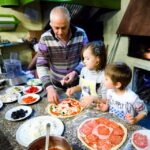
- Families, since the host is described as patient and welcoming, and kids in particular seem to enjoy it when the atmosphere is supportive
It may be less ideal if:
- You have very strong expectations for constant hands-on work for every step, including sauces
- You’re the kind of cook who hates watching more than working, even for a small group
- You need a menu where you make all dishes from scratch rather than participating in core pasta steps
If you’re not sure, read your own motivation. Are you here for pasta fundamentals and a great Roman meal? Or are you here for full production cooking, every minute?
Tips to Get the Most Out of the Experience
A few practical things can make your class day smoother.
First, plan your timing. The location is near major Vatican sights, so pairing a morning or midday Vatican Museums visit with this class can work well. Starting at Borgo Angelico and returning there keeps your day tidy.
Second, wear clothes you don’t mind getting flour on. Even if the kitchen is organized, pasta making is a hands-on process.
Third, come with curiosity. The class is not only about food mechanics. You’ll hear food-culture tips and historical context as you cook. If you listen for those explanations, you’ll understand why Romans season and sauce the way they do.
Finally, if you’re booking for a specific experience level, keep the hands-on note in mind. The format is structured, and some steps may be handled by the host. You can still participate heavily, but you should expect it to be guided rather than fully independent cooking.
Should You Book This Pasta Making Class Near the Vatican?
I’d book it if you want a small-group pasta making experience that feels Roman in both food and setting. The location near St. Peter’s Basilica plus the historical kitchen context make it more memorable than a generic cooking studio. Add the sparkling wine start, the full menu, and the chance to learn fresh pasta basics with a patient host like Romina, and it’s an easy yes for many visitors.
I’d hesitate only if you’re expecting a highly hands-on class where you personally execute every step, including sauces, for every dish. If that’s your priority, you may end up feeling like you did the main pasta steps but watched some of the rest.
If you’re looking for a fun, well-taught way to spend a few hours in Rome that ends with a meal you helped create, this is the kind of experience that can anchor your trip. And if you catch it between Vatican Museums time blocks, it’s a smart reset for both your feet and your appetite.
FAQ
How long is the Small-Group Pasta Making class?
It runs for about 3 hours.
Where is the meeting point?
The class meets at Borgo Angelico, 00193 Roma RM, Italy, and ends back at the meeting point.
What group size should I expect?
The activity has a maximum of 8 travelers.
Is the class offered in English?
Yes, the experience is offered in English.
What does the class include for food and drinks?
You start with sparkling wine and nibbles, you make fresh homemade pasta and Roman dishes, and you end by eating your cuisine with local wine. A sample menu includes bruschetta, green ravioli, homemade fettuccine with Amatriciana, and dessert (tiramisù or strawberries and cream).
Can I choose lunch or dinner?
Yes, you can choose a lunch or dinner class to fit your schedule.
What is the cancellation policy?
You can cancel for a full refund up to 24 hours before the experience’s start time. Free cancellation is available, and changes made less than 24 hours in advance are not accepted.
More Cooking Classes in Rome
More Museum Experiences in Rome
More Tour Reviews in Rome
Not for you? Here's more nearby things to do in Rome we have reviewed


Vatican Tours, compared.
 ★ 4.5Vatican: Museums & Sistine Chapel Entrance TicketFrom $38144,003 reviews
 ★ 4.3Vatican Museums & Sistine Chapel Tour with Optional BasilicaFrom $7967,413 reviews
 ★ 4.5Vatican Museums, Sistine Chapel & St Peter’s Basilica Guided TourFrom $2239,149 reviews
 ★ 4.3Vatican Museums, Sistine Chapel & Basilica TourFrom $13013,872 reviews
 ★ 4.4Vatican Museums & Sistine Chapel Skip-the-Line Entry TicketFrom $4313,838 reviews
★ 4.7Vatican Museums, Sistine Chapel & Basilica TourFrom $7213,217 reviews
★ 4.4Vatican Museums & Sistine Chapel Skip-the-Line Entry TicketFrom $4313,838 reviews
★ 4.7Vatican Museums, Sistine Chapel & Basilica TourFrom $7213,217 reviews
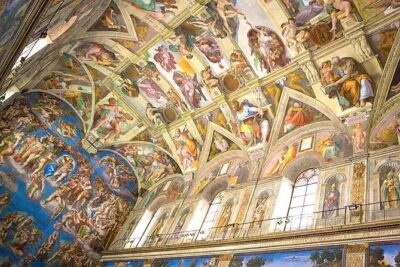 ★ 4.5Skip-the-Line Group Tour of the Vatican, Sistine Chapel & St. Peter’s BasilicaFrom $3012,779 reviews
Vatican Museums & Sistine Chapel Guided TourFrom $11812,117 reviews
★ 4.5Skip-the-Line Group Tour of the Vatican, Sistine Chapel & St. Peter’s BasilicaFrom $3012,779 reviews
Vatican Museums & Sistine Chapel Guided TourFrom $11812,117 reviews
Browse the lists this tour appears in