
Reviewed · ROME
Rome: Experience the Magic of Castel Sant’Angelo
Rome’s skyline gets a history lesson. Castel Sant’Angelo is more than a stop, it is a layered story you walk through, from Emperor Hadrian’s mausoleum to a papal fortress. If you like your Rome with both views and meaning, Angel’s Terrace is the payoff.
Two things I like here. First, you get pre-reserved priority tickets, so your time in front of the castle stays shorter. Second, the optional audioguide app helps you make sense of big spaces, from the Papal Rooms to the Hall connected to Hadrian.
One consideration: this is self-paced. You will control the tempo, but you also need to drive your own experience with the app, your attention, and comfortable shoes for stair-heavy areas.
Key highlights you will feel right away

- Priority entry that helps you start without the usual time squeeze
- Papal Rooms that show how the fortress functioned beyond a single era
- Spiral Staircase that makes the castle feel like a living, vertical journey
- Hall of Emperor Hadrian’s Ashes tied to the site’s original purpose
- Angel’s Terrace for panoramic Rome views from above the river area
- Audioguide app in 6 languages (English, Spanish, French, Italian, German, Chinese)
Castel Sant’Angelo: A fortress that keeps changing jobs
Castel Sant’Angelo is the kind of Roman site where the building does the storytelling. It started as Emperor Hadrian’s mausoleum, then shifted into a papal fortress, prison, and refuge for popes. That role change matters because it changes how you should read the rooms, not just what you should photograph.
You also get a detail that really brings the place to life: it was connected to the Vatican by a secret passage. Even if you are just learning about it from the audioguide, that one fact reframes the castle. This was not a random military structure, it was part of how Rome’s power system moved people and information when it needed to.
When you visit at your own pace, you can slow down where you care most. I like that you can spend extra time on the fortress feel and then speed through the parts that are more about layout.
You can also read our reviews of more tours and experiences in Rome.


Priority tickets and a realistic 2-hour visit
At about $39 per person, the value hinges on one thing: you are paying for pre-reserved priority tickets plus a structured experience window. The duration is 2 hours, which is just enough time to see the main highlights without turning your day into a forced march.
Because this is not sold as a long guided tour, it works best if you can handle a “see it, then understand it” rhythm. If you want a live guide to explain everything with a big narrative, this format may not be what you want. The good news is that the audioguide app can still give you the historical spine, if you use it.
You should also plan for the fact that the castle is vertically interesting. Expect stairs, and expect that going up and down will shape your pacing more than the clock will.
Papal Rooms: Where the story moves indoors

One of the top draws is the chance to see the Papal Rooms. These rooms help you understand the castle after it became part of papal life and security, not just an imperial monument. Standing in these spaces, you can feel the shift from Rome’s ancient emperor identity to the church’s fortified presence.
What I suggest is simple. Look for how the rooms connect visually and physically. Even without a live guide, you can notice patterns in layout that suggest function, storage, control points, or ceremonial use. The Papal Rooms section becomes more meaningful when you treat it like a “how did they use this” puzzle.
If you choose the audioguide, use it actively here. Turn it on, listen while you stand still, and only move when you feel like you have the gist of what you are looking at. Audio works best when it matches where your eyes are, not when you are rushing ahead.
Spiral Staircase: The vertical route you will remember
The Spiral Staircase is one of those classic Rome features that changes the whole vibe. It is not just movement, it is a way the castle controls your view and your pace. As you climb, you get repeated glimpses and a sense that the building was designed to move people through layers of defense and access.
Practical tip: plan your photo timing. If you stop everywhere, you will end up tired faster than you expect. Instead, pick a couple of moments where the angle will actually help your photo and then keep going.
Also, because this is self-paced, you control your speed. That can be great if you want quiet moments, but it can also be a drawback if you feel anxious about managing your time. If you tend to wander, keep an eye on the 2-hour window so you do not reach the terrace too late.
Hall of Emperor Hadrian’s Ashes: The original purpose hits differently

The Hall of Emperor Hadrian’s Ashes is where the building’s beginning becomes concrete. Even if you already know Hadrian’s name, being in a space tied to his remains gives the site a gravity that is hard to fake.
This is also a good area to slow down and listen carefully. The audioguide can help you connect the castle’s later fortress and papal roles back to its origin as a mausoleum. When the timeline clicks, the place feels less like “one more big building” and more like a single structure that kept being repurposed.
If you are sensitive to crowd flow, keep in mind that people will naturally gather where the space is most dramatic. You can avoid frustration by letting others pass at your own pace, then taking your time after the initial bottleneck.

Angel’s Terrace: The 360 views that justify the climb
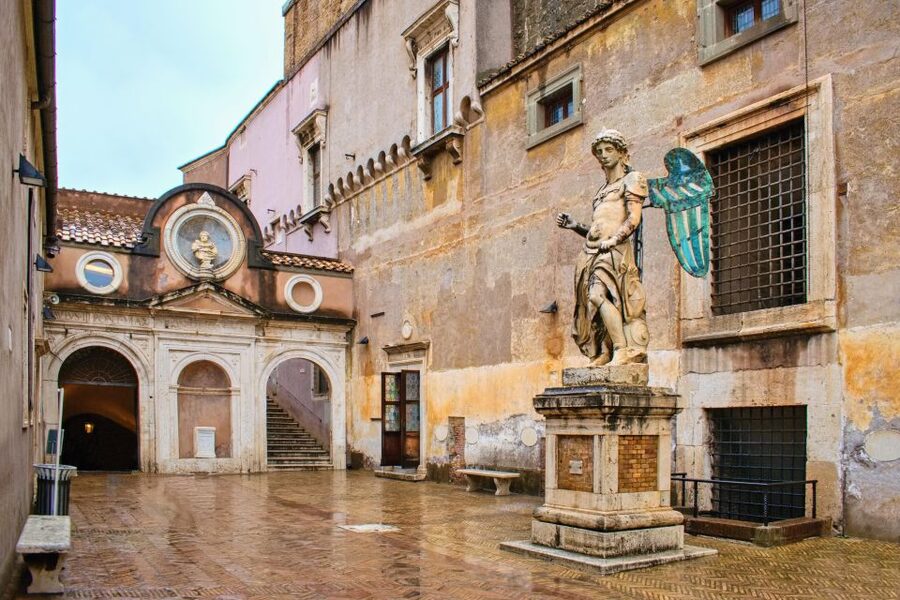
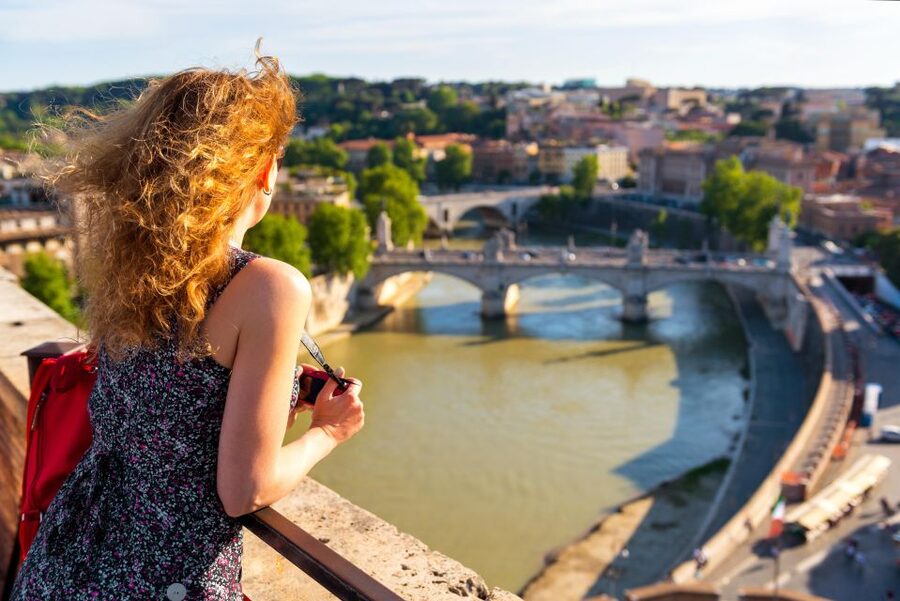
The reason most people make the trip is the Angel’s Terrace, with 360-degree views of Rome. I treat this as the moment to pause and reset your brain. From above, Rome’s shape becomes easier to understand, and you can connect what you saw at street level to what is spread out around the river area.
This is also where you get the best payoff for having visited the interior first. If you go up for the views without understanding the building, you will still enjoy the skyline, but you might miss the drama of how the castle’s position made it useful to whoever controlled it.
Give yourself a few minutes here with no phone in your hand. Not forever, just long enough to actually look. The views are the kind that feel better when you stop trying to capture everything.
The optional audioguide app: use it like a tool, not background noise
The audioguide is an app you access on your smartphone, and it comes with your own headphones. You will need a smartphone, and the system works without Wi-Fi after you download it.
Before you start, download the audioguide where you have Wi-Fi. This matters because you do not want your phone to stall right when you hit a key room. Once it is downloaded, it should work even when you are moving around.
Language options include English, Spanish, French, Italian, German, Chinese. If you pick your language and then switch to listening as you walk, you will get a cleaner experience. The audio works best when you pair it with a mental note of where you are standing and what feature you are looking at, like the terrace or the main interior rooms.
One more honest note. If you prefer a high-level narrative that ties everything together in one story, the app may feel more room-by-room than big-picture. That is not wrong, it is just a style choice. If you want a more interpretive experience, consider spending extra time letting the audio build your timeline rather than rushing through multiple stops.
Tickets, names, and ID checks: the part that can ruin your day
This experience uses nominative tickets, meaning the entrance purchase depends on the full names you provide. You need to include all participants’ full names, and each traveler must show a valid ID that matches the booking name.
Plan for this early. Double-check your spelling before you travel. It sounds boring, but it is the difference between a smooth entry and a stressful delay.
You also receive your entrance tickets and audioguide (if you selected it) in advance by SMS, email, or WhatsApp. That is helpful when it works, but it also means you should provide accurate contact information. One disappointment case involved not receiving the service after repeated contact attempts, so I recommend you treat delivery as part of your prep and not an afterthought.
If you want to keep the day calm, do two things when the message arrives. First, save the ticket details on your phone. Second, check you can access the audioguide link or download instructions before you head to the castle.
What I’d pack and what you can’t bring
Bring a passport or ID card. That is required for entry because your name on the ticket must match your ID.
For what you cannot bring, the list is clear and strict. No pets, no weapons or sharp objects, no baby strollers, and no luggage or large bags. You also should not bring alcohol and drugs.
That impacts real people. If you are traveling with a stroller or a bulky day bag, you will need a plan for storage that fits your overall Rome travel style. Keep your load light so you do not waste time worrying about what will be refused at the entrance.
Who this is best for, and who should think twice
This experience is a strong match if you want a classic Rome landmark with flexibility. I like it for couples, solo travelers, and families who can handle stairs and enjoy reading or listening at their own pace. The 2-hour timing is also a good fit if you already have Vatican sights on your schedule, since Castel Sant’Angelo sits right near that zone and is connected to it by the historical secret passage story.
If you hate self-paced attractions, or you want a human guide to manage the flow and explain in depth, you may feel unsatisfied. The format here is access plus audio support, not a live lecture.
It is also smart if you like a tidy set of must-sees rather than a half-day maze. You are focused on Papal Rooms, the spiral staircase, the hall tied to Hadrian’s ashes, and the Angel’s Terrace views. That makes planning easier and helps you feel like you finished something, not just wandered.
Price, value, and how to get your money’s worth
The pricing is straightforward: $39 per person for priority entry, plus the audioguide app if you select that option. I think this is good value because priority tickets save time, and time is one of the few things you cannot buy back in Rome.
To stretch the value, do not treat the audioguide as optional decoration. Use it at key points, especially in the Papal Rooms and near the Hall of Emperor Hadrian’s Ashes, so the castle’s timeline becomes clear.
Also, do not underestimate the terrace payoff. Many places in Rome give you views, but here the view is part of the castle’s whole reason for being. If you skip the terrace because you feel rushed, you lose the best “why this building matters” moment.
If you want maximum payoff, plan a calm start. When you arrive without stress, you actually enjoy the climb and you get to the terrace with energy.
Should you book this Castel Sant’Angelo experience?
I would book it if you want priority entry, a 2-hour self-paced format, and the option of an audioguide app in your preferred language. It is a practical way to see major highlights, including the Papal Rooms and Hadrian-linked spaces, and end with the 360-degree view from Angel’s Terrace.
I would think twice if you need a live guide to connect the dots for you, or if you strongly prefer a big-picture narrative instead of room-by-room audio. Also, if you do not like tech, plan to download the audioguide ahead of time and bring headphones.
Overall, for most visitors aiming to hit Vatican-area sights efficiently while still feeling the castle’s story, this is a solid choice.
FAQ
How long does the Castel Sant’Angelo visit take?
The experience is scheduled for 2 hours. You can check starting times based on availability.
What is included in the ticket price?
You get pre-reserved priority tickets. If you select the audioguide option, you also get the audioguide app.
Do I need a live guide?
No. The included experience does not include a live guide.
What languages are available for the audioguide?
The audioguide app is available in English, Spanish, French, Italian, German, and Chinese.
What do I need to use the audioguide app?
You need a smartphone and your own headphones. If you choose the audio option, download it before you start where you have Wi-Fi.
What identification do I need for entry?
Bring a passport or ID card, and make sure it matches the booking name on the nominative ticket.