
Reviewed · COOKING CLASSES
Walking tour in the Heart of Rome and a Cooking Class in a Very Small Group
Rome tastes better with a pasta lesson. This very small-group experience pairs a guided walk through Rome’s historic center with a hands-on fresh pasta cooking class at a local restaurant. I love that you’re not choosing between sightseeing and food, and I love the pace, because the group size caps at 8 travelers for real interaction instead of standing in a crowd.
You’ll also get a full meal built around what you make, including an appetizer, a pasta dish, and dessert, plus recipes you can take home. The main drawback to consider is that the walking portion moves quickly, with short stops at each landmark, so you won’t get long time to linger like you might on your own.
Key things I’d circle before you book
- Max 8 travelers: easier questions, better photo stops, and calmer pacing.
- A stop-by-stop landmark route: Piazza Barberini, Spanish Steps, Trevi, Pantheon, and Piazza Navona.
- Hands-on pasta lesson in a local restaurant: you make pasta from scratch, not just watch.
- A meal that matches the lesson: appetizer, pasta, and dessert tied to what you learned.
- Recipes provided for all dishes: you get the instructions you need to recreate it later.
- English-led experience with a mobile ticket: easy to plan around and convenient on the day.
Rome in One Afternoon: Walking Sights Then Making Fresh Pasta
This tour is a smart fit if you’re the type who wants two kinds of value from a Rome day. You get the city’s big-name sights in a focused route, then you switch gears and learn practical pasta skills in a real restaurant kitchen. It’s also the kind of plan that helps you fill a schedule when you don’t have a lot of time, but you still want something beyond a quick photo lap.
The “small group” part matters more than you might think. Rome’s center is crowded, and when a tour group is capped at 8, the guide can actually slow down when people have questions, and you can move in a tighter line. That makes the whole experience feel less like logistics and more like a guided stroll with a chef’s lesson at the end.
At 4 hours (approx.) and $142.98 per person, the price isn’t only for history talk. You’re paying for a guided route, a hands-on cooking class, and a meal that lines up with the dishes you prepare. One extra plus: the stops are admission ticket free, so you’re not stacking add-on entry fees onto the day.
You can also read our reviews of more walking tours in Rome

The Small-Group Advantage at Max 8
If you like your guides to notice what you’re interested in, this is the setup. With up to 8 travelers, it’s easier to hear directions, easier to ask questions about architecture or Roman life, and easier to keep the group together at busy intersections.
The reviews give you a clue about the teaching style, too. Guides such as Sara and Nina come up as standout personalities, with praise for being patient and making the experience feel one-of-a-kind. In the cooking session, Chef Paula is named as the person guiding the hands-on part, and at least one group had translation support during the class, which is useful if your comfort level with Italian cooking terms is still building.
Just keep expectations realistic. This is not a museum-depth tour where you stop for long reads at one site. The walk is paced to cover several landmarks, then you get your time in the restaurant kitchen.
The Walk Through Rome: From Piazza Barberini to Piazza Navona
The day starts at Piazza Barberini and ends near Piazza della Rotonda (close to the Pantheon). The walking portion reaches near Piazza Navona, and then the experience continues at a local restaurant where you make your pasta.
Because it’s designed as a route, you’ll spend part of the experience moving from stop to stop. That’s part of the value, honestly: you get a “greatest hits” walk without having to plan the order yourself. It’s also offered in English, and it runs in a time window that usually works well for first-time visitors who want a guided foundation.
Two practical details help you enjoy the day more:
- Wear comfortable shoes, because you’ll be on your feet for a city walk and then working in a restaurant setting.
- If you’re the type who likes photos, keep your phone charged and ready, because you’ll get short photo moments at key sights.
Stop by Stop: What Makes Each Landmark Worth Your Time
This tour’s strength is how it links the walking sights to what you’ll be learning later, through food and culture. Each stop is short, so the guide’s job is to pick the most useful context.
Piazza Barberini, the opening orientation
You begin with a brief introduction at Piazza Barberini. This is where you get the tone of the walk and the surrounding context, so you’re not just wandering from one famous spot to another. It’s a quick start, and the payoff is that you’ll know what to look for as you move.
You can also read our reviews of more cooking classes in Rome


Spanish Steps, history plus street-level curiosities
From the meeting point area, you head toward the Spanish Steps. The guide explains the history and curiosities of the Spanish Steps, the square, and the nearby surroundings. It’s a good stop for people who like more than postcard facts, but it’s also fast enough that you still have momentum for the rest of the route.
If you’re trying to decide whether you need this stop, here’s the practical angle: it’s one of Rome’s easiest landmarks to recognize instantly, and getting the context makes it more than a photo backdrop.
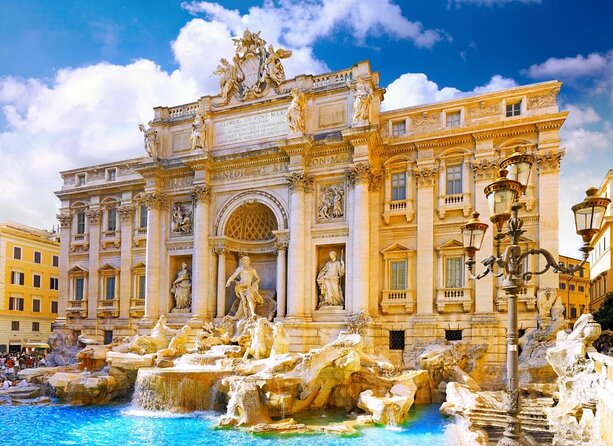
Trevi Fountain, the ancient aqueduct story and time to wander
Next comes the Fontana di Trevi. On the way, you pass the ruins of an ancient aqueduct, then you reach the fountain itself. After the historical explanation, you get some time to wander, take photos, and throw coins in the fountain.
That last piece matters for many people, because a guided tour can sometimes feel like a sprint. Here, you get a short window to enjoy it at your own speed. If you want to do the coin moment, I’d bring a few small coins, just in case you like participating.
Piazza Di Pietra, Hadrian’s temple context
At Piazza Di Pietra, the guide explains the square and Hadrian’s temple. This stop is brief, but it’s useful because you’re learning what you’re actually looking at when you see the temple elements nearby. Even if you only catch the highlights, you’ll come away with a clearer mental map of what Rome built and why.
Chiesa di Santa Maria Sopra Minerva, Bernini’s elephant
You’ll stop at the Chiesa di Santa Maria Sopra Minerva, where you hear about Bernini’s elephant and the square around it. This is one of those Roman details that can be easy to miss if you’re just scanning for the headline monuments. It also tends to be memorable because it’s oddly specific, and the guide turns that peculiarity into something you’ll remember.
Pantheon, why it influenced Renaissance masters
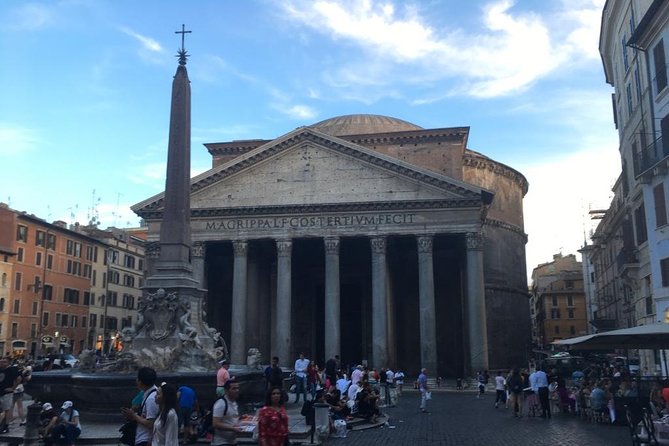
The next major stop is the Pantheon. The guide covers historical facts about the site that inspired many Renaissance masters. This is likely the emotional peak of the walking route, because the Pantheon is one of those buildings that feels important the moment you see it, even if you don’t know why yet.
You get about 15 minutes here, which is enough time to understand the basic context and still look around. If you love taking time with architecture, you may want to return later on your own for longer exploring.
Piazza Navona, one of Rome’s most beautiful squares
The walk finishes with Piazza Navona, where the guide provides historical explanation of the square. Then you head for the restaurant where the cooking class happens. Even though this is a short stop, it’s a satisfying closing note, since Piazza Navona is already a feast for your eyes.
The Cooking Class: Fresh Pasta From Scratch With Chef Paula
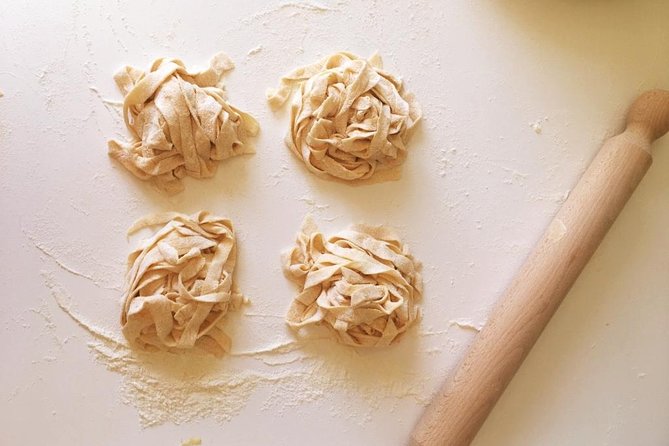
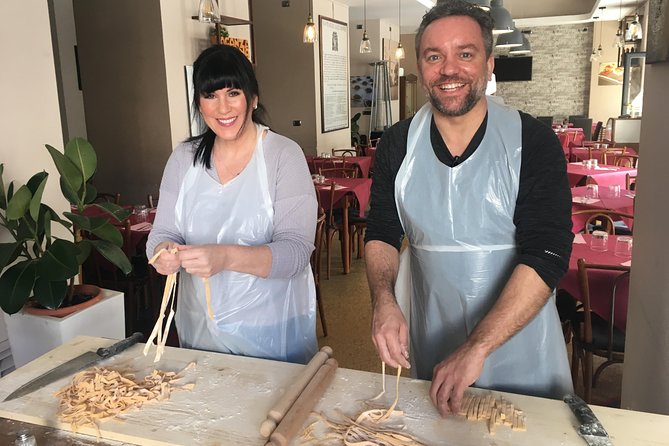
Now for the part you’ll probably remember most on a return trip home: the cooking. After the walk near Piazza Navona, you shift into a local restaurant setting for a hands-on class where you learn fresh pasta techniques.
The big promise here is that it’s not a demo. You’ll make your own pasta from scratch, and you’ll take part in a meal that includes:
- an appetizer
- a pasta dish
- a dessert
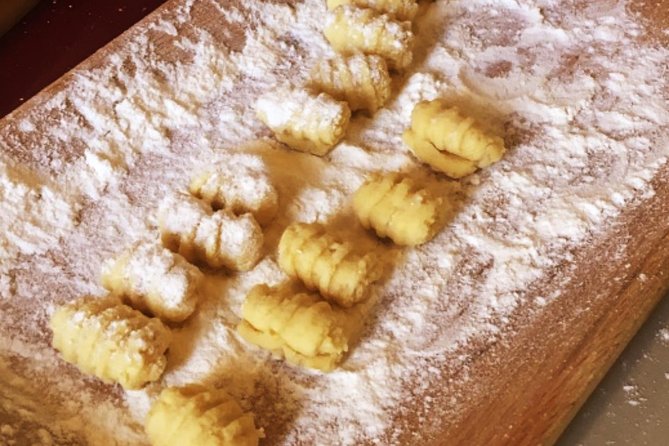
In one of the reviews, specific dishes and tasks are mentioned, which helps you picture what the lesson might include. That group worked on artichokes, learned to mix and roll gnocchi, and made ciabelline, a crunchy licorice-flavored cookie. Your exact lineup can vary, but the structure is the same: you learn several parts of the meal and then eat what you made.
What you get at the end
You don’t just leave with full bellies. You also get recipes for all the dishes you prepared. That’s a real value item, because the difference between a good cooking class and a forgettable one is whether you can recreate the results.
The guiding tone matters too. Reviews highlight hosts and instructors like Sara and guides like Nina as supportive, fun, and focused on teaching. When Chef Paula leads the class, it feels like you’re getting professional instruction, not a scripted performance.
Timing, Comfort, and How to Prepare Like a Pro
With 4 hours (approx.), you’ll be moving between sights and then into the kitchen. That means the day works best if you treat it like one connected plan, not like three separate activities.
A few things to get right before you go:
- Go in with an appetite, because the lesson includes tasting and eating the dishes.
- Expect hands-on work. If rolling pasta or shaping gnocchi sounds fun to you, this class will feel like play with practical skills.
- Plan for the walking portion to be quick at each landmark. You’re covering several places, so don’t expect long museum-style stops.
If you’re worried about food allergies or special diets, the only safe move is to check with the provider ahead of time. The data here confirms the meal components and recipes, but it does not list dietary substitutions.
Price and Value: Is $142.98 a Good Deal?
Let’s look at what you’re paying for beyond the headline number.
For $142.98 per person, you get:
- a guide with extensive knowledge of Roman history and cuisine
- a walking route through major sites in the historic center
- a cooking class in a local restaurant
- an appetizer, a pasta dish, and dessert built around what you learn
- recipes for the dishes you prepared
- a mobile ticket
- English language delivery
- a small group size of up to 8
The value logic is simple: in many Rome experiences, you pay for either sightseeing or food. Here you get both, and the food portion includes meal time plus take-home recipes. If you were trying to recreate this on your own, you’d spend time on planning the route, then pay for a class, then pay for dinner. This packages it all into one afternoon.
Who This Tour Fits Best
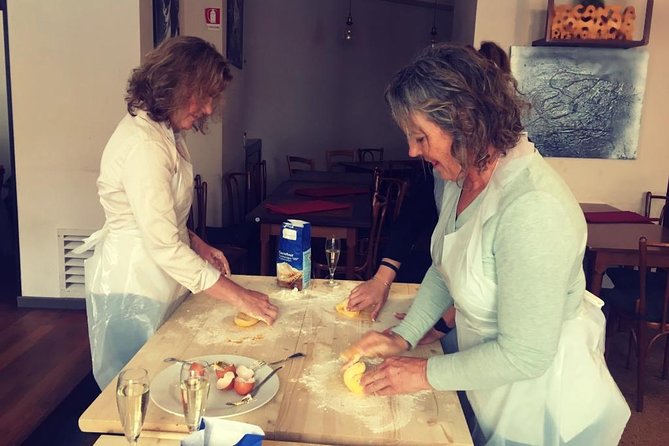
This experience is ideal if you’re:
- short on time in Rome and want a guided overview of major landmarks
- food-focused, with interest in making fresh pasta rather than just eating it
- the kind of person who enjoys learning in small groups, where you can ask questions
- traveling with family, since at least one group highlighted the experience as enjoyable for the entire family
If you’re more of a slow traveler who wants to linger at one or two sites for a long time, you might find the walking portion a bit brisk. In that case, you’d pair this with a separate, self-guided return to the Pantheon area for extra time.
Should You Book This Rome Walk and Pasta Class?
I think this is a strong booking choice if you want an afternoon that feels like two good days stitched together. The walk gives you a clean, guided route through iconic spots like the Spanish Steps, Trevi Fountain, and the Pantheon. The cooking class ends the day with something practical and memorable, especially if you enjoy hands-on instruction from people like Chef Paula, supported by guides such as Sara or Nina.
Before you book, just sanity-check your goals. If you want deep time in each landmark, this route will feel too efficient. But if you want the best mix of Rome sightseeing plus real pasta skills, this one fits the bill.
If you’re excited by the idea of shaping gnocchi, learning from a local instructor, and taking recipes home, book it and treat it as your food-and-history anchor day.
FAQ
How long is the walking tour and cooking class?
It lasts about 4 hours.
Where does the tour start and end?
The tour starts at Piazza Barberini and ends close to Piazza della Rotonda, near the Pantheon.
How many people are in the group?
The maximum group size is 8 travelers.
Is the tour offered in English?
Yes, the experience is offered in English.
What is included in the cooking class meal?
You’ll enjoy an appetizer, a pasta dish, and dessert, and you’ll receive recipes for all the dishes you prepared.
Do we need tickets to enter the listed stops?
The information provided lists admission ticket free for each stop.
Is there a cancellation option if plans change?
Yes, you can cancel for a full refund up to 24 hours in advance. If you cancel less than 24 hours before the experience starts, the amount paid is not refunded.
More Walking Tours in Rome


More Tours in Rome






More Tour Reviews in Rome

Not for you? Here's more nearby things to do in Rome we have reviewed












Cooking Classes, compared.
 ★ 4.9Pasta Making Class with Wine, Limoncello, and DessertFrom $483,177 reviews
 ★ 4.93-in-1 Fettuccine, Ravioli, and Tiramisu Cooking ClassFrom $812,704 reviews
 ★ 4.8Fettuccine Pasta Cooking Class in Rome’s City CenterFrom $462,414 reviews
 ★ 5.0Traditional Pasta with Cocktails Cooking ClassFrom $1002,374 reviews
 ★ 4.8Fettuccine and Tiramisu Cooking Class with WineFrom $672,013 reviews
 ★ 4.8Pasta & Tiramisu Cooking Class near the Spanish StepsFrom $581,395 reviews
 ★ 4.7Traditional Pizza Cooking Class near Piazza NavonaFrom $461,241 reviews
 ★ 4.9Pasta Making with Wine Tasting and Dinner in FrascatiFrom $35979 reviews
Browse the lists this tour appears in