
Reviewed · COLOSSEUM TOURS
VIP Colosseum, Roman Forum & Palatine Hill & Special Access Sites
Three stops. One efficient ancient Rome day. This VIP-style walk stitches together the Roman Forum, Palatine Hill Super Sites, and the Colosseum so you can see more without wasting time in the worst bottlenecks. I especially like the way the guide turns the ruins into a story, with names and context you can actually hold onto, like Augustus and the political job the Colosseum did for the empire. And I like the human touch too, since this route often runs with top guides such as Luigi, Guido, Paula, Marco, and Mariela.
One heads-up, though: it’s a walking tour with a lot of steps, and the schedule can feel brisk. If you have mobility limits or you tire quickly standing and climbing, plan smart or consider a less active option.
Fast facts before you go
- Super Sites on Palatine Hill are the main draw, with rarely available areas such as the House of Augustus, Santa Maria Antiqua, or the Domus Tiberiana depending on what’s open.
- Reserved Colosseum entry helps you skip the worst line chaos, and the tour keeps you moving between key viewpoints.
- First and second tiers at the Colosseum are built into the plan, with guiding that explains what you’re seeing rather than just pointing.
- Small group size (max 16) gives you a better shot at asking questions and hearing details.
- A tight loop starts at Via delle Terme di Tito 72 and ends at Piazza del Colosseo 1, so you can day-trip without a long backtrack.
The VIP route that actually saves you time
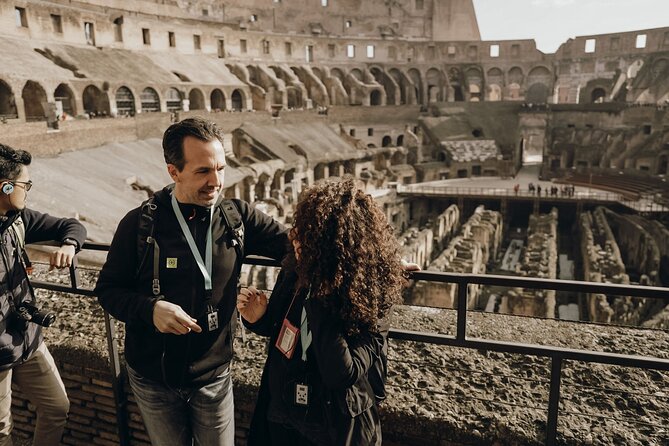
Rome’s ancient sites can feel like a choose-your-own-adventure made of lines, stairs, and crowds. This tour is designed to cut through that. You’re not just buying tickets, you’re buying a guided path plus reservations that help you get in and out with less wandering.
The big value is how the timing connects the three locations. The Roman Forum sets the political and social stage. Palatine Hill brings you into elite and imperial spaces, including areas with special access. Then you finish at the Colosseum, where all that power becomes theater, literally.
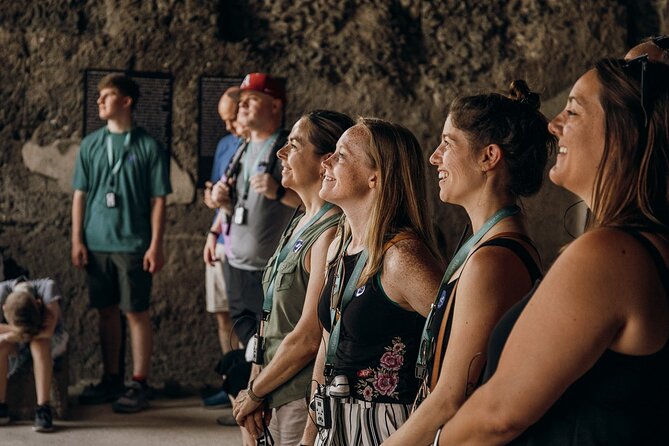
Also, it’s limited to up to 16 people, so it doesn’t turn into a moving wall of hats. That small-group feel shows up in the way guides can answer questions on the spot, instead of racing past them.
A few more Rome tours and experiences worth a look
Price and value: what your $139 really covers
At $139.13 per person for about 3 hours 30 minutes, it’s not a budget tour. But the pricing makes sense when you look at what’s included.
You get a local English-speaking guide, a guided walking tour, plus Colosseum admission (valued at €18) and a Colosseum reservation fee (valued at €2). The remaining cost covers the guided experience, the reservation handling, and the “VIP” part of the route, especially the Palatine Hill Super Sites access, which typically is not something you can easily recreate on your own.
If you tried to DIY this day, you’d still need tickets, you’d still face timed entry rules, and you’d probably lose time figuring out what to see first. This tour trades that mental workload for structure and expert guidance.
Roman Forum: where “daily life” turns into real places
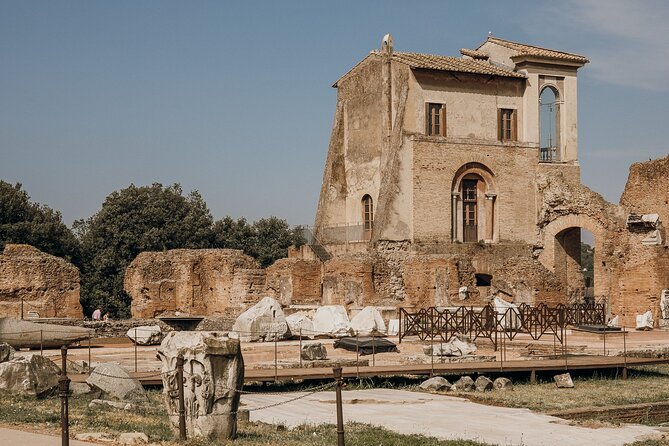
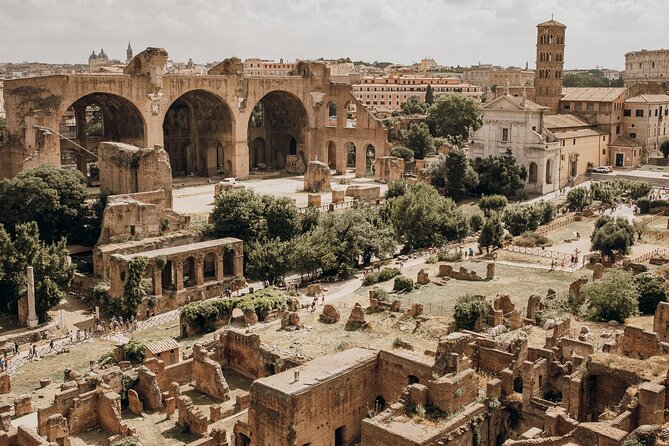
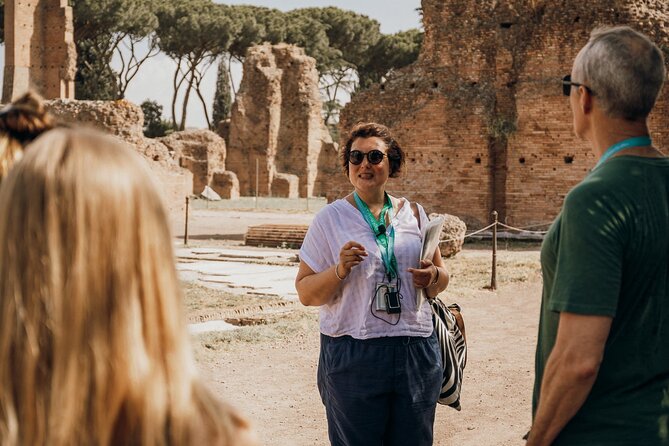
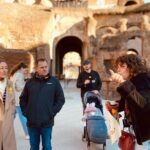
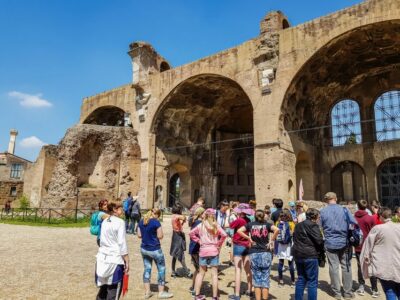
The Roman Forum stop is where the tour starts feeling like you’re stepping into a living city, not just a photo wall. Your guide leads you along key ruin areas while explaining how the space functioned in everyday Roman life and in power politics.
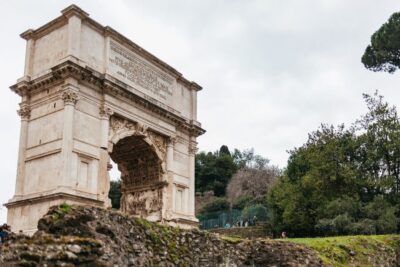
Here’s what I’d call the Forum magic: it’s layered. You see streets and arches, but the guide connects those surfaces to people you recognize from Roman stories. You’ll hear references tied to major figures like Julius Caesar and Mark Antony, and that matters because the Forum can otherwise blur together into “old rocks.”
Practical tip: wear shoes you can trust. Even when the walking is “moderate,” the Forum is uneven and full of small climbs and descents. If your feet are happy, your brain can enjoy the details instead of counting steps.
Palatine Hill Super Sites: the rare access that changes the whole day
Palatine Hill is often on the “yes, I’ll see it” list, but most visits skim the surface. This is the stop that makes this tour feel different.
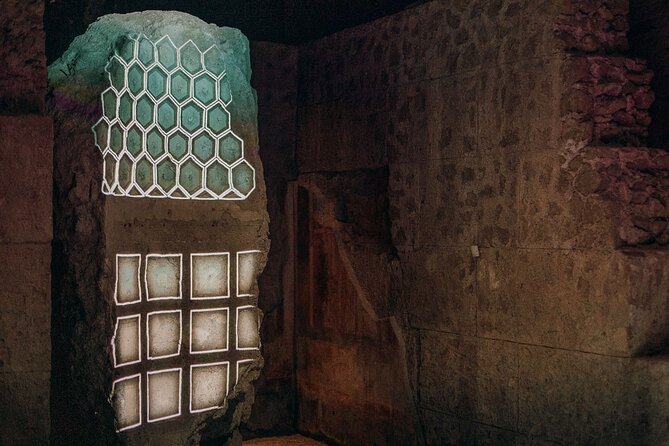
You’ll head into the Super Sites collection, areas of exquisitely preserved ancient spaces that are usually closed off to casual visitors. The exact sites vary by what’s open on your day, but you might see one of these standout options:
- House of Augustus, linked to the life of Rome’s first emperor’s family line and known for vivid frescoes
- Santa Maria Antiqua, an unusual snapshot of early Christian art and architecture set inside an older world
- Domus Tiberiana, associated with an imperial palace from the first century AD
What makes this worthwhile is contrast. The Forum gives you the public sphere, Palatine gives you the elite sphere. That shift helps you understand how power worked in Rome, not just what it looked like.
Small caution: because these sites depend on opening conditions, don’t plan your “must-see” list around one specific room. You can still walk away satisfied, but the day-of access can change.
Colosseum first and second tiers: the politics of games
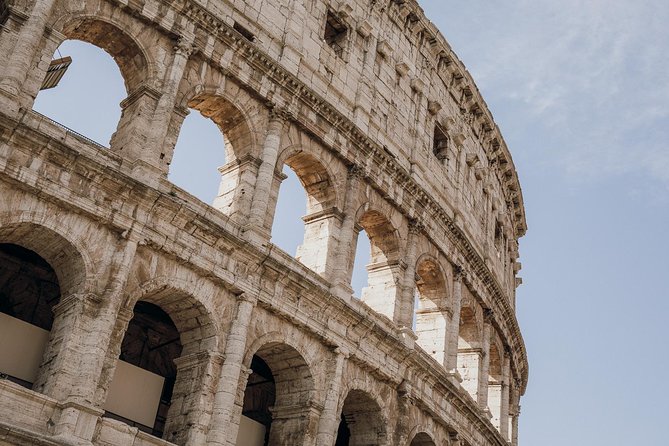
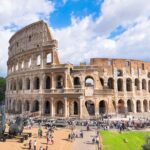
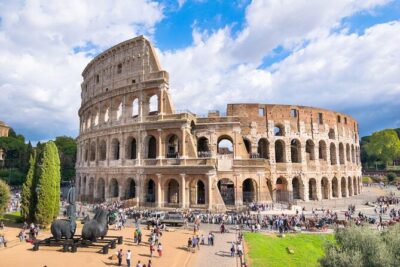
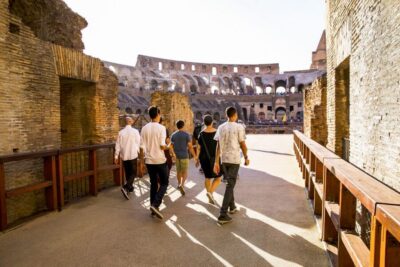
The Colosseum stop is where the “wow” factor comes fast. Even if you’ve seen it from the outside a dozen times, inside is a different level of scale. Your tour takes you up to the first and second tiers, and your guide explains the Colosseum’s role as a major political tool for the Roman Empire.
You’ll also get a guided sense of what a day at the games was like: animal hunts, public punishments, gladiatorial combat, and the gambling culture around events. That’s more useful than it sounds. Without guidance, it’s easy to stare upward and miss what those levels and pathways were designed to do.
A heads-up from real-world expectations: some people arrive hoping for ground-level access such as the arena floor, and access rules can vary. This tour is clearly structured around tier viewpoints, so if arena-floor access is the one thing you care about most, set your expectations around the planned viewing levels rather than assuming every day allows the same access.



How the guide shapes the day (and why names matter)
On this kind of tour, the guide is not a bonus. The guide is the product.
The best versions of this day are the ones where the guide has the pacing of a storyteller and the detail of a lecturer. In this operator’s orbit, you’ll commonly see strong performances from guides like Luigi and Guido, plus others such as Paula, Eddy, Sev, Mariela, Marco, Vincenzo, Camilla, Ricardo, and Anna. The pattern is clear: guests often highlight guides who can answer questions smoothly and keep the group engaged without turning it into a lecture marathon.
You should also expect real explanations, not just location names. The tour’s angle on Emperor Augustus, Caesar’s heir, is a good example. Augustus isn’t just a name here. It’s a thread that helps you connect Palatine spaces to how Rome presented itself to the public.
Pacing and crowd management: what to expect in real life
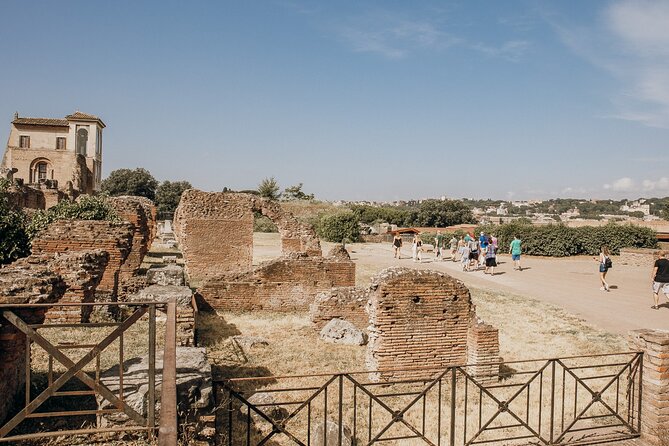
This tour is designed to be efficient, but it’s still a day in Rome’s busiest ruins. You’ll cover three big sites in one outing, which means you’ll spend time walking between areas and then standing to get your bearings and look at details.
Many people love the skip-line effect, and the reservation setup typically helps reduce the time trapped in mass entry lines. Still, the Colosseum and surrounding sites can be crowded in general, so the goal is not “quiet museum time.” It’s structured movement plus interpretation so you feel like you’re seeing something, not just getting processed.
Heat matters. Even on a well-run tour, you can feel the day if it’s hot. If you go in summer, bring what you need, and keep water in mind. Your guide will do what they can, but your body does the heavy lifting.
What to look for at each stop (so the time feels worth it)
Here’s a simple way to make this day feel satisfying, even if you’re tired by the end.
At the Roman Forum, focus on relationships. Ask yourself: what looked public here, and what looked official? The Forum is about systems, and the guide helps you connect the dots.
At Palatine Hill Super Sites, focus on “who lived here” and “why this mattered.” The House of Augustus type sites feel intimate and personal. Santa Maria Antiqua shifts the story into later eras, where religion and old imperial space overlap. Domus Tiberiana helps you see how the imperial family used architecture.
At the Colosseum, focus on movement and design. Look for how people could enter, where spectators sat, and what you think the political messaging was. If your guide points out the purpose behind the tiers and pathways, you’ll get far more out of the stone.
Who this tour fits best
This is a strong choice if you:
- Want a guided experience at the big three sites, not a self-guided checklist
- Like learning the “why” behind Roman politics and daily life
- Are comfortable with a walking tour and moderate stamina
It may be less ideal if you:
- Need very low step counts or minimal standing
- Are traveling with someone who gets overwhelmed in dense crowds
- Want a slow, sit-down museum style experience
If you’re traveling with kids, plan breaks and snacks. The sites are incredible, but the route is physically demanding.
Should you book this VIP Colosseum, Roman Forum, and Palatine Hill tour?
Yes, I’d book it if you want the best combination of reserved access and expert guidance across the Roman Empire’s most important spaces. The Palatine Hill Super Sites access is the differentiator, and the guided story helps you connect Forum politics to imperial life and then to the Colosseum as power made spectacle.
Book it with realistic expectations about what access looks like on the day, especially at the Colosseum. You’re paying for a structured tour with tier access plus special access on Palatine, and that is exactly where the value tends to land.
If you want the kind of Rome day where your brain feels rewarded instead of exhausted, this is a good bet.
FAQ
Which attractions are included in the tour?
The tour includes the Roman Forum (Stop 1), Palatine Hill’s Super Sites (Stop 2), and the Colosseum (Stop 3).
Is the tour fully guided, and what language is it in?
Yes, it’s a guided walking tour with a local English-speaking guide.
How long does the experience last?
It runs for about 3 hours 30 minutes.
What’s included with the ticket for the Colosseum?
Colosseum entrance ticket and a Colosseum reservation fee are included.
Where does the tour start and end?
It starts at Via delle Terme di Tito, 72, 00184 Roma RM, Italy, and ends at Colosseum, Piazza del Colosseo, 1, 00184 Roma RM, Italy.
Is this tour wheelchair accessible?
The tour info says it’s a walking tour and most travelers can participate, with the ability to walk at a moderate pace. No specific wheelchair accessibility details are provided.
What are the ID requirements?
You must provide the full names of all participants at booking, matching the names on the ID or passport. A government-issued ID or passport is required for all participants, and without it security may deny entry.
More VIP Experiences in Rome


More Tour Reviews in Rome
Not for you? Here's more nearby things to do in Rome we have reviewed





Colosseum Tours, compared.
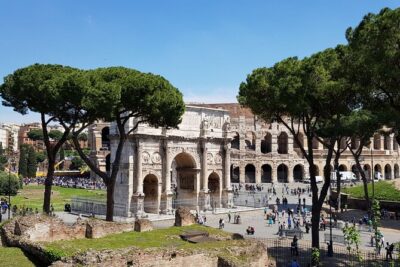 ★ 4.8Colosseum, Palatine Hill and Roman Forum Guided TourFrom $5232,814 reviews
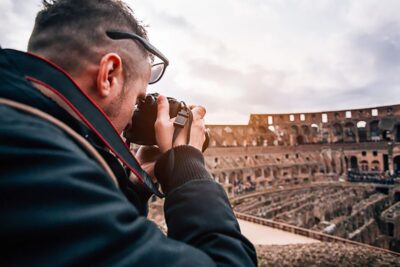 ★ 4.7Guided Tour of Colosseum, Roman Forum & Palatine HillFrom $5527,897 reviews
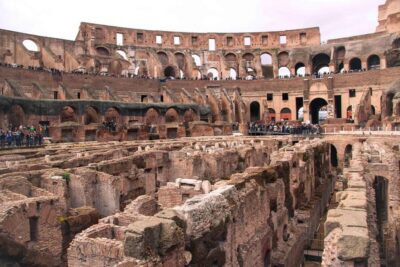 ★ 4.2Colosseum & Forum with Audio Guide App -Optional ArenaFrom $4124,770 reviews
 ★ 4.5Colosseum, Roman Forum and Palatine Hill Guided TourFrom $5923,903 reviews
 ★ 4.4Colosseum, Forum & Palatine Hill Tour & Optional ArenaFrom $5813,839 reviews
 ★ 4.6Colosseum, Palatine Hill & Roman Forum Guided TourFrom $5112,703 reviews
 ★ 4.7Colosseum: Underground and Ancient Rome TourFrom $16012,691 reviews
 ★ 4.6Colosseum Arena, Palatine Hill & Forum Guided TourFrom $7310,584 reviews
Browse the lists this tour appears in