
Reviewed · CATACOMBS & UNDERGROUND TOURS
Trevi Fountain Underground Guided Tour Small group
Rome has a second Trevi, down below. This guided small-group walk takes you under the city to see Roman water systems and the archaeological remains beneath the fountain. I like how it is guided and focused, not a self-guided wander, and you get extra context on where the water comes from.
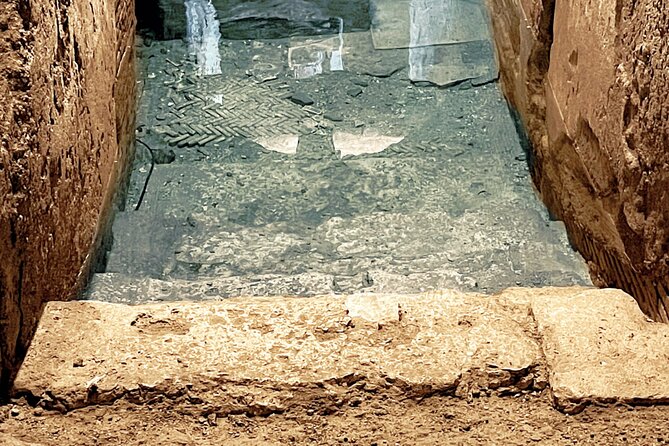
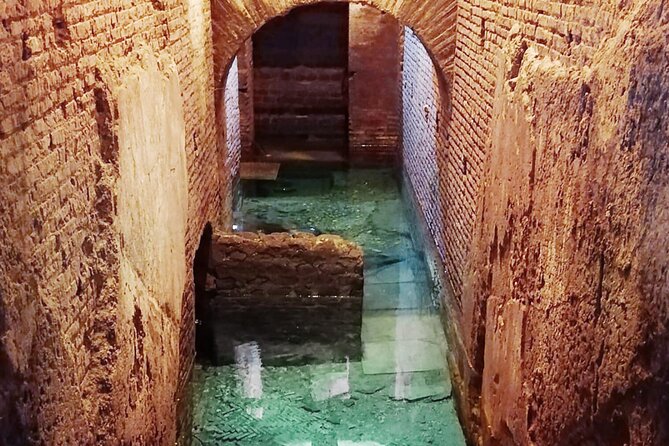
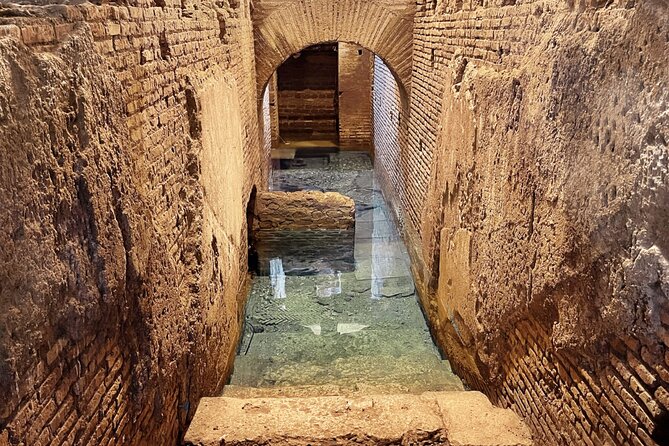
I especially love the Vicus Caprarius “City of Water” stop, where you can watch fresh water still moving around ancient structure. One thing to keep in mind: the underground portion is tight and brief, so if you expect a long tunnel-style stroll, you may feel a bit cramped or slightly underwhelmed.
Quick Hits: What Makes This Trevi Underground Tour Worth It

- Max 10 people means you can actually ask questions instead of listening from the back.
- Radio headsets included help a lot in enclosed spaces and around crowd noise above.
- Aqueduct remains under Trevi Fountain give you a new perspective on a monument you already know.
- Vicus Caprarius is a rare underground archaeological site where water still runs.
- English tour with a guide who can explain Roman waterways clearly, often with real enthusiasm (Silvia, Alessandra, and Emanuele are names you might hear).
- About 1 hour makes it a good add-on day plan when Rome feels packed.
Price and Value for a 1-Hour Small-Group Experience
At $57.68 per person for about 1 hour, the price makes sense if you care about interpretation. You are not just paying for entry, you are paying for a guide to connect the dots between Roman engineering, later reuse of water infrastructure, and what you can actually see underground today.
The tour includes entrance tickets and radio headsets, which is a genuine value boost in Rome. In tight archaeological spaces, hearing matters. Also, small-group formats save you from standing in a “line of sight lottery” where your view depends on luck.
Is it budget travel? No. But it is good mid-range value if you want more meaning from your time in Rome, especially if you are already planning to see Trevi Fountain above ground.
You can also read our reviews of more guided tours in Rome



Starting at Piazza dei Crociferi, Then Moving With the Flow
The tour starts at Piazza dei Crociferi, 00187 Roma RM, Italy, at 11:00 am. It ends back at the same meeting point, so you do not need to figure out a second pickup spot.
Why this matters: Rome’s big sights attract crowds fast, and Trevi can be especially tricky. By starting in the morning and keeping the group small, you have a better shot at hearing your guide and keeping the experience more comfortable.
You are also close to public transportation, which helps if you are juggling a day that includes other central landmarks. The route can feel compact because you are moving between sight points and the underground access area, so wear something you can move in easily.
Stop 1: Fontana di Trevi Seen From Beneath
This part is your reality check, in a good way. You see Trevi Fountain’s story not as a postcard, but as a living piece of Roman water infrastructure. The highlight here is the remains of the aqueduct underneath the fountain, which gives you the sense that the famous face of Trevi is only the top layer.
What you should expect at this stop:
- A mix of explanations and time to look down at what is preserved below
- A focus on how the water system connects to the fountain’s design and operation
- A change in scale, because you are looking at historical structure from a different angle than you would from street level
Now, here is the consideration that comes up: this is not billed as a long tunnel walk. One disappointment you might run into is expecting more continuous underground passageways. Instead, think of it as guided viewing and interpretation in the key access areas that matter most.
Also, the fountain itself can be surrounded by people above, which can make it harder to keep following outside moments if the crowd swells. If you are the type who gets irritated by shoulder-to-shoulder sightseeing, plan to stay flexible and let the guide keep you oriented.
Stop 2: Vicus Caprarius, the City of Water Underground
This is the stop that tends to win hearts. Vicus Caprarius is an underground archaeological zone beneath the Trevi area, often described in relation to the Roman water network. The key theme is Aqua Virgo, a name tied to the meaning pure water and linked to the Roman aqueduct system that fed fountains.
This is where you get the best feeling of why Roman water mattered. Instead of treating the site like a museum display, you get a sense of water in motion interacting with ancient remains. One of the most memorable parts is that water can still be seen moving fresh and clear around the archaeological area, which turns history into something physical you can sense.
What makes Vicus Caprarius special for you:
- It is an actual underground archaeological environment, not just a quick peek
- The site helps you understand Roman water planning as something practical, not just ornamental
- Fresh water near the remains gives the stop a calmer rhythm than you might expect in a dense, busy part of Rome
The other reality check is size and shape. The underground space is interesting and atmospheric, but it is not endless. The circulation can feel tight, and you will likely spend part of the time standing or pausing while the guide explains what you are looking at.
If you are expecting big-scale Roman hydraulic engineering on display, you might feel the remains are more “what survived” than “full working system.” The value is interpretive. With the guide’s explanation, you can reconstruct the logic of the system and what these remains meant.
Guides: Why the Explanations Matter More Than You Think
This tour shines when the guide can connect the visible pieces to the bigger picture. In the reviews and tour descriptions, the guides often come up as a major factor, with Silvia named prominently, plus Alessandra and Emanuele.
Here is what I think you should look for in your guide experience:
- Clear explanation of Roman water routes under the city
- A sense of enthusiasm that keeps you paying attention, especially in enclosed spaces
- The ability to answer questions without rushing
Also, the tour is designed as a small-group format, and that changes the vibe. You are not just being talked at. You can ask why something is located where it is, or what a name like Aqua Virgo actually refers to.
A practical note: in a stop like Vicus Caprarius, your brain needs a moment to switch from “look around” mode to “follow the explanation” mode. If your guide talks for a bit longer, it is usually because the underground context is hard to understand on your own.





Group Size, Radio Headsets, and Comfort in Tight Spaces
With up to 10 travelers, you should find the tour more manageable than most Rome group tours. But the underground portion still has limits. Tight spaces mean people bunch up while listening, which is where the word cramped shows up in real-world feedback.
This is not a dealbreaker, but it is a consideration:
- If you prefer lots of walking and wide open areas, you may wish there were more movement time
- If you do not like standing still in a small space, plan your expectations for a viewing-and-explanation experience
The good news is the radio headsets help you keep up even when you are not standing perfectly close to the guide. That one included item can make the difference between getting the story and just catching fragments.
Timing: Morning Start Works Better Than You Might Expect

The tour runs at 11:00 am and lasts about 1 hour. For Rome, that is a smart slot if you are also doing daytime sightseeing. You avoid turning this into a full-day commitment, and you still get something distinctive that most people skip because it requires going underground.
If your schedule is crowded, the short duration also makes it easier to fit. Just remember that when you come out, Trevi will likely be busier, and your next stop may be in a crowd zone. Wear comfortable shoes and keep a small buffer in case you need a few minutes to decompress after the underground portion.
Who Should Book This Tour (and Who Might Skip It)
I think this tour is a great match if you:
- Love Roman history but want it connected to real surviving structure
- Want a break from above-ground sightseeing
- Appreciate guided interpretation, especially around technical topics like water systems
- Like small-group pacing and the ability to ask questions
You might want to rethink if you:
- Expect a long tunnel walk or a big continuous passage experience
- Want mainly outdoor views and lots of motion
- Have trouble with close, crowded spaces, even in a small group
- Are hoping to see a complete, fully engineered Roman “how it worked” display, rather than preserved remains interpreted by your guide
One more caution, based on real feedback: the wording can lead you to expect access beyond just the underground areas, such as more external fountain-side components. What you should focus on is the underground visit and Roman waterway context, especially Vicus Caprarius.
Final Call: Should You Book This Trevi Underground Tour?
Book it if you want Trevi to mean more than a famous photo spot. The value is in the combination of small group size, radio headsets, and a guide who explains how Roman water infrastructure shaped what you see today. If you enjoy archaeology that you can actually sense, especially with water still present, this stop pays off quickly.
Skip or choose something else if you need wide spaces, long passageways, or a nonstop walking route. This is more about guided interpretation in a tight underground setting than about endless tunnels.
FAQ
How long is the Trevi Fountain underground guided tour?
It lasts about 1 hour.
Where does the tour meet, and where does it end?
It starts at Piazza dei Crociferi, 00187 Roma RM, Italy and ends back at the meeting point.
Is the tour offered in English?
Yes. The tour is offered in English.
What is included in the price?
The tour includes radio headsets and entrance tickets.
What is the group size limit?
This experience has a maximum of 10 travelers.
Are service animals allowed?
Yes, service animals are allowed.
More Guided Tours in Rome

More Tours in Rome

More Tour Reviews in Rome
Not for you? Here's more nearby things to do in Rome we have reviewed












Catacombs & Underground Tours, compared.
 ★ 4.7Colosseum: Underground and Ancient Rome TourFrom $16012,691 reviews
 ★ 4.6Crypts and Catacombs Underground Tour with TransfersFrom $745,341 reviews
 ★ 4.7Colosseum Underground Small Group Guided TourFrom $1054,844 reviews
 ★ 4.8St. Peter’s Basilica, Dome Climb, and Underground TourFrom $383,404 reviews
 ★ 4.7Colosseum Underground, Arena & Forum TourFrom $1573,272 reviews
 ★ 4.3Trevi Fountain and Underground Guided TourFrom $411,664 reviews
 ★ 4.6Catacombs and Capuchin Crypt Guided Tour with TransferFrom $411,606 reviews
 ★ 4.7St. Peter’s Basilica Priority Access Tour with Dome & CryptFrom $831,476 reviews
Browse the lists this tour appears in