
Reviewed · ROME GOLF CART TOURS
Tour of Rome in Golf Cart: Squares and Fountains of Rome
Rome on a golf cart is a smart sprint. You cruise from Via dei Condotti to Rome’s best-known fountains and squares, then hop off for close looks and guided context that fits into a tight 3-hour plan.
I love the small-group feel, capped at 15 people, so it stays friendly. I also like that your guide is both the driver and storyteller, and you get a quick, practical run-through of what you’re seeing (plus interactive reading material to keep it straight).
One consideration: the timing is quick at each stop, and Pantheon admission is not included, so you need to plan for that if you want inside time. If you’re seated farther back, you may find it harder to hear over the drive.
Key things to know before you ride
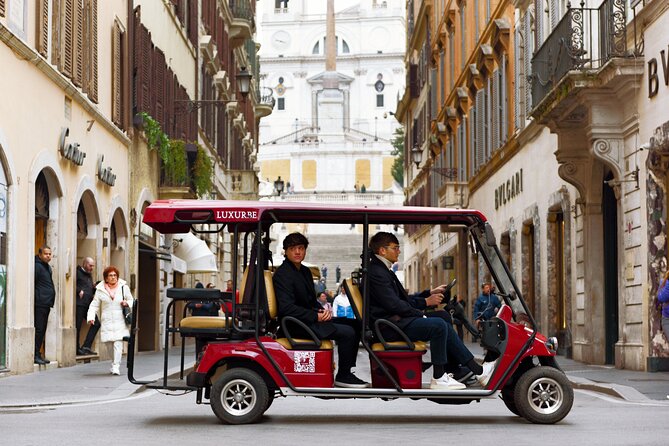
- Golf cart logistics: You cover more ground with less walking, then hop off for short landmark time.
- Licensed guide-driver: Expect real commentary, not just a drive-by stop list.
- Photo-friendly stops: Each main sight gets enough time to get your bearings and grab shots.
- Tight schedule: You see highlights fast, not deep museum time.
- Order can shift: Traffic or access rules can change the stop sequence, especially near the Jewish Ghetto.
- Best for short visits: Ideal when you only have a couple days and want an overview fast.
Why a golf cart tour works so well for Rome
Rome can be a lot. Big roads, tight streets, nonstop crowds, and attractions that are spread out more than you expect. This tour uses a golf cart to solve the first problem, then uses short walks to solve the second.
The real value is the pacing. You get stories tied to what you’re looking at, not just directions. And since you can hop on and off, you’re not stuck shuffling between far-apart spots like a tired commuter.
You can also read our reviews of more tours and experiences in Rome.



Meeting at Via dei Condotti, the luxury runway to start from
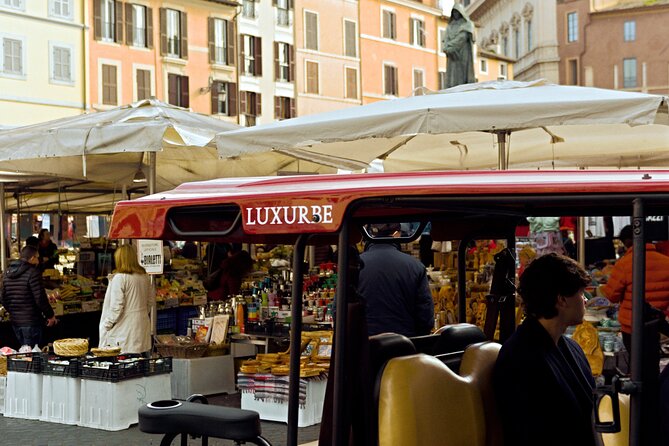
You meet at Via dei Condotti 61, right on the main shopping street that leads down toward the Spanish Steps area. It’s easy to recognize the vibe: cobblestones, grand facades, designer storefronts, and the sense that you’re in Rome’s “front row.”
Wait in front of the building entrance. There is no Luxurbe sign to hunt for, so don’t waste time looking. Your golf cart driver will come to you, and pickup time can vary a bit due to Rome traffic.
This is a good start point for two reasons. First, you’re already near some of Rome’s most photogenic streets. Second, it sets the tone: this tour mixes famous monuments with the streets around them.
Via dei Condotti to Pantheon: engineering plus city context
After you roll out, the tour naturally transitions from shopping-street Rome into classic monument Rome. The first major stop is the Pantheon.
Pantheon stop: what you should focus on in 20 minutes
The Pantheon is famous for a reason. The dome, the oculus (the open circle at the top), and the preserved interior details make it feel both ancient and shockingly well-kept. Historically, it was a temple dedicated to all gods, and you still feel that idea when you look around.
With only about 20 minutes, don’t aim for a slow, everything-on-your-own scan. Instead, pick three things:
1) the dome scale
2) the oculus light effect
3) interior marble and artwork details
Important budget note: Pantheon admission is not included. If you plan to go inside, you should expect an extra cost.
Jewish Ghetto: a short walk through centuries, with modern life beside it
Next comes the Jewish Ghetto near the Tiber River. This area’s story reaches back to 1555, when it was established as a confined area for Roman Jews for centuries. Today you’ll still see the narrow cobblestone streets, old synagogue buildings, and Jewish cultural sites, along with everyday cafes and shops.






How to use your time here
In 20 minutes, you can’t do museum-level deep study. But you can walk away with something useful: a sense of how layered Rome is, where history is right there on the street.
Here’s what I’d do if you want the most out of a short stop:
- slow down enough to read the street fabric
- look for historic-facing buildings rather than rushing to the next corner
- use the guide’s context so you know what you’re looking at
Also, entrance times and access can change in this neighborhood, and the stop sequence may be adjusted based on local rules. That can affect how long you get or what you can enter, so keep some flexibility.
Campo de’ Fiori: market energy, then night-life atmosphere
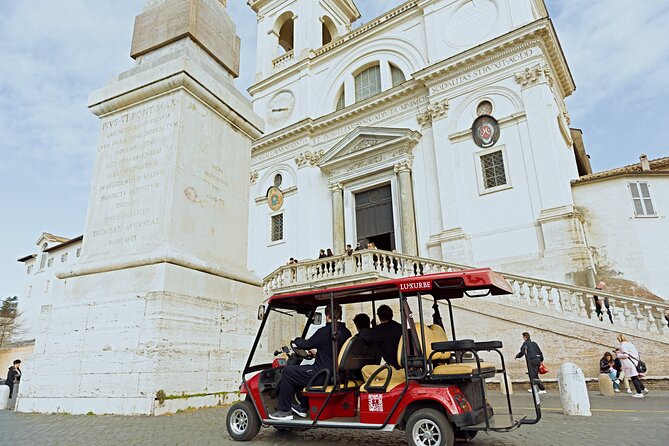
Campo de’ Fiori is one of those places that feels different depending on when you’re there. Daytime, it’s known for its market scene. Later, it shifts into a more social, nightlife-style square, with cafes pulling people in.
A strong focal point is the statue of Giordano Bruno. Even if you don’t stop for long, it gives you a landmark to anchor the square in your memory.
Quick tip for your walkabout
This is a great stop for sensory moments. Look at the stalls if it’s daytime. If it’s later, watch how the cafes and street rhythm take over. Either way, you’re getting an authentic slice of Roman routine, not just monuments.
Piazza Navona: Baroque spectacle plus easy people-watching
Piazza Navona is all about Baroque elegance. You’ll see Fontana dei Quattro Fiumi as a centerpiece, and the square is lined with cafes that make it easy to stop and just watch life happening.
The best strategy with a short time window is to pick your fountain angle. Walk one side for a closer view, then cross or reposition for a wider shot. That way you get both “detail” and “whole scene” in the time you have.
This stop is also valuable because it balances the heavier history stops. Navona feels playful even though it’s visually grand.
Trevi Fountain: the world-famous view, with smart timing instincts
Then you get to Trevi Fountain, one of the most recognizable sights in Rome. It’s a Baroque masterpiece filled with myth-inspired sculpture, and the fountain’s sound does half the work for you. You’ll see the Neptune-themed centerpiece and the dramatic arrangement of figures.
The classic coin ritual happens here because of course it does. People throw coins, make wishes, and wait for a clear spot to photograph.
The only drawback is crowd physics
Trevi is always crowded. Your tour time is only about 20 minutes, so treat it like a “see it properly” session, not a “linger forever” session. If you want cleaner photos:
- arrive ready to stand your ground for a minute
- take photos first, then enjoy the atmosphere
- don’t expect a long, quiet walk around the perimeter
Piazza Venezia: where the ancient-and-modern feeling is closest
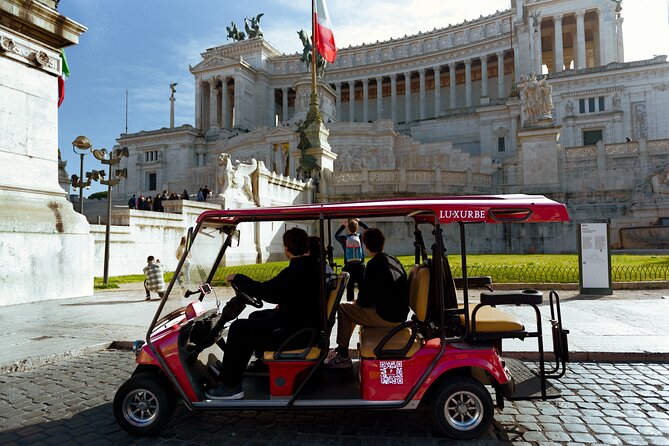
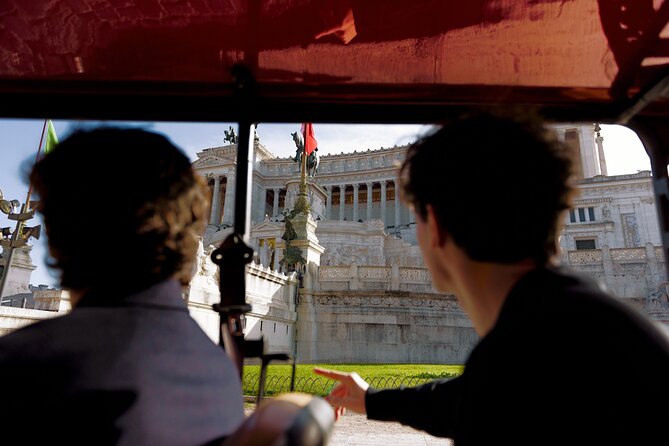
Piazza Venezia is centered around Altare della Patria, with the Vittoriano monument dominating the square. It’s a big, dramatic setting that connects Roman identity across eras, and it’s a helpful pivot point for understanding where you are in the city.
If you want one simple reason to care: it makes the geography feel real. You’ve been bouncing between squares, and then suddenly you’re in a grand hub that ties them together.
Via Sistina and Trinità dei Monti: the in-between streets that make Rome feel Roman
After the big-name squares, you head into the neighborhoods around the Spanish Steps area, starting with Via Sistina. This street connects Piazza Trinità dei Monti and Piazza Barberini and mixes historic buildings, boutiques, and cafes.
Then you stop at Trinità dei Monti for another short look around. The time here is brief, so think of it as a palate cleanser and a chance to take in street-level Rome rather than another monument box.
Why these last two stops matter
When your trip is short, it’s easy to only chase the “top 10” landmarks. This part of the route reminds you that Rome is also streets, facades, and daily life. Even a 20-minute walk can help your day feel more complete.
What makes the guides matter, and what you might notice
One of the most praised parts of this experience is the way guides manage the storytelling. People have highlighted tour guides like Jimmy, Otto, Paolo, Matteo, Dennis, and Francesco by name, and the common theme is clear: the guide wants you to have a good time and knows how to connect details to what you’re seeing.
That said, sound matters. More than one rider has said it can be hard to hear from the back while you’re moving. If you’re sensitive to hearing or you hate missing commentary, try to get a seat where you can face forward and clearly hear the guide-driver.
Price and value: what you are really paying for
This tour costs $83.87 per person for about 3 hours. For that, you get golf cart transportation, a licensed guide who also drives, and interactive reading material.
So is it “worth it”? It depends on your travel style.
- If you want an overview without spending your whole day walking, it’s a strong value. You get multiple major landmarks in one go.
- If you’re the type who wants long stops, deep museum time, or slow wandering, you might feel rushed. Each site gets limited time.
- If you specifically want the Pantheon interior, remember the admission ticket is not included. That changes the final budget.
There’s also a practical value to the small group limit of 15. It’s easier to ask questions, and the guide can actually keep track of what you’re trying to see.
Who should book this tour, and who might skip it
I’d put this tour on your “yes” list if:
- you have limited time in Rome and want a fast orientation
- you prefer less walking but still want stops at major sights
- you like history told in clear, story-shaped chunks
- you want a guided way to see both famous monuments and neighborhood streets
I’d consider skipping or pairing it with something else if:
- you want to spend a lot of time inside monuments, especially the Pantheon
- you hate crowd scenes and want quiet time at Trevi and Navona
- you’re the kind of traveler who needs a perfectly fixed itinerary, no reordering ever
- hearing the guide is crucial for you, since seating position can matter
Should you book the Golf Cart Tour: Squares and Fountains of Rome?
If you’re on a short Rome trip, I think this is a smart booking. It’s built for your reality on the ground: traffic, crowds, and the fact that Rome’s best sights are spread out. The golf cart makes it doable, and the guide-driver format makes it informative.
Before you buy, do two quick checks:
- Decide whether you truly care about Pantheon interior time, since admission is not included.
- Plan to be flexible about stop order. Traffic and access rules can nudge the sequence.
If you want a focused, time-efficient way to see the famous squares and fountain icons, this is an easy “yes” for most itineraries.
More Tours in Rome
More Tour Reviews in Rome
Not for you? Here's more nearby things to do in Rome we have reviewed












Rome Golf Cart Tours, compared.
 ★ 4.8Imperial City Tour by Golf Cart with Optional TransferFrom $1241,024 reviews
 ★ 5.0Golf Cart Small-Group Guided Tour: Rome City HighlightsFrom $104907 reviews
 ★ 4.8City Highlights Golf Cart TourFrom $45857 reviews
 ★ 5.0Private/Group 4 Hours Golf Cart SightseeingTourFrom $168780 reviews
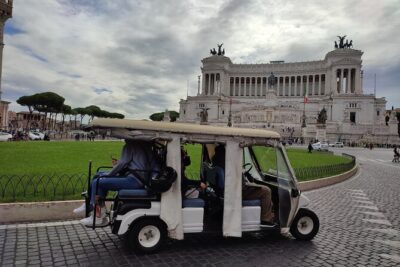 ★ 5.0Explore Rome on a Golf Cart: Private TourFrom $83757 reviews
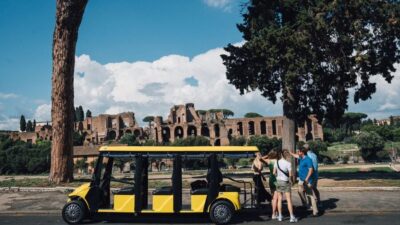 ★ 4.8City Highlights Golf Cart Tour with Local GuideFrom $71752 reviews
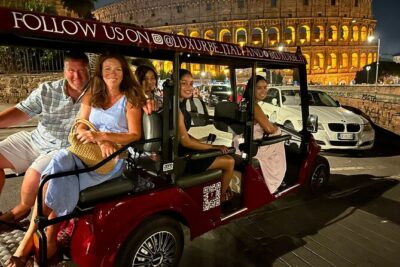 ★ 4.5Rome by Night: Golf Cart TourFrom $108688 reviews
 ★ 5.0Rome Catacomb & Appian Way Small-Group Tour by Golf CartFrom $107681 reviews
Browse the lists this tour appears in