
Reviewed · SKIP THE LINE
Rome: Skip-the-Line Castel Sant’Angelo Tickets & Audio Guide
Rome has a way of rewarding you quickly. This Castel Sant’Angelo ticket helps you do that, with skip-the-line access and a mobile audio guide in six languages. You’ll move through Hadrian’s fortress-to-mausoleum story, then into papal spaces and out onto panoramic terraces with far less waiting.
I especially liked two things. First, the express security check means you spend your time inside, not stuck in queues. Second, the audio app made the place feel clear and human, with stories about symbolism and the history behind what you’re seeing, plus maps and multimedia that help you not get lost.
One watch-out: the audio guide is on your phone, so you need a fully charged smartphone, internet access for the download, and your own headphones. Also, tickets are timed and you must arrive about 15 minutes early, or entry may not be guaranteed.
Key highlights worth planning for
- Skip-the-line express security to save your time for the views and rooms
- Six-language audio guide app with maps and multimedia, plus staff help downloading
- Hadrian’s mausoleum to papal chambers, so you get both imperial and church-era context
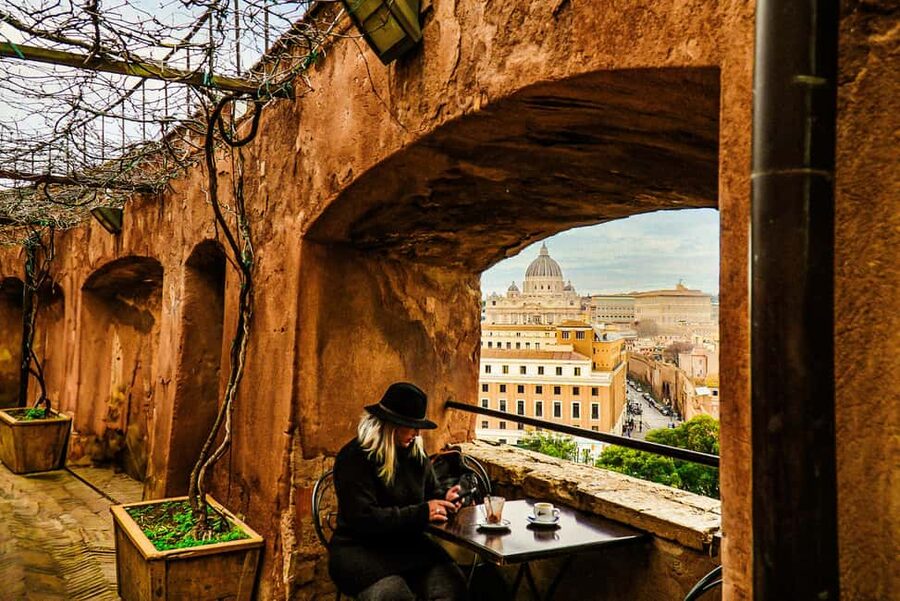
- Terrace time pays off, with a viewpoint that is worth the climb
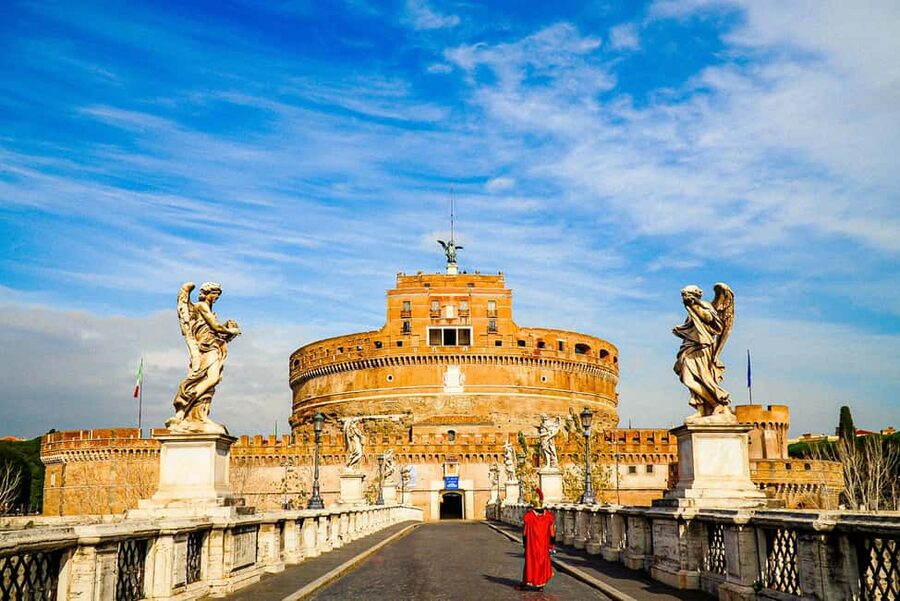
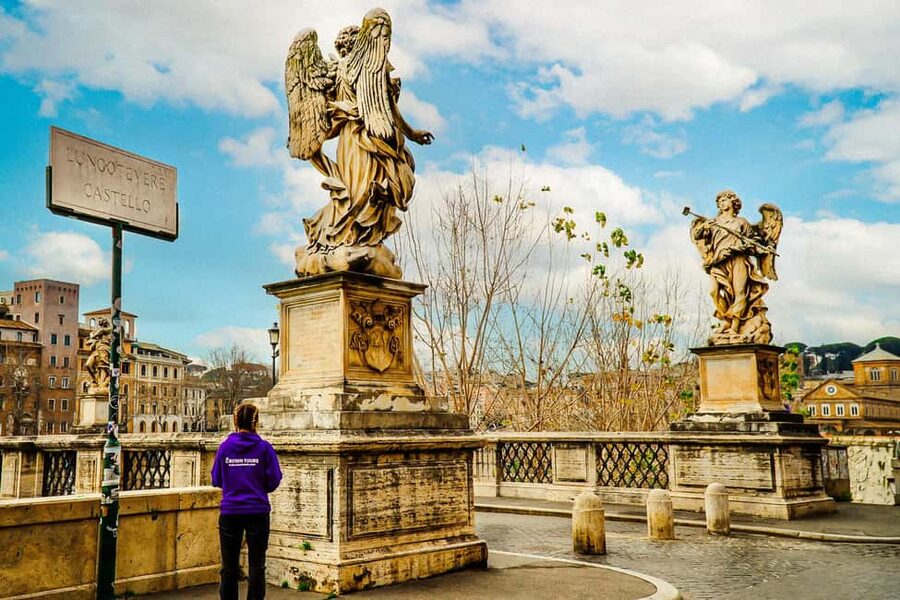
- Staff at the entrance in purple Crown Tours shirts under the angel statue to point you the right way
- Self-paced visit with a 2-hour window that works well for solo travelers and couples
Why Castel Sant’Angelo feels like a story, not just stone
Castel Sant’Angelo is often described as a castle, but when you’re inside, it comes off more like a living timeline. It shifts from Emperor Hadrian’s mausoleum roots to later papal use, and you can feel those changes as the spaces get more ornate and more political.
What makes this ticket especially useful is that it’s built for a relaxed pace. You still get to see the big highlights, but the audio guide helps you connect the dots as you walk, so you’re not just collecting photos. From the start, the experience is designed around helping you get your bearings fast and keep moving.
A few more Rome tours and experiences worth a look



Skip-the-line entry and what the front gate experience is like
Your visit begins at the entrance, where Crown Tours staff stand just under the angel statue. Look for purple Crown Tours shirts, and plan to arrive 15 minutes before your timed entry start. Late arrivals can miss participation, so I treat that early buffer as non-negotiable.
The skip-the-line part is about security. Instead of blending into the standard queue grind, you go through an express security check, which is usually the biggest bottleneck in older European sites. That matters here because Castel Sant’Angelo is all about flow: you want enough time to go downward, then upward, and still have room to linger on the terraces.
Before you go, make sure you’re ready to follow the site rules. You cannot bring luggage or large bags, and you also should not show up with alcohol, drugs, glass objects, or weapons. Dress matters too: sleeveless shirts are not allowed, so bring a light layer if your wardrobe is borderline.
The 2-hour visit plan, and why “timed” is actually helpful
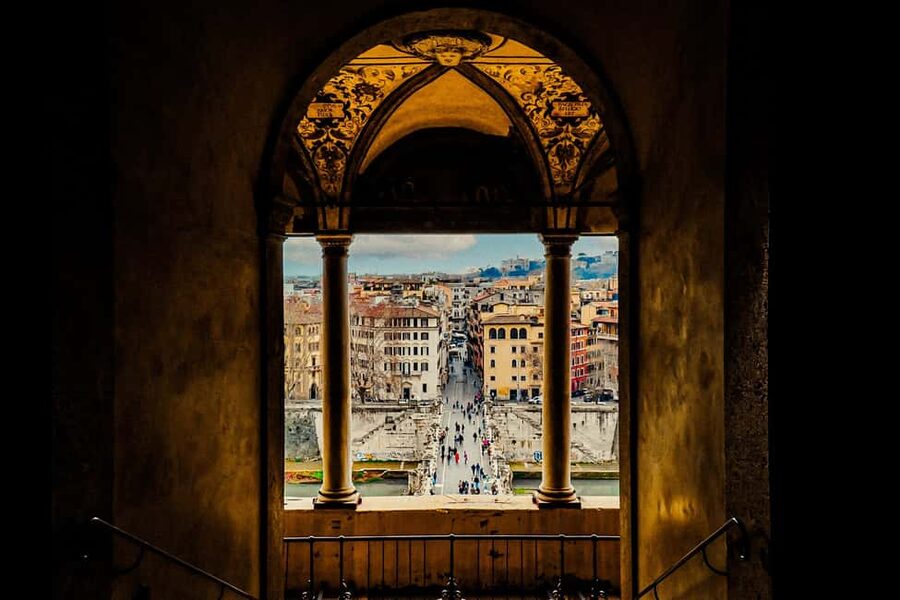
The duration is listed as 2 hours, with timed entry start times. That’s a smart structure for Castel Sant’Angelo because it’s not a quick photo stop, and it’s also not a full-day commitment unless you plan extras.
A practical way to think about the timing is this: you’ll spend time learning as you move through the fortress spaces, then you’ll save energy for the terrace climb. In one of the best takeaways from the experience feedback, the terrace view was repeatedly called out as worth the effort. I agree with that logic even before you see it, because the terrace is where the story turns into a panorama over Rome.
If you’re the type who likes to read every sign, you might feel the clock. But if you use the audio guide to keep your pace steady, the 2 hours can feel just right.
Using the audio guide app: six languages that keep you oriented
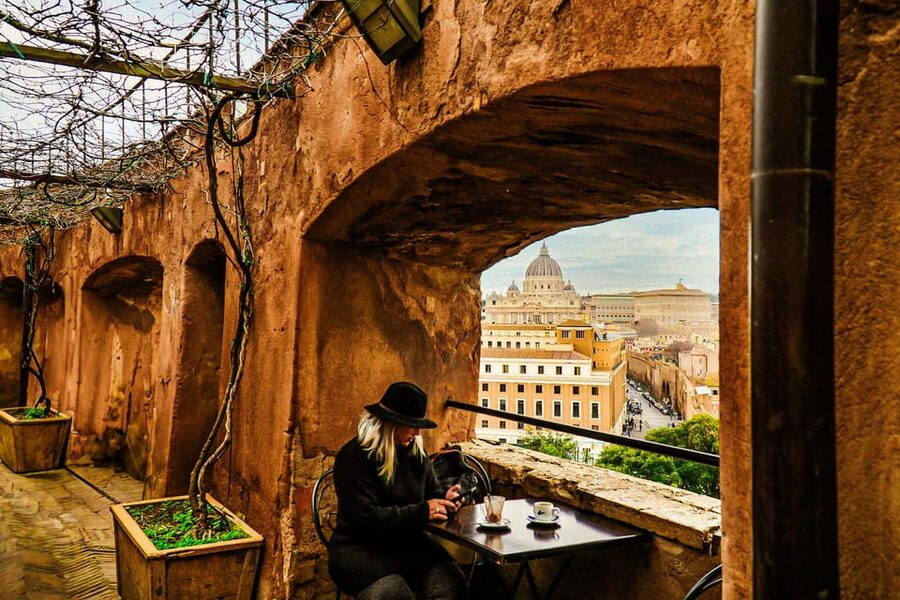
This experience includes a digital audio guide in six languages: Italian, English, Spanish, French, German, and Chinese. In practice, that’s one of the easiest ways to turn Castel Sant’Angelo from confusing corridors into a place with meaning.
The audio guide is delivered through a mobile app. That means you’ll need a smartphone that you can use inside without dying halfway through. The operator specifically says you should bring a fully charged phone, internet access to download the content, and headphones.
You might not realize how important headphones are until you’re standing there. Earphones are not included, so bring your own. If you forgot, the best-case scenario is staff can point you toward solutions nearby, but the ticket experience itself assumes you have them.
One more useful detail: expert hosts assist with downloading. So even if you’re not techy, you’re not totally on your own. Still, I recommend you arrive prepared, not troubleshooting with low battery and shaky internet.
What the app actually helps with once you start walking
The app isn’t just narration. It includes interactive maps and multimedia content, plus guided routes. That helps a lot in a fortress where it’s easy to wander without a sense of what you’re seeing and why it matters.
The audio content is built to explain what you’re looking at as you go. So you’re not stuck waiting for a docent to catch up with your questions. You can stop, listen, and move on when you’re ready, which is the whole point of pairing audio with skip-the-line entry.
You can also read our reviews of more guided tours in Rome





Hadrian’s mausoleum: the imperial foundation you’ll feel immediately
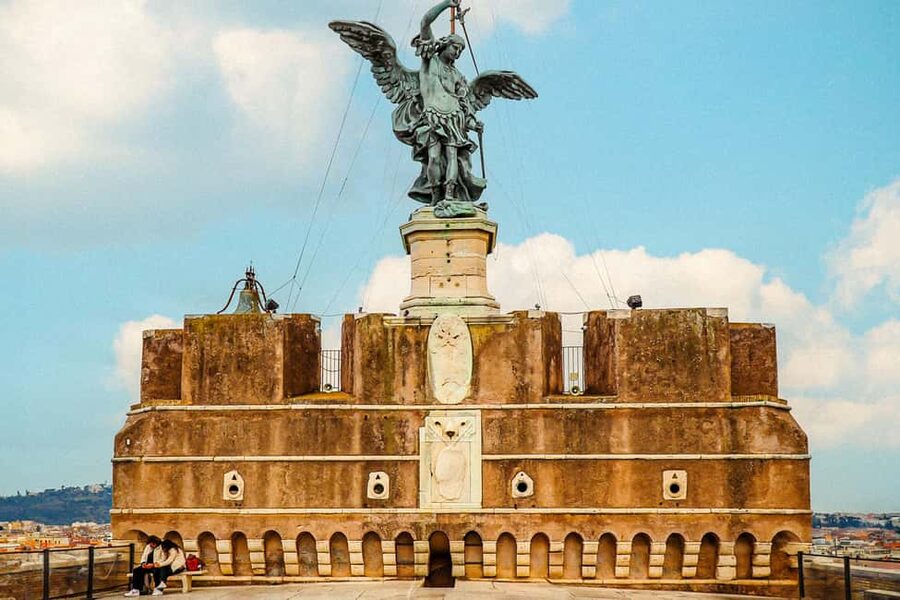
When you step into Castel Sant’Angelo’s core, you’re entering Emperor Hadrian’s mausoleum. This is the part of the experience where context becomes essential, because the architecture can feel mysterious if you only see it as a defensive structure.
The audio guide helps you understand what it meant to build a mausoleum in that era and how the fortress identity developed later. As you explore the depths of the mausoleum, you’re not just looking around, you’re watching history shift layers as the site changed hands.
A key benefit here is pacing. Instead of rushing, you can listen to how the space connects to the people who used it and the ideas behind it. One review specifically highlighted how the audio guide included stories about symbolism, which is exactly what you want when a place has strong visual cues but no simple labels.
Papal chambers: where the power gets visible in the details
Castel Sant’Angelo’s papal chambers add a different mood. You go from the heavy, monumental feel of the mausoleum into rooms that reflect church-era influence, including ornate spaces described in the experience as papal chambers.
The audio guide is doing real work here. It connects what you see to the larger storyline, so you understand why the rooms look different and how those changes fit into centuries of use. You’ll also encounter references to artworks, including masterpieces associated with artists like Tiepolo and Titian.
One reason I like pairing audio with this kind of interior exploration is that these are spaces where you want time to look. Without guidance, you can miss why a room feels designed, not just decorated. With the audio prompts, you’re more likely to notice symbolism and details that would otherwise blur together.
Panoramic terraces: the climb that pays you back
The terrace is where Castel Sant’Angelo turns from “interesting rooms” into “I get why people climb here.” The experience plan includes time on the panoramic terraces, and that’s not filler.
Expect a climb after you’ve worked your way through the earlier areas. The good news is that your audio guide helps you keep momentum up to that point, so the stairs don’t feel like punishment. In the feedback, the terrace view was directly called out as worth every step, and that tracks with how these viewpoints work in Rome.
If you’re visiting on a clear day, prioritize terrace time. If weather is poor, you might still get something worthwhile, but the payoff is naturally tied to the sky.
What I’d expect you to do while you’re there (and what to skip)
Because this is self-paced, you control the rhythm. Here’s a simple approach I think works well with the 2-hour duration.
First, start with the main flow immediately. Don’t spend your first ten minutes deciding where to begin, because the best plan is the one that keeps you moving from mausoleum areas toward papal spaces and then up to the terraces. Second, use the audio guide to decide when to pause and when to move on, especially in interior rooms.
What you should skip is trying to do everything at a breakneck speed. If you sprint, you’ll reach the terrace tired and miss the point of the story. If you slow down just enough to listen, the visit tends to feel joyful and personal, which is how one of the strongest pieces of feedback described the experience.
Value and price: what you’re really paying for at about $36
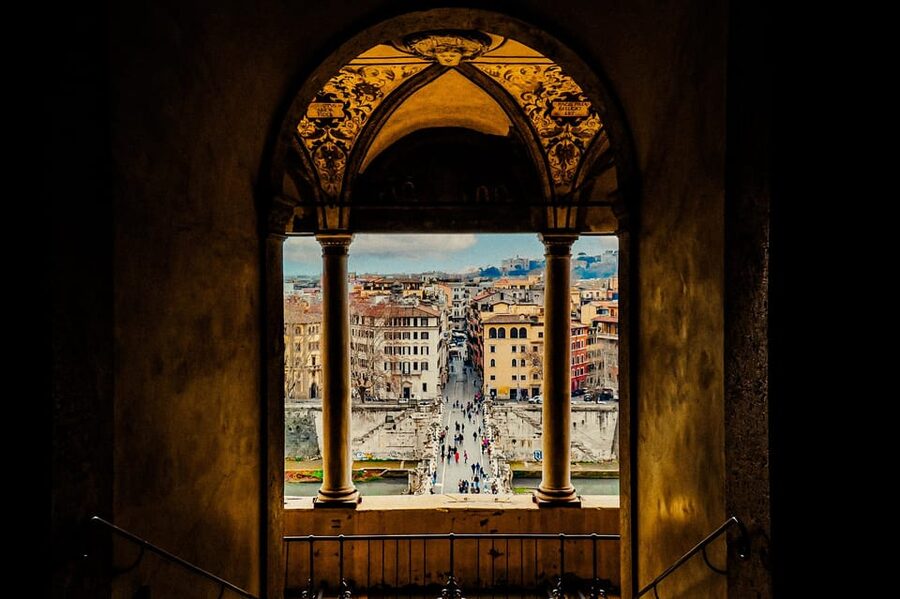
The listed price is $36.44 per person. That’s not pocket change, so I look at what you gain beyond the ticket itself.
You’re paying for three practical things:
- Skip-the-line entry through express security, which saves time
- A six-language audio guide app with maps and multimedia
- Staff assistance at the entrance, including help with downloading
If you’re comparing options, the audio guide is a big deal because it turns the visit into a guided experience without the cost of a fully staffed live guide. If you already know you prefer self-paced sightseeing, this kind of audio-supported visit often feels like better value than paying extra for a person to keep the group together.
There are also combo options mentioned, including Castel Sant’Angelo with a guided tour of the Vatican Museum and Sistine Chapel. If you’re already planning a Vatican day, a combo can reduce decision fatigue. Still, only go for it if you’re genuinely planning both, because stacking major sights can crowd your energy.
The info also references other combo-style add-ons in the booking context, including Museo Correr and the National Archeological Museum. If those aren’t on your Rome plan, you can ignore them and keep your Castel visit focused.
Who this works best for (and who should consider something else)
This setup fits best if you want freedom but still crave context. The experience is described as good for all visitors regardless of age or interests, and the languages make it approachable for mixed groups.
It’s also ideal if you travel with someone who likes different paces. One person can listen, the other can scan details, and you can reunite naturally as you move toward the terraces.
You might want a different format if you strongly prefer a live guide who can answer on the spot. This ticket does not include a live guided tour. It includes staff at the entrance, but the actual storytelling is through the app.
If you rely on someone else for smartphone access or cannot use headphones, this might be less comfortable. The experience specifically assumes you can handle downloading and listening yourself.
Small rules that can trip you up (so you stay on schedule)
To keep your day smooth, check the restrictions ahead of time. No smoking, no intoxication, no alcohol or drugs, no glass objects, no weapons, and no large bags.
The dress rule is one people forget until they’re already there. Sleeveless shirts are not allowed, so if your itinerary includes warm-weather sightseeing, bring a light top that covers your shoulders.
Also remember the ticket is nominative. Bring ID, and make sure you provide the full names of participants. If your group includes kids, you should have their ID too, and a copy is accepted.
Should you book this Castel Sant’Angelo skip-the-line audio ticket?
I think you should book it if you want the best mix of time savings and meaningful context. The express security check is the kind of advantage that pays off immediately in Rome, and the six-language audio app helps you make sense of what you’re seeing without rushing.
Skip it only if you know you dislike audio guide formats, you’re not comfortable using your phone during a timed entry, or you want a live guide to customize explanations. For most independent travelers, this is a practical way to experience Castel Sant’Angelo with less stress and more understanding.
FAQ
How long is the Castel Sant’Angelo ticket experience?
The duration is listed as 2 hours. Starting times depend on availability.
Does this include skip-the-line entry?
Yes. Your ticket includes skip-the-line entry through an express security check.
What languages is the audio guide available in?
The audio guide is available in Italian, English, Spanish, French, German, and Chinese.
Is a live guided tour included?
No. This ticket includes an audio guide, not a live guided tour.
Do I need headphones for the audioguide app?
Yes. Earphones are not included, so you’ll need your own headphones to use the app.
Where do I meet the staff?
The meeting point is at the entrance of Castel Sant’Angelo. Staff are said to be under the angel statue wearing purple Crown Tours shirts.
What do I need to bring for entry?
You should bring a passport or ID card for you and any children. A copy is accepted.
Are tickets timed, and when should I arrive?
Tickets are timed. Arrive 15 minutes before the activity starting time, because late arrivals may not be admitted.
Is it wheelchair accessible?
The information includes both wheelchair accessible and a note that it is not suitable for wheelchair users. If mobility is a concern, you should verify the fit with the operator before booking.
More Guided Tours in Rome
More Tickets in Rome


More Tour Reviews in Rome

Not for you? Here's more nearby things to do in Rome we have reviewed












Skip the Line, compared.
 ★ 4.4Vatican Museums & Sistine Chapel Skip-the-Line Entry TicketFrom $4313,838 reviews
 ★ 4.5Skip-the-Line Group Tour of the Vatican, Sistine Chapel & St. Peter’s BasilicaFrom $3012,779 reviews
 ★ 4.2Vatican Museums & Sistine Chapel Skip-The-Line TicketFrom $4111,708 reviews
 ★ 4.5Vatican, Sistine Chapel & St. Peter’s Skip-the-Line TourFrom $587,770 reviews
 ★ 4.2Vatican: Vatican Museums Sistine Chapel Skip-the-Line TicketFrom $716,682 reviews
 ★ 4.4Castel Sant’Angelo Skip-the-Line Ticket & Audio GuideFrom $203,500 reviews
 ★ 4.4Castel Sant’Angelo Skip-the-Line TicketFrom $343,040 reviews
 ★ 4.8Borghese Gallery Guided Tour with Skip-the-Line EntryFrom $842,649 reviews