
Reviewed · ROME GOLF CART TOURS
Rome: Private Highlights Tour by Golf Cart
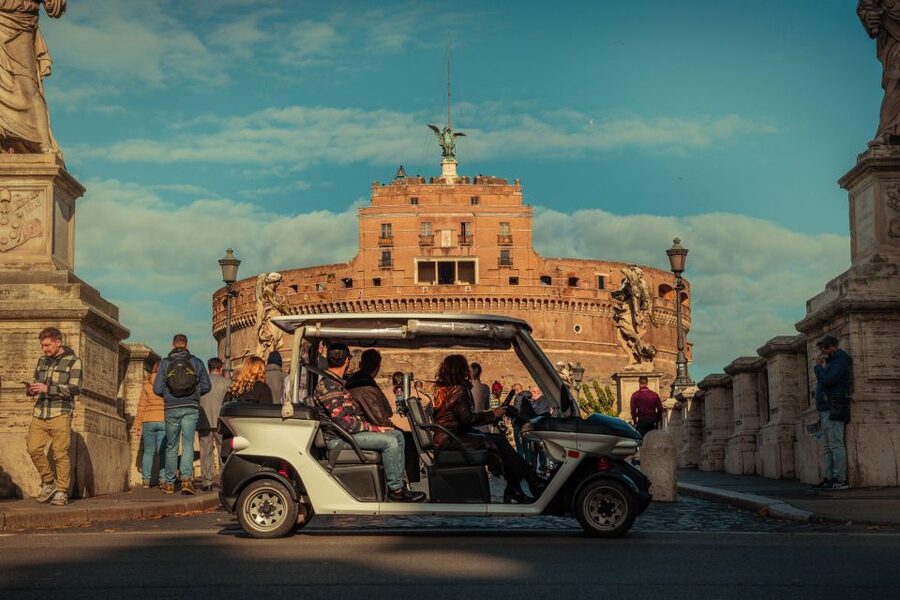
Rome feels different at cart speed. This private highlights tour strings together the big names of the city, from the Colosseum to Vatican City, with narration from a local guide while you glide through narrow old streets. I like that it starts right in the historic center with pickup, so you spend less time figuring out logistics and more time getting your bearings fast, whether your guide is Duccio, Paolina, or Gian Marco.
Two big things I love are the way the golf cart makes the day easier on your legs, and how guides keep it personal, adapting to what you already saw and what you want next. The one drawback to plan around: entry tickets are not included, so you’ll still need to buy separate access if you want to go inside major sights on your own timetable.
Key takeaways before you book
- Central pickup only: Your pickup is limited to certain ZIP codes, so check this early.
- Big sights in a short window: You hit landmarks like the Pantheon, Trevi Fountain, and Spanish Steps without a marathon walk.
- Short stops, smart timing: Photo stops and quick “look-and-learn” moments keep things moving, but they are not long museum visits.
- Guides set the tone: Multiple guides are praised for being funny, patient, and adjusting the pace for families and mixed interests.
- Comfort kit for real weather: Umbrellas, rain cover, and even blankets are included if conditions turn.
- Customisable route (within limits): You can shape the day somewhat to avoid repeating what you already did.
Why a golf cart tour is the smart way to do Rome highlights
Rome is famous for its monuments, and also for its traffic, cobblestones, and tight lanes. A golf cart tour is one of the easiest ways to see a lot without turning your day into a blister test. You still get the story, just delivered while you sit comfortably, rather than while you wrestle with hills and crowds for hours.
This is also a good fit for a “first day” approach. Rome has so many layers that it helps to have someone connect the dots between squares, temples, and empires. A good guide can point out what you would otherwise miss if you only followed a map.
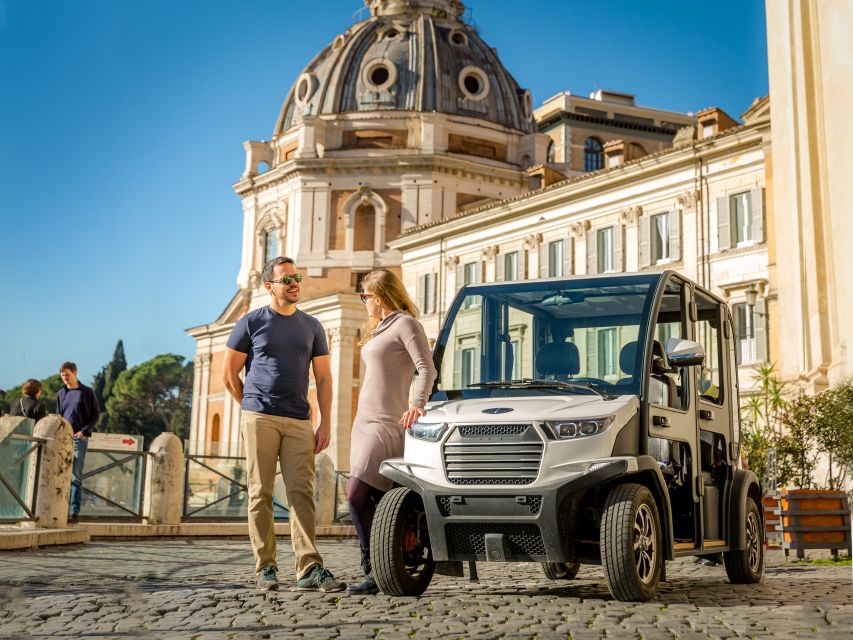
And yes, the carts help in ways you might not expect. They get you to viewpoints where cars cannot go, and they make it practical to stop close to the action for quick photos and explanations. That means more sightseeing time and less time hunting for parking, crossing major roads, or squeezing through bottlenecks.
You can also read our reviews of more private tours in Rome

Pickup in the historic center: where your tour really starts
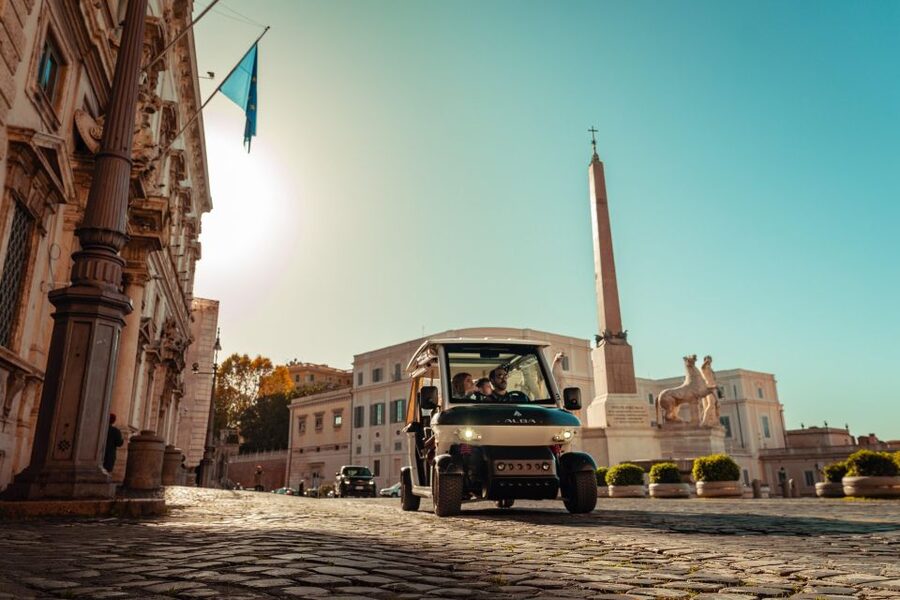
Your tour begins with pickup in the historical center at a time you select. The biggest practical detail is the ZIP-code limit: pickup is only available for addresses with ZIP codes 00184, 00186, 00187. If you are staying just outside those areas, you might need to adjust lodging plans or meeting logistics.
From there, you ride from stop to stop, with short “golf cart” transfers in between. In other words, it is not one of those tours where you spend most of your time driving and waiting. The cart time is there to reduce walking, then you get focused time at the highlights.
Because the tour is private, you avoid the awkward group shuffle. Your guide can ask what you already did, and you get a more natural flow through the day. Guides like Fabio and Lisa have been praised for adapting the route and pacing, which is exactly what you want when your schedule is tight.
Pantheon and Piazza Navona: the day’s first wow factor
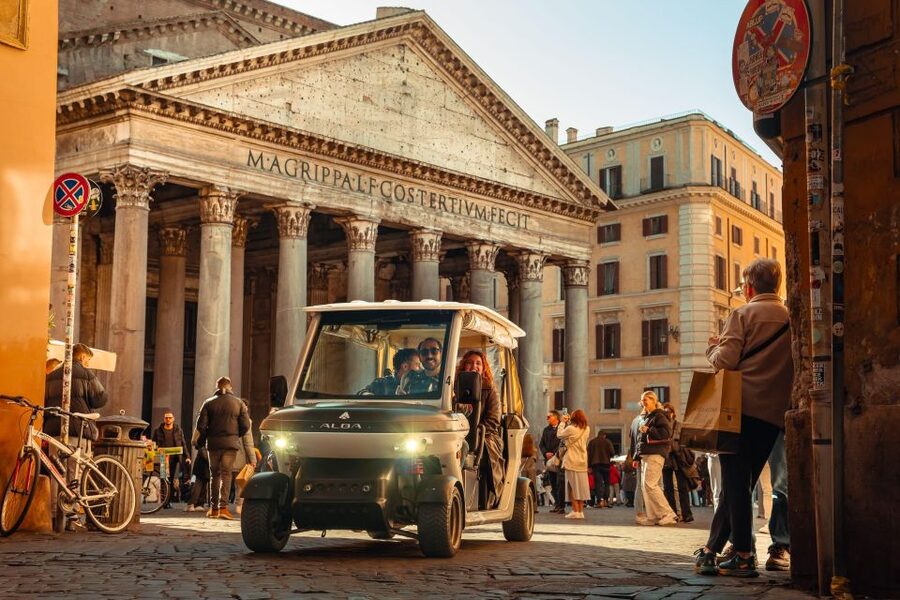
Your first major sightseeing stop is the Pantheon. You will get a guided visit, around 10 minutes in this plan, plus time for photos. Even if you know the Pantheon only by reputation, seeing it in person is a reset moment. The scale and the geometry hit immediately, and a guide can help you understand what you are looking at without drowning you in technical detail.
Right after, you move on toward Piazza Navona, also about a 10-minute guided stop. This square is all baroque energy and street-level charm, and it is one of the places where Rome feels like a set that never changed. Expect to see major perspectives from the edges and hear the kinds of historical notes that make the buildings feel like they have personalities.
A practical consideration: 10 minutes is enough to orient yourself and capture key angles, but not enough for a slow, deep visit. If you plan to go inside and linger, remember the tour does not include entry tickets, so you will need to handle those separately.
Spanish Steps and Trevi Fountain: seeing the icons without burning the whole day
After the baroque square energy, the route hits two of Rome’s most recognizable photo magnets.
First comes the Spanish Steps, with a short guided visit. If you have ever tried to do this area on foot, you know how quickly time vanishes in lines, crowds, and detours. Here, the cart keeps you from spending half the day just getting into the right streets.
Then you reach Trevi Fountain. This is another stop designed for quick impact, about 10 minutes guided. You get the fountain, you get the context, and you get time to see it from multiple angles. If you are going for night photography, you can use this stop as your daytime scout.
Drawback to consider: Trevi and the Spanish Steps can be busy at almost any hour. The tour approach helps, but you still might feel the crowd swell. The upside is that your guide can steer you toward the best viewpoints quickly, rather than letting you wander and lose time.
Also, keep your pace realistic. This is a highlights day, not a slow art-and-architecture marathon. If you want long time at one site, you can often ask your guide to spend a little more at that priority location, as long as the overall route still works.
Colosseum, Roman Forum area, and Circus Maximus: the ancient core, paced for real life
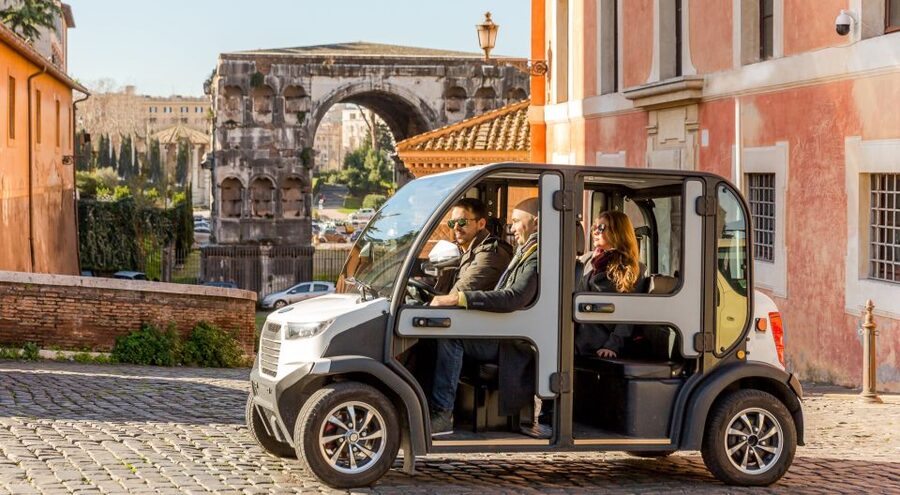
This is the heart of the classic postcard Rome route.
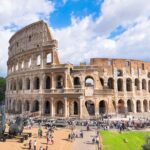
You ride toward the Colosseum for about a 10-minute sightseeing stop. Again, this is built for seeing and learning from the outside or from adjacent viewpoints. If you want to go inside the Colosseum, plan on adding entry tickets separately, because those are not included.
Along the way, you pass major landmarks, including the Vittoriano by the general route. That pass-by matters. It helps you understand the city’s layers, from ancient Rome to more modern monument building, without you needing to connect them alone.
After the Colosseum area, you continue to Circus Maximus for a sightseeing stop. About 10 minutes here gives you a real sense of scale. Even if the original structure is not fully standing, your guide can explain how the space shaped entertainment and daily life.
At this point you will likely feel the difference between “touring” and “just visiting.” You are not only seeing famous buildings, you are learning how they relate to the city’s story.
If you are traveling with kids, this pacing is often a win. Reviews mention guides who kept children engaged, and that makes sense here. The cart reduces fatigue, and the short stops make it easier to hold attention.



Aventine Hill photo stop, Mouth of Truth, and the smaller classics
Next comes a set of stops that feel less like a checklist and more like a guided walk through Rome’s imagination.
You get a photo stop at Aventine Hill for about 10 minutes. This is not about ticking every museum box. It is about perspective. If you want views and postcard angles without a long trek, this fits.
Then you visit the Mouth of Truth. It is a quick stop, around 5 minutes. It is the kind of place where the fun is in the moment, plus the surrounding lore that makes the site memorable. For many people, this is where Rome becomes playful, not just impressive.
You also stop at the Forum Boarium for about 5 minutes. That stop is short, but it offers a change of pace. It is a reminder that Rome was not only built for emperors and spectacle. It was built for commerce, rituals, and everyday movement too.
Another photo moment follows at the Theatre of Marcellus for about 5 minutes. This is one of those structures that looks better when someone explains what it was designed to do, and how it sits in the broader urban plan. As a photo stop, you get the highlights without turning it into a long digression.
Jewish Ghetto and river views: where Rome feels human
The next stop is the Jewish Ghetto, with about a 10-minute guided visit. This is an important shift from monuments to neighborhood history. The time is brief, so you are not getting a full museum experience here, but it gives you a respectful framework for understanding what you are walking through.
After that, the route heads toward the river area. You visit Castel Sant’Angelo for around 10 minutes sightseeing. Even if you know it mostly from movies or views, this place hits hard in person. It looks like a fortress, and it comes with enough history to justify why it has been used and reused across centuries.
This part of the day also tends to feel calmer than the heaviest central crowds. You are still in Rome’s spotlight zones, but the pacing is designed to keep you moving without exhausting you.
Vatican City: how to get the most from a short stop
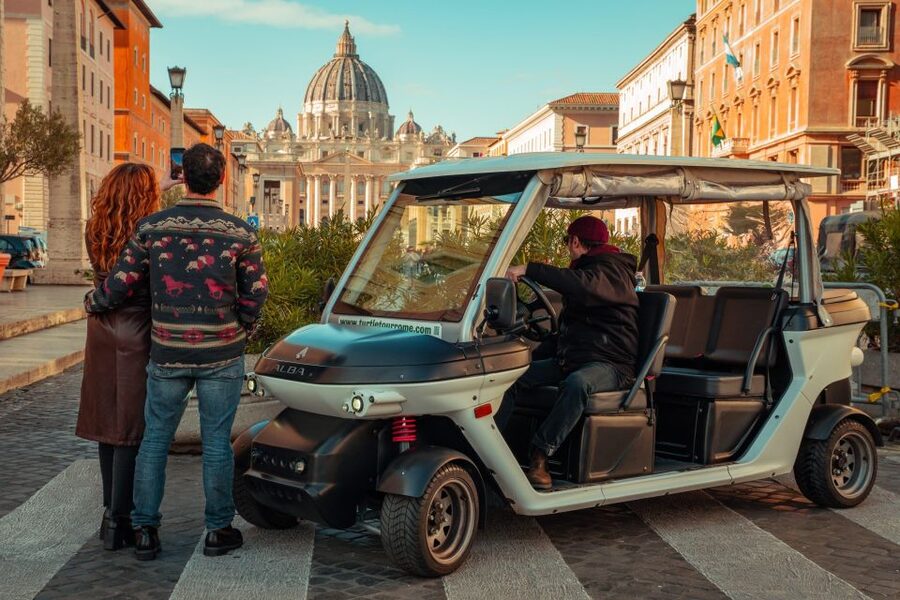
Your tour ends with Vatican City sightseeing, about 10 minutes. This is a “see the key sights from the outside” kind of stop in most highlight tours, and since entry tickets are not included, you should treat it as orientation time. If the Vatican is a must-go inside for you, you will want to plan a separate timed ticket and build your day around that.
That said, having a guide here still matters. A quick guided explanation helps you understand why the shapes, courtyards, and major structures are positioned the way they are. It also helps you connect what you have already seen earlier in the day with what you are seeing here.
If you are short on time in Rome, this is one of those strategies that can be worth it. You get your first visual impression, then you can decide what deserves a return visit with tickets later.
Guide quality is the real value add
The carts do the logistics. The guide does the magic.
Across guides, the consistent praise is about pacing, humor, and the ability to keep different interests on track. Names that show up again and again include Duccio, Paolina, Gian Marco, Fabio, Lisa, Mimmo, and Tiziano. The common thread is that they do not just list facts. They explain why a place matters, then help you see it with your own eyes.
One practical strength that comes up often: good guides ask what you already did before you start. That means you waste less time repeating what is already familiar, and you spend more time on what is new or important to you. If your trip is compressed, that is not a small detail. It is the difference between a tour that checks boxes and one that sets you up to explore on your own afterward.
Also, multiple guides are praised for being adaptable even when the day turns weird, like rainy weather. The tour includes umbrellas and rain cover, and that helps your comfort stay stable while the guide keeps the plan working.
Comfort tips that make the day go smoother
This tour is built for moving fast, but Rome rarely gives you smooth conditions. Expect bumpy streets, and plan accordingly if you are sensitive to jolts. The golf cart helps a lot, but it does not turn Rome into a highway.
Bring a small bag with essentials, and keep an eye on your timing. Stops are short by design, so you will get more value if you are ready to move when your guide signals the next leg.
If you are traveling in heat, the cart is a lifesaver for breaking up long walking stretches. Reviews also mention the advantage of carts during summer, because you get relief from the sun while still seeing a lot.
If it rains, you are set. Umbrellas, rain cover, and even blankets if needed are included. That is not a luxury detail. It is often the difference between tolerating the day and enjoying it.
If you are traveling with mobility needs or families: the tour is wheelchair accessible, and strollers are allowed with advance notice. If you need specific arrangements, tell the operator beforehand so your guide can plan accordingly.
Price and value: what $164.26 really gets you
At $164.26 per person, you are paying for three things: private guiding, efficient transportation, and a structured route that covers major highlights in a limited time window.
For value, compare this to the cost of doing the same sights via separate taxis, multiple guide bookings, and the time you lose navigating congested areas. If you are in Rome for only a few days, this kind of private orientation can actually save money by reducing extra day tours later.
The duration is listed as 1.5 to 3 hours, depending on availability and your start time. That range matters. In 1.5 hours, you get a fast highlight scan with minimal linger. In a longer option, you have more breathing room for photos and questions.
The key value question is how you personally travel. If you dislike long walks, want to see a lot without fatigue, or want a clear first-day structure, the cart format makes the price easier to justify. If you love lingering at a single site, you may find a short stop schedule too rushed unless your guide can adjust your priorities.
Should you book this Rome highlights golf cart tour?
I think it is a strong choice if you want a first-day boost and you care about comfort on cobblestones and crowded streets. It is also great for families, mixed-age groups, and anyone who wants to see major landmarks like the Pantheon, Trevi Fountain, Spanish Steps, Colosseum area, and the Vatican without stacking hours of walking.
Book it if:
- you want a private, guided orientation
- you prefer short stops with context, not long museum marathons
- you are planning to return later for tickets at the sites that truly pull you in
Skip or reconsider if:
- you want long interior visits at the Colosseum or Vatican right away, because entry tickets are not included
- you are the type who hates crowd zones, since icons like Trevi can still be busy even with efficient routing
FAQ
How long is the Rome private highlights tour by golf cart?
The duration is listed as 1.5 to 3 hours, with starting times depending on availability.
Are entry tickets included for the Colosseum or Vatican?
No. Entry tickets are not included.
Where can pickup be arranged?
Pickup is available only at addresses with ZIP codes 00184, 00186, and 00187 in the city center.
What languages does the live guide speak?
The tour offers live guiding in English, French, German, Italian, and Spanish.
Is the tour wheelchair accessible, and can I bring a stroller?
Yes, the tour is wheelchair accessible. If you plan to bring a wheelchair or a stroller, you should let the operator know beforehand.
Is rain gear provided?
Yes. The tour includes umbrellas and rain cover if needed, plus blankets if needed.
More Private Tours in Rome
More Tours in Rome
More Tour Reviews in Rome
Not for you? Here's more nearby things to do in Rome we have reviewed





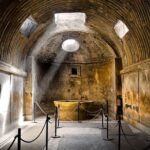
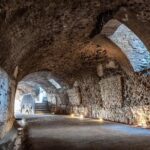


Rome Golf Cart Tours, compared.
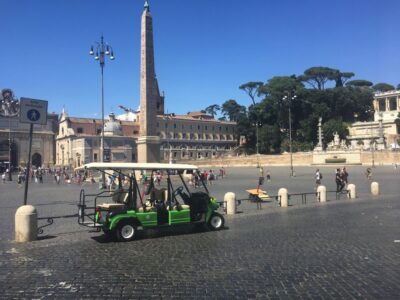 ★ 4.8Imperial City Tour by Golf Cart with Optional TransferFrom $1241,024 reviews
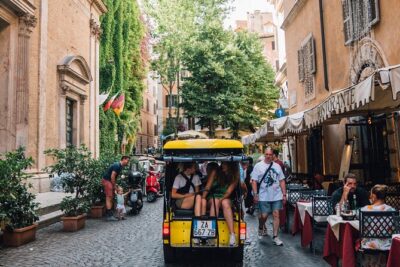 ★ 5.0Golf Cart Small-Group Guided Tour: Rome City HighlightsFrom $104907 reviews
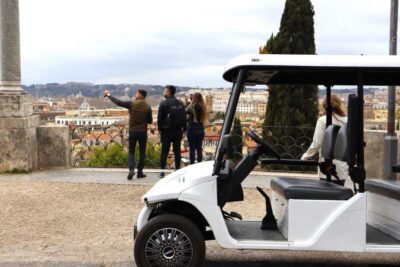 ★ 4.8City Highlights Golf Cart TourFrom $45857 reviews
 ★ 5.0Private/Group 4 Hours Golf Cart SightseeingTourFrom $168780 reviews
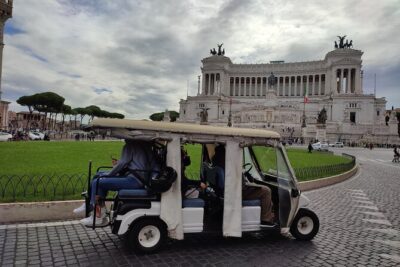 ★ 5.0Explore Rome on a Golf Cart: Private TourFrom $83757 reviews
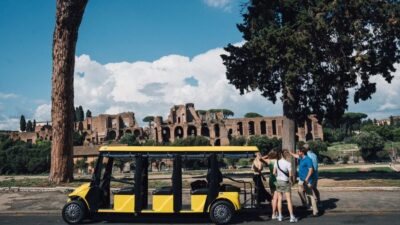 ★ 4.8City Highlights Golf Cart Tour with Local GuideFrom $71752 reviews
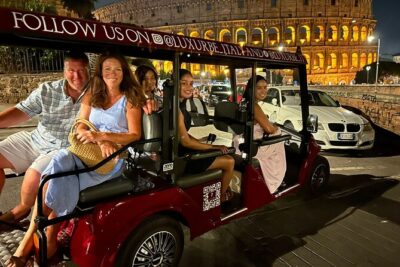 ★ 4.5Rome by Night: Golf Cart TourFrom $108688 reviews
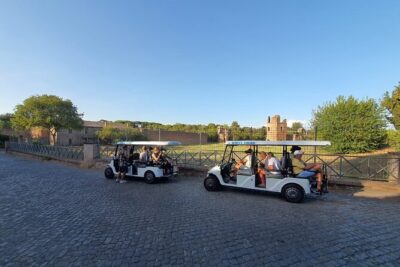 ★ 5.0Rome Catacomb & Appian Way Small-Group Tour by Golf CartFrom $107681 reviews
Browse the lists this tour appears in