
Reviewed · TRASTEVERE TOURS
Rome: Jewish Ghetto and Trastevere Tour
Rome has a second story.
This 2.5 hour walk connects Rome’s Jewish Ghetto and Trastevere in a way that feels personal, not textbook. You start with cobblestones and hard-won survival stories, then you move toward the Tiber and into Trastevere’s older, more lived-in rhythms, all tied together by the guides’ storytelling.
I especially like how the tour keeps you walking through real places, not just stopping for photos. The route includes Theatre of Marcellus and Portico d’Ottavia as context, then builds momentum through the Ghetto and ends in Trastevere near Santa Maria in Trastevere, with time for a short break on Tiber Island.
One consideration: you see the synagogue from the outside only. If you were hoping for an interior visit, plan for this to be an atmospheric history-and-streets tour, with architecture and visible landmarks doing most of the work.
Key things to know before you go
- Story-driven guiding that turns streets into scenes, not lectures
- A smart route link between the Jewish Ghetto and Trastevere
- Real landmarks in a short walk (Theatre of Marcellus, Portico d’Ottavia, Tiber Island)
- Time for pauses including a break on Tiber Island
- Trastevere’s church-and-alley contrast after the Ghetto
- Good value for the price when a guide turns details into clear stories
Entering the Jewish Ghetto and Trastevere connection
This tour makes one big argument: Rome’s neighborhoods are not isolated boxes. The Jewish Ghetto and Trastevere sit close enough that you can feel how the city’s history overlapped, changed, and remembered itself. Instead of treating the Ghetto as a museum zone, you learn how it connects to the broader life of the city.
I like that it’s not only about sadness or only about beauty. You get the weight of centuries in the Ghetto, then you walk into Trastevere where the streets, churches, and daily atmosphere help you understand the contrast. That shift is part of why this route works.
If you’re a first-time visitor, you’ll get your bearings fast. You’ll also come away with a better sense of how Rome’s layers pile up in the same walking distance.
You can also read our reviews of more tours and experiences in Rome.


Meeting at Santa Rita da Cascia in Campitelli (and why it matters)
You meet outside Santa Rita da Cascia in Campitelli, on Via Montanara, next to Antico Caffè del Teatro Marcello. The guide waits there with a sign that says Jewish Ghetto & Trastevere Stroll, so arriving about 10 minutes early helps you avoid stress and missed introductions.
This meeting point is useful because it puts you near major context sites right away. You are not starting in the middle of the Ghetto with zero background, which makes the later stops easier to follow.
Bring comfortable shoes. The walk is on cobblestones and uneven paving, and the whole point is to actually experience these street-level spaces.
Theatre of Marcellus and Portico d’Ottavia: the quick warm-up ruins
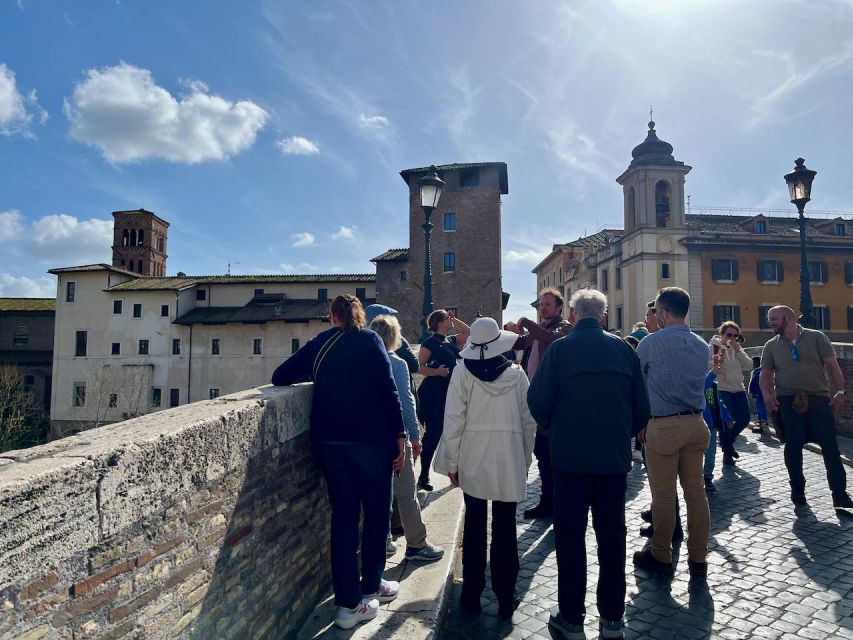
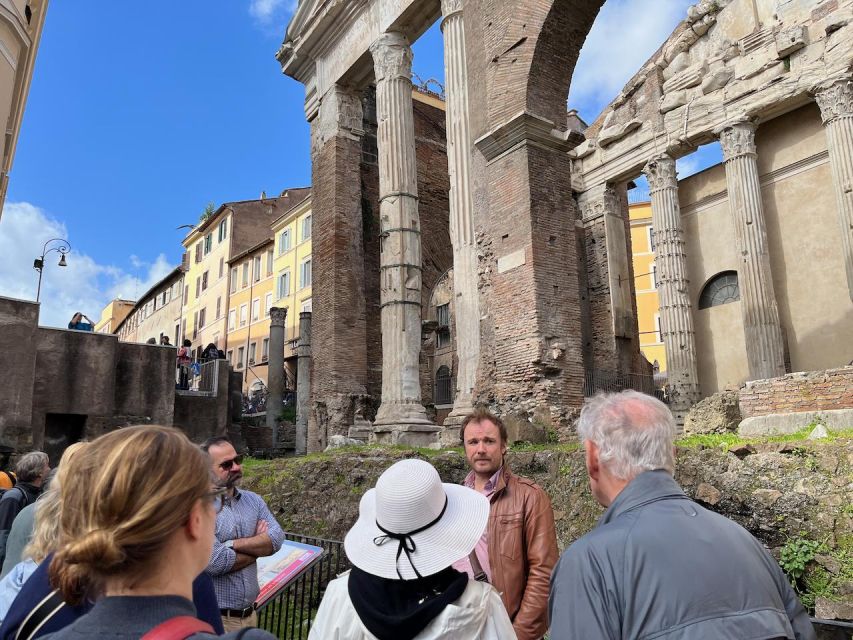
Before you hit the Jewish Ghetto, you get a short guided look at the Theatre of Marcellus and then the Portico d’Ottavia. Even with just about 10 minutes here and 5 minutes there, the purpose is clear: Rome’s story did not begin with modern streets.
At Theatre of Marcellus, the guide’s narration helps you see why this area mattered long before the later neighborhoods took their shape. Then Portico d’Ottavia adds another layer of civic and architectural context, so the Ghetto stops land with more meaning.
This is also a good pacing moment. You start with landmarks that are easier to orient around, and then the tour moves into narrower streets where the storytelling can feel more intimate.
Jewish Ghetto streets: resilience, regulation, and everyday life
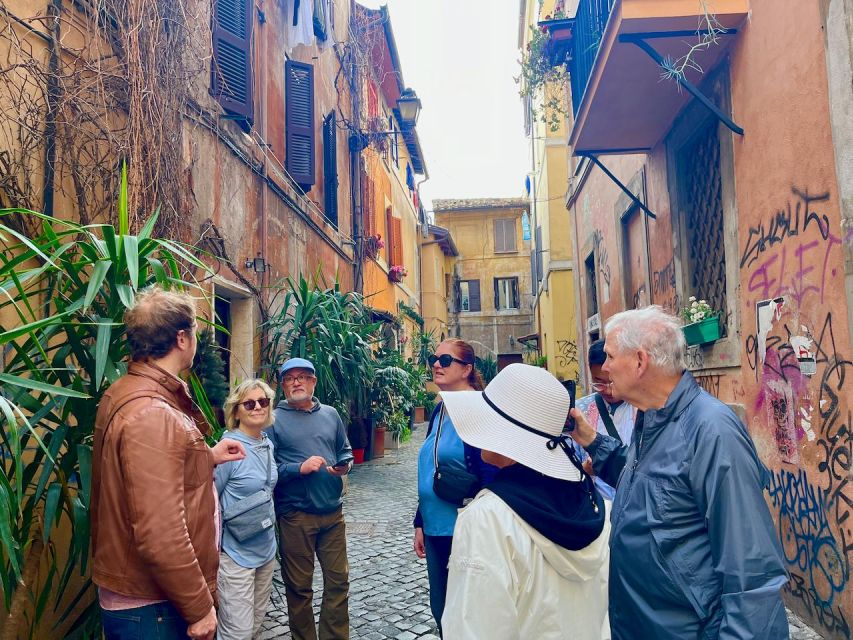
The tour’s heart is the Jewish Ghetto walk, split into multiple segments so you can absorb what you’re hearing. You spend about 30 minutes in the Ghetto, then later another 20 minutes after Piazza Mattei, so the neighborhood story doesn’t blur into one long stretch.
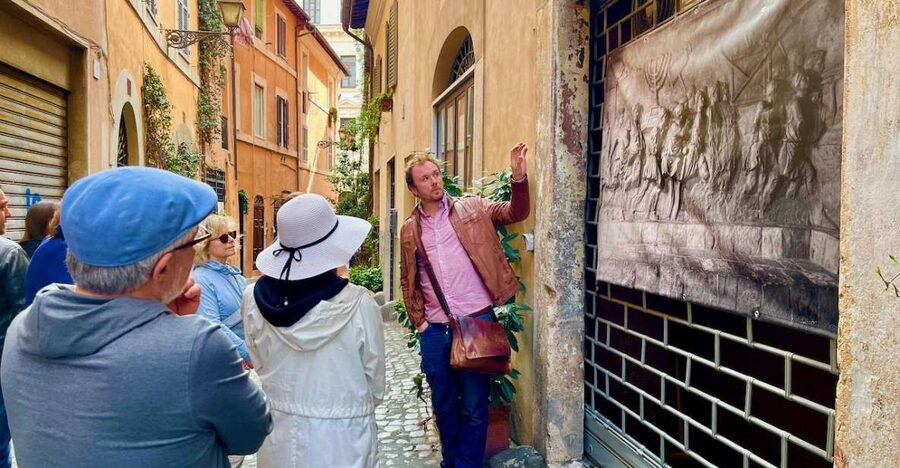
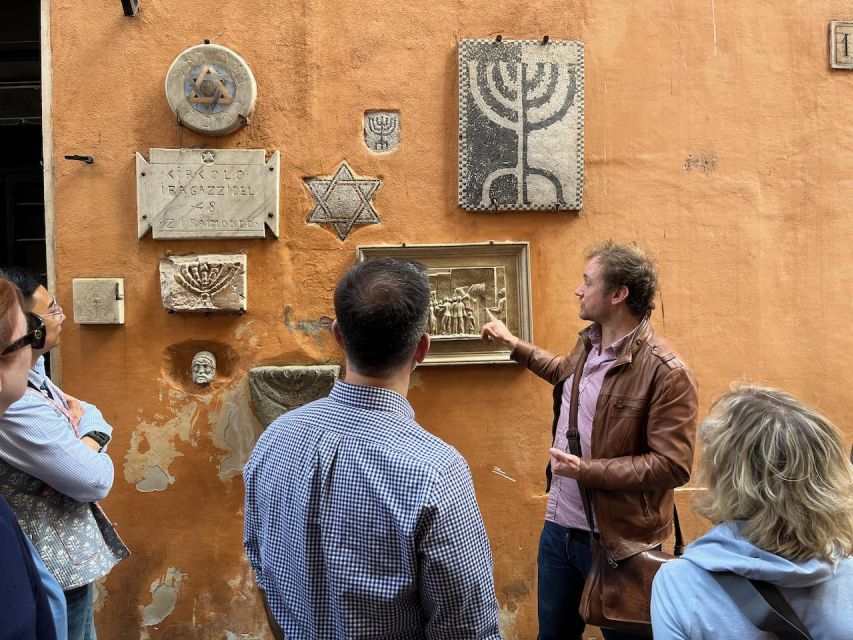
This is where you’ll feel the “layers” of the past in a practical way. You’re walking through a space where history is not abstract, it’s built into the layout, the corners, and the facades you see as you move. The guide focuses on how the Jewish community’s life in Rome shaped, and was shaped by, the city around them.
I also love that the tour does not dodge complexity. Based on the way guides have been described, you’re likely to hear stories that include hard chapters and also moments that show human endurance. One review highlighted how the guide was able to cover 2,000+ years of history and distill it into a connected story, which is exactly what you want on a short walking tour.
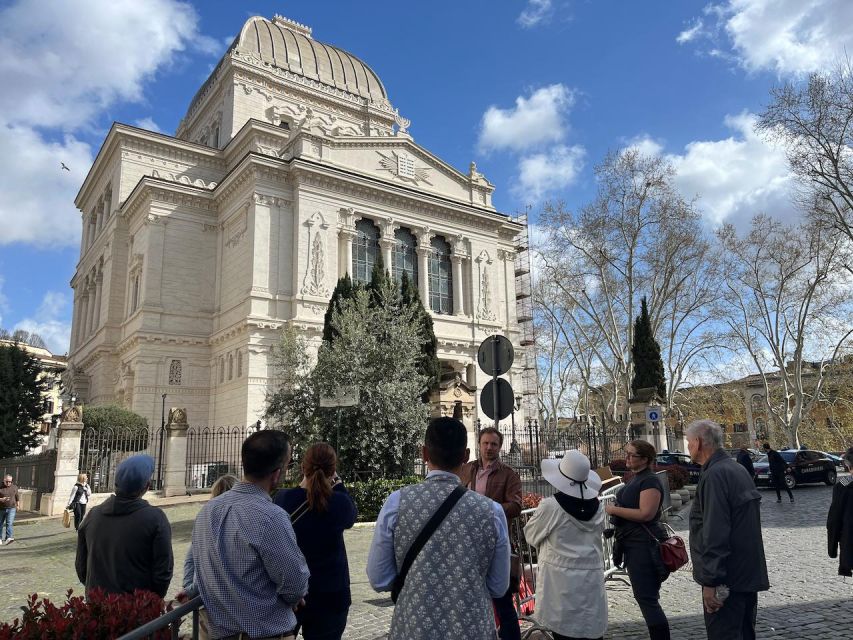
Synagogue viewing is exterior only
You will not go inside the synagogue. The tour is designed so you see it from outside, which still works if your goal is street-level context rather than an interior museum visit.





Piazza Mattei: a breather that still keeps the story moving
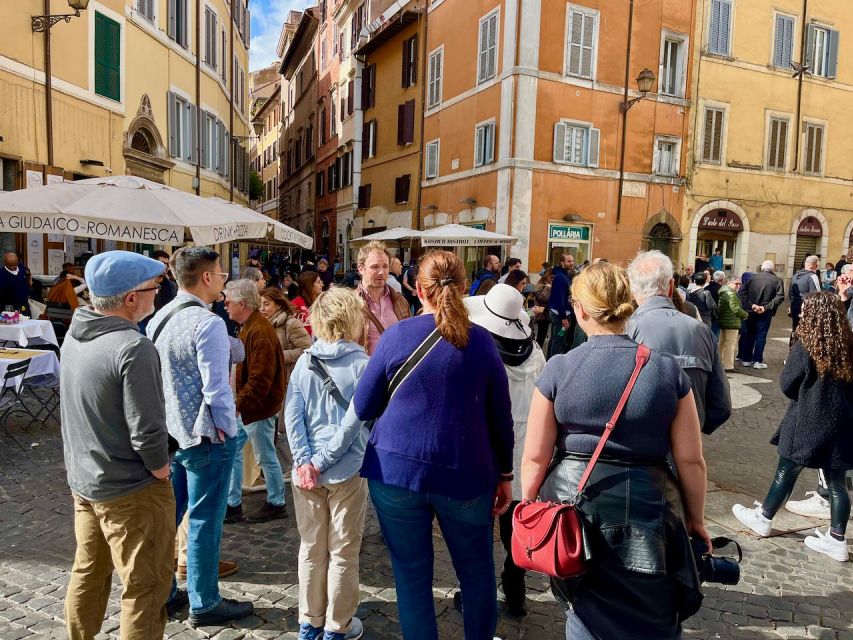
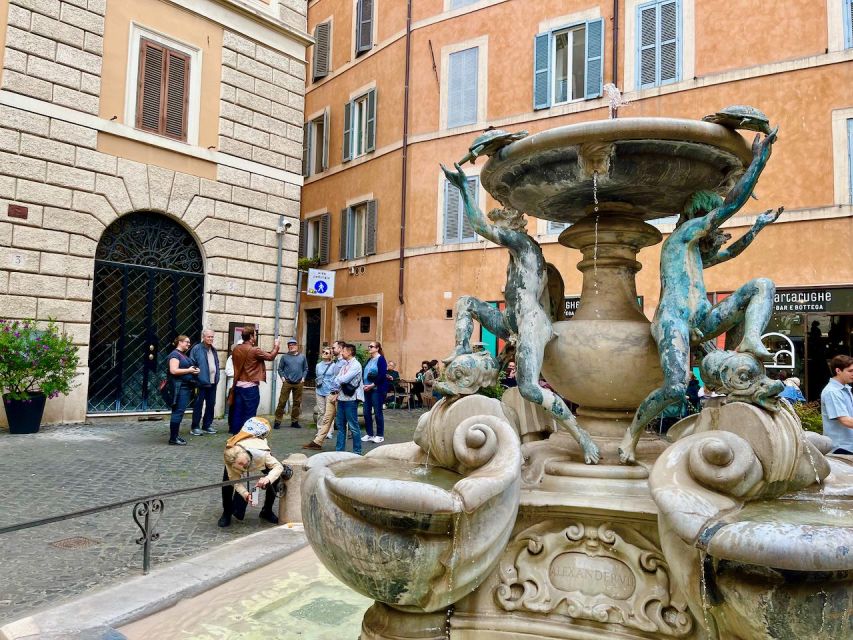
Piazza Mattei is a short guided stop, about 10 minutes, but it breaks up the walk in a smart way. You’re already in the Ghetto zone, so instead of feeling like you’ve paused the experience, the stop gives your brain a chance to regroup.
Think of it as the narrative hinge. You’re not just moving from one cluster of streets to another, you’re stepping into a different feel of open space before you return for more Ghetto walking.
If you’re sensitive to long stretches of dense information, this kind of pause is genuinely helpful. It keeps the tour from turning into nonstop input.
Tiber Island: why the center of the river still pulls the story
Next comes the Tiber Island segment, with about 15 minutes of guided time and then a 10-minute break. That break matters because it gives you space to stand back, look, and let the history “sit” for a moment.
Even though the island is small, it’s historically significant, and your guide uses that to connect the dots between the neighborhoods you just explored. The Tiber is Rome’s great divider and connector, so this stop reinforces the idea that places nearby can still have very different identities.
This is a great moment to take photos, but also to just look at how the river frames movement. Once you see the island in your mental map, the rest of Trastevere makes more sense.
Trastevere’s alleyways and Santa Maria in Trastevere
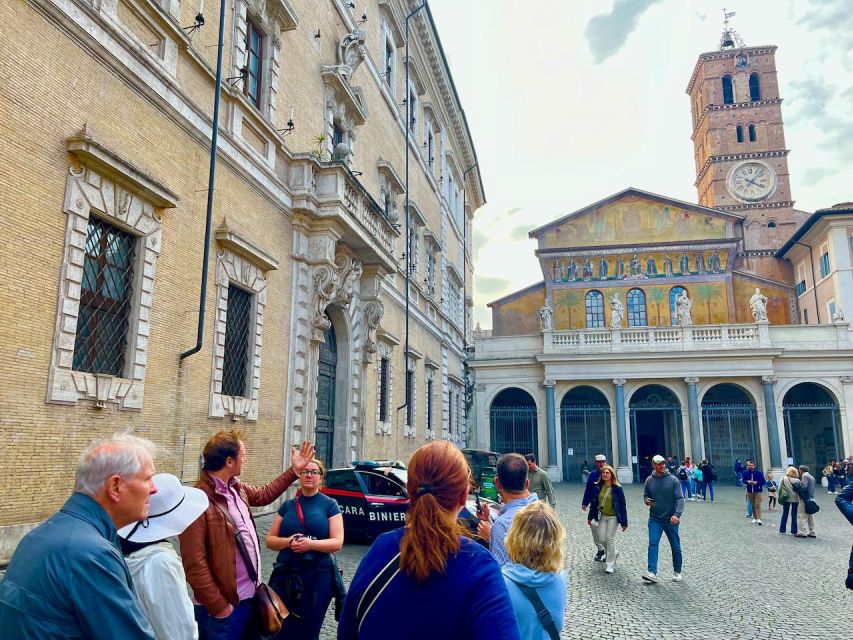
Trastevere is where the tour’s mood shifts, and that contrast is the point. After the Ghetto, you spend about 30 minutes roaming Trastevere’s narrow alleys, with ivy-clad houses and older churches shaping the background.
You’ll also get a guided look at Santa Maria in Trastevere for about 10 minutes. This stop is useful because it anchors your Trastevere experience in more than just street charm. Churches here help explain why this neighborhood carries tradition in a visible, day-to-day way.
Guides who bring humor without losing the thread
Several reviews specifically praise how guides use humor and clear explanation, with English described as easy to follow. Names that come up include Alithia, Ariel, Guido, Ben, Alethea, Alice, Ivana, and others. That matters because this topic needs both sensitivity and clarity, and the best guides keep their tone human.
If you tend to forget facts in long tours, this approach helps. When the guide uses stories and small side details, you can remember the feel of a place, not only dates.
Piazza Trilussa: ending in a real neighborhood, not a dead-end
The tour finishes at Piazza Trilussa. It’s a smart place to end because you’re not left stranded in a transit gap, you’re placed in an area where you can continue wandering on your own.
If you want to extend the evening, ask your guide for food or drink recommendations at the right moment. Many guides in the feedback are described as giving practical suggestions for local spots, and the tour even mentions an optional gelateria or café stop.
This is also a good time to slow down and browse. Trastevere rewards unplanned walking, and your new context from the Ghetto will change what you notice as you go.
What makes this tour worth $35 for 2.5 hours
At $35 per person for about 2.5 hours, the value depends on one thing: the guide. In the feedback, the guides are repeatedly praised for making the history feel real, staying well paced, and answering questions clearly.
That’s not a small point. A low-cost tour that turns into a rushed walk is disappointing. Here, the structure includes multiple guided segments, a break on Tiber Island, and an intentional rhythm that keeps the story coherent.
You also get more than one “Rome flavor” in a single outing. You’re seeing context ruins, the Jewish Ghetto, Tiber Island, and Trastevere in one go. If your days are packed, this saves you time compared with trying to stitch the same loop together solo.
What is not included, and how to plan around it
Food and drink are not included. There is an optional gelateria or café stop, so if you want a snack, plan to budget a bit extra. Also, because the synagogue is outside-only, you should not expect timed entry into a formal interior visit.
Practical tips for a smoother walk
This tour runs in rain or shine. Bring a compact weather layer so you can stay comfortable without spending the whole time checking your phone for updates.
In summer, it can get warm, so bring a water bottle. The tour info notes fountains are available for refills, which is a Roman-friendly solution if you hate carrying heavy bottles.
Arrive early at the meeting point and give yourself a little buffer. Guides are scheduled to start on time, and late arrivals can reduce how much explanation you get at the beginning, which is when the whole story is easiest to follow.
Who this tour fits best
This is ideal if you want a focused, human-scale history walk. If you like architecture and place-based storytelling, you’ll enjoy how stops like Theatre of Marcellus and Portico d’Ottavia set up the neighborhoods that follow.
It also works well if you’re pairing Rome experiences and want something different from the “usual big monuments.” Instead of only sprinting from highlight to highlight, you get to understand how Rome’s identity formed neighborhood by neighborhood.
If you need a lot of indoor time, you might find it lighter on museum-style content since the synagogue is exterior only and much of the experience is outdoors walking.
Should you book this Rome Jewish Ghetto and Trastevere tour?
If you want a clear, story-led way to understand two of Rome’s most meaningful areas, I’d book it. The combination of the Jewish Ghetto, Tiber Island break, and Trastevere finish is a strong use of time, especially for a half-afternoon slot.
Choose it if you value a guide who can connect landmarks into a single thread and keep the pace comfortable. Based on the guide feedback, the best part is often the narration style, with English that is easy to follow and a sense of humor that helps serious history stay understandable.
Skip it only if you specifically want synagogue interior access or long indoor exhibits. For everyone else, this is a rewarding walk that turns Rome from a list of sights into a map of stories you can actually remember.
FAQ
How long is the Rome Jewish Ghetto and Trastevere tour?
The tour lasts 2.5 hours.
What does the tour cost?
It costs $35 per person.
Where do I meet the tour guide?
Meet outside the church of Santa Rita da Cascia in Campitelli, in Via Montanara next to Antico Caffè del Teatro Marcello. Your guide will be waiting with a sign that says Jewish Ghetto & Trastevere Stroll.
Is the synagogue included in the tour?
No. The synagogue is seen from the outside only.
Is food included?
Food and drink are not included. An optional stop at a gelateria or café may happen.
Does the tour run in bad weather?
Yes, it runs rain or shine, so bring weather protection.
More Tours in Rome
More Tour Reviews in Rome
Not for you? Here's more nearby things to do in Rome we have reviewed











Trastevere Tours, compared.
 ★ 4.8Trastevere or Jewish Quarter Street Food TourFrom $513,839 reviews
 ★ 4.9Trastevere & Campo de Fiori Street Food Walking TourFrom $512,768 reviews
 ★ 4.8Guided Food Tour in TrastevereFrom $1122,266 reviews
 ★ 4.9Trastevere Guided Food and Wine Tour with 20+ TastingsFrom $1461,022 reviews
 ★ 4.8Small Group Trastevere Food Tour with DinnerFrom $132719 reviews
 ★ 5.0Rome Trastevere Pasta Making Class with Eating EuropeFrom $100505 reviews
 ★ 4.9Twilight Trastevere Food Tour with Wine TastingFrom $123490 reviews
 ★ 4.8Food & Wine Tour of Campo de Fiori, Ghetto, TrastevereFrom $81413 reviews
Browse the lists this tour appears in