
Reviewed · COLOSSEUM TOURS
Rome: Introduction to the Colosseum and Ancient City Tour
Big Rome, small time. This 2.5-hour tour helps you see the Colosseum fast, with skip-the-ticket-line access and explanations you can actually follow using radios and headsets. I also like that you do not just rush through, you get guided context first, then time to look around on your own around Palatine Hill and the Roman Forum. One thing to keep in mind is strict ID rules, and the meeting area can be chaotic when you arrive.
You’ll meet your Crown Tours guide and head straight into one of the most famous spots in the world. The guided story centers on how the Colosseum worked, why it was built, and what Roman entertainment really meant. The practical bonus is that you finish near Trajan’s Column, so you get a strong visual “end point” instead of wandering back into the crowd.
Quick take: best for first-timers who want context
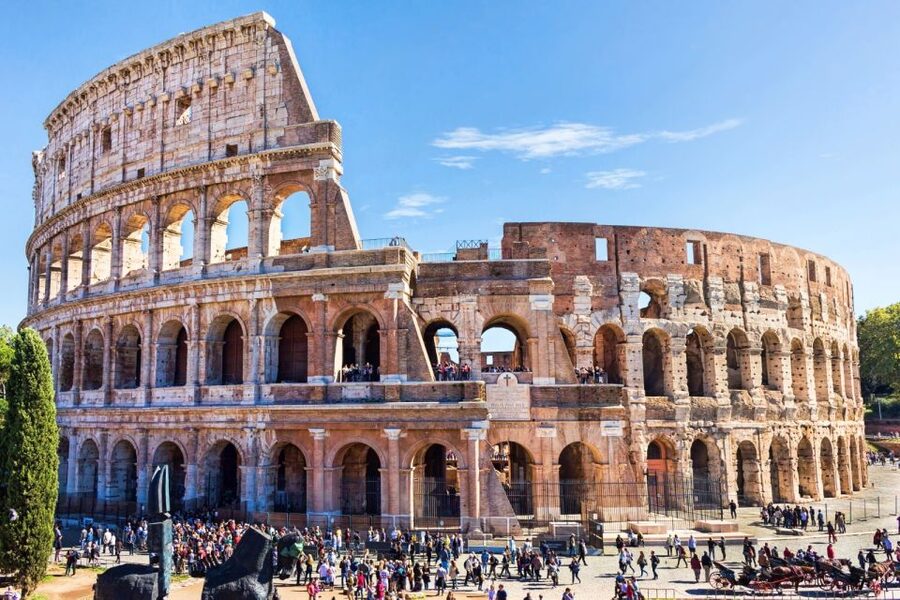
If this is your first Rome ruin day, this tour has a smart flow. You start at the Colosseum with a guide, then you move through Palatine Hill and the Roman Forum, where the city’s power and politics actually lived. The only drawback is you must show ID, and the tour is non-refundable, so plan your schedule carefully.
Why this Colosseum tour feels efficient and worth $58
Let’s talk value, not just price. At $58 per person for a 2.5-hour guided experience, you are paying for three things that matter in Rome.
First, you skip the ticket line, which is huge at the Colosseum where waits can eat your morning. Second, the tour includes licensed guide time plus reservation services and the archaeological-site entry. Third, you get audio devices, which makes a real difference in a loud, windy monument zone.
The math on the site fees is worth knowing. The tour includes the official entrance fee, listed as €16 for adults, plus a €2 reservation fee, with free entry for children under 18. Your price also covers guide services, audio devices, and tour amenities. So you are not just buying a ticket, you are buying time with a guide who can interpret what you are seeing.
The tour is rated 4.8 with 75 reviews, and the most praised parts come up again and again: guide clarity, great pacing, and fun personality. One guide you may encounter is Catherine, praised for excellent French and strong explanations. Another mentioned guide is Alessandro Palma, noted for being thorough, friendly, and sharp on details.
You can also read our reviews of more city tours in Rome


Entering the Colosseum with reserved access
Your start point can vary depending on the option you book, so double-check the exact meeting instructions before you go. Once you meet up with Crown Tours, the first practical win is access. You are not dealing with the slow crush at the entrance.
Keep your logistics simple:
- Bring the ID you used for the booking
- Keep your day bag manageable since there is no suitcase compartment
- Expect ID checks at the entrance
This is not a “show up and wing it” site. The tour provider is clear that if you arrive without ID, entrance can’t be guaranteed.
What you actually learn in the Colosseum
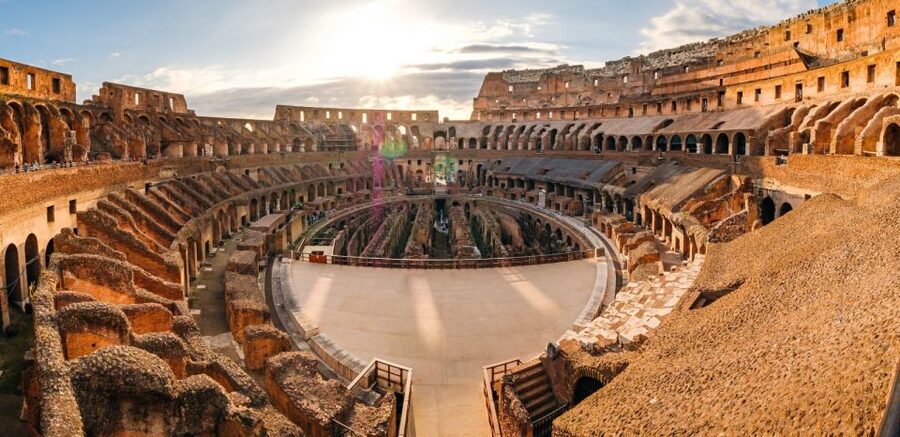
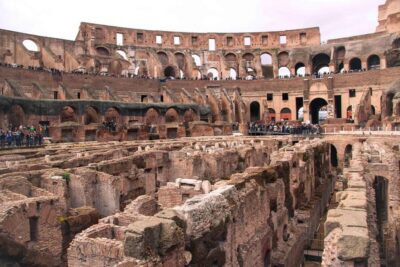
The Colosseum is a giant stone machine, and your guide explains it like one. You learn key facts that help the building stop being just impressive and start making sense.
Here are the big ideas your guide covers:
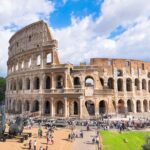
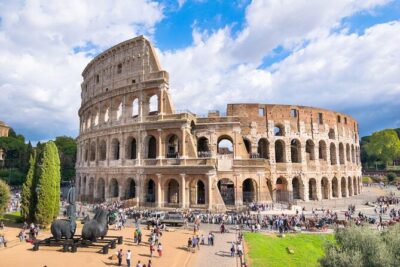
- The Colosseum had over 80 entrances and could accommodate around 50,000 spectators.
- It was built for three main reasons: to win favor with Roman citizens from the Flavian Dynasty, to stage entertainment, and to showcase Roman engineering.
- Games and festivals could last up to 100 days.
That “engineering first” approach is the difference between reading about the Colosseum and actually understanding why it looks the way it does. When your guide points out how crowd flow and structure relate to performance, you begin to picture how the arena would have felt in action.
A big theme is how Roman entertainment worked as public messaging. This is not just violence as spectacle, it is also politics, social control, and civic pride all packaged into one massive venue.
How the guided story leads into self-paced exploring
The tour is built in layers. You get a guided walk and explanation, then you get room to slow down.
After the guided Colosseum portion, you move into Palatine Hill and the Roman Forum. The plan keeps you from spending the whole day looking down at your feet. Your guide gives you enough context to choose what to focus on next.
Once you are settled into the ruins zone, you can shift gears. You might spend more time on panoramic spots, or you might linger on specific structures. The tour design is meant for that kind of flexibility after you understand what you are looking at.
Palatine Hill: the view plus the timeline
Palatine Hill is where Rome feels layered, because it literally is layered. This part of the tour is more than scenic. Your guide walks you through how the hill connects many eras in one view.
You hear about Palatine’s “foundation” role, then you jump across time:
- Ruins reaching back to the early kingdom of Rome, roughly the 7th century BCE
- Later Roman Republic layers
- The Imperial Age palace of Emperor Domitian, which is jaw-dropping in concept if not in intact detail
- Later additions like the Farnese family presence during the Renaissance
- And even the 20th-century presence of Mussolini
I like that you get a guided story first, because it changes how you read the ruins. Without context, you see broken stone. With context, you start imagining households, emperors, and elite power shifting across centuries.
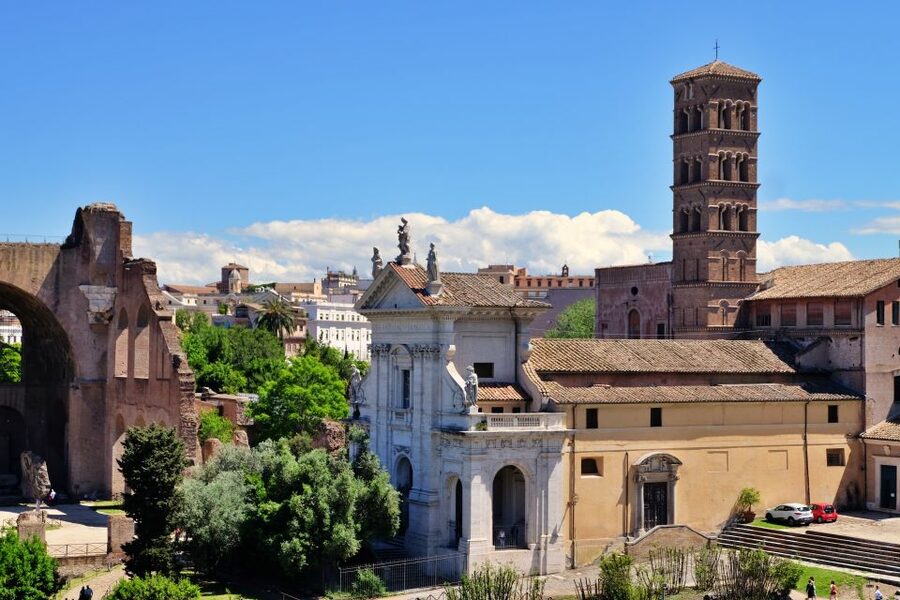
And yes, there are panoramic views of the Colosseum from this area, which turns your “history stop” into a photo and orientation stop at the same time.


Roman Forum: politics, money, religion, and daily collisions
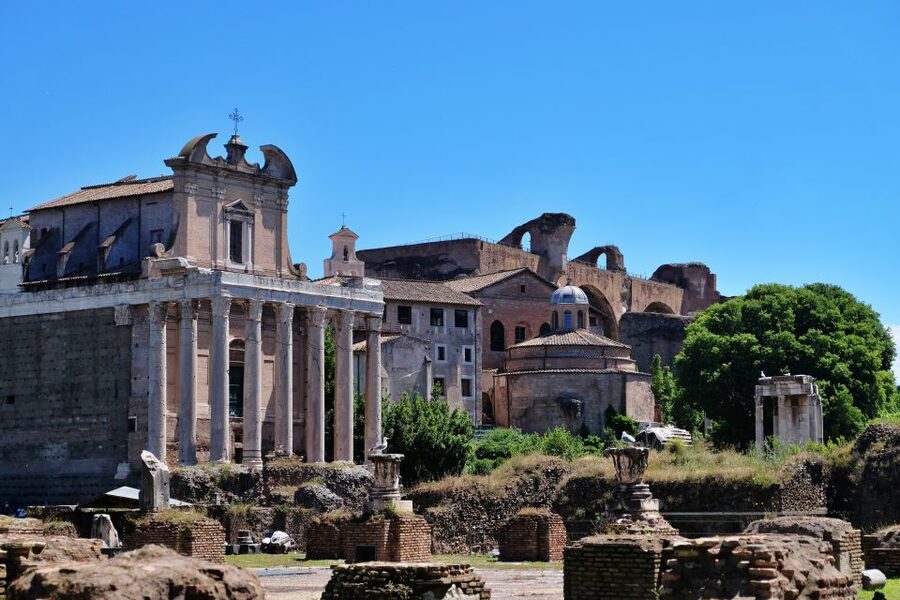
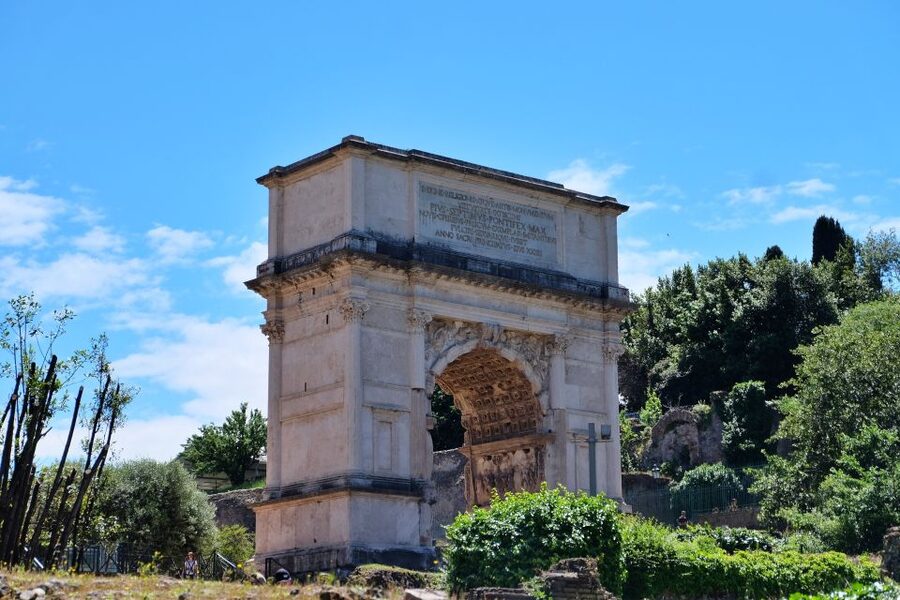
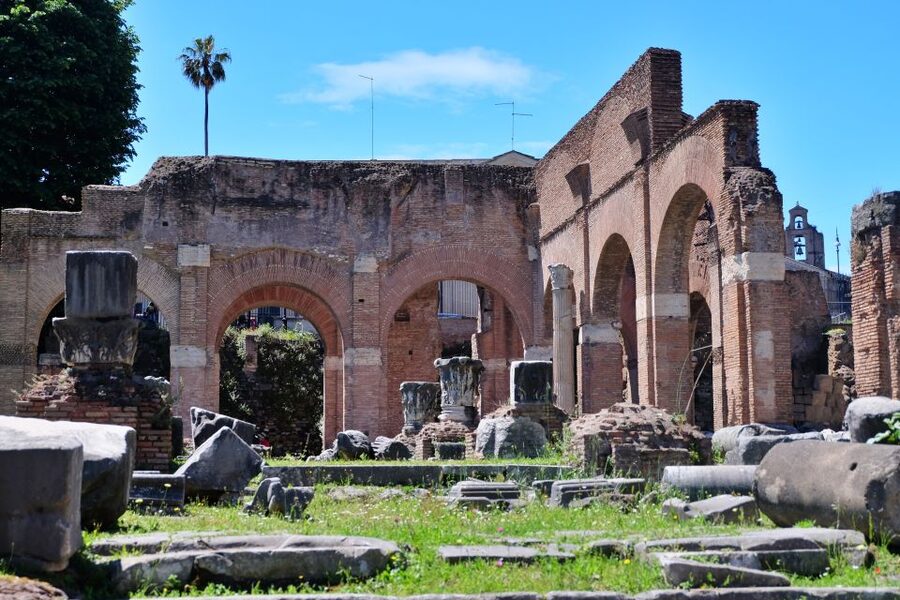
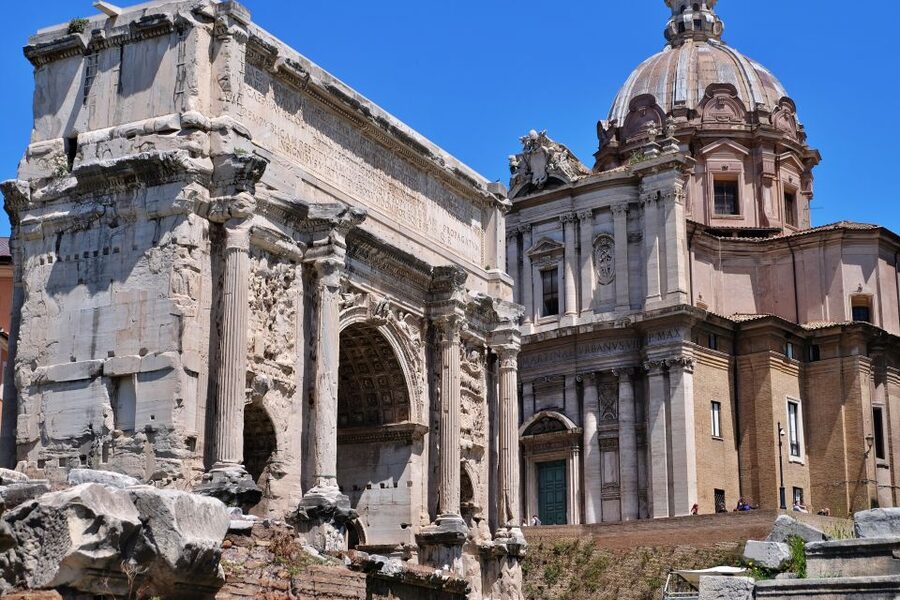
The Roman Forum is where the Roman Empire’s pulse showed up every day. Your guide frames it as the social, political, religious, and financial center of the empire.
What I find most useful here is the guide’s emphasis on people. It is not an empty museum. The Forum is described as a place where different classes rubbed shoulders daily, from wealthy senators down to homeless beggars.
That matters because it helps you interpret the ruins around you. Instead of only hunting for famous names, you look for the functions: where decisions happened, where business took place, where public life shaped identity.
Structures are still standing in places, but the real payoff is your mental map. You start to see the Forum as a working city hub, not just a set of monuments.
Ending at Trajan’s Column
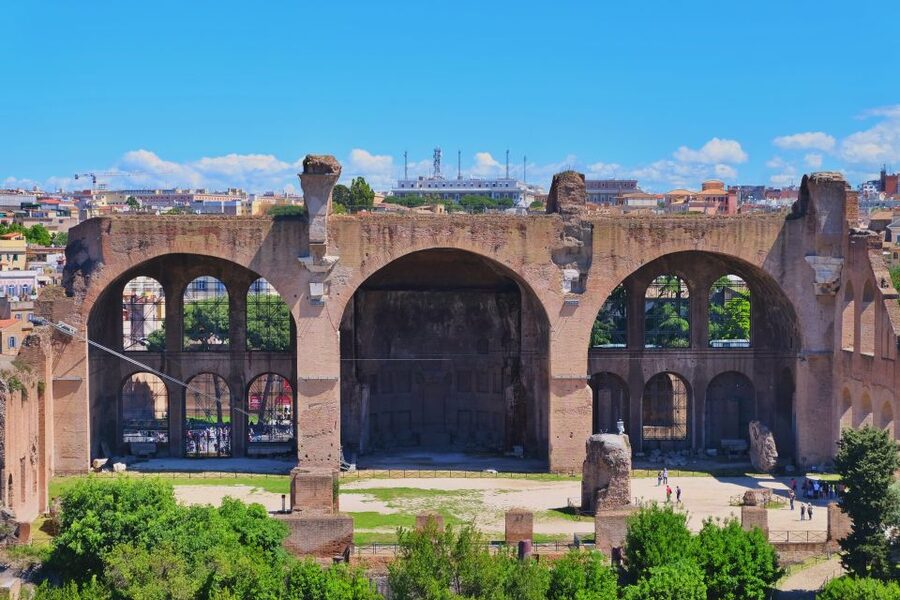
Your tour ends at Trajan’s Column, which is a smart finish point. It is a famous icon of Roman victory and power, and it gives you closure after walking through the arena and the civic heart of Rome.
Even if you are not a “column detail” person, it helps to end at something that communicates a message clearly. It is easier to remember your day when you end on a strong visual.
Group feel, guide styles, and why radios help
Tour group size is not spelled out in the details you provided, but one review notes a small group of 8 with guide Catherine. That kind of smaller group setup often makes it easier to ask questions and keep the pace comfortable.
Regardless of size, the tour includes radios and headsets, which is a practical upgrade. In a place like the Colosseum, even a good guide can be hard to hear without audio.
The reviews also point to guide personality and question-answering. Catherine was praised for being precise and explanation-heavy, while Alessandro Palma was mentioned as thorough, curious-friendly, and attentive. That combination is what you want: someone who can explain both the big reasons and the small practical details.
Timing that can affect your plan
The tour is listed as 2.5 hours. In July and August, the duration drops to 2 hours, so summer schedules can feel tighter.
Also, the tour office can be busy. One review mentioned the office itself felt crowded and that it was hard to find the right tour. My advice is simple: arrive a few minutes early, check your meeting instructions carefully, and ask a staff member to confirm you are in the correct group.
If you need a nearby bite while you wait, there is said to be a pizza and sandwich spot across the street area. Keep it casual, because you cannot bring food into the monument areas during the tour anyway.
Price and what is included, including the Colosseum entry fee
You pay $58 per person for:
- A live tour guide
- Radios and headsets
- Colosseum entrance
- Palatine Hill and Roman Forum visit
- Skip-the-ticket-line access
You also get languages listed as French, German, English, Italian, Spanish.
A key detail: your tour price acknowledges that the archaeological-site entrance fee is €16 for adults, plus a €2 reservation fee. Children under 18 have free entry. Your tour price covers the guide service and the reservation-related services.
From a value angle, I like this setup because it avoids the common headache of trying to sort out ticket timing while your day is already in motion. You show up, check in, and get going.
Practical stuff to know before you go
A few rules matter because they affect whether you can enter at all.
ID is mandatory
Bring a passport or ID card. The tour info is direct: guests without ID cannot be guaranteed entrance. Also, the full names of all participants are required, and incomplete information can prevent guaranteed entrance.
What you cannot bring
Not allowed:
- Pets
- Weapons or sharp objects
- Oversize luggage
- Smoking
- Food and drinks
- Alcohol and drugs
- Sprays or aerosols
- Glass objects
- Unaccompanied minors
- Electric wheelchairs
Bags and luggage
No suitcase compartment is available. Plan for a small bag only.
Tour languages
Your guide can be French, German, English, Italian, or Spanish depending on the booking.
Who should book this Colosseum and Ancient City tour
This is a good fit if:
- You want a first-time-friendly Colosseum visit with context, not just photos
- You like explanations that connect building design to how Roman entertainment worked
- You want Palatine Hill and the Roman Forum in one coordinated day
- You appreciate audio help, especially in noisy outdoor ruins
It is also a solid choice if you prefer some guided structure, then flexibility. You get a guided introduction, then you can shift to a slower pace for your own looking.
If you already know a lot about Roman architecture and politics, you might still enjoy it for the time-saving entry and the panoramic stops, but you may want to pair it with a longer self-guided walk later in the day.
Should you book it?
I would book this if you want your Colosseum day to feel efficient and understandable, with an expert guide narrative and actual audio support. The $58 price makes sense when you factor in skip-the-line access, the guide, the audio devices, and the included entry. The only reason not to book is if your ID situation is uncertain or your schedule is so tight that a two-hour summer version might feel stressful.
If you go, do one thing that makes the whole day easier: prepare your ID and check that your booking has your full name exactly. Then show up early enough to find your group, and enjoy the moment when the Colosseum stops being a postcard and starts working as a real Roman venue in your mind.
FAQ
Do I need ID to enter the Colosseum area?
Yes. A passport or ID card is required at the entrance. If you arrive without ID, entrance cannot be guaranteed.
How long is the tour?
It is listed as 2.5 hours. In July and August, the duration is 2 hours.
Is ticket time included, or will I wait in line?
The tour includes skip-the-ticket-line access to the Colosseum.
What entrance fees are included for adults?
The archaeological site entrance fee is €16 for adults, with an additional €2 reservation fee. Children under 18 have free entry.
What languages are available for the live guide?
Live guide languages listed are French, German, English, Italian, and Spanish.
What should I bring?
Bring your passport or ID card, including for children.
Are food and drinks allowed during the tour?
No. Food and drinks are not allowed.
Can I bring a suitcase or electric wheelchair?
There is no suitcase compartment, so you should plan for a small bag. Electric wheelchairs are not allowed.
More City Tours in Rome

More Tours in Rome

More Tour Reviews in Rome
Not for you? Here's more nearby things to do in Rome we have reviewed







Colosseum Tours, compared.
 ★ 4.8Colosseum, Palatine Hill and Roman Forum Guided TourFrom $5232,814 reviews
 ★ 4.7Guided Tour of Colosseum, Roman Forum & Palatine HillFrom $5527,897 reviews
 ★ 4.2Colosseum & Forum with Audio Guide App -Optional ArenaFrom $4124,770 reviews
 ★ 4.5Colosseum, Roman Forum and Palatine Hill Guided TourFrom $5923,903 reviews
 ★ 4.4Colosseum, Forum & Palatine Hill Tour & Optional ArenaFrom $5813,839 reviews
 ★ 4.6Colosseum, Palatine Hill & Roman Forum Guided TourFrom $5112,703 reviews
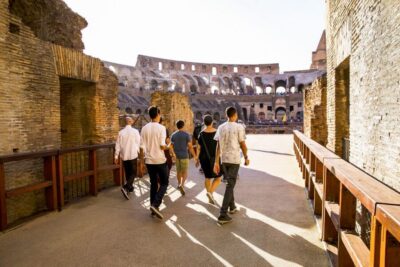 ★ 4.7Colosseum: Underground and Ancient Rome TourFrom $16012,691 reviews
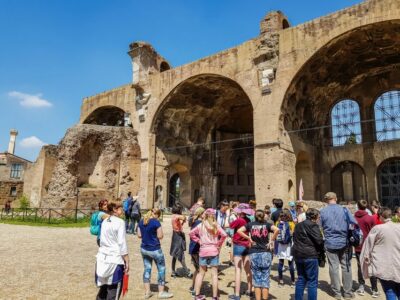 ★ 4.6Colosseum Arena, Palatine Hill & Forum Guided TourFrom $7310,584 reviews
Browse the lists this tour appears in