
Reviewed · COLOSSEUM TOURS
Rome Colosseum & Catacombs Underground Tours & Transfer
Underground Rome changes everything. This tour packs Colosseum and Roman Forum plus the catacombs on the Via Appia Antica into one well-planned half-day, with an archaeology-minded guide telling the stories in a way that actually sticks. I love the ticket-and-transfer setup, and I love how the walk stays focused instead of turning into a lecture marathon, with names like Daniel at the Colosseum and Bijenn helping things run smoothly. The one drawback to keep in mind is the pace, it can feel tight if you like extra time to slow down and absorb.
You also get practical structure: small-group touring, an on-time meeting, and strict rules once you hit the security line and the catacomb entry. In short, this is a smart value if you want major sites plus underground history without spending your day figuring out logistics yourself, but you should show up ready to move.
Key Highlights You Should Know
- Small-group Colosseum, Forum, and Palatine Hill with timed entry and an expert-style narrative
- Catacombs ticketing and round-trip transfer included, so you do not waste time coordinating transit
- Appia Antica underground tour changes by day, with sites like San Calisto, San Sebastiano, or Santa Domitilla
- Meet 30 minutes early with name matching on your ID to keep Colosseum entry from turning into a headache
- Catacombs are about 60°F (cold) and very damp, so bring layers you can stand in
- Max 25 travelers means you get attention, without feeling like you are in a stadium crowd
A 5-Hour Rush Through Ancient Rome, Above and Below
This is built for people who want a lot of Rome’s biggest “wow” moments, without spending the day hopping between vendors and bus stops. You are in the Colosseum and top ruins for about half the time, then you shift to the Via Appia catacombs for the underground portion, with transportation included.
The best part is that you do not just see ruins, you get the why behind them. You also get a nice mix: bright, iconic monuments in the daylight, then cooler, quieter underground spaces where the details feel personal.
A few more Rome tours and experiences worth a look

Entering the Colosseum: Reserved Entry, Security, and Real Timing
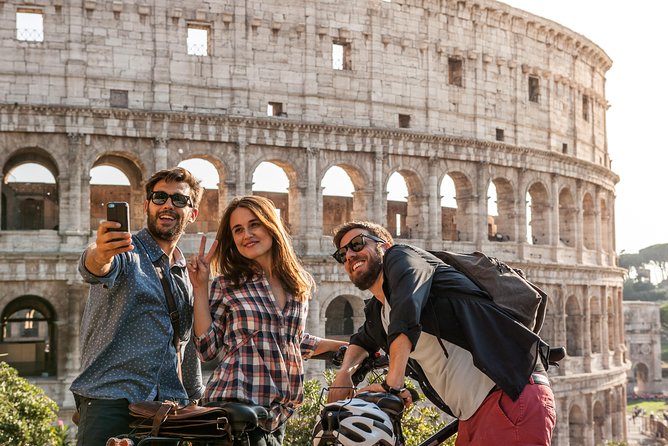
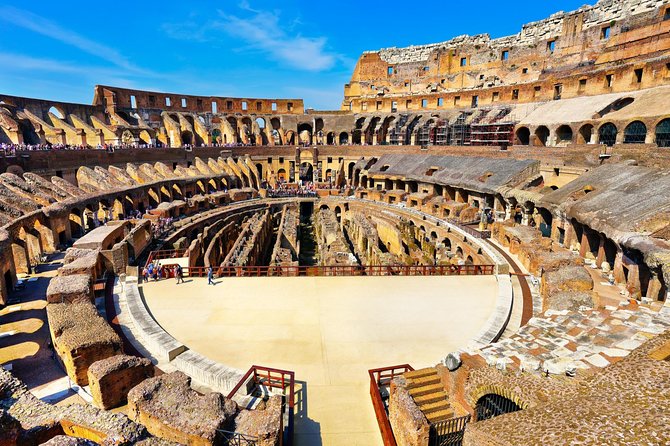
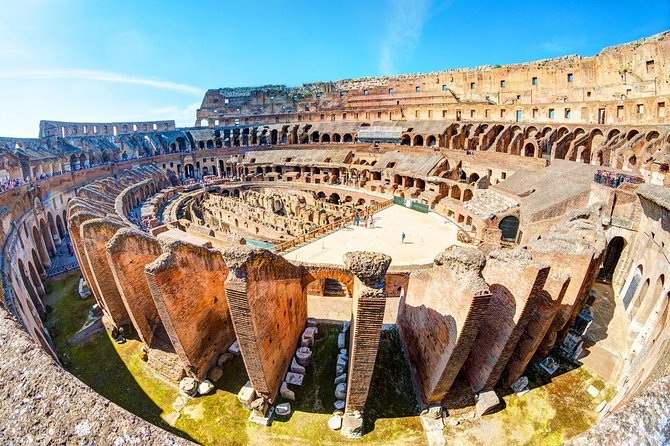
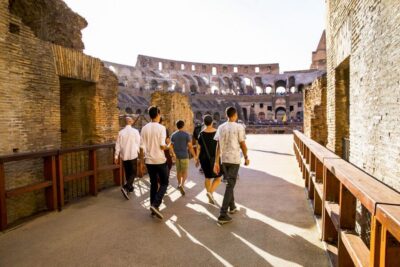
Your Colosseum stop runs about 1 hour 30 minutes, and the tour includes both the admission ticket and the reservation fee. That matters in Rome, because the biggest challenge at the Colosseum is not knowing where it is, it is timing the lines and the crowd flow.
Plan for the reality of security. You will go through screening, and the rules are strict about what you can bring in, including no bottles and glass containers, no alcoholic beverages, no aerosols, and no large backpacks. Medium and small backpacks can go inside with X-ray, but bigger stuff may be a problem, so pack light. Also, expect the site to sometimes throttle entry even with reservations, since crowd limits can affect access.
What you are likely to love here is the storytelling approach. The guide is described as having an art and archaeology background and keeping things lively, and I like tours where you can ask questions and get answers without the guide shutting down.
A practical heads-up: with a tight schedule and heavy crowds, the experience can feel rushed, and some groups report not reaching every area, such as the arena floor. If that is your top priority, you should confirm your route details before you go.
Roman Forum in 45 Minutes: Sacred Streets and Big Names
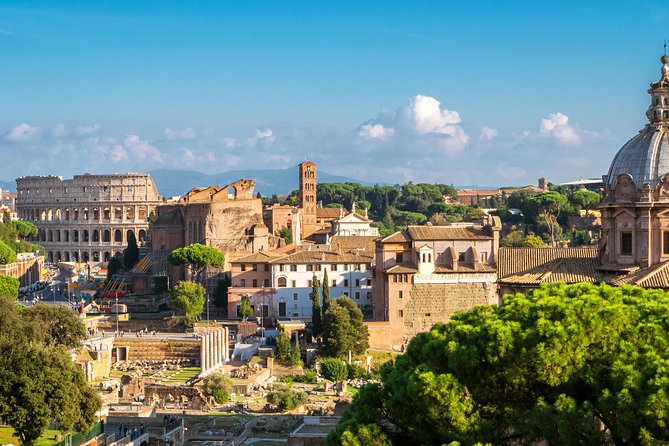
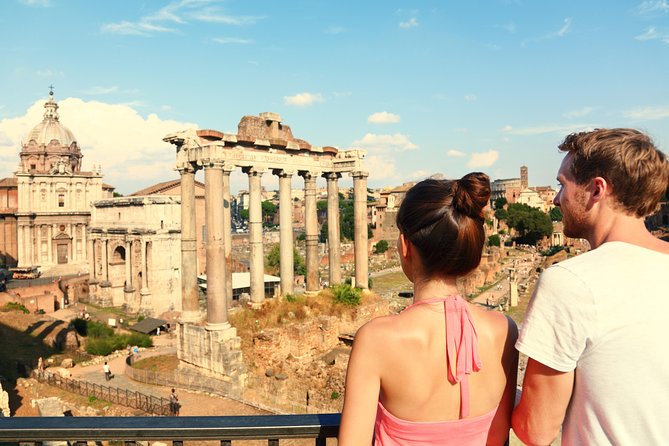
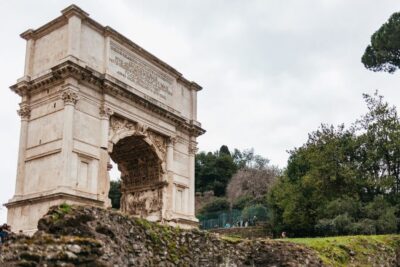
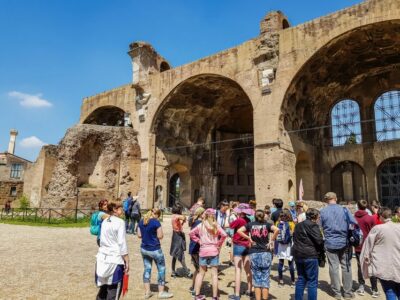
Next comes the Roman Forum, about 45 minutes, with key sites clustered into one manageable walk. You will pass by some of the Forum’s most evocative landmarks, including the Temple of Julius Caesar, the Arch of Titus, the Senate House, and the Basilica of Maxentius.
The Forum is where you start connecting the dots between power, law, religion, and propaganda, and this stop is structured to help you do that quickly. You also walk the Sacred Way, described as a triumphal road tied to Caesar’s centurions returning from campaigns. It is a lot of meaning packed into less time than you might want, but it is a good way to get grounded.
The tour is ticketed, so you are not scrambling for entry windows. You are also not stuck in a long, slow line, because the timing is built into the plan, not just “arrive sometime and hope.”
Palatine Hill: Views, Frescoes, and the Romulus and Remus Story
Palatine Hill runs about 45 minutes, and it is the classic “Rome at a higher altitude” moment. You explore the site of an older settlement from the 9th century BC, then focus on standout spaces tied to elite homes and later recreation areas.
You get to admire frescoes in the House of Augustus and also the Hippodrome, described as an elliptical sunken garden from the Palace of Domitian. Then there is a strong pay-off view: you look out over the Circus Maximus valley and back toward the Roman Forum, which helps the ruins start making geographic sense in your head.
The guide also tells the Romulus and Remus legend, the brothers raised by a wolf who fought over power. I like including this kind of myth because it gives the stones a narrative spine, and it is easier to remember when you link it to what you see.
Then you get a 1-hour break. That part is underrated. It gives you time to step away, use the bathroom, and reset before the underground portion.
Via Appia Antica Transfer: Air-Conditioned Ride, Green Outside, Underground Inside
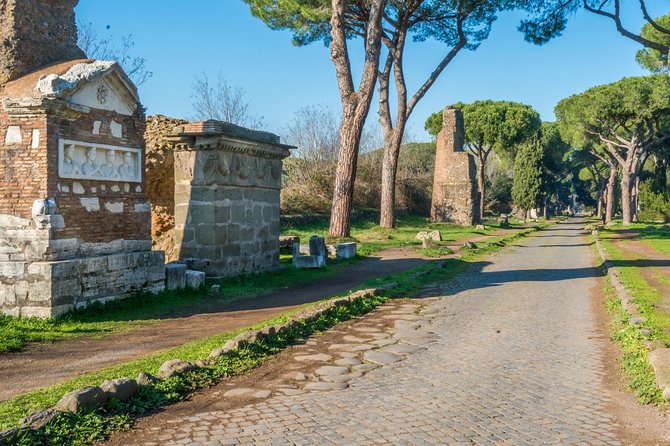
After the break, you shift to the Appia Antica area, including catacombs access. Your transfer uses a comfortably transported, air-conditioned vehicle, and you will ride with a professional driver (not a guide) for that leg.
This portion matters because the Appia Antica experience feels like a different world from the central Colosseum zone. Even if you only get glimpses from the road, you are moving from dense city ruins into a calmer stretch of the historic countryside.
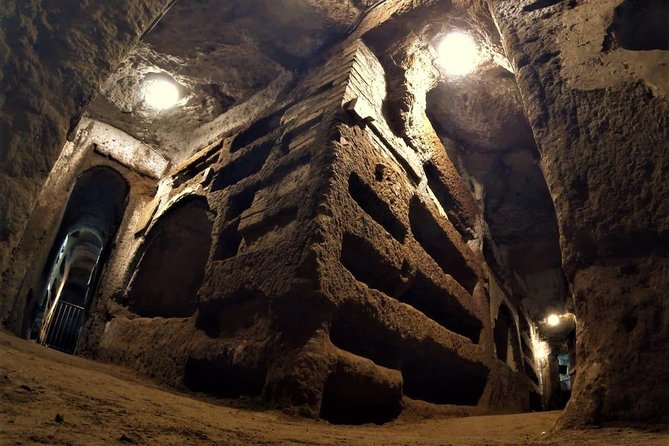
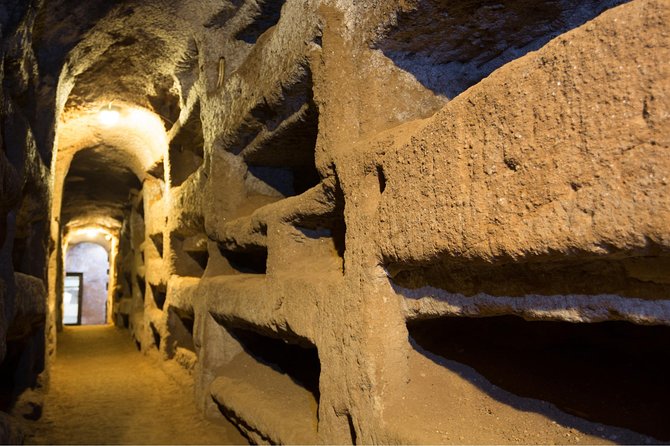
Your catacomb visit is scheduled for about 2 hours on the Appia side, and the exact sites can change depending on the day. The catacombs named as possibilities are San Calisto, San Sebastiano, or Santa Domitilla, and the tour description emphasizes the underground tunnels spread across multiple levels.
Expect a real underground walking route, not a quick peek. You will see things like ancient frescoes, crypts with inscriptions, niches, small chapels, sarcophagi, and tombs, plus burial connections to famous religious figures like popes and martyrs. You also learn that these spaces are still used for religious rites, which gives the underground sites a living, continuing purpose.






Inside the Catacombs: San Callisto and the Rules You Must Follow
One specific listed stop is Catacombe di San Callisto, with about 1 hour for that segment. The tour content explains its early Christian development tied to Pope Callixtus I and earlier hypogea, plus later relic translations and the rediscovery in the 1800s.
Even if you do not know a single date going in, the experience works because you are guided through a physical story. You move through corridors and chambers while the guide connects what you see, inscriptions and burial spaces, to how early Christianity used these underground areas.
In the catacombs, strict behavior rules are part of the package. You cannot visit on your own, you cannot stray from your group, and you are not allowed to remove anything. You also cannot touch exhibits, and this is one of those tours where you need to treat the route like a guided flow, not an open museum.
Two more practical things:
- It is about 60°F underground and very damp, so dress for cool, not for Rome’s outdoor heat.
- Photos and videos are not allowed in the catacomb areas during the visit, so plan to rely on your eyes, your guide, and your memory.
Short Stops That Add Context: Circus Maximus and Baths of Caracalla
Your route also includes time to look at big Roman entertainment and public life. The plan references the Circus Maximus, the ancient chariot-racing stadium and mass entertainment venue in the valley between Aventine and Palatine hills.
You also see the Baths of Caracalla, Rome’s second-largest thermae, built in the early 3rd century and used for centuries before falling into ruin. This is helpful context because Rome is not only about politics and temples, it is also about daily rituals, public leisure, and how emperors used monumental buildings to project power.
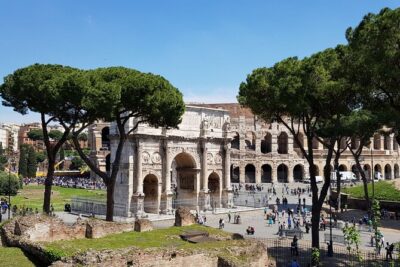
There is also an Arch of Constantine stop, free admission, with about 5 minutes listed. It is the kind of quick photo-and-facts stop that keeps the day moving while still giving you a major visual landmark.
Price and Value: What $227.58 Buys You in Practice
At $227.58 per person for roughly 5 hours, you are paying for a bundled experience, not just access to buildings. What makes it feel like value is that it includes:
- guided touring for the Colosseum, Roman Forum, and Palatine Hill
- a guided catacombs portion
- Colosseum entry plus reservation fees
- catacombs tickets
- round-trip transfer by minivan to the catacombs area
When you add up what Rome costs in time, stress, and separate ticket lines, bundling can actually be cheaper than it looks. If you tried to build this yourself, you would still face Colosseum entry timing, then catacombs transport coordination, plus the problem of getting the right day and route.
The only reason this price might not feel right is if you are the type who wants long, slow museum pacing. With this format, you are getting a strong overview, not a sit-down, linger-for-hours kind of experience.
Group Size, Meeting Rules, and Why They Matter
This tour caps at 25 travelers, which is a meaningful difference compared with mega-bus groups. Smaller groups usually mean you get quicker guidance and fewer delays at transitions.
There is also a mandatory meeting time of 30 minutes before departure for organizational reasons. Do not treat that like a suggestion. The Colosseum requires name matching, and you will be screened, so showing up late can turn a smooth day into a stressed scramble.
Bring the full names exactly as booked, and use a valid passport or ID that matches. The tour notes that if names do not match at the ticket office, entry can be denied. It is not the kind of risk you want to gamble on.
Who This Tour Suits Best, and Who Should Rethink It
This works best for you if:
- you want top sites in one half-day block
- you like guided storytelling with archaeology flavor
- you want tickets and transfers handled
- you are comfortable walking at a moderate pace
It is less ideal if:
- you have walking impairment needs. The activity is not recommended for walking impairment and is described as not accessible for walker users.
- you hate tight timing. Some people found the Colosseum pacing too fast to fully absorb the scale.
If you are traveling with kids, the tour is described as suitable for all ages in the Colosseum portion, but kids must be accompanied by an adult, so plan accordingly.
Should You Book This Colosseum and Catacombs Tour?
If you want a clean, organized path through Rome’s biggest highlights, plus a real underground experience on the Via Appia, I think this is a solid booking. The strongest selling points are the reserved Colosseum access, the small-group guiding, and the fact that the catacombs part is ticketed and transported for you.
I would book it especially if your trip is short and you want the Colosseum and Forum to make sense fast, then you want the contrast of cool, damp catacomb tunnels before you head back to Rome’s surface streets.
I would skip or switch plans if you strongly prefer slow pacing, you need very accessible routes, or you are aiming specifically for every possible Colosseum area beyond what a guided half-day format can cover.
FAQ
What is the meeting time before the tour starts?
You must arrive for a mandatory meeting time 30 minutes prior to the scheduled departure to manage entry and organization.
Are Colosseum and catacombs tickets included?
Yes. The tour includes Colosseum admission and reservation fees, plus catacombs tickets and a round-trip transfer to the catacombs.
Which catacombs will we visit?
The catacombs can change depending on the day, with San Calisto, San Sebastiano, or Santa Domitilla listed as options. Catacombe di San Callisto is also included as a stop in the tour plan.
How cold are the catacombs, and what should I wear?
The catacombs are about 60°F with high moisture, so dress appropriately for cool and damp conditions.
Can I eat or drink during the tour?
You are not allowed to eat inside the monuments. You can carry a water bottle.
Is this tour suitable for people with walking impairments?
The tour is not recommended for travelers with walking impairment, and it is described as not accessible for walker users.
Can I cancel for a full refund?
Yes. You can cancel up to 7 days in advance of the experience for a full refund.
More Private Drivers in Rome


More Tours in Rome



More Tour Reviews in Rome
Not for you? Here's more nearby things to do in Rome we have reviewed












Colosseum Tours, compared.
 ★ 4.8Colosseum, Palatine Hill and Roman Forum Guided TourFrom $5232,814 reviews
 ★ 4.7Guided Tour of Colosseum, Roman Forum & Palatine HillFrom $5527,897 reviews
 ★ 4.2Colosseum & Forum with Audio Guide App -Optional ArenaFrom $4124,770 reviews
 ★ 4.5Colosseum, Roman Forum and Palatine Hill Guided TourFrom $5923,903 reviews
 ★ 4.4Colosseum, Forum & Palatine Hill Tour & Optional ArenaFrom $5813,839 reviews
 ★ 4.6Colosseum, Palatine Hill & Roman Forum Guided TourFrom $5112,703 reviews
 ★ 4.7Colosseum: Underground and Ancient Rome TourFrom $16012,691 reviews
 ★ 4.6Colosseum Arena, Palatine Hill & Forum Guided TourFrom $7310,584 reviews
Browse the lists this tour appears in