
Reviewed · TICKETS
Rome: Catacombs of St. Sebastian Entry Ticket & Guided Tour
Underground Rome is surprisingly human. This guided walking tour takes you into the Rome underground for a focused look at the third-century Catacombs of Saint Sebastian and the people laid to rest there. You get a short, guided story that makes the place feel personal, not just archaeological.
Two things I really like: the tour runs on a small-group pace, so the guide can actually answer questions without herding everyone like luggage. And the experience is genuinely moving, especially once you understand how these spaces were reused and repurposed over centuries.
One possible drawback: at 30 minutes, it can feel a bit fast if you want lots of time to linger and read everything slowly on your own.
Key highlights you will care about
- A live guide in your language (English, Italian, Spanish, French), not just a self-guided ticket
- A short, well-paced underground route designed for a quick, meaningful visit
- Constantine-era context, including the mention of a basilica shaped like a Roman circus (circiforme)
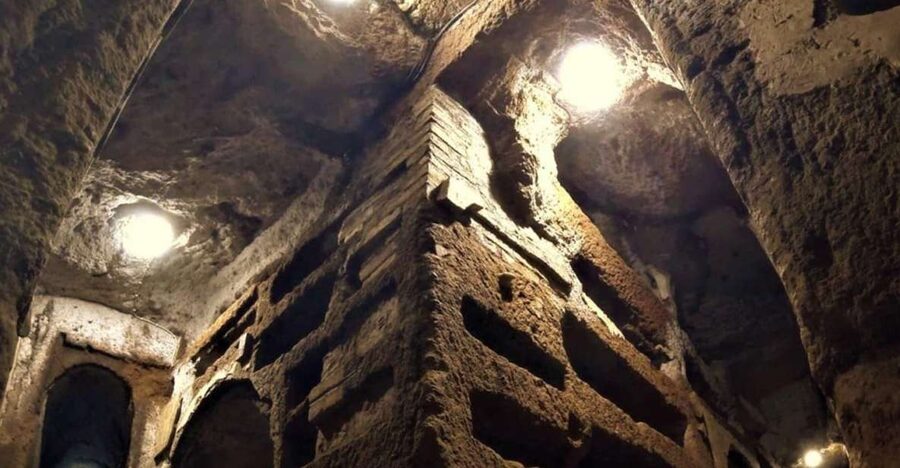
- The catacombs as a reused space, starting as a quarry and shifting into an underground cemetery
- No photography inside, which keeps the focus on the experience (and saves you the constant phone-diving)
- Cold underground temperatures, where a jacket is not a suggestion
A 30-minute walk through Saint Sebastian’s underground world
This is one of those Rome activities that works well when your calendar is tight. You are in and out in about 30 minutes, and it is built around a guided route rather than a long, self-directed wander. For most visitors, that means fewer decisions and more story.
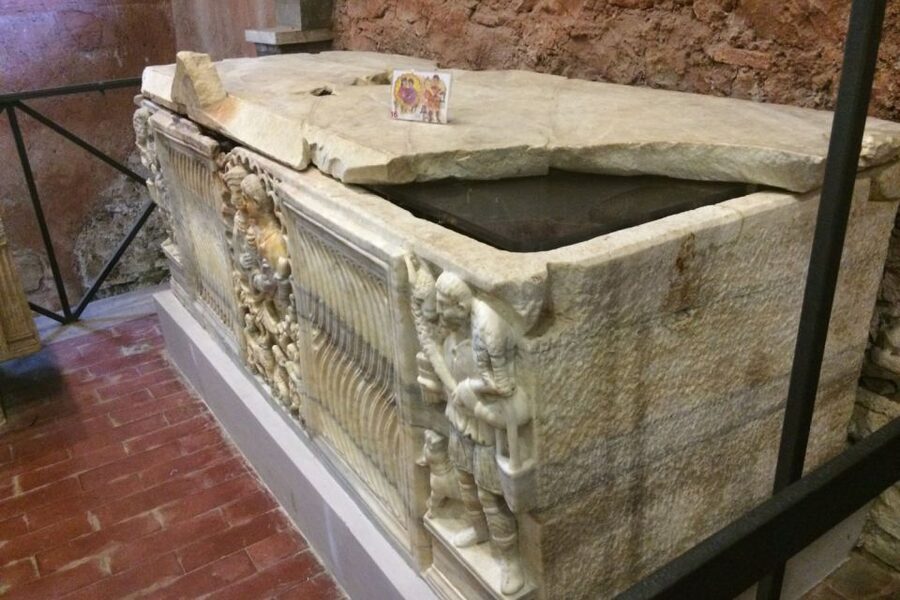
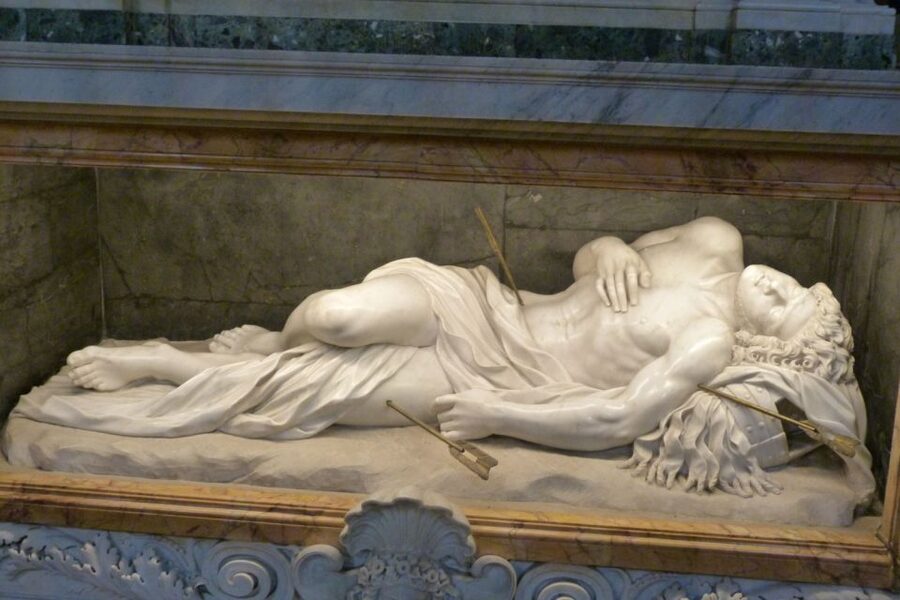
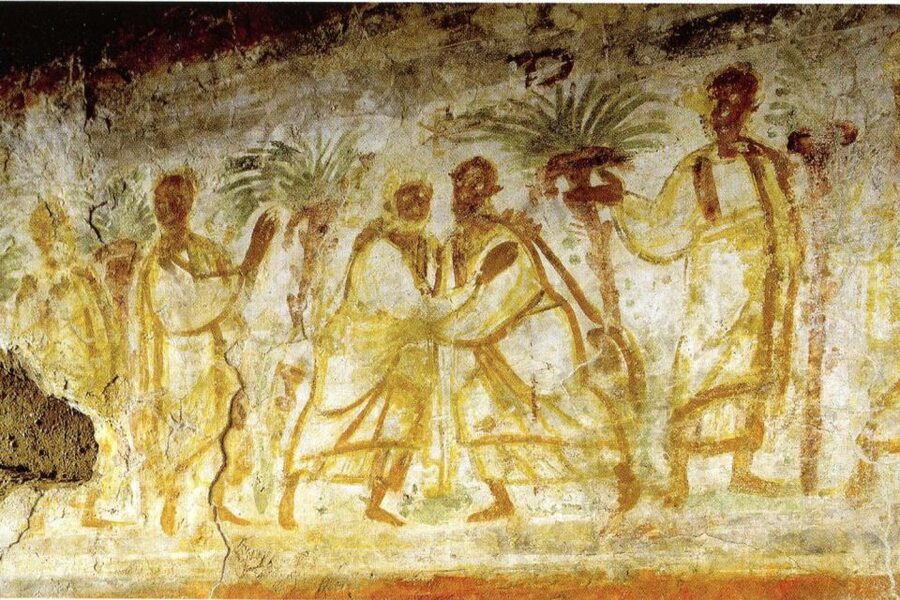
The main idea is simple: you are not just looking at stone corridors. You are learning how the Catacombs of St. Sebastian became a major burial site for early Christians, and how that role evolved over time. The tour is designed to connect the physical space to the big names tied to it, including martyrs like Sebastian and Eutichio, and references to saints, popes, and emperors.
If you love short tours with strong context, you will probably enjoy the format. If you want a slow, deep, take-your-time exploration with lots of pauses, the time limit may feel like a squeeze.
A few more Rome tours and experiences worth a look



Why this catacomb complex matters, quarry to cemetery to basilica
To appreciate the catacombs, you need one mental image: this place did not start as an underground cemetery. Long before the burials, the area where the Catacombs of San Sebastiano sit was a deep depression used as a pozzolana quarry. The name ad catacumbas, near the cavities, eventually became the word people associate with underground cemeteries.
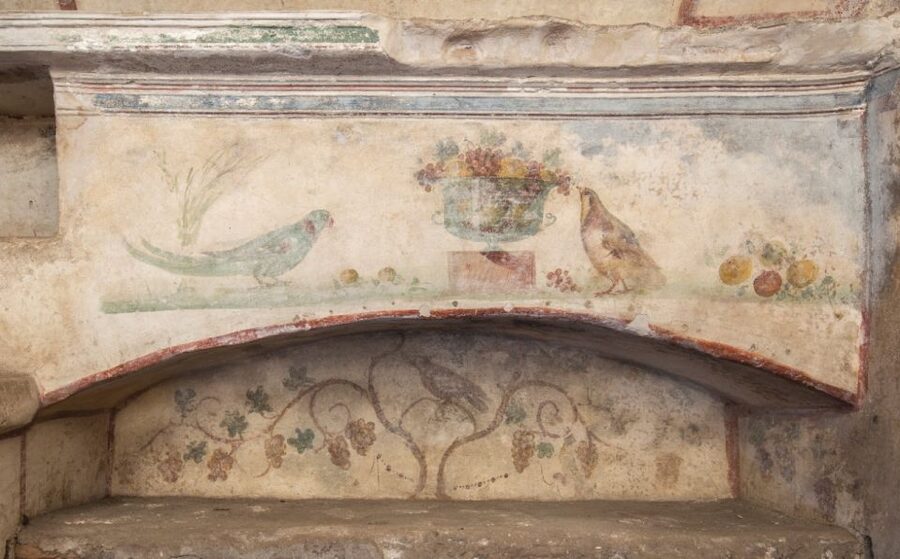
Then history piled on. After the first century, the site was intensely exploited, and the underground galleries were reused to create burial niches. On the surface, there were also columbaria (places for cremation urns) and even residential systems, including a smaller villa and a larger villa, with decorated pictorial wall art.
That layered past matters for you as a visitor because it changes how you read what you see. You are not only imagining early Christian burial customs. You are also seeing a site shaped by reuse, expansion, and survival. In other words, this is not a single moment frozen in time. It is a living timeline carved into rock.
What you will see inside, and how the guide brings it to life
A good guided tour makes the underground easier to follow. Instead of you trying to piece together dates from stone and signage, your guide connects the space to a sequence of changes.
You should expect the guide to walk you through several distinct concepts tied to the catacombs’ development:
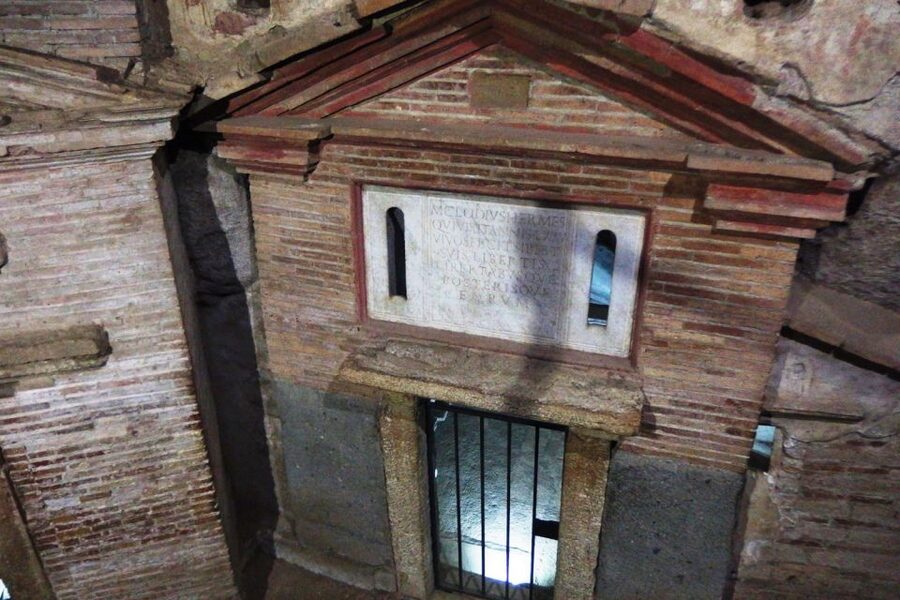
You’ll hear about the way the valley floor was buried to create a pitch, and how mausoleums were built in succession by named figures and groups, including Clodius Hermes, the Innocentiores, and Ax. You’ll also learn how later burials were added to make room for the construction of the triclia, a portico bordered by a wall.
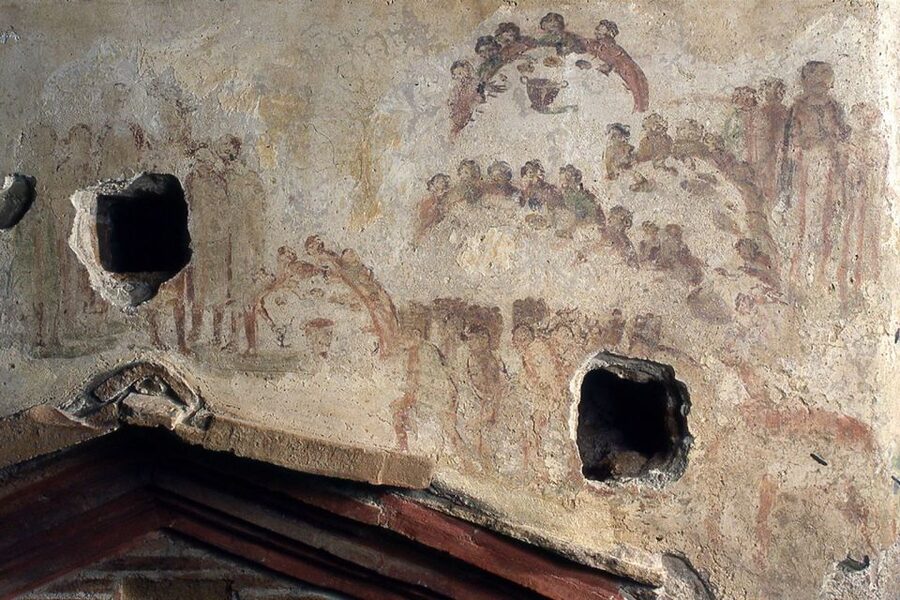
Then comes one of the most fascinating details mentioned for this site: graffiti invocations. Around 250, graffiti addressed prayers to Saints Peter and Paul, who were venerated together there. That detail is powerful because it moves the focus from formal monuments to everyday voices. Even if you cannot stand still and read every mark, the idea is clear: real people were praying in the middle of all this stone.
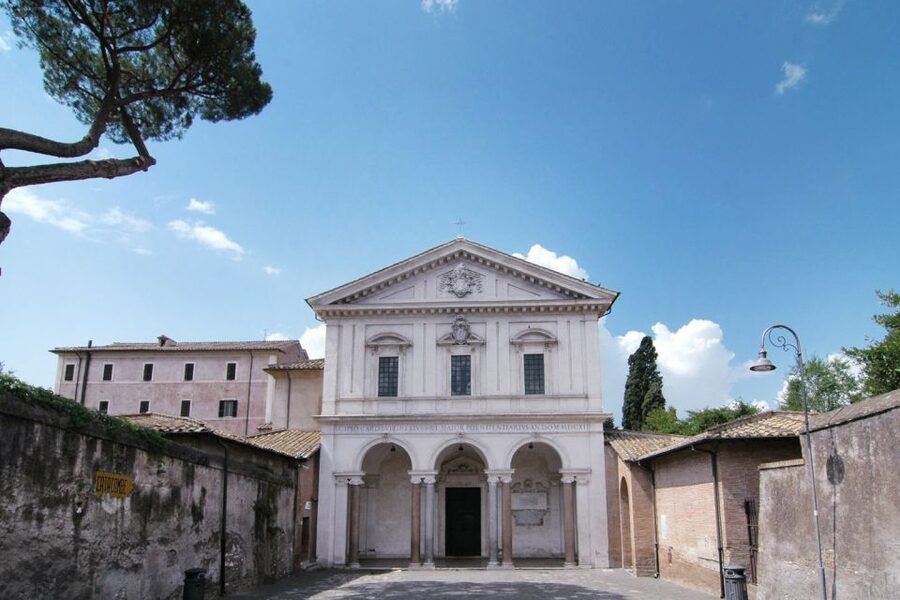
Finally, you’ll get the Constantine-era framing. The emperor Constantine (306 to 337) had a basilica built in the shape of a Roman circus, called circiforme. Even when you are underground, this matters because it shows the shift from clandestine burial to a more public, institutional Christian presence.
Basilica moment: when the story shifts upward to the circiforme shape
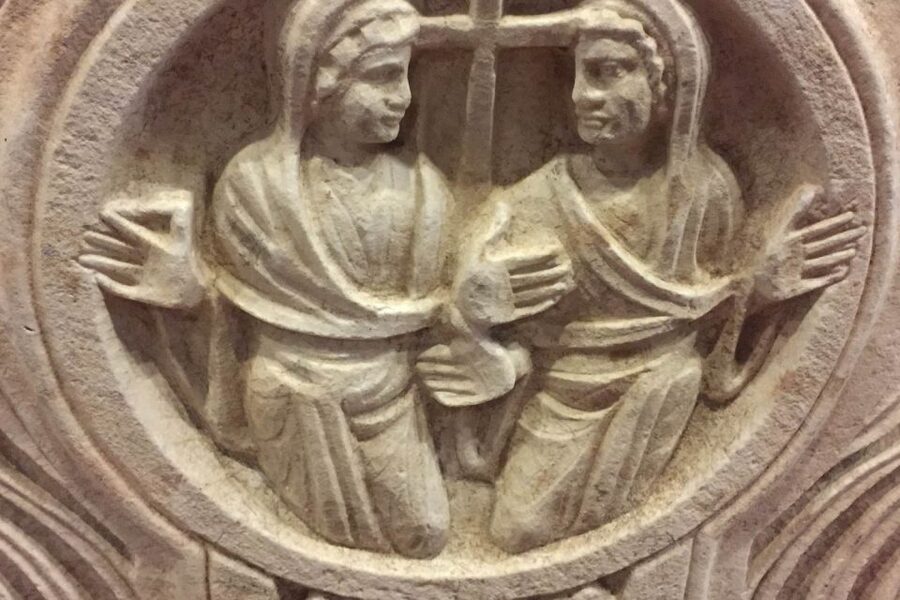
Not all your time is likely spent entirely in the deepest tunnels. You will also connect to the basilica area tied to the Constantine-era vision.
One of the repeated takeaways from visitors is the look of the basilica interior, including hand-carved wood ceilings that people find stunning when they pause to look up. Even if the tour is short, this is often where the experience feels most emotionally grounded, because the guide’s story lands with visual texture, light, and craft rather than only shadow and stone.
If you are trying to plan your mood, think of it like this: the underground segments do the heavy emotional lifting, and the basilica time helps you make sense of how this site fit into public Christian life.
Practical stuff that makes or breaks the visit
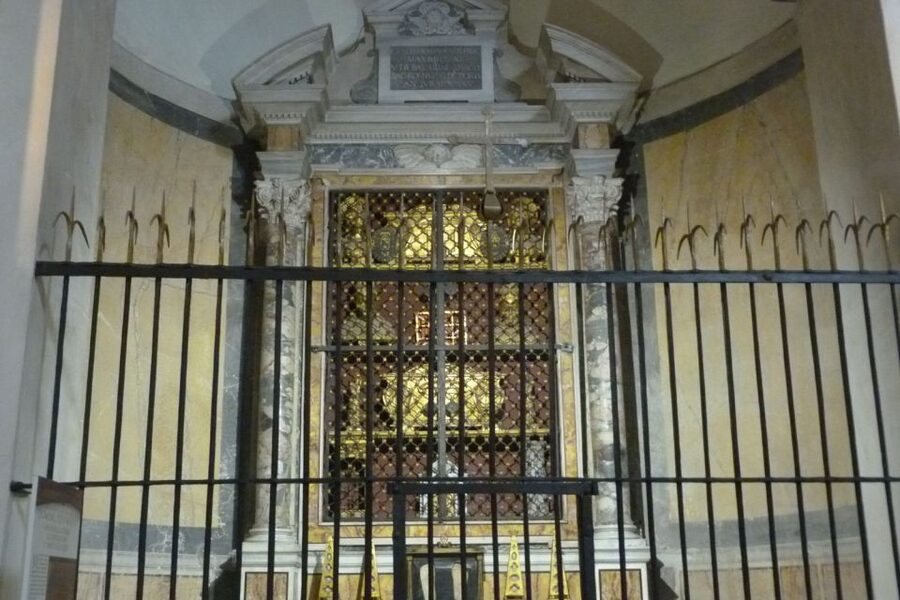
The catacombs are not a museum where you can glide around in comfort. They are an underground site with real restrictions, narrow passages, and a temperature that can feel colder the deeper you go.
Here’s what I’d plan for:
- Comfortable shoes matter more than you think. You will be walking through uneven, underground spaces.
- Warm clothing and a jacket are worth packing. Even on a hot day topside, underground can feel chilly.
- No baby carriages are allowed. If you are traveling with a stroller, you’ll want an alternate plan.
- No photography inside. Keep your phone put away underground and use your eyes. It also helps your group stay quiet and focused.
One more practical reality: movement can be single-file at times, and there may be brief stops where your guide gathers the group to make sure everyone stays together. That is normal here, but it can also be why the tour feels quick. You are not always controlling your pace.
If you tend to get anxious in enclosed spaces, take the site’s guidance seriously. It is not suitable for people with claustrophobia.
You can also read our reviews of more guided tours in Rome



Meeting point and how to avoid the annoying start
This tour is organized around timed groups, and the most common mistake is showing up late.
Go directly to the ticket office of the catacomb and show your reservation at least 10 minutes before the scheduled tour time. That buffer helps you get through the start process and makes it easier for your guide to collect everyone.
If you are figuring out transit, one helpful tip that comes up is that bus 118 can make the approach easier. There is also a coffee shop and souvenir shop noted nearby, which can be useful before or after your underground slot.
A small but important idea: arrive early enough that you are not rushing when the tour begins. Underground sites can feel stricter the moment your group forms, and you’ll enjoy the tour more when you start calm.
Price and value: is $16 worth it?
At $16 per person for about 30 minutes, you’re paying for two things at once: timed entry plus a live guide in your chosen language. That is the value equation.
It can be tempting to think you should just buy a ticket on site. Some visitors have said this option can feel a little more expensive than purchasing locally. But the guided component is where the money earns its keep.
You are paying for:
- a clear story that connects the site’s different phases (quarry, burial niches, mausoleums, triclia, Constantine-era basilica),
- a route that works in a tight underground layout,
- and a guide who can answer your questions on the spot.
If you want the experience to be more than a quick look at corridors, the guide does real work for your understanding. If your goal is simply to walk through and take snapshots, you may feel the price less meaningful, especially since photography is not allowed inside.
Who this tour suits best, and who should skip it
This experience is a strong match if you:
- want a short, guided dose of Roman underground sites,
- like learning the background behind Christian-era locations,
- and enjoy tours where the guide keeps things organized and easy to follow.
It may be a weaker fit if you:
- have mobility impairments, since it is not suitable for that,
- have claustrophobia, because the underground setting can be stressful,
- or need lots of open time to wander at your own pace, because this is intentionally a shorter visit.
If you’re traveling with kids, it could work for older children who can handle underground walking and follow restrictions. But because baby carriages are not allowed and the space is tight, you’ll want to travel with a practical setup.
Should you book the Catacombs of St. Sebastian tour?
I’d book it if you want a focused, guided underground experience that packs key stories into a short timeframe. The combination of live interpretation, a manageable 30-minute route, and a guide-driven explanation of how the site changed over centuries makes this one of those tours you can fit into a busy Rome day without feeling like you sacrificed too much.
Skip or rethink it if you strongly prefer self-guided time, or if claustrophobia or mobility limits apply. And if you hate feeling rushed, you might find the time window too tight.
For the right traveler, this is a high-emotion, high-context stop, and it’s one of the easiest ways to understand what is happening in the stone when you are standing inside it.
FAQ
How long is the Catacombs of St. Sebastian guided tour?
The guided tour is valid for 30 minutes.
What is included in the $16 ticket?
Your ticket includes the entrance and a guided tour in the language you choose.
What languages are available for the live guide?
The tour guide is available in English, Italian, Spanish, and French.
Where do I meet for the tour, and when should I arrive?
Go directly to the ticket office of the catacomb and show your reservation at least 10 minutes before your scheduled tour time.
Are photos allowed inside the catacombs?
No photography is allowed inside.
Is the tour suitable for mobility impairments or claustrophobia?
No. It is not suitable for people with mobility impairments or people with claustrophobia.
More Tickets in Rome


More Tours in Rome


More Tour Reviews in Rome
Not for you? Here's more nearby things to do in Rome we have reviewed








Tickets, compared.
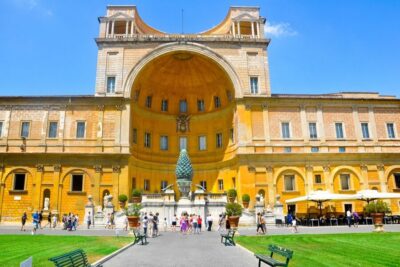 ★ 4.5Vatican: Museums & Sistine Chapel Entrance TicketFrom $38144,003 reviews
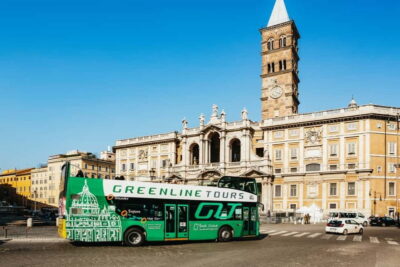 ★ 4.0Hop-On Hop-Off Panoramic Open Bus Ticket 3 Circuits x 1From $2015,405 reviews
 ★ 4.4Vatican Museums & Sistine Chapel Skip-the-Line Entry TicketFrom $4313,838 reviews
 ★ 4.2Vatican Museums & Sistine Chapel Skip-The-Line TicketFrom $4111,708 reviews
 ★ 4.3Vatican Museums & Sistine Chapel Skip-the-Ticket-Line TourFrom $13010,486 reviews
 ★ 4.2St. Peter’s Basilica & Dome Entry Ticket & Audio TourFrom $177,537 reviews
 ★ 4.2Vatican: Vatican Museums Sistine Chapel Skip-the-Line TicketFrom $716,682 reviews
 ★ 4.1Vatican & Sistine Chapel Ticket with Optional Audio GuideFrom $465,405 reviews