
Reviewed · TICKETS
Rome: Catacombs of Priscilla Entry Ticket & Guided Tour
Under Rome, people kept faith underground.
The Catacombs of Priscilla guided tour takes you into two levels of burial corridors on Via Salaria, showing how Rome’s earliest Christians used underground spaces for burial and remembrance.
I love the way the guide links what you see to real people and dates, from martyrs like Felice and Filippo to popes including Silvestro and Liberius. I also love the atmosphere down there, cool air and preserved paintings that make early Christianity feel human, not abstract.
One consideration: the setting is tight and dim, so it is not suitable for people with mobility impairments, and photography is not allowed inside.
Key highlights to look for
- Two-floor catacombs that began as an arenarium, then became Christian burial space in the early 3rd century
- Martyrs and popes connected to specific areas, including Felice and Filippo and several named popes
- Cryptoporticus and the Greek Chapel area, tied to a noble family burial ground
- The Acili hypogeum with inscriptions found in what was originally a cistern
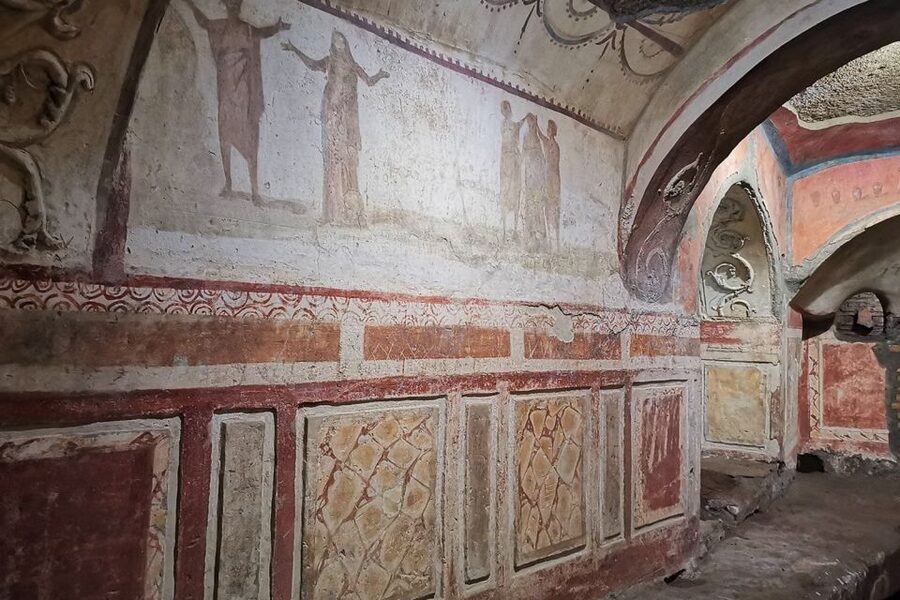
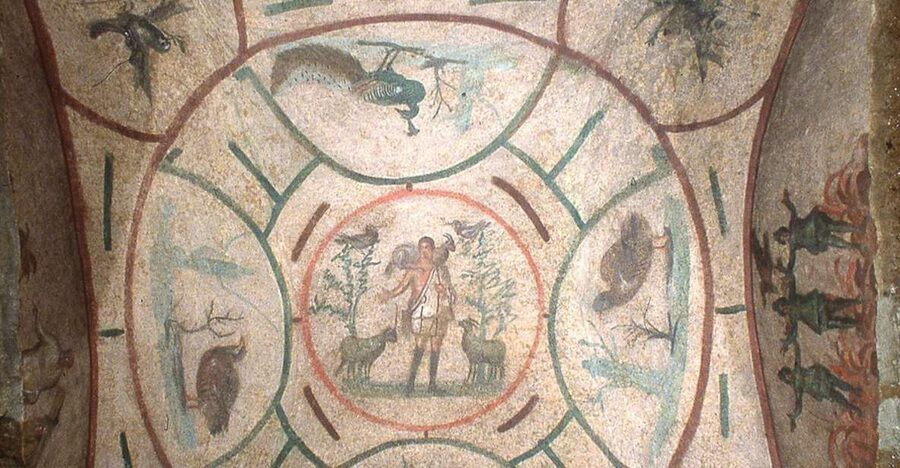
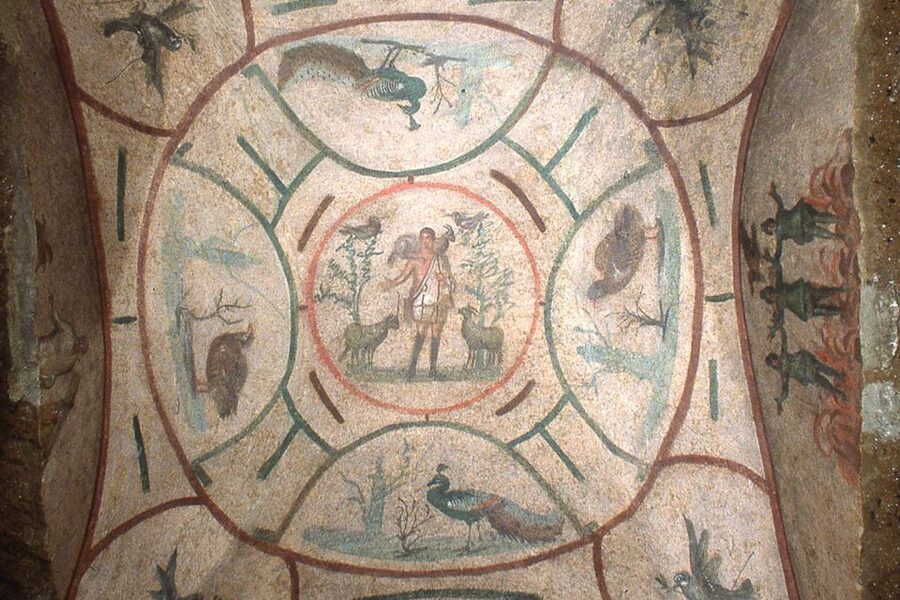
- Frescoes and carved niches that bring early Christian art and burial practice into focus
Why the Catacombs of Priscilla Feel Different Than Rome’s Usual Sights
Rome is famous for crowds, marble, and big monuments. The Catacombs of Priscilla are the opposite mood. You trade the street-level scene for underground rooms made for burial, prayer, and communal memory.
What makes this tour especially interesting is that you’re not only looking at “old tombs.” You’re learning how people reused space. This site was not born as a catacomb. It started as an arenarium, then fell out of use. Christians later took over large, irregular galleries and reshaped them for burial, starting at the beginning of the third century. That history of repurposing adds meaning as you walk through the corridors.
You also get the early Christian art angle in a direct way. The catacombs are known for preserved Christian imagery, including frescoes that visitors often find surprisingly moving. Several guides who lead this experience are described as funny and quick with context, and the best ones will help you notice small details, not just big headlines.
A few more Rome tours and experiences worth a look



Via Salaria Meet-Up and What 45 Minutes Really Means Underground
This is a compact visit, listed at 45 minutes. That length matters. Down in the catacombs, you are moving through narrow spaces where it takes time to stop, look, and understand what you’re seeing. A long tour can feel slow under ground. Here, the timing is realistic for keeping the group together while still giving you context.
I’d plan to arrive early and comfortable, because the meeting point is straightforward: go directly to the catacomb ticket office and show your reservation at least 10 minutes before the scheduled tour. No extra museum circuit required, just access to the catacombs experience.
The group is small, limited to 10 participants, which is a big deal underground. Corridors can feel like a tunnel even when you’re paying attention. A small group means less waiting, fewer bottlenecks, and more time for the guide to point things out close up.
Also note that there is no hotel pick-up or drop-off included. You’ll arrange your own way there. Once you’re at the ticket office, the rest is handled: ticket access plus a guided walk through the site.
Two Floors, an Arenarium Past, and the Start of Christian Burial in the 3rd Century
One of the most helpful parts of this tour is the background your guide gives you before you feel lost. The catacombs of Priscilla spread over two floors, and they weren’t always what you think of as catacombs.
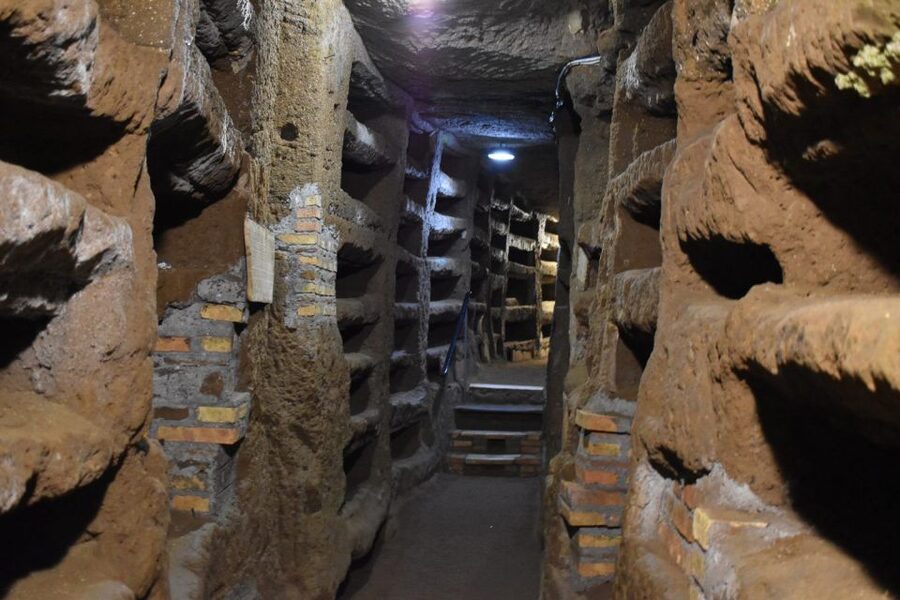
Here’s the key story: the site initially functioned as an arenarium, then was abandoned. Early Christians then began using the large, irregular galleries on the first floor around the beginning of the third century. They built about twenty niche tombs there and then carved hundreds of niches into the walls.
As you walk, this makes the architecture make sense. Instead of seeing a random set of corridors, you start to see layers. Different carved elements reflect different moments when the community used space for burial and remembrance. The tour becomes less about passing through and more about understanding why the walls look the way they do.
Because the visit is split between two floors, expect some movement between levels and tight passages. You’ll want to wear shoes with grip and keep your attention on where you’re going, not just where you’re looking. This is the kind of place where you want to slow down at the stops, but not trip over the route.
First-Floor Galleries and Niche Tombs You Can Actually Interpret
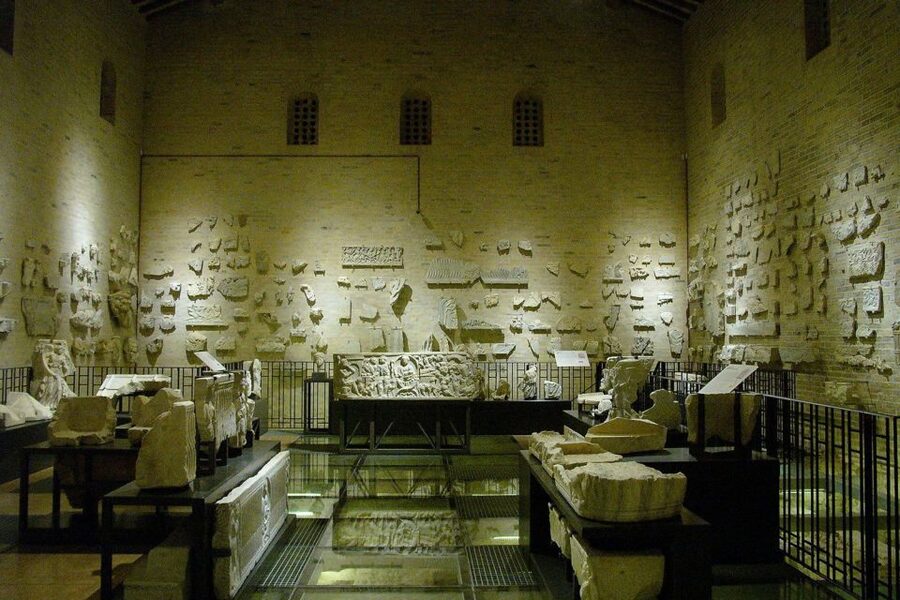
The first floor is where the story begins in a big way. The Christians’ earliest use focused on those large, irregular galleries. Your guide will likely point out the niche tombs and wall niches and explain what they were for in daily faith life.
Why this is valuable: it’s easy to tour catacombs like a show. You stop, you photograph if allowed, you move on. This experience works better when you treat it like a guided reading of the space. The guide’s job is to make the “why” clear, not just describe the “what.”
You also get a sense that underground burial practice was part of community identity. These were not just storage rooms for bodies. They were places where people marked memory and continued hope. Even if you don’t share the beliefs, you can understand the need for continuity and the human need to remember.
If you’re hoping for grand, theatrical wow moments like Rome’s biggest monuments, you might feel the pace is calmer. But that calm is the point. You get a focused look at how early Christians used their world, not a parade of famous artifacts.
Martyrs and Popes: Felice, Filippo, and the Named People Tied to the Site
This tour becomes much more personal when the guide starts naming individuals. Priscilla is strongly associated with martyrs and popes, and those names help you anchor what you’re seeing.
In the list of martyrs linked to the site, the brothers Felice and Filippo stand out, along with their mother St. Felicita. The information provided for Priscilla also includes the other brothers: Alessandro, Marziale, Vitale, Silano, and Gennaro.
Then there are the popes. This is one reason Priscilla is more than a curiosity stop. Numerous popes were buried here, including Marcellino (296-304), Marcello (308-309), Silvestro (314-335), Liberius (352-366), Siricius (384-399), Celestino (422-432), and Vigilius (537-555).
A good guide will use these names to explain why the site mattered. Burial locations were tied to status, community memory, and later reverence. When you hear names that show up in church history, the catacombs stop being anonymous. The underground corridors turn into a map of relationships.
If you want the experience to hit harder, listen for the connections. Felice and Filippo are especially important because the site is also linked to later construction around their tomb area, including a basilica tied to Pope St. Silvestro.
You can also read our reviews of more guided tours in Rome

Cryptoporticus, the Greek Chapel, and the Acili Inscriptions Above the Meaning Line
Not every catacomb tour gives you the sense that you’re moving through a larger complex. Priscilla does. The description of the site points to an adjacent area called the cryptoporticus, and it includes the Greek Chapel.
The cryptoporticus story adds another layer: it was born as a noble family burial ground and later became connected to the catacomb. That means you are not only seeing early Christian use. You’re also seeing how later communities integrated older spaces into their own sacred map.
Then comes the hypogeum of the Acili. This area is particularly important because its origin is different. It was originally a cistern of water. Later, inscriptions tied to the Acili family were found and exhibited as part of the site’s interpretive materials. So instead of only relying on carved niches, you’re also working with documentary evidence and names.
For me, the best underground tours are the ones that help you understand evidence types. Here, you get carved architecture plus inscriptions. That combination makes the visit feel grounded, not just eerie.
If the tour pace feels quick in spots, don’t panic. The guide’s goal is to cover the key points inside the time limit. Focus on catching the links between gallery use, niche carving, and the named areas like the Acili hypogeum and cryptoporticus.
Frescoes, Empty Tombs, and Why the Art Hits Even Without Spectacle
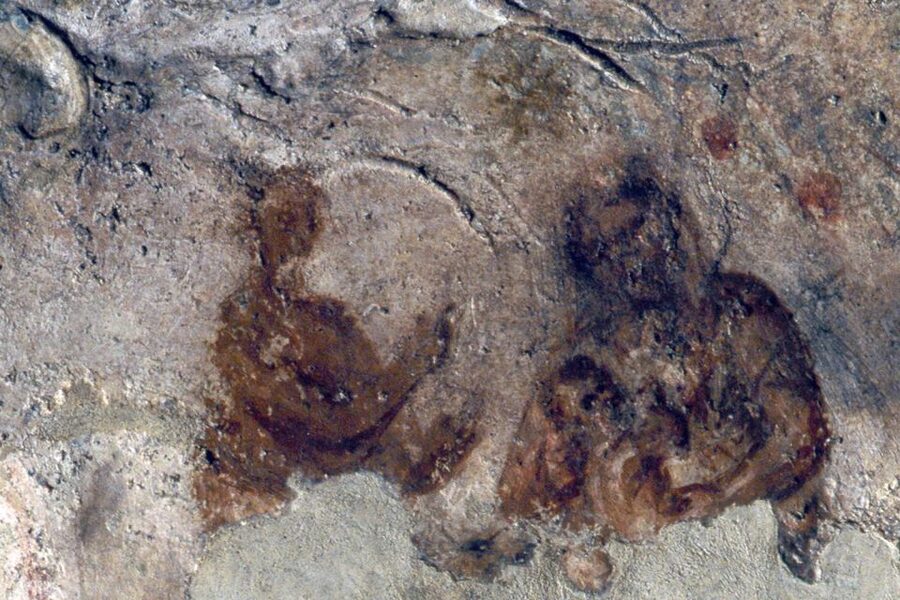
The Priscilla catacombs are often described as having some of the most ancient Christian frescoes with areas still intact. In practical terms, what you gain is context for early Christian visual language.
The tour duration is short, so you’re not going to sit and study each painting like you would in a museum room. But that’s why it can work. In a dark, narrow corridor, a fresco doesn’t need to be huge to feel powerful. It becomes a sign carried through time.
One thing to mentally prepare for: some tomb spaces can appear empty. The body details are not always what people picture from the word catacombs. The guide typically helps clarify what you’re seeing in the present state and how the site changed over time.
Here’s the takeaway for you: treat this as a guided look at early Christian art and burial practice, not a hunt for preserved bodies. If you’re open to that shift, the experience can be far more thought-provoking than you expect.
Also remember photography is not allowed inside. That rule can feel strict, but it also keeps the focus on what your guide is telling you. You’re forced to pay attention rather than turn the visit into a phone scroll.
Practicalities That Affect Your Comfort: Small Groups, No Photos, and Stroller Rules
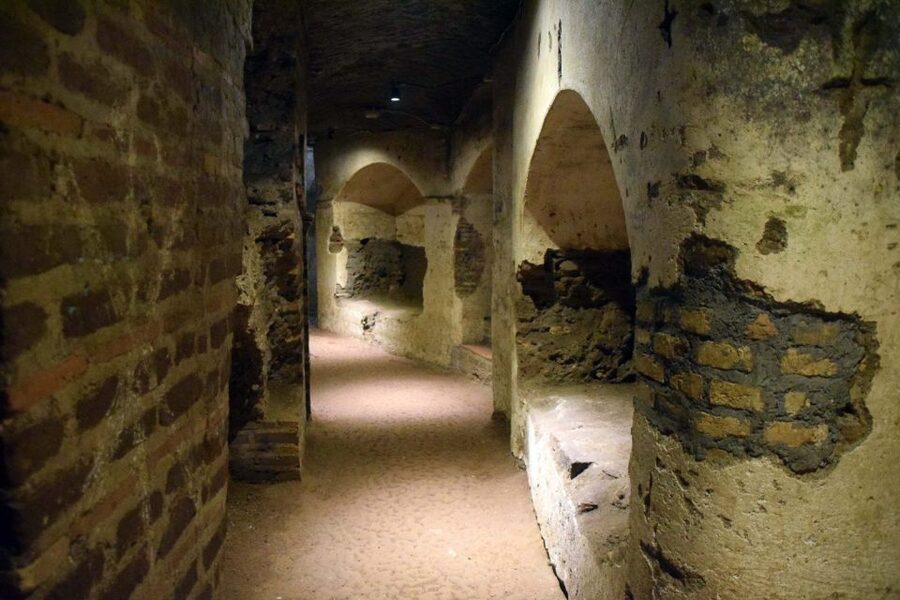
This is where the experience gets real. You’re going underground in close quarters, so comfort affects enjoyment.
- Small group size is capped at 10 participants, which helps a lot in narrow spaces.
- Photography is not allowed inside, so you’ll rely on the guide’s explanations and any interpretive displays outside the underground zones.
- Baby strollers are not allowed, so if you’re traveling with kids who need stroller support, plan to carry or use alternatives outside the catacombs.
- It is not suitable for people with mobility impairments, because of the conditions and the underground layout.
I recommend wearing breathable layers. Underground spaces tend to feel cooler than the street, which can be a welcome break during Rome’s hotter months. The flip side is that the visit still involves walking on uneven or tight routes, so shoes matter more than style.
If you care about photo souvenirs, you might find you can buy printed materials at the site. Even if not, you can still take mental snapshots. The guide is there to point out specific details, including the fresco themes and what they were likely meant to communicate.
Is It Worth $16? Value, Time, and the Quality of Interpretation
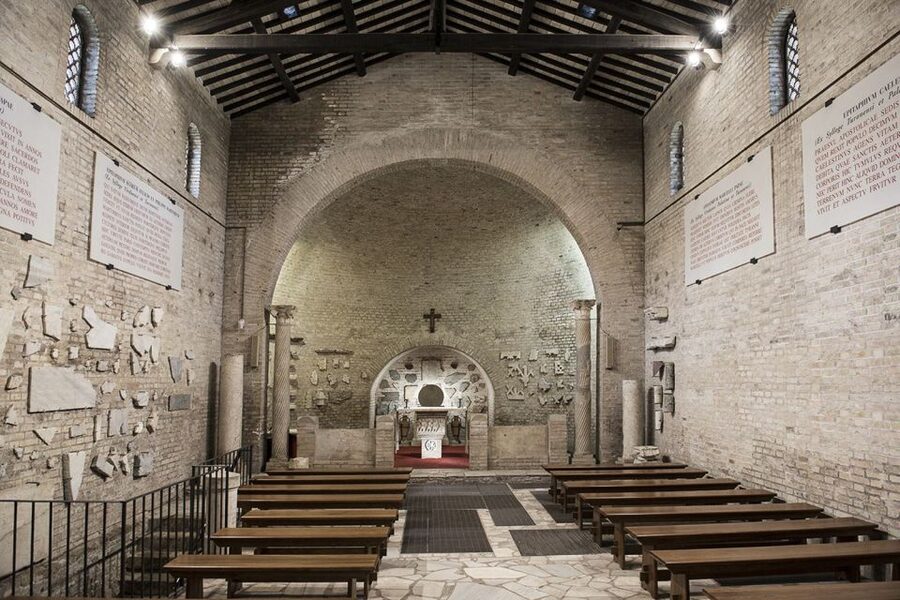
At about $16 per person, this isn’t priced like a luxury add-on. It’s also not priced like a half-baked shortcut. The value comes from two things you’re paying for: access and interpretation.
Access matters because catacombs are not exactly walk-in places when you want the full guided route. You get a ticket plus a live guide, not a generic audio track.
Interpretation matters even more. The descriptions of the guides in recent experiences repeatedly highlight how they connect archaeology with early Christian meaning and how they keep people engaged in tight spaces. Some guides are described as friendly and humorous, others as especially good at explaining art and historical context. Names that have shown up include Sister Lydia (and also written Lidia), Alexandra, and Clara.
Even if you don’t care about faith history, the archaeology angle is worth it. You learn how niches were carved, how spaces were reused, and how inscriptions were found in the Acili area. That kind of explanation turns the corridors from spooky to understandable.
Is there a trade-off? Yes. You’re spending 45 minutes underground, so it is not a long museum day. You won’t leave feeling like you toured every tunnel in Rome. But if your goal is a focused, guided look at early Christian burial practice and preserved art, it is a strong value.
Who Should Book This Tour (and Who Might Want Another Option)
Book this if you like early Christian art, archaeology, or any kind of history that feels close to everyday people rather than faraway emperors. This is also a great choice if you want a break from the biggest Roman hits like the Colosseum and Trevi Fountain. Underground means you avoid some of the most intense midday heat and crowd energy.
You’ll also enjoy it if you’re the type who likes questions, back-and-forth, and guides who explain what you’re looking at as you walk. The format works well for families with older kids and couples who want something memorable without taking over the entire day.
Consider skipping if you need lots of wide-open space, wheelchair friendly access, or a tour that feels like a large-scale spectacle. The catacombs are narrow and rule-heavy. It’s not built for motion sickness, stroller pushing, or slow wandering.
Should You Book Catacombs of Priscilla?
Yes, I’d book it if you want a short, small-group guided look at early Christianity in Rome, with real named figures, carved burial spaces, and frescoes you can still see after centuries. At $16 for a 45-minute guided tour, it’s priced for value, not for hype.
Just go with the right expectations: you’re not collecting selfies in a grand hall. You’re learning how people used underground spaces for remembrance, and you’re seeing early Christian visual culture in context. If that’s your kind of Rome, this is an easy yes.
FAQ
How long is the Catacombs of Priscilla guided tour?
The tour duration is 45 minutes.
Where do I meet for the tour?
Go directly to the ticket office of the catacomb and show your reservation at least 10 minutes before the scheduled tour.
What’s included in the price?
Your ticket includes entrance to the Catacombs of Priscilla and a guided tour.
Is photography allowed inside the catacombs?
No. Photography is not allowed inside.
Are baby strollers allowed?
No. Baby strollers are not allowed.
Is the tour suitable for people with mobility impairments?
No. It is not suitable for people with mobility impairments.
What languages are the guides available in?
Tours are offered in Italian, English, and Spanish.
Can I get a refund if I cancel?
Yes. Free cancellation is available up to 24 hours in advance for a full refund.
More Tickets in Rome


More Tours in Rome

More Tour Reviews in Rome
Not for you? Here's more nearby things to do in Rome we have reviewed








Tickets, compared.
 ★ 4.5Vatican: Museums & Sistine Chapel Entrance TicketFrom $38144,003 reviews
 ★ 4.0Hop-On Hop-Off Panoramic Open Bus Ticket 3 Circuits x 1From $2015,405 reviews
 ★ 4.4Vatican Museums & Sistine Chapel Skip-the-Line Entry TicketFrom $4313,838 reviews
 ★ 4.2Vatican Museums & Sistine Chapel Skip-The-Line TicketFrom $4111,708 reviews
 ★ 4.3Vatican Museums & Sistine Chapel Skip-the-Ticket-Line TourFrom $13010,486 reviews
 ★ 4.2St. Peter’s Basilica & Dome Entry Ticket & Audio TourFrom $177,537 reviews
 ★ 4.2Vatican: Vatican Museums Sistine Chapel Skip-the-Line TicketFrom $716,682 reviews
 ★ 4.1Vatican & Sistine Chapel Ticket with Optional Audio GuideFrom $465,405 reviews