
Reviewed · TICKETS
Rome: Catacombs of Domitilla Entry Ticket & Guided Tour
Underground Rome still keeps secrets. This short guided visit to the Catacombs of Domitilla takes you beneath the city for an up-close look at how burial spaces evolved from pagan roots to Christian worship. In just 30 minutes, you move through cold stone passages and learn what you’re seeing, not just what’s labeled on the wall.
I particularly love the mix of pagan and Christian frescoes and how the guide explains what those images meant to different communities. And the guiding matters here, since multiple guides are described as patient, friendly, and ready to answer questions, with Andrea called out as especially professional and passionate. One thing to plan for: no photography inside, so you’ll want to rely on the guide and your own memories instead of phone pics.
Key things that make this tour worth your time
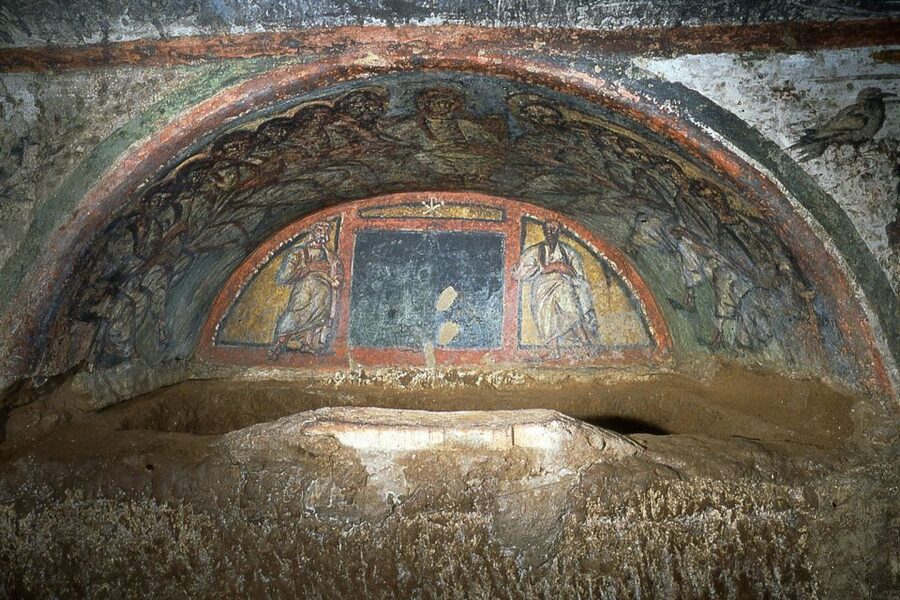
- Two-level layout with the Hypogeum of the Flavians and a later martyrs’ crypt
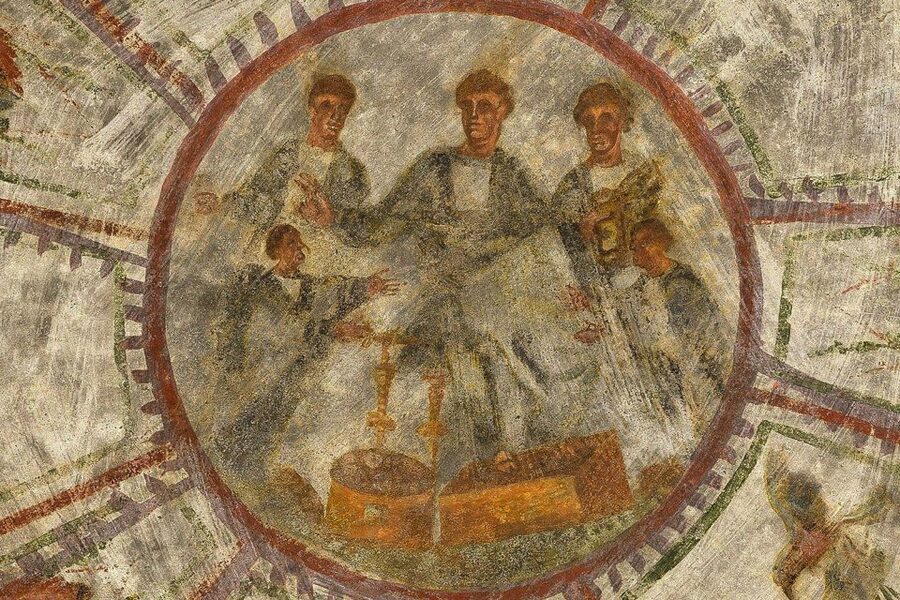
- Fresco storytelling, including the shift from pagan to Christian use
- Named historical milestones like Pope Damasus and Pope Siricius shaping the basilica area
- Small-group feel limited to 10 participants, which helps the guide keep things clear
- Practical pacing for a 30-minute visit underground, without the tour dragging on
Catacombs of Domitilla: what makes this cemetery different
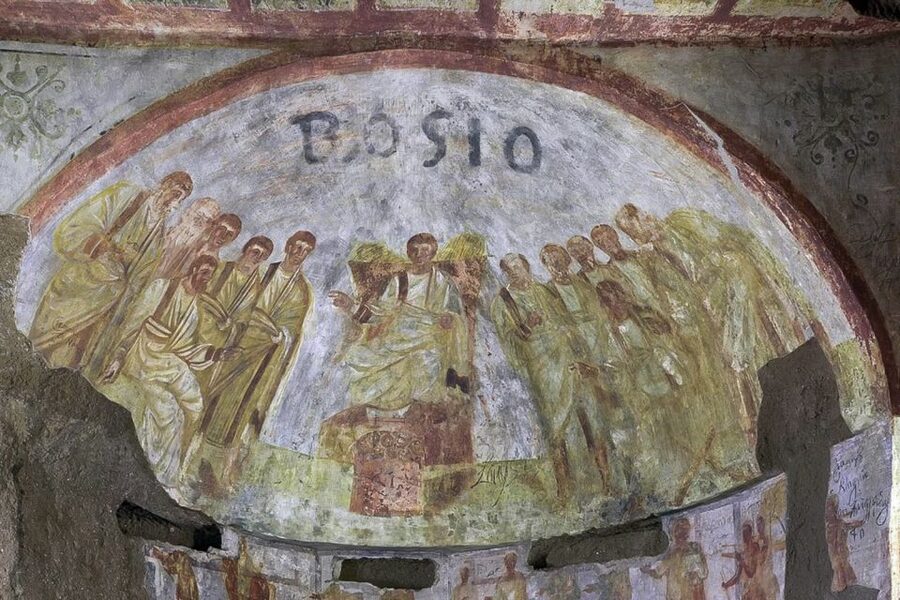
Rome’s catacombs are famous, but Domitilla is special because it’s not one “single moment” frozen in time. It’s a layered burial complex with different phases of use, which means the story you hear from your guide is more like a timeline than a single scene.
The site is located on via delle Sette Chiese, and it begins with land linked to Flavia Domitilla. Her background ties the catacombs to the imperial world: she is connected to the Flavian line and described as related to the imperial family. As a Christian, Flavia Domitilla was exiled by Domitian to the island of Ponza, where she died. Afterward, burial activity developed on land associated with her freedmen, creating a foundation for what later became one of Rome’s larger underground cemeteries.
What really sets Domitilla apart is the way the catacombs grew and changed. The complex is organized into two main levels, and each level reflects a different era. Your route is designed so you get a clear sense of how spaces were reused, expanded, and reinterpreted, instead of feeling like you’re just walking through random corridors.
And yes, the “underground” part is real. The tour information describes descending about 16 km beneath Rome’s busy streets, and whether that figure is read as a dramatic way of describing depth or a specific measurement, the experience still delivers that cold, enclosed sense of stepping far away from modern noise.
A few more Rome tours and experiences worth a look



The two levels you’ll see in the 30-minute guided loop
This tour is short by design, so you want it to be focused. The good news is that Domitilla gives you a clean storyline in a compact time window: one level with earlier burial spaces, and another with later Christian reverence.
Hypogeum of the Flavians: where pagan becomes Christian
The first big stop centers on the so-called Hypogeum of the Flavians. Here’s where the timeline gets interesting.
Giovanni Battista de Rossi believed this area might help identify tombs connected to Christian members of the Flavian family. But before Christian expansion, it also functioned as a pagan hypogeum dating to the end of the 2nd century and the beginning of the 3rd century. At some point later, the space became Christian and was enlarged in the mid-3rd century.
So when you’re underground here, your guide isn’t only describing objects. They’re helping you notice the transition: how communities reuse architecture and how religious identity can reshape artwork and burial function over time. You’ll also hear about the masterly-built chambers that make the catacombs feel organized rather than chaotic, even though the network is vast.
The second level: the martyrs’ crypt and the small basilica
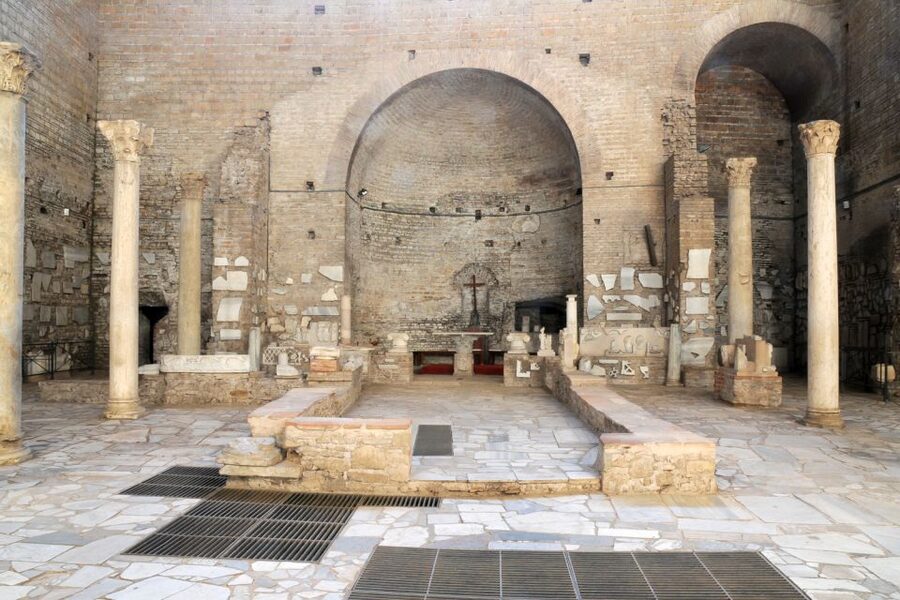
Then you move toward the second floor area tied to the martyrs Nereus and Achilleus. Toward the end of the 3rd century, their bodies were placed in a crypt on this level. After that, the site took a stronger “worship-space” direction.
Pope Damasus (366 to 384) transformed that crypt into a small basilica. Later, Pope Siricius (390 to 395) enlarged it until reaching the size it is described as having today. That’s a key point for your understanding: Domitilla is not only a cemetery. It also functions as a memorial and a religious focal point.
Even if only part of the catacombs is accessible during a guided visit, the basilica section gives you the sense that you’re standing in a space that mattered, not just a place where bodies were stored. The guide frames it around the sanctity of burial grounds for Christian martyrs, so the mood makes sense once you’re there.
The guide’s role: frescoes, sanctity, and restoration explained plainly
A catacomb tour can go two ways. It can be a fast checklist of what you’re walking past, or it can help you understand why the walls look the way they do.
This tour leans toward understanding. The guide explains the delicate restoration process, and that matters more than most people expect. Catacomb surfaces are fragile, and restoration is a constant balancing act between preserving fragile material and making the art readable enough to study. When your guide talks about it, you’ll start to notice why certain details are handled carefully and why the visit is structured the way it is.
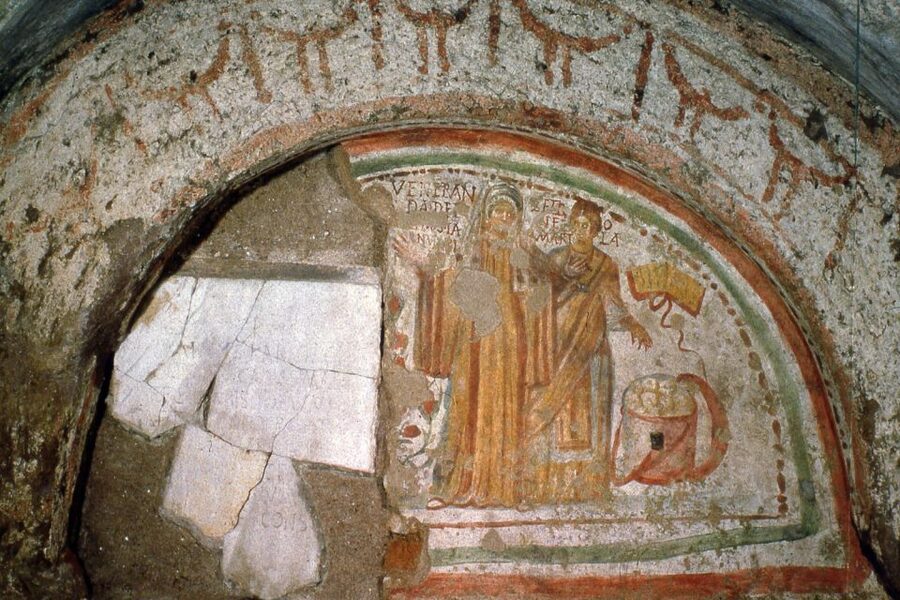
You’ll also get interpretation of the “why” behind the artwork and the burial function. The catacombs’ unique mixture of pagan and Christian frescoes can feel confusing if you only view it as decorative history. With a good guide, it becomes a clue to social change: how images shifted, what communities valued, and how burial spaces gained spiritual meaning over centuries.
This is also where the human side of the tour shows up. The most praised aspect of this experience is the guide quality, with specific names like Andrea highlighted as friendly, professional, and passionate about history and art. In the same spirit, other guides are described as expressive and attentive to questions, with clear explanations that help you keep up underground when it’s cool, dim, and your sense of direction is limited.
You can also read our reviews of more guided tours in Rome



Masterfully-built chambers: what you feel, and what you learn
Domitilla is built to guide movement underground. That might sound obvious, but many people expect catacombs to feel like a random maze. Instead, the experience you get is shaped by chambers that were engineered for practical use and then adapted over time.
The tour highlights the ability to navigate the network of chambers with help from the guide, which is important because underground spaces can make distance and orientation feel misleading. In a place like this, the difference between an enjoyable visit and a confusing one is often whether someone helps you connect the dots.
You also get a physical feeling that supports the learning. Cold stone walls do not require imagination. You’re surrounded by the architecture of burial, the kind of atmosphere where your brain starts to treat the place as sacred or solemn, even before you fully process the historical details. The guide’s focus on the sanctity of burial grounds for Christian martyrs gives you a framework so the mood doesn’t feel random.
Finally, the tour’s structure helps keep everything understandable. Since it’s limited to 30 minutes, you’re not expected to absorb every nuance of Roman burial history. Instead, you get a clear set of anchors, Hypogeum of the Flavians first and then the martyrs’ crypt and basilica area.
Photography is off inside. Here’s how to handle that
No photography inside is a real limitation. If you love building a travel photo library, you’ll notice this fast, and some people leave with the sense that memories can fade if you do not capture images.
But you can still make the tour stick without photos. Your best strategy is to treat the guide as your “recording device.” Ask questions early, especially about what you’re looking at in the fresco areas and how the pagan and Christian layers relate. If you’re the type who likes to remember visually, take time before the tour begins to look at signage and exterior context, then let the underground time be about details your guide explains.
One practical tip: bring comfortable clothes, since you’ll be walking and standing in a cool, stone environment. The tour doesn’t list extra gear, so focus on what makes you steady. A relaxed body helps you pay attention.
Price and value: $16 for entrance plus a guide in a small group
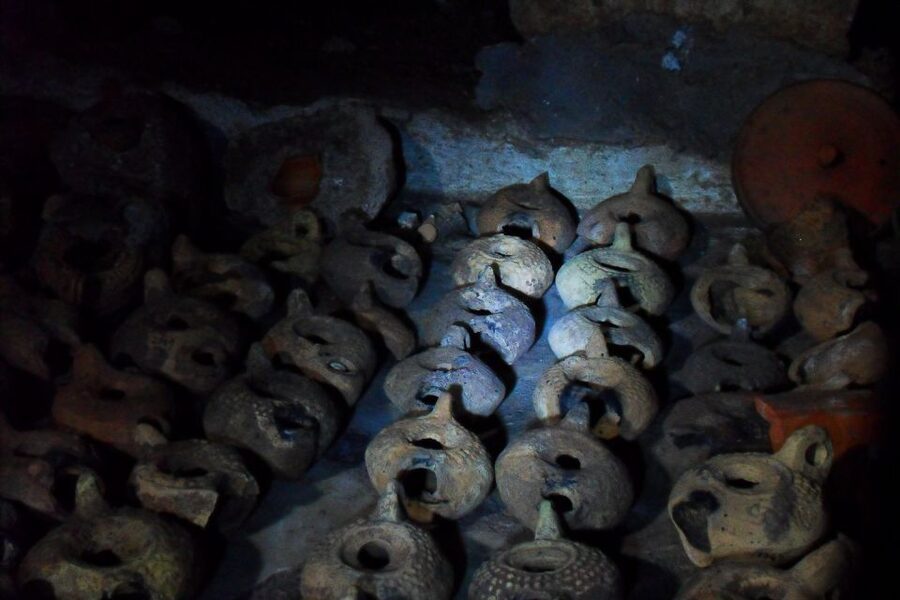
At $16 per person for a 30-minute guided tour, the value comes from two things: the entrance fee is included, and the experience includes a live guide. You’re not paying for a long bus ride or a half-day program. You’re paying for access to a controlled underground visit with interpretation.
That short duration is also part of the value equation. Catacomb tours can run long, and long tours sometimes dilute attention. Here, the timing forces focus. You get the highlights, the major timeline shifts, and enough context to make the walls meaningful.
Small-group size matters too. The group is limited to 10 participants, which can make a big difference underground. Fewer people means the guide can slow down if you need clarification, and you spend less time waiting for others to catch up in tight spaces.
The other value cue is what people consistently praise: the guide quality and the fact that it feels like a must-see stop because of the basilica inside. If that’s the part you care about most, the format is built to deliver it without padding.
Meeting point and timing that actually affect your day
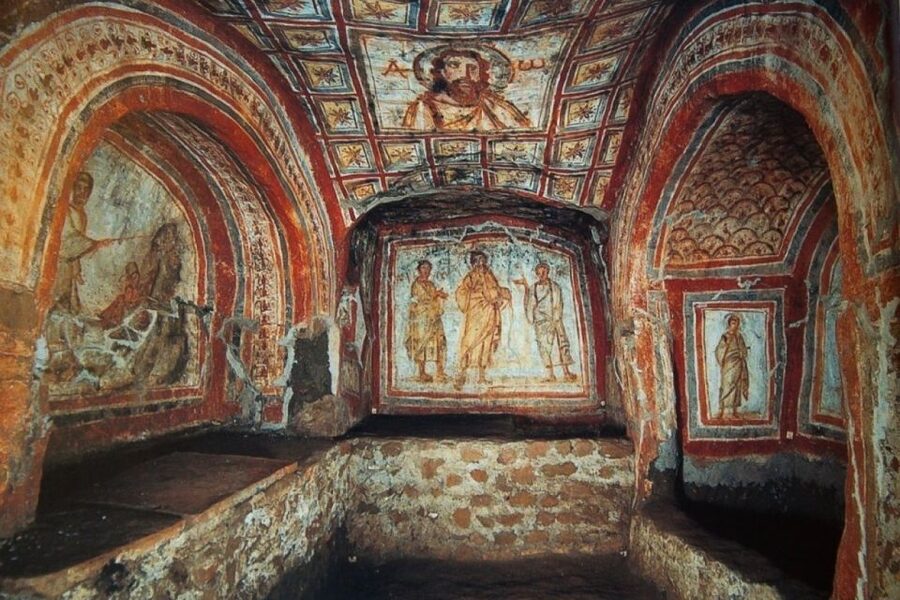
The meeting instructions are straightforward. Go directly to the ticket office of the catacomb and show your reservation at least 10 minutes before the scheduled tour time.
That buffer matters because the tour runs as a timed slot. If you show up late, you can miss your window and lose the prepaid access you were counting on. The experience provider schedules start times based on availability, so picking a time that fits your day and your transport plan is smart.
I also suggest planning your route so you’re not scrambling. One caution that comes up is difficulty reaching the meeting time by public transport for the schedule you aimed for, so give yourself extra margin and check your travel time before you head out.
Who should book this Domitilla catacomb tour
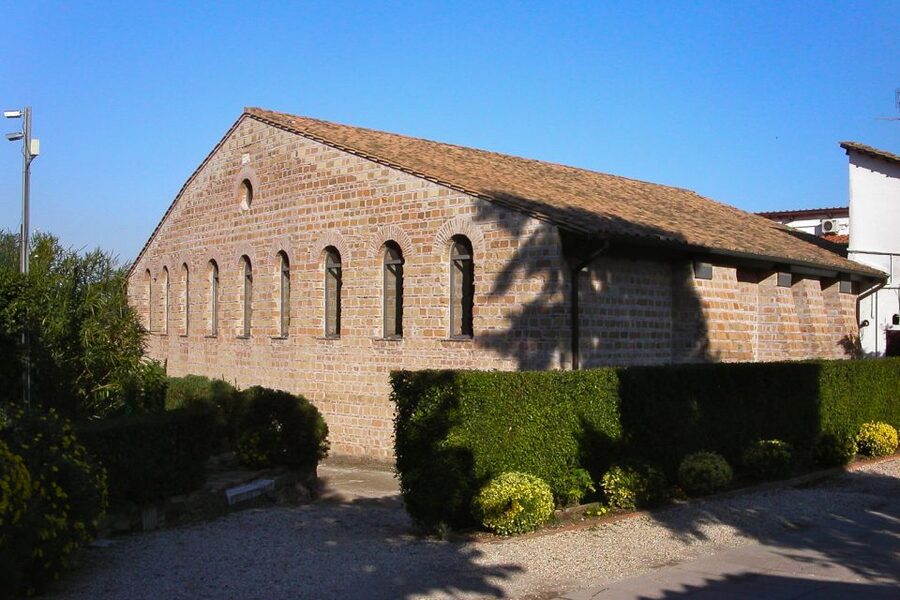
This is a strong fit for you if you want a compact, guided underground experience with clear historical context. If you like art history and religion, the pagan and Christian fresco mix will be the kind of thing you talk about afterward. If you prefer guided explanations over walking in silence, the live guide is the point.
It’s also a good fit if your schedule is tight. At 30 minutes, you can slot it between other Rome classics without committing to a long underground block.
On the other hand, it is not suitable for people with mobility impairments and it is not for wheelchair users. If that’s your situation, skip this one and look for an accessible alternative, because you do not want to force a visit that the tour is not set up to support.
Should you book the Catacombs of Domitilla tour?
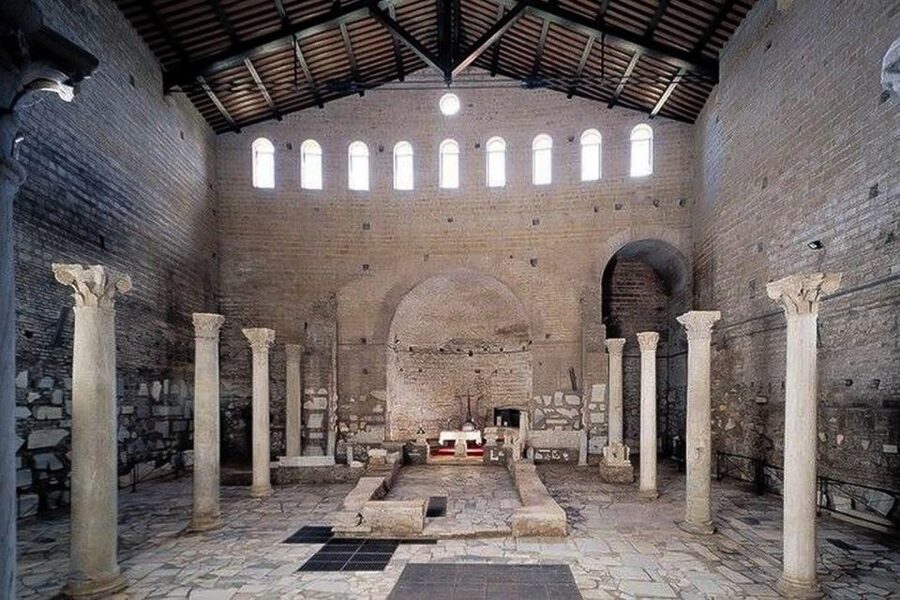
If you want your catacomb experience to be understandable and well paced, I’d book this. The combination of a small-group guide, a focused 30-minute route, and the clear story from pagan hypogeum to the Christian martyrs’ basilica area makes it a practical choice.
I’d especially recommend it if you’re intrigued by how art and burial practices shifted over centuries, and if you appreciate guides who answer questions calmly and clearly. The lack of photography inside is the main trade-off, so go in knowing you’ll remember this with your ears and your mind, not your camera roll.
If you want a longer self-guided exploration where you can linger and shoot photos at will, this format may feel limiting. But if you want a meaningful underground visit that’s easy to work into a Rome day, Domitilla is a very solid pick.
FAQ
Where is the meeting point for the Catacombs of Domitilla tour?
Go directly to the ticket office of the catacomb, and show your reservation at least 10 minutes before the scheduled tour.
What languages are the guided tours offered in?
The live tour guide is available in Italian and English.
How long is the guided tour?
The duration is 30 minutes.
How much does the tour cost?
The price is $16 per person.
What is included in the ticket price?
Your tour includes a tour guide and entrance fees.
Is photography allowed inside the catacombs?
No, photography is not allowed inside.
How large is the group?
The tour is a small group with a maximum of 10 participants.
What should I bring or wear?
Wear comfortable clothes.
Can I pay later or keep things flexible?
Yes, the booking option is reserve now & pay later, so you do not have to pay nothing today (as stated in the activity details).
What is the cancellation policy?
You can cancel up to 24 hours in advance for a full refund.
Is the tour suitable for wheelchair users or mobility impairments?
No, it is not suitable for people with mobility impairments or wheelchair users.
More Tickets in Rome


More Tours in Rome

More Tour Reviews in Rome
Not for you? Here's more nearby things to do in Rome we have reviewed








Tickets, compared.
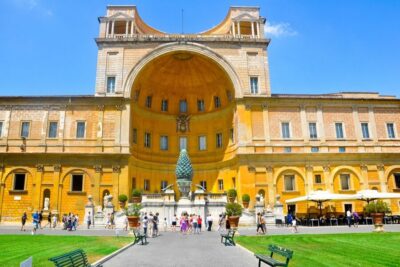 ★ 4.5Vatican: Museums & Sistine Chapel Entrance TicketFrom $38144,003 reviews
 ★ 4.0Hop-On Hop-Off Panoramic Open Bus Ticket 3 Circuits x 1From $2015,405 reviews
 ★ 4.4Vatican Museums & Sistine Chapel Skip-the-Line Entry TicketFrom $4313,838 reviews
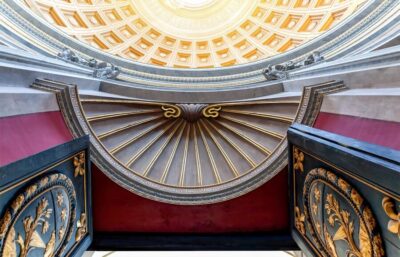 ★ 4.2Vatican Museums & Sistine Chapel Skip-The-Line TicketFrom $4111,708 reviews
 ★ 4.3Vatican Museums & Sistine Chapel Skip-the-Ticket-Line TourFrom $13010,486 reviews
 ★ 4.2St. Peter’s Basilica & Dome Entry Ticket & Audio TourFrom $177,537 reviews
 ★ 4.2Vatican: Vatican Museums Sistine Chapel Skip-the-Line TicketFrom $716,682 reviews
 ★ 4.1Vatican & Sistine Chapel Ticket with Optional Audio GuideFrom $465,405 reviews