
Reviewed · GUIDED
Rome: Castel Sant’Angelo Guided Tour
Roman views, plus a real story.
I like this tour because it gets you inside Castel Sant’Angelo with admission tickets already included, so you are not burning time at the gate. The focus on Roman origins and later papal history gives the building real context, not just dates. One possible drawback to plan for is that you will climb a series of stairs, and the terrace walk is not exactly stroller-friendly.
My favorite part is the rooftop perspective.
The guided route leads to a panoramic terrace where you can take photos of Rome from a different angle than the usual street-level viewpoints. Headsets are included if needed, which matters in this kind of busy site where groups can get spread out fast.
The main caution is group control and pacing.
A small handful of comments point to guides who were hard to follow or tours that felt short, so if you want a very tightly managed experience, show up on time and go in with the mindset that you may need to stay alert when the group moves.
Key things that make this tour worth your time
- Admission included so you start seeing things faster.
- Headsets if needed help you catch the guide in a crowded fortress.
- Terrace photo stop gives you a city overview you cannot get from ground level.
- Roman to papal storyline ties the fortress to Hadrian and later Popes.
- Small group size (max 20) keeps it more manageable than big bus tours.
Castel Sant’Angelo: what this tour gets right in 2 hours
Castel Sant’Angelo is one of those Rome places that looks simple from the outside, then turns into a maze of meaning once you are inside. This guided format is built for people who want the key highlights without spending half a day lost in corridors and signage.
I like that the tour is designed around three “high payoff” elements. You get a guided walk through the fortress spaces, you learn how the site evolved over time, and you end with a panoramic terrace moment where the city suddenly makes sense as a map. At about 2 hours total (and sometimes a bit less depending on the walking option you choose), it is a good fit when you want history and a payoff view, but you still have dinner plans.
You can also read our reviews of more guided tours in Rome

Entrance speed: admission tickets included, so you spend less time waiting
In Rome, entrance lines can eat your day. This tour includes Castel Sant’Angelo access, so you can focus on finding your meeting point and getting through the site rather than standing around hoping staff can move faster.
A practical tip: keep your expectations realistic. Even with admission included, you still have to go through whatever checks and flow rules the monument requires that day. What the included ticket does buy you is time and certainty, especially on popular slots.
Also, plan to arrive early at the meeting point. The meeting location is Lungotevere Castello, 50, 00193 Roma RM, Italy, and the activity ends back there. Late arrival or a no-show is not accommodated and not refunded, so build in Rome traffic and a quick buffer.
The walking route: stairs are part of the deal
You will climb. The terrace access specifically requires a series of stairs. Several visitors flagged that the stair count can feel intense once you are already in “tour mode,” and you may encounter stairs without handrails in some sections.
If you have limited mobility, you should treat this as a harder stop than it looks on a brochure. If you are fine with stairs, go in prepared: take your time, wear grippy shoes, and do not plan to “power through” just because the group keeps moving.
One small mercy is that you get headsets to hear the guide clearly. That helps you stay engaged even when the group slows or pauses on stair sections.
The guide-led storyline: Roman origins to Papal power
The biggest reason to book a guided version here is that Castel Sant’Angelo is layered. Without a guide, it is easy to see impressive walls and rooms and still miss the point of why those rooms mattered.
This tour’s narrative ties the fortress to its early Roman origins, then carries you into its later role connected to the Popes. The guide is also positioned to point out the “why” behind each space, not just what it looks like.
In the experience notes, you will hear about:
- the Emperor’s burial area (a late Emperor is mentioned as part of the stop)
- Pope’s apartments
- the treasure room
- and the fortress’s long stretch as a prison and later tied to public executions
That sequence matters. You start to see the building as a system built for control, defense, and spectacle, not a single-purpose castle.
Inside the fortress: the rooms you will want to pay attention to
The guided highlights include the places people usually skip or misunderstand when they do self-guided visits.

The Emperor’s burial site
The tour includes a stop for the burial place of the late Emperor. If you have any interest in how imperial Rome turned into later periods of power, this is one of the moments that makes the building feel more than just stone.
The Pope’s apartments
When the Papacy takes over the narrative, you will be shown the Pope’s apartments. Even if you are not focused on religious history, this gives you a window into how leaders used architecture to project authority.
The treasure room
Castel Sant’Angelo is not just about grim corridors. The guide also leads you to a treasure room, which adds contrast. It helps break up the heavier themes and makes the visit feel more like a complete “world” inside the structure.
The public execution history
The tour also frames the fortress as a place used for imprisonment and public executions across years. This portion can be emotionally heavy, so if you prefer lighter stops, go in mentally prepared. A guide’s tone will affect how this lands for you.
Headsets and group flow: why this matters in a busy attraction
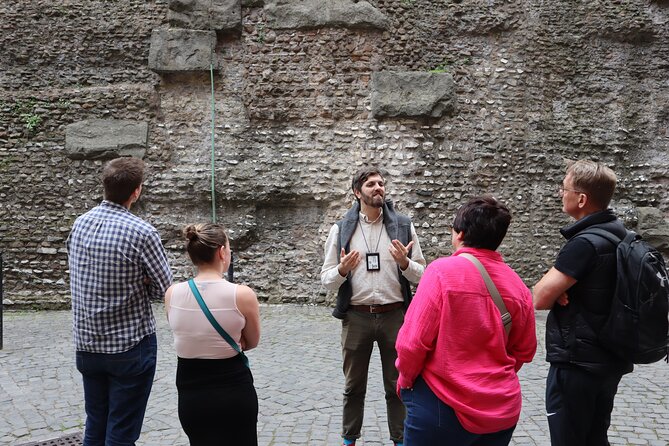
The tour provides headsets if needed, and that is not just a nice perk. Castel Sant’Angelo is busy. People stop suddenly for photos. Staff reroute flows. Groups get pulled apart.
Headsets help you hear the guide clearly so you can stay oriented when movement gets choppy. If you have ever felt frustrated at monuments where you can see the guide but not understand the explanation, this is aimed at fixing that problem.
That said, one key lesson from mixed feedback: your best chance of a smooth tour is being alert. Keep an eye on where the group is heading, and do not drift for extra photos during “transition moments.”
Terrace views: how to get your best Rome photos from Castel Sant’Angelo
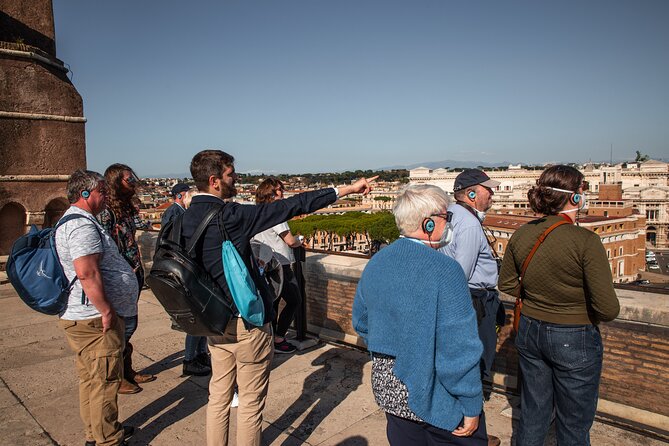
The rooftop terrace is a major payoff. It is where you can connect the fortress to the city you keep walking around.
The tour specifically includes a panoramic tour from the terrace, and people love this part for a simple reason: it changes how Rome looks. From there, you see Rome as layers, with the Tiber River and major landmarks in a way that street-level views do not replicate.
Photo advice:
- Expect bright light. Bring sunglasses and be ready to adjust your camera settings.
- Move slowly on the terrace access stairs so you do not feel rushed.
- Take one “wide view” shot early, then come back for closer detail.
Some visitors also mention the terrace climb as roughly 270 stairs in at least one experience. Your exact route may vary, but the takeaway is consistent: terrace time is earned.
The Bridge of Angels connection: don’t ignore Ponte Sant’Angelo
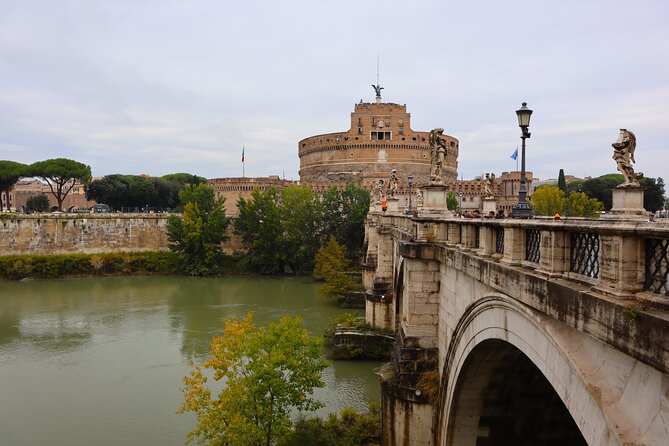
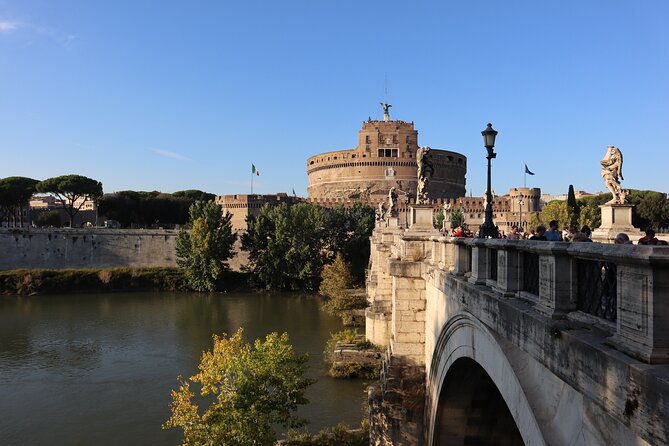
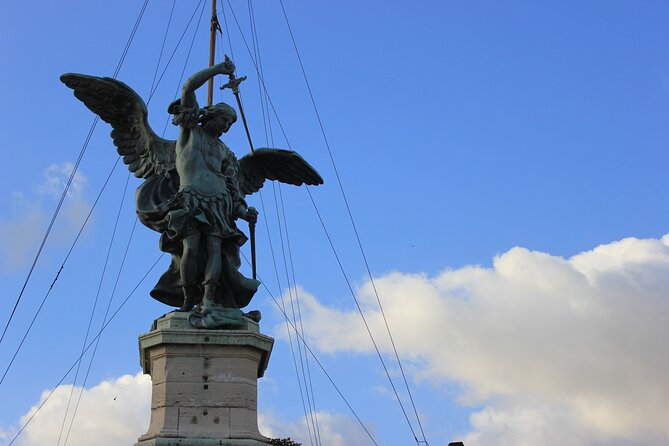
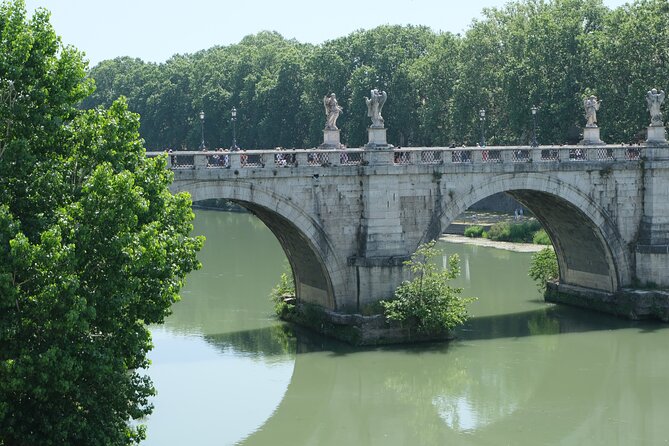
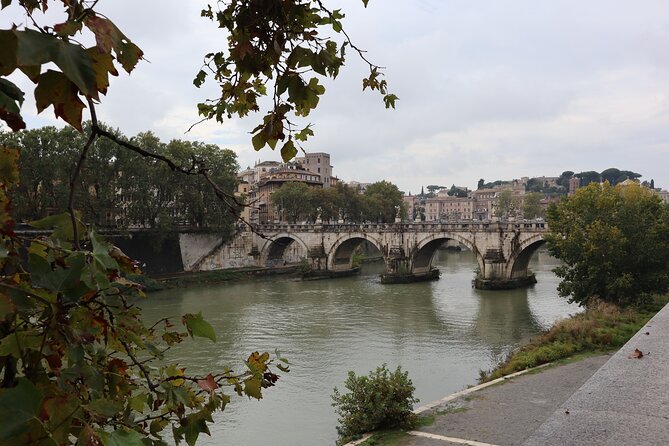
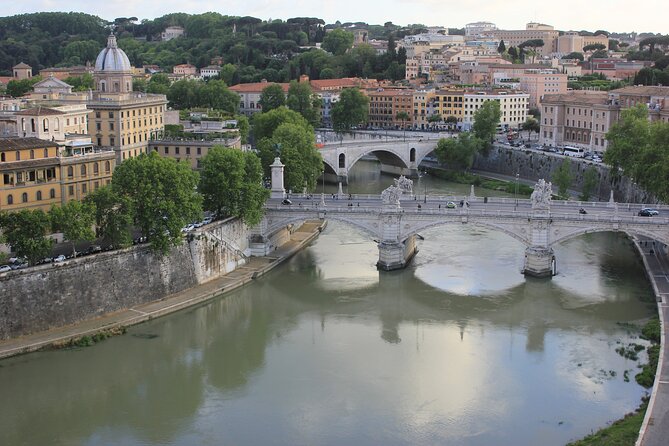
Even though this is primarily a fortress tour, the experience ties Castel Sant’Angelo to the story of Ponte Sant’Angelo, also known as the Bridge of Angels. The tour route description includes angel sculptures associated with the bridge.
Why you should care: Ponte Sant’Angelo is one of the most iconic lines in central Rome, and understanding the “Angels” concept helps the city feel connected instead of like separate tourist stops. If you have time after the tour, take a look back toward the bridge so the fortress and river make a tighter visual story in your head.
Price and value: is $70.17 worth it?
At $70.17 per person for about 2 hours, you are paying for three things you would otherwise piece together yourself:
- guided interpretation (so you do not miss the meaning of rooms)
- admission included (so you cut wait time)
- headsets (so you can actually hear the explanation)
If you were to buy admission and do it solo, you might save money, but you would also lose the “click” moments where history connects across centuries. The fortress is dense, and having a guide who can point out the Emperor burial area, Pope’s apartments, and treasure room makes it feel less like wandering.
Group size helps the value too. With a maximum of 20 travelers, you usually get better attention and easier regrouping than with huge crowds.
The one value risk is pacing. A small number of comments complain about shorter-than-promised tours or group cohesion problems. You cannot control every guide, but you can improve your odds by choosing a time slot that suits your energy level and arriving early.
Who this tour fits best (and who should skip it)
This is a strong pick if you:
- want a guided “hits and connections” tour in under a half-day
- enjoy Roman-to-Papacy storylines tied to real rooms
- want the terrace view without figuring out timing on your own
- appreciate hearing the guide clearly, especially in busy spaces thanks to headsets
This may be a less ideal pick if you:
- need minimal stairs and a fully flat route
- hate any religious discussion tone that can feel critical or argumentative
- prefer total independence and do not want a group schedule
On that last point, there was at least one negative experience where the guide’s approach to religion felt offensive to the audience. That is not guaranteed, but it is a legitimate consideration if you are sensitive to that kind of commentary. If religion talk is a problem for you, you might want to set expectations with the guide through your own mindset, and decide quickly if the tone is not for you.
Real-world guide strengths you should look for in the format
The best reviews here are not about fancy extras. They are about storytelling that makes rooms make sense, and guides who can hold attention without turning it into a lecture.
You will see praise for guides with names like Alec, Agnes, Teresa, Clarissa, Carissa, Silvia, Alescia, Bogdan, and Fredrico. Several stood out for humor, clear pacing, and turning history into something you can picture.
What I take from those comments: the format works when the guide keeps the group together and speaks clearly enough that you feel you are participating, not just tagging along behind someone’s shoulder.
Bottom line: should you book this Castel Sant’Angelo guided tour?
If your goal is to get inside Castel Sant’Angelo with admission included, hear the core story of Roman origins and papal power, and end with an excellent terrace view, then yes, it is an easy yes.
I would book it if you can handle stairs, you want a guided explanation (not just signage), and you like the idea of a small group visit of about 2 hours.
I would think twice if you are very sensitive to pacing issues, need strict group cohesion to feel comfortable, or you would rather avoid heavy themes like prison and executions. In those cases, you might still want to visit Castel Sant’Angelo, but consider a plan that matches your comfort level with stairs and tone.
If you do book, do one simple thing that makes a big difference: arrive early at Lungotevere Castello, 50 and stay focused during transitions. That’s the difference between a smooth terrace moment and a stressful one.
FAQ
Is admission included in the Castel Sant’Angelo guided tour?
Yes. Castel Sant’Angelo access and admission tickets are included.
How long is the tour?
The experience is about 2 hours (walking time can vary by option, with 1 or 2 hour walking mentioned).
Is the tour offered in English?
Yes, it is offered in English.
Are headsets provided?
Headsets are provided if needed, to help you hear the guide during the visit.
Where do I meet the group?
You meet at Lungotevere Castello, 50, 00193 Roma RM, Italy.
Where does the tour end?
The tour ends back at the meeting point.
Do I need to bring a passport or ID?
Yes. You should bring your passport or valid ID for verification.
Are there restrictions on luggage?
Yes. The activity does not allow luggage or large bags, and it also lists restrictions like no weapons or sharp objects.
Is the terrace accessible if I have trouble with stairs?
You will need to climb a series of stairs to reach the panoramic terrace, so plan for stairs as part of the experience.
Is it worth going if I just want views?
If views are your main goal, the terrace panoramic stop is a highlight. The guided context also helps you understand what you are seeing and why the fortress matters.
What is the cancellation rule?
You can cancel for a full refund if you cancel up to 24 hours in advance of the experience’s start time.
More Guided Tours in Rome
More Tours in Rome

More Tour Reviews in Rome
Not for you? Here's more nearby things to do in Rome we have reviewed










Guided, compared.
 ★ 4.5Vatican Museums, Sistine Chapel & St Peter’s Basilica Guided TourFrom $2239,149 reviews
 ★ 4.8Colosseum, Palatine Hill and Roman Forum Guided TourFrom $5232,814 reviews
 ★ 4.7Guided Tour of Colosseum, Roman Forum & Palatine HillFrom $5527,897 reviews
 ★ 4.2Colosseum & Forum with Audio Guide App -Optional ArenaFrom $4124,770 reviews
 ★ 4.5Colosseum, Roman Forum and Palatine Hill Guided TourFrom $5923,903 reviews
 ★ 4.6Colosseum, Palatine Hill & Roman Forum Guided TourFrom $5112,703 reviews
Vatican Museums & Sistine Chapel Guided TourFrom $11812,117 reviews
★ 4.6Colosseum, Palatine Hill & Roman Forum Guided TourFrom $5112,703 reviews
Vatican Museums & Sistine Chapel Guided TourFrom $11812,117 reviews
 ★ 4.6Colosseum Arena, Palatine Hill & Forum Guided TourFrom $7310,584 reviews