
Reviewed · ROME VESPA TOURS
Rome by Vespa – with Francesco: the Best Guided Vespa Tour
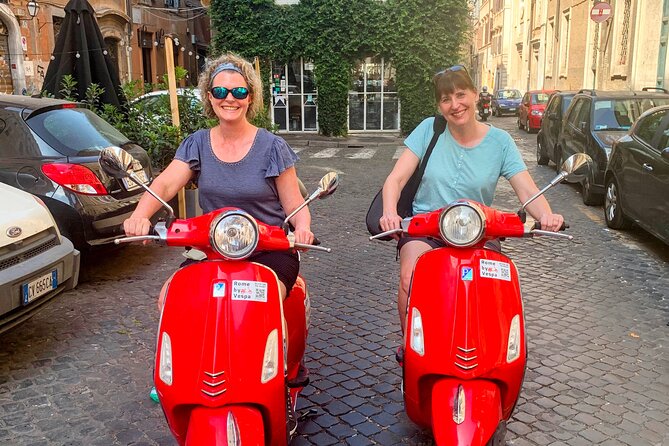
Scooters are a fast way to feel Rome.
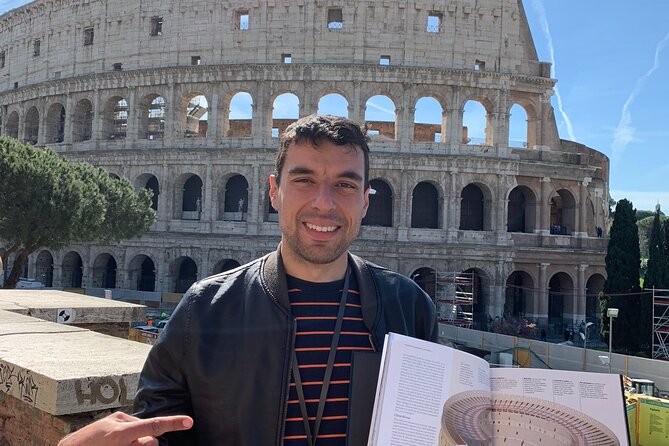
This guided Vespa tour turns major landmarks into real street time, with Francesco steering you through the city and calling out what you’re seeing in plain, useful ways. You’ll swap long walks for quick rides, then pause at the big sights and a few calmer neighborhoods.
What I like most is the combo of small-group attention (max 15) and short, focused stops that keep you moving without rushing your brain. The other big plus is the safety-first setup, including helmets and a practical check for self-drive riders before you hit traffic.
One drawback to plan around: this is not a casual scooter ride for beginners. If you pick self-drive, you need prior experience and the right paperwork, plus a €500 deposit, and you should be comfortable riding in Rome traffic.
Key things to know before you book
- You can self-drive or ride with a driver (cash fee for the driver option)
- Helmets and hands-on prep so you are not thrown into traffic cold
- A small group, max 15, so Francesco can actually manage the pacing
- No Colosseum ticket included, you see it from outside and focus on storytelling
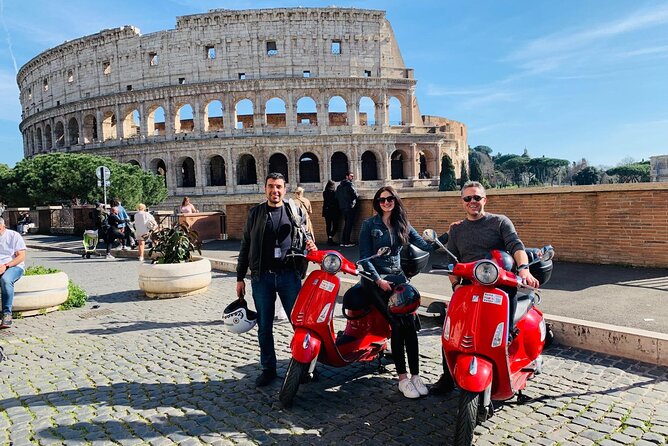
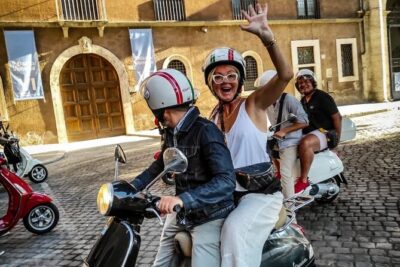
- Photo moments with your Vespa at major backdrops like the Colosseum and Fontanone
- Route mixes big sights with neighborhood streets, including Trastevere
Why Rome by Vespa works so well
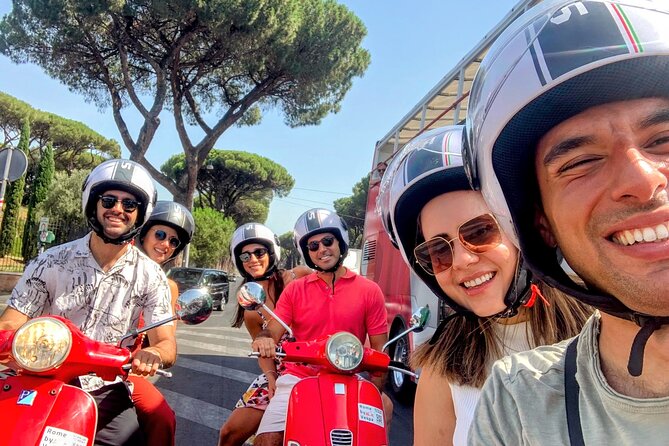
Rome is famous for walkable beauty, but not every second is pleasant on foot. This tour gives you something different: motion. On a Vespa, you get that windy, street-level feeling, and you can cover ground that would take you hours to do properly by yourself.
I also like the rhythm. You are not just riding past monuments. You stop, look up close, and get quick context so the place sticks. The fact that the guide is officially licensed matters too, because it tends to translate into clearer directions and more controlled group management when the streets tighten up.
You can also read our reviews of more guided tours in Rome

Meeting at Via della Madonna dei Monti and getting ready
Your tour starts at Via della Madonna dei Monti 57, Rome. It is a convenient base because it is near public transit, and the tour ends back at the same meeting point, so you do not have to plan a separate return.
Once you arrive, Francesco handles the practical stuff first: helmets and getting everyone squared away. If you choose self-drive, you also get a test moment to make sure you are comfortable on the scooter before you roll into the busier roads. That short check is a big deal. Rome can feel chaotic, and the tour’s goal is to keep it fun, not stressful.
Rione Monti: cobblestones first, not afterthoughts
The first stop is Rione Monti. This is a smart opener because it eases you into the tour area and warms up your eyes before you hit the heavy-hitter monuments.
You ride through cobbled streets and rolling turns, then you get guided points that help you spot what matters: the vibe of the neighborhood and the way Rome layers history on top of everyday life. You also get the sense that the tour is not only about checklist sights. It is about moving through real streets at a real pace.
Stop time is about 10 minutes, so treat it like a quick orientation moment. If you want linger-time, you will probably want to schedule that on a different day. Here, the value is momentum.
Colosseum from outside: the story plus a Vespa photo
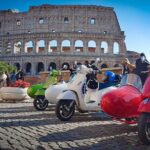
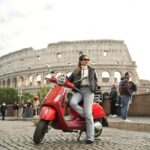
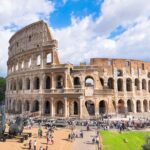
Next up is the Colosseum. You get one of the most famous views in the city, but in a way that avoids the longest line headaches. This tour visits the Colosseum from outside, so there is no Colosseum entrance included, and you do not need to plan around a ticket.
What you do get is a focused history lesson right by the landmark, plus a chance to stage a photo with your Vespa against the backdrop. For many people, that is the perfect tradeoff. You get the atmosphere and the meaning without turning your tour into a ticket line exercise.
The main consideration here is simple: if you want to go inside the arena and museum areas, you will need a separate plan. This tour is about street views and guided context, not full-ticket access.
Palazzo del Quirinale: papal power and modern politics

You then pass by Palazzo del Quirinale, the Summer residence of the Pope, which today is known as a presidential palace. The stop is short, around 5 minutes, so do not expect a deep inside visit.
But this is a good kind of stop on a Vespa day, because you are seeing how Rome’s institutions evolve over time. You can connect the dots between eras while still keeping the ride flowing.
If you like architecture and how a city’s buildings reflect its shifts in power, you will appreciate this kind of quick, guided framing.
A few more Rome tours and experiences worth a look
Trevi Fountain: coin toss with a guided moment
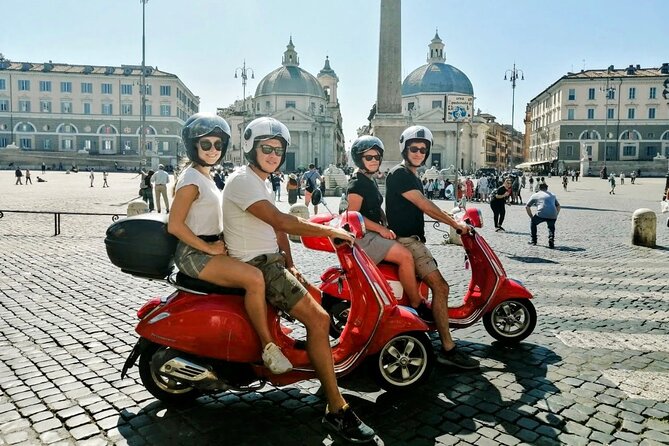
Trevi Fountain is the obvious magnet in the route, and it does not disappoint as a final approach before you move deeper into the center.
Stop time is about 15 minutes here, and the tour focuses on the fountain’s scale and details, including the carvings tied to Oceanus and sea horses. You also learn the tradition of tossing a coin over your shoulder, then you actually get to do it. That’s one of those silly-in-the-best-way moments that makes the tour feel like a complete experience, not just transit between sights.
Practical note: Trevi can be crowded. A Vespa tour keeps you from spending your whole time stuck in the mess because you approach, stop for the moment, and move on. You still get the iconic shot, but you avoid the time sink.
Spanish Steps: panorama time from above
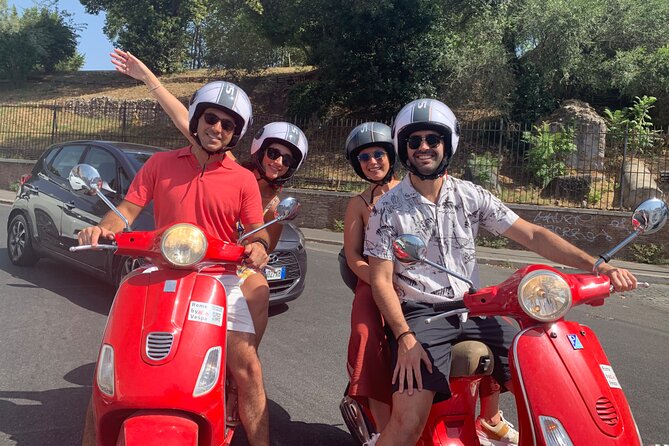
Next come the Spanish Steps. This stop runs about 10 minutes, and the value is in what you gain at the top: a perspective over Rome that helps all the other stops feel connected.
You will get a chance to climb and take in views of the surrounding streets, ruins, and historic buildings. It is not a long summit session, but it is enough to change how you see the city on the rest of your trip.
If stairs bother you, keep it in mind. The tour does not market itself as a wheelchair-friendly route, and you will be dealing with city steps during this part.
Piazza Navona and Bernini’s Four Rivers
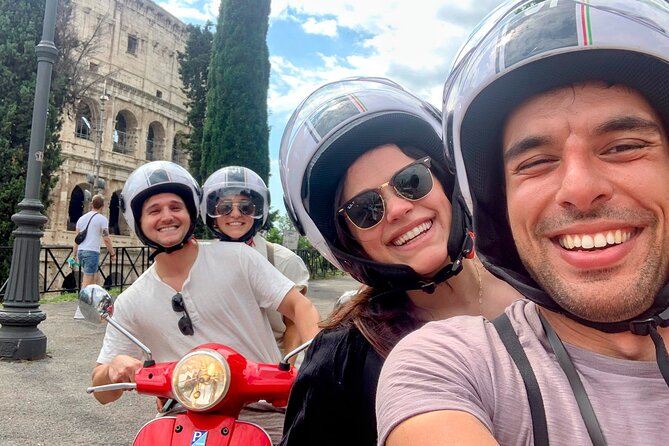
Piazza Navona is one of those places where you can feel the artwork even before the explanations start. The fountain of the Four Rivers takes center stage, and the guide gives you the story around Bernini’s design and the figures representing the Nile, Danube, Ganges, and Rio de la Plata.
Stop time is about 10 minutes. That is short, but it is enough to see the fountain’s scale and to learn what each figure is meant to represent so you do not just take a photo and move on.
Also, this is a nice moment to slow down and watch the square’s energy without needing to sprint to keep up. It balances the faster pace of the riding.
Castel Sant’Angelo: from Hadrian’s tomb to fortress to museum
Then you reach Castel Sant’Angelo. Even though you are moving through by Vespa, the stop is there for a reason. The building’s story is long and layered, and it is one of Rome’s better examples of how one structure can shift roles across centuries.
You get the core timeline: built as Emperor Hadrian’s tomb in 135 AD, later converted into a military fortress, protected the city during the Middle Ages, then served as a papal residence and a prison during the Renaissance era. Today, it is a museum.
Stop times on Vespa routes tend to be short, but the payoff is that you get a clear sense of why this silhouette matters. If you like history, this is a stop that turns “big castle” into “this is why it looks like this.”
Janiculum and the cannon shot: a rare wow if timing lines up
One of the tour’s more memorable special moments is the Janiculum hill cannon shot. The experience notes say that if you book the morning tour that hits the timing around 12 o’clock, you may witness the daily tradition, originally used to synchronize the city’s clocks back in the 19th century.
You approach the viewpoint, Francesco explains the background, then you hear the boom and watch the smoke clear. After that, you get a wide view spanning major landmarks, described as stretching from the Colosseum to the Pantheon and all the way to St. Peter’s Basilica.
Two honest points for planning:
First, this is timing dependent. If your departure does not line up with the cannon moment, you might not see it. Second, even without the cannon, Janiculum is still a strong view stop.
Fontanone and the Vespa photo backdrop
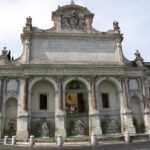
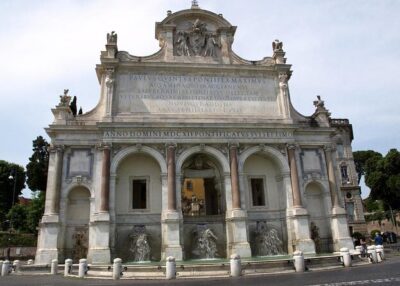
After Janiculum, you head to Fontana dell’Acqua Paola, often called the Fontanone. This stop is built around two things: the viewpoint and the chance to grab a picture with your red Vespa in front of the panorama.
The sights mentioned from this spot include the Tiber River, the dome of the Pantheon, and the Vittoriano in the distance. It is one of those Rome views where it becomes obvious why people come back again and again.
Stop time is about 10 minutes. Keep expectations realistic. This is not a long balcony session, but it is enough to take in the view, do one good photo, and remember it later.
Trastevere by Vespa: ending in a real neighborhood
To close, you ride into Trastevere. This is a smart choice for a finish because it feels different from the monument belt. You get winding streets and a more lived-in atmosphere, with pastel palaces, cobblestones, and flower-filled streets.
Stop time is about 10 minutes, and the tour frames this as a chance to soak up the neighborhood vibe rather than chase one specific landmark. You also ride with Francesco through backstreets, where the city feels less like a museum and more like a place that runs on routine.
If your feet are tired by this point, you will appreciate that. A Vespa tour is exhausting in a different way, mostly mentally and visually, but it is easier on your walking stamina than a full-day foot loop.
Price and value: what $108.89 buys you, and what costs extra
At about $108.89 per person, this tour can feel like a splurge. The value comes from what is included for that price.
You get a 2.5-hour guided tour led by Francesco (officially licensed), plus helmets, Vespa rental for the tour, and a local guide on a separate Vespa. You also do not pay for Colosseum entry because you see it from outside.
The two big things that can change your total cost are the ride option and the self-drive deposit.
1) Driver option: If you choose Vespa with driver, there is a cash fee of €50 per person paid on arrival. This option is also described as available as private. If you are choosing this because traffic makes you nervous, plan to budget for it.
2) Self-drive requirements and deposit: For self-driving, the tour clearly says you must have prior scooter experience, and you need the right license setup. A security deposit of €500 is required to rent the Vespa, and it can be paid by credit card or cash. If you cannot meet the driving requirements, there is no refund.
So here’s the practical way to judge value:
If you can self-drive confidently, your per-person cost stays closer to the listed rate because you use the included Vespa rental. If you cannot or prefer not to ride in traffic, the driver fee is the adjustment you make to still enjoy the route.
Safety, traffic reality, and how to choose the right option
This is the part that matters most.
Rome driving patterns can be aggressive, and that is not a small detail. Even if you are an experienced rider, you should expect tight lanes, fast changes, and constant attention. That is why Francesco and the team focus on safety prep and why the self-drive option is not sold as beginner-friendly.
From the experience notes and the guide approach, the tour uses a safety-first mindset, including helmets and a test drive moment for self-drive riders. In the same spirit, the route is designed for controlled group management, with a small number of scooters and a local guide riding separately.
If you are at all unsure about riding skills, the with-driver option is the more relaxing way to do it. You still get the same monuments and stops. You just remove the need to concentrate on scooter control.
Also, double-check your expectations on English. The tour is offered in English, but communication quality can vary with guides and situations. The good news is that the group pace and visual cues help, and Francesco is described as funny and patient in multiple accounts. Still, if you need detailed explanations in perfect English, ask questions at the start.
How long it really feels, and how to time it with the rest of your Rome trip
This is about 2 hours 30 minutes. In real life, you feel it as a half-day experience because you are covering serious distance quickly and getting multiple landmark moments. Your brain also gets a workout because you are seeing so much street texture.
Because the tour ends back where it starts, it works well if you are staying near the Monti area or if you plan an easy meal right after. You may want to keep a lighter schedule for the rest of the day, especially if you choose self-drive.
Also, since key stops like Trevi and Spanish Steps are timed to quick photo and viewpoint moments, do not expect them to replace dedicated landmark sightseeing later in your trip.
What I would do to make this tour smoother
Here are the practical steps that keep this kind of tour fun.
- Dress for wind. You will feel it, especially once you are moving between center areas.
- Bring ID and your documentation if you plan to self-drive. The tour is strict about license categories and IDP rules for non-EU drivers, and U.S. citizens are specifically called out as needing an International Driving Permit issued by the American Automobile Association.
- If you pick the driver option, budget the €50 cash fee per person ahead of time so there is no last-minute scramble.
- Wear shoes you trust on cobblestones, even if you only walk a few minutes at stops.
One last mindset tip: treat this as a street-view tour with history notes, not a slow art tour.
Should you book Rome by Vespa with Francesco?
If you want the fast, fun, very Roman feeling of seeing sights up close from the street, I think you should book this. The combination of small-group size, a licensed guide, helmets, and a route that blends monuments with neighborhood streets makes it a strong value when you have limited time in Rome.
Choose carefully if you are sensitive to traffic stress or if you are not confident on a scooter. Self-drive has real requirements, including experience and paperwork, plus the €500 deposit. If that is you, the with-driver option is the smart way to protect your trip’s enjoyment.
And if you are the type who likes everything perfectly timed and perfectly clear, message the company before you go. One negative account mentioned frustration around option pricing changes late in the process. You can avoid that kind of headache by confirming which option you selected and what the cash fees are for your exact ride setup.
Bottom line: for most visitors, this is a memorable, high-energy way to get your bearings fast in Rome, with enough history to make the stops mean something.
More Guided Tours in Rome
More Tours in Rome

More Tour Reviews in Rome
Not for you? Here's more nearby things to do in Rome we have reviewed







Rome Vespa Tours, compared.
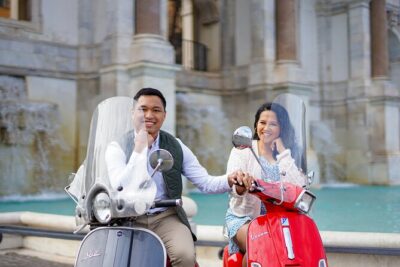 ★ 5.0Rome Vespa Scooter Tour with Professional PhotographerFrom $66857 reviews
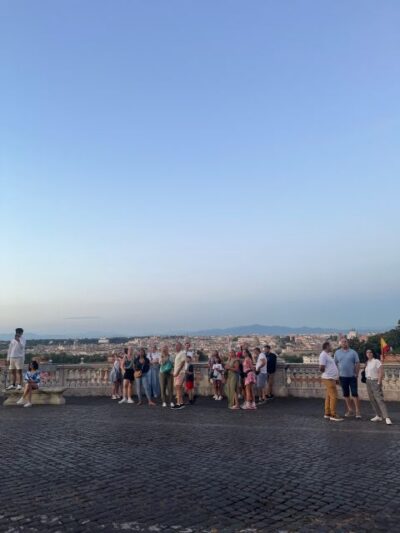 ★ 4.9Highlights Vespa Sidecar Tour with Coffee and GelatoFrom $141747 reviews
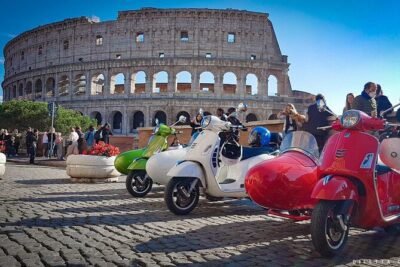 ★ 5.0Rome Afternoon Sightseeing Vespa Sidecar Tour with Gourmet GelatoFrom $163692 reviews
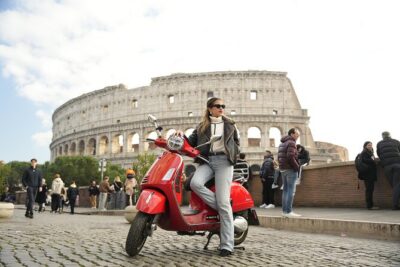 ★ 5.0Rome Vespa Tour with Professional PhotoshootFrom $81576 reviews
 ★ 5.0Vespa Sidecar Tour In Rome with Pickup, Drop-off, Gelato includedFrom $143472 reviews
 ★ 5.0Rome by Vespa: Classic Rome Tour with Pick upFrom $119321 reviews
 ★ 5.0Rome by Vespa – Live the City Like a LocalFrom $180297 reviews
Vespa Tour with Pro PhotoshootFrom $80276 reviews
★ 5.0Rome by Vespa – Live the City Like a LocalFrom $180297 reviews
Vespa Tour with Pro PhotoshootFrom $80276 reviews
Browse the lists this tour appears in