
Reviewed · COLOSSEUM TOURS
Rome 2-Day Sightseeing Tour with Trevi Fountain, Colosseum & More
Two days makes Rome feel doable. I like the private pace and the skip-the-line Colosseum setup, plus you get in-depth commentary at each stop instead of head-down wandering. One thing to keep in mind, it is still a lot of walking and stairs, and Vatican access can change last minute for major events.
This is the kind of tour that feels planned, not squeezed. In particular, names like Paola, Claudia, and Tomasso show up in the guide feedback, and you can feel the difference when a guide turns famous scenes like the Sistine Chapel and St. Peter’s Basilica into clear stories you actually remember. I also like that the schedule leaves breathing room, so you can recharge for evening plans instead of collapsing after a single mega-day.
There’s also a practical side you will want to respect. Dress code is strict for places of worship and selected museums, and you must present IDs that match the names used for your Colosseum and Roman Forum entry.
Key highlights you should care about
- Private experience, only your group, so you move at a human pace through heavy crowds
- Colosseum includes a timed reservation plus the site admission ticket, which saves real time
- Trevi + key landmarks nearby, including the Government District sights and Hadrian’s Temple area
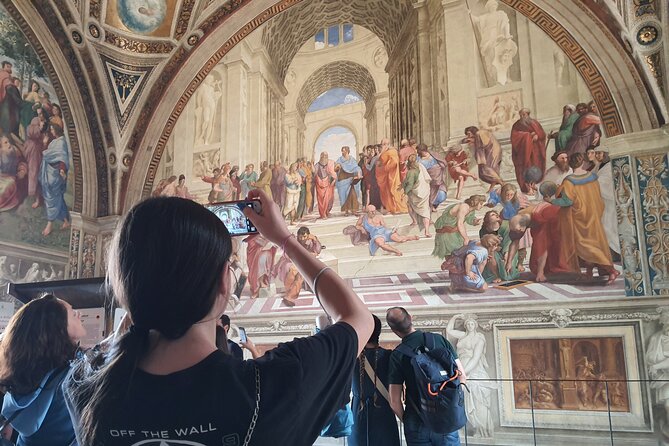
- Vatican Museums focus on the big art rooms, including Raphael spaces like the School of Athens and Parnassus
- Sistine Chapel with rules explained first, then a tight, well-guided viewing window
- Last-minute Vatican closures have a fallback plan, with an alternative that still concentrates on Vatican museum areas
Private Rome in two days, not one frantic day
Rome rewards slow attention, but most visitor schedules do the opposite. This tour’s main win is that it stretches the top highlights across two days, so the experience feels guided rather than frantic. You are not just checking boxes, you are being walked through what you are seeing, why it mattered, and how the pieces connect.
The private setup matters here. Group tours can be loud and rushed, especially at the Colosseum and Vatican. With a smaller, private group, you are more likely to pause when something grabs you, take a breath, and get answers instead of hearing half a sentence while moving.
From the guide feedback, I also see a pattern: guides like Claudia and Paola were described as engaging and organized, with specific ways to keep kids interested too. That tells me the tour is built for real communication, not just a script read at speed.
A few more Rome tours and experiences worth a look
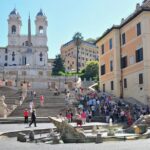
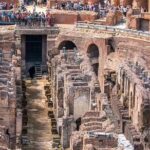
Day one: Trevi Fountain, then the Colosseum and Roman Forum zone
Day one is basically your Rome “greatest hits” block, starting with Trevi Fountain and then shifting you into Ancient Rome’s power center. The order is smart. Trevi is cinematic and iconic, but it’s also easy to get stuck in crowd chaos if you arrive at the wrong time. Starting there gives you a clean entry into the day before the main archaeological sites take over your legs.
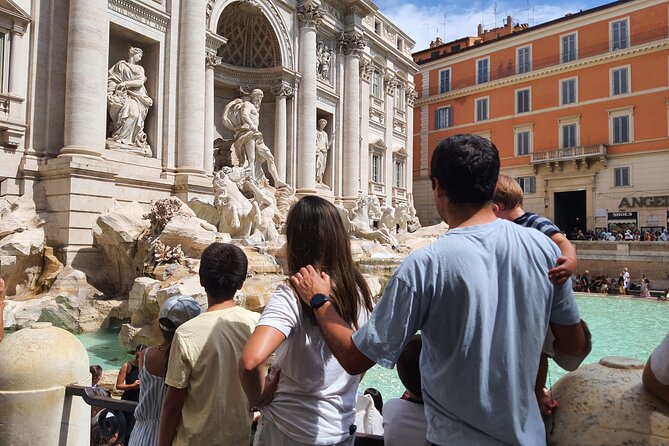
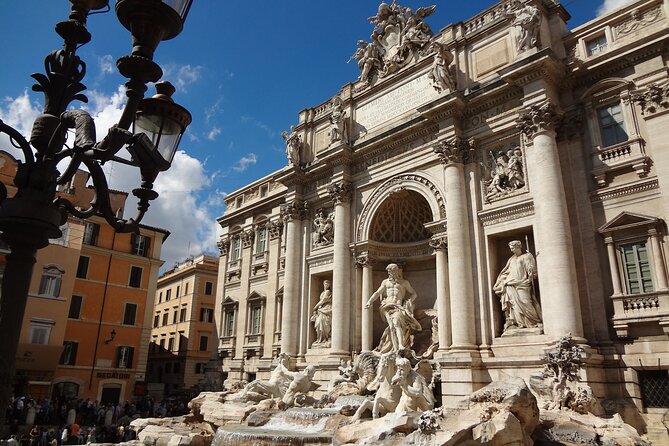
Trevi Fountain: do the coin ritual, then look around
Trevi Fountain gets all the hype, but the guide approach is what makes it worthwhile. You will follow the legend by throwing a coin into the fountain and making a wish to return to Rome. That part is fun, sure, but the better value is what you do right after.
You are not sent off immediately. You continue through nearby landmarks linked to Roman power and civic life, including the Parliament Building and the Palace of the Council of Ministers, plus the Column of Marcus Aurelius. Close by, you also pass through the area tied to the Temple of Hadrian. Even if you do not go deep into every stop, the guided commentary helps you place what you see in the larger story of Rome shifting from empire to modern government.
A drawback to expect: this is still Trevi. If you are hoping for a quiet photo, manage expectations. The tour can help you move smartly, but it cannot erase the fact that Trevi is a magnet.
Colosseum: reservation entry plus an arena walkthrough
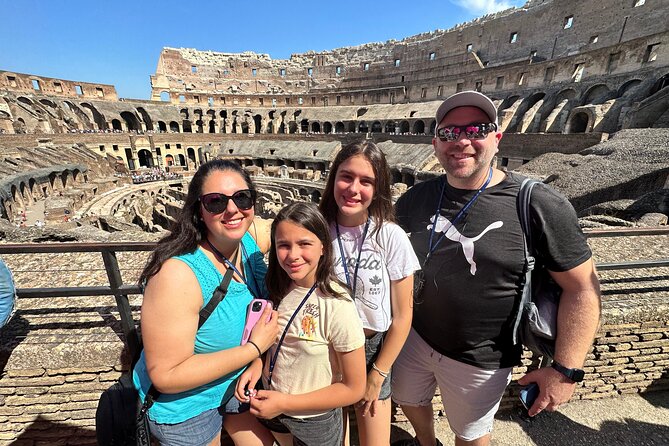
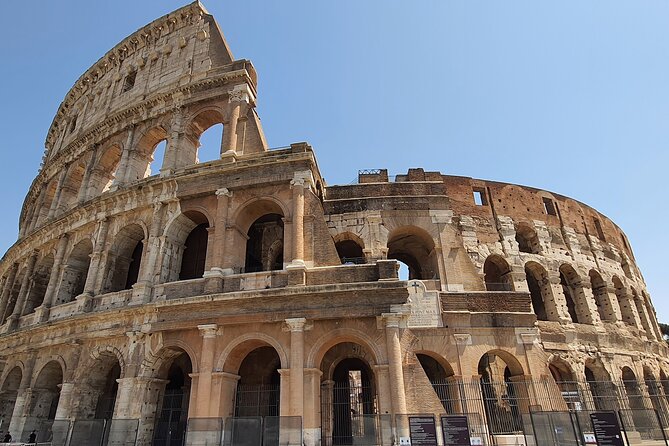
The Colosseum is where most people feel the time-crunch pressure. The tour’s big advantage is that it includes the Colosseum entrance ticket and the reservation fee. In practice, that means less fiddling around and fewer chances for your day to get derailed by long queues.
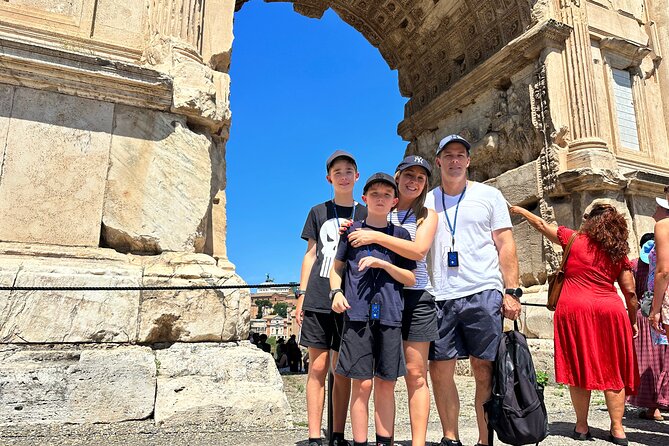
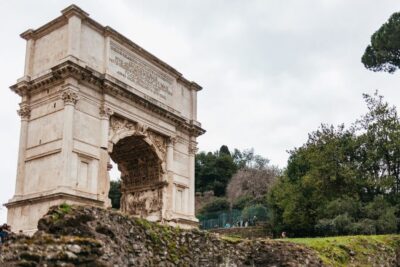
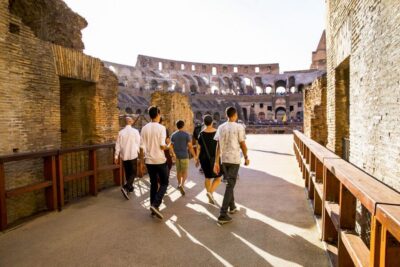
Inside the arena area, you are guided through Ancient Rome’s largest amphitheater. Then you step back out to see the Arch of Constantine and the Roman Forum area. The key value here is that the guide connects the buildings you are seeing to the Forum as the political, religious, and social hub of the empire.
One more reason I like the pacing on this tour: it gives you time to process. The Colosseum stop is long enough that you are not just herded in, pointed at one view, and pushed out.
Roman Forum focus, with Arch of Constantine as your context anchor
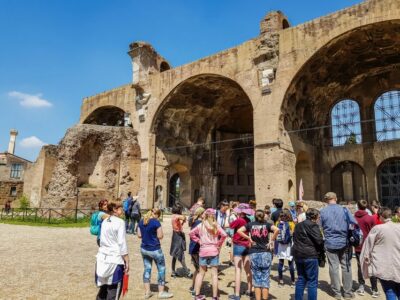
After the Colosseum, you go into the Roman Forum zone again, with a structured visit that centers on what the Forum was for. You will hear it explained as the empire’s political, religious, and social hub, then you will see the wonderful buildings and monuments that made that hub function.
The Roman Forum can feel like a pile of ruins if you wander it without guidance. With a good art historian style guide, it clicks. You start noticing how the spaces relate to power, law, religion, and public life. That is the part that turns photos into memory.
A practical consideration: this area can involve uneven ground and some stairs. If you have mobility needs, it helps that feedback included notes about patience and pacing from guides like Claudia. Still, plan for walking and plan for breaks.





Pantheon area and Piazza Navona: quick hits that add variety
Later in day one, the tour shifts to a different mood. You walk down a narrow avenue to the Pantheon, where you can see the tomb of Raphael. You also pass by the Ancient Baths of Nero as you move toward Piazza Navona.
Two useful details here:
- The Pantheon stop lists admission as not included, so if you want to go inside, you will need to add your own ticket.
- Piazza Navona and its famous Bernini Fountain of the Four Rivers is included as a free admission stop, so you spend your money elsewhere and still get the payoff.
I like this section because it gives you a contrast to the Colosseum and Forum. You go from empire politics and spectacles to Renaissance and Baroque Rome. That variety is part of why the two-day structure works.
Vatican Museums day: statues, maps, and Raphael rooms that make sense
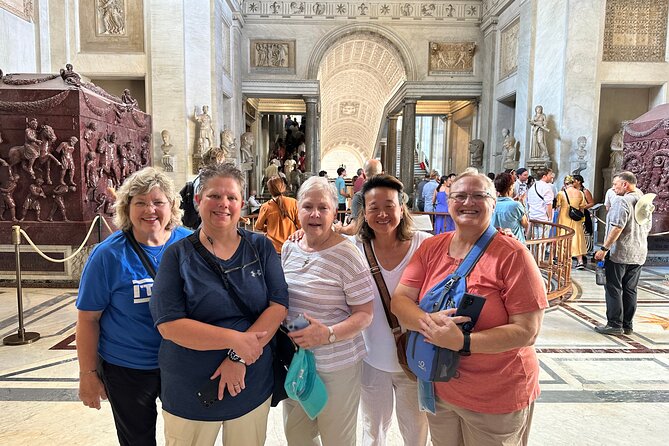
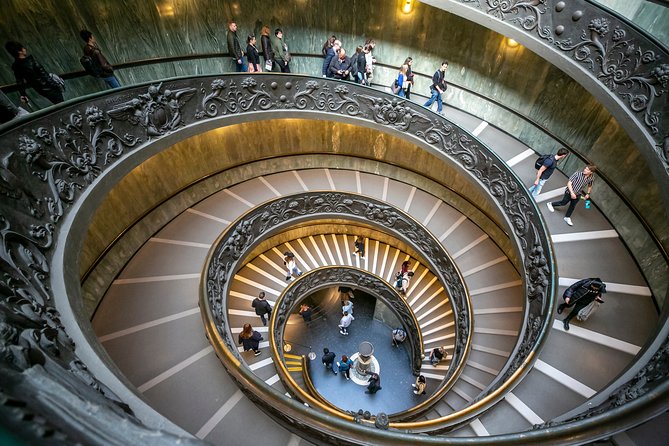
Day two takes you into the Vatican Museums, starting with Belvedere Courtyard and the Pio-Clementino Museum area, including large collections of ancient Roman and Greek statues. Then you move through highlights like the Gallery of Tapestries and the Gallery of Geographic Maps, which house some of the most important Renaissance maps.
This is the value of guided ordering. Museums can swallow time fast, and if you pick the wrong route you can miss the rooms most people dream about. Here, the tour points you toward art and ideas that connect across rooms, from ancient sculpture to Renaissance interpretation.
Then you get to rooms that often feel intimidating on your own. You will see the Sobiesky Room and the largest canvas painting in the Vatican displayed there, plus frescoes in the Immaculate Conception Room. You also visit rooms painted by Raphael for Pope Julius II.
Two Raphael spaces are specifically highlighted:
- The Parnassus
- The School of Athens
Those are not small details. They are the kind of works where a guide’s explanation turns the scene into a map of symbols. The goal is not just to look, it is to understand what you are seeing.
A consideration: time is limited in busy museums. The tour is paced, not leisurely. If you love one specific type of art, you will still get a lot, but you may want to leave yourself a plan for adding more on a future trip.
Sistine Chapel viewing: rules first, then the art window
Next up is the Sistine Chapel. The guide explains history and also shares interesting, curious facts before you enter, and speaking is forbidden in the chapel. That matters, because you are not just learning after the fact. You are prepared for how to behave, and you can focus on the ceiling frescoes when you get inside.
Once inside, you marvel at Michelangelo’s famous frescoes. The tour also mentions seeing work by Botticelli and other famous artists. You also learn about how the Sistine Chapel is used today, including the conclave process to elect a new Pope.
The stop is short, so the best approach is mental. When you enter, pick two or three sections you want to look at closely, then let the guide point you to the bigger connections. You will not be able to read every detail without spending all day, but you can still leave with strong impressions.
St. Peter’s Basilica and St. Peter’s Square, plus closure risk
The tour finishes with St. Peter’s Basilica, including exploring numerous side chapels with their hidden crypts. You will see Michelangelo’s Pietà, with an explanation about why it is the only work that he signed. Then you learn about Bernini’s altarpiece and how Michelangelo triumphed over contemporaries for the honor to paint St. Peter’s magnificent dome.
You end at St. Peter’s Square.
One important “know before you go” point: the Vatican can close areas last minute due to major events. The tour notes that, during periods of intense activity, the Sistine Chapel and/or the Basilica of Saint Peter might not be accessible. If that happens, your guide will provide a valuable alternative focusing on the Vatican museums.
The tour also warns that due to the Jubilee, the Basilica might not be accessible as part of the tour, but you can go after the tour by queueing.
This is the kind of detail you should actually plan around. If St. Peter’s Basilica is your top must-see, build flexibility into your schedule for a follow-up visit, just in case.
Price and value: is $721.67 per person worth it?
At $721.67 per person for about two days, this is not a budget add-on. So you should judge it by what you get, not just by what it costs.
What’s included is meaningful:
- Private tour
- Professional art historian guide and a local guide
- Local taxes
- Colosseum entrance ticket and the Colosseum reservation fee
- Mobile ticket
What the price is not mostly covering is food and private transportation, which are not included. You are also not getting Pantheon admission inside as part of the stop.
Here’s how I think about value with this kind of tour. You are paying for three things that are hard to replicate well on your own:
- Time saved at the Colosseum through reservation handling
- Expert interpretation, especially for the Forum and Vatican rooms
- A paced, two-day structure that makes the trip feel usable, not exhausting
If you are the type who tries to navigate by yourself, you might spend less money and still see the big sites. But you will also risk losing time to lines, missing context, or stumbling through the Vatican museum maze without a plan. For families and mixed-age groups, feedback also points out how the pacing can work well. For example, Tomasso was praised for being engaging for a wide age range and for keeping waiting time low.
The other value signal: a 4.9 rating from 24 reviews and a 96% recommendation rate. That does not guarantee your exact experience, but it does suggest the product is consistently landing well.
Practical tips that make the difference
A great tour still needs you to play it smart. Here are the parts that matter most based on the details given.
Dress code and entry rules
Dress code is required for places of worship and selected museums. No shorts or sleeveless tops. Knees and shoulders must be covered for both men and women. If you show up out of code, you risk refused entry.
For the Colosseum and Roman Forum, you must provide full names of all travelers when booking. At the ticket office, names must match the voucher and your passport or ID. Mismatches can lead to denied entry.
Tickets you should plan for
Colosseum admission is included, but Pantheon admission is not included. If you want to go inside the Pantheon, you will need to handle tickets separately.
Expect walking and stairs
Moderate physical fitness is required. Even with good guidance, you should plan for uneven ground, steps, and long outdoor stretches. It is a tour where you should bring water, and it helps to plan breaks.
Should you book this Rome 2-day private tour?
Book it if you want Rome’s top monuments with an expert lens and a schedule that avoids the one-day overload. This is especially a strong choice if:
- You only have two days and want Trevi, the Colosseum, the Forum, the Vatican Museums, the Sistine Chapel, and St. Peter’s on your list.
- You value interpretation, not just photos.
- You are traveling with kids, or with a group that benefits from patience and structure. Feedback specifically praised guides like Claudia and Tomasso for engaging people of different ages and handling mobility needs with care.
Consider skipping it or planning extra flexibility if:
- You are hoping for zero walking. This is still a stamina-heavy route.
- You are counting on Sistine Chapel or St. Peter’s Basilica being accessible at the scheduled time. There is an explicit closure contingency, and access might change last minute. You should be ready to revisit St. Peter’s after the tour if needed.
In short: if you want a smoother, more meaningful Rome, with a plan that holds up under crowd pressure, this two-day private format is a solid way to do it.
FAQ
What does the tour include at the Colosseum?
Colosseum entrance ticket and the Colosseum reservation fee are included, along with a local guide and an art historian guide.
Are tickets included for the Vatican Museums and Sistine Chapel?
Yes. Vatican Museums and Sistine Chapel admission tickets are included in the tour.
Is the Pantheon admission ticket included?
No. The Pantheon stop is listed with admission ticket not included.
What if the Sistine Chapel or St. Peter’s Basilica closes last minute?
The tour notes that some areas might close without notice. If this happens, your guide will provide an alternative that focuses on the Vatican museums. It also notes the Basilica might be inaccessible as part of the tour, with the option to visit afterward by queueing.
What dress code rules should I follow?
You must cover knees and shoulders. No shorts or sleeveless tops are allowed. This applies to places of worship and selected museums.
Do I need my passport or ID for entry?
Yes. You must present a valid passport or ID document that matches the name provided at booking for Colosseum and Roman Forum entry.
Is food or private transportation included?
No. Food and drinks are not included, and private transportation is not included.
What is the cancellation policy?
The experience is non-refundable and cannot be changed for any reason.
More 2-Day Experiences in Rome
More Tours in Rome



More Tour Reviews in Rome
Not for you? Here's more nearby things to do in Rome we have reviewed












Colosseum Tours, compared.
 ★ 4.8Colosseum, Palatine Hill and Roman Forum Guided TourFrom $5232,814 reviews
 ★ 4.7Guided Tour of Colosseum, Roman Forum & Palatine HillFrom $5527,897 reviews
 ★ 4.2Colosseum & Forum with Audio Guide App -Optional ArenaFrom $4124,770 reviews
 ★ 4.5Colosseum, Roman Forum and Palatine Hill Guided TourFrom $5923,903 reviews
 ★ 4.4Colosseum, Forum & Palatine Hill Tour & Optional ArenaFrom $5813,839 reviews
 ★ 4.6Colosseum, Palatine Hill & Roman Forum Guided TourFrom $5112,703 reviews
 ★ 4.7Colosseum: Underground and Ancient Rome TourFrom $16012,691 reviews
 ★ 4.6Colosseum Arena, Palatine Hill & Forum Guided TourFrom $7310,584 reviews
Browse the lists this tour appears in