
Reviewed · TRASTEVERE TOURS
Private Tour – Trastevere and Villa Farnesina
Raphael meets Rome’s backstreets. On this private 3-hour outing, I like how the art at Villa Farnesina sets you up to read the neighborhood differently once you step into Trastevere.
I also love the mosaic-and-myth trail, from Santa Maria in Trastevere’s 13th-century mosaics to Santa Cecilia’s choir legacy, with a chance to see crypts and ancient Roman undergrounds. One possible drawback: crypt and underground access can depend on the nuns running the site, and Villa Farnesina can have closures that affect what you see that day.
Key highlights at a glance
- Villa Farnesina + Raphael’s world: Renaissance decoration tied to patronage and power
- Santa Maria in Trastevere mosaics: 13th-century artistry you can spot from the main impressions
- Santa Cecilia’s lesser-known angles: mosaics, plus the possibility of crypts and Roman undergrounds
- Trastevere on foot: an honest neighborhood walk, not a checklist run
- Guides who keep the day on track: strong storytelling and smart adjustments when sites change
Why this Trastevere route works so well
Trastevere is the kind of Rome district where you can wander for hours and still feel like you barely scratched the surface. This tour gives that wandering a structure that actually helps you understand what you are looking at. You start with a major Renaissance stop, then you shift into churches and underground layers that explain how Rome keeps building over itself.
It also feels like the right pacing. Three hours is long enough to slow down, ask questions, and look closely, but short enough that you do not feel like you are rushing between places. The tour is private, so you are not stuck in the slowest-walking group, and you can move at the pace your guide sets.
The best part is the mix of art and place. Villa Farnesina is not just a pretty building. It is about what wealthy patrons wanted people to believe. Then Trastevere pulls you into the older Rome layer, with mosaics, churches, and the hint of underground life beneath your feet.
You can also read our reviews of more private tours in Rome


Villa Farnesina: Raphael’s patron drama in one hour
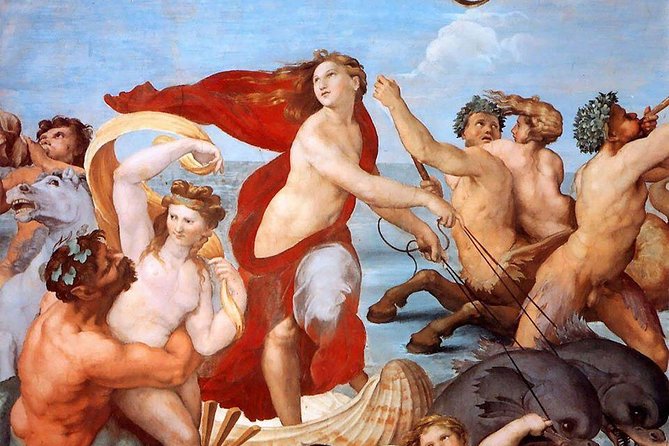
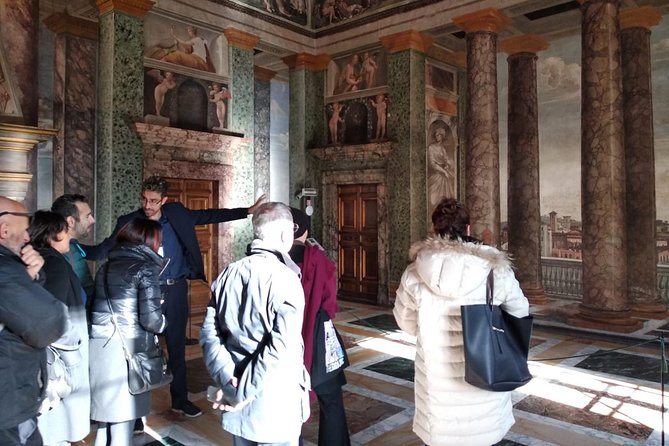
Villa Farnesina is a XVI century villa with a strong Renaissance punch. The focus here is the work tied to Raphael, and the story goes beyond famous names. You get context about the patron who commissioned the villa, Agostino Chigi, and why the decoration mattered so much. It is art as messaging, not just art as decoration.
Your guide also has the chance to explain how Raphael’s school of painters fit into the bigger picture. That matters because Villa Farnesina can feel overwhelming if you treat it like a museum stop. With a guide, you see the logic. You notice the themes and the way the decoration reflects what a banker and his circle wanted to project during that period.
Time-wise, you have about one hour here with the admission ticket included. If you love art history but hate dry lectures, this is the kind of setting where stories land better, because the rooms and paintings are literally the proof.
A note on closures, and how the day can be saved
One real-world wrinkle you may face is that Villa Farnesina can be closed on certain days. When that happens, the guide you are assigned can adjust on the fly. In at least one case involving Vincenzo Spina, he contacted the site ahead of time, then still led a solid Trastevere walk and arranged a refund through the booking platform. So the day is not necessarily a total loss, but you should still mentally prepare for possible changes.
Santa Maria in Trastevere: the mosaic you remember longer than the building
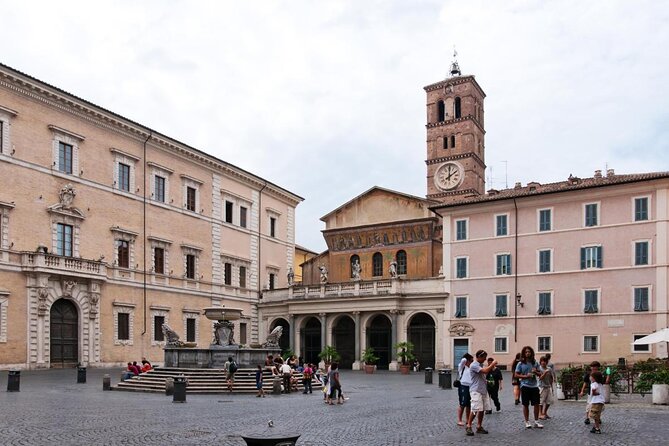
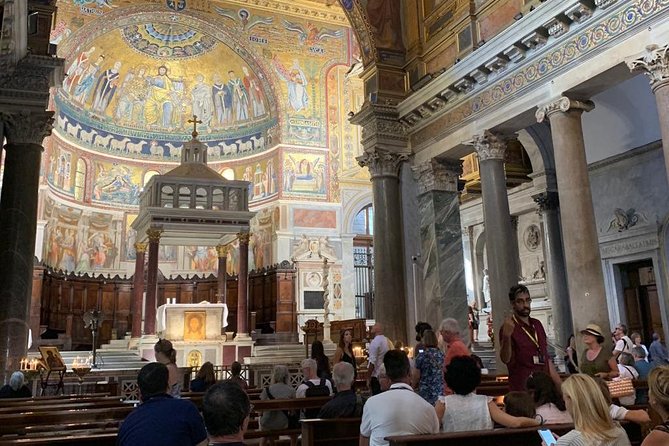
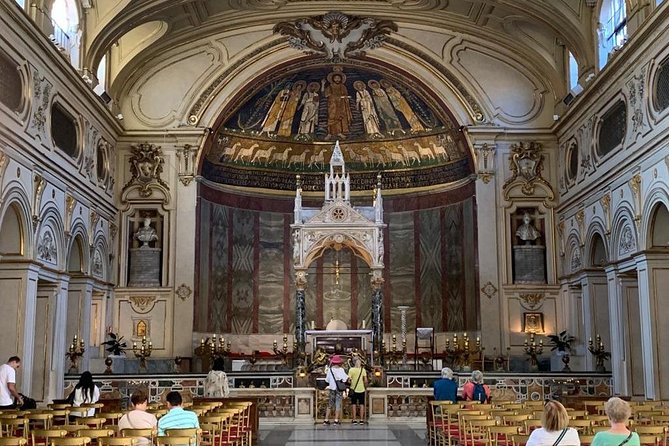
From Villa Farnesina, you move into Trastevere’s church core with Santa Maria in Trastevere as the next stop. This is the church dedicated to the Virgin Mary in Rome, and the “wow” factor is the mosaics. The key detail is that the mosaics date back to the XIII century, so you are looking at medieval work with a strong visual identity.
This stop is shorter, about 20 minutes, and the admission ticket is free. That is a good setup when you do not want to spend your entire afternoon stuck behind the doors. You get enough time to focus on what matters, then you get back out into the neighborhood.
In a district like Trastevere, churches can blur together if you are not paying attention. Santa Maria in Trastevere is memorable because the mosaics are doing the heavy lifting. The guide’s job is to help you read what you see, so you leave with impressions that last, not just photos.
Practical tip for this stop
Go in with a mindset of looking, not checking. You can spend five minutes finding one mosaic section that really clicks, then let the guide point you toward the next piece that connects. That way, the time limit does not feel tight.






Santa Cecilia: when the choir legend meets the underground layer
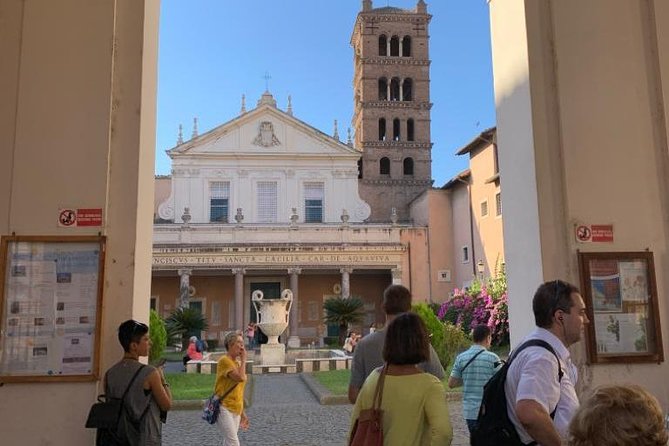
Santa Cecilia in Trastevere is where the tour starts feeling more like Rome under Rome. This stop runs about 30 minutes, and here the entrance is part of what you pay, since the admission ticket is included.
The headline is that Santa Cecilia became famous worldwide for its choir. But the real draw for many people is the mosaics and the layered story around the church. What makes this stop especially interesting is the possibility of seeing more than just the main areas.
If it is possible based on how the nuns manage the building, you can visit the crypt and even the ancient Roman undergrounds of the church. That is the kind of experience you rarely plan for on your own because access rules are not always clear from outside. In other words, your guide helps you attempt it under the right conditions.
Why this stop is worth the time
You are not just ticking a church off a list. You are moving through time. Seeing underground spaces, even in part, helps you understand why churches in Rome are never simply “old.” They are part of a physical story, built on earlier structures and shaped by centuries of reuse.
And if the underground access is limited that day, the tour still gives you the mosaics and the church context that make Santa Cecilia feel different from the typical church stop.
The Trastevere walk: food-and-tradition streets with meaning
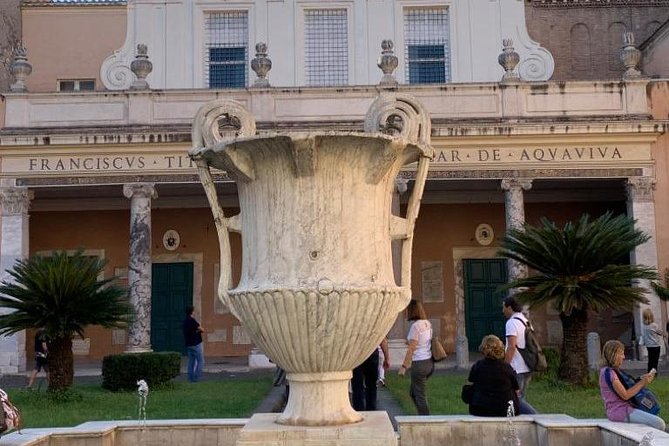
Between the major stops, you are walking in an authentic Trastevere setting. This district is known for food, wine, and traditions, and you can feel that as soon as you are outside. The tour uses those streets in a smart way: you are not only moving between sites, you are learning how the neighborhood fits into the story of Rome.
A big advantage of doing it with a private guide is that you can ask quick questions as you walk. You can also pause when something catches your eye, like a church façade detail, a street view worth photographing, or a clue about how people moved through the area historically.
The tour’s moderate physical fitness requirement is important. You are on foot for a few hours and you will be walking through uneven streets at times. If you are comfortable with city walking, you should be fine. If you need lots of long breaks or avoid stairs, consider that churches and underground access can involve changes in level.
Price and value: is $149.78 per person worth it?
At $149.78 per person for a 3-hour private tour, this is not a bargain-basement deal. You are paying for three things: a private format, guided ticketed time at select stops, and specialized interpretation that connects art, architecture, and neighborhood context.
What makes the value easier to justify is the mix of inclusions:
- Tickets included for Villa Farnesina
- Ticket included for Santa Cecilia
- Santa Maria in Trastevere is free
- A local guide, plus a professional guide
- The tour is offered in English
So you are not just buying narration. You are buying access where it matters and a guide who ties it together.
Also, the tour has group discounts available. If you are traveling with others who want the same art-and-church focus, the per-person cost can feel even more reasonable.
Finally, the quality signal is strong: a 5 out of 5 rating across 35 reviews and 100% recommended. That does not mean every day is identical, but it does suggest the guide experience is consistently solid.
The guide experience: what to expect from Vincenzo Spina
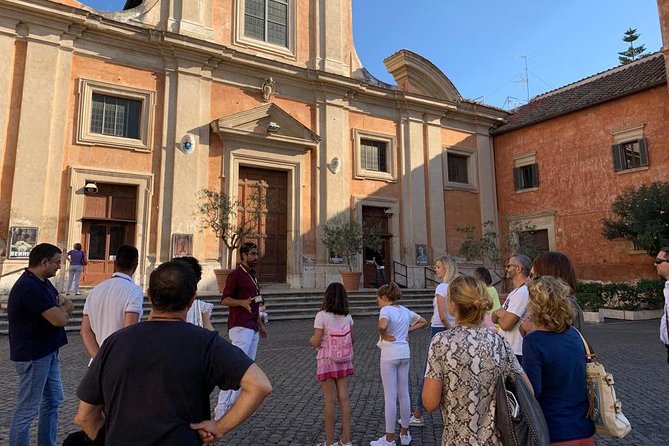
A private tour rises or falls on the guide. The standout theme from guide performance here is energy plus clarity. Names that come up in connection with this tour include Vincenzo Spina, and the way he leads is described as engaging, fast-paced, and full of detail.
What I like as a “decision helper” is how the guide story translates into what you can expect on the ground. You should feel like you are learning without being trapped in lectures. The tour format works because the guide has a lot to say, and the stops themselves provide natural prompts for good storytelling.
One extra plus: in at least one account, the guide ended with a thoughtful parting gift. Even if that is not guaranteed, it reflects a style that treats the tour like a relationship, not a transaction.
And if a site is closed, the approach is not to shrug. The day can pivot toward other value inside Trastevere, with adjustments made so you still get a meaningful experience.
Timing, meeting points, and how to plan your morning
The tour starts at 10:00 am. Your start point is Villa Farnesina, Via della Lungara 230, 00165 Roma RM, Italy. It ends at Basilica di Santa Cecilia in Trastevere, Piazza di Santa Cecilia 22, 00153 Roma RM, Italy. That end point matters because you are finishing in a central neighborhood pocket, good for continuing your day afterward on foot.
The tour is near public transportation, which helps on arrival. Since hotel pickup and drop-off are not included, you will want to plan how you get yourself to the meeting point and back later. If you are staying in central Rome, you can often make this work with tram, bus, or a manageable walk, but you will need to map it for your exact lodging.
Dress for walking. You are visiting churches, plus you are out and about in Trastevere. Comfortable shoes matter because cobblestones and minor elevation changes are common. Plan for weather shifts too. Rome can be warm, then cool quickly in the evening, and on walking tours, the temperature change hits you harder.
Who this tour suits best, and who might want something else
This private experience is a strong fit if you want:
- A mix of Renaissance art and church mosaics
- A neighborhood walk where the guide explains what you are seeing
- A chance at underground areas at Santa Cecilia, if access allows
- A private format in English
It is also a great choice if you are not trying to “collect every monument.” Instead, you want fewer stops with a lot more meaning per stop.
You might reconsider if:
- You dislike churches and prefer outdoor ruins only
- You need guaranteed crypt and underground access, because the tour says it depends on the nuns managing the building
- You cannot handle uneven streets or expect lots of long breaks
Should you book this private tour?
Yes, if you want a Rome day that connects art and place, not just photos. Villa Farnesina gives you Raphael in a context that makes the decoration make sense. Santa Maria in Trastevere gives you medieval mosaics without a long time commitment. Santa Cecilia adds that extra Rome layer through the chance to see crypts and Roman undergrounds, when access allows.
I’d especially book it if you enjoy guides who tell stories with pace, and you want the day to feel personal. With a 5-star track record and guides like Vincenzo Spina associated with the experience, you are likely in good hands.
If you are flexible about access conditions, and you come ready to walk and look closely, this is the kind of tour that leaves you with a clearer mental map of Rome layers, from Renaissance messaging down to the older rooms beneath the church.
FAQ
How long is the private tour?
It runs for about 3 hours.
Is this tour private?
Yes. It is a private tour, and only your group participates.
What language is the tour offered in?
The tour is offered in English.
What time does the tour start?
The start time is 10:00 am.
Where does the tour start and end?
It starts at Villa Farnesina, Via della Lungara 230, 00165 Roma RM, Italy. It ends at Basilica di Santa Cecilia in Trastevere, Piazza di Santa Cecilia 22, 00153 Roma RM, Italy.
Which stops are included?
The tour includes Villa Farnesina, Basilica di Santa Maria in Trastevere, and Santa Cecilia in Trastevere.
Are admission tickets included?
Tickets are included. Villa Farnesina has an admission ticket included, and Santa Cecilia also has an admission ticket included.
Is Santa Maria in Trastevere free?
Yes. The Santa Maria in Trastevere stop is described as free.
Can we see the crypt and ancient Roman undergrounds at Santa Cecilia?
It depends on the nuns managing the building. The crypt and ancient Roman undergrounds are mentioned as something the tour will visit if possible.
What is the cancellation policy?
You can cancel for a full refund up to 24 hours before the experience’s start time. Free cancellation is available under that window.
More Private Tours in Rome


More Tours in Rome



More Tour Reviews in Rome
Not for you? Here's more nearby things to do in Rome we have reviewed












Trastevere Tours, compared.
 ★ 4.8Trastevere or Jewish Quarter Street Food TourFrom $513,839 reviews
 ★ 4.9Trastevere & Campo de Fiori Street Food Walking TourFrom $512,768 reviews
 ★ 4.8Guided Food Tour in TrastevereFrom $1122,266 reviews
 ★ 4.9Trastevere Guided Food and Wine Tour with 20+ TastingsFrom $1461,022 reviews
 ★ 4.8Small Group Trastevere Food Tour with DinnerFrom $132719 reviews
 ★ 5.0Rome Trastevere Pasta Making Class with Eating EuropeFrom $100505 reviews
 ★ 4.9Twilight Trastevere Food Tour with Wine TastingFrom $123490 reviews
 ★ 4.8Food & Wine Tour of Campo de Fiori, Ghetto, TrastevereFrom $81413 reviews
Browse the lists this tour appears in