
Reviewed · ROME GOLF CART TOURS
Private Golf Cart Tour in Rome
The quickest way to see Rome without cramming. This private golf cart tour lets you cover big outdoor sights fast, and you can set the pace with an expert driver-guide. I especially like the way it turns the city into an easy-to-follow route, plus the built-in stops for photos where you actually get time to look.
My other favorite part is how smoothly it works for different ages and mobility levels, including families and older travelers. The one thing to consider is that it is a fast, mostly outdoor overview, so you may still want to plan separate time or tickets for indoor highlights like the Pantheon.
Key Points You’ll Notice on This Private Golf Cart Tour
- Private, up to 6 people: your group stays together, with no need to wait for strangers.
- Expert driver-guide + headset setup: guides in several reviews used audio so everyone could hear, even on busy roads.
- A tight route of A-list sights: Colosseum, Arch of Constantine, Pantheon, Trevi Fountain, and more in about 2 to 3 hours.
- Short photo-and-story stops: many stops are listed around 10 minutes so you get the highlights without hours of line-waiting.
- Designed for real-world Rome walking limits: great for kids, seniors, and anyone who wants comfort over cobblestones.
- Tickets are mostly your responsibility: entry tickets are not included, with the Pantheon specifically called out as not included.
Why a Private Golf Cart Tour Works So Well in Rome
Rome is one of those cities where the highlights are close on a map and far in real life. Streets curve, traffic slows, and the walking adds up fast. A private golf cart tour is a practical fix. You get the big sights in a short window, without your legs turning into a bottleneck.
I also like that it feels more personal than a group bus. It is not just transportation, it is a moving tour with a guide who explains what you are seeing, and a driver who handles the chaos of central Rome. In reviews, guides like Dino, Antonio, and Umberto are praised for making things easy and keeping the group on track.
One more thing: Rome’s best moments are often at street level, right where the crowds get thick. The cart helps you position for quick looks and good angles, then move on before you lose the day.
You can also read our reviews of more private tours in Rome


Price and Value for Up to 6 People
It costs $1,102.88 per group for up to 6 people, for a 2 to 3-hour tour. That is not cheap on a per-person basis if you are traveling solo. But it can be strong value when you have a group, because you are effectively paying for (1) private transport, (2) a professional guide, and (3) a route that covers major sites efficiently.
Here is the value angle I think matters most. Rome is expensive in time and energy, not just in euros. If you tried to replicate this on your own, you would likely spend extra money on taxis, plus time mapping, repositioning, and dealing with crowd bottlenecks. With this cart tour, the route is already organized, and the guide handles the why behind each stop so you are not just collecting photos.
A key cost note: entry tickets are not included, and the Pantheon is specifically listed as not included. Many other stops in the route are marked free, so you might mostly pay only if you decide to add an interior visit.
Where You Meet, How It Works, and What to Expect
You start at Italy In Love Tours, Via del Cardello, 31, 00184 Roma RM, and the tour ends at Piazza Venezia. Reviews say the office is easy to find, and setup happens quickly. Since the tour uses a mobile ticket, you should have your confirmation ready on your phone.
Because this is private, your group stays together the whole time. That matters in Rome, where splitting up can waste time and create stress. It also helps if you have a child who needs a little extra patience, or if an older traveler wants more frequent pauses.
One small detail worth planning for: the cart experience is about movement with short stops. You do not hop out for long museum visits. Think of it like a guided highlight reel with enough time to see and photograph, not a replacement for deep-ticket sites.
The Colosseum and Arch of Constantine: Your Quick Hit of Imperial Rome
The itinerary begins with the Colosseum, also called the Flavian Amphitheatre. Even from outside, it is hard not to feel the scale. The Colosseum was built under the Flavian emperors, designed with an elliptical shape, and constructed from stone, concrete, and tuff. It rose up to four stories at its highest point and was used for gladiatorial contests and public spectacles.
What makes this stop work in a golf cart tour is that your guide can tie the architecture to the story. Instead of seeing a photo spot, you start understanding why it looks the way it does. You also get a better feel for the surrounding neighborhood, which helps later when you are trying to place other ruins.
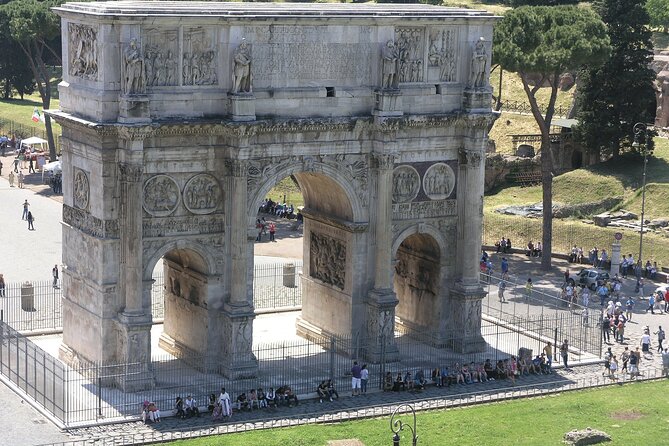
Next is the Arch of Constantine, completed in AD 315. It is known for reusing reliefs and inscriptions from earlier monuments, creating a visible conversation between different eras. It also reflects Constantine’s rise and the empire’s shift toward Christianity. This is the kind of stop where a short explanation makes a huge difference, because the arch is packed with meaning if someone points out what you are looking at.
If you want the best photos, ask your guide to pause for angles that show both the scale and the details. That is where the short photo stop becomes worth it.
Circo Massimo, Bocca della Verità, and Temple of Hercules: Fun Stops With Real Stories
After the big monuments, the tour moves to lighter, more playful Rome moments, but with serious archaeology behind them.
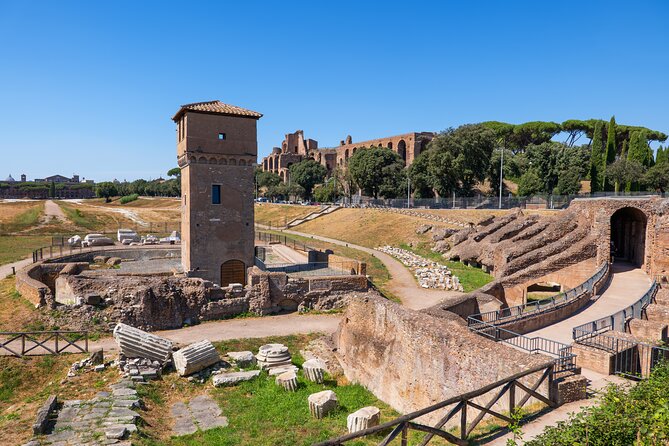
First is Circo Massimo, the ancient chariot racing stadium in the valley between Palatine Hill and Aventine Hill. It held roughly 150,000 spectators and hosted chariot races plus public games and religious ceremonies. Over time it was renovated, fell into disrepair, and was largely dismantled during the Middle Ages. Today, you mostly see it as an archaeological site with a public park over part of the area.
This stop is great if you want Rome’s ancient culture in a different form than arenas and temples. It also helps break up the intensity of the Colosseum and Constantine, especially if you are traveling with kids.
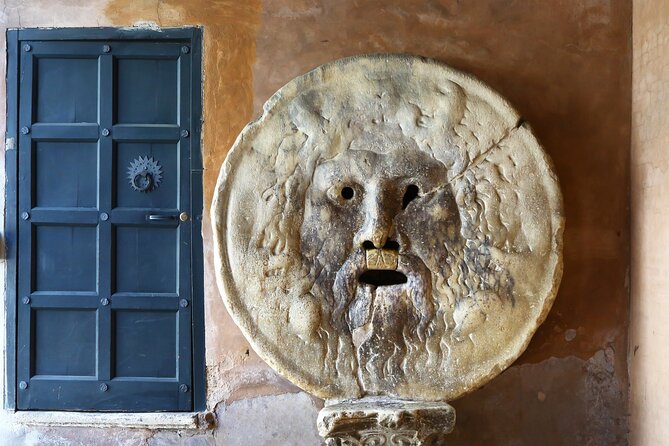
Then comes Bocca della Verità, the marble mask known as the Mouth of Truth. The original function is debated. You will hear theories ranging from a ceremonial well cover to a decorative fountain piece or even a manhole cover. Either way, it is famous because people love the interaction, and the guide story gives context so it does not feel like a random tourist photo.
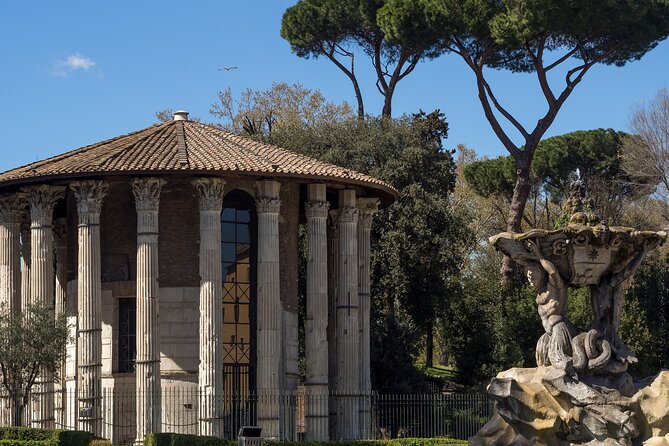
Right nearby is the Temple of Hercules Victor (also known as Hercules Olivarius). It is a well-preserved Roman temple with a tholos, a circular plan, and a surrounding colonnade influenced by both Greek and Roman design. It was built in the 2nd century BCE and is one of the best surviving examples of Roman temple architecture.
The advantage of doing these stops on a cart is that you get variety without long walks between them. You go from sports stadium to playful myth to architectural precision in a short sequence.






Teatro di Marcello to Piazza Venezia: Old Rome Meets Italy’s National Stage
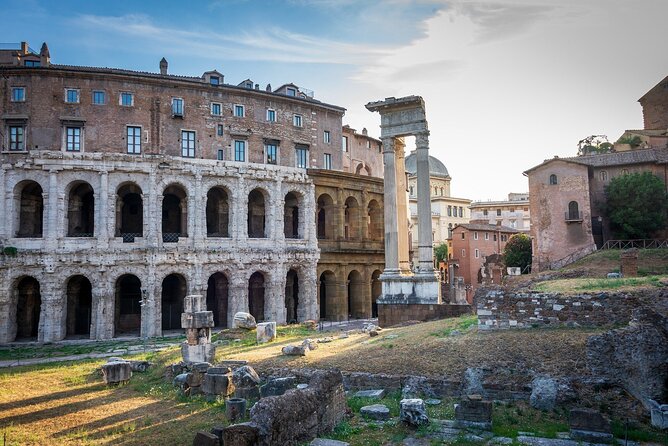
The Teatro di Marcello is an open-air theatre built in the late 1st century BCE, commissioned by Julius Caesar and completed by Emperor Augustus. It resembles the Colosseum in layout and scale, and it could hold around 20,000 spectators. Over time, it was remodeled and repurposed, and today parts of it are incorporated into private residences.
On a golf cart tour, this stop is less about staying for a long viewing and more about understanding what Rome reused. It is a good reminder that ancient Rome did not just vanish, it got built over, repurposed, and still lives in the city fabric.
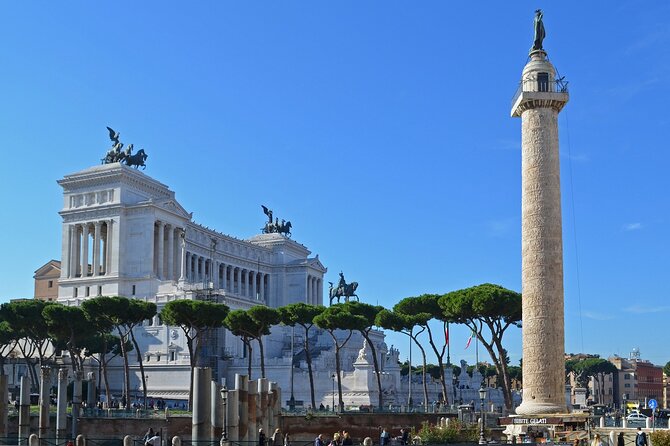
Then you roll into Piazza Venezia, at the base of Capitoline Hill. It sits at a major intersection of streets, and it is close to monuments that signal Italy’s modern identity. The area includes the Altare della Patria, an important national monument honoring Italy’s unification. Even if you are mainly in Rome for ancient ruins, this stop helps you connect the city’s timeline, from emperors to nationhood.
Largo di Torre Argentina and Piazza Navona: Archaeology Meets Street Life
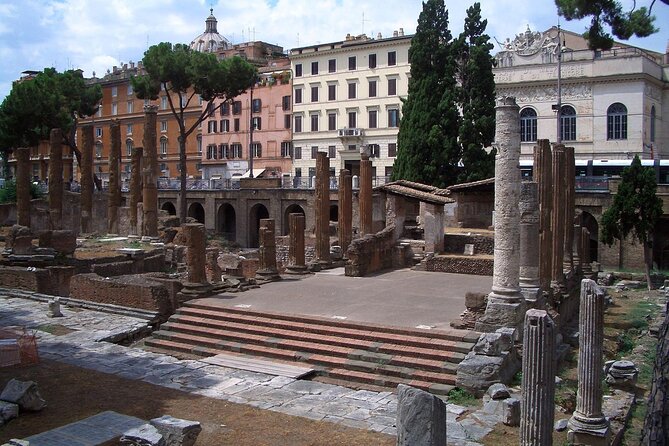
A highlight of the later loop is Area Sacra di Largo Argentina (Largo di Torre Argentina). This square is known for multiple archaeological remains, including four Roman Republican temples and traces of Pompey’s Theatre, the setting tied to Julius Caesar’s assassination. There is also a cat sanctuary in the area, which adds a surprising, humane-feeling layer to an otherwise dramatic site.
If you like history but also like atmosphere, this stop hits the sweet spot. It is a place where the stones still feel story-heavy, but the square itself gives you that open, city-sitting energy.
Next is Piazza Navona, famous for its fountains and baroque architecture. The star is Fontana dei Quattro Fiumi, topped by an obelisk. You also get a strong view of the Church of Sant’Agnese in Agone nearby, which helps you connect the plaza’s visual drama to the church style of the era.
This is a good pause point if you want a break from ruins and a more human-scale scene. You can grab photos, take in the geometry of the square, and then keep moving.
The Pantheon Dome Moment (With Ticket Planning)
The Pantheon is where the tour hits a true engineering and architecture icon. You will notice the granite columns supporting the portico, then the huge rotunda and the domed ceiling that makes the building famous.
In a cart tour, the Pantheon stop is typically tight. You might get a short time window to see it from the outside and take in the scale. It is also the one place on this route where the itinerary explicitly notes entry is not included.
So if the Pantheon interior is a must for you, plan to add your ticket on your own. You do not want to discover at the last second that you cannot go in. But even if you only see the exterior and front space, it is still one of the most recognizable structures in Rome.
Santa Maria Sopra Minerva and the Elephant-and-Obelisk Story
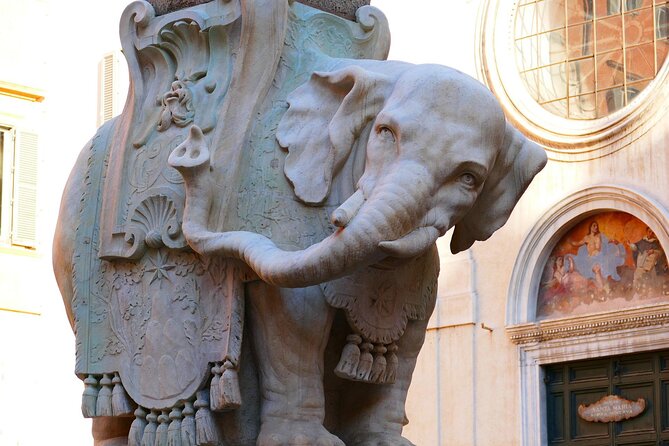
After the Pantheon, you head toward Chiesa di Santa Maria Sopra Minerva and the nearby sculpture people affectionately call the Minerva chick, describing Bernini’s elephant carrying an obelisk.
The story behind the sculpture adds charm to the stop. The commission started with Cardinal expectations for a more traditional depiction, but Bernini presented a playful approach that still respected the subject. The elephant placement also ties into a broader idea of reviving Rome’s ancient heritage, mixing art, religion, and history in a Baroque style.
This is a stop that is perfect for a guided tour, because the sculpture is unusual. A guide can connect it to the personality of the Baroque era, and you will understand what you are seeing instead of just noticing an odd elephant holding something.
Spanish Steps to Trevi Fountain: Finish With Two Iconic Stops
The tour includes Piazza di Spagna, known for the Spanish Steps that connect the square to the Church of Trinità dei Monti. It is also a lively meeting point near the Spanish Embassy, which gave the square its name. This is the kind of location where the vibe is always on, and a cart helps you reach it without spending your whole day crossing Rome on foot.
Then the route ends at Fontana di Trevi, completed in 1762 and designed by Nicola Salvi. The fountain is huge, about 26.3 meters high and 49.15 meters wide, with intricate sculptures and flowing water. You can also do the well-known tradition of tossing a coin over your shoulder, said to ensure you return to Rome.
Trevi at night is especially striking. If your timing allows, you might catch it illuminated, which tends to turn it from an always-crowded photo spot into a memorable sight.
How the Guide-Driver Team Makes This Tour Feel Easy
This is not the kind of tour that works just because it has wheels. It works because of the people running it.
Across reviews, guides like Dino, Antonio, Marco, Elaine, and Umberto are praised for making the stops clear and fun, not just recited facts. Drivers and guide teams, including Alex and Andreea, are also highlighted for being personable, flexible, and good at handling busy streets.
One detail I really like from the reviews is the headset setup. One family said they were given ear pieces so everyone could hear the guide, which is a smart move in a noisy city. It means you are not constantly repeating yourself or leaning in.
I also like that the best guides seem to take small requests in stride. If you want a little more time at the Pantheon area, or you want fewer photos and more explanation, your guide can likely adjust. That is the value of private.
Who This Tour Suits Best, and Who Might Want Something Different
This is a strong match for:
- Families who want a structured route with comfort for kids.
- Older travelers or anyone with limited mobility, because the cart reduces walking.
- People with limited time who want an organized overview before doing deeper visits.
It is also ideal if you want to see a lot of major sights without negotiating logistics all day.
If you are the type who wants long museum time or detailed interior visits, this will feel a bit fast. The stops are designed for quick viewing and stories, not for extended ticketed exploration beyond what you choose to add.
A practical tip: wear comfortable shoes anyway, because even with a cart, you will step out for photo moments. And bring your patience for Rome. The route moves through busy central areas, and the driver-guide helps keep things moving.
Should You Book This Private Golf Cart Tour in Rome?
I think you should book if you want a high-efficiency Rome highlight circuit with a guide who gives you context, not just a ride. The price is much easier to justify when you have a group of up to 6, and the experience is especially useful for families, seniors, and anyone who does not want the day to become a cobblestone endurance test.
I would hold off or add planning if Pantheon interior access is a top priority for you, since entry tickets are not included. Also, if you want deep, slow exploration, this is better as an overview day than a replacement for full museum visits.
FAQ
How long is the private golf cart tour?
The tour lasts about 2 to 3 hours.
How many people can be in a group?
The pricing is per group for up to 6 people.
Where does the tour start and end?
It starts at Italy In Love Tours on Via del Cardello, 31, 00184 Roma RM, and ends at Piazza Venezia, Roma RM.
Is the tour private?
Yes. It is a private tour, so only your group participates.
Are admission tickets included?
No. Entry and admission tickets are not included. The Pantheon is specifically listed as not included.
What is included in the price?
The tour includes the golf cart tour, a professional guide, and the tour is described as a way to see Rome comprehensively with extensive golf cart touring. Food, drinks, and tips are not included.
What is the cancellation policy?
You can cancel for a full refund up to 24 hours before the experience’s start time. If you cancel within 24 hours, the amount paid is not refunded.
More Private Tours in Rome
More Tours in Rome



More Tour Reviews in Rome
Not for you? Here's more nearby things to do in Rome we have reviewed












Rome Golf Cart Tours, compared.
 ★ 4.8Imperial City Tour by Golf Cart with Optional TransferFrom $1241,024 reviews
 ★ 5.0Golf Cart Small-Group Guided Tour: Rome City HighlightsFrom $104907 reviews
 ★ 4.8City Highlights Golf Cart TourFrom $45857 reviews
 ★ 5.0Private/Group 4 Hours Golf Cart SightseeingTourFrom $168780 reviews
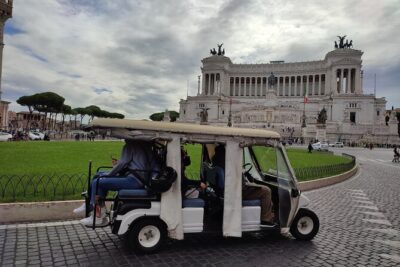 ★ 5.0Explore Rome on a Golf Cart: Private TourFrom $83757 reviews
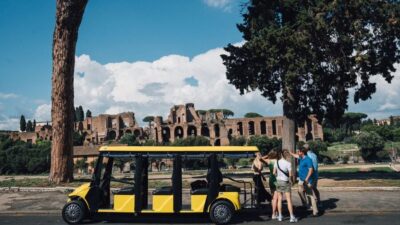 ★ 4.8City Highlights Golf Cart Tour with Local GuideFrom $71752 reviews
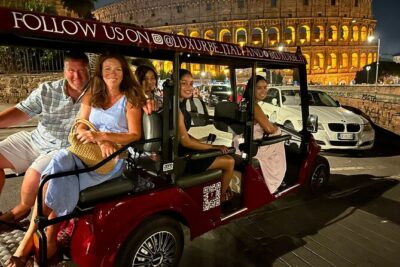 ★ 4.5Rome by Night: Golf Cart TourFrom $108688 reviews
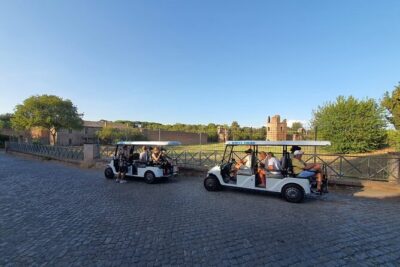 ★ 5.0Rome Catacomb & Appian Way Small-Group Tour by Golf CartFrom $107681 reviews
Browse the lists this tour appears in