
Reviewed · PANTHEON TOURS
Pantheon Guided Tour: Rome’s Ancient Temple with Express Option
The Pantheon hits fast, even if you think you know it. This guided tour helps you read the building like a puzzle, from the exterior facade to the dome’s engineering and the later Christian history inside. I especially like the small-group feel (max 10) with sterilised headsets, and I love that the guide points out details that get missed. The one drawback to keep in mind is that the tour is short and time is managed tightly, so if you want to linger for photos or long conversations, the add-on is worth considering.
If you are doing Rome on a schedule, this tour has a smart rhythm. You start at Fontana del Pantheon, walk into the monument with an expert guide, and then you either keep it express or extend into nearby squares and churches for more context. It is offered in English, runs about 40 minutes to 1 hour 20 minutes depending on your option, and you meet back at the same spot.
Key highlights at a glance
- Small group, max 10 travelers, which makes it easier to hear questions and follow along
- Headsets included, so you can focus on the guide instead of straining in crowds
- Express option keeps the visit tight, leaving time for your own Rome routing
- Optional 40-minute neighborhood add-on, starting at Piazza della Minerva and ending at Piazza Navona
- Original marble floor plus big-picture history, including pagan worship and later Christian use
Pantheon First Look, Meet at the Obelisk Fountain
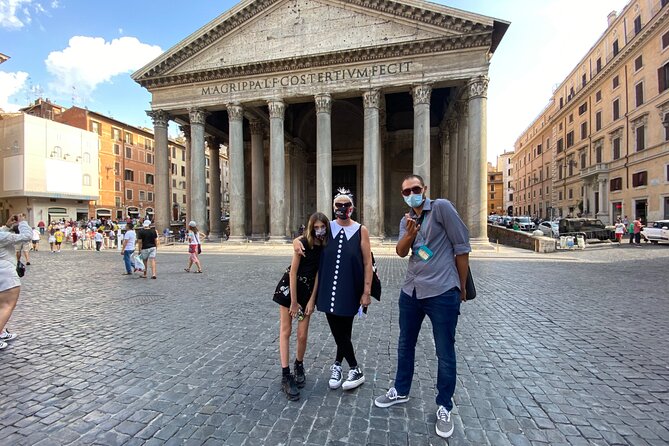
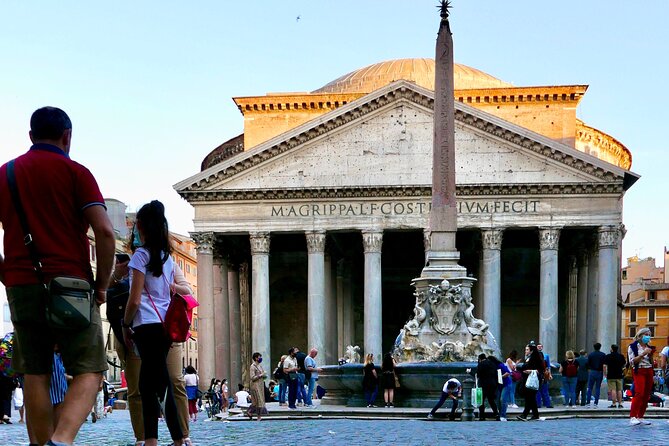
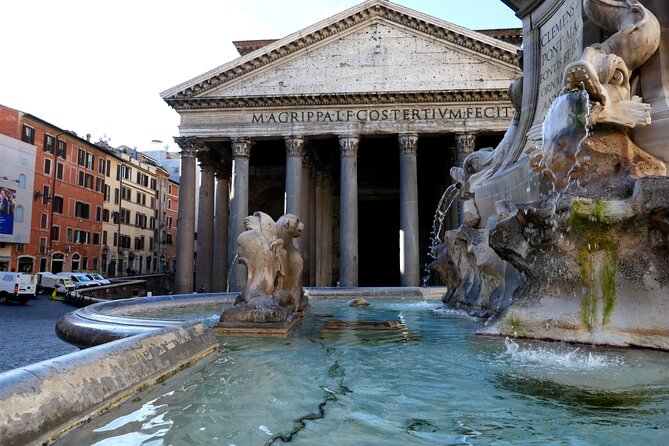
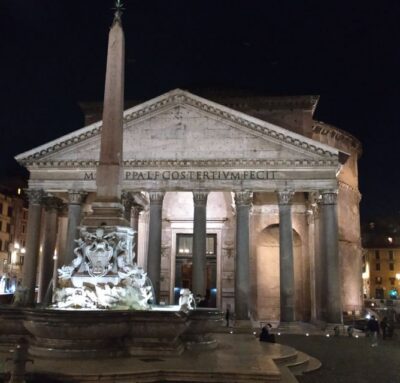
Your tour starts at Fontana del Pantheon, at Piazza della Rotonda. The meet point is below the obelisk, which is a good landmark when you are arriving in a busy area and trying to find your group quickly. Arriving about 5 minutes early matters here, because tours move at a steady pace.
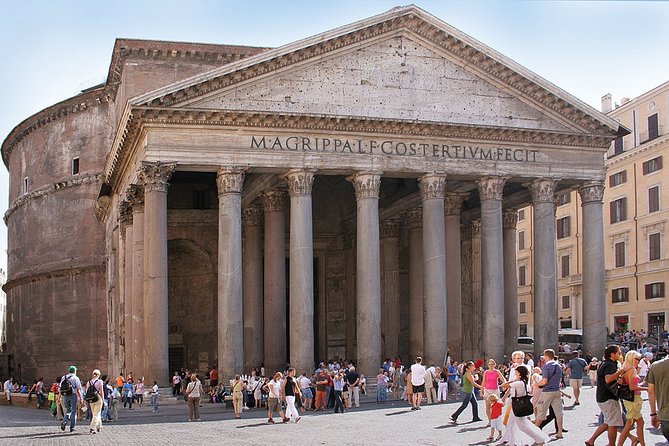
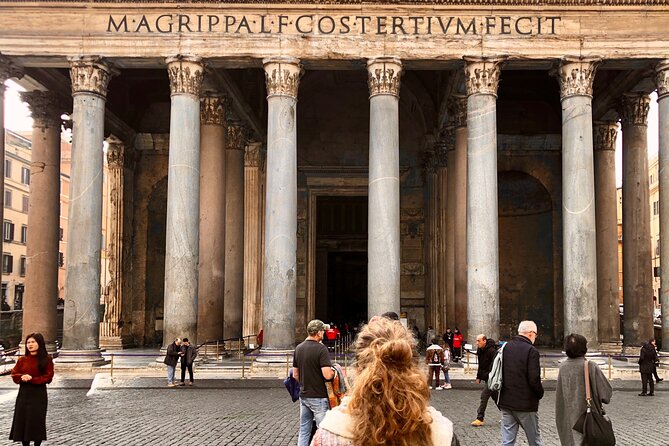
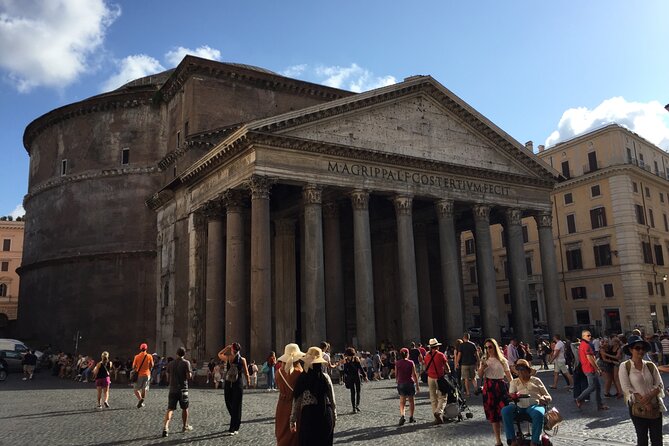
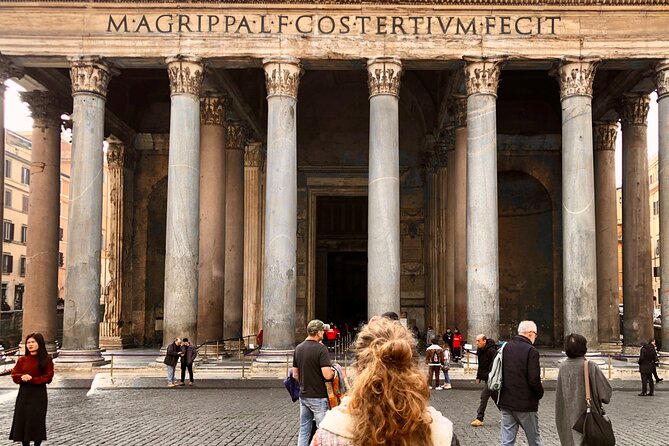
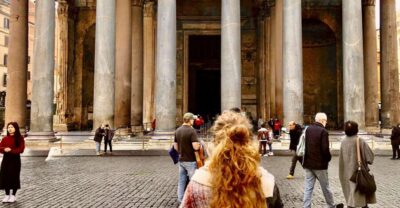
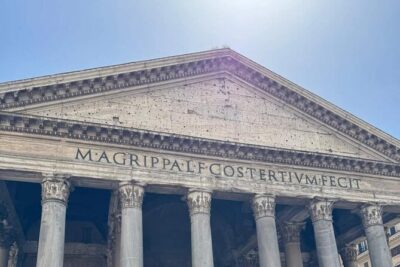
Before you go in, your guide gives you an orientation to the surroundings and the Pantheon’s exterior facade. I like this setup because the Pantheon looks like it has a single “front,” but once you understand how the building relates to the square, you notice more. It also gets you in the right mood for what is inside, especially the dome and the way light works once you step into the rotunda.
The exterior portion is brief, about 10 minutes, and the admission ticket for this specific stop is free. That short intro is a useful investment because it stops you from wandering into the monument with a blur of selfies first, questions later.
You can also read our reviews of more guided tours in Rome



Inside the Pantheon: Dome Math, Columns from Egypt, and Original Marble
The heart of the experience is the guided visit inside the Pantheon. This is where your guide earns their keep by pointing out engineering secrets and construction ideas that most casual visits skip. Even if you have admired photos for years, seeing the space in person changes your sense of scale, and a guide helps you understand why.
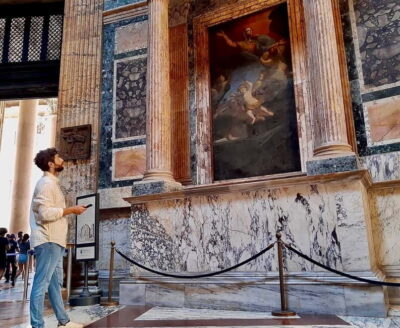
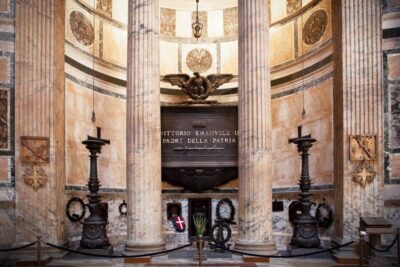
You will hear how the Pantheon was dedicated as a Roman temple for all the Gods, then later adapted as a Christian church. That shift matters, because the building did not get erased when religions changed. You will also learn about its role as a resting place for Christian martyrs, Italian royals, and famous artists such as Raphael.
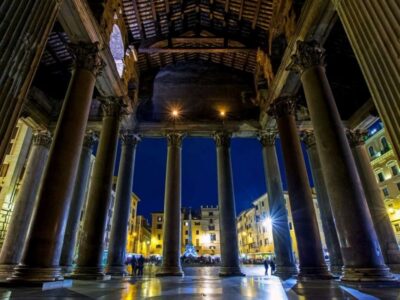
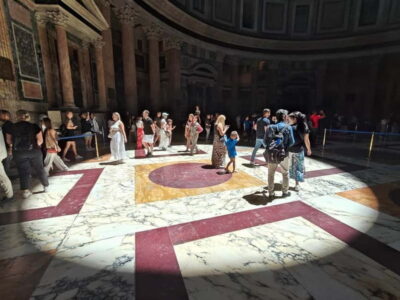
One standout detail is the Corinthian columns brought in from Egypt. Your guide will connect that fact to how Romans used materials and prestige across the empire, so the monument feels less random and more like a deliberate statement. Another big moment is walking on the original marble floor. That is the kind of thing you would never notice on your own, and it makes the interior feel less like a museum piece and more like a living historical layer.
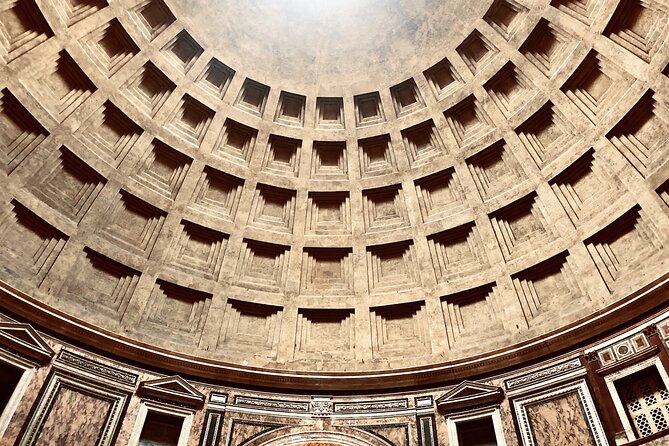
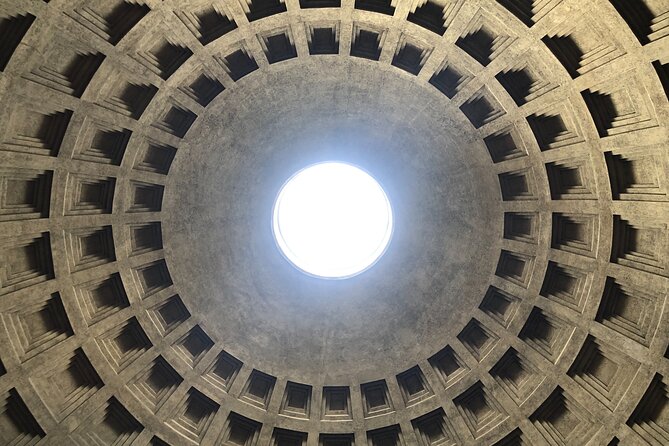
Then comes the dome. Expect a focus on its proportions and the engineering logic behind what you see. The tour frames it as the largest dome in the ancient world, and the guide helps you “read” the dome instead of just staring upward. It even connects to Renaissance awe, including how Michelangelo reacted when he first saw this architectural jewel.
Why I think this part is worth paying for: the Pantheon is famous, but it can still feel like a quick photo stop if you go without a plan. Here, you get structure, context, and explanations you can actually reuse later when you look back at other Roman architecture.
Practical note: the Pantheon is a church now, so attire matters. You should cover knees and shoulders to enter.
Express vs. Add-On: When the Piazzas Make the Difference
This tour has two ways to shape your day. The express approach focuses on the Pantheon, keeping your visit efficient and giving you time to explore on your own afterward. That is a big deal in Rome, where the best afternoons often come from leaving room for unplanned walking, snacks, and side streets.
If you want more than just the monument, you can choose the optional extension, another about 40 minutes. This add-on keeps your guide’s storytelling going and gives you a sense of the neighborhood around the Pantheon, not just the building itself. The tour is designed to add context, so the Pantheon does not feel like an isolated star in a sea of plazas.
The extension starts at Piazza della Minerva, then moves to Tempio di Adriano and ends at Piazza Navona. You can decide this at booking time, which makes it easier to match the experience to your energy level. On a rainy day, the extra walk also works as a structured way to stay oriented instead of getting lost in slick streets.
One thing to watch: because both versions are guided and time-boxed, you will not get to roam freely like you would on a self-guided walk. The tradeoff is that you get guided explanation in exchange for flexibility.
Piazza della Minerva to Tempio di Adriano: Roman Mix in One Walk
If you pick the add-on, the next stop is Piazza della Minerva. This square is the launch pad for one of the most memorable sculptures in the area: Elephant and Obelisk, designed by Bernini. Your guide frames it so it makes more sense than just a famous photo object sitting in the middle of the square.
You will also get small chunks of history as you move, which is helpful because the Roman center can blur together. Instead of treating each square like a separate postcard, you start seeing how they connect in mood and architecture.
From there, you head toward Tempio di Adriano, also known as the Temple of Hadrian. You will see the giant columns up close, and your guide will point out the fusion of ancient and modern architecture. I like this stop because it shows a common Rome truth: the ancient city is often still part of the street life, not sealed behind ropes in a faraway zone.
That blend is exactly why a guided add-on can be better value than it seems. It teaches you what to notice when you are back out on your own.
Piazza Navona Finale: Baroque Fountains After the Temple
The tour ends at Piazza Navona, with about 20 minutes here on the guided portion. If you have not been yet, this is the kind of square that makes you pause even when you are tired. It is lively, visually intense, and packed with famous baroque details.
Your guide focuses on the Baroque masterpieces in the square by Bernini and Borromini. You will also stop for the Fontana dei Quattro Fiumi (the Four Rivers Fountain). Even if you have seen it online, seeing it in person after learning how Romans and later artists shaped public space gives the fountain more meaning.
This ending timing works well for most itineraries. After the Pantheon, you get a different Roman era and a different kind of spectacle. It is a strong shift from the dome’s quiet geometry to the square’s dramatic energy.
And since the experience finishes back at the meeting point area, you are not forced into a complicated route back through Rome.




Price, Group Size, and Skip-the-Wait Value
At about $54.42 per person, this is not the cheapest thing you can book, but it can be good value if you factor in time saved and the cost of learning. You are paying for a professional guide, entrance fees, and sterilised headsets. That combination matters most at the Pantheon, where the site can get crowded and where you will want clear audio for a building that rewards close attention.
The duration range is about 40 minutes to 1 hour 20 minutes, depending on whether you choose the express-only option or add the neighborhood walk. For many people, that time window hits the sweet spot: enough to get real meaning from the monument, not so long that it drains an entire morning.
I also like that the group size is capped at 10 travelers. In a big crowd, even the best guide struggles if people cannot hear, and if questions do not get answered. A small group helps your experience feel more like a conversation than a lecture.
There is also a real-world advantage to booking ahead. The tour is commonly booked about 55 days in advance on average, which suggests you get better timing options when you lock it in early. If you arrive late in your planning, you might find fewer time slots.
Practical Tips Before You Go
A few details can make or break the experience, especially at the Pantheon.
First, wear clothing that meets the church dress code. Knees and shoulders should be covered. If you are traveling in warmer months, plan for a light layer that you can use at the entrance.
Second, bring patience for weather and schedule issues. This tour is subject to weather conditions and/or liturgical-calendar events. If it gets canceled, you get the option of an alternative date or a full refund.
Third, use the headset correctly once you get it. The review feedback includes one concern about not hearing the guide well in one instance, so make sure you are settled and the headset is working before the explanation starts. The good news is that most of the reviews praise the clarity and the guide’s ability to answer questions.
Fourth, if you care about photos, plan your camera moments around the guide’s stopping points. The Pantheon is not a huge building, but the tour still moves quickly. You will likely get some photo time, just do not assume you will have a long free-form window.
Finally, the meeting point is concrete: Fontana del Pantheon, Piazza della Rotonda. Your tour ends back there. That is helpful when you are building the rest of your day, especially if you are walking next to other sights afterward.
Who This Tour Fits Best
This is a strong choice if you want the Pantheon visit to feel like more than a stop on a checklist. You will like it if you enjoy architecture, Roman history, or the story of how religious buildings change over time. The dome explanation, the original marble floor, and the columns from Egypt give you concrete things to remember.
It is also a good fit if you are short on time. The express option exists for a reason, and it helps you avoid the common trap of spending most of your day only standing in one place.
If you are traveling with a group that wants structure, the max 10 number helps keep it manageable. In reviews, guides like Francesca and Mia earn praise for being friendly, answering questions, and keeping things organized. You may also see names like Nastassi or Paul mentioned in feedback, which hints at consistent guide quality.
If you hate hearing rules mid-visit, you might feel a bit constrained by the timed format. The tradeoff is that the guide gives you the explanations that help you see the Pantheon properly, not just quickly.
Should You Book This Pantheon Tour?
Book it if you want a guided Pantheon that teaches you what you are looking at and helps you get value from a famous site. It is especially worth it if you care about engineering details like the dome’s proportions, and if you want the full story of the building from Roman temple to Christian church.
Skip it or consider self-guided if you already have a strong handle on Roman architecture and you prefer to roam without time limits. The Pantheon can be an excellent solo visit, but you would have to supply your own context. This tour does that work for you, with a guide plus headsets included.
If you are deciding between express and add-on, I suggest this rule of thumb: choose express if your schedule is tight. Choose the add-on if you want the Pantheon to connect to the streets around it, especially with the Bernini Elephant and Obelisk and the baroque drama of Piazza Navona.
Either way, you end up with more than a photo. You leave with a building that finally makes sense.
FAQ
How long is the Pantheon guided tour?
The tour runs approximately 40 minutes to 1 hour 20 minutes, depending on whether you choose the express experience or add the extra neighborhood tour.
Does the ticket price include entry to the Pantheon?
Yes. Entrance fees are included in the tour, and the Pantheon stop specifies admission ticket included.
Do I need headsets to hear the guide?
Yes. The tour includes sterilised headsets so you can hear the guide clearly.
Where do I meet the guide?
You meet at Fontana del Pantheon, Piazza della Rotonda, 00186 Roma RM, Italy, below the obelisk.
What should I wear to enter the Pantheon?
The Pantheon is a church now, so you need appropriate attire. Knees and shoulders should be covered.
What happens if weather or religious events cause cancellation?
The tour can be canceled for weather conditions and/or liturgical-calendar events. If that happens, you will be offered an alternative date or a full refund.
More Guided Tours in Rome

More Tours in Rome

More Tour Reviews in Rome
Not for you? Here's more nearby things to do in Rome we have reviewed










Pantheon Tours, compared.
 ★ 4.9Pantheon Timeless Marvel Guided Tour with Entry TicketFrom $214,002 reviews
 ★ 4.1Pantheon Priority Entry Ticket & Audio Guide AppFrom $63,234 reviews
 ★ 4.9Pantheon Small-Group Guided Tour with Entry TicketFrom $481,094 reviews
 ★ 4.7Pantheon Small Group Tour and Skip-the-Line TicketFrom $531,008 reviews
 ★ 4.2Pantheon Guided Tour with Skip-the-line TicketFrom $28816 reviews
 ★ 4.5Rome Walking Tour with Piazza Navona, Trevi Fountain and PantheonFrom $35676 reviews
 ★ 4.5Pantheon Roma Fast-Track Entry TicketsFrom $7540 reviews
 ★ 4.9Spanish Steps, Trevi, Navona and Pantheon Sunset TourFrom $46522 reviews
Browse the lists this tour appears in