
Reviewed · ROME GOLF CART TOURS
Golf Cart Tour Rome: Glide By Ancient Wonders & Hidden Gems
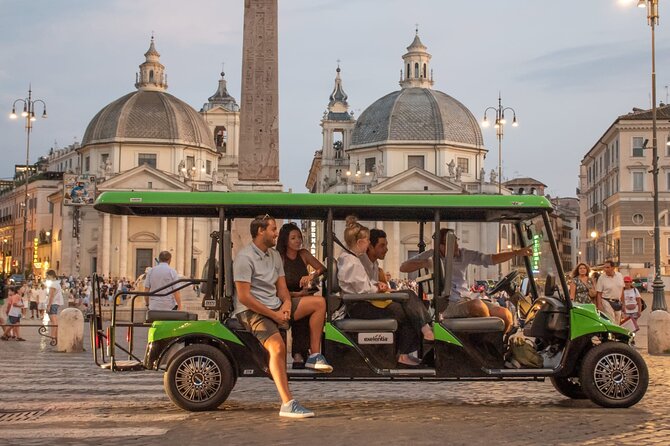
Rome in a golf cart hits different. You get close, wraparound views of the biggest icons without the long slog between them, plus a guide who connects sites to stories you can actually use. The small group size keeps it personal, with stops timed for photos and city orientation.
I like the 7-person cap. It feels like a smart neighborhood tour instead of a cattle-line production, and you still cover major landmarks in about 2 hours 30 minutes. I also like that guides bring in real detail and humor, and names like Vladimir, Federico/Frederico, Antonio, and Vitaliy/Vitale show up repeatedly in glowing feedback.
One drawback to plan for: Trevi Fountain and photo timing can depend on traffic, so you may not get a perfect stop at every moment of the day. Still, the tour gives you a clear route, multiple departure times, and enough time at each key photo spot to make it work.
Key Things to Know Before You Go
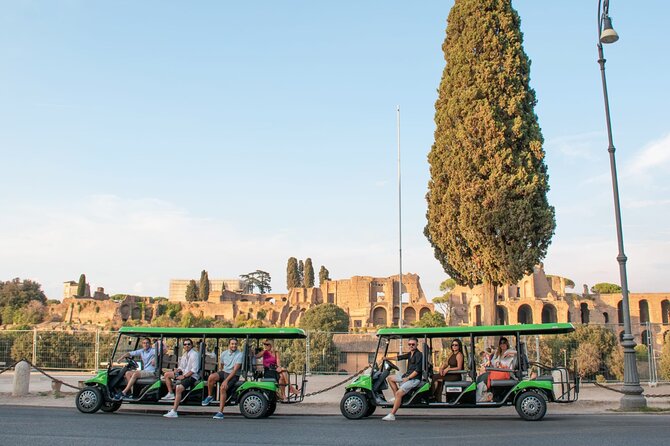
- 7 travelers max for a cozier ride and easier photo stops
- Wraparound views make the ride feel like part of the sightseeing
- No interior rush at the big sights, with photo-focused timing
- Pantheon from the outside, plus a guide video on why it stays dry
- Trevi photo stop depends on traffic, so flexibility helps
A Cozy Rome Loop From Largo Gaetana Agnesi to Campo de’ Fiori
This tour is built for people who want the Rome highlights, without turning every minute into a walking challenge. You start at Largo Gaetana Agnesi and end at Piazza Campo de’ Fiori, so you’re not stuck back where you began. That matters because it helps you plan dinner nearby right after, instead of trying to cross the city again.
The ride format is also the point. A golf cart lets you move through Rome with enough speed to stay efficient, but slowly enough to stop where photos really happen. The wraps around you also mean you get better angles from the cart than you would if you were herded on foot.
You can also read our reviews of more tours and experiences in Rome.

Why the 7-Person Limit Changes the Whole Experience
Rome is busy. Big tours can feel loud, rushed, and impersonal, with everyone trying to listen over engines and crowds. Here, the group is capped at seven, which changes the energy fast. You can hear the guide, ask questions, and get attention when you need it.
This also helps at the stops. At places like the Colosseum, Pantheon area viewpoints, and Trevi, the tour is not just passing by. It’s timed moments for quick context, photos, and small pauses to take in scale before moving on.
If you’re the kind of traveler who likes to ask why something is the way it is, this format is a good match. Many people highlight that guides like Vladimir and Antonio do more than list dates. They explain the why behind what you’re seeing and keep it fun at the same time.
Colosseum Front Views and Gladiator Stories You Can Picture
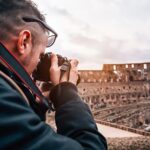
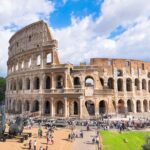
Your first major stop is the Colosseum, and the tour gives you an opening view that sets the tone for the entire day. You’ll get time for a memorable photo, plus a short story to put gladiators into context. It’s the kind of intro that helps you look at the arena shape, the seating idea, and the sheer scale without needing to study architecture first.
The standout detail here is the guide connection. Some guides, including those with backgrounds tied to the Colosseum, bring in stories and perspective you don’t usually get on a quick drive-by. If your guide is Vladimir, Vitaliy, or Federico/Frederico, you’ll likely find the same theme in feedback: humor, flow, and a knack for making ancient Rome feel less distant.
Practical note: since this is focused on exterior views, you’re not spending time stuck inside queues. That’s good for time control, especially on a first day when you want energy left for the rest of your schedule.
Driving Past the Birthplace of Rome for Panoramas and Early-Empire Clues
Between big monuments, the tour shifts into the city layer that often gets skipped. You’ll ride past the birthplace of Rome area and get panoramic views, along with quick anecdotes about emperors and early Rome. Even if you’re not stopping at a museum, these drive-by moments help you understand what kind of city Rome was built to be, not just what it looks like now.
The value here is orientation. When you later walk around on your own, you’ll recognize the neighborhoods and routes the guide introduced. It also helps you connect monuments to geography, like why certain structures sit where they do and how sightlines work from one area to another.
Circo Massimo Chariot Racing Track and a Fun Photo Stop
Next up is Circo Massimo, the ancient chariot racing track. The tour doesn’t treat it like a blank field. You’ll be guided to where racing momentum would have felt like it hit a wall, plus time to spot key elements and take photos.
There’s also a playful angle to this stop. The tour includes a fun photo moment and instruction on how to use a fountain in a distinctly Roman way. It’s the kind of small, light interaction that keeps the tour from becoming pure monument spotting.
If you’re traveling with someone who gets restless during “just history” tours, this is a good stop. It gives you a break from staring at stone and lets you do something silly, quick, and memorable.



An Ancient Roman Theater Up Close, Including Why Those Windows Exist
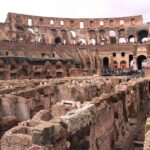
You’ll then admire a historic Roman theater up close, with a guide explaining architectural choices and how performances shaped the space. One of the most curious bits: the guide tells you why the building has windows. That kind of detail is exactly why a guided exterior tour can feel better than a free-form photo walk.
This is also a nice pacing change. After big open-icon sites, an architecture-focused stop helps your brain reset. You get to slow down just enough to notice curves, proportions, and the way ancient builders solved practical needs.
Pantheon Exterior Views Plus the No-Rain Explanation
At the Pantheon, you’ll see one of Rome’s best-preserved ancient buildings from outside. You’ll get photo time for the oculus, and you’ll hear a short tale about how it has stood the test of time.
Then comes the cool science story. You won’t have time to go inside, but the guide shares a private video explanation of how it never rains inside, tied to a fireplace effect the Romans mastered. This is the kind of detail that makes the Pantheon more than a famous dome. You start thinking about air pressure, ventilation, and water behavior, which makes it feel fresh even if you’ve seen photos before.
If you love practical facts, this stop tends to land well. People remember it because it answers something they actually wonder about.
Trevi Fountain Coin Toss and Getting the Best Photo When Traffic Allows
Trevi Fountain is the big name everyone wants, and you’ll get the classic moment: tossing a coin and taking in the atmosphere. The tour also includes guidance on traditions tied to the fountain, so you’re not guessing what you’re supposed to do.
The photo side is handled with care. The guide is described as having a hawk-like eye for photography, but there’s a realistic catch: the special shots at Trevi depend on traffic. That means your best photos might happen if the cart can position you well in that moment.
Here’s how to make this work for you. Bring your camera ready before you arrive, and if you travel at times when the area is jammed, treat this as a “try your best” stop, not a guaranteed perfect postcard angle. The overall tour still gives you enough time to get a solid Trevi set even if conditions are messy.
Spanish Steps and Piazza Navona for People-Watching and Easy Planning
The tour moves to the Spanish Steps, with time to climb a few steps or pause and absorb the square. This is another stop where the guide adds color beyond the monument. You’ll hear fun stories that connect the steps to films, Rome’s timeline, and everyday local life.
It’s also a smart break if your feet are starting to feel the day. A cart ride plus a short pause beats a long climb when you still want to enjoy the rest of your itinerary.
From there, you’ll reach Piazza Navona, known for elegant fountains and street performers. The guide points out features like the river gods and gives suggestions for where to stand to get good photos without fighting the densest crowd pockets. One especially useful touch: you’ll get recommendations for an authentic Italian lunch or dinner spot in the heart of the square, based on what’s practical for the moment.
Finishing at a Panoramic Garden Above the City
The last leg is a calmer viewpoint at a panoramic garden. You’ll get final photos and a chance to breathe after the busy highlight run below. Ending with a view helps your brain store the day. Instead of collapsing right after monuments, you get a wide-angle moment that makes the whole route feel connected.
This is also a helpful close for logistics. Since you end near Campo de’ Fiori, you can transition easily to a walk, a snack run, or an evening drink without needing a big relocation.
Price and Value: Why $163.33 Can Make Sense for 2.5 Hours
At $163.33 per person for about 2 hours 30 minutes, you’re paying for time savings, comfort, and guided context at multiple top sights. If your alternative is doing everything by foot or bouncing between scattered stops on your own, the value equation shifts fast in Rome.
Here’s what you’re really buying:
- Efficient movement with fewer long walks between major locations
- A guide who ties sites together, including practical, interesting details like the Pantheon no-rain effect
- Photo-focused timing at the big icons, not just passing them at speed
- Small group size that improves the listening experience
Would this be a bargain for someone who already knows Roman history and only wants photos? Maybe not. But for most people doing their first Rome trip, or anyone who wants to see a lot without burning out, this price feels easier to justify.
Also remember: bottled water is included, and the tour is in English, which reduces friction when you’re trying to understand fast-moving city moments.
What I’d Pack and How You Should Plan Your Day
Bring comfy shoes anyway, because you might choose to climb a few steps at Spanish Steps. But the tour reduces the worst of the walking.
For photos:
- Charge your gear and clear storage before Trevi, since that’s the moment everyone wants
- Keep your phone and camera accessible, since stop time at each key site is relatively short
- Be ready for traffic timing, especially around Trevi Fountain
For your day plan:
- Choose a departure time that matches your energy. Early tends to feel easier, while later can offer softer light for photos
- After the tour ends near Campo de’ Fiori, plan food close by. The tour route sets you up for that
If you want a more personalized feel, you can also use the guide’s humor and flexibility. In feedback, guides like Vladimir and Antonio are praised for offering options and adapting to what the group wants to focus on.
Who This Golf Cart Tour Fits Best
This works especially well if you:
- Want an overview of Rome’s top icons without long walks
- Have limited time and want a structured route
- Travel with mixed ages, or anyone who tires easily
- Prefer exterior, photo-centered sightseeing with explanations as you go
It can also be a great first day move. Getting oriented reduces confusion later. When you later choose which sites to return to, you’ll know where things are and how long it might take to get between them.
If you are the type who only wants deep museum time and long interior visits at each monument, you might feel the exterior approach is too light. But for most first-timers, the balance is strong.
Should You Book This Rome Golf Cart Tour?
Book it if you want a small-group, efficient, photo-friendly way to hit the major Roman landmarks with stories that make the stops make sense. The 7-person cap is a real quality marker in a city where crowds can ruin the listening part of a tour. The Pantheon no-rain explanation and the attention to photo timing at Trevi are also the kind of details that turn a drive-by into something memorable.
Skip it or consider an alternative if your main goal is long interior time at major monuments. This tour is designed for exterior viewing and short, well-timed moments.
FAQ
How long is the Golf Cart Tour Rome?
The tour runs for about 2 hours 30 minutes.
Where does the tour start and end?
It starts at Largo Gaetana Agnesi (00184 Roma RM) and ends at Piazza Campo de’ Fiori (00186 Roma RM).
Is the tour offered in English?
Yes, it is offered in English.
How many people are in the group?
The group is capped at a maximum of 7 travelers.
Do I get to go inside the Pantheon?
No. There is no time to go inside, but the guide will show a private video explaining why it never rains inside, using the fireplace effect.
Are there admission tickets included for the stops?
The tour listing shows Admission Ticket Free for the stops, and the landmarks are visited externally.
What’s included in the price?
Included items are the 2.5-hour golf cart tour, an expert guide, visits to major landmarks externally (including Colosseum, Spanish Steps, Trevi Fountain), and bottled water.
What is not included?
Tips are not included.
Do I need a paper ticket?
No. You’ll receive a mobile ticket.
Is it possible to cancel?
Yes, free cancellation is available up to 24 hours in advance for a full refund.
Can service animals join the tour?
Yes, service animals are allowed.
More Tours in Rome
More Tour Reviews in Rome
Not for you? Here's more nearby things to do in Rome we have reviewed






Rome Golf Cart Tours, compared.
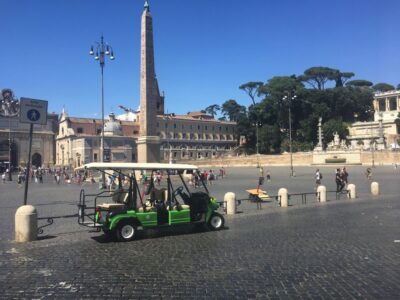 ★ 4.8Imperial City Tour by Golf Cart with Optional TransferFrom $1241,024 reviews
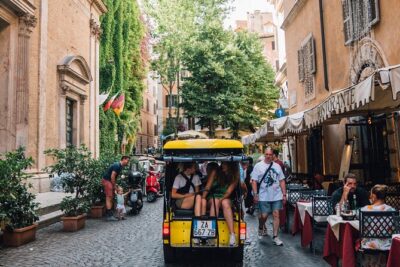 ★ 5.0Golf Cart Small-Group Guided Tour: Rome City HighlightsFrom $104907 reviews
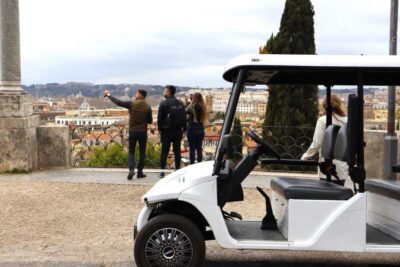 ★ 4.8City Highlights Golf Cart TourFrom $45857 reviews
 ★ 5.0Private/Group 4 Hours Golf Cart SightseeingTourFrom $168780 reviews
 ★ 5.0Explore Rome on a Golf Cart: Private TourFrom $83757 reviews
 ★ 4.8City Highlights Golf Cart Tour with Local GuideFrom $71752 reviews
 ★ 4.5Rome by Night: Golf Cart TourFrom $108688 reviews
 ★ 5.0Rome Catacomb & Appian Way Small-Group Tour by Golf CartFrom $107681 reviews
Browse the lists this tour appears in