
Reviewed · TRASTEVERE TOURS
Gianicolo to Trastevere: Italy’s Independence trail with GELATO
Rome’s history has a viewpoint. This small-group walk links the Italian independence story to nine sights on and below Gianicolo Hill, then lands you in Trastevere for a gelato finish. You get expert English guidance and the kind of pace that lets you actually look at what you’re seeing, not just shuffle past it.
What I like most is the mix of big ideas and concrete places: a liberty-style lighthouse tied to the Italian diaspora, plus political history you can read right on the hill. The best moment is the city-spanning panorama from Gianicolo, where the walk suddenly makes Rome feel less like a checklist and more like a lived-in city. The main drawback to consider is that you’re on a hill, so comfortable shoes matter, and the whole experience depends on good weather.
Key highlights you’ll feel fast
- Panoramic Gianicolo views that give you Rome’s layout in one shot.
- Italian independence focus tied to monuments you can’t easily find on your own.
- Very small group (max 6), so questions and stop-by-stop pacing work.
- English-speaking local guides, including Chiara and Federico.
- Gelato in Trastevere to end the walk in a casual, social mood.
- Not all monuments include tickets, so two stops may be extra.
Why Gianicolo to Trastevere is such a smart Rome day
This walk works because it takes Rome in the right order. You start high on Gianicolo, where the views help you understand the city’s geography, then you walk downhill toward Trastevere, where the mood gets softer and more neighborhood-like. The independence theme stays grounded the whole time, not floating in abstract facts.
I also like that it’s not trying to cram in every famous site. Instead, you get a concentrated route through places connected to the Roman Republic era, with landmarks that explain why this hill mattered. It’s the kind of sightseeing that makes you look up, not just look around.
One practical note: because you’re walking and climbing at times, you’ll want shoes with grip, especially if rain makes the steps slick. The good news is the tour is designed for a relaxed pace, and with a group size of six, nobody feels rushed.
You can also read our reviews of more tours and experiences in Rome.



Meeting point and pacing, so you don’t waste your energy
You meet at Faro degli Italiani, Piazzale del Faro (00165 Roma RM). The tour ends in Trastevere near Porta Settimiana, at Via Garibaldi 1 (00153 Roma RM). That start-to-finish flow is useful because it puts you where you begin with views, then where you end with an easy evening plan.
Expect about two hours total. Each segment is short, usually around ten to twenty minutes, so you’re constantly transitioning, learning, and looking. And because the group is capped at six travelers, you’re more likely to get real back-and-forth at the stops instead of hearing your guide talk into a crowd.
You’ll also have a mobile ticket. That matters because Rome can be busy, and having your start time handled neatly helps you focus on the actual experience. The tour is offered in English, and service animals are allowed, which is a comforting detail for planning.
The independence story starts at Faro degli Italiani
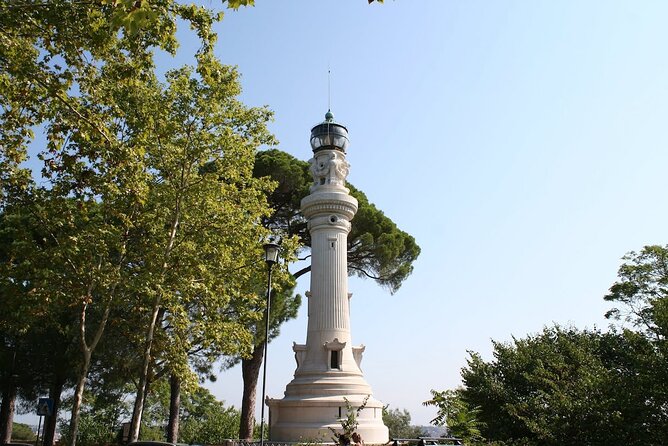
Your first big moment is the Faro degli Italiani on Gianicolo, a liberty-style lighthouse with an unusual backstory. It was donated by Italian expats in Argentina to honor their country of origin. That detail hits differently in person, because you realize the independence story wasn’t just fought on Italian streets. It was carried across oceans by people who stayed connected to home.
There’s no ticket cost for this stop, so you can spend your time simply taking it in. Pay attention to the panoramic angle, because your guide’s explanation of the city’s layout will make more sense once you see the whole spread below.
From there, the walk keeps moving with intent. You’re heading through a cluster of monuments that connect personal figures, political ideals, and the 1849 Roman revolution to specific locations on the hill.
Anita Garibaldi, the 1849 revolution, and the power of a statue
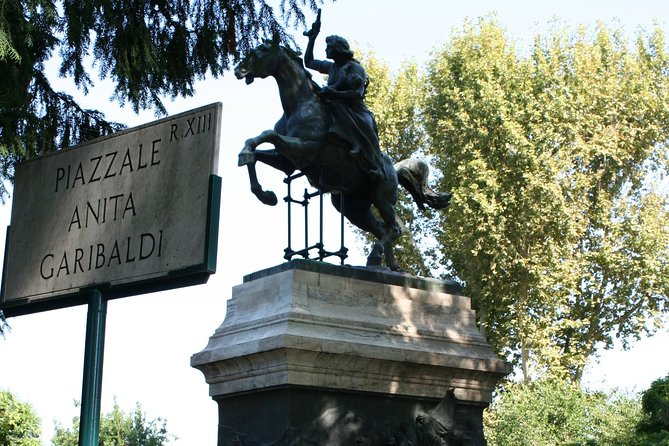
Next you reach the Monumento ad Anita Garibaldi, an equestrian monument on Gianicolo. It honors Anita Garibaldi, the woman who helped her husband, Giuseppe Garibaldi, in the Roman revolution in 1849. Seeing her represented on horseback adds weight to the story. It’s not just a name in a textbook, it’s a public symbol meant to last.
This stop is brief, about ten minutes, but it sets the theme. The walk is showing you independence as a network of people and decisions, not a single dramatic moment.
Reading the constitution on Il Muro della Costituzione Romana
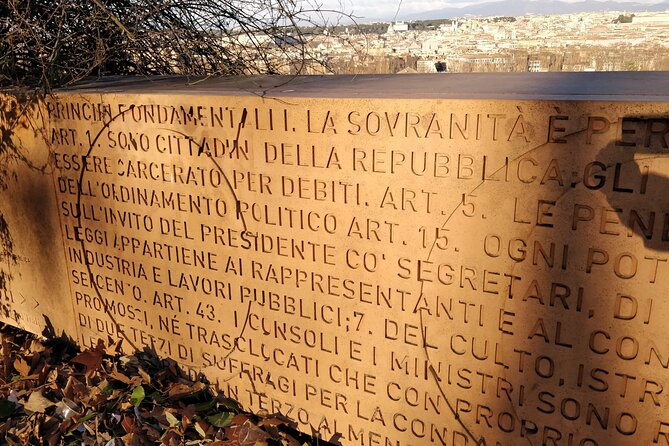
One of the most memorable stops is Il Muro della Costituzione Romana, a memorial engraved on one of Gianicolo’s best outlook spots. The Roman Republic Constitution is described as one of the most advanced constitutions of the second half of the 19th century, and it later inspired modern European democracies in the 20th century.
What’s valuable here is how the politics becomes physical. You’re standing somewhere that gives you a broad view, while also confronting a concrete idea about governance. Even if you don’t remember dates, you’ll remember the sensation of reading a political legacy into a landscape.
This stop includes admission, and it’s worth slowing down. Take a moment to focus on the text and the way it’s placed, because that’s where the meaning clicks.






The Terrazza del Gianicolo viewpoint and Garibaldi’s presence
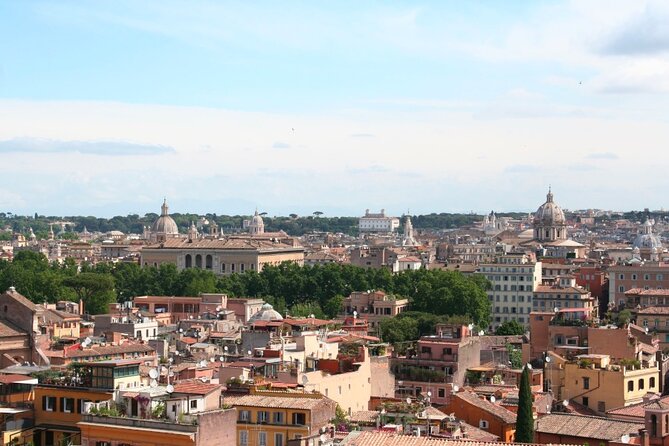
Then you reach Terrazza del Gianicolo, one of the most beautiful viewpoints on the hill. This is also a romantic spot where many young Romans go to propose. That tradition matters for how you experience the place. You’re not just viewing history, you’re sharing space with how locals actually use the hill today.
From the terrace, you also greet the statue of Giuseppe Garibaldi, the independence hero who ties the stops together. The guide’s narrative helps you connect him to what you’ve already seen on Anita Garibaldi’s monument and the constitution memorial. This is where the tour starts to feel like a storyline with momentum, not a list.
You’ll spend about fifteen minutes here. If you’re someone who likes photos, this is the moment to take them, but also make sure you look with your eyes first, then shoot. The views are wide, and it’s easy to forget what you saw once you start snapping.
Er Fontanone, plus a reminder that not every ticket is included
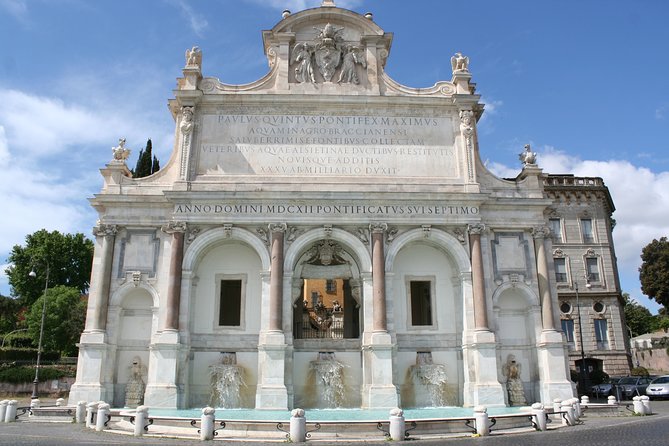
Now you head to Fontana dell’Acqua Paola, known in Rome as er Fontanone. It’s one of the city’s famous monuments and is visible from much of central Rome. That “visible from everywhere” quality is exactly why it works on a walking tour: it’s a landmark you can imagine even when you’re not staring at it.
Here’s the practical catch: admission ticket for this stop is not included. You may still be able to see it, but if you’re planning around “what’s paid in,” remember this is one of the two not-included stops listed for the experience.
The walk then moves to the next memory-heavy monument, again tied to Garibaldi and 1849.
Mausoleo Ossario Gianicolense: honoring the 1849 fighters
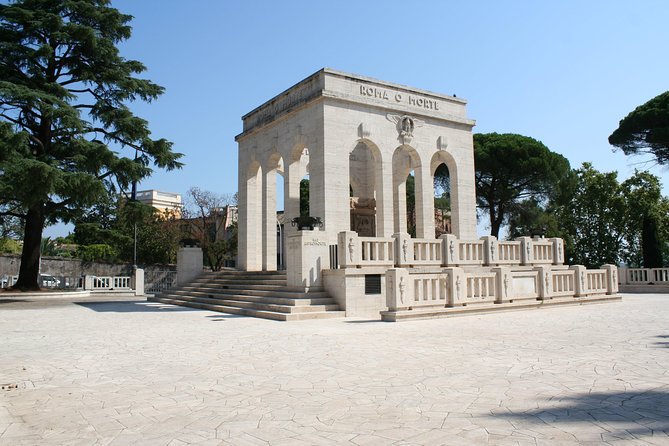
On Gianicolo, you also visit the Il Mausoleo Ossario Gianicolense, dedicated to those who fought alongside Giuseppe Garibaldi during the Roman revolution in 1849. The idea of an ossuary makes the history feel stark and human. You’re not only learning about political events, you’re encountering how a community remembers loss and sacrifice.
This stop is about ten minutes, and its admission ticket is not included. So treat it as a “watch your budget” part of the route, not a guaranteed all-in included attraction.
Piazza San Pietro in Montorio and the tradition about upside down crucifixion
Your route continues to Piazza San Pietro in Montorio, where you find a church built on a site tied to a specific tradition: the apostle Peter was crucified upside down on the cross. The viewpoint at this point gives you a magnificent look back over Rome, making the tradition feel anchored to a real place rather than a story told from far away.
This stop includes admission. With the view in play, you’ll likely spend time simply standing where the guide directs you, looking for the city shapes that match the explanation.
If you’re the type who wants meaning and location in the same moment, this is a good stop to slow down.
Tempietto del Bramante: the Renaissance tomb that earns its reputation
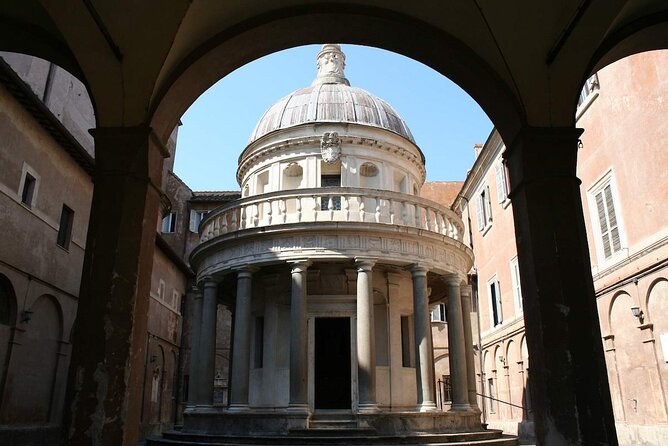
Next comes Tempietto del Bramante, built in 1502 by the architect Bramante as a commemorative tomb. This is described as a treasure of Renaissance art, a compact gem on Gianicolo Hill.
This is one of those monuments you can “get” quickly, even if you aren’t an architecture nerd. The scale, the symmetry, and the attention to detail make it feel special from the first second you see it. It’s also a strong counterpoint to the independence focus. The tour shows you that Rome is always rewriting itself, from politics to art, from sacrifice to design.
The good news for value: this stop has free admission in the tour framing. So you get a major highlight without extra ticket cost.
Downhill to Trastevere, then gelato time
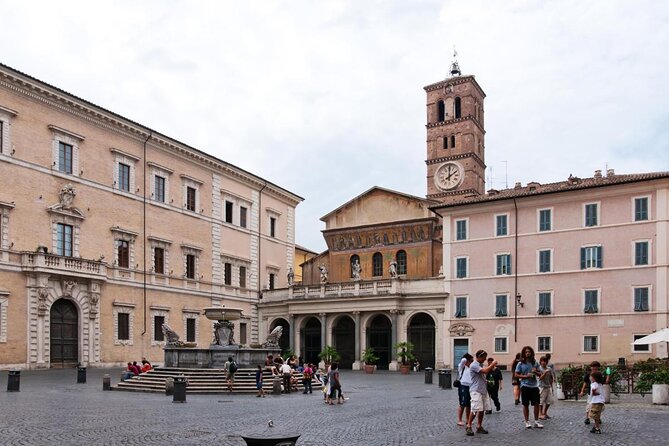
The walk finishes in Trastevere, with time to sit and enjoy Italian gelato. The endpoint is near Porta Settimiana, which is a smart landing spot. Trastevere is where you go when you want Rome to feel social, casual, and real, not stage-managed.
This is where the tour’s pacing really pays off. After learning about independence and reading history in stone, you’re not pushed to keep sprinting across the city. Instead, you get a short breather, a sweet finish, and a chance to chat with your guide in a normal setting.
It’s listed as a snack, and that’s exactly the right size for the day. You don’t want a heavy meal right after uphill walking, so gelato as a finale makes practical sense.
Price and value: is $90.22 a good deal?
At $90.22 per person for about two hours, this isn’t a bargain-bin freebie. It’s priced like a guided experience where the route, the guide, and the included treats matter.
Here’s where the value comes from:
- A max 6 group, which usually means more interaction and fewer distractions.
- English guidance focused on specific independence-era stories tied to concrete monuments.
- Several stops with tickets included, plus free admission for the lighthouse and the Tempietto del Bramante.
- Gelato included as the end-of-walk reward.
The main value risk is that two monuments are not ticket-included: Fontana dell’Acqua Paola and the Mausoleo Ossario Gianicolense. If you’re budgeting tightly, check how you want to handle those stops financially.
Also, remember the time factor. This is a short walk compared to big Rome day tours. If you’re hoping to cover dozens of major attractions, you’ll likely want other plans too. But if you want a meaningful slice of Rome with fewer crowds, the structure makes sense.
Who this tour suits best (and who should think twice)
This tour is a great fit for you if:
- You want Rome off the densest tourist lanes, with neighborhoods you feel more than you photograph.
- You like history that connects people, like Anita and Giuseppe Garibaldi, to specific locations.
- You enjoy viewpoints and can handle a hill with some stairs and uneven surfaces.
It also lists that most travelers can participate and that service animals are allowed, so planning feels straightforward.
You might think twice if:
- You have low tolerance for walking uphill, because Gianicolo is the whole point of the route.
- Weather is unstable on your dates, since the experience requires good weather.
Practical tips so your day runs smoothly
Bring comfortable, grippy shoes. Even if the route is manageable, hills and steps can feel longer than you expect when you’re sightseeing and stopping often.
If you’re planning your own route to the hill from elsewhere, use common sense with streets and walking directions. For example, if you’re walking up from the Vatican area, avoid dangerous roads with no sidewalk and traffic close by. One route to watch is Via Delle Fornaci, where you can end up facing traffic with limited pedestrian space.
Finally, if rain shows up, it’s worth dressing for it. The guides have shown a steady approach to showing up on time even when weather turns, so you’ll feel better prepared if you pack a light rain layer.
Should you book this Gianicolo to Trastevere independence walk with gelato?
Yes, I’d book it if you want a Roman day that feels thoughtful and local, not just famous and crowded. The combination of Gianicolo views, independence-era monuments, and an end in Trastevere with gelato is a strong match for many first-time visitors who also want a deeper story.
Book it especially if you value:
- A guide you can ask questions of, in a small group.
- An itinerary that makes sense geographically, start high for the panorama and end in Trastevere for a natural evening vibe.
- A history theme that stays connected to real places, from Faro degli Italiani to Tempietto del Bramante.
Skip it or plan alternatives if you cannot handle uneven ground and hill walking, or if your schedule is so tight that a weather-dependent reschedule would be a problem.
FAQ
How long is the Gianicolo to Trastevere walk?
It lasts about 2 hours.
What is the group size?
The tour has a maximum of 6 travelers.
What language is the tour offered in?
The tour is offered in English.
Is gelato included?
Yes. Italian gelato snacks are included.
Where does the tour start and end?
You start at Faro degli Italiani, Piazzale del Faro (00165 Roma). You end in Trastevere near Porta Settimiana, at Via Garibaldi 1 (00153 Roma).
Is this tour ticketed, and do I need to bring anything?
You’ll receive a mobile ticket. Entrance and ticket inclusion varies by stop as noted in the tour details.
Are all monument tickets included in the price?
No. Fontana dell’Acqua Paola and the Mausoleo Ossario Gianicolense are listed as admission ticket not included.
Is it weather dependent?
Yes. The experience requires good weather. If it’s canceled due to poor weather, you’ll be offered a different date or a full refund.
Is it easy to reach with public transport?
It is listed as near public transportation.
What is the cancellation window for a full refund?
You can cancel for a full refund up to 24 hours in advance of the experience start time.
Are service animals allowed?
Yes, service animals are allowed.
More Tour Reviews in Rome
Not for you? Here's more nearby things to do in Rome we have reviewed












Trastevere Tours, compared.
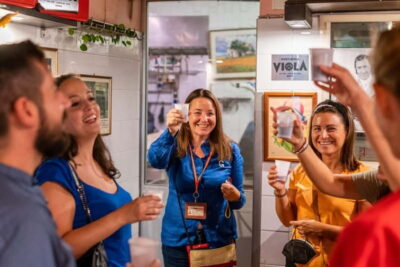 ★ 4.8Trastevere or Jewish Quarter Street Food TourFrom $513,839 reviews
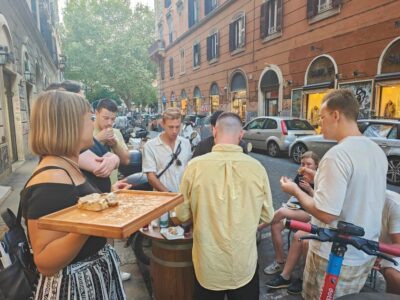 ★ 4.9Trastevere & Campo de Fiori Street Food Walking TourFrom $512,768 reviews
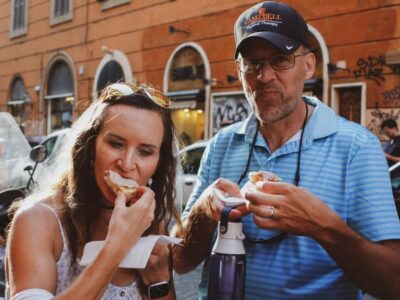 ★ 4.8Guided Food Tour in TrastevereFrom $1122,266 reviews
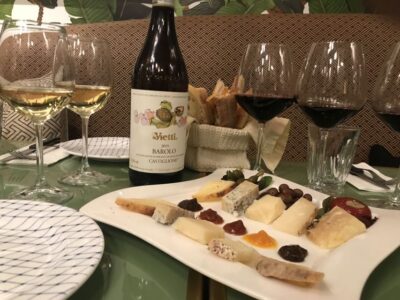 ★ 4.9Trastevere Guided Food and Wine Tour with 20+ TastingsFrom $1461,022 reviews
 ★ 4.8Small Group Trastevere Food Tour with DinnerFrom $132719 reviews
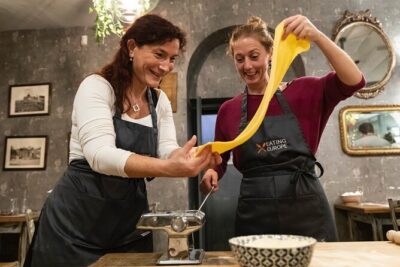 ★ 5.0Rome Trastevere Pasta Making Class with Eating EuropeFrom $100505 reviews
 ★ 4.9Twilight Trastevere Food Tour with Wine TastingFrom $123490 reviews
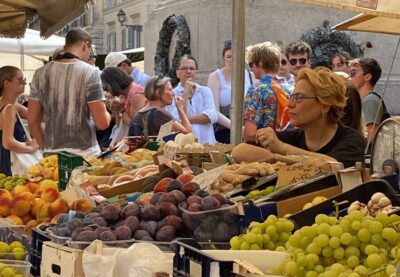 ★ 4.8Food & Wine Tour of Campo de Fiori, Ghetto, TrastevereFrom $81413 reviews
Browse the lists this tour appears in