
Reviewed · ANCIENT ROME TOURS
From Rome: Ostia Antica Guided Half-Day Trip by Train
Rome goes quiet at Ostia Antica. This former harbor town lets you picture how Romans lived, worked, and relaxed far from the Colosseum glare, with a small-group guided walk through well-preserved streets and public buildings. You also get the practical bonus of a short train ride, so the day feels focused instead of logistically messy.
I really like two things about this trip. First, the route hits the Forica (public washrooms), the Baths of Neptune, and the amphitheater, so you see Roman daily life, not just ruins-as-rocks. Second, guides like Rob, Cat, Alberto, and Laura get repeatedly praised for clear storytelling and keeping the group moving at the right pace.
One consideration: once the tour ends, your return train is unescorted. It is still easy, but you’ll want to be comfortable following train signs and staying aware of where to go next.
Key highlights worth knowing before you go
- Decumanus Maximus stroll: walk the main street where shops, taverns, and city life would have lined up.
- Baths of Neptune mosaic: the sea god scene is one of the most striking images in the park.
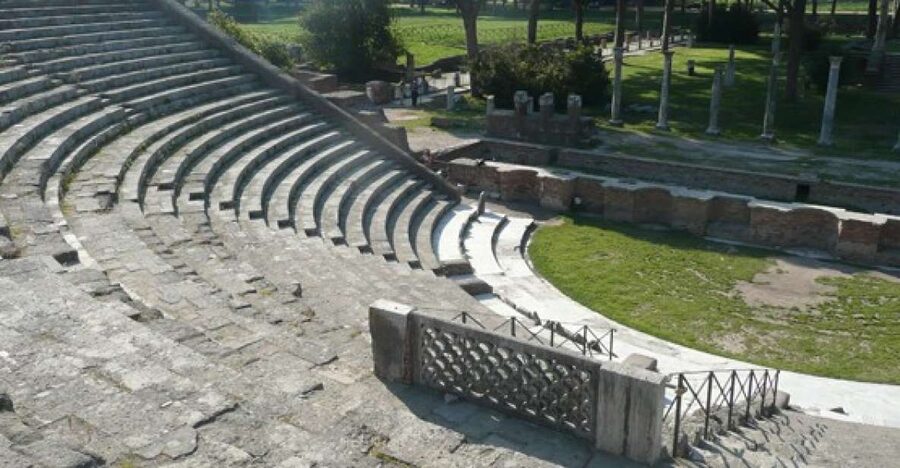
- Amphitheater scale: built in the early empire period, with space for about 3,500 spectators.
- Forica realism: those marble bench holes make the place feel oddly personal.
- Small group, big attention: groups capped at 12 can ask questions without yelling.
Getting to Ostia Antica from Rome, fast and actually simple
Ostia Antica is close enough to Rome that a half-day works, and this trip is built around that reality. You meet at Cafe Piramide near the Piramide metro (Line B, blue line). The café is easy to spot with its white outdoor umbrellas, and the guide will be holding a City Wonders sign so you can avoid that awkward guessing-game with other groups.
Then it’s train time. Expect about 15 minutes on the outbound ride. The group size is capped at 12, which matters because Ostia is a large archaeological park. You’ll want a guide who can keep everyone together while you move between the set-piece buildings.
On timing, the format is straightforward: a total 4 hours, with a 3-hour guided tour inside the ruins. After that, you head back by train. The return is still included with your ticket, but the guide is no longer with you on the unescorted train ride.
If you’re the kind of person who likes to start walking quickly, this design helps. You spend less time negotiating transport and more time inside the site, which is where the value is.
You can also read our reviews of more guided tours in Rome


Why Ostia Antica feels like Rome’s port city, not a random ruins detour
Ostia Antica was founded in the 4th century BC and grew into a working hub for a city that, at its height, served more than 100,000 people. That population size is the big clue for how to think about the place. This was not a scenic retirement town. It was an active commercial and military seaport, tied to food, goods, ships, and the constant movement of people and resources.
A good guide matters here, because the same stones look different when you know what they were for. The walking tour is framed around how Ostia rose and fell, and it keeps pulling you back to everyday needs: where people shopped, where goods were stored, where public life happened, and how Romans used shared spaces.
What I like about this angle is that it makes your Rome visit feel less one-note. Rome is often taught as monuments and emperors. Ostia is Roman life as logistics and routines, with public baths, entertainment, and civic infrastructure all functioning within an actual working city.
You’ll also notice that Ostia tends to feel calmer than the headline sites. The pace here lets you slow down and look at mosaics, floor plans, and building remains rather than constantly checking your watch. That calm is part of the reward.
Following the city’s main street: Decumanus Maximus and the port-era vibe
One of your anchors in Ostia is the Decumanus Maximus, the main thoroughfare. Your walk along it helps you understand how the city was organized. When you see the street as a spine, the rest of the buildings start to make sense: taverns and commerce spaces along the route, larger civic and entertainment structures set into the urban plan, and pathways where statues once lined walkways.
You’re not just moving from photo spot to photo spot. The tour is structured like a guided city walk, which means you get context as you go. You’ll hear explanations of the taverns, thermal baths, warehouses, and theaters you see. Those categories are useful because they keep the site practical. You start spotting what Roman daily life relied on: trade, assembly, eating, bathing, and public events.
Another detail I appreciate is how the guide connects architecture to imagination. Multiple guides get high marks for storytelling that makes the port city feel alive, including bits of acting and humor. That approach helps you visualize crowds in public spaces, busy movement in market-adjacent areas, and the daily routines that turned a harbor town into the engine of Rome’s supply.
Practical tip: bring comfortable shoes. The terrain is outdoors and the park is big. Even with a guide, you’ll be walking at a city pace for a full chunk of the morning.
Forica, Baths of Neptune, and the amphitheater, where daily life turns human
This is where Ostia Antica really earns its reputation. You hit three stops that are memorable for different reasons: one for hygiene and everyday civics, one for art and leisure, and one for mass entertainment.
Forica (public washrooms)
The Forica is one of those places that can feel strange in the best way. You’ll see the marble bench lined with 20 well-spaced holes along four walls in a large open room. Sitting there on purpose is part of the experience, because it’s a rare chance to see a Roman shared facility as an actual routine. It’s not glamorous, but it’s real.
Baths of Neptune
Then you move to the Baths of Neptune, with a mosaic that is hard to forget. The star is the sea god being drawn by a four-horse chariot. Even if you’re not a mosaic expert, you’ll recognize why this image matters: it shows Roman taste for mythological scenes in places built for leisure and regular social life.
Amphitheater
Finally, you’ll visit the amphitheater and take your place where about 3,500 spectators would have watched events when it opened around 12 BC. The scale here is the point. In a site like this, the seating area helps you feel the room in a way standing outside a wall can’t.
These three stops are also a “how Romans used public space” lesson. Baths were for relaxation and meeting people. Entertainment venues were for shared culture. The Forica was for basics, handled publicly and with routine efficiency. Once you notice that pattern, Ostia feels less like a museum and more like a lived-in city.
The guide experience, why the same ruins can feel totally different
Ostia Antica is a wide site. Without help, you can leave with a pile of photos and only a partial sense of what you saw. With a strong guide, you get structure, interpretation, and the kind of small details that help the buildings click.
In the reviews, certain guide names come up again and again, including Rob, Cat, Alberto, and Laura. The praise is consistent: they explain clearly, keep the pace right, and bring humor and storytelling into the walk. Some guides even use reenactment-like bits to make scenes and routines feel more understandable, which is especially useful in places like the amphitheater or baths where your imagination fills in the gaps.
Also, pay attention to the practical care praised in reviews. One theme is how guides manage group energy and logistics. For instance, there are notes about guides finding shade on hot days and building in short wander breaks. Those breaks matter because Ostia can be sunny and open, and taking a few minutes to reset helps you keep enjoying the details.
Bottom line: if you only have half a day, this format gives you the best chance of getting more meaning per minute.
A few more Rome tours and experiences worth a look





After the tour: stay in Ostia, add the beach, or squeeze in the modern museum
Your tour ends back in Rome at about 1:00 PM at the Piramide Metro Station. The key detail is that you’re free to remain at Ostia Antica and explore on your own if you’d rather extend the day.
If you want a slower pace, use that free time to wander the modern town of Ostia. Some people also mention a newly opened museum in the modern area, which is an easy add-on when you still have legs and daylight.
If you like beach time, you can head to a nearby beach after the tour. It’s a sensible pairing because you’ve just seen the port city. Walking from archaeology to coastline gives your brain a clean connection between what Romans built and why it mattered.
Two practical notes to keep in mind:
- Plan to eat before you’re too hungry. There are snack-bar options during a toilet break, and one review mentions an on-site restaurant with sandwiches and desserts.
- If you’re visiting in winter, you might find that museum hours close earlier. One note says it may close around 1:30 PM, so timing can matter.
And remember, your return train from Ostia to Rome is unescorted. The trip includes your return ticket, but you’ll need to navigate on your own after the guide’s end point. If you’re the kind of person who enjoys certainty, take a photo of your station instructions when the guide gives them.
Price and value: why $58 can make sense for a half-day
At $58 per person for about 4 hours, this is not the cheapest way to see ruins. But it’s also not trying to be. The value comes from three things that are bundled:
- Return train tickets between Rome and Ostia
- Ostia Antica entry
- A live English guide for the 3-hour core visit
The guide part is what you’re paying for in a practical sense. Ostia Antica is big, and the meaning of the site depends on knowing what to look for. Even when you find signs, you can’t read your way into the routines, civic spaces, and port functions as fast as a good guide can explain them while you’re standing in the room.
It’s also a time-saver. Getting there by train is easy enough that you could DIY it, but you’d still be figuring out an efficient route through a huge park. For many people, the cost feels worth it because the day stays short and productive.
This is also where the small group size helps. A max of 12 participants means the guide can keep an eye on everyone and answer questions without the usual tour-crowd chaos.
Who should book, and who might prefer to DIY
This tour fits best if you want:
- A half-day Roman history experience that feels more like everyday life than empire trivia
- A guided walk through big, spread-out ruins
- A calm alternative to the biggest headline sites in the area
It’s a strong choice for first-timers to Ostia Antica, and also for people who have seen other Roman ruins and want a different angle. The port-city theme can make your Rome trip feel more complete.
You might skip a guided format if you:
- Already know Ostia well from planning and want maximum freedom
- Prefer to move at your own pace without a set 3-hour framework
- Don’t want to rely on group timing, especially for the toilet break and snack stop
One more straight fact: it is not suitable for wheelchair users. The route involves outdoor walking through the archaeological park.
Should you book this Ostia Antica half-day train tour?
Yes, if you want the efficient, guided version of Ostia Antica. The combination of train access, entry, and a guide-led route through the Forica, Baths of Neptune, and amphitheater is exactly what turns a large site into a coherent story.
Book it especially if you like your history tied to daily routines. Ostia rewards that mindset. And the repeated praise for guides like Rob, Cat, Alberto, and Laura is a good sign that you’ll get more than a list of what to see, you’ll get a sense of what it meant.
If you’re comfortable navigating the unescorted return and you’re okay with a walking-heavy archaeological park, this is a smart use of a half day from Rome.
FAQ
Where do I meet for the Ostia Antica tour?
Meet at Cafe Piramide near the Piramide metro station (Line B, blue line). When you face the Piramide metro, the café is on your right side in view of the train tracks and the train exit.
What does the tour include?
The package includes the return train ticket from Rome to Ostia Antica, Ostia Antica entry, and a live English guide for the guided portion of the day.
How long is the guided part once you reach Ostia Antica?
The total experience is 4 hours, with about 3 hours spent on the guided tour inside Ostia Antica, plus short train rides at both ends.
Can I stay in Ostia after the tour?
Yes. After the guided portion, you can remain in Ostia Antica and the modern town of Ostia at your leisure, or go to a nearby beach. The tour service ends in Rome at Piramide around 1:00 PM.
Is there a toilet break?
Yes. The schedule includes a toilet break, with time for a snack and/or drink at the snack bar.
Is the tour suitable for wheelchair users?
No. The tour is not suitable for wheelchair users based on the activity information provided.
More Half-Day in Rome

More Guided Tours in Rome

More Tour Reviews in Rome
Not for you? Here's more nearby things to do in Rome we have reviewed









Ancient Rome Tours, compared.
 ★ 4.7Colosseum: Underground and Ancient Rome TourFrom $16012,691 reviews
 ★ 4.4Colosseum, Ancient Rome Tour or Self AudioGuided TourFrom $392,866 reviews
 ★ 4.9Appian Way, Catacombs, & Roman Aqueducts E-bike TourFrom $851,421 reviews
 ★ 4.9Appian Way E-bike Tour with Catacombs, Aqueducts & FoodFrom $961,210 reviews
 ★ 5.0Appian Way Aqueducts Bike Tour (Catacombs & Lunch Option)From $78975 reviews
 ★ 4.7Appian Way, Aqueducts, and Catacombs TourFrom $64942 reviews
 ★ 4.7Caracalla Baths & Circus Maximus — Private or SharedFrom $77835 reviews
 ★ 4.7Colosseum Arena Access and Ancient Rome Guided TourFrom $94774 reviews
Browse the lists this tour appears in