
Reviewed · COLOSSEUM TOURS
Colosseum Small Group Experience Official Guided Tour
A famous arena can feel like a blur. This small-group Colosseum experience mixes timed entry with Roman Forum and Palatine Hill context, so the site makes sense instead of just impressing you. You get multiple start times, and you can pick the pace that fits you: live guide or a self audio option.
I especially like that it includes Colosseum access plus Roman Forum and Palatine Hill entry tickets valid for 24 hours. That matters, because Rome sites are crowded and spread out, and having your ticket valid the next day means you can come back for a slower walk. I also like the app option, which gives multilingual storytelling in English, Chinese, German, French, Italian, and Spanish, so you are not stuck with whatever language skills your guide has.
One drawback to plan around is that timing is strict and security takes time, so arriving late can mean you lose your spot. Also, if you choose the audio option, you must bring a smartphone (no older than 2020) and you should plan on using your own earphones, since they are not included.
Key highlights to notice before you go
- Small group size (max 24), easier to manage in the crowds than big buses
- Timed entry approach (includes a Colosseum reservation fee) that helps you start efficiently
- Roman Forum and Palatine Hill tickets valid 24 hours so you can explore at your pace
- Optional live guide or audio app, English included, plus several other languages in the app
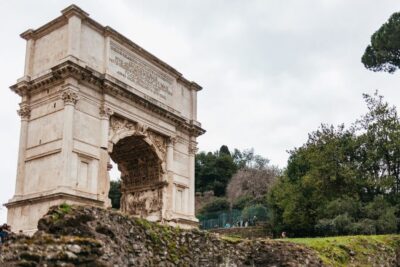
- Core landmarks in the walk, including the Arch of Constantine and the Temple of Venus and Roma
- Named guide praise in the mix, with people highlighting guides like Eva, Eddie, and Daniele
How the small-group format helps at the Colosseum
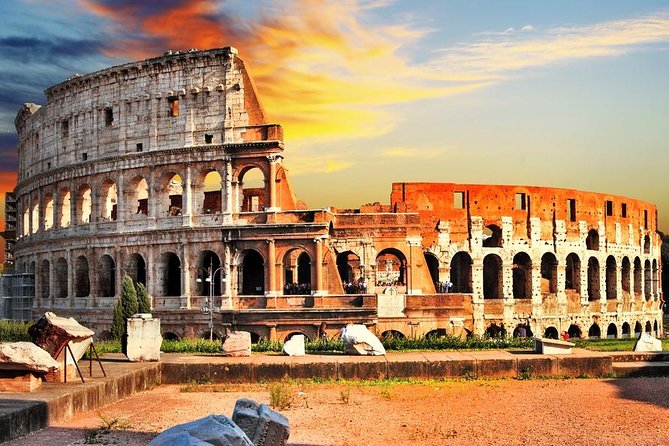
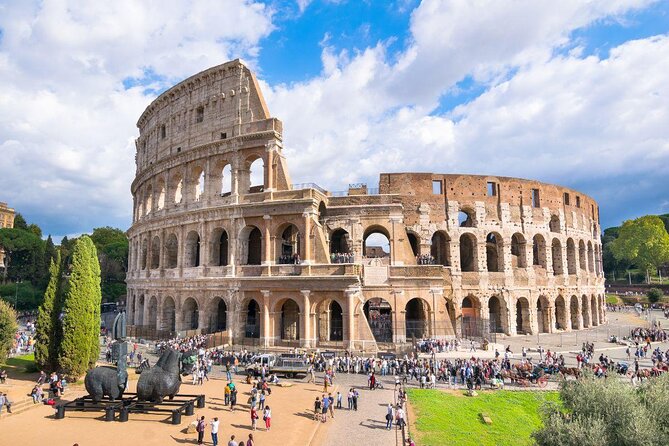
The Colosseum is one of those places where the building is instantly impressive, but the context can get lost fast if you wander on your own. This tour is built for the real-life problem: crowds, ticket lines, and a confusing layout when you are trying to see the best spots efficiently.
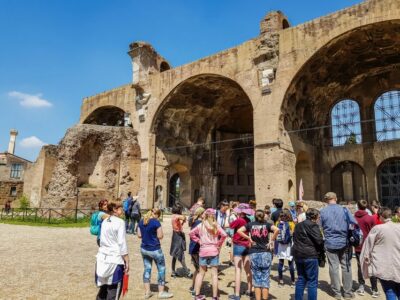
With a maximum of 24 people, you typically get the benefit of a group without feeling trapped in a human bottleneck. You also finish back in the area right by the Colosseum and Roman Forum, which is handy because you can keep exploring immediately after the guided portion or return later using your valid tickets.
Just remember that the day runs on tight timing. The meeting point check-in needs to be done at least 30 minutes before departure, and security checks take at least 20 minutes.
You can also read our reviews of more guided tours in Rome



Entering The Colosseum: what the guide or audio helps you catch
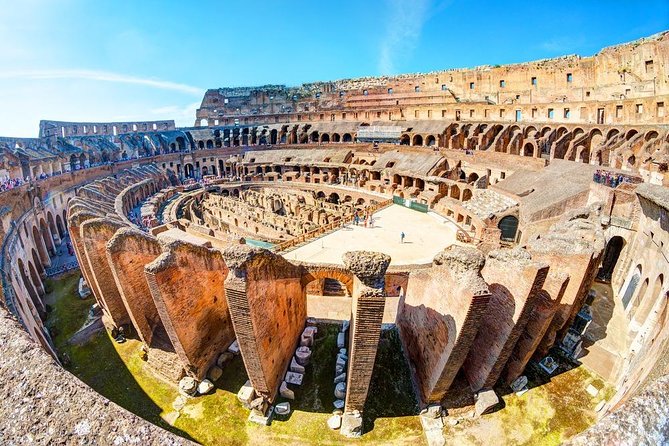
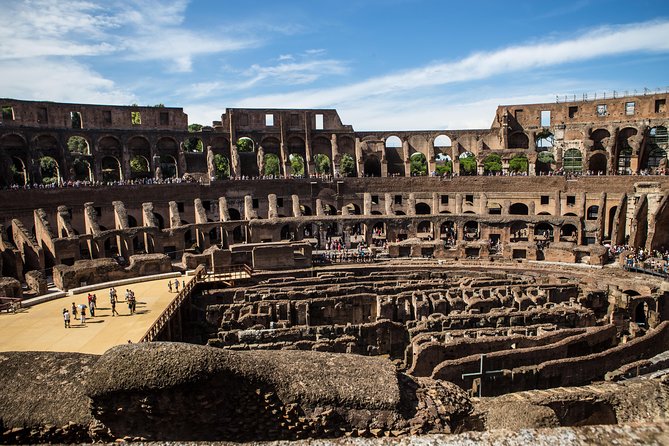
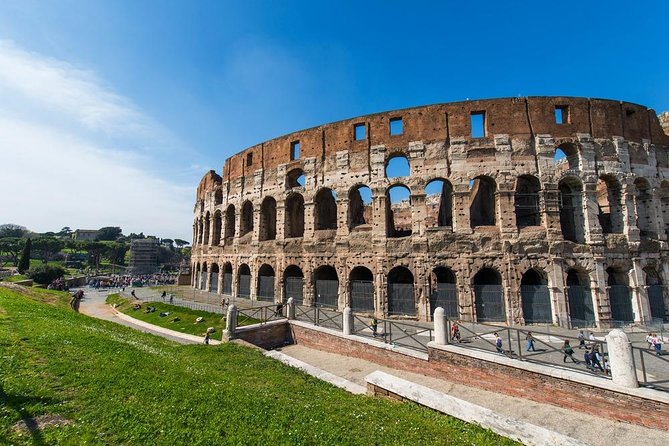
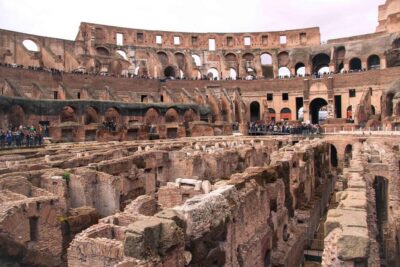
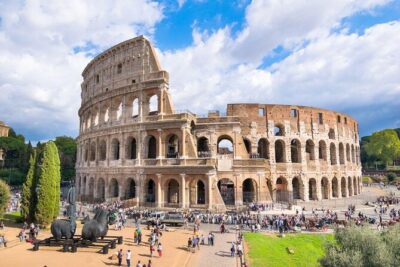
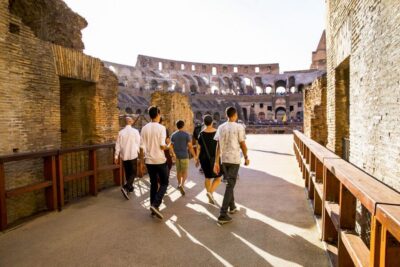
The tour centers on the Colosseum, a UNESCO World Heritage Site and also listed among the New Seven Wonders of the World. You will be inside a structure that the Romans treated like a machine for spectacle, not a static monument. That shift in perspective is often the difference between, wow, cool, and wow, I get it.
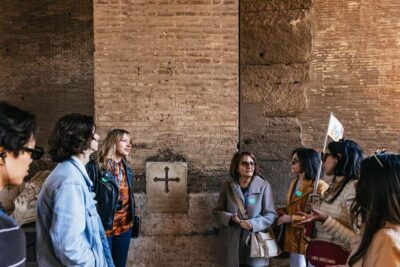
If you choose the live guided option, you will typically get commentary that links what you are seeing to how the arena worked, why it mattered politically, and what people were watching there. In the feedback you will see a pattern of satisfaction with guides who are organized and responsive. One guide named Eva is praised for being patient with the group and practical about shade, water, and bathroom breaks.
If you choose the self audio-guided option, you will rely on the multilingual audio app storytelling. This is great when you like control, you can pause, and you do not want someone pacing you. The tradeoff is you must have a smartphone that is recent enough (no older than 2020) and you should have working earphones, because earphones are not included.
A practical note: some people have mentioned microphone or sound issues on certain days. If you are sensitive to audio quality, consider bringing backup earphones you trust, and give yourself a little patience if the first minute or two are too loud or too quiet.
Roman Forum and Latin Forum Romanum: the part that makes the city click
After the Colosseum, the story widens to the Roman Forum, located in low ground between the Palatine and Capitoline hills. This is where you learn why this area mattered before the empire got its full footprint everywhere.
The Roman Forum was a public stage long before it became a ruin you take photos in. In republican times, it was linked to law courts, meetings of power, and even gladiatorial combats. Under the empire, it shifted toward religious and secular ceremonies, which helped turn the Forum into a kind of civic theater with temples and monuments packed into walking distance.
The area includes surviving structures and monuments that help you read the space like a map. You might hear about or notice elements such as the Temple of Castor and Pollux, the Temple of Deified Caesar, the Mamertine Prison, the Curia (senate house), the Temple of Saturn, the Temple of Vesta, and the Temple of Romulus. It is also connected to major arches and practical engineering like the Cloaca Maxima.
This is one of the tour’s biggest value points. The Forum can feel like a pile of rocks if you are only looking at silhouettes. With the right explanation, those ruins start lining up into a real narrative of political life and public ritual.
Two quick cautions. First, the Forum is outdoors and can get hot, windy, or rainy, so go in with water and layer options. Second, if you are hoping to visit at your own speed later, confirm you have the correct Forum and Palatine Hill entry access tied to your tickets, not just your Colosseum entry.
Arch of Constantine and the Temple of Venus and Roma: major sights, strong payoff
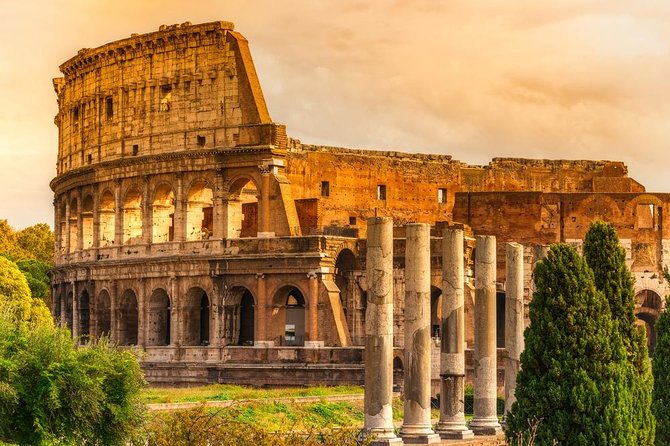
As you move through the area between the Colosseum and the Palatine Hill, you will hit two landmarks that are particularly rewarding when you understand why they were built where they are.
The Arch of Constantine
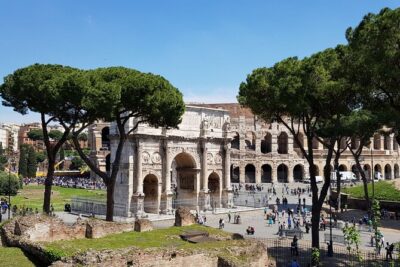
The Arch of Constantine is a triumphal arch dedicated to Constantine the Great. It was commissioned by the Roman Senate to commemorate his victory over Maxentius at the Battle of Milvian Bridge in AD 312. It was dedicated in 315 and is the largest Roman triumphal arch, at about 21 meters high and roughly 25.9 meters wide.
Why it matters on a walking tour: the arch sits along the Via Triumphalis, the route victorious generals used during a triumphal procession when they entered the city. So even if you only spend a few minutes there, you get a clear snapshot of how Rome celebrated military power and connected it to the urban landscape.





Temple of Venus and Roma
Next is the Temple of Venus and Roma, often described as the largest temple in ancient Rome. It is on the Velian Hill between the eastern edge of the Forum Romanum and the Colosseum. The temple honored Venus Felix (Venus the Bringer of Good Fortune) and Roma Aeterna (Eternal Rome).
This temple has a construction story that helps you understand the empire’s scale and planning. It was created under Emperor Hadrian, with construction beginning in 121. It was inaugurated in 135 and finished around 141 under Antoninus Pius. It was damaged by fire in 307 and restored later with alterations by Maxentius.
When you get this kind of timeline, the building stops being just a big footprint and becomes a statement. It tells you that Rome wanted to tie gods, the city, and imperial identity together in one visible place.
Palatine Hill: your second act after the arena
Finally, you reach Palatine Hill, the most central of Rome’s Seven Hills and one of the oldest parts of the city. It is often called the first nucleus of the Roman Empire. Today it is an open-air museum, with the Palatine Museum holding finds from excavations.
In imperial times, major palaces were built here starting with Augustus. Before that, the hill housed wealthy residences. Even if you do not go into every museum room, the Palatine Hill area helps you understand how the elite lived above the city that worked below.
The hill is also useful for viewpoint hopping. The layout is split by two main summits historically known as Palatium and Germalus. Standing around the area, you can see why it became valuable real estate: it gives you height, sightlines, and a sense of the city’s layers.
If your tour includes Palatine Hill access, you have flexibility. You can treat the guided portion as your orientation, then wander later using the 24-hour validity of your ticket.
Price and value: what you actually pay for at $59.03
At $59.03 per person, this is not a bargain in the way that self-guided free walking is. But you are not paying only for someone to talk while you stand around. You are paying for a few things that matter in Rome.
You get:
- Colosseum entrance ticket plus the Colosseum reservation fee
- Roman Forum and Palatine Hill entry tickets valid for 24 hours
- An experience structure that helps you hit key areas without losing an entire morning to ticket confusion
That reservation fee and timed approach can save you real time when the crowds are thick. In a similar situation, people have compared waiting for general tickets to hours in line. Even if your exact wait varies day by day, the value logic is consistent: reducing uncertainty makes your day feel easier.
Also, your choice of option changes the value. If you pick the live guide, you are paying for live interpretation and group management. If you pick the audio option, you are paying for paid entry plus an app that keeps the storytelling going when you move at your own pace.
One more value detail: this experience runs in English as an offering, and the audio app expands your language coverage. That matters if not everyone in your group speaks the same language comfortably.
Practical tips so your day runs smoothly
A Colosseum day can feel like a logistics test, so you want to win that test early.
First, plan your arrival around security. Everyone must pass through attraction security, and you should allow at least 20 minutes. If you arrive late for check-in, you cannot join or reschedule without paying again, and you would not be eligible for a refund in a no-show situation.
Second, travel light. Large bags, backpacks, and suitcases are not permitted, and there are no cloakrooms at the monument. Stick to something small that you are comfortable carrying.
Third, bring the right identification. You must present a valid passport or ID document that matches the name used when booking. Also, pets are not allowed inside the venue.
Fourth, if you choose the audio-guided option, bring earphones and a phone that is recent enough. The tour notes that smartphones must be no older than 2020, which is a surprisingly common fail point.
Fifth, expect timing adjustments. Capacity regulations and security can delay tour departure, and departure time can differ by up to 20 minutes from your selected slot.
Who this tour is best for
This tour works well if you want structure but still want to roam.
Choose the guided option if:
- You like a human explanation and want someone to connect the dots between Colosseum, Forum, arches, and temples
- You appreciate someone managing the group through crowds
- You value practical pacing, since guides like Eva are praised for caring about shade, water, and restroom needs
Choose the audio option if:
- You like freedom and prefer to linger at details
- You are comfortable with app-based storytelling
- You have a reliable smartphone and your own earphones
It also suits first-timers who want the essentials without guessing which ruin matters most.
If you hate schedules and strict meeting times, you might find this style of tour stressful, even with the small group size.
Should you book this Colosseum small group experience?
Yes, if your goal is simple: see the Colosseum, understand the Roman Forum, and get Palatine Hill context without wasting hours. The biggest reason I would book is that you are buying entry plus timed organization, and you keep the flexibility to explore the Forum and Palatine Hill across a 24-hour window.
I would book with two conditions in mind. One, arrive early for check-in and security so you do not lose your slot. Two, decide between guided or audio based on your comfort level with sound and phones, since audio quality and microphone clarity have been a real differentiator.
If you want a Rome experience that feels less like random sightseeing and more like a readable route through power and spectacle, this is a strong pick.
More Guided Tours in Rome
More Tours in Rome

More Tour Reviews in Rome
Not for you? Here's more nearby things to do in Rome we have reviewed












Colosseum Tours, compared.
 ★ 4.8Colosseum, Palatine Hill and Roman Forum Guided TourFrom $5232,814 reviews
 ★ 4.7Guided Tour of Colosseum, Roman Forum & Palatine HillFrom $5527,897 reviews
 ★ 4.2Colosseum & Forum with Audio Guide App -Optional ArenaFrom $4124,770 reviews
 ★ 4.5Colosseum, Roman Forum and Palatine Hill Guided TourFrom $5923,903 reviews
 ★ 4.4Colosseum, Forum & Palatine Hill Tour & Optional ArenaFrom $5813,839 reviews
 ★ 4.6Colosseum, Palatine Hill & Roman Forum Guided TourFrom $5112,703 reviews
 ★ 4.7Colosseum: Underground and Ancient Rome TourFrom $16012,691 reviews
 ★ 4.6Colosseum Arena, Palatine Hill & Forum Guided TourFrom $7310,584 reviews