

Reviewed · AUDIO TOURS
Castel Sant’Angelo E-Ticket & Multilingual Audio Guide
Rome’s fortress tells a dark story.
This self-guided Castel Sant’Angelo experience is interesting because you’re not stuck inside a rigid group schedule, and the offline audio guide keeps you moving at your pace. I also like that you get the entry ticket right on your phone, so you can focus on the fortress instead of ticket lines.
My favorite part is the way the audio helps you “read” the building. You’ll hear focused stories as you pass the execution courtyard moments like Giordano Bruno, then switch to imperial tomb details, and finish with the terrace views over the Tiber. The main drawback to plan around is tech and flow: the audio is designed for a certain walking path, but real-world signage, restoration, and crowd routes can change, so you may need patience (and a charged phone).
Key Things I’d Prioritize Before You Go

- Offline audio plus map means you can navigate without relying on signal at the fortress
- Phone ticket delivery helps you enter with less friction than door sales, especially when timed well
- A smart route with big payoff views takes you from grim courtyard stories to the Sant’Angelo terrace panorama
- You must download early since there is no WiFi or 4G on-site and the app needs around 100 to 150 MB
- Audio accuracy is not perfect at every step, so expect occasional mismatch between prompts and what you see
- Plan for security and slopes by arriving about 30 minutes early, and moving carefully if you have stamina limits
The 90-Minute Castel Sant’Angelo Experience That Works With Your Schedule
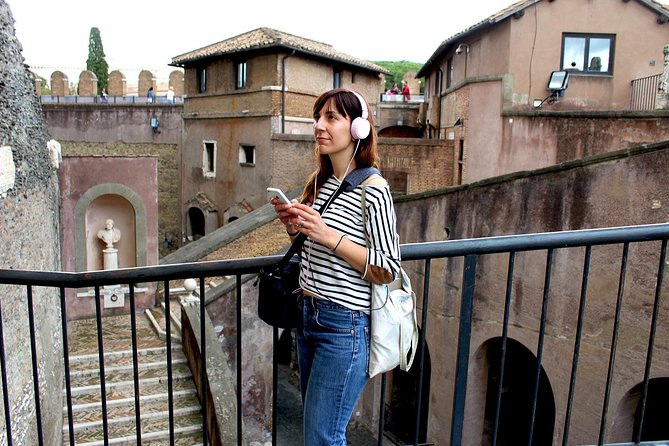
Castel Sant’Angelo is one of those Rome stops where timing matters. The ticket and audio combo is built for independent exploring, and the duration is about 1 hour 30 minutes on average.
This format is a good match if you like to wander, stop for photos, and control your own pace. You also get to choose your date and time, which helps you avoid the most intense parts of the day if you’re flexible.
The tour is self-guided only. There is no live guide and no meeting point. You enter, then use your phone’s offline narration and map to move from room to room.
A few more Rome tours and experiences worth a look



Price and Value: What $34.94 Really Buys You
At $34.94 per person, you’re paying for two things in one: an adult entry e-ticket plus an offline audio tour on your smartphone (Android or iOS).
If you were going to visit Castel Sant’Angelo anyway, the audio piece is what turns the trip from “I walked through” into “I understood what I was looking at.” The audio includes narrated stories and an interactive map you can use without cell service.
A practical note: this is an adult entry e-ticket. Reduced or free entry tickets are not provided by the supplier, even if some visitors are eligible elsewhere. If that applies to you, double-check what you need to bring for your category before you buy.
Getting Your Ticket and Audio Running (Before You Hit the Castle)
This is where the experience can be smooth, or it can turn into a frustrating time sink. The instructions are clear: download the ticket and audio tour while you have WiFi before you arrive, because there is no WiFi or 4G on-site.
You’ll receive an email from the local supplier with important ticket and audio instructions. The audio is offline, but the download step still needs connectivity. Give yourself time the day before if possible.
Here’s what I’d do to avoid problems:
- Make sure your smartphone is fully charged before you leave.
- Bring earphones, since the experience expects you to listen on your device.
- Confirm you have enough free space: the audio download is about 100 to 150 MB.
- If your ticket email seems missing, use the contact method in your instructions right away and reference your booking.
Also note a few entry details that can surprise first-timers:
- Viator Voucher is not your entry ticket.
- Tickets are accepted in digital or printed form.
- Your ticket may be purchased under the legal representative’s name, so the name on the ticket can differ from yours. That should not stop entry.
Finally, arrive early. You need to get through security, and the guidance is to show up 30 minutes in advance. Late arrivals are not accommodated.
Where the Audio Route Starts: The Fortress Entrance by the Tiber

Your self-guided route begins at the main entrance at Castel Sant’Angelo, right on the bank of the Tiber. That matters because your first impressions of the building, its setting, and the surrounding river landscape set the tone for the stories you’ll hear.
Because you’re not following a live guide, the biggest trick is simple: follow the audio’s cues and start where the instructions indicate. Some visitors report that when signage or flow changes, prompts can feel out of sync. I’d treat the audio as the guide, but keep your eyes on what’s in front of you.
Stop 1: The Execution Court and Giordano Bruno’s Shadow (About 15 Minutes)

The first stop takes you toward the large open space that was once the executions courtyard. This is not a museum-style calm start. It’s a strong, dramatic entry point.
You’ll hear stories tied to the Roman Inquisition and famous heretics, including Giordano Bruno. The audio here is doing something useful: it’s helping you connect architecture to events, not just describe rooms.
What to watch for here:
- Expect a heavier emotional tone than the later papal-and-royal spaces.
- You may want extra time if you’re the type who likes to read and stare before moving on.
If you’re short on time, this is still worth it. The courtyard is the kind of place where one story can change how you perceive the whole fortress.
You can also read our reviews of more guided tours in Rome






Stop 2: Hadrian’s Mausoleum, the Cinerary Urns, and a Real 2nd-Century Ramp (About 30 Minutes)

Next you shift from courtroom darkness to imperial grandeur. The audio brings you into the area linked to Castel Sant’Angelo’s early role as a mausoleum for Roman emperors.
This stop centers on Hadrian’s cylindrical tomb, and then you follow a climb up the original 2nd-century brick-walled ramp. That’s the kind of detail that makes self-guided audio worthwhile, because your brain can feel the age when you’re literally walking the structure.
You’ll end up in the room where the cinerary urns of the imperial family were once placed. This is a “look up and notice the geometry” type of space, not just “walk and listen.”
A practical consideration: the ramp and slope inside the fortress can be demanding. If stairs or long inclines are an issue for you, take it slowly and plan your pace around that.
Stop 3: Paolina Hall Frescoes and Pope Paul III’s Papal Welcome (About 30 Minutes)
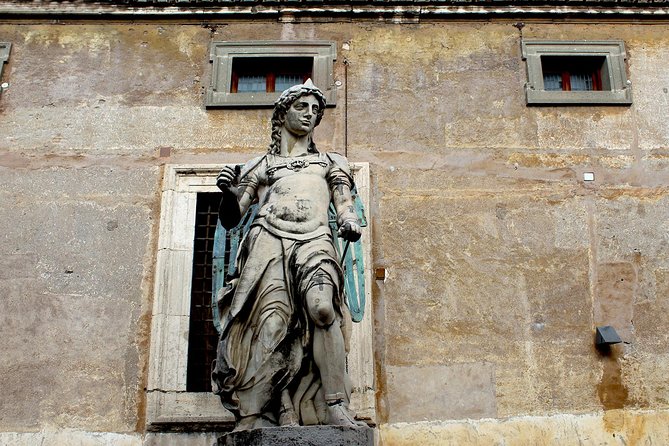
Paolina Hall is where the fortress starts showing off its wealth. Covered in frescoes, this luxurious space is tied to Pope Paul III, who welcomed honored guests there.
The audio explains the bigger story: Castel Sant’Angelo wasn’t only a fortress. It also operated as a papal residence, which explains why you go from militarized angles to rooms designed to impress.
You’ll also hear about decorative work attributed to Perino Del Vaga, whose complex frescoed design helped make this hall a visual centerpiece.
Why this stop is a big deal for your experience:
- It breaks up the darker narrative and gives you a “why would they build this here?” contrast.
- It’s one of the best places for slow looking, especially if you enjoy art details.
One caution based on real-world navigation: some audio routes can feel fast or hard to pause. If you want more time for each room, plan to control your phone playback.
Stop 4: The Sant’Angelo Terrace View Over the Tiber and Rome (About 15 Minutes)

The final portion is the payoff. The Sant’Angelo terrace gives you dramatic views across the Tiber and out over Rome.
The audio connects this moment to culture too, referencing how the terrace area echoes the ending in the famous opera Tosca, where Floria Tosca flings herself over the edge in search of death. Even if you’re not an opera person, that kind of reference helps you “place” what you’re seeing.
This is also a spot where you’ll likely want photos, a breather, and a moment to absorb the city’s scale. One of the most consistent things people like about the visit is simply how worthwhile the top views are.
When the Audio Meets Real Life: Accuracy, Signage, and Renovations
Self-guided tours are great until real-world changes show up. Castel Sant’Angelo can have active visitor traffic shifts and sometimes on-site changes. The result can be annoying if your audio feels like it assumes a different flow.
A few specific issues to plan for:
- The audio prompts may not line up perfectly with exhibit numbers or signage.
- The map and “path” can differ from how you’re actually routed through certain sections.
- Restoration or renovation can reroute visitor movement, which can make audio navigation feel less straightforward.
What I recommend instead of stressing:
- Treat the audio as guidance, not GPS.
- If you miss a stop, don’t panic. Slow down, re-orient, and keep following the audio chapters as you find the right area.
- If you’re in doubt, use the fortress signage and your sense of direction, then restart the relevant chapter when you reach the next key room.
This approach keeps your experience enjoyable even when the building is moving people around differently than the audio assumes.
Practical Tips for a Smoother Castel Visit
Even without a live guide, you can do a lot to make this go smoothly.
First, manage expectations about how much you can see. About 1 hour 30 minutes is a solid target, but the fortress involves stairs and slopes, and it can be busy at peak times. If you want more rooms or more time to pause, treat the audio like a framework and allow extra minutes.
Second, prepare your phone. The app is not compatible with Windows phones, and there are limits on older Apple devices including iPhone 5/5C and older, iPod Touch 5th generation and older, iPad 4th generation and older, and iPad Mini 1st generation. If you’re traveling with an older device, check compatibility before you go.
Third, remember that large backpacks and bulky luggage are not allowed. If you travel with a big bag, plan to leave it somewhere safe and light.
Finally, download early and fully. Several problems people reported were tied to audio not starting or tickets not being ready in time. The easiest fix is also the boring one: WiFi download, charged phone, earphones ready.
Who This Self-Guided Ticket Fits Best
This experience fits best if you like history told through walking, not through lectures. You’ll get the most out of it if you enjoy connecting stories to specific spaces, like the execution courtyard, Hadrian’s tomb areas, and the frescoed Paolina Hall.
It’s also a good fit if you’re traveling with a group and want freedom. You can pause for photos, slow down for artwork, and regroup without waiting on anyone.
On the other hand, if you strongly rely on perfect turn-by-turn instructions, this may feel frustrating. Some visitors find that the audio route isn’t always clear about where to press play and how to move from one room to the next. And if you want a guide to adapt on the spot to renovations or changing visitor flow, you may prefer a live-guided tour instead.
Should You Book Castel Sant’Angelo E-Ticket and Offline Audio?
If you want maximum value from your phone and you’re comfortable navigating at your own pace, I’d book it. The combination of phone entry plus an offline audio map is exactly how you keep a Rome day efficient.
I’d skip or reconsider if you hate tech setup on travel days. Make sure you can download the audio and ticket before you go, and make sure your device is supported. If you show up unprepared, the fortress will still be great, but you might miss the main benefit of this product.
My call: book it if you enjoy stories while you walk, and you’re willing to plan a little for your smartphone. The terrace views and the fortress’s dramatic range from prison-like courtyards to papal prestige make the time worth it.
FAQ
How long is the Castel Sant’Angelo E-Ticket and audio guide?
The experience is about 1 hour 30 minutes on average.
Is there a live guide with this ticket?
No. This is a self-guided audio tour, and there is no live guide.
Do I need an internet connection during my visit?
You should download the ticket and audio tour while you have WiFi before you go. The audio content is offline, and there is no WiFi or 4G on-site.
What do I need to use the audio tour?
You need a smartphone with Android (version 5.0 and later) or iOS. You should also bring earphones. The audio tour is not compatible with Windows phones and certain older Apple devices listed in the details.
What time should I arrive for security?
You should arrive about 30 minutes early to complete the security check-in. Late arrivals will not be accommodated.
Can I change the date or get a refund?
This experience is non-refundable and cannot be changed for any reason.
More Guided Tours in Rome
More Tickets in Rome



More Tour Reviews in Rome

Not for you? Here's more nearby things to do in Rome we have reviewed










Audio Tours, compared.
 ★ 4.2Colosseum & Forum with Audio Guide App -Optional ArenaFrom $4124,770 reviews
 ★ 4.2St. Peter’s Basilica & Dome Entry Ticket & Audio TourFrom $177,537 reviews
 ★ 4.1Vatican & Sistine Chapel Ticket with Optional Audio GuideFrom $465,405 reviews
 ★ 4.3Colosseum, Forum, & Palatine Hill with Audio GuideFrom $444,591 reviews
 ★ 4.4Castel Sant’Angelo Skip-the-Line Ticket & Audio GuideFrom $203,500 reviews
 ★ 4.1Pantheon Priority Entry Ticket & Audio Guide AppFrom $63,234 reviews
 ★ 4.2Colosseum Experience with Audio Guide and Arena OptionFrom $302,200 reviews
 ★ 4.0Colosseum Express Entry with Audio Guide AppFrom $411,507 reviews