
Reviewed · ANCIENT ROME TOURS
Ancient Rome Half-Day Segway Tour
Segwaying through imperial Rome feels unreal. You get to move through Ancient Rome on a self-balancing, eco-friendly Segway while an English guide connects each stop to the people who shaped the Empire. I especially like the Segway training part, because it helps you feel in control fast, and I also like how the guide’s explanations turn major landmarks into a clear story you can follow.
One possible drawback: you will spend the 3 hours actively riding and standing, so this is best for people who are comfortable learning a new way to get around (with short breaks when the guide finds a safer moment or better shade).
Key highlights to look for
- Quick Segway training so you are not struggling while landmarks go by
- Panoramic views from Palatine Hill with the legend of Romulus and Remus in the mix
- Seven Hills route flow from Circus Maximus toward Aventine Hill and the Orange Grove
- Santa Maria in Cosmedin stop featuring the San Valentino remains and the Mouth of Truth
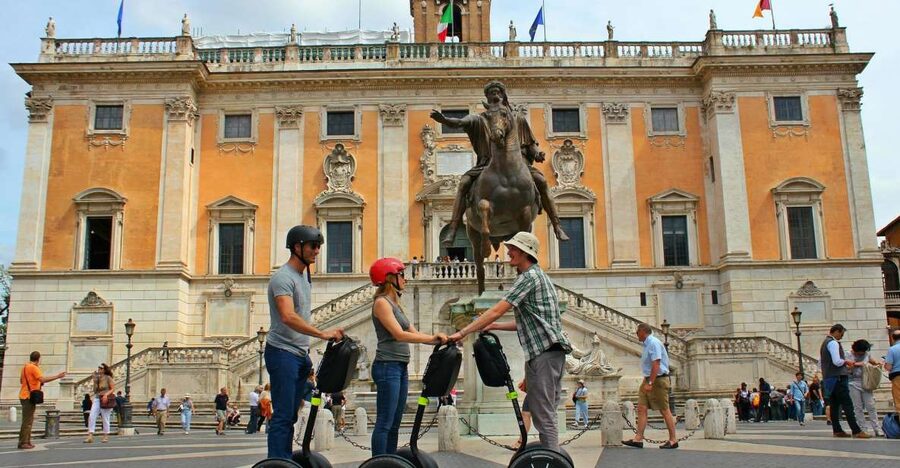
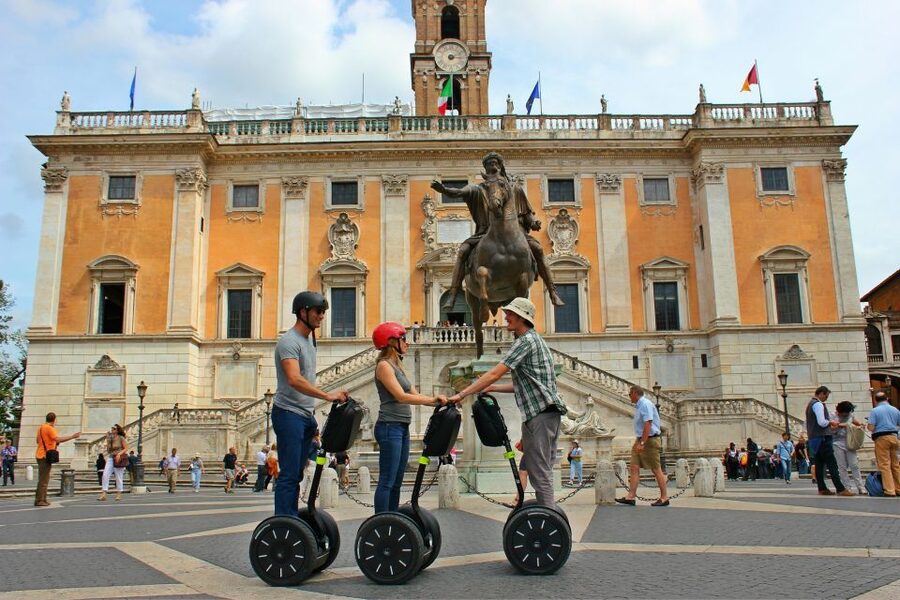
- Michelangelo’s influence on Capitoline Hill plus big-photo potential
- Imperial Forum and Colosseum viewing with less rushing than a pure walking plan
Starting at Piazza del Gesù, then learning the Segway fast
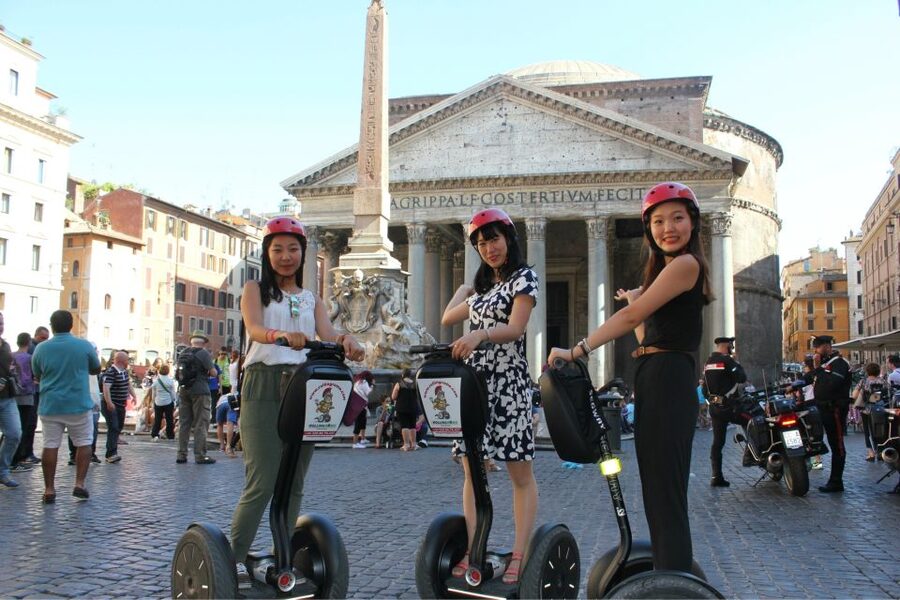
The tour meets at Piazza del Gesù, 47, which is a practical starting point for seeing Rome in a tight half-day window. From there, the experience pivots quickly into motion. Before you ride far, you get a training session focused on the basics of balancing, steering, and stopping.
I like this approach because it solves the biggest Segway problem right away, you do not waste the good daylight or the best streets learning how to just move. Once you are comfortable, the guide can concentrate on what you came for: the sights and the stories behind them.
It is also a small group setup, limited to 8 participants. That matters. You tend to get more patience while you get your rhythm, and you are less likely to feel like you are being rushed through a photo line.
A few more Rome tours and experiences worth a look

Palatine Hill panoramas and the Romulus and Remus thread
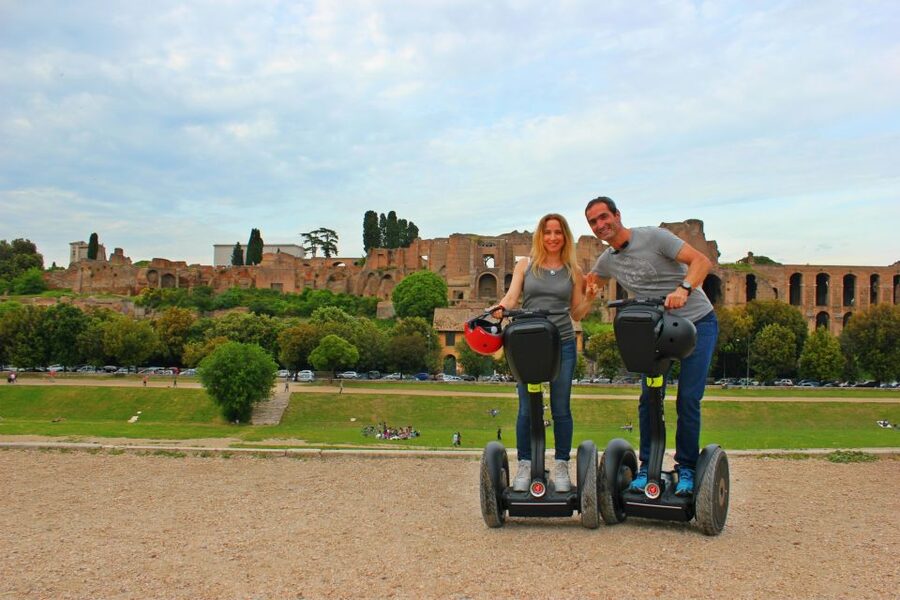
After training, the route centers on the 7 Hills of Rome, and Palatine Hill is a key early payoff. This is where the big views kick in, and it is where the guide’s narrative really helps your brain connect the dots.
You will look out over the city while the guide explains the legend of Romulus and Remus. Even if you know the myth already, hearing it in context of the hilltop setting helps it click as more than a bedtime story. You start to understand why people kept returning to these heights, not just for power, but for perspective.
The practical win here is the combination of effort and reward. You are not climbing stairs all morning, yet you still get high-up viewpoints that usually take time to reach on foot. If you are short on days in Rome, this kind of setup can feel like you bought back hours.
Circus Maximus to Aventine Hill, with the Orange Grove stop
From Palatine, you glide onward past Circus Maximus, then continue toward Aventine Hill and the Orange Grove. This part of the tour is about variety. You are not only seeing the famous heavy hitters like the Colosseum. You are also getting a sense of how Rome shaped movement and daily life across different hills.
Circus Maximus is especially interesting because it reminds you Rome was built for spectacle and crowds. The guide’s talk helps you imagine the scale and purpose, even if you are standing near ruins that look quiet now.
Then you reach Aventine Hill, which is a great contrast to the earlier viewpoint energy. The Orange Grove stop adds a calmer breath to the day. If you are the type who likes walking tours for atmosphere, you will probably appreciate the way the route builds in lighter moments, not just nonstop monuments.
Santa Maria in Cosmedin and the Mouth of Truth moment
One of the most memorable stops is Santa Maria in Cosmedin. Here, the tour connects Rome’s ancient reputation for myths and rituals to tangible artifacts you can actually stand near.
You will see the remains of San Valentino as well as the famous Mouth of Truth marble mask. This is the kind of stop where the guide’s explanation makes a big difference. The Mouth of Truth is already known to many visitors, but you will get more out of it when you learn how it functioned in the old imagination of testing honesty.
Also, the setting can be surprisingly atmospheric. It is a reminder that Rome did not freeze in time. Ancient objects continued to live in the city, wrapped up in later religious life and local tradition.
If you are deciding whether to do this tour versus a standard walking route, this is a good reason to pick it. You get a structured sequence of major areas, but you also get these memorable, specific details.
Capitoline Hill and Michelangelo’s redesign for smarter photos
Next comes Capitoline Hill, described as the most important of the imperial hills, and the tour brings that importance to life with design details from the Renaissance, including work associated with Michelangelo.
This stop is valuable for two reasons. First, the view and placement make it easier to understand Rome’s “top-down” way of thinking. Second, the Michelangelo connection gives you a bridge between ancient power and later attempts to reorganize Rome visually.
You will drive through the surrounding area on your Segway route, which helps you keep momentum without feeling like you are sprinting between spots. And because you are in a small group, you are more likely to get a clear moment to take photos when the guide says it is good timing.
If you have ever felt frustrated on a walking tour because you are stuck behind other people at the exact wrong moment, the Segway format can feel smoother. You still stop, but the flow tends to be more controlled.



Imperial Forum to the Colosseum: seeing the route of emperors
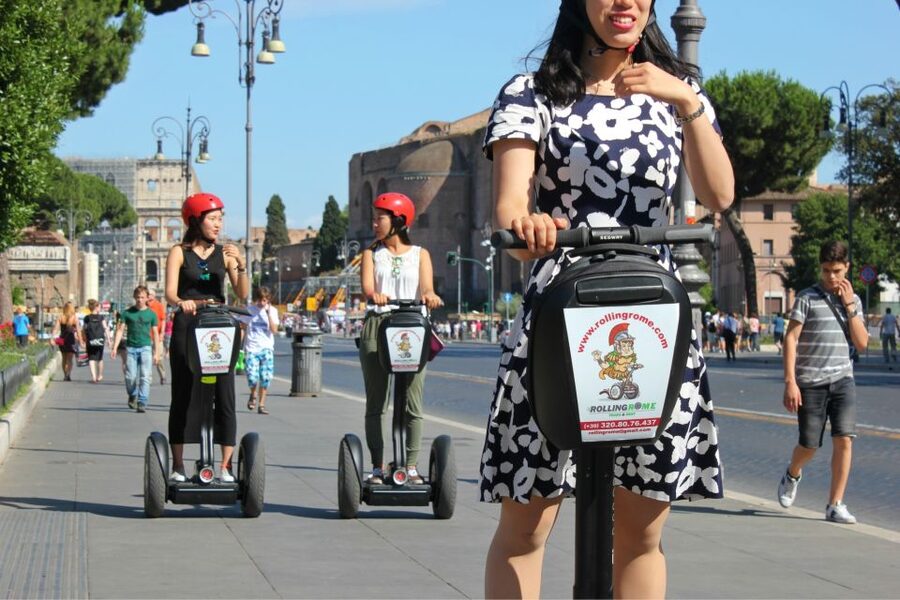
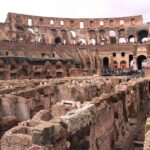
Then the experience shifts toward the heart of imperial storytelling. You will drive through the Imperial Forum, following the footsteps of Roman emperors, and then head to one of the world’s most recognized monuments: the Colosseum.
This segment is where the tour earns its “half-day” label. You get the big-ticket sights without doing the grueling version of Rome where you walk for hours just to reach the next viewpoint. You can also pay attention to the narrative of the city as an urban machine. The guide’s explanation helps you see the Forum not as a random collection of stones, but as a political stage.
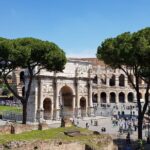
The Colosseum stop is the obvious highlight, but what I like is how it is usually framed. If you go in expecting only to look at the exterior, you might leave feeling like you saw a postcard. On this tour, the Colosseum feels like the destination of a bigger route that includes the Forum and hilltops that shaped Roman authority.
One small note to keep your expectations realistic: you are touring by Segway, so you are not doing a fully detailed, inside-the-ruins deep dive. Still, for the time you have, it is a strong overview that gives you a clean base for future explorations.
The value question: why $100 can be worth it in Rome
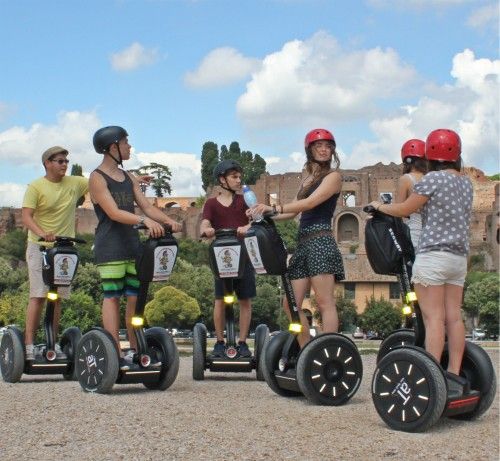
At $100 per person for about 3 hours, this is not a “cheap day in Rome” option. It is better to think of it as paying for three things at once: guided interpretation, Segway access, and time efficiency.
Here is the value logic that makes sense. Rome rewards planning, because distance and navigation can eat your day. A standard walking plan can work, but it is slower when you factor in getting from hill to hill, finding the right approach points, and dealing with busy streets. The Segway lets you cover more terrain in less time, and the guide keeps you focused on what matters.
Also, the training included part is a value multiplier. If you are new to Segways, you get instruction before you are committed. That reduces stress and makes the ride feel safer and more confident.
And the English live guide matters too. In Rome, words do not just entertain. They help you interpret what you are seeing, and that makes photos and landmarks feel connected instead of separate.
So if your priorities are: see major sites, get context fast, and keep energy for dinner later, this tour usually checks those boxes.
Group size, pacing, and the reality of closures
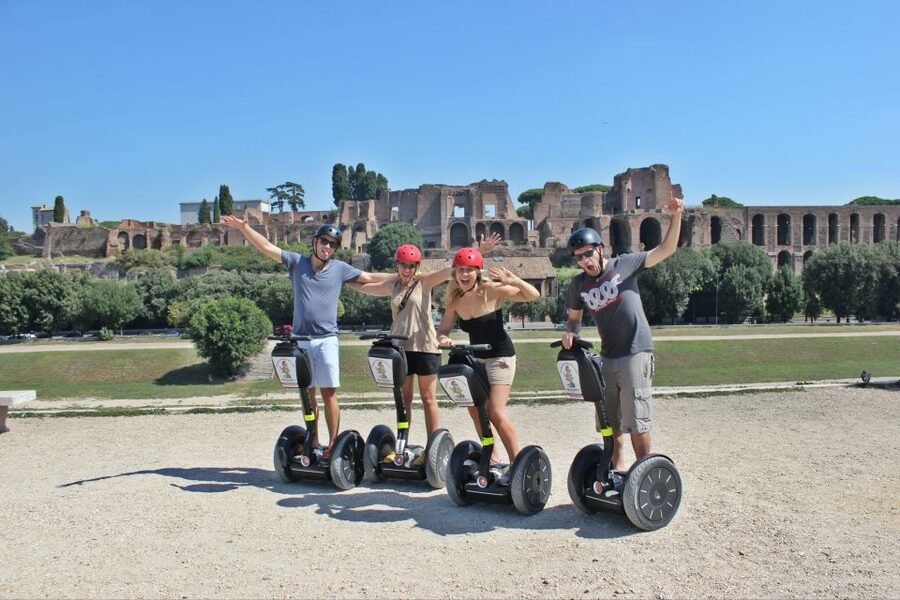
With up to 8 participants, pacing tends to feel manageable. The guide can watch the group, and you are more likely to get helpful coaching when someone is still getting comfortable.
The pace is also designed around Rome’s on-the-ground realities. Streets can shift due to local events and closures. During periods like Holy Week, you might find that the team needs to adjust the route and still hit the core landmarks. That flexibility is a big deal, because Rome does not run like a theme park schedule.
Another practical detail worth noting is comfort. Based on what the guides have done for earlier riders, they tend to pay attention to things like finding shade when it is hot. That is not an official promise you can count on every day, but it is a smart sign about how the guide runs the day.
Who this tour fits best (and who should reconsider)
This is a great match for you if you want a structured introduction to Imperial Rome without spending your whole day on foot. It also helps if you like history explanations that are clear and tied to what you can see nearby, like Palatine Hill views, Circus Maximus, Santa Maria in Cosmedin, and the Forum route to the Colosseum.
It can be a tougher fit if you dislike learning a new device. Even with training, you are still operating a self-balancing Segway for a significant stretch of time. If you have balance concerns, knee issues, or you know you get anxious riding anything that requires physical coordination, you should think carefully.
Where this tour shines most is for visitors on a first Rome trip, or for anyone who wants to stack value into a short stay.
Should you book this Ancient Rome Segway tour?
Book it if you want to get a lot of Rome into 3 hours, with Segway training, English guidance, and a route that links multiple hills to the big monuments like the Colosseum. The small-group size also pushes this into the “more personal, less chaotic” category.
Hold off or consider alternatives if you know you will be uncomfortable on a Segway for the full duration, even with coaching. Also, if you want only slow, quiet time at one site, this route is designed for breadth rather than single-location deep study.
If you are trying to choose between seeing a handful of places well and seeing many places quickly, this tour is built for the second option, and it usually does that job with style and good explanations.
FAQ
How long is the Ancient Rome Half-Day Segway Tour?
The duration is 3 hours.
Where is the meeting point?
Tours start at Piazza del Gesù, 47.
Is the tour guide available in English?
Yes. The tour includes a live tour guide in English.
How big is the group?
The tour is a small group, limited to 8 participants.
Do you get training before riding?
Yes. The tour includes a Segway training session before you begin riding.
Can I cancel for a full refund, and can I book without paying right away?
Yes. You can cancel up to 24 hours in advance for a full refund, and you can reserve now & pay later.
More Half-Day in Rome


More Tours in Rome

More Tour Reviews in Rome
Not for you? Here's more nearby things to do in Rome we have reviewed









Ancient Rome Tours, compared.
 ★ 4.7Colosseum: Underground and Ancient Rome TourFrom $16012,691 reviews
 ★ 4.4Colosseum, Ancient Rome Tour or Self AudioGuided TourFrom $392,866 reviews
 ★ 4.9Appian Way, Catacombs, & Roman Aqueducts E-bike TourFrom $851,421 reviews
 ★ 4.9Appian Way E-bike Tour with Catacombs, Aqueducts & FoodFrom $961,210 reviews
 ★ 5.0Appian Way Aqueducts Bike Tour (Catacombs & Lunch Option)From $78975 reviews
 ★ 4.7Appian Way, Aqueducts, and Catacombs TourFrom $64942 reviews
 ★ 4.7Caracalla Baths & Circus Maximus — Private or SharedFrom $77835 reviews
 ★ 4.7Colosseum Arena Access and Ancient Rome Guided TourFrom $94774 reviews
Browse the lists this tour appears in