

Reviewed · CITY TOURS
Rome: City Sightseeing Hop-on Hop-off Bus with Audioguide
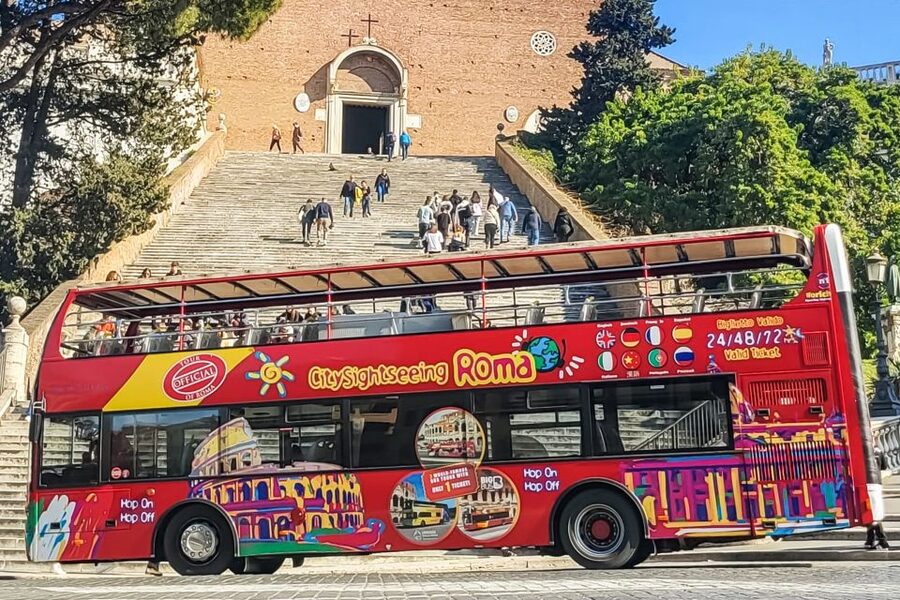
Rome has a way of overwhelming you fast. This open-top, double-decker hop-on hop-off bus turns that chaos into a simple loop around the city’s biggest sights, with audio to keep you oriented.
I especially like the flexibility. You can get off whenever something catches your eye, then rejoin the next bus when you are ready, whether you have 1 hour or a full day. I also love the onboard help, including headphone audio in 8 languages, plus Wi-Fi and a sightseeing app.
One consideration before you board: the route can shift for special events, and some stops may not be guaranteed. Also, a few people note the commentary can get interrupted, so plan to use the audio as guidance, not the only source of info.
Key things to know before you ride
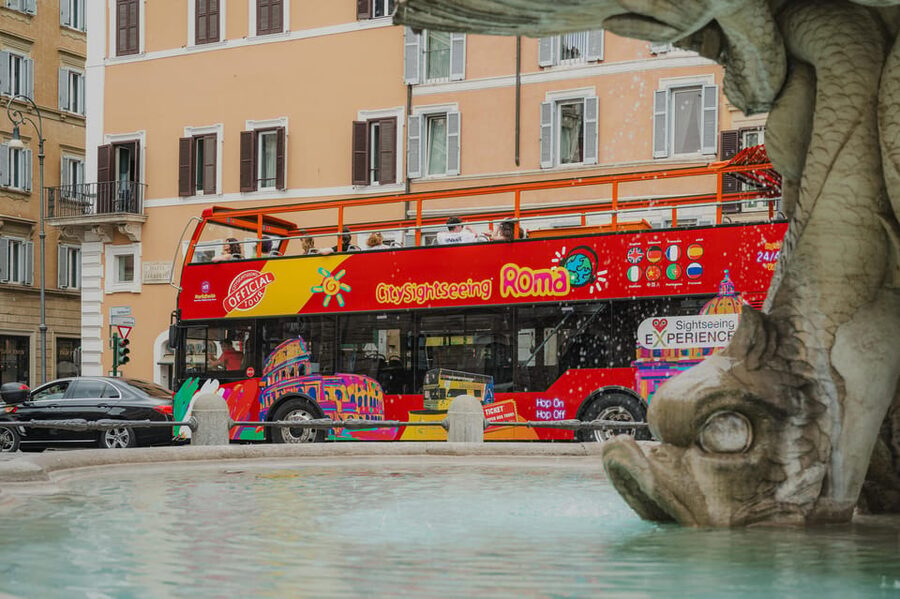
- Hop-on, hop-off freedom across a loop that takes about 100 minutes, so you can pace yourself
- Audio in 8 languages on the open bus, with headphones included (if you ride open deck)
- Wi-Fi on the open bus and a sightseeing app to support the narration
- Jubilee Line included on your City Sightseeing ticket, operated by Vatican & Rome Open
- A dense set of major landmarks along the way, from Colosseum area to the Vatican zone and Piazza di Spagna
Why This Bus Is a Smart First Move in Rome

If you have never been to Rome, the city can feel like a puzzle with 3,000 pieces. This bus gives you a working frame in one ride, passing the landmarks you will keep seeing in photos and guidebooks. You get motion, viewpoints, and a logical path, without needing to map public transit while you are still adjusting to the streets.
What makes it practical is that you are not locked into one rigid tour. Your ticket is valid for 1 to 3 days, with options for 24, 48, or 72 hours, so you can treat the bus as an orientation tool on day one and a transport shortcut on day two or three. That is where the value really starts to show, especially if you are trying to reduce taxi costs.
You can also read our reviews of more city tours in Rome



Getting Started at Via Marsala, 7 and Line A Stops
You start at Via Marsala, 7, but you do not have to stand around waiting for one specific pickup point. Your pass lets you start from any stop of City Sightseeing Rome Line A, which makes it easier to match your schedule to real life. If you are already near Termini or later in the day near Piazza Venezia, you can jump in closer to where you are.
Because Rome traffic and crowds are real, this is the part I would pay attention to. Arrive with a small buffer, especially if you want a specific stop like the Colosseum or Vatican side. The route may change due to special events, so the most reliable plan is to have a backup idea for where you will hop off and walk.
The 100-Minute Loop: Where the Bus Takes You
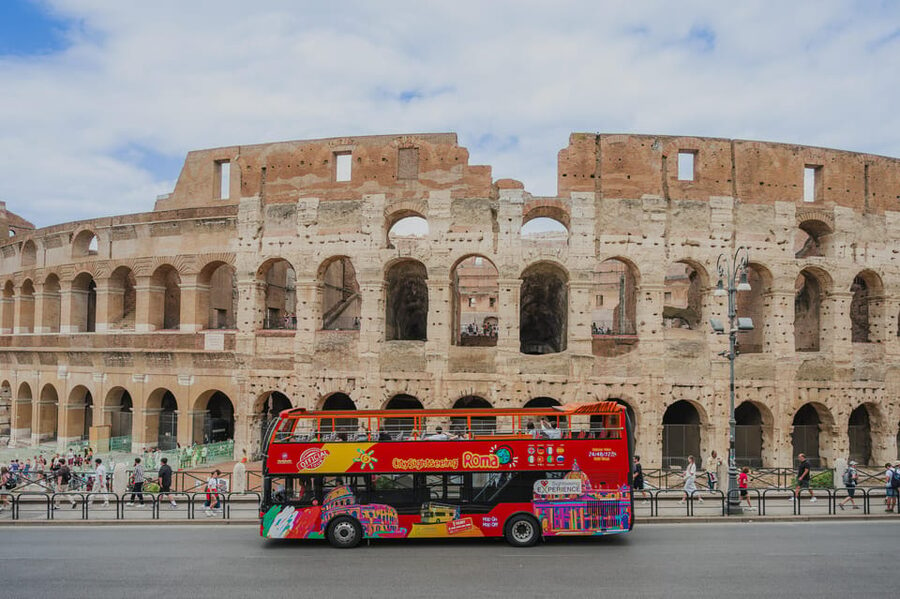
The loop is about 100 minutes, and that matters because it helps you calculate your day. If you hop off, spend time walking, and want to rejoin without losing momentum, this timing gives you a realistic rhythm.
As you ride, the bus travels through key central areas. You pass Santa Maria Maggiore and San Giovanni in Laterano, then move toward the Colosseum and Circus Maximus area. After that, you reach Piazza Venezia and Largo Argentina, then head through Piazza Navona toward the Vatican zone. From there, it continues past Villa Borghese, down toward Piazza di Spagna (with the stop name referencing Trevi Fountain), then to Piazza Barberini and back near Roma Termini and Via Marsala.
Santa Maria Maggiore and San Giovanni in Laterano Stops

These two stops help you “zoom out” from the headline attractions. They are excellent if you want to see more of Rome than just the postcard center, and they are also handy if you are staying on the east side.
Santa Maria Maggiore is a big landmark in its own right, and the surrounding area gives you a feel for Rome beyond the most crowded hot spots. San Giovanni in Laterano does the same on the other side of the historic core. The advantage of using the bus here is that you can step off, orient yourself on foot, and come back without wrestling with transfers.
Practical tip: if you are trying to keep your day light, this is where you can do shorter walks and still feel like you covered real Rome.
Colosseum and the Circus Maximus Area
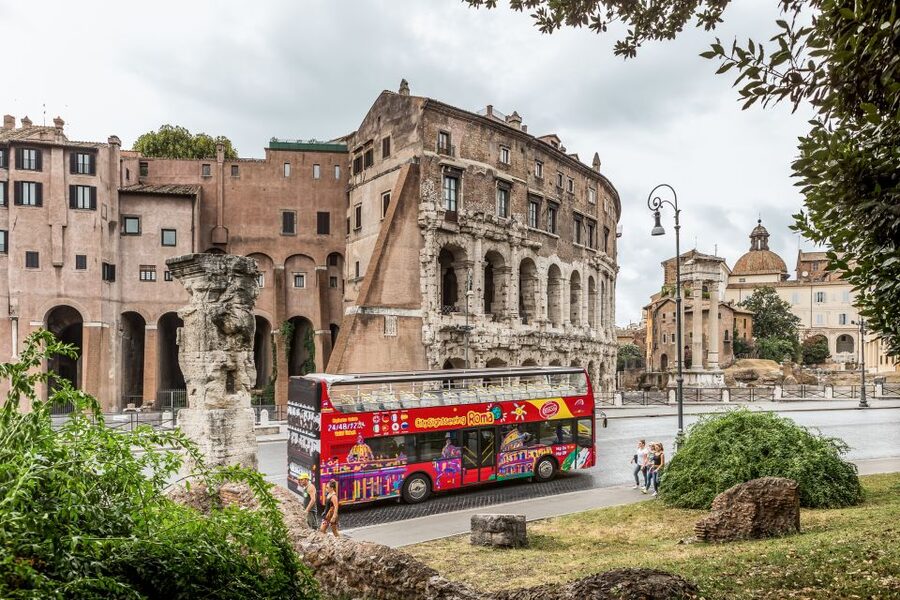
This is the stop most people connect to instantly, and for good reason. You will see the Colosseum area from the bus, and getting off around there puts you close enough to take photos and start exploring by foot.
The Circus Maximus stop is useful because it keeps you in the “ancient Rome” zone. It is also a nice reminder that Rome is not just a cluster of single monuments. It is spaces, ruins, streets, and stretches of history that you experience better when you move through them on foot.
One reality check: some stops may not be guaranteed depending on special events. If Colosseum is your must-see, I would give yourself extra time and treat the bus stop as part of your plan, not the entire plan.



Piazza Venezia and Largo Argentina: Great for Quick Walkabouts
Piazza Venezia is one of those places where you can reset your bearings. Even if you do not do a long visit, hopping off here works because you are positioned for walking options in multiple directions.
Then Largo Argentina is a fun contrast. It is a very walkable stop area, and it is easier to explore in small chunks. This is where I like using the bus like a transportation game, get off, walk for 20 to 40 minutes, then hop back on when you are ready to move on.
Piazza Navona and the Vatican Zone: Two Different Rome Moods
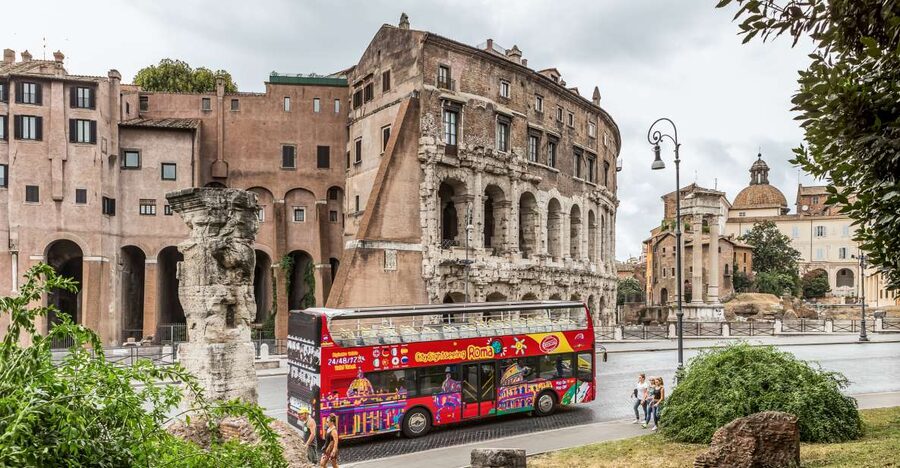
Piazza Navona is the kind of stop that feels like Rome at street level. You get an easy sense of how people use public spaces here, and you can often find spots to pause without turning it into a whole production. Even if you only do a short walk, it can be a satisfying stop between big-ticket monuments.
Then the Vatican area changes the whole tone. This is where you are heading toward the Vatican zone, with the stop name referencing Castel Sant’Angelo. If your day is tight, the bus helps you reach this area without losing time in transit planning. It also keeps your schedule flexible if you want to spend extra time near the Vatican without committing to one fixed walking route from the start.
Villa Borghese, Piazza di Spagna, Trevi Fountain Area, and Piazza Barberini
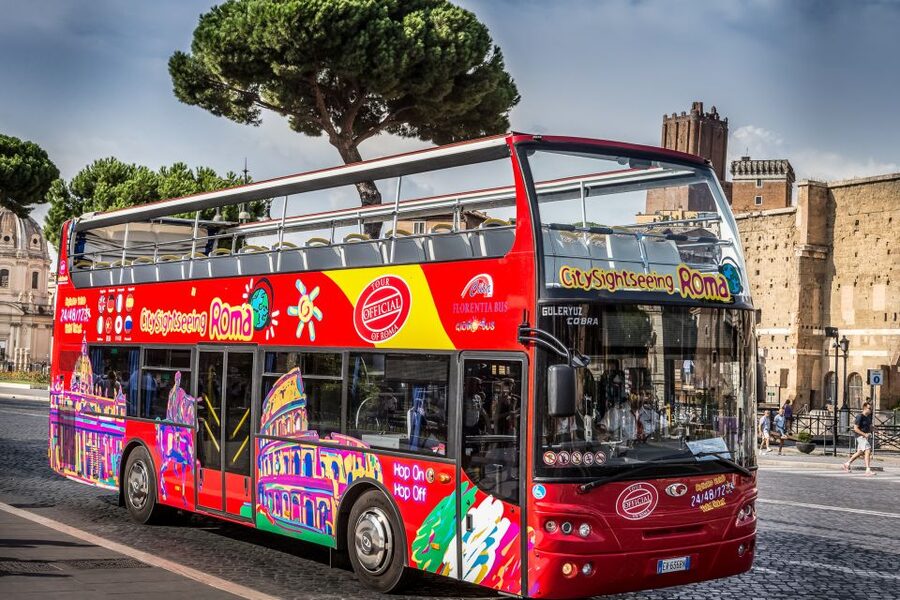
This part of the route is where you can slow down and “Rome-watch.” Villa Borghese is a major landmark area, and hopping off gives you a chance to change pace from ruins and monumental spaces into Rome’s more scenic, park-adjacent feel.
Next is Piazza di Spagna, and the stop naming also points you toward Trevi Fountain. This is a smart combination because it keeps two of the most famous photo stops within the same overall route flow. Piazza Barberini is another strong option if you want to keep walking in central Rome without feeling boxed in.
My advice: do not try to see everything at once here. Instead, choose one main target per stop area, then use the bus for repositioning.
Roma Termini, Termini Area Access, and a Smooth Comeback
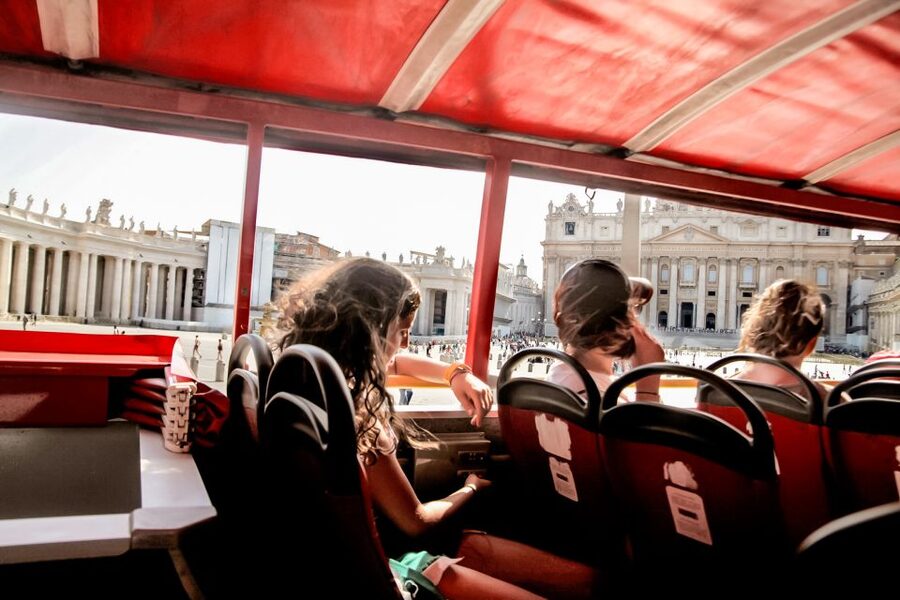
Roma Termini is where Rome becomes practical. It is the kind of anchor location that helps you avoid getting stuck far from your next plan. The route passes back through the Termini area, and the bus also connects with terminal points near Largo di Villa Peretti and Piazza dei Cinquecento.
If you are tired, this matters. You can step off where you are closest to your evening plans, then hop back on later without feeling like you have to retrace your steps the hard way.
Audio Commentary, Headphones, and Wi-Fi That Actually Help
The onboard audio is one of the best reasons to choose a hop-on hop-off bus in Rome. You get commentary in 8 languages, and headphones are included for open bus rides. If you want to follow what you are seeing, it is a big leg up over guessing based on building shapes and distance.
A small caution based on real experiences: the commentary can be interrupted and may not always finish the way you expect. That is not the end of the world, just treat it as an orientation guide. Use it for context while you look out at landmarks, then fill gaps with quick reading on your phone when you are off the bus.
Wi-Fi is also included on the open bus. That is useful for checking opening times, looking up a quick background fact, or finding your way back to the stop without stress.
Jubilee Line Included: The Vatican Bonus on Your Ticket
What I like here is simple: your ticket includes a Jubilee Line option, operated by Vatican & Rome Open. That means you are not only relying on the main bus loop to reach the Vatican area. You get an additional way to move around while keeping your same overall ticket.
I would think of this as insurance. If the bus timing does not match your ideal Vatican visit window, you have another transport route included. Keep your eye on how it connects with your day, then choose the option that reduces your walking and waiting.
Planning a 1-Day vs 2-Day vs 3-Day Pace
A single loop is great if you are short on time. Use it as your map maker. Then pick 2 to 4 stops you want to revisit and spend more time there. This is also where the hop-on hop-off format shines, because you can turn the bus into your transportation backbone.
For 2 days, you get room to do one “monuments first” day and one “walk more” day. On day two, you can start closer to where you actually want to explore, rather than redoing the basics.
For 3 days, you can afford to get picky. You can return to the same neighborhood at a different hour, when light and crowds feel different. Since your ticket covers 1 to 3 days, you can also build in rest time without feeling like the clock is punishing you.
Common Snags and How to Handle Them
Rome can change in a hurry. The route may change, and some stops may not be guaranteed due to special events. That is the biggest reason I do not treat the bus as a perfect checklist.
Second, the Colosseum area is a classic example of why buffers matter. If you hit a day with operational limits near a stop, you might not be able to get off where you wanted. Build time for alternate stops nearby, and plan for photos from the bus if you cannot hop off right at the monument.
Finally, double-check you are using the correct product. One Loop is not the same as hop-on hop-off. Make sure your ticket is the hop-on hop-off pass, so you do not end up paying for the wrong format.
Who This Hop-on Hop-off Bus Is Best For
This works especially well for:
- First-time visitors who want major sights without complex transit planning
- People who like choosing their own rhythm, hop off, then rejoin
- Travelers short on time who still want a wide coverage sweep
- Anyone who appreciates audio in multiple languages, plus Wi-Fi and a sightseeing app
It is less ideal if you want a guided walk-through where a staff member spends lots of time explaining details at each location, or if you need included admission tickets. Attraction tickets are not included, so you will still need separate entry plans for things that require reservations.
Should You Book This Rome Hop-on Hop-off Bus?
Yes, if your goal is efficient Rome coverage with flexibility. At around $15 per person, the real value is not just the price, it is what you buy: repeated access over 24 to 72 hours, audio help, and a route that lines up with major landmarks across central Rome.
Book it if you want to:
- Get oriented quickly and avoid decision fatigue
- Reduce the cost and stress of short taxi rides
- Build a plan around your energy level, not a strict schedule
Skip or think twice if you are expecting guaranteed stop access at every landmark on every day, or if you want a full guided experience inside attractions. In that case, you might pair this bus with another plan for the places you actually want to enter.
If you want Rome to feel manageable, this is one of the easiest ways to make that happen, with simple hop-on hop-off freedom and audio guidance keeping you pointed in the right direction.
FAQ
How long is the Rome bus ticket valid?
Your City Sightseeing Rome ticket is valid for 1 to 3 days, with options for 24, 48, or 72 hours depending on what you choose.
Is this a hop-on hop-off bus?
Yes. This is a hop-on, hop-off sightseeing bus pass, so you can leave the bus at stops and return on the next bus when you want to continue.
What audio languages are included?
Audio is included in 8 languages: Spanish, Chinese, English, French, German, Italian, Russian, and Portuguese.
Does the bus offer Wi-Fi?
Yes. Wi-Fi is included on the open bus.
What is included with my ticket besides the bus ride?
The included items are headphones (for open bus only), Wi-Fi (on open bus), audio in 8 languages, and a sightseeing app. The Jubilee Line is also included on your ticket.
Where do I start the tour?
You can start at any stop of City Sightseeing Rome Line A. The starting location is Via Marsala, 7.
Are attraction tickets included?
No. Attraction tickets are not included, and you will need to buy those separately if you want to enter specific sites.
More City Tours in Rome


More Tour Reviews in Rome


Not for you? Here's more nearby things to do in Rome we have reviewed









City Tours, compared.
 ★ 4.8Fettuccine Pasta Cooking Class in Rome’s City CenterFrom $462,414 reviews
 ★ 4.3Vatican City: Vatican Museums & Sistine Chapel Entry TicketFrom $392,185 reviews
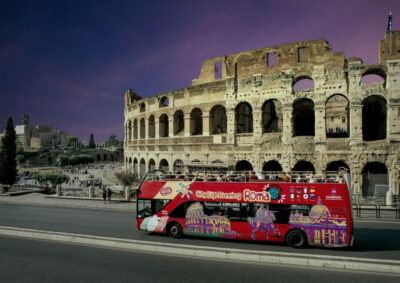 ★ 4.1City Highlights Open-Top Bus Night TourFrom $222,038 reviews
 ★ 4.8Imperial City Tour by Golf Cart with Optional TransferFrom $1241,024 reviews
 ★ 4.4Guided City Center Evening Sightseeing Walking TourFrom $46953 reviews
 ★ 5.0Golf Cart Small-Group Guided Tour: Rome City HighlightsFrom $104907 reviews
 ★ 4.8City Highlights Golf Cart TourFrom $45857 reviews
 ★ 4.8City Highlights Golf Cart Tour with Local GuideFrom $71752 reviews
Browse the lists this tour appears in