
Reviewed · WALKING TOURS
Rome: Via Crucis Pilgrim 3-Hour Walking Tour
Relics in Rome, with a clear route. This 3-hour Via Crucis tour strings together relic-focused worship stops, led in a devout, small-group setting that makes the whole walk feel intentional. The main consideration is the Holy Stairs tradition, climbing those steps on your knees takes about 45 minutes and is not part of the standard itinerary.
You start at Santa Maria Maggiore, one of the key Roman basilicas tied to the Holy Doors opening in 2025. Then you work your way through some of Rome’s most meaningful churches, keeping the focus on the Passion story all the way to the Basilica of the Holy Cross in Jerusalem.
Key things that make this Via Crucis tour worth your time
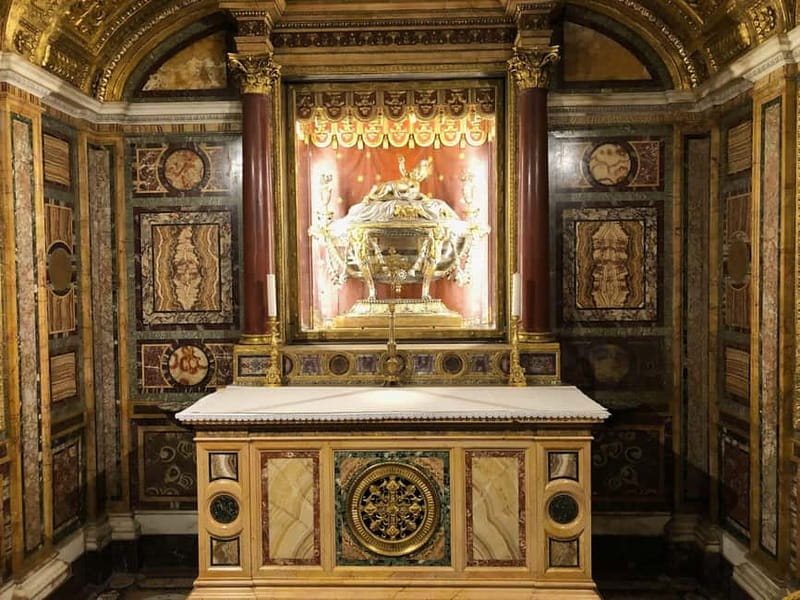
- A relic route built around the Passion of Christ, including items connected to the One True Cross, the Holy Nails, and the Crown of Thorns
- St Mary Major plus another major basilica, with Holy Doors connected to the Jubilee Year of 2025
- Scala Sancta (Holy Stairs) with guided context, including how the tradition of kneeling fits in
- St John Lateran, the Cathedral of Rome, where you’ll see relics linked to Saints Peter and Paul
- A small group capped at 5 participants, so questions feel possible, not rushed
A 3-hour pilgrimage route that feels like a plan, not just church-hopping
Rome is full of churches. The trouble is most visits turn into a quick look, a quick photo, and then you’re back to traffic and lunch lines. This tour keeps you on a single spiritual storyline, the Via Crucis, the Way of the Cross, moving through sites connected to Christ’s condemnation and final hours.
I like that the tour is built around specific Passion relics and images, not just general Christian Rome talk. You get the sense that each stop has a job to do. And with a limited group size, the guide can slow down when something matters, especially when prayer time comes up.
One more practical point: this is a real walk, about 2 to 3 km in roughly 3 hours. That’s not a marathon, but it is enough that comfortable shoes matter.
You can also read our reviews of more walking tours in Rome

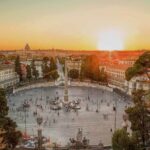
Getting to Santa Maria Maggiore: the meeting point you cannot miss
You meet at the fountain in front of the main entrance to the Basilica of St Mary Major (Santa Maria Maggiore). The key detail is the building’s front faces Piazza Santa Maria Maggiore, not Via Cavour, so don’t follow a random street name and assume you are there.
If you like to avoid last-minute stress, save the Google Map link and keep your phone ready. The tour operator asks you to download WhatsApp so you can get real-time help if you run into delays or confusion.
It also helps to arrive a bit early. Santa Maria Maggiore sits inside a very active area, and security lines can slow entry into the basilica itself.
St Mary Major: cradle-wood, St Luke’s icon, and Holy Doors in 2025
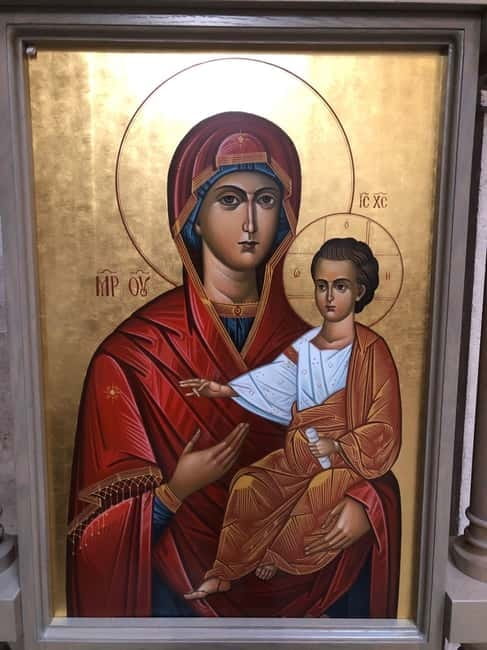
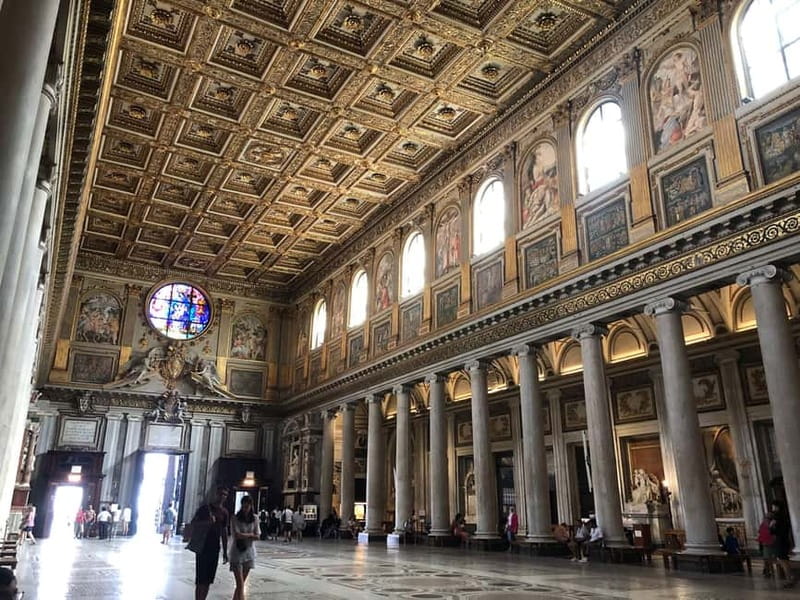
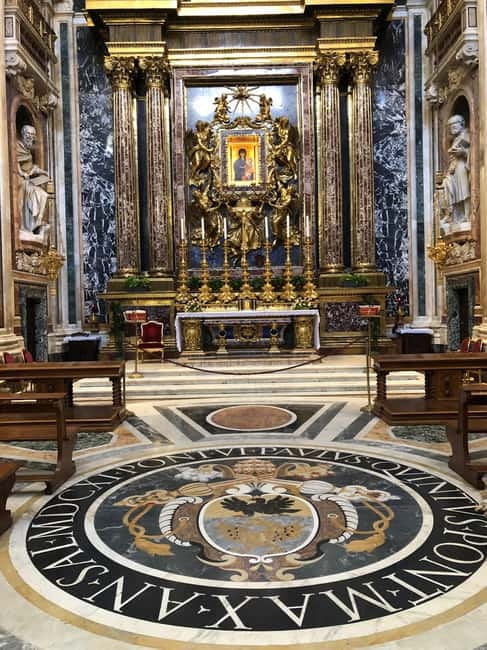
The tour starts at Santa Maria Maggiore, and you spend the first hour right here. This isn’t just a stop for grand architecture. It’s a devotional entry point into the story the tour will follow.
You’ll have time to venerate original wood from the Crib of the Nativity. Then, still in the same basilica, you stand near an icon traditionally connected to St Luke the Evangelist, titled Salus Popoli Romani.
There’s also a Jubilee angle. Santa Maria Maggiore is one of the basilicas tied to Holy Doors that will be opening in 2025. Even if the Holy Door moment is future-facing, the tour framing makes it feel like you’re visiting Rome with the next chapter of the pilgrimage already in your mind.
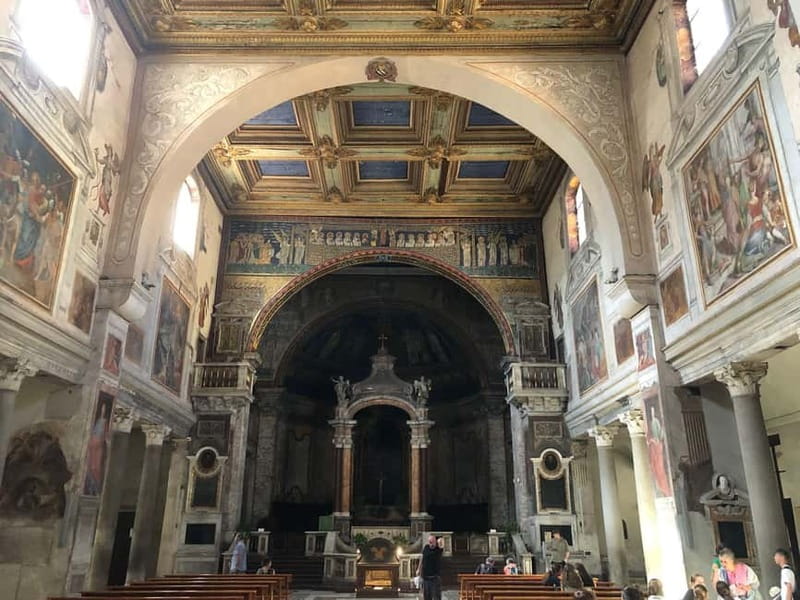
Santa Prassede: mosaics that explain early Christians without lecturing
After Santa Maria Maggiore, you head to Santa Prassede for a shorter guided visit, about 20 minutes. This is one of those stops where you learn to look instead of just glance.
You’ll see mosaics filled with symbolism, and you’ll get context on the struggles of early persecuted followers. The goal isn’t to turn the room into a classroom. It’s to connect the art to people who risked a lot to keep their faith.
The drawback here is timing. Because the visit is brief, you should come ready to absorb quickly. If you’re the type who needs extra minutes to linger and read everything, you may want to add a little self-guided time later.
Church of Saint Alphonsus Maria de Liguori: Our Lady of Perpetual Help
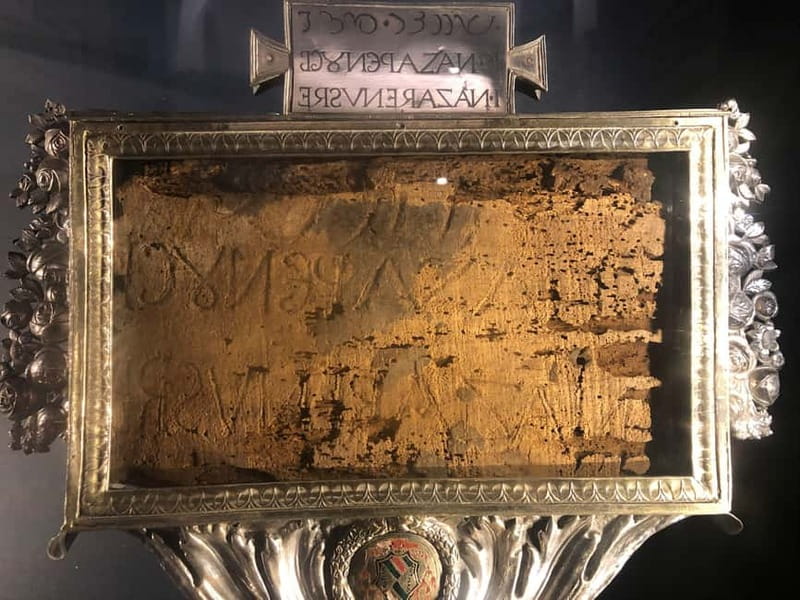
Next comes the Church of Saint Alphonsus Maria de Liguori. This stop is where the tour gets especially image-centered, and it’s a big reason Catholic travelers love this route.
You’ll learn about and see Our Lady of Perpetual Help, also known under alternate names such as Our Lady of Perpetual Succour or Our Lady of the Passion. This is the famous icon that many people recognize even if they have never been in the room with it.
What I like is the way the tour links devotion to story. You’re not only admiring an artwork. You’re being guided toward the meaning behind the Passion focus, and how Mary’s icon fits into the wider Christian memory of Christ’s suffering.
A few more Rome tours and experiences worth a look

Scala Sancta (Holy Stairs): the Holy Stairs tour, and how not to miss your chance
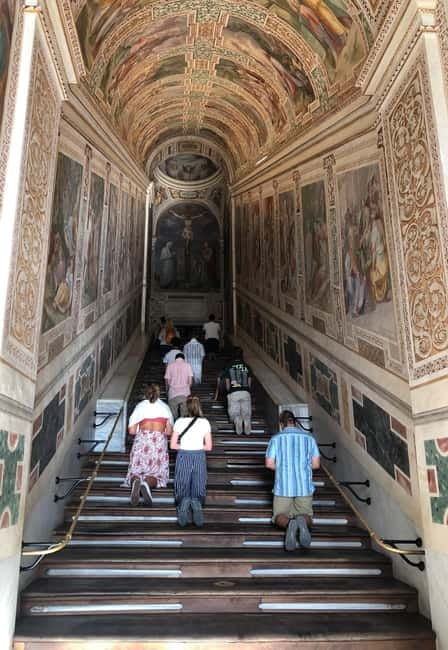
Scala Sancta is one of the most distinctive parts of this walk. You’ll get a guided visit here, and you’ll also hear the deeper tradition that surrounds it.
Important practical note: the classic tradition is climbing the steps on your knees. The guide information says this takes about 45 minutes and is not part of this tour’s standard itinerary. If that tradition is a top priority for you, plan to do it separately outside the 3-hour tour.
You’ll also hear about the Holy Stairs’ connection to what’s traditionally described as an inner sanctum, with tradition saying only the Pope gains access. That context makes the physical stairs feel less like a tourist attraction and more like a devotional pathway.
Even if you skip the kneeling climb, the guided explanations can change how you experience the place. You start to notice how the Passion story is built into the Roman experience of worship, step by step.
St John Lateran: skull relics, the Holy Sponge, and why Peter and Paul matter
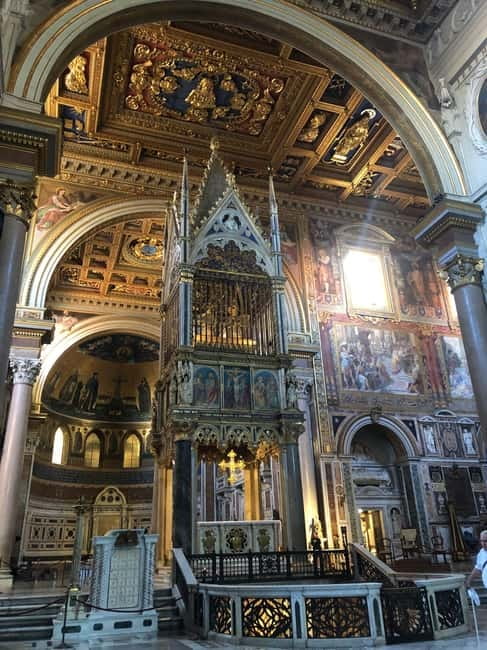
You then move to Basilica di San Giovanni in Laterano, St John Lateran, the Cathedral of Rome. This is one of the most important churches in the Catholic world, and the tour gives it a focused, 30-minute slot.
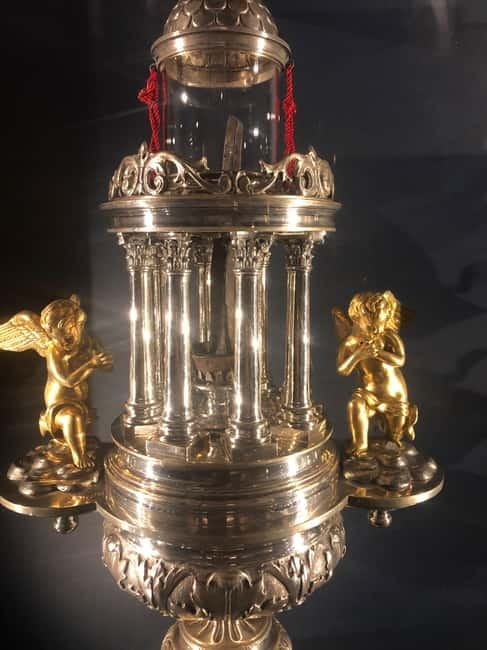
Here, you’ll see relics connected to Saints Peter and Paul, including the skulls of the two saints as kept here. You’ll also hear about the Pillars of the Church, and about the Holy Sponge, described as the sponge that doused Jesus while He hung from the Cross.
This is also a stop that helps you connect the Passion to the early church story in a concrete way. The tour frames it as more than a background. The sites in Rome tie scripture themes to specific places, so the walk becomes a kind of living index of Christian memory.
A practical consideration: because it’s a major basilica, you’ll want to follow the guide’s timing closely. Entry and the pace of the visit can be influenced by what’s happening in Rome on any given day.
Basilica of the Holy Cross in Jerusalem: the end of the route and the homily option
The final stop is the Basilica of the Holy Cross in Jerusalem. It’s about a 10-minute walk from the nearest metro station and sits near the edge of the Aurelian Wall, putting you near a very Roman boundary between the modern city and the older core.
This is where the tour concludes. The guide provides a homily on request, so if you want that added spiritual ending, you should request it when you book or at the start of the tour.
If you care about the Passion relic emphasis, this last stop feels like a payoff. The tour has been carrying you through the story all day, from condemnation context to the places where Catholic tradition anchors the memory of Christ’s suffering.
The guide experience: reverent, articulate, and built for questions
From past tours, the guide name that comes up most often is Tom. His style is repeatedly described as both warm and serious about the sacred sites, with strong command of Church history and symbolism.
I love that the tour doesn’t rush past the places. There’s an emphasis on reverence, plus time for prayer and reflection. Some groups even describe the guide making space for sitting when possible, which matters because churches can be physically demanding if you’re on your feet too long.
Also, because the tour is small, you’re not stuck in a cattle line. Questions tend to have room to breathe.
Price and value: what you are really paying for at $107.62
At $107.62 per person, this is not a cheap add-on. But it is priced like a specialized pilgrimage route with guided time in multiple important sites, plus an experienced devotional guide.
Here’s what you’re getting that makes the price easier to justify:
- Multiple guided church visits in a short 3-hour window
- A focus on Passion-related relics and icons, not just general sightseeing
- Included essentials like radio headsets for groups of 7 or more (even though this tour caps at 5, the setup is included)
- A homily option on request
- All taxes and fees included
What you do not get is transport. You’re responsible for getting to Santa Maria Maggiore and getting from the end point on your own. Guide tip is also not included, so plan for that if you appreciate the effort.
If you already have a plan to visit churches anyway, the value question becomes simple: will you spend the time to learn what you’re seeing? If the answer is yes, a guided pilgrimage route can save you hours of piecing information together.
Who this tour is best for, and who might want to adjust
This tour is a strong fit if you want a traditional Catholic pilgrimage experience in Rome, especially with the Jubilee Year of 2025 in mind. It’s also a good choice if you like your Rome with structure, clear spiritual themes, and enough time in each church to actually pay attention.
It’s less ideal if you want a casual, flexible stroll with no rules. There are dress restrictions: shorts and short skirts are not allowed. Also, one location is not wheelchair-accessible, and the tour is not suitable for wheelchair users.
If you specifically want the Holy Stairs kneeling tradition as part of your day, you should plan extra time beyond the tour, since the kneeling climb is explicitly not included.
Should you book this Via Crucis Pilgrim 3-Hour Walking Tour?
Book it if you want a purposeful Catholic route that mixes relics, major basilicas, and prayer time, with a guide who keeps the tone reverent and the explanations tied to meaning. The small group size is a real advantage, and the Passion focus gives you more than a checklist of churches.
Pass or modify your plan if the Holy Stairs kneeling climb is non-negotiable for you, because you’ll need to arrange that separately. Also, if you cannot meet the dress code or need full wheelchair accessibility, look for another option.
If you’re traveling in 2025, even better. This route is framed around Jubilee timing, including Holy Doors connected to Santa Maria Maggiore, so you’ll feel like you’re walking with the city’s next pilgrimage moment already in the air.
FAQ
Where is the meeting point for the tour?
The meeting point is at the fountain in front of the main entrance to Basilica of St Mary Major (Santa Maria Maggiore). The front faces Piazza Santa Maria Maggiore, not Via Cavour.
How long is the walking tour?
The tour lasts about 3 hours. Starting times vary, so you should check availability for the schedule.
How big is the group?
The tour is limited to 5 participants, so it stays small.
Is the tour wheelchair accessible?
No. The tour is not suitable for wheelchair users, and one of the locations is not wheelchair-accessible.
What language is the guided tour?
The tour is guided in English.
Are there dress restrictions?
Yes. Shorts and short skirts are not allowed.
Does the tour include climbing Scala Sancta on your knees?
No. Climbing the Holy Stairs on your knees takes around 45 minutes and is not part of the itinerary. You’d need to arrange that separately.
Does the tour include a homily?
A homily is available on request. It’s part of the wrap-up at the Basilica of the Holy Cross in Jerusalem.
What is included in the price, and what is not?
Included: the Catholic guide, all taxes and fees, radio headsets for groups of 7 or more, and a homily on request. Not included: transport to the meeting point, transport from the end point, and guide tip.
Can I cancel for a refund?
Yes. Free cancellation is available up to 24 hours in advance for a full refund.
More Walking Tours in Rome

More Tours in Rome
More Tour Reviews in Rome
Not for you? Here's more nearby things to do in Rome we have reviewed




Walking Tours, compared.
 ★ 4.9Trastevere & Campo de Fiori Street Food Walking TourFrom $512,768 reviews
 ★ 4.9Paranormal Night Walking Tour & Secret BackstreetsFrom $341,921 reviews
 ★ 4.4Guided City Center Evening Sightseeing Walking TourFrom $46953 reviews
 ★ 4.5Best of Rome Walking Tour including Trevi FountainFrom $4923 reviews
 ★ 4.8Under the Moonlight Evening Walking TourFrom $28852 reviews
 ★ 4.9Forbidden History Walking Tour & Pub Crawl with DrinksFrom $61688 reviews
 ★ 5.0Guided Small Group Walking Tour of City HighlightsFrom $30682 reviews
 ★ 4.5Rome Walking Tour with Piazza Navona, Trevi Fountain and PantheonFrom $35676 reviews
Browse the lists this tour appears in