
Skipping the line changes everything. This reserved entry ticket gets you into the Vatican Museums with reserved access and a 10-language audio guide, so you can explore at your own pace. One important consideration: if the Sistine Chapel is not accessible for reasons beyond control, there is no partial refund.
I like that the visit is designed around time, not rushing. You get a set entry time slot (morning or afternoon), then enough room to work through the big sights people come for, including the Sistine Chapel and Michelangelo’s The Final Judgement, plus stops like the Pio Clementino Museum and the Candelabra Gallery. The drawback is also the tradeoff, there is no tour guide included, so you are doing the navigation and museum choices yourself.
You meet offsite at a specific spot, Bar Caffetteria L’Ottagono in Piazza del Risorgimento, and you need to be there about 15 minutes early for ticket redemption. You’ll also want to bring your original passport or valid ID, and print or show your voucher when you arrive. If you need a wheelchair-friendly route, note this option is not suitable for wheelchair users.
Key highlights to know before you go
- Reserved access entry with a timed slot, so you spend less time stuck in queues
- Audio guide in 10 languages that lets you choose your pace and focus
- Sistine Chapel time to see Michelangelo’s The Final Judgement (when accessible)
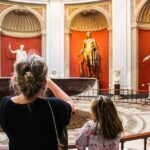
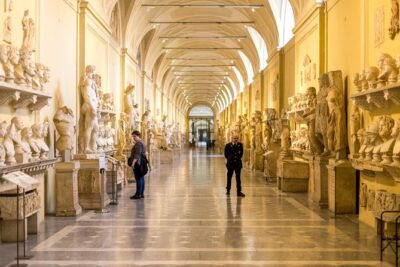
- Pio Clementino Museum and classic galleries that are ideal if you like sculpture and scale
- Raphael Rooms plus Vatican art collections for a mix of painting and religious art
Why a reserved entrance ticket matters at the Vatican Museums
The Vatican Museums are famous for one thing, lines. This ticket is built to solve that problem with exclusive reserved access, so you can get inside without waiting for hours. For a place this big, saving time is not a luxury. It is the difference between seeing the highlights and feeling like you are sprinting.
What I like here is that you do not have to follow a strict group schedule once you are in. You can move through the galleries in a way that matches your interests, whether that means more time on Renaissance and religious art or a slow orbit around ancient statues and artifacts. The experience is also set for self-guided wandering across up to 54 galleries, using your included audio guide.
One practical reality: the museum is still large. Reserved entry helps, but your body still has to do the walking. Plan for a lot of steps and lots of stairs, even if you are moving efficiently.
A few more Rome tours and experiences worth a look
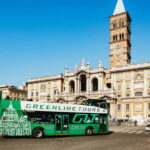

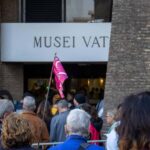
Getting to the meeting point: Bar Caffetteria L’Ottagono (Ottaviano)
Logistics matter at the Vatican because everything starts at your assigned time. Your meeting point is Bar Caffetteria L’Ottagono in Piazza del Risorgimento. It is about 400 meters from Metro A Line, Ottaviano stop.
Arrive 15 minutes before your entry time for ticket redemption. If you arrive late, it can mean extra costs, and changing your entry time can also come with added fees. This is the kind of setup that rewards early planning and a calm start.
Also bring your original passport or valid ID card. They require the real document on the day of the tour, not a photo. If you are traveling with someone else, double-check that everyone has their own ID.
What 4 hours of museum time really means
Four hours sounds like plenty, until you see how wide the Vatican Museums are. The good news is your entry ticket is timed, and once inside you can explore at your own pace. Think of 4 hours as enough time to hit the major anchors, plus a couple of optional zones, if you do not stop for too long in every room.
Your “success strategy” is to choose what you will treat as must-see first, then let the audio guide fill in the gaps. If you try to do everything equally, you will end up spending time floating rather than discovering.
Your included audio guide runs in 10 languages, so you can focus on the art instead of reading every label. In practice, that means you can spend more time looking, less time trying to figure out what you are looking at.
Sistine Chapel and Michelangelo’s The Final Judgement
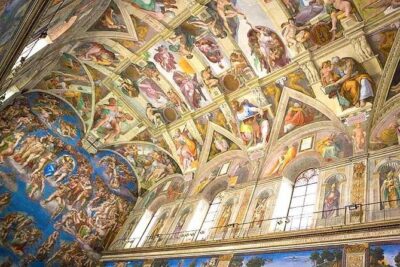
Yes, this is the main event. The Sistine Chapel is one of the most famous spaces in the world for good reason, and Michelangelo’s The Final Judgement is the kind of work you remember even after the museum dust settles.
The key thing to know is that Sistine access can be affected by circumstances beyond control. If the Sistine Chapel is not accessible, there is no partial refund. That policy is not meant to be scary, but it is worth internalizing so you plan emotionally and practically. If seeing the Sistine Chapel is your top priority, you are still covered in the sense that the ticket includes your museum entry and audio experience, but understand the limitation.
When you arrive near the Sistine area, give yourself a buffer in your timing. I recommend slowing down at the approach, because the atmosphere changes and you will want to be present. Also, the Chapel experience tends to make people pause and look longer than they planned, which is fine if you accounted for it.
Raphael Rooms, painting, and the Vatican’s art collections
After you get the classic “wow” of the Sistine area, the Raphael Rooms and Vatican painting collections are where the visit turns into a study of genius and storytelling.
The Raphael Rooms are a major stop with frescoes and scenes that people love because they feel theatrical, even though they are centuries old. If you want to connect the dots between art and theology, this is a great section to spend time in, since your audio guide can help you focus on what matters instead of getting lost in the wall-to-wall details.
You’ll also be in the orbit of the Pinacoteca Vaticana, with works connected to art names like Leonardo da Vinci, Michelangelo, Caravaggio, Raphael, and Giotto. Even if you are not an art scholar, the audio guide helps you understand why these artists matter and what you are looking at in plain language.
You can also read our reviews of more guided tours in Rome





Pio Clementino Museum: where scale does the talking
The Pio Clementino Museum is a standout for people who love sculpture and the physical presence of classical art. This is not just about learning names. It is about understanding how much space these works take and how they were meant to be viewed.
Here is the tip I give you: treat this area like your “slow down zone.” If you rush through, you miss the impact. If you pause, look at composition, and listen to the audio narration, the sculptures start to feel alive rather than like museum objects.
This section works especially well with a self-guided format. Because you can spend extra time where you are drawn in, rather than following a strict group path. The Pio Clementino Museum is exactly the type of stop where being able to choose pace improves the experience.
Candelabra Gallery and the kinds of details to hunt for
The Candelabra Gallery is one of those rooms where the details can be easy to overlook if you are only looking for the biggest masterpieces. The Candelabra setting is visually strong, and it can help you reset your attention between dense stretches of galleries.
What I recommend is using your audio guide strategically in rooms like this. Listen for the context, then look again with the story in mind. That is when “background information” stops being background and starts turning into understanding.
Also, keep an eye out for patterns in the collection. The Vatican Museums mix eras, themes, and artistic styles. When you notice how the rooms transition, the museum stops feeling like a long hallway and starts feeling like a curated journey.
Ancient art, Etruscan finds, and Egyptian artifacts
One reason the Vatican Museums keep pulling people in is the variety. You’ll find Roman and Greek statues, an Etruscan collection, and artifacts connected to Ancient Egypt. Even if your personal interests skew one way, this variety helps you stay engaged.
This is where the self-guided audio format shines. You can spend extra time with the sections that match your curiosity, and skip more quickly through areas you are not in the mood for. The museum is huge, so having control is a real value.
If you like to learn while you walk, you will also appreciate the way the audio guide connects art to broader cultural ideas. Instead of just seeing objects, you get a sense of why certain works are grouped together and what the museum wants you to notice.
Modern Religious Art and cross-era perspective
If you think the Vatican Museums are only about ancient statues and Renaissance masterpieces, the Modern Religious Art collection is your reality check. This section includes paintings and sculptures connected to artists listed such as Carlo Carrà, Giorgio de Chirico, Vincent van Gogh, Paul Gauguin, Marc Chagall, Paul Klee, Salvador Dalí, and Pablo Picasso.
That jump from classical and Renaissance to modern styles can be jarring in a good way. It shows how religious subjects and themes keep being reinterpreted across time. If your brain likes patterns, this portion can help you see religion as a continuing visual language rather than a museum category.
The practical benefit is that it gives your eyes a break. After dense frescoes and sculpture rooms, a modern section can feel fresher, even though it is still deeply serious art.
Audio guide tips: make it work for you
Your audio guide is available in 10 languages: Italian, English, French, German, Spanish, Japanese, Korean, Chinese, Russian, and Portuguese. That means you can focus on comprehension without relying on reading every label.
Here’s how to use it so it does not become background noise. Pick a few moments where you want context, then actively listen while you look. In long galleries, listening for one key point per room is enough to keep the experience meaningful.
Also, use the audio guide to decide where to spend extra time. If a room description clicks with you, you can slow down. If it does not, you can keep moving without feeling like you are missing “the required content.”
Price and value: is $62 worth it?
At $62 per person for about 4 hours, the value comes from two things: time saved and what you get included. Reserved access reduces the time you lose to lines, and the audio guide is included in 10 languages. That audio guide alone is often what turns a “walk-through” into an actually satisfying visit.
You are not paying for a tour guide here, so expectations should match the format. If you want someone to point things out in real time, you may want a guided tour instead. But if you like freedom and are comfortable navigating a big site, this ticket gives you a strong cost-to-time ratio.
Add the fact that Sistine Chapel is a key anchor, plus Raphael Rooms and multiple major collections, and the value starts to make sense. You get a whole museum experience designed around efficient entry and a guided listening layer.
Who should book this Vatican Museums reserved access ticket
I think this works best for you if:
- You want to see the big highlights, including Sistine Chapel and The Final Judgement
- You like going at your own pace instead of matching a group schedule
- You value a multilingual audio guide and use it actively
- You are short on time and need to avoid the worst line headaches
It may not be the best fit if:
- You want a live tour guide included (this option does not include one)
- You need wheelchair accessibility (this option is not suitable for wheelchair users)
It is also a good match for different time personalities, because your entry slot can be morning or afternoon. That flexibility helps you plan around the rest of your Rome day, whether you prefer a quieter start or a later rhythm.
Quick practical checklist before you go
- Bring your original passport or valid ID card
- Print your voucher or have it ready to show tour personnel
- Arrive at the meeting point about 15 minutes early for ticket redemption
- Wear comfortable shoes, plan for walking inside
- Decide ahead what you want most, then let the audio guide guide your detours
Should you book this Vatican Museums reserved access ticket?
If your goal is to see the Vatican Museums without spending your limited Rome time in lines, I would book this. The reserved entry plus audio guide format is a smart combo, especially if you want freedom and comprehension rather than a rushed checklist.
Book it if Sistine Chapel and Michelangelo’s The Final Judgement are on your must-see list, and you’re comfortable managing the rest yourself with audio support. Just go in knowing there is no partial refund if the Sistine Chapel becomes inaccessible, so keep expectations flexible for that specific room.
FAQ
Where is the meeting point?
You meet at Bar Caffetteria L’Ottagono in Piazza del Risorgimento, about 400 meters from Metro A Line, Ottaviano stop.
What time should I arrive?
Plan to arrive about 15 minutes before the tour starts for ticket redemption.
What do I need to bring for entry?
Bring your original passport or a valid ID card.
How long is the visit?
The duration is listed as 4 hours.
Is there a tour guide included?
No, a tour guide is not included. You explore with the included audio guide.
What languages is the audio guide available in?
The audio guide is available in 10 languages: Italian, English, French, German, Spanish, Japanese, Korean, Chinese, Russian, and Portuguese.
More Guided Tours in Rome
More Tickets in Rome

More Tour Reviews in Rome

Not for you? Here's more nearby things to do in Rome we have reviewed












Vatican Tours, compared.
 ★ 4.5Vatican: Museums & Sistine Chapel Entrance TicketFrom $38144,003 reviews
 ★ 4.3Vatican Museums & Sistine Chapel Tour with Optional BasilicaFrom $7967,413 reviews
 ★ 4.5Vatican Museums, Sistine Chapel & St Peter’s Basilica Guided TourFrom $2239,149 reviews
 ★ 4.3Vatican Museums, Sistine Chapel & Basilica TourFrom $13013,872 reviews
 ★ 4.4Vatican Museums & Sistine Chapel Skip-the-Line Entry TicketFrom $4313,838 reviews
★ 4.7Vatican Museums, Sistine Chapel & Basilica TourFrom $7213,217 reviews
 ★ 4.5Skip-the-Line Group Tour of the Vatican, Sistine Chapel & St. Peter’s BasilicaFrom $3012,779 reviews
Vatican Museums & Sistine Chapel Guided TourFrom $11812,117 reviews