

Reviewed · CATACOMBS & UNDERGROUND TOURS
Rome: Trevi Fountain and Underground Guided Tour
Rome’s Trevi Fountain has a second story. This guided experience mixes the myths you see above with what’s hidden underground, including archaeology connected to the water system that feeds the fountain.
I love two things about it. First, the chance to spot the 2000-year aqueduct still tied to the fountain’s water today, not just a ruined pipe in a museum case. Second, the way the tour connects big stone characters at Trevi with the imperial Domus and older street-level layers under the city.
One consideration before you go: the restricted basin area around the fountain costs an extra €2, and the guide will instead lead you to a great public viewing spot at piazza level.
Key highlights you’ll actually care about
- A 9-meter descent to see archaeology and a fully functioning 2000-year aqueduct tied to the fountain above
- Trevi Fountain myths explained with real context, so the sculptures make more sense
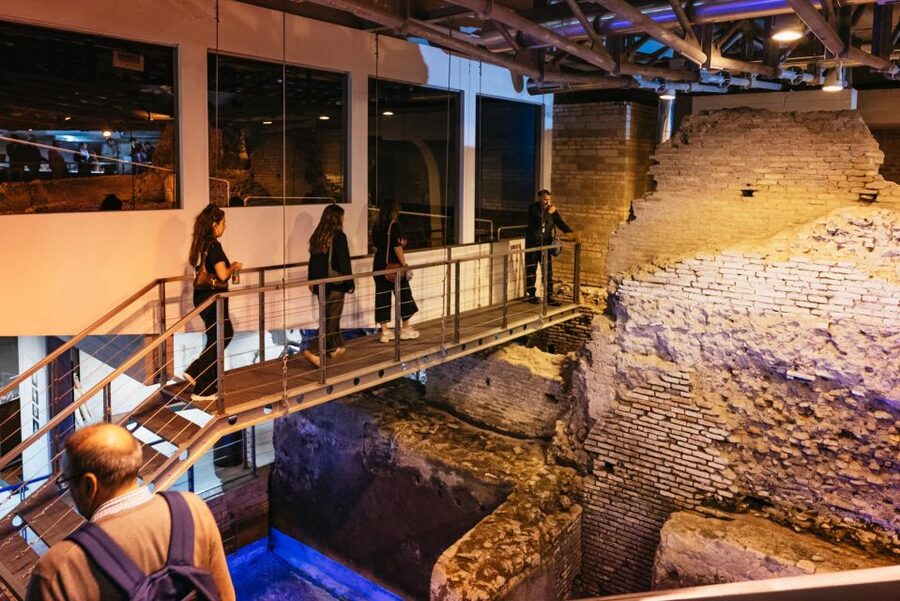
- Ruins beneath Rome’s streets, including Vicus Caprarius remains and an imperial Domus
- A fast, focused 40 minutes with headsets so you can hear the guide clearly
- Strong guide energy, with names like Mario, Francesca, and Anestis showing up in recent tour feedback
What This Trevi Fountain Underground Tour Really Shows You
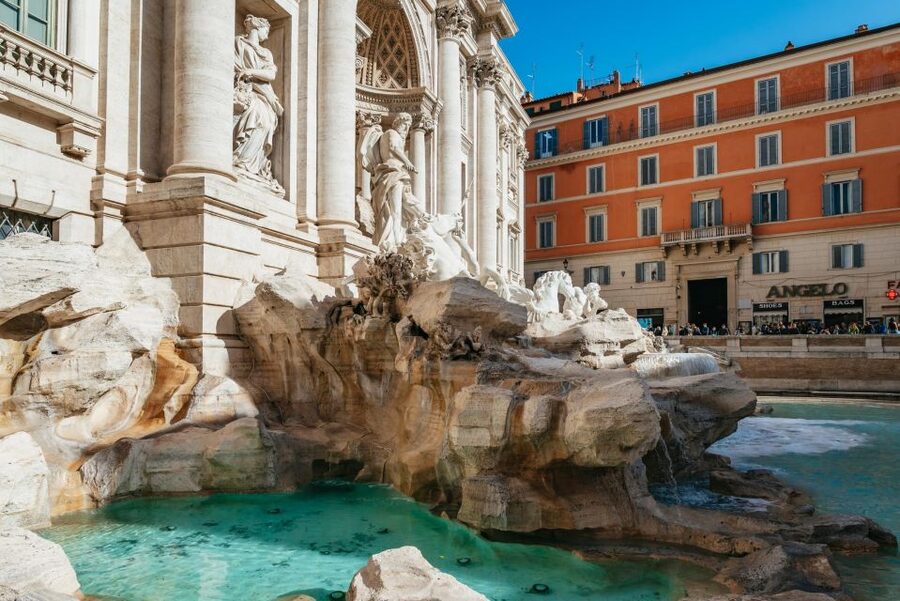
Trevi Fountain is famous for a reason. But if you only watch the crowds and snap photos, you miss the best part, the engineering and layers of Rome that sit under the postcard scene.
This tour is built to give you two “Aha” moments. One is story-driven, the mythological figures and dramatic scenes at Trevi with an explanation that ties them to Rome’s bigger picture. The other is practical and physical, you head 9 meters below ground to see an archaeological site and a working aqueduct connected to how water reaches the fountain.
The route is short on purpose. At 40 minutes total, you’ll cover the fountain area and then the underground portion without turning it into a half-day project. That makes it a smart add-on when Trevi is already on your itinerary, but you also want to beat some of the heat and chaos.
You can also read our reviews of more guided tours in Rome



Meeting at Piazza di Trevi: Find the TOURIKS sign
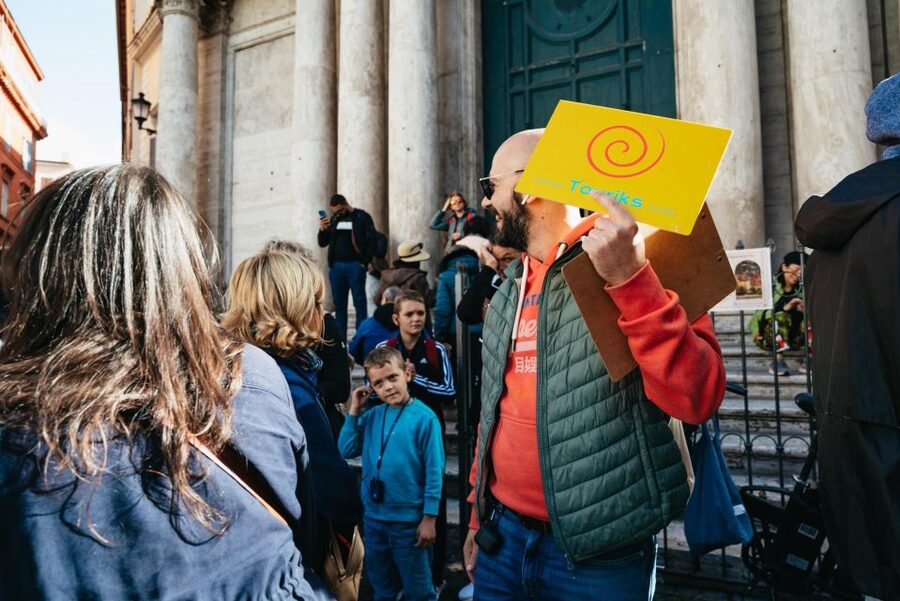
Plan to arrive a few minutes early, because the meeting point sits in a busy zone. You meet your guide in front of the entrance to Santi Vincenzo e Anastasio a Fontana di Trevi Church, on the left corner of Piazza di Trevi. Look for a yellow label that says TOURIKS.
The tour starts and ends near Via del Lavatore, 49. That matters because Trevi’s streets can feel like one long traffic jam, so it helps to know you’re not walking across town afterward.
If you’re nervous about finding the group, this setup is worth it. The guide meets you at a fixed church entrance with a clear sign, so you’re not trying to match people by guesswork.
The first stop: Trevi Fountain walk for myths and meaning

You spend about 20 minutes at Trevi Fountain with a guided walk. The focus isn’t just “look at the fountain.” It’s how to read it.
Expect your guide to point out the mythological figures and the dramatic stone scenes, then explain what they meant in their time and how the fountain became the symbol it is today. You’ll also get the origin story and the lesser-known mysteries that often get skipped when people race for the perfect photo.
Here’s what makes this part useful: your brain needs a guide to connect details. Trevi looks like one big artwork from far away. Up close, it’s a map of themes, messages, and craftsmanship, and your guide helps you follow that thread instead of staring at random details.
The restricted basin fee, and your best alternative viewpoint
One practical thing to know upfront. Access to the restricted basin area around the fountain costs an extra €2, and it is not included in your tour price. The guide leads you to an excellent viewing point at public piazza level.
So if you’re hoping for that close-up, inside-the-action angle, plan for the add-on. If you’re okay with a strong view from the public area, you can keep your expectations realistic and still get great photos.
Vicus Caprarius: seeing Rome’s layers where tourists usually miss them
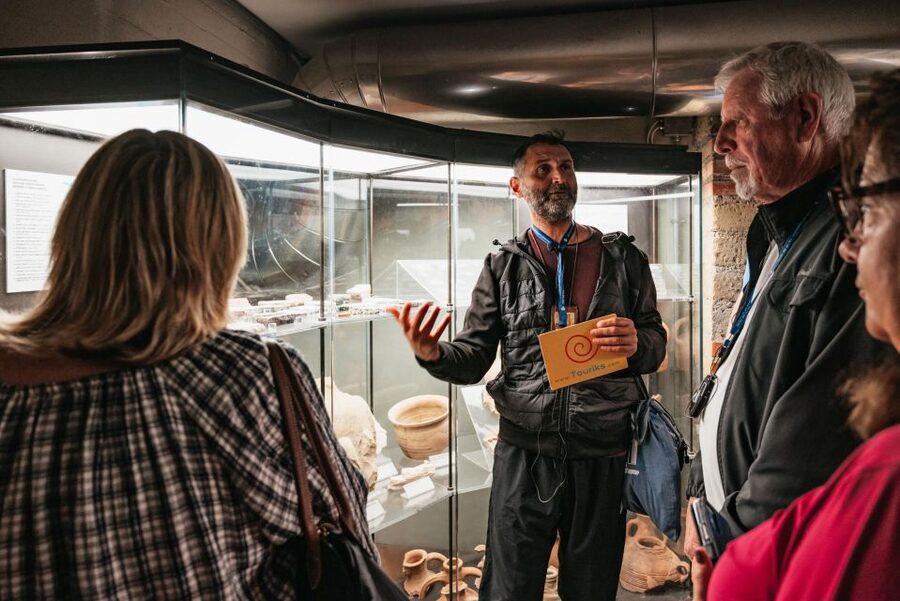
Next comes the second guided segment, about 20 minutes focused on the underground archaeology tied to the area. You’ll hear about the Vicus Caprarius, the neighborhood layer that existed before modern Rome’s streets and stone facades formed.
This is where the tour shifts gears from art to everyday life. It’s not just “ancient stuff down there.” It’s a chance to understand how Rome stacked time on top of time, and how people lived, worked, and moved through the same geographic space long before today’s Trevi crowd arrived.
You’ll also see remains connected to an imperial Domus. That’s a big clue that you’re not only looking at small neighborhood traces. You’re glimpsing elite Roman presence and the scale of building projects that defined power and wealth.



What to look for underground, without overthinking it
Underground ruins can feel confusing if you don’t have context. The guide’s job here is to point out what you’re looking at and explain why it matters. For you, that means:
- You’ll know what area you’re in and what period it connects to
- You’ll understand how it fits into Rome’s bigger infrastructure story
- You’ll avoid the “I saw walls, now what?” feeling
Nine meters down: the 2000-year aqueduct that still matters

The headline moment is the descent to about 9 meters below ground to see the 2000-year aqueduct. And not just any aqueduct story. The tour description is very specific about it being fully functioning and still supplying water to the fountain above.
That combination is rare. You get to see ancient engineering and also understand that it links directly to what you’re looking at on the surface. It turns Trevi from a pretty landmark into evidence of how Rome built systems meant to last.
You’ll follow your guide through the underground route, then see and learn about how water moves through the historic network. One recent feedback point that matches what you’ll feel during this part: it’s a great break from the surface heat and crush of the Trevi area, and the air down there makes the experience feel calmer.
If you’re the type who likes details, you’ll get what you want here. If you just want the big picture, you’ll still leave with a clearer sense of how the fountain works, not only what it looks like.
A quick reality check: it’s archaeology, not a movie secret passage
A useful expectation-setting point: the underground portion is about archaeology and infrastructure related to the Trevi area. It’s not presented as a hidden tunnel that takes you to an inside view of the fountain basin itself. You still stand in a guided underground space while learning how it relates back to the fountain you see above.
Also remember the restricted basin access has its own small cost. Your guide already has a plan for the best public views, so you won’t feel like you’re missing everything. You’ll just be missing the one extra-close option unless you pay the €2.
How the guide makes or breaks a short tour

This is a 40-minute tour, so the guide’s pacing matters. The best part of many recent experiences is how guides keep the story clear without going on too long, and how they handle questions calmly.
You may hear guide names like Mario, Francesca, Vito, and Anestis in recent tour feedback. The common thread is simple: the guide explains in a way that keeps kids engaged too, with bite-sized pieces of information and room for questions.
That’s important for you if:
- You’re traveling with family
- You hate tours that talk at you nonstop
- You want your guide to handle curiosity without making it feel like a disruption
Headsets help a lot
You’ll get headsets to hear your guide, which makes a big difference when you’re underground or surrounded by other groups. Recent feedback also praises how clear and comfortable the audio devices are, which is a nice sign. Bring the headphones you’re asked to bring, and you’ll be set.
Price and value: is $41 worth it for 40 minutes?
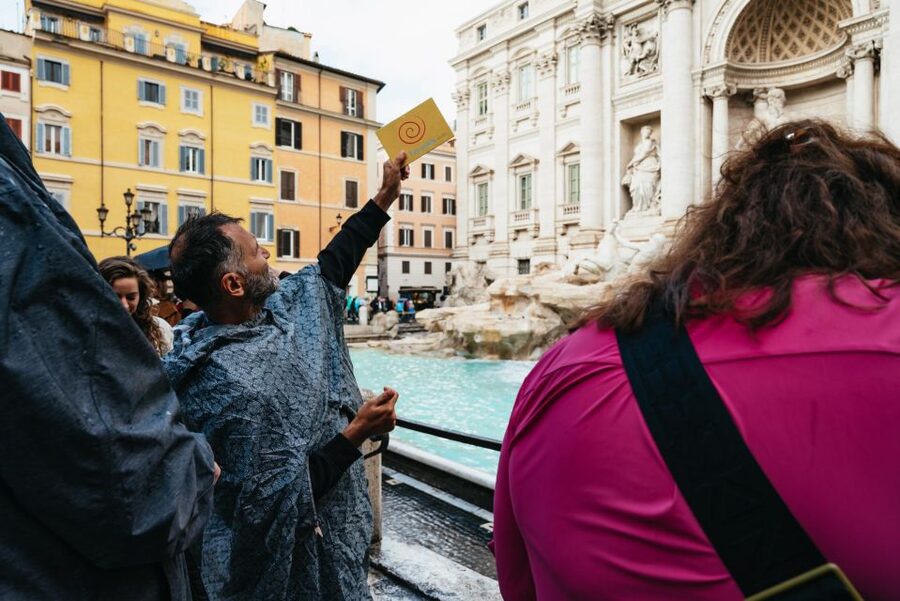
The price is listed at $41 per person. For a 40-minute experience, that’s not “cheap,” but it can be a good value depending on what you want.
Here’s what you’re paying for, based on what’s included:
- A live guide
- Entrance fees for the underground excavations
- Headsets
You’re also saving effort. You’re not trying to figure out where the underground archaeology is, how it connects to the fountain, or what you’re looking at once you’re inside. A good guide is basically a translation layer, and it’s the reason this tour tends to feel better than standing around on your own.
The comparison you should make
If you’re debating between a tour and going solo, here’s the honest way to look at it: there’s an audio option mentioned at about 3.50 euro in recent feedback. That can work if you’re confident you’ll enjoy reading and self-guiding.
But if you want someone to connect Trevi’s mythology to the water system, explain the aqueduct and the ruins, and answer questions in real time, $41 starts to feel more reasonable. You’re buying time and clarity, not just access to a room.
Also keep one small extra cost in mind: €2 for the restricted basin area. Plan for that if you want the closest fountain experience.
Best time to go and how to pair it with Trevi sightseeing

Your tour ends back near the Trevi area, so it’s easy to use it as a warm start or a mid-visit reset. A lot of people like doing it when crowds peak, because the underground portion offers a break from the surface crush and heat.
Pair it with:
- A relaxed Trevi Fountain walk after you come up, so you can look again with new context
- Other nearby highlights in the same neighborhood, since the meeting point and ending point keep you in the central zone
If the tour is canceled due to weather, you’ll have an option for an alternative date or a full refund. That’s worth thinking about in summer when rain can still ruin tight outdoor plans.
Who should book this tour
This tour fits best if you want more than photos. I’d especially recommend it for you if:
- You’re interested in how Rome works, not only what it looks like
- You like engineering stories, aqueducts, and infrastructure history
- You want a family-friendly guide style that keeps attention during a short outing
- You’re short on time but still want the underground angle
It may be less ideal if you need wheelchair access, since it is listed as not suitable for wheelchair users. Also, if you hate fast-paced tours, treat this as a “focused hit,” not a slow stroll. It’s designed to cover a lot quickly.
Should you book the Rome Trevi Fountain and Underground Guided Tour?
Book it if you want Trevi Fountain explained with purpose and you care about what’s under the streets. For $41, you get a guide, underground entrance, and headsets, plus the standout moment of a 9-meter descent to see the 2000-year aqueduct and archaeological layers like Vicus Caprarius and an imperial Domus.
Skip or reconsider if you mostly want the closest possible view inside the restricted basin area without extra steps. You’ll pay €2 for that access, and your guide will guide you to a strong public viewpoint otherwise.
My practical take: if you’re going to Trevi anyway, this turns a famous facade into a story you can actually picture, from stone myths above to water systems below. That’s the kind of value you can feel in 40 minutes.
FAQ
How long is the Trevi Fountain and Underground guided tour?
It lasts about 40 minutes total, with roughly 20 minutes at the Trevi Fountain and about 20 minutes in the underground area.
Where do I meet the guide for the tour?
Meet the guide in front of the entrance to Santi Vincenzo e Anastasio a Fontana di Trevi Church, on the left corner of Piazza di Trevi. Look for a yellow label with TOURIKS on it.
Is the restricted basin area access included in the price?
No. Access to the restricted basin area costs an extra €2 and is not included. The guide will lead you to an excellent public viewing point at piazza level.
What does the tour price include?
Your ticket includes the live guide, entrance fees for the underground excavations, and headsets to hear the guide.
What languages are available for the live guide?
The live guide is available in English, French, Spanish, Portuguese, German, and Italian.
What should I bring with me?
Bring headphones and a reusable water bottle.
Is this tour suitable for wheelchair users?
No. It is listed as not suitable for wheelchair users.
More Guided Tours in Rome

More Tours in Rome

More Tour Reviews in Rome
Not for you? Here's more nearby things to do in Rome we have reviewed











Catacombs & Underground Tours, compared.
 ★ 4.7Colosseum: Underground and Ancient Rome TourFrom $16012,691 reviews
 ★ 4.6Crypts and Catacombs Underground Tour with TransfersFrom $745,341 reviews
 ★ 4.7Colosseum Underground Small Group Guided TourFrom $1054,844 reviews
 ★ 4.8St. Peter’s Basilica, Dome Climb, and Underground TourFrom $383,404 reviews
 ★ 4.7Colosseum Underground, Arena & Forum TourFrom $1573,272 reviews
 ★ 4.6Catacombs and Capuchin Crypt Guided Tour with TransferFrom $411,606 reviews
 ★ 4.7St. Peter’s Basilica Priority Access Tour with Dome & CryptFrom $831,476 reviews
 ★ 4.7Capuchin Crypts Skip-the-Line Ticket and TourFrom $441,162 reviews
Browse the lists this tour appears in