
Reviewed · CATACOMBS & UNDERGROUND TOURS
Rome: Capuchin Crypts Skip-the-Line Ticket and Tour
Bones have a story in Rome. The Capuchin Crypt is unlike any other stop, made from the remains of roughly 3,700 people collected over centuries, and explained by a guide as you move through the underground rooms. I love the small-group format (up to 10 people), because it keeps the pace human and makes questions easy.
I also love how the tour gives you the “why,” not just the “wow.” You start with the Capuchin Museums and then head into the crypts with a clear walkthrough of the main displays, including the Crypt of the Three Skeletons and the Mass Chapel.
One drawback to weigh: this is not a casual, lighthearted experience. You must cover shoulders and knees to enter, and if you are very squeamish about human remains, the bones will feel intense fast.
Key things that make this tour worth it
- Small-group size keeps the tour easy to follow and question-friendly
- Skip-the-line entry helps you spend your time in the crypt, not waiting outside
- English guide walkthrough gives context for the bones and symbols
- Bone “set pieces” you can actually spot (three skeletons, hourglass, pelvises, and more)
- Mass Chapel and Resurrection Crypt add spiritual weight to the visit
- Guides like Luigi and Slobodan are praised for making a heavy topic feel accessible
A macabre Rome stop with a clear story: what the Capuchin Crypt is really about
The Capuchin Crypt works on two levels at once. On one level, it is a surreal sight, underground chambers arranged from human remains in a way that looks almost artistic. On another level, it is about faith, ritual, and how people tried to make meaning from death.
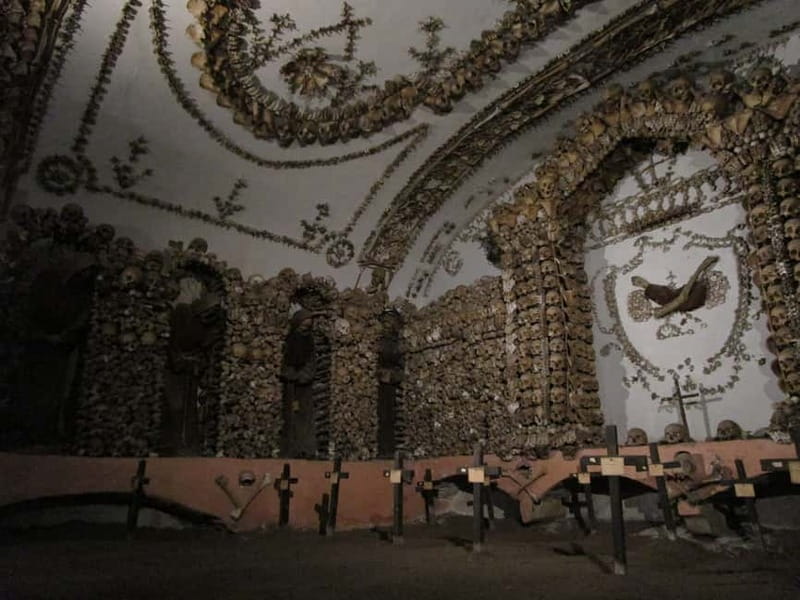
What you will see is carefully organized. You’re not just walking past random bones. You’ll move through distinct areas, including bone crypts like the leg and thigh displays, the Crypt of the Skulls with its famous hourglass, and the Mass Chapel. The tour also explains how the Capuchins approached burial and why the bones ended up here, rather than inside churches.
A key piece of the backstory is the Capuchins’ law against burials within churches. Bones were moved from an older friary area near the Trevi Fountain, and an underground cemetery was created for this work. That context matters, because it shifts the experience from shock value to something closer to a message about mortality and belief.
And yes, it is still macabre. But with an English-speaking guide, it stops being random and starts making sense, room by room.
A few more Rome tours and experiences worth a look



Your 50- to 60-minute plan, and why the small group matters
This experience is short, usually about 50 minutes to 1 hour, with starting times that vary. That timing is a big part of the value. Rome has a way of eating your day, and this keeps the crypt experience from turning into a long, exhausting detour.
The other big factor is group size. With a maximum of 10 participants, you get a guided walk that feels more like a group conversation than a factory line. That matters a lot for a site like this. People tend to have questions as they see symbols and arrangements, and a smaller group makes it easier to keep moving without losing understanding.
The guide also sets the tone. In feedback, guides like Luigi are described as energetic and funny, while Slobodan is noted for mixing facts with humor and involving the group. That style is useful here, because the topic can feel heavy. A little levity does not erase the subject, but it makes it easier to absorb the message.
Bottom line: you will leave with a mental map, not just a photo dump.
Via Vittorio Veneto meeting point: getting in smoothly (and dressing right)
The meeting point is in a very specific spot: Via Vittorio Veneto 27, street level, in front of the bronze gate. Show up there a bit early so you can settle in before the tour starts. The flow depends on timing, and the underground part moves at a fixed pace.
Now the practical part that catches people: you must cover shoulders and knees to enter the crypts. This is not a “nice to have” rule. It is a condition of entry, so plan your outfit accordingly.
If you forget or misjudge the dress code, you might still be able to solve it on the spot. One guide, Slobodan, was credited with helping when a visitor realized knees needed to be covered, including providing a quick cover-up. Still, don’t treat that as guaranteed. Dress ahead and you’ll avoid stress.
Also, keep an eye on comfort. You are moving underground through galleries and small spaces. Wear shoes you can stand and walk in confidently for the duration.
Capuchin Museums first: what you learn before the crypt hits
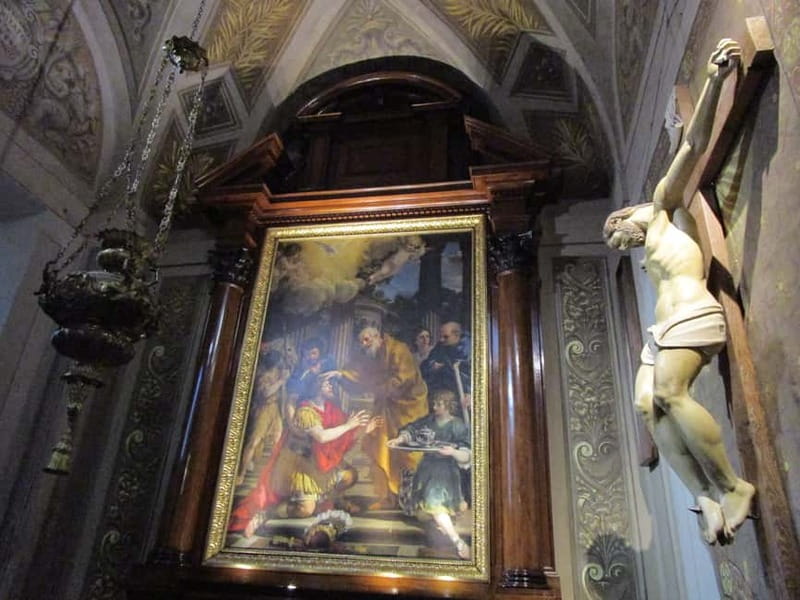
You start at the Capuchin Museums, and that order matters. The museums give you the cultural and spiritual framing before you walk into the bone chambers. It’s the difference between seeing a strange display and understanding why it exists.
The guide’s job here is to translate what can feel confusing if you only read signs. You’ll get an explanation of cultural meaning, and you’ll also learn how to look. Instead of treating everything as shock, you’ll start recognizing patterns: complete skeleton placements, symbolic bone groupings, and repeated religious motifs like crosses and chapel-like spaces.
One practical benefit of starting in the museum section is that it helps you mentally switch modes. You go from typical museum behavior into a different kind of experience. With the guide’s setup, the crypt becomes more coherent when you finally drop underground.
And because the guided portion is not super long, you are not stuck for hours. You get the context, the highlights, and then the rest is yours to process.
Crypt of the Three Skeletons and the bone rooms you can’t miss
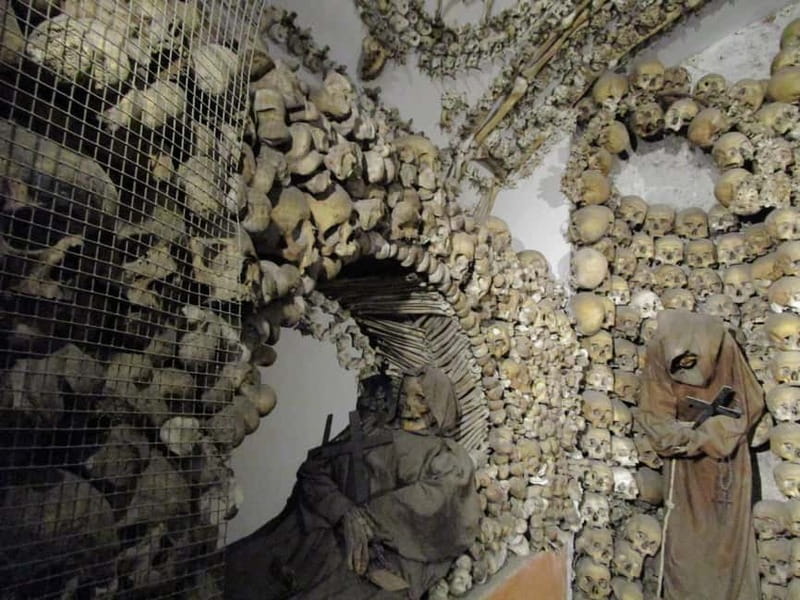
After the museum intro, you head into the crypt area, beginning with the Crypt of the Three Skeletons. This is the only place where a complete human skeleton is displayed in its natural state. Seeing that helps anchor everything else, because you understand the “real body” concept before you get into the bone-by-bone arrangements.
From there, the tour moves through several themed bone crypts:
- The Crypt of the Leg Bones and Thigh Bones, where the presentation feels more clinical and structured.
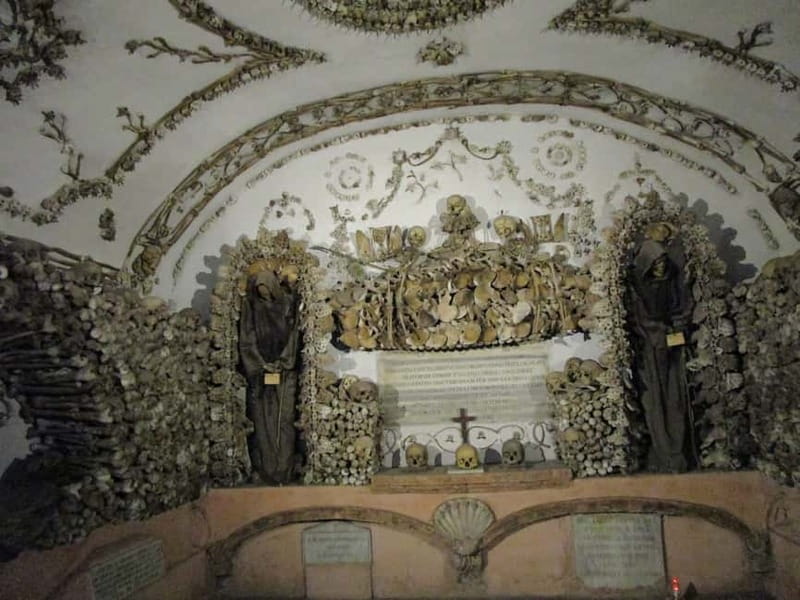
- The Crypt of the Pelvises, including two Capuchin friars posed in an arched formation.
- The crosses on the ground, which mark the resting places of seven Capuchins.
What I like about this sequence is that it teaches you how to read the site. The crypt is not meant to be a single photo moment. It is designed like a set of stations, each with a specific arrangement and symbolism.
A small caveat: this is where the site gets most intense for first-timers. Even if you are curious and not squeamish, you’ll be close to the displays. If you want the message, stay with the guide’s pacing and explanations. If you need space, ask for a slow moment and take your time at each stop.
A few more Rome tours and experiences worth a look
- Skip-the-Line Group Tour of the Vatican, Sistine Chapel & St. Peter’s Basilica
★ 4.5 · 12,779 reviews



Crypt of the Skulls, the hourglass, and the Trevi Fountain connection
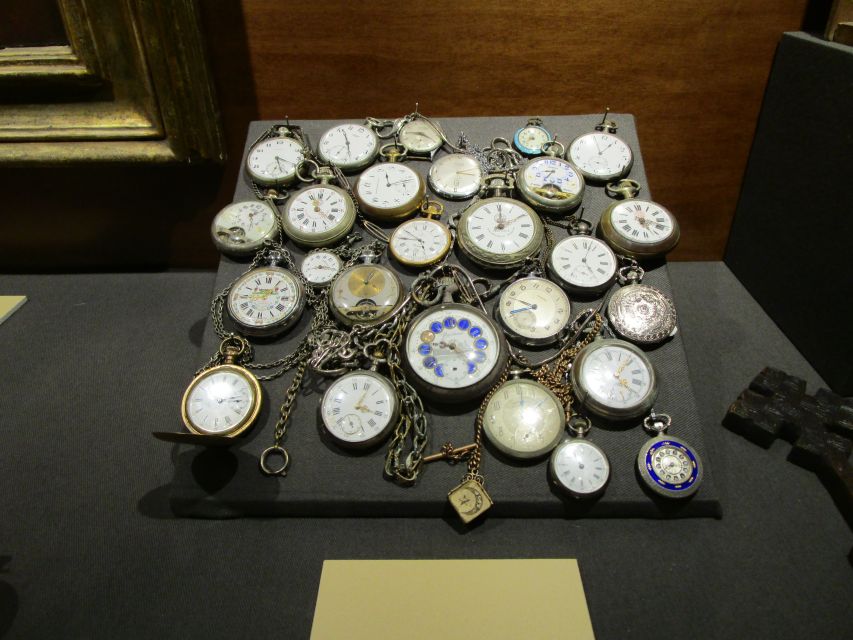
The Crypt of the Skulls is one of the most recognizable sections, and the tour points you to the key detail: the hourglass. It is a simple object, but in a crypt, it becomes a symbol with heavy weight. The guide helps you connect that imagery to the larger theme of time, mortality, and faith.
Then the story widens. You’ll learn why the bones are here, including how friars were relocated from an old friary near the Trevi Fountain. The explanation ties back to the Capuchins’ law that prohibited burials inside churches, which is why an underground cemetery was established.
This part is valuable because it gives you the site’s logic. Without that context, the skulls could feel like a gimmick. With it, the arrangements feel like communication, using bones instead of words.
If you are the kind of person who wants to understand before you judge, this is the stop that clicks.
And if you are the kind of person who just wants to look closely, you still get that chance. The hourglass and skull-focused displays make it easy to slow down and take in the details without needing to decode everything on your own.
Mass Chapel and the Resurrection Crypt: the spiritual tone of the bones
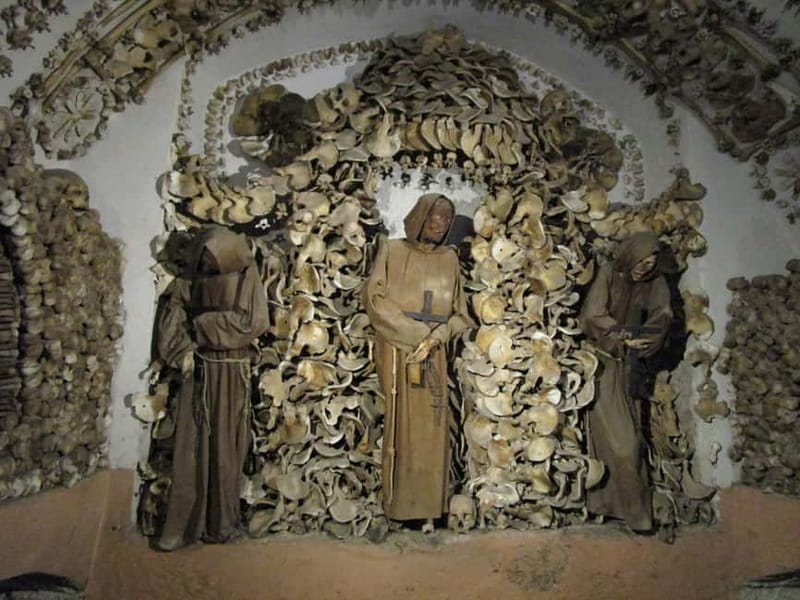
The tour does not stay purely in the “bones are weird” zone. It also includes the Mass Chapel and the Crypt of the Resurrection. Those rooms shift the experience toward ritual and belief.
Even if you are not religious, it helps to understand that the Capuchins used this space as part of their worldview. The arrangements are not random, and the chapel-like feel keeps it grounded in the purpose behind the work.
This is also where a guide’s personality matters. In feedback, multiple guides were praised for balancing respectful explanation with a lighter touch. Luigi and Slobodan were both singled out for keeping the group engaged, including making room for questions and using humor to keep the mood from going flat.
That matters because this site can make people go quiet. A good guide does not force you to laugh. Instead, they keep the flow steady so you can absorb the meaning without feeling overwhelmed the whole time.
Price and value of a skip-the-line guided ticket at $44.41
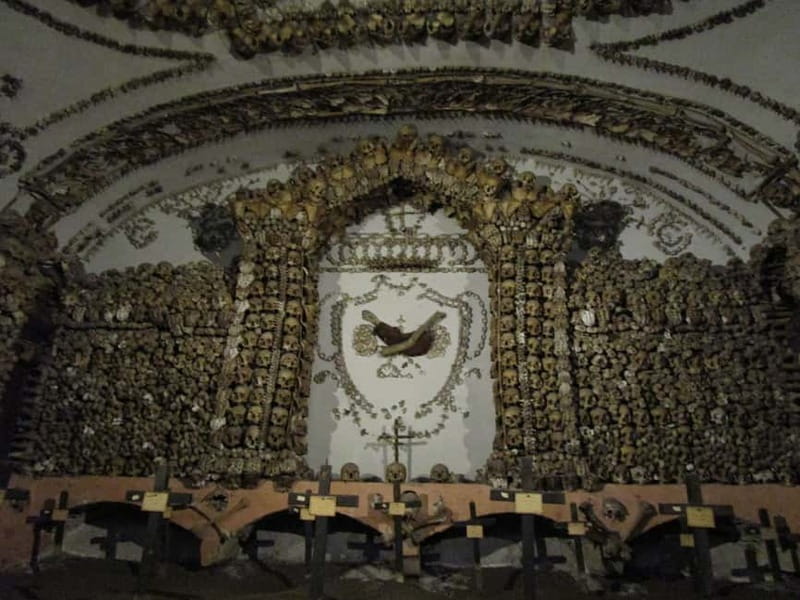
At $44.41 per person, you’re paying for three things: entry, a guide, and time savings. For a site like this, the guide component is the real value, because the crypt is full of symbolism and specifics that you might miss if you go in unguided.
The skip-the-line part can also be practical. Underground attractions can be popular, and waiting can chip away at your day fast. If your time is tight, paying to move quickly is a straightforward trade.
The duration is short, which can feel like a plus or a minus depending on your style. If you like fast, high-impact tours, this timing is ideal. If you love to wander and linger for long periods, you might wish you had more time. Still, the guide format gives you the highlights and the story in a way that saves you effort.
One more value point: after the guided portion ends, you may be able to return into the museum area. Since the tour is timed and not overly long, it helps to know the visit might be more than just a single pass through the crypt.
Who should book this tour, and who might want to pass
This is a strong choice if you want:
- A guided explanation in English that makes the site easier to understand
- A structured walk through specific crypt rooms, not just a loose wander
- A short Rome detour that fits into a busy day
It is also a good option for teens and older kids who can handle unusual themes. One family mentioned this was a highlight for their teenage sons, and that usually tells you the pacing and explanations were easy to follow.
Who might want to pass? If you know you cannot handle human remains, or you get upset by the idea of bones arranged as displays, you should think twice. Even with context, this is still a crypt. It may be fascinating, but it is not gentle.
Should you book this Capuchin Crypt skip-the-line guided tour?
If you are curious and you like your experiences explained, I think this tour is a solid book. The combination of small group, English guidance, and skip-the-line entry makes it a practical way to see a site that is hard to interpret on your own.
Book it if you want a clear route through the Crypt of the Three Skeletons, the Crypt of the Skulls with its hourglass, the pelvises arrangement, and the chapel rooms, with the “why” behind the bones. Consider skipping it if human remains will bother you more than you can tolerate.
If you do book, do the simple prep that makes the visit go smoothly: cover your shoulders and knees, arrive at Via Vittorio Veneto 27 by the bronze gate, and come ready to listen for how the guide turns this macabre set-up into a story you can actually hold in your head.
FAQ
How long is the Capuchin Crypt skip-the-line ticket and tour?
The tour lasts about 50 minutes to 1 hour. Starting times vary, so you’ll want to check availability for the slot you prefer.
Where do I meet the tour guide?
Meet in front of Via Vittorio Veneto 27 on street level, next to the bronze gate.
Is the tour guide English-speaking?
Yes. The live tour guide provides the experience in English.
How big is the group?
It is designed as a small group, with a maximum of 10 participants.
Does this include skip-the-line entry?
Yes. You get a skip-the-line entry ticket for the Capuchin Crypt.
What parts of the crypt will we visit?
The guided visit includes the Capuchin Museum and multiple crypt areas, such as the Crypt of the Three Skeletons, the Crypt of the Leg Bones and Thigh Bones, the Crypt of the Pelvises, the Crypt of the Skulls (including the hourglass), and it also covers areas like the Mass Chapel and the Crypt of the Resurrection.
What dress code do I need for the crypts?
Shoulders and knees must be covered to enter the crypts.
How much does the tour cost?
The price is $44.41 per person.
Can I cancel if my plans change?
Yes, free cancellation is available up to 24 hours in advance for a full refund.
More Tickets in Rome

More Tours in Rome



More Tour Reviews in Rome
Not for you? Here's more nearby things to do in Rome we have reviewed






Catacombs & Underground Tours, compared.
 ★ 4.7Colosseum: Underground and Ancient Rome TourFrom $16012,691 reviews
 ★ 4.6Crypts and Catacombs Underground Tour with TransfersFrom $745,341 reviews
 ★ 4.7Colosseum Underground Small Group Guided TourFrom $1054,844 reviews
 ★ 4.8St. Peter’s Basilica, Dome Climb, and Underground TourFrom $383,404 reviews
 ★ 4.7Colosseum Underground, Arena & Forum TourFrom $1573,272 reviews
 ★ 4.3Trevi Fountain and Underground Guided TourFrom $411,664 reviews
 ★ 4.6Catacombs and Capuchin Crypt Guided Tour with TransferFrom $411,606 reviews
 ★ 4.7St. Peter’s Basilica Priority Access Tour with Dome & CryptFrom $831,476 reviews
Browse the lists this tour appears in