
Reviewed · TRASTEVERE TOURS
3-Hour Trastevere and Jewish Ghetto Guided Walking Tour
Rome has another face after dark. This 3-hour Trastevere and Jewish Ghetto walk puts you in the middle of Roman everyday life while your guide threads together stories that go back about 2,500 years. I especially liked the mix of a stop at one of Rome’s oldest churches in Piazza Santa Maria and the moment you shift from Trastevere street corners to the Jewish Ghetto area near the Tiber.
I also like that the guides leading this tour tend to be funny and personable, with names like Jeanette, Inger, Claudio, and Inga showing up in past departures for their warmth and Q and A style. One thing to watch: this tour is not wheelchair accessible, and you will be on narrow, cobbled streets.
Key things I’d plan for before you go

- A neighborhood-focused route that trades gridlocked historic-center crowds for local streets and squares
- Piazza Santa Maria in Trastevere and the church there, one of the oldest in Rome
- Jewish Ghetto geography you can actually picture, from the Via del Portico d’Ottavia area toward the river
- English live guide plus an English audio guide, useful if you want to pause and replay
- Local rhythm around cafés, bars, and small shops, the kind you would skip if you only chase famous sights
Where the tour starts, and how to get there without stress
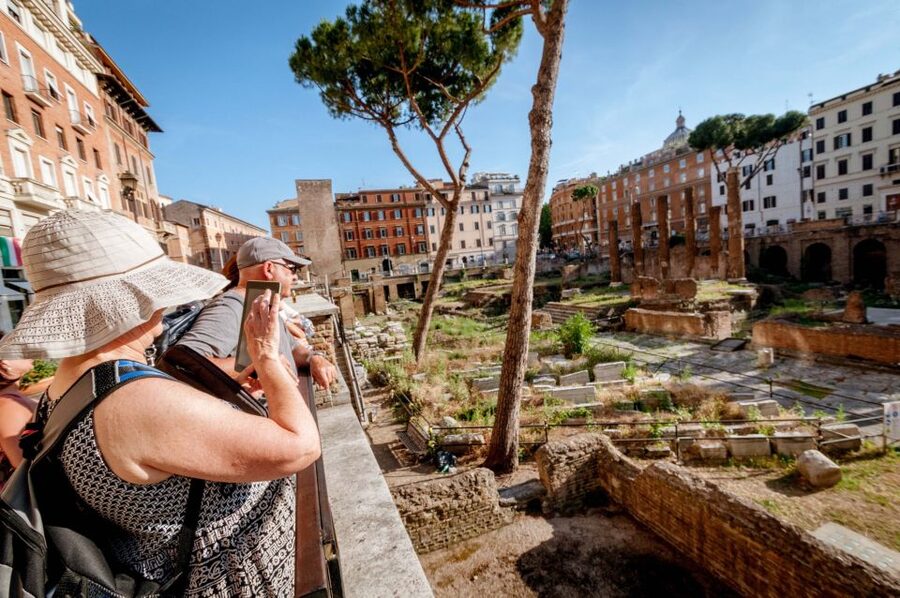
This walk begins at the junction of Largo di Torre Argentina and Via dei Cestari, between the newsstand and the shop named Sermoneta. Plan to be there 25 minutes early so you can check in, find your group, and get oriented before the walk starts.
Transportation is not included. That matters in Rome, where a last-minute metro sprint can turn your first stop into a frazzled scramble. I suggest you give yourself a little buffer and arrive ready to walk right away.
The tour lasts 3 hours, so it is designed as a focused neighborhood loop, not a half-day marathon. If you like to spend your energy on a few places and actually learn them, this time length works well.
You can also read our reviews of more walking tours in Rome



Entering Trastevere from street level, not from postcards
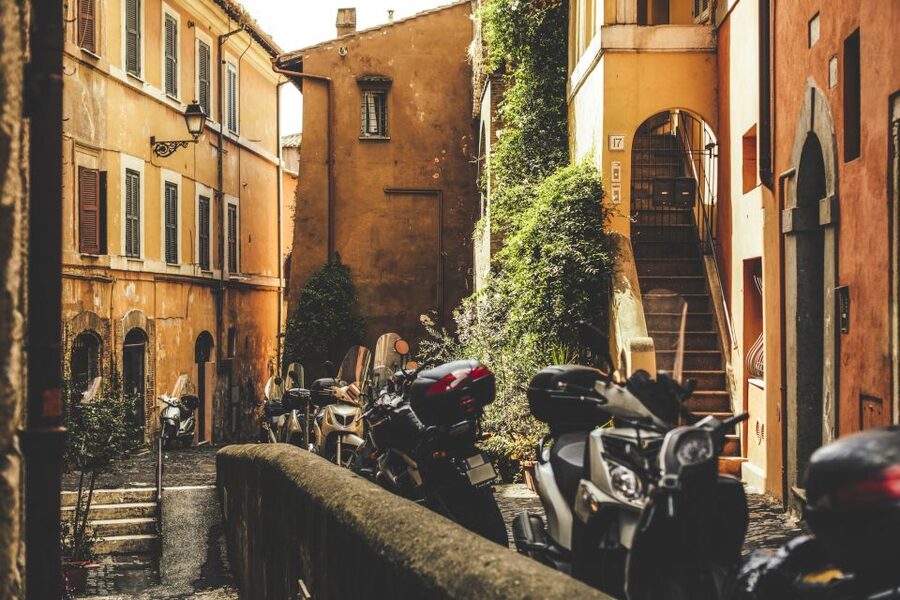
The big idea here is simple: Trastevere is a real working neighborhood, not just a background for photos. You get narrow, cobbled lanes and medieval-era buildings, plus a strong student presence that makes the area feel lived in.
The name Trastevere means beyond the Tiber. In the early days, it connected to the rest of the city by a tiny wooden bridge, which helps you understand why this side of Rome developed its own identity. Your guide uses that origin story to set up the rest of the walk, so you are not just collecting facts, you are building a mental map.
I like that the tour leans into how people moved into this area. Immigrants, especially Jews and Syrians arriving from the East, settled here and shaped the community over time. That context makes the later stops feel less like a history lesson and more like a continuation of real life.
Piazza Santa Maria in Trastevere: the square that gives you bearings
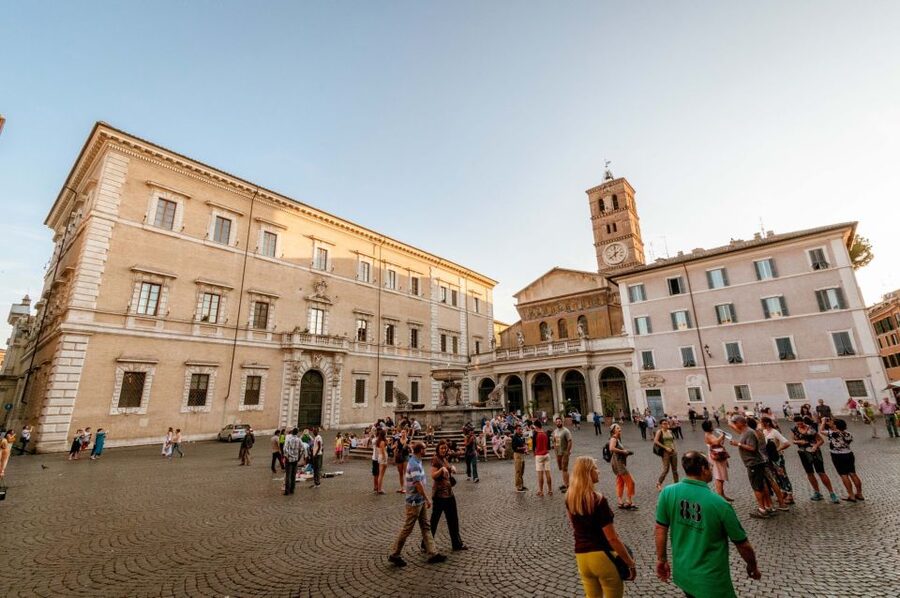
A key anchor is Piazza di Santa Maria in Trastevere, the main public space where everyday Roman life spills out. The square sits outside Santa Maria in Trastevere, and that church is one of Rome’s oldest. It is also one of the most visited, so you get the satisfaction of a major landmark without feeling like you are stuck in the busiest tourist channels for hours.
What you should watch for during this part is how the guide connects the building to the surrounding neighborhood. Even if you have seen big-name churches before, this one feels different because the walk continues right out into the streets you are standing on.
The best value of this stop is not just the church itself, it is the way the tour uses the church as a time switch. You look at the present-day square, then your guide pulls you back to older layers of Rome. That rhythm helps the whole 3 hours feel cohesive.
How Trastevere’s 2,500 years show up in the streets
You will hear about Trastevere’s long timeline while you are walking, not just at one museum-style stop. Your guide frames the area’s growth as something gradual, shaped by movement across the Tiber and settlement patterns.
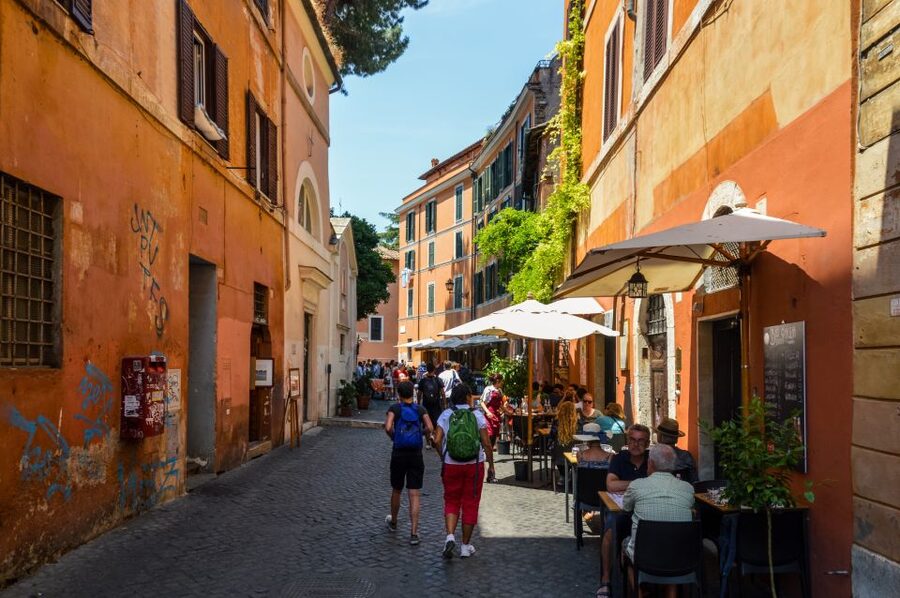
This is one reason Trastevere feels like a diversion from the heavy-handed tourist center. It is more residential, so you are seeing ordinary storefronts, side streets, and the kinds of corners where Romans actually hang out. The guide also points out smaller details along the way, the stuff that tells you when a neighborhood changed and when it stayed the same.
One practical benefit: you get a break from constant standing in line. This tour is designed as a stroll with stops, so your feet get a chance to absorb the city while your brain absorbs the story.
The shift to the Jewish Ghetto near the Tiber
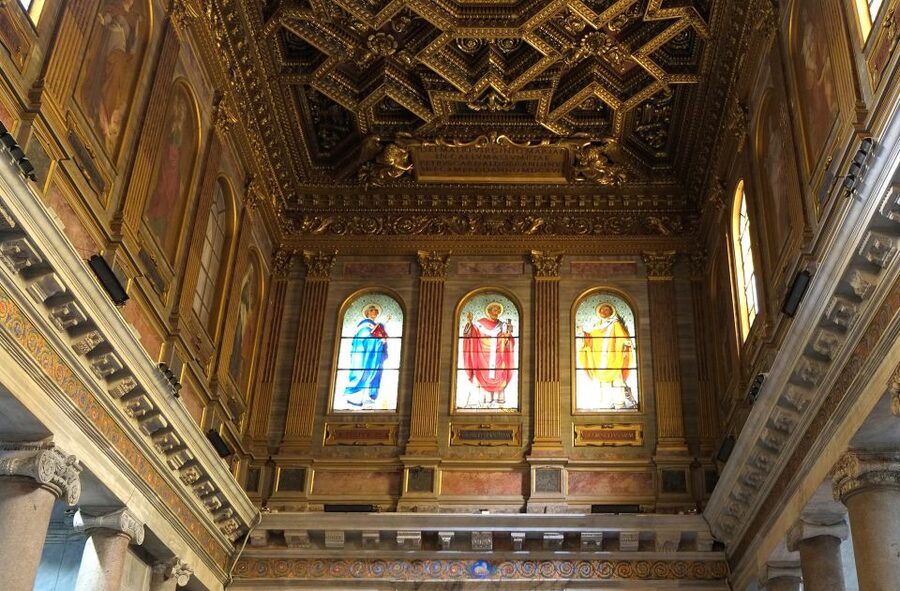
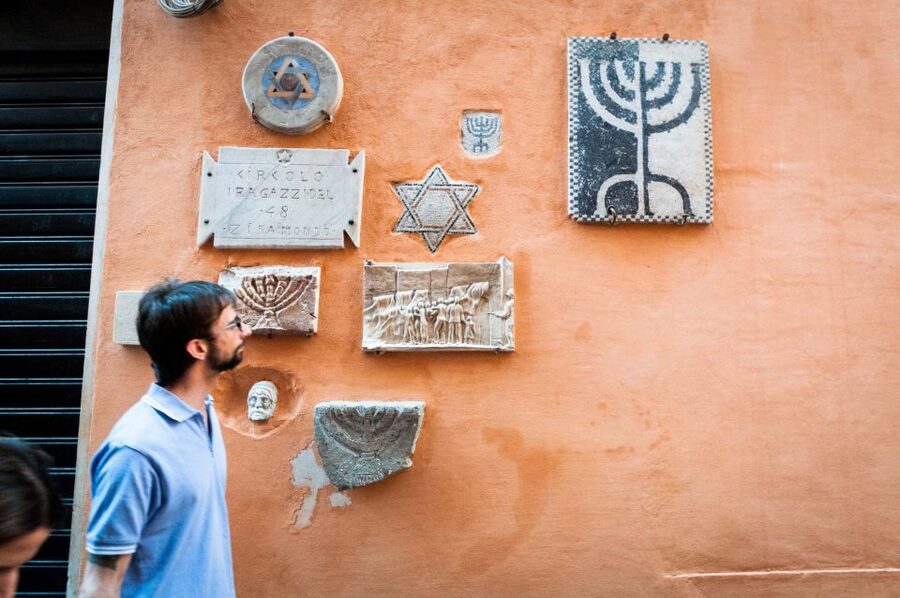
After Trastevere, you move toward the Jewish Ghetto area. The tour focuses on the location of the ghetto near the Tiber, in an area surrounded by today’s Via del Portico d’Ottavia, Lungotevere dei Cenci, Via del Progresso, and Via di Santa Maria del Pianto.
It is easier to understand places like this when you can connect street names to a mental picture. That is what this tour does well, and it is why the boundaries matter. By the time you finish this section, you should be able to recognize where the ghetto sits relative to the river, instead of treating it like a single building you passed once.
You will also hear the Italian term Serraglio delli Ebrei, which translates to enclosure of the Jews. The word choice lands differently when you are physically in the neighborhood streets. It turns a term you might have seen in a textbook into something that feels connected to space and daily life.
You can also read our reviews of more guided tours in Rome






Seeing the synagogue area, and knowing what to expect
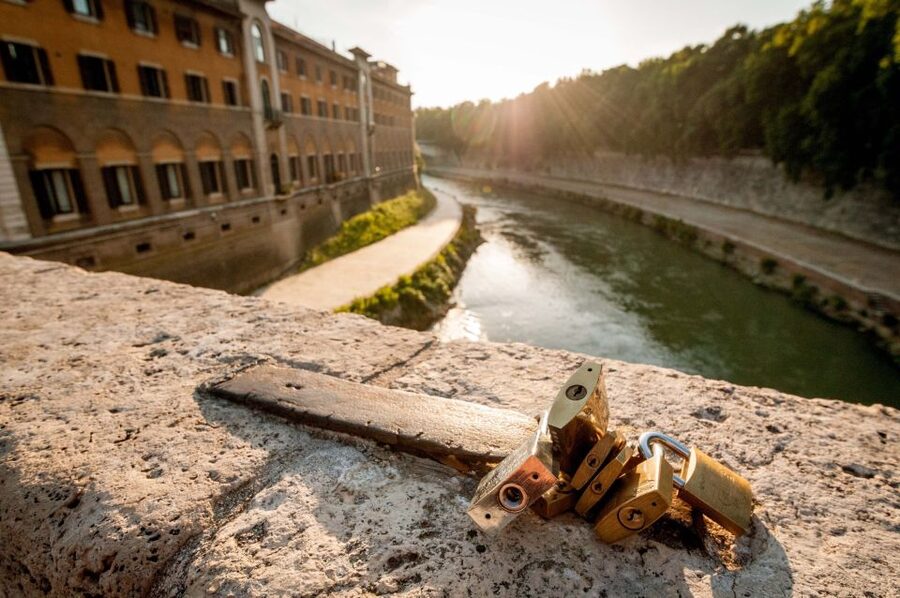
You also get to see the Synagogue of Rome area as part of this walk. The tour description frames the location as charming, with restaurants and some of Rome’s best food nearby. That detail is important because it’s a reminder that history did not replace daily life, it coexisted with it.
One thing I’d plan for: the view from the street can be limited. In past departures, at least one person wished they had been able to see more than the back of the synagogue during the stop. So if your priority is a front-on photo or a full exterior viewing moment, set expectations now and treat the stop as a contextual viewing point rather than a guaranteed grand facade shot.
Your guide should help you notice what you can see and, just as importantly, what the setting is telling you. In neighborhoods like this, the streets themselves often carry the story. Look for that, and you will get more out of the stop.
The pace: relaxed walking with room for questions
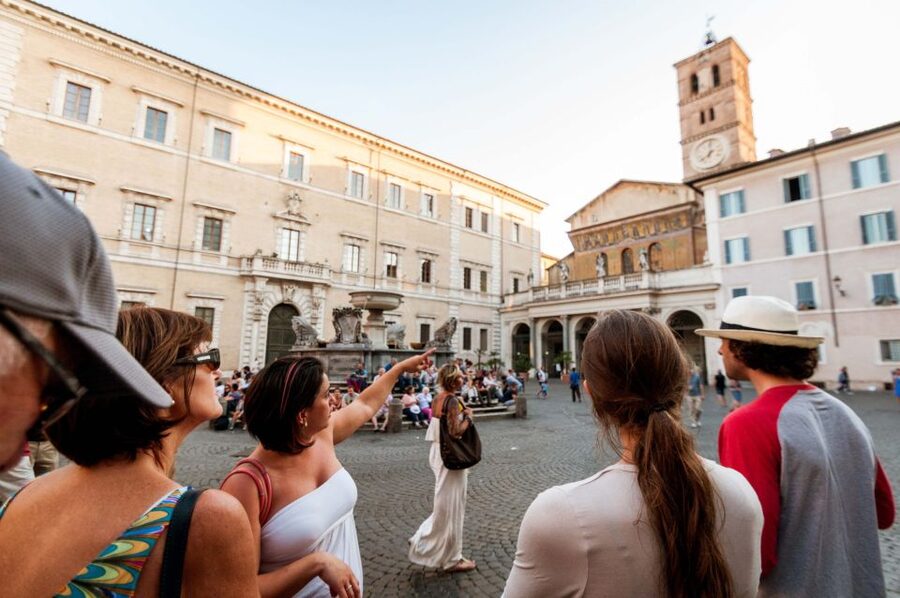
At 3 hours, you are not racing through Rome. This tour aims for a pace that lets you ask questions and still reach every planned stop. That balance is a big deal, because too-fast tours make history feel like an assignment.
The guide approach is part of the value. People have highlighted guides as personable and passionate, with a sense of humor that makes serious topics easier to hold in your head without shutting down. It also helps if you like an active style of touring, where your guide connects the past to the present streets you are walking.
English is supported by both a live English guide and an English audio guide. The audio option can be a lifesaver if you want to slow down, step back for a clearer moment, or catch a detail you missed while moving through crowds.
Food, cafés, and shopping that actually fit the neighborhood
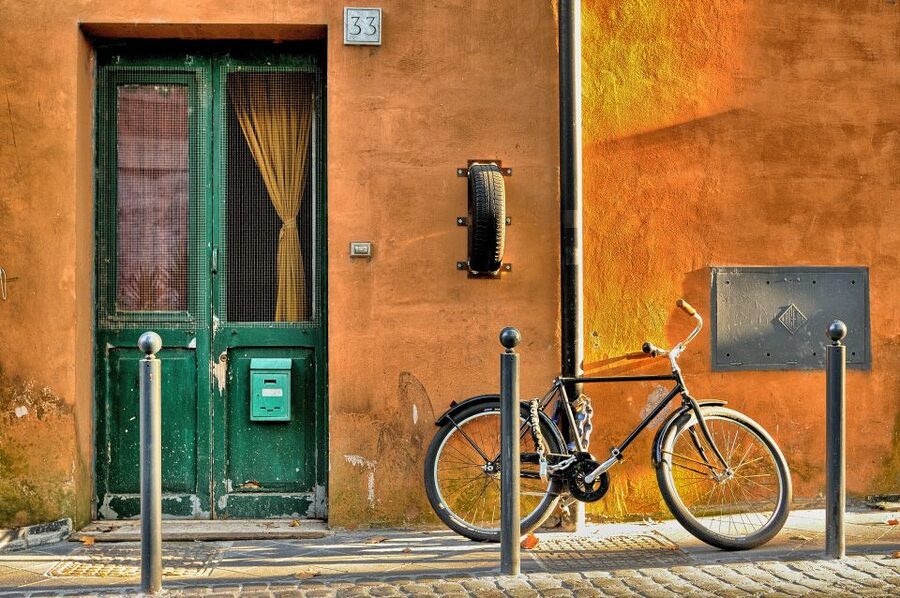
Trastevere is full of places to eat and drink, and this tour places you in the right mood for it. As you walk, you will pass an impressive selection of restaurants, bars, and cafés that locals use. That is the kind of information that pays off immediately, because you can choose dinner based on what you just experienced rather than guessing from a map.
You will also pass boutiques and studios where shopping feels more like browsing than hunting. If you like small gifts, handmade items, and art that looks like it came from the neighborhood instead of a mall, this area is where you tend to find it.
The tour does not add transportation, so treat this as a chance to build your own plan afterward. When you finish, you will already understand the streets enough to pick a nearby place without losing time.
Price and value: what you get for $82
This tour costs $82 per person for 3 hours, and the inclusions matter. You get a live English guide plus an English audio guide, so you are not just paying for someone to walk you from point A to point B. You are paying for interpretation, timing, and the ability to ask follow-up questions as you go.
Transportation is not included, so the real cost includes your own getting-to-meeting-point logistics. Still, for a guided neighborhood experience that covers both Trastevere and the Jewish Ghetto area, it is a reasonable price point if you value context and want to understand what you are seeing.
To judge value well, think about what you normally pay for a guided walk in Rome, then compare that to what this gives you: major landmarks plus a neighborhood route that helps you connect history to streets.
If you like self-guided Rome, you could also cobble together the route on your own. But if you want the story threaded through your feet, this price buys that structure.
Accessibility and practical limits to know up front
This walk is not wheelchair accessible. The streets in Trastevere are narrow and cobbled, which usually makes wheel travel difficult even when a route looks possible on paper. If you need mobility support, you may want to consider another format, because the tour is built around street-level walking.
Pets are not allowed, so if you are traveling with an animal, you will need to plan a different activity. Also, since transportation is not included, you should be comfortable navigating on foot around your meeting point and during the route.
Who this tour suits best
This is a strong choice if you want:
- a neighborhood-focused Rome, not a checklist of only big monuments
- meaningful context for the Jewish Ghetto area, anchored to street geography
- a relaxed pace with time for questions and a guide who can explain clearly in English
- a trip that ends with you feeling ready to eat and wander locally
If your travel style is mostly fast-hit sightseeing, you might find the slower walking less exciting. But if you enjoy small squares, church exteriors, and learning how a district evolved, you will probably feel like the 3 hours disappear in a good way.
Should you book this Trastevere and Jewish Ghetto walking tour?
I think you should book it if you want Rome that feels human, with the kind of history that lives in actual streets. The combination of Piazza Santa Maria, Trastevere’s evolution beyond the Tiber, and the ghetto geography near the river is a smart use of time.
Skip it if you need wheelchair accessibility or if you want only landmark-grade photo ops with wide viewpoints. Also, if you are extremely pressed for time and dislike meeting-point logistics, plan to arrive early and handle your own transportation so the start does not stress you out.
Overall, this is a solid value walk for people who care about how cities work, not just what they look like.
FAQ
How long is the tour?
It is a 3-hour guided walking tour.
How much does the tour cost?
The price is $82 per person.
What language is the tour guide?
The live tour guide is in English.
Is an audio guide included?
Yes, an English audio guide is included.
What is included in the price?
The price includes the 3-hour guided tour.
Is transportation included?
No, transportation is not included.
Where is the meeting point?
The meeting point is the junction of Largo di Torre Argentina and Via dei Cestari, between the newsstand and the shop Sermoneta.
When should I arrive at the meeting point?
You should be ready at the meeting point 25 minutes prior to tour departure.
Is the tour wheelchair accessible?
No, the tour is not wheelchair accessible.
Are pets allowed?
No, pets are not allowed.
Does booking include free cancellation and pay later options?
You can cancel up to 24 hours in advance for a full refund. You can also reserve now and pay later.
More Walking Tours in Rome



More Tours in Rome


More Tour Reviews in Rome
Not for you? Here's more nearby things to do in Rome we have reviewed












Trastevere Tours, compared.
 ★ 4.8Trastevere or Jewish Quarter Street Food TourFrom $513,839 reviews
 ★ 4.9Trastevere & Campo de Fiori Street Food Walking TourFrom $512,768 reviews
 ★ 4.8Guided Food Tour in TrastevereFrom $1122,266 reviews
 ★ 4.9Trastevere Guided Food and Wine Tour with 20+ TastingsFrom $1461,022 reviews
 ★ 4.8Small Group Trastevere Food Tour with DinnerFrom $132719 reviews
 ★ 5.0Rome Trastevere Pasta Making Class with Eating EuropeFrom $100505 reviews
 ★ 4.9Twilight Trastevere Food Tour with Wine TastingFrom $123490 reviews
 ★ 4.8Food & Wine Tour of Campo de Fiori, Ghetto, TrastevereFrom $81413 reviews
Browse the lists this tour appears in