
Reviewed · ROME VESPA TOURS
Vespa Tour – The Essence of Rome
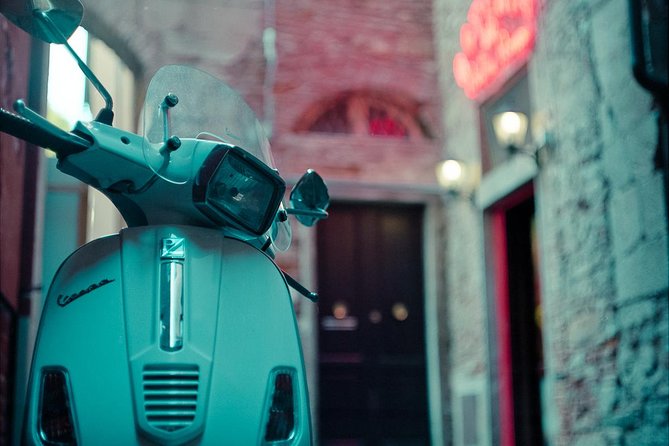
Sparks of ancient Rome, powered by scooter. A Vespa tour turns scattered sights into one smooth route, with a guide and quick stops built for getting your bearings fast. It is timed for big-name landmarks, but it still feels like you are gliding through real streets, not marching between ticket lines.
I love the hands-on scooter experience plus the fact that helmets and fuel are included, so you can focus on the ride. I also like that you can ride solo or with a second rider per scooter, which makes the tour easier to plan for couples or friends. One thing to weigh: this is not for faint of heart if you are new to city traffic. The driving requirement is strong, and you will want confidence on small streets and quick maneuvers.
Key Highlights Worth Knowing
- Helmet and fuel included so you are not doing extra budgeting before you start.
- Max 10 people per booking for a more personal feel and easier pacing.
- Private tour format means the guide can adapt to your group’s comfort level.
- A short 3-hour circuit that hits forum ruins, Colosseum area, Trevi, Pantheon, Navona, and St Peter’s Square.
- Solo or tandem riding option depending on how you are paired on your scooter.
- US drivers need an International Driving Permit (and you need the right license type), which matters before you arrive.
Rome by Vespa, not on foot
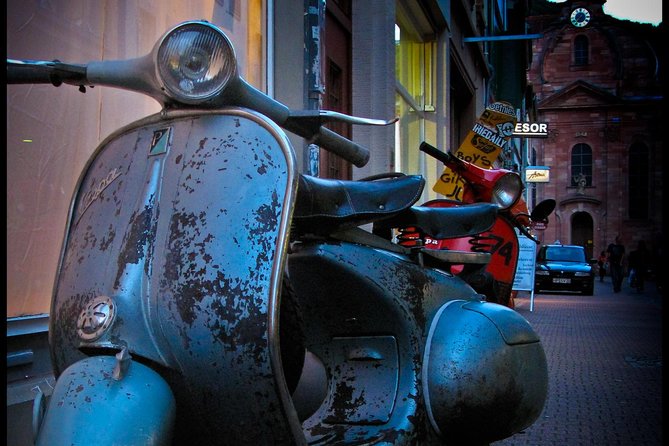
A scooter tour in Rome is a simple idea, but it changes the whole trip. On foot, Rome can feel like a long series of crossings, stairs, and waiting. On a Vespa, you can move with the city’s rhythm. You still stop to look and learn, but the gaps between landmarks stop feeling like dead time.
This tour is built for the classic Rome hits, then stitches them together into one rideable story. In about three hours, you cover everything from Ancient Rome power points to the big Baroque and Renaissance postcards, then finish at St Peter’s Square and the lively market area of Campo de’ Fiori.
Where it feels most “Roman” is the way you travel through narrow streets and busier squares without treating Rome like a museum hallway. You get photos at the places you came for, but you also get the feeling of moving with locals.
A few more Rome tours and experiences worth a look
Price and what you get for $137.80 per person
The price is listed at $137.80 per person, and what makes it feel like value is the bundle: Vespa use, helmet, and fuel are included, plus a professional guide. For a city tour where you are usually paying separately for transport, this one is already packaged.
You also gain something less obvious: time. With stops planned for roughly 10 to 15 minutes each, you are not spending your whole day trapped in long “walk to the next thing” loops. If you only have a short Rome window and you want to see major sights in one go, the math tends to work out.
A balanced note: you are not buying deep, hour-long visits inside every monument. Some stops have admission tickets marked as free and others are not included, so treat this as a guided circuit designed for seeing key exteriors and learning what matters, quickly.
Before you start: license, comfort, and helmet time
This is where you need to read carefully, because Rome scooter tours are part ride and part driving test.
You need a B driver’s license, and if you are a US citizen, you need an International Driving Permit. The minimum age is 21. Dress code is smart casual, and the tour uses a helmet and includes fuel and the Vespa.
The big requirement is skill level. Strong experience driving scooters in city traffic is listed, which makes sense. Rome traffic is not calm, and even when your guide rides at a slower pace, you are still weaving through moving cars, tight streets, and sudden stops. In the same spirit, keep your expectations realistic: this is not a “casual stroll with pretty scenery.” It is a riding activity.
Practical tip: if you are even slightly unsure, practice confidence first. That might mean spending time getting comfortable with braking and turning before you start the sightseeing portion.
Largo Argentina to the Forum zone: Rome’s layers fast
You begin at BigaBike – Rent Scooter Rome (Via di S. Calisto, 9). From there, you meet your guide and pick up your Vespa and helmet, then roll toward the first stop at Area Sacra di Largo Argentina.
This opening stop sets the tone. Largo Argentina is known for its Ancient Rome presence, and the guided start helps you mentally map what you are about to see. Instead of getting to ruins cold, you get a quick orientation, then you can connect the dots as the route moves forward.
Next comes Foro Romano. This is where the tour earns its “Essence” name. Your guide illustrates the major ruins of the heart of Ancient Rome, giving you a hit of context without needing to spend your day inside a single site. The admission ticket is marked as not included here, so if you want full entry or a longer look, you will need separate planning.
How this plays out for you: if you like history but hate slow pacing, this is a nice fit. If you want long museum-style time at one place, you will likely feel the time pressure.
Colosseum area and Circo Massimo: view, explain, then roll
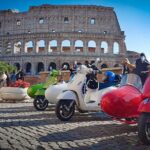
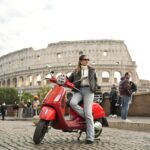
From Foro Romano you move into the Colosseum (Flavian Amphitheatre) area. Your guide explains the history of the Colosseum and also the Arch of Costantine. Again, this stop is short, and admission is not included, so think of it as a guided spotlight rather than a full visit.
The advantage of doing the Colosseum this way is your perspective. On a scooter circuit, the Colosseum does not feel like a single isolated photo spot. It becomes part of a cluster of power, politics, and spectacle that you can sense through the route.
Then you head to Circo Massimo, the Ancient Roman stadium for chariot racing. The guide also connects it to the view of the Palatine Hill, the center-most of the Seven Hills of Rome.
This is one of the smarter stops in the itinerary because it adds spatial understanding. You see the kind of scale chariot races required, and you get a stronger sense of where the hills sit in relation to the city.
If you do not love rushing, watch how your group is pacing. Some scooter tours move quickly by default. A slower guide and a careful group can make these “10 minute” stops feel more like “brief but worthwhile.”
A few more Rome tours and experiences worth a look


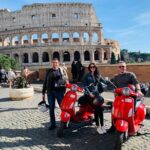
The Mouth of Truth area and Piazza Venezia: quirky Rome, then monuments
One of the standout parts is the stop that centers on the tallest medieval belfry in Rome, with the Mouth of Truth and the nearby Temple of Hercules Victor and Temple of Portunus across the street.
Even if you are not a trivia collector, this stop is fun because it feels like Rome has character in layers. You get a story cue for a famous landmark, then you see the smaller temple structures in the same orbit. It helps you remember Rome is not only about big stadiums and famous fountains, it is also about oddball, instantly recognizable details that have stuck in pop culture for a reason.
After that comes Piazza Venezia and its cluster of major monuments. You are guided past sights including Trajan’s Column, the Vittoriano monument, Altare della Patria (Italy’s Tomb of the Unknown Soldier), Capitoline Hill, and nearby churches and Palazzo Venezia.
This zone is good for two reasons. First, it is visually dense, so a guide helps you prioritize what to look at. Second, it bridges the Ancient and Modern Rome feel you came for.
Time is limited here, so the value is in choosing the moments that matter to you. If you are the kind of person who likes to stand and stare, you will need to balance that instinct with the group pace.
Trevi Fountain and Spanish Steps: classic postcards, timed for photos
Then the tour goes into the most famous “walk away and you are there” Rome territory.
At Fontana di Trevi, your guide describes the largest Baroque fountain in Rome and includes the classic coin ritual. The stop is about 15 minutes, which is enough for a few photos and a guided explanation without feeling stuck in a crowd all afternoon.
At the Spanish Steps, you get another 15-minute block. The guide helps you admire the monumental stairway called Scalinata di Trinità dei Monti, along with the Church of the Santissima Trinità dei Monti, the early Baroque Fontana della Barcaccia, and the Column of the Immaculate Conception.
Here is the key practical point: these stops are famous because the crowd magnets are strong. In a scooter tour, you do not “solve” crowds. You just move between them quickly with a plan. If your goal is postcard moments in limited time, these timed stops do the job.
If your priority is quiet, longer staring sessions, you might find this portion a bit hectic. But if you can handle busy public spaces, this is where the tour pays off emotionally, because Rome’s most iconic images are the reward.
Pantheon to Piazza Navona: architecture outside, with context
Next up is the Pantheon. You get a private-guide style history and architecture description, and the admission is listed as free for this stop.
Even when time is short, Pantheon makes sense for a scooter tour because it is instantly readable. You do not need a long script to recognize why it matters, and the guide can explain what you are seeing in a way that sticks.
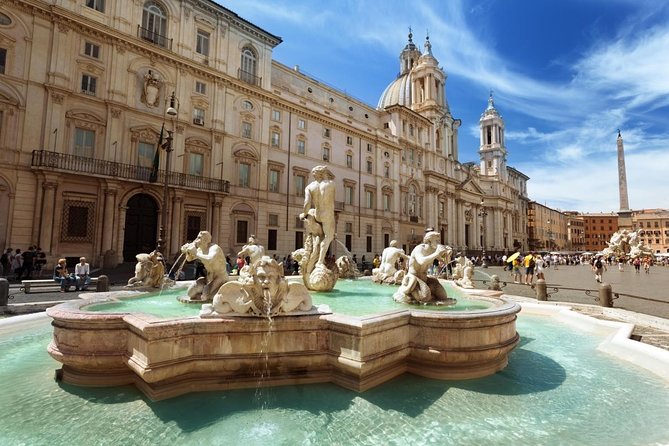
Then you head to Piazza Navona for about 15 minutes. The guide walks you around the plaza to admire the Fountain of the Four Rivers, the church of Sant’Agnese in Agone, the Fountain of Neptune, and the Moor Fountain.
This stop is also a good one for your senses. Piazza Navona is lively, especially during the day, and it is easier to connect the dots here. The fountains and artwork are not “background.” They are the point.
The only drawback is that your time is short. You will likely want to linger after the guide’s route ends, so plan for the fact that this tour can be the spark, not the complete experience.
Castel Sant’Angelo and St Peter’s Square: big Rome ending
From Piazza Navona, you move toward Castel Sant’Angelo. You get to admire it from outside, also known as the Mausoleum of Hadrian, plus the Ponte Sant’Angelo with its angel sculptures.
This is another stop where the scooter format works. You get exterior viewpoints and a guided story without waiting for a full visit window. If your travel style includes “see first, decide later,” this is a smart way to handle a huge sight.
Then you arrive at St Peter’s Square, where your guide offers detailed information about St Peter’s Basilica, the square’s obelisk, and Bernini’s Colonnades.
Your stop is about 15 minutes. That means you will get orientation, key visual pointers, and context. It also means you are unlikely to get the full deep religious or architectural exploration unless you plan a second visit later.
Campo de’ Fiori: finish with market-life Rome
The last stop is Campo de’ Fiori, where you can stroll through the daily market for about 15 minutes.
This ending works because it shifts you from grand monuments into street-level life. It feels like a good travel trade: you spend the first half seeing Rome’s major landmarks, then you end with a place where locals and daily rhythms take over.
You finish back at the meeting point, so the loop closes cleanly.
One more practical note: because your tour ends where it starts, you will have an easy time arranging dinner plans or walking to nearby stops on your own.
Should you book this Vespa Tour, The Essence of Rome?
Book it if you want a fast, guided Rome hit and you enjoy riding. This tour is ideal when your schedule is tight and you want to cover a lot of iconic sights without hours of walking. I also think it suits people who like history but do not want to spend the day inside separate venues. The pace fits a “get the big picture” travel style.
Do not book it if you are not ready for scooter driving in city traffic. The requirement is clear that strong experience is expected, and the route includes busy zones and tight streets where confidence matters. Also skip it if you want long inside visits at every major monument. This is a short stops, guided circuit tour.
If you are comfortable on a scooter, though, you will likely find this one of the most fun ways to see Rome fast. It is practical, structured, and built around the idea that Rome is best experienced in motion.
FAQ
How long is the Vespa Tour – The Essence of Rome?
The tour lasts about 3 hours.
How much does it cost per person?
The price is $137.80 per person.
What is included in the tour price?
It includes use of the Vespa, helmets, fuel, and a professional guide.
What is not included?
Hotel pickup and drop-off are not included, and food and drinks are not included unless specified.
What license do I need to drive the scooter?
You need a B driver’s license. US citizens need an International driver’s license.
Where does the tour start and end?
It starts at BigaBike – Rent Scooter Rome (Via di S. Calisto, 9, 00153 Roma RM, Italy) and ends back at the meeting point.
More Scooter Rentals in Rome

More Tours in Rome






More Tour Reviews in Rome

Not for you? Here's more nearby things to do in Rome we have reviewed












Rome Vespa Tours, compared.
 ★ 5.0Rome Vespa Scooter Tour with Professional PhotographerFrom $66857 reviews
 ★ 4.9Highlights Vespa Sidecar Tour with Coffee and GelatoFrom $141747 reviews
 ★ 5.0Rome Afternoon Sightseeing Vespa Sidecar Tour with Gourmet GelatoFrom $163692 reviews
 ★ 5.0Rome Vespa Tour with Professional PhotoshootFrom $81576 reviews
 ★ 5.0Vespa Sidecar Tour In Rome with Pickup, Drop-off, Gelato includedFrom $143472 reviews
 ★ 5.0Rome by Vespa: Classic Rome Tour with Pick upFrom $119321 reviews
 ★ 5.0Rome by Vespa – Live the City Like a LocalFrom $180297 reviews
Vespa Tour with Pro PhotoshootFrom $80276 reviews
Browse the lists this tour appears in