
Reviewed · TRASTEVERE TOURS
Small Group Rome’s Jewish Ghetto and Trastevere Tour
A few streets, and suddenly centuries. This small group walk threads the Roman Jewish Ghetto to Trastevere with expert storytelling and standout stops along the way. I like how the route mixes big monuments with human scale details, so history feels close instead of museum dry.
Two things I really like: the guide keeps the tone respectful and vivid while covering tough moments, and the small size (up to 15) makes it easy to ask questions and slow down at the right spots. One possible drawback is that you see the Great Synagogue of Rome from the outside only, so if you want interior access, plan to do that separately.
You start near Saint Rita of Cascia in Campitelli and finish in Trastevere at Piazza Trilussa, which is convenient if you want to keep exploring afterward on foot.
Key highlights worth your attention
- Up to 15 people keeps the walk lively, not rushed
- 2000 plus years of Jewish life in Rome, explained street by street
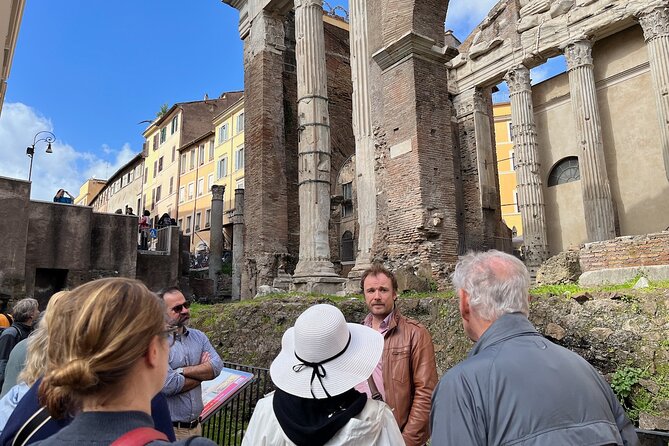
- Teatro di Marcello and Il Portico di Ottavia set the scene with Roman power and daily life
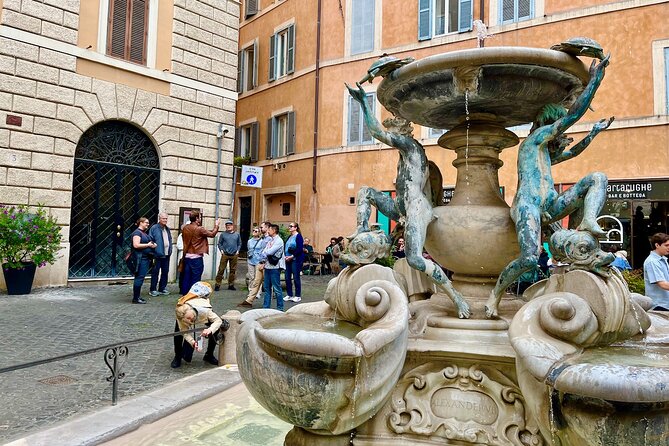
- Fontana delle Tartarughe and Pont Fabricius add charming, story driven stops you might otherwise skip
- Trastevere alleyways turn the tour into a real neighborhood experience, not just checkpoints
- Isola Tiberina includes an optional gelato or coffee break and long timeline context
The smart way this tour balances power, faith, and neighborhood life
This is a history and neighborhoods walk that moves at a comfortable walking pace, but it still covers a lot in about 2 hours 30 minutes. You begin with major Roman ruins, shift into the Roman Ghetto area, then wrap around to Trastevere, one of Rome’s most fun after dark neighborhoods (and yes, you will walk enough to earn your snack).
The value is in the way the stops connect. The Jewish Ghetto section is not treated like a single, fenced off topic. It sits alongside nearby streets, landmarks, and visual clues, so you understand where the community lived and how the city shaped daily life over time.
Also, the tour price is modest for the amount you get: an expert guide plus guided time at multiple major sites where admission is listed as free. The one thing to watch is that the synagogue interior is not included, so your money is really paying for context, not entry.
You can also read our reviews of more tours and experiences in Rome.



Getting started near Saint Rita of Cascia, then straight into Roman ruins
The tour starts at Saint Rita of Cascia in Campitelli, Via Montanara. That matters because it puts you close enough to begin with a classic Rome scene instead of spending your first minutes hunting for the right street.
Stop 1: Teatro di Marcello, a ruin with real presence
You kick off at Teatro di Marcello, one of Rome’s great ruins. Even if you have seen your share of Roman stones, this stop works because it is framed around why the structure mattered and what you can still read from its shape.
This is a good opening move. It gives you Roman context early, before the tour shifts to the Ghetto. It also helps you notice details you might otherwise overlook, like how ancient architecture was built to handle crowds.
Stop 2: Il Portico di Ottavia, history layered for over 2000 years
Next comes Il Portico di Ottavia. The focus here is the building’s long timeline, from its foundation in the 1st Century BC to how it has developed over time.
For me, this stop is one of those “small scale but important” moments. It trains your eye to see change over centuries, rather than treating old buildings as fixed photos. You start to realize Rome keeps reusing and reshaping spaces, even when the meaning changes.
Both of these early stops are listed as short, about 5 minutes each, which is exactly right for a walking tour. You get enough orientation to make later sections click.
The Roman Ghetto section, where the tour stays human and respectful
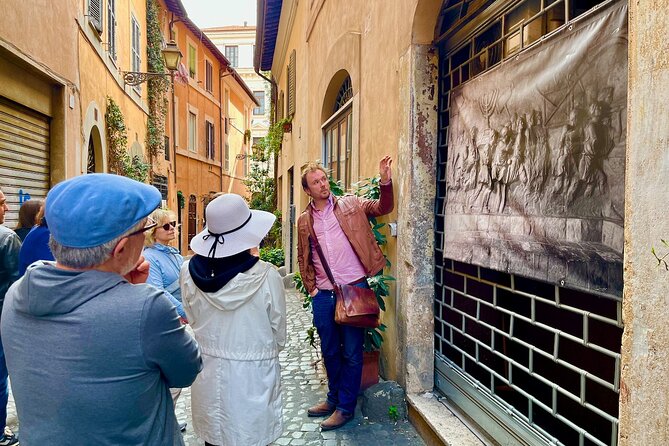
The heart of the walk is the Roman Ghetto area, in the centre of where the community lived. The tour time here is about 50 minutes, which is long enough for the guide to tell stories without turning it into a frantic sprint through photo spots.
This is where the best feedback consistently points: guides like Ben, Alethia, Alethea, and Alisha are praised for doing the hard history in a way that honors the people involved. You are not just hearing dates. You are being guided through the streets and visual cues so the story connects to place.






What makes this part valuable for you
If you have ever felt confused walking through the Ghetto area on your own, this guided section helps you connect the dots. You get a sense of continuity, because the community’s history is described as over 2000 years old, not a single dramatic chapter.
And it is not treated like a lecture. You are shown how the area works visually, with little signs and features that you likely would miss without a guide. The payoff is that you leave with a clearer understanding of why the neighborhood still feels so distinct.
A practical note
This area can feel busy, and the streets can be tight. If you want to ask questions, this is the best time in the tour to do it, since the longer stop gives you breathing room.
Fontana delle Tartarughe and Pont Fabricius, the “wait, that’s why” stops
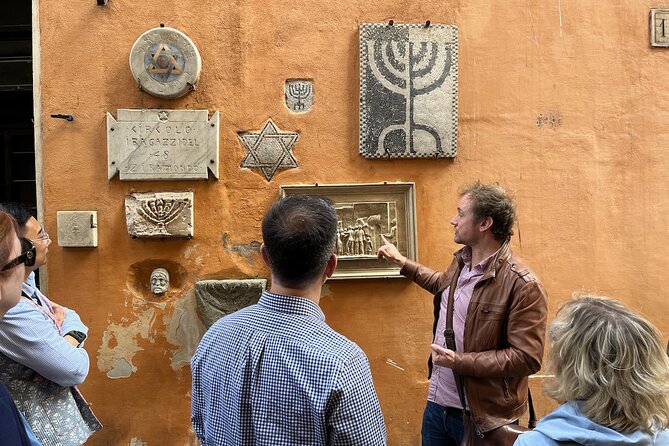
After the Ghetto, the tour turns more poetic with two short but meaningful landmarks.
Stop 4: Fontana delle Tartarughe, a small fountain with a story
At Fontana delle Tartarughe, you get a quick guided explanation of why this fountain is special. It is one of those moments where Rome rewards attention. A pretty spot becomes a clue to time, symbolism, or local tradition.
This stop is only about 5 minutes, but it works because it resets your brain after the heavier Ghetto material. You go from streets and survival to something lighter, without pretending the history is gone.
Stop 8: Pont Fabricius, one of Rome’s oldest bridges
Near the end, you reach Pont Fabricius, described as one of Rome’s oldest bridges. The guide’s focus is on why it is significant to the city.
I like this kind of stop because bridges are basically “infrastructure stories.” They show how movement shaped Rome, and they help you visualize how people and trade traveled. It is also a nice final image before you head into Trastevere for the neighborhood part.
The Great Synagogue of Rome, from outside with meaningful details
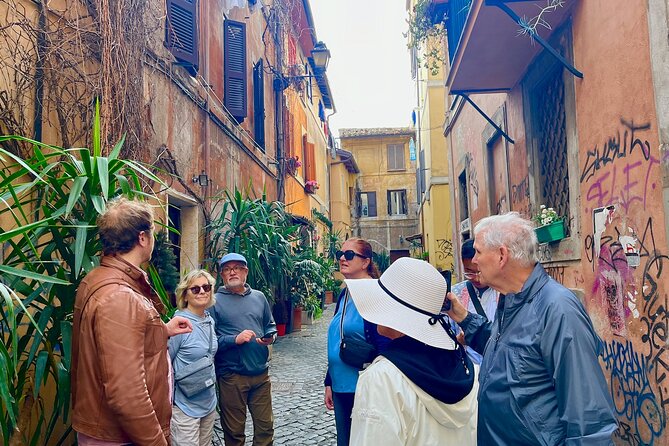
You also see the Tempio Maggiore di Roma, the Great Synagogue of Rome. The important detail for planning is this: the tour says you view it from the outside only, and synagogue entrance is not included.
That might sound limiting, but the value is in how the guide frames the outside details. You hear about the history and the “subtle meanings” behind the decoration and construction. Even without entry, you can still walk away understanding what you are looking at.
If synagogue interior access is a priority for you, plan that as a separate stop before or after this walk. The good news is the tour still gives you enough context to make an outside look meaningful, not just pretty architecture.
Trastevere, then Isola Tiberina, a calm break before you finish
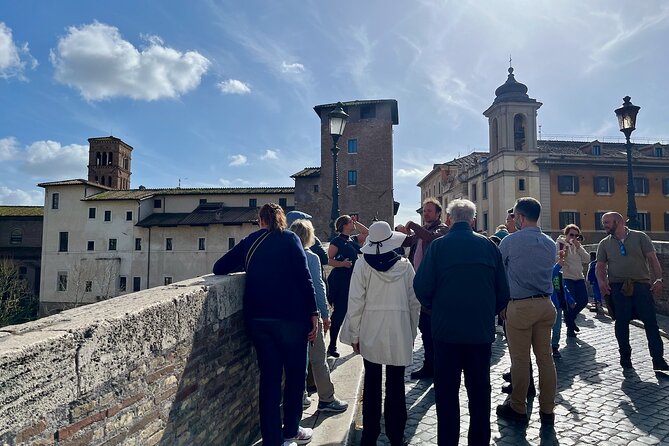
The tour transitions from historical density to neighborhood energy with Trastevere.
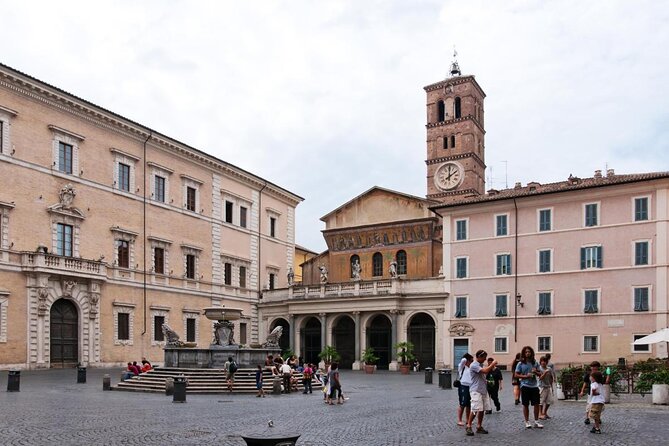
Stop 6: Trastevere alleyways and the why behind the vibe
You get about 1 hour in Trastevere, walking small alleyways and charming streets. The guide explains the area’s history and why it still feels magical.
This is the section you will enjoy most if you like to wander with purpose. You can treat it like a neighborhood orientation walk, where the goal is to learn what to notice and where to linger after the tour.
A small tip based on the general style of the guides: you are likely to get practical food and gelato advice at the right moment. In past groups, guides even pointed people back for a sweet finish like ricotta and cherry pie after the walk.
Stop 7: Isola Tiberina, optional gelato or coffee and a 2500 year timeline
Then you reach Isola Tiberina, Rome’s small island in the Tiber river. You have an optional break for gelato or coffee and drinks for about 15 minutes, before the guide shares stories spanning over 2500 years.
This stop is a smart pacing tool. It helps you reset with a short break and a change of scenery, even if the rest of the route stays busy.
Where the tour ends: Piazza Trilussa
The walk finishes in Trastevere at Piazza Trilussa. That’s a great landing spot because you are already in the area where it is easiest to keep exploring on foot after the guide wraps up.
The guide also provides information on how to get to anywhere afterward. Since this tour is primarily walking, that little close out can save you time when you are figuring out your next move.
Price and value: $36.05 for a focused guide, free admissions, and real context
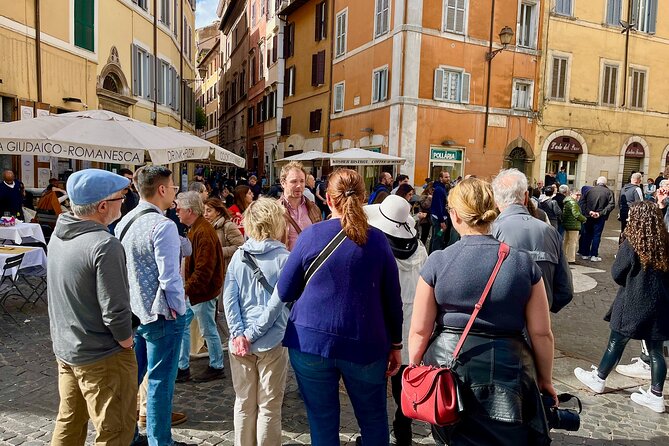
At $36.05 per person, this tour is priced for value, not for convenience. You do not pay for private transport, and the experience is mostly walking with a guide leading you from place to place.
What you do get is an expert guide plus guided time at multiple major stops where the listed admission is free. You also get a strong “two neighborhood” structure, Ghetto first, Trastevere second, so your money buys context and variety in one outing.
Where the value is weaker for some people is the synagogue interior. Since you see the Great Synagogue from outside only, you might want a separate ticketed visit if you want to go inside.
Still, if your goal is understanding the Jewish Ghetto area and then getting that Trastevere sense of place, this price feels fair for what you cover.
Small group size, meeting point, and the practical details that matter
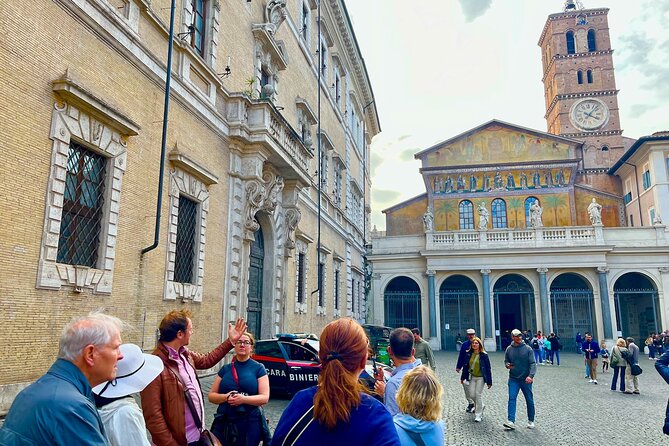
This is limited to a maximum of 15 travelers, which is a big deal for a walking tour in central Rome. Smaller groups mean you are less likely to lose the guide at corners, and you can ask questions without feeling like you are interrupting a stampede.
You also get a mobile ticket, and the tour is offered in English. It is marked as near public transportation, which matters because you do not have private rides to lean on.
If you are sensitive to long walking stretches, note the tour duration is about 2 hours 30 minutes. It is not a full day, but you should still plan comfy shoes and expect steady movement.
The meeting point is very specific: Saint Rita of Cascia in Campitelli, Via Montanara. The end point is equally specific: Piazza Trilussa. If you are doing other plans afterward, build in a little buffer.
Who should book, and who should consider something else
This tour is a great fit if you want:
- A respectful introduction to the Jewish Ghetto area with real street level context
- A short history walk that still includes neighborhood wandering in Trastevere
- A group size small enough to keep questions and conversation going
You might want to choose a different option if:
- You specifically want to enter the synagogue on the same tour, since this one is outside only
- You prefer tours that last longer at fewer sites rather than covering more ground across both areas
For most people who are planning a first or second Rome pass, this is a smart use of a single half day. It gives you the “why does this part of Rome look like this” feeling, plus the “I want to come back here for dinner” feeling in Trastevere.
FAQ
How long is the Small Group Rome Jewish Ghetto and Trastevere Tour?
It runs for about 2 hours 30 minutes.
How much does the tour cost?
The price is $36.05 per person.
Is the tour offered in English?
Yes, the tour is offered in English.
What is the group size limit?
The tour has a maximum of 15 travelers.
Where does the tour start and end?
It starts at Saint Rita of Cascia in Campitelli, Via Montanara, 00186 Roma RM, Italy, and ends at Piazza Trilussa, 00153 Roma RM, Italy.
Do you go inside the synagogue?
No. The synagogue is seen from the outside, and synagogue entrance is not included.
What is the cancellation policy?
You can cancel for a full refund up to 24 hours before the experience starts. If you cancel less than 24 hours before, the amount paid is not refunded.
Should you book this tour?
Yes, I would book it if your goal is a thoughtful, street level introduction to the Roman Jewish Ghetto, followed by a rewarding walk through Trastevere. The pricing is fair for the amount of guided time, the group stays small, and the guide style is repeatedly praised for being respectful and clear.
Just go in knowing what it is: outside views of key religious architecture, plus a focused walk that connects the Ghetto to the city around it. If that matches your travel style, this is a strong use of your time in Rome.
More Tours in Rome
More Tour Reviews in Rome
Not for you? Here's more nearby things to do in Rome we have reviewed












Trastevere Tours, compared.
 ★ 4.8Trastevere or Jewish Quarter Street Food TourFrom $513,839 reviews
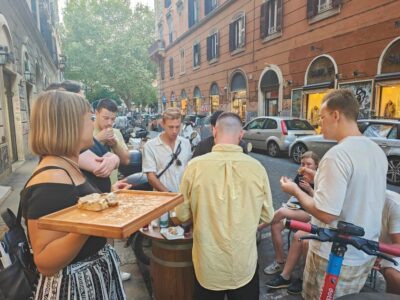 ★ 4.9Trastevere & Campo de Fiori Street Food Walking TourFrom $512,768 reviews
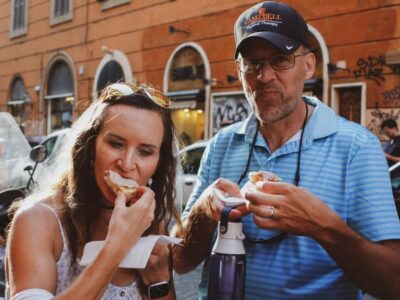 ★ 4.8Guided Food Tour in TrastevereFrom $1122,266 reviews
 ★ 4.9Trastevere Guided Food and Wine Tour with 20+ TastingsFrom $1461,022 reviews
 ★ 4.8Small Group Trastevere Food Tour with DinnerFrom $132719 reviews
 ★ 5.0Rome Trastevere Pasta Making Class with Eating EuropeFrom $100505 reviews
 ★ 4.9Twilight Trastevere Food Tour with Wine TastingFrom $123490 reviews
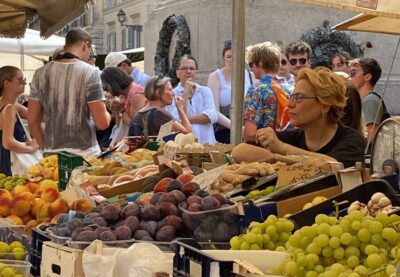 ★ 4.8Food & Wine Tour of Campo de Fiori, Ghetto, TrastevereFrom $81413 reviews
Browse the lists this tour appears in