
Reviewed · COLOSSEUM TOURS
From Colosseum Gladiators to Via Sacra: Rome’s Historic Heart
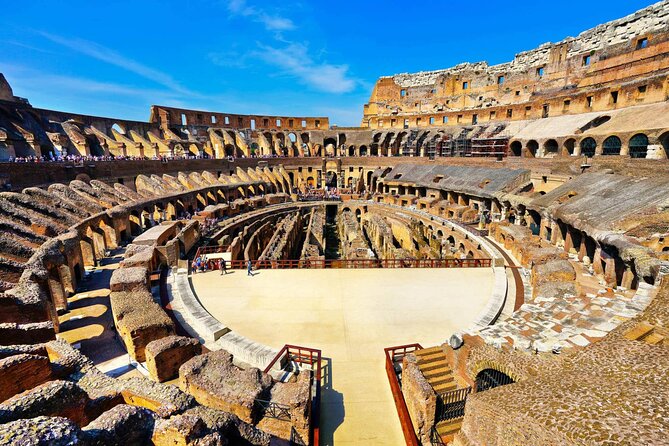
The arena floor changes everything in Rome. I like the skip-the-line setup and the fact you step onto the arena floor, not just look at the building from the outside. The main downside: group tours can mean moments when audio is tough if the microphone struggles, and you’ll be standing for stretches.
This half-day guided route strings together three of Rome’s big hitters, the Colosseum, Palatine Hill, and the Roman Forum, in about 3 hours. You get a live guide, entrance tickets for all stops, and a mobile ticket. It runs as a shared group (up to 25 people), so you’ll move with the pace of the group rather than stopping for your own photos whenever you want.
Key things to know before you go
- Arena floor access is the real upgrade here. You go down into the space where gladiators fought, which feels more specific and less touristy than a standard upper-level visit.
- You see three landmarks without trying to cram more. A 3-hour plan keeps it focused, especially if you have other church, food, or neighborhood plans later.
- Via Sacra turns ruins into a story. Your guide connects daily life, politics, and legends along the procession road.
- Expect standing and some slow moments. Even with good guidance, the route works in scheduled stops and climbing segments.
- Guide quality matters on this kind of tour. One guide named Sandra has been praised for being thorough, well spoken, and attentive to the group.
- You need the right ID and your name must match. Bring a valid passport or identification document that matches what you booked.
Entering the Colosseum Arena, not just viewing the Colosseum
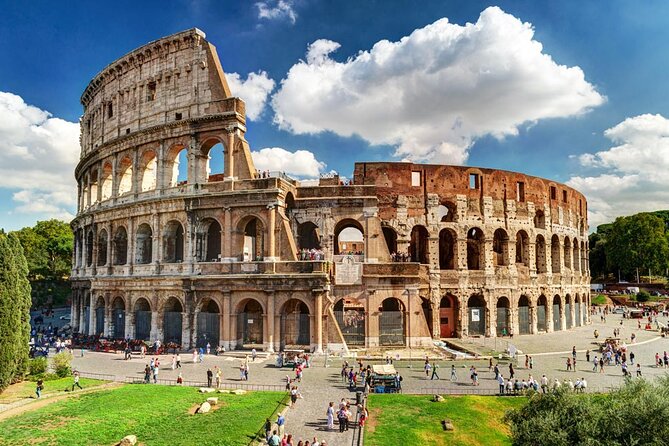
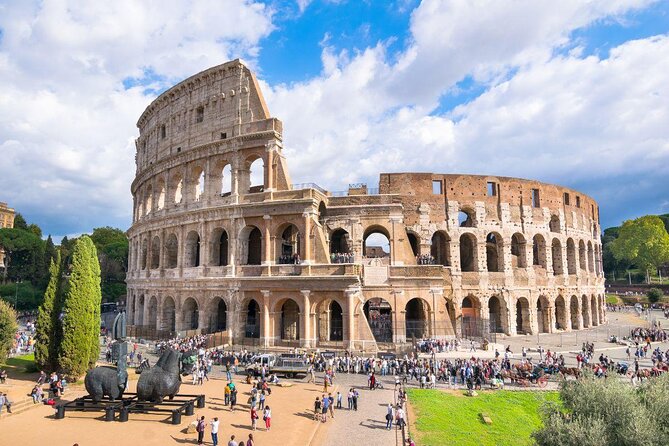
The first stop is built around one goal, getting you into the Colosseum in a way that feels more exclusive than the usual wander-through. Yes, the Colosseum is dramatic from any angle. But the difference is what happens when you reach the arena floor.
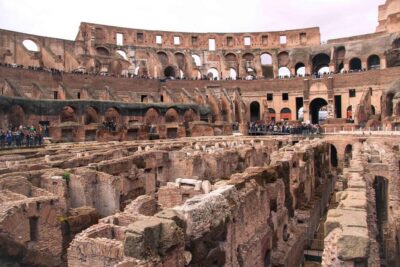
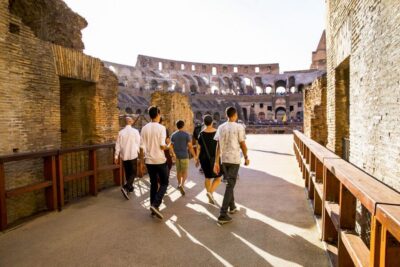
You’ll spend about 1 hour at the Colosseum with a guided component, and the ticket includes entrance to the arena. That matters because the arena is where the scale stops being theoretical. From up in the stands, you mostly see architecture. From the floor, you feel the stadium as a working space. Seating capacity in this area is smaller than the rest of the amphitheater, which also tends to mean fewer people in the most “in-the-action” zone.
Practical note: this is a guided stop, so you might be asked to hold position for key explanations before moving on. If you are the type who hates waiting, that can be a mismatch. One caution that came up is that microphone pick-up can make parts of the narration hard to catch at times, so it helps to stand close to your guide during commentary.
You can also read our reviews of more historical tours in Rome

How the Via Sacra story connects Colosseum, Forum, and politics
After the Colosseum, the tour keeps you in motion but shifts the focus from spectacle to meaning. You’ll cross the area dominated by major Roman triumphal arches and then work your way toward Palatine Hill and the Roman Forum. The guide’s job is to turn stone leftovers into something you can mentally place.
Even if you already know the basics of gladiators and emperors, the value here is how your route follows a logical geography. You are not bouncing randomly across Rome. You’re moving through the historic heart that helped shape Roman public life, from imperial power to senator politics.
This is where the Via Sacra elements come in. The Via Sacra is the road of processions and triumphs, and the guide’s explanations are aimed at showing you what that meant in real terms. Expect talk that connects:
- politics and speeches,
- ceremonial movement through the city,
- and legends tied to where you’re standing.
If you like history that explains how people acted, not just what happened, this structure fits well. If you prefer archaeology presented as a slow, quiet self-guided stroll, you may find the pace a little directive. You can still enjoy it, but you’ll enjoy it more if you’re open to the guide framing things.
Palatine Hill climbs: arches, sacred spots, and the oldest Rome vibe
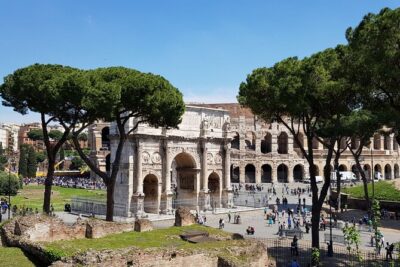
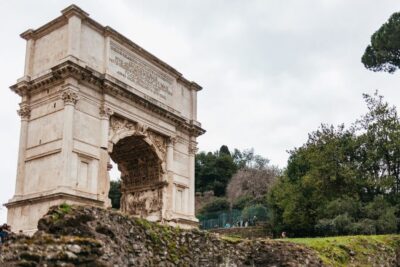
The Palatine Hill stop is about the “why” behind the ruins. From the route you’ll pass the Arch of Constantine and the Arch of Titus as you move across the square and begin the climb.
One reason these arches show up is because they’re not just decoration. Your guide points out the decorative apparatus on the Arch of Constantine, including reliefs and statues, and how Roman art worked as propaganda and power messaging. In other words, you’re not only looking at an arch. You’re seeing how emperors used imagery to control the story.
Then you climb toward Palatine Hill, one of the famous seven hills of Rome and a place packed with historical memory. This is also where the tour emphasizes the most ancient past of the city, including places Romans considered sacred. The guide connects these sacred associations to mythical events tied to Rome’s foundation.
A heads-up for planning: this segment involves climbing and more uphill movement than the Forum-level walking. It’s not an all-day hike, but it is real. Wear shoes you trust, because Rome’s stone surfaces do not care about your fashion choices.
Roman Forum highlights: Curia, rostrums, and what speeches looked like
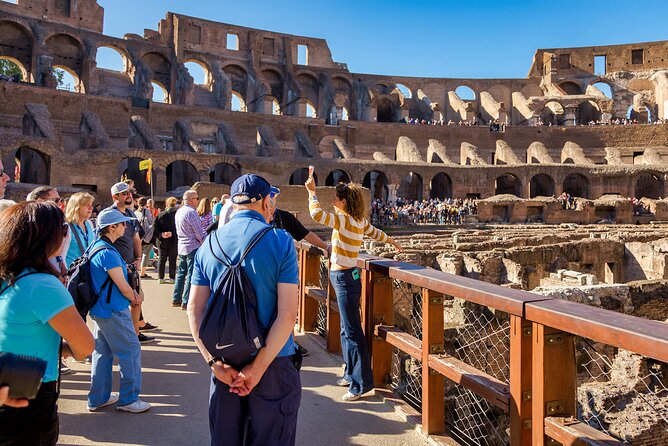
The Roman Forum area is where the day becomes very visual. You descend into the valley occupied by the Forum and also link it with the Imperial Forums, which together were the “beating heart” and monumental center of ancient Rome.
Your guide leads you along the Via Sacra and keeps the focus on practical and political details. You’ll walk past or near major civic landmarks, and the explanations are designed to make the space feel like a political machine rather than a bunch of columns.
Some specific stops and features you can expect the guide to point out include:
- the Curia, described as the official seat of Roman senators and noted as coming down to us intact,
- the tribunes of the rostrums, tied to heated political speeches,
- a rally area intended for the election of magistrates,
- and imposing triumphal arches.
This is a strong part of the tour for first-time Rome visitors because it gives you mental scaffolding. After you stand here, words like senator, election, and triumph stop being vocabulary and start being locations and crowd movement.
The same practical caution applies as with the Colosseum. You’ll likely have moments where the group pauses for explanations. The upside is that this is also when the guide’s narrative pulls it together.
Group size, pacing, and why timing matters for a 3-hour plan
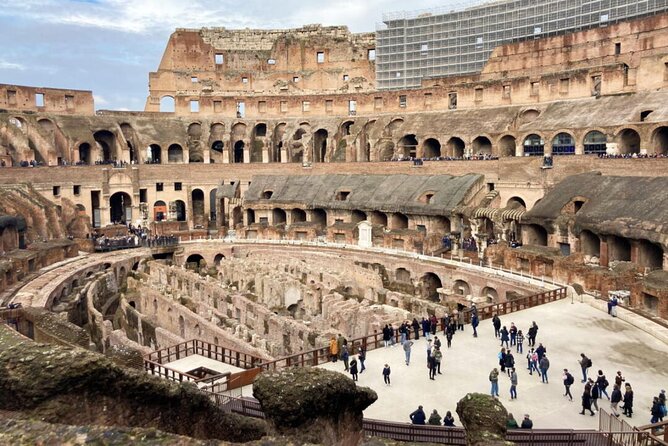
This experience is shared and not private. Groups can be made up of 1 to 24 people, and the overall maximum is 25. That’s a key detail, because it affects how quickly you move, how often you stop, and whether you can linger for photos.
The tour duration is about 3 hours, and it runs in either morning or afternoon time slots. For most schedules, that makes it a smart anchor activity. You can pair it with lunch, then spend the rest of the day exploring neighborhoods at a calmer pace. Or you can do it earlier and use the afternoon for museums or walking routes that need your energy.
Two timing thoughts that will help:
- If you are prone to getting “ruin fatigue,” this tour is short enough to stay fun, but you still need breaks after. Plan a stretch of downtime afterward.
- If audio is important to you, stand closer to the guide. One past experience flagged that poor microphone pick-up made parts of the narration hard to hear at times. Better position helps.
Also, the tour returns to the meeting point. That’s useful if you want an easy exit plan without hunting for a different drop-off spot.






Price value: what $160.22 buys you in real terms
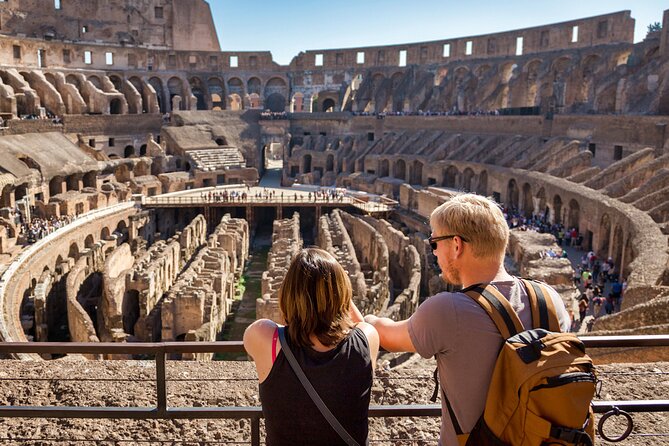
At $160.22 per person, this is not a budget add-on. The good news is that the price is built around three concrete value drivers:
- a live guide for all major segments,
- entrance fees included for the Colosseum, Palatine Hill, and the Roman Forum,
- and skip-the-line entry plus access to the Colosseum arena.
In many Rome ticket combos, you pay for the ticket and then still end up doing the confusing parts on your own. Here, you’re paying to remove friction. The “skip-the-line” part is often what turns a painful waiting line into a tour that still feels like a tour.
Then there’s the arena-floor component. That is a tangible differentiator, because it’s the part most visitors never access in a meaningful way. If you are choosing between a basic Colosseum ticket tour and one that includes the arena, this is the line item that makes sense to spend on.
What’s not included is equally important for planning. You’ll need to handle your own food and drinks, and you should plan for tips.
Who should book this Colosseum, Forum, and Via Sacra route
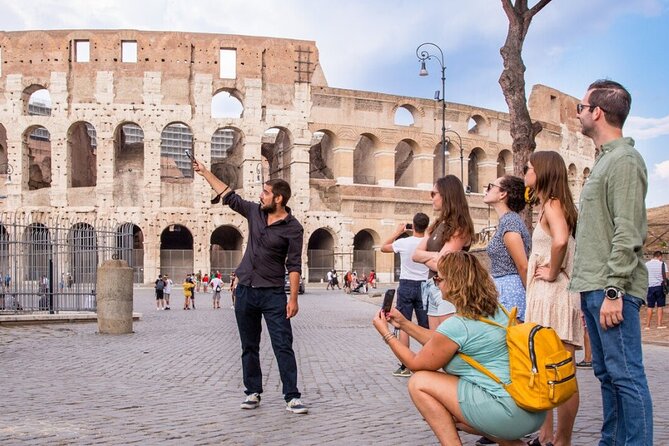
This works best if you want classic Rome sites in a tight, guided package. It’s also a good fit if you like your history explained with clear connections between places and politics, not just dates and names.
You’ll likely enjoy it if:
- you’re a first-time Rome visitor who wants the core sights without building a route yourself,
- you enjoy walking and can handle standing while someone explains what you’re seeing,
- you want a structured tour that reduces decision-making.
It may not be ideal if:
- you hate group pacing and want maximum freedom to roam,
- you get annoyed when you have to pause for narration,
- you have very specific photo timing needs.
One more practical fit detail: the youth rate applies to students and children, with ID and proof of age required. So it can be a reasonable option for families who want a guided overview rather than a DIY ticket hunt.
Should you book this tour?
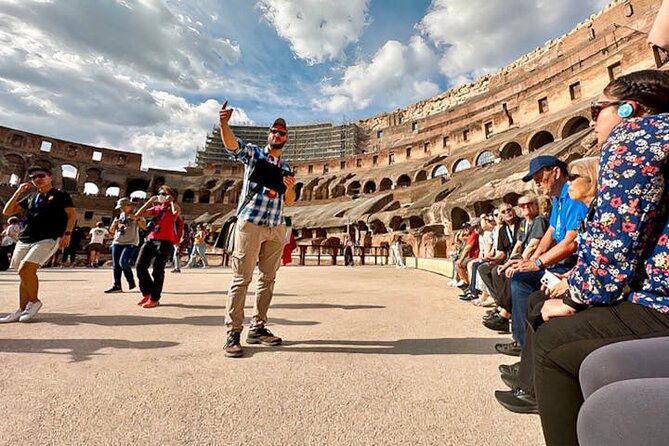
I’d book this if your goal is simple: see the Colosseum, Palatine Hill, and the Roman Forum with guidance that turns monuments into story, and do it with skip-the-line convenience. The arena floor access is the kind of upgrade that makes a 3-hour tour feel worth it, not just busy.
I’d be cautious if you rely heavily on audio clarity and you’re sensitive to microphone issues. Also, be realistic about the walking and standing segments, especially if you’re planning back-to-back tours.
If you’re staying flexible with timing and you want the historic heart of Rome without over-planning, this is a strong choice.
FAQ
Where does the tour start and end?
The tour starts at Via di S. Giovanni in Laterano, 14, 00184 Roma RM, Italy. It ends back at the same meeting point.
How long is the Colosseum, Palatine Hill, and Forum tour?
The tour is about 3 hours.
What tickets are included?
Entrance fees are included for the Colosseum, Palatine Hill, and the Roman Forum, and it includes skip-the-line Colosseum entrance plus access to the Colosseum Arena.
Is this tour private?
No. It is a shared group tour, and group size can range from 1 to 24 travelers, with a maximum of 25.
Do I need a passport or ID?
Yes. Each traveler must present a valid passport or identification document that matches the name provided at booking to enter the Colosseum and Roman Forum.
Is food included?
No. Food and drinks are not included. Tips are also not included.
More Historical Tours in Rome

More Tour Reviews in Rome



Not for you? Here's more nearby things to do in Rome we have reviewed












Colosseum Tours, compared.
 ★ 4.8Colosseum, Palatine Hill and Roman Forum Guided TourFrom $5232,814 reviews
 ★ 4.7Guided Tour of Colosseum, Roman Forum & Palatine HillFrom $5527,897 reviews
 ★ 4.2Colosseum & Forum with Audio Guide App -Optional ArenaFrom $4124,770 reviews
 ★ 4.5Colosseum, Roman Forum and Palatine Hill Guided TourFrom $5923,903 reviews
 ★ 4.4Colosseum, Forum & Palatine Hill Tour & Optional ArenaFrom $5813,839 reviews
 ★ 4.6Colosseum, Palatine Hill & Roman Forum Guided TourFrom $5112,703 reviews
 ★ 4.7Colosseum: Underground and Ancient Rome TourFrom $16012,691 reviews
 ★ 4.6Colosseum Arena, Palatine Hill & Forum Guided TourFrom $7310,584 reviews
Browse the lists this tour appears in