
Reviewed · BORGHESE GALLERY TOURS
Sketching in Rome Villa Borghese Private lesson with Guido
Sketching in Villa Borghese makes Rome calmer. You get a private art lesson outdoors across multiple garden landmarks, with Guido guiding your hand as you practice drawing, coloring, and watercolor. This is also, in practical terms, the kind of activity you can’t easily swap for something else in Rome.
I love the hands-on teaching style, starting from basics and building toward tougher skills like perspective. I also love that you are not stuck “watching,” you are actively drawing at a sequence of real scenery stops with tools provided for the whole session. One thing to consider: this is not an indoor museum class, it is a moving sketch walk in the park, so you will want to plan for time outdoors and you will need to bring your own water since bottled water is not included.
Key highlights you’ll feel right away
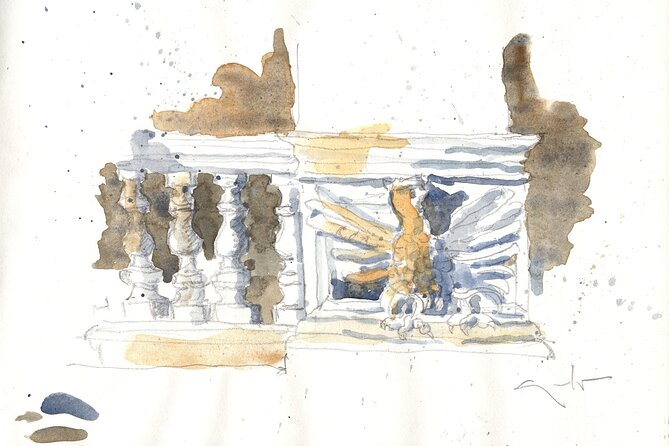
- Guido runs a true private lesson, so you can work at your pace and ask for the focus you want
- All sketching supplies are included, from fineliners and pencils to watercolor and brushes
- A route of landmark garden stops, so you practice composition in lots of different settings
- Techniques build step by step, with exercises that can include fountain pen sketches and quick studies
- English instruction with a relaxed, funny vibe, plus local stories about Villa Borghese
- Perfect for beginners, because the coaching keeps things doable, not intimidating
Why this Villa Borghese sketch lesson feels different from typical Rome tours
Rome is full of big sights, but it rarely slows down enough for you to really look. This lesson does the opposite. You trade checklists for close-up observation, and you turn what you see into something you can hold, frame, and remember.
The big win is that your “classroom” is Villa Borghese itself. You are not just learning a technique in theory, you are practicing it while the scenery is changing every few minutes. That makes drawing feel less like work and more like a way to experience the park.
Also, this is not an art class inside the Borghese Gallery. The focus stays with the park setting, the walk, and the outdoor views. If you want museum walls and controlled lighting, you may prefer something else. If you want fresh air and a real Roman garden loop, this fits beautifully.
You can also read our reviews of more private tours in Rome

Meeting Guido at the Terrace of Pincio (and finding the start point fast)
You meet at the terrace area of Pincio, at Piazzale Scipione Borghese 5. The easiest way to picture it is as the practical hub for entering the park views from that side, near the Fountain of Venus.
This matters for two reasons. First, you are starting where the park opens up, so you can jump quickly into sketching without wasting time figuring out the area. Second, your lesson ends back at the same meeting point, so you avoid the hassle of a second drop-off.
Come a few minutes early if you can. It is a private lesson, so you want your start to be smooth. And since the tour uses a mobile ticket, have your confirmation ready on your phone.
Supplies are included, so you can focus on drawing instead of shopping
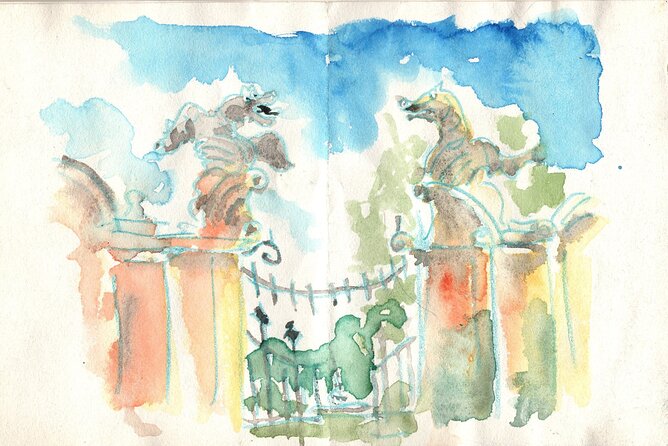
The lesson provides the practical stuff. You get drawing tools and materials such as pencils, markers, fineliners, fountain pens, ballpoint pens, and brushes. You also get drawing paper, a support tablet, and watercolor paints for coloring and washes.
For me, that is a big part of the value. Buying a random sketch kit in Rome is hit-or-miss, and carrying it around is annoying. Here, you show up and you try multiple tools in one afternoon, guided by someone who knows how each one behaves on real paper and real subjects.
One more benefit: because you can switch tools during the lesson, Guido can steer you toward what will work best for each scene. That keeps beginners from getting stuck with one “wrong” pen or one technique that does not match the view in front of you.
The 2.5-hour flow: how your skills get built during the walk
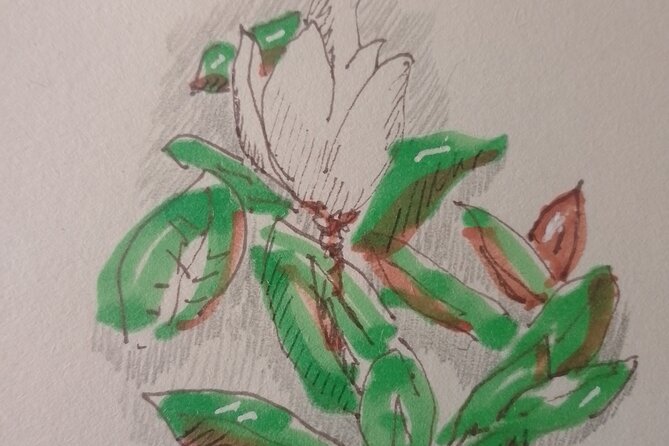
The session runs about 2 hours 30 minutes, and it is structured as a sequence of sketch stops. You are not just taking in scenery, you are doing short, guided studies, then moving on.
From the way Guido teaches, you can expect the lesson to start more basic and grow more playful. You might begin with a careful look at a subject and learn how to reduce it into lines and shapes. Then you practice adding color, using watercolor, and working on stronger skills like perspective.
A small detail I really like: the pace is relaxed enough that you can actually enjoy the park. Guido tells amusing stories and keeps the mood light, so even if you feel a little awkward with drawing at first, the lesson stays comfortable. Since this is private, he can also respond to what you want to work on, and that flexibility is part of why the experience scores so high.
Stop-by-stop sketching in Villa Borghese: what you’ll draw at each location
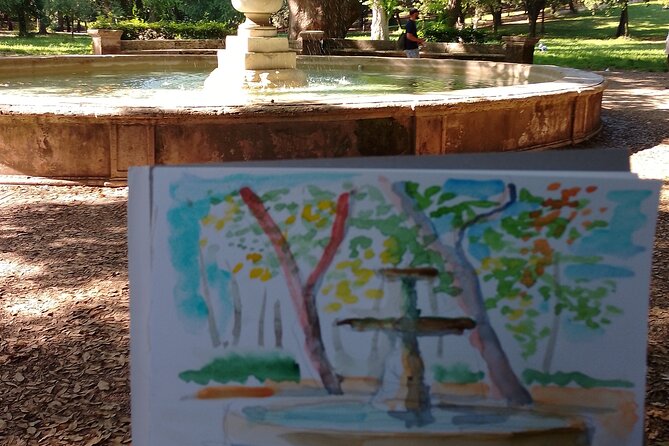
You move through a route of major garden points. The stop list is part of the magic, because it forces you to practice different types of subjects: fountains, open spaces, classical forms, and garden corners.
A few more Rome tours and experiences worth a look




Stop 1: Giardino di Piazzale Scipione Borghese
This opening stop is a strong way to get your eye trained. When you start here, you are in the park’s garden rhythm, with enough variety around you to begin with simple lines and quick composition checks. It is also a good place to test your tools, because you will likely do an early sketch that sets your baseline.
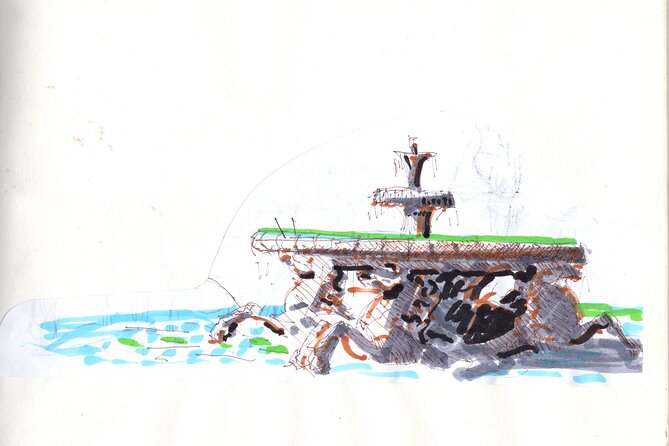
Stop 2: Fontana dei Cavalli Marini
Fountains are great drawing subjects because you can practice both structure and movement. At Fontana dei Cavalli Marini, you get a named feature to focus on, and you can work on turning the scene into a clear outline before adding color.
If you want a lesson that helps you break a complex scene into manageable parts, this is where that approach starts to click. You are learning not only how to draw, but how to choose what to draw first.
Stop 3: Piazza di Siena
A square or open area gives you a different challenge than a close-up fountain. Here, you can practice spacing, choosing a focal point, and showing depth without overworking every detail.
It is also a useful stop for beginners. You can keep your drawing lighter and still make it feel real, especially when the instructor helps you simplify what you see into believable proportions.
Stop 4: Temple of Asclepius
Classical temple shapes are perfect for learning fundamentals. Symmetry, columns, and clean geometry help you focus on line quality and scale. At the Temple of Asclepius, you are likely to work on how to capture a historic structure while keeping your drawing readable.
This is also where perspective practice can feel less abstract. You are drawing something with strong visual cues for how the building sits in space.
Stop 5: Tempio di Diana
Once you learn the basic “temple drawing” approach at the first temple stop, the second one gives you a chance to compare and adjust. You can focus on differences in angles and details without starting from zero.
This repetition is smart teaching. It helps your brain build confidence because you see your skills carry over from one stop to the next.
Stop 6: Casa del Cinema
Now the lesson shifts from pure classical forms to a building with a different visual style. This kind of subject is handy if you want variety: architecture that is not just columns and arches, but more of a structured façade to frame.
This is a good moment to practice tool choice too. You might find certain pens or marker weights help define edges, while watercolor helps soften the surrounding greenery.
Stop 7: Monumento Ad Umberto Primo
Monuments test your ability to simplify detail. You are usually working with a focal element that has lines, textures, and visual hierarchy. Guido’s coaching can help you decide what matters most for your drawing, rather than trying to copy everything.
From a learning perspective, this stop teaches a practical lesson: your job is not to draw every tiny part, it is to draw what makes the subject recognizable.
Stop 8: Museo Carlo Bilotti
A museum stop can add a new angle to your sketches. Even if you are not doing an indoor museum visit, the surrounding environment gives you another way to frame buildings against the park.
This is also a good place to practice composition. You can work on how to keep architecture from overpowering the scene, using lighter lines or selective color to balance the view.
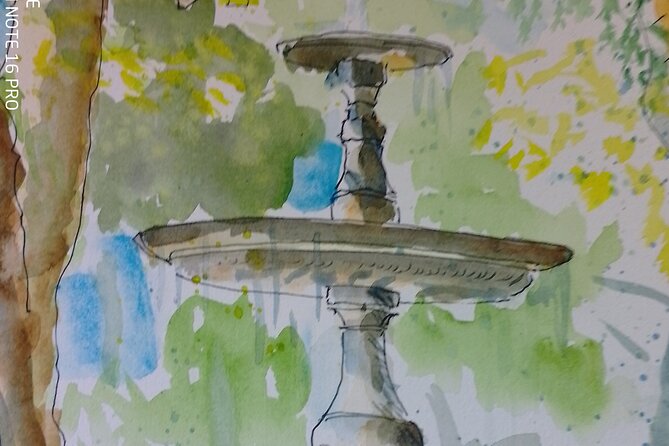
Stop 9: Fontana di Venere
Coming back to a fountain at Fontana di Venere is a smart reset. You can apply what you learned earlier with fountains and see how your drawing style has changed.
Venus-themed imagery also tends to invite expressive details, so you can practice adding interest through color and accents. If you liked the first fountain stop, this one is a satisfying follow-up.
Stop 10: I Giardini Segreti di Villa Borghese
The secret gardens are where the lesson gets more atmospheric. This kind of spot is a great match for watercolor and softer coloring, because garden corners often reward gentle washes rather than heavy linework.
It is a satisfying final stop because it feels quieter and more intimate than the bigger open areas. By the end, you should have at least one sketch that feels like it belongs on your wall later.
Learning techniques that make your sketches look intentional
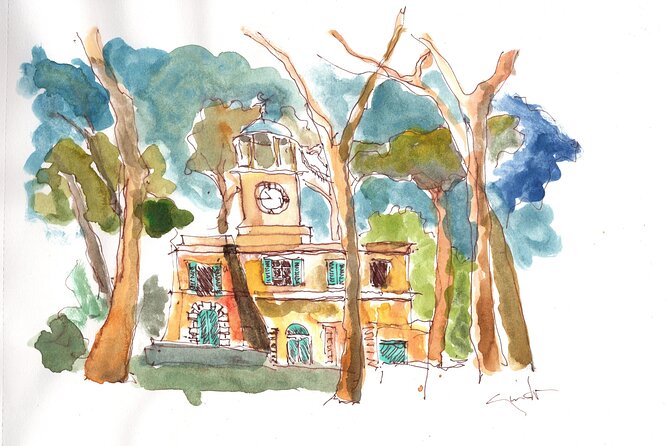
Guido’s teaching approach is practical. He tends to guide you step by step, and the exercises are designed so you can actually finish something you feel good about.
Here are a few technique directions that fit what you will likely do during the session:
Fountain pen first, then color
You may start with a fountain pen or other pen to map the outline, then add colored pencil or markers. This order helps you build structure before you add attention-grabbing color.
Perspective as a real-world skill
Perspective can feel like a classroom topic until you try it outside. The lesson includes perspective coaching, and the park’s mixed architecture and open spaces make it easier to understand what changes when your viewpoint shifts.
Quick studies that train your eye
You can expect exercises that emphasize speed and observation. Quick sketches teach you to stop fussing and start seeing, especially with views that include multiple elements.
If you are worried you cannot draw, these time-limited moments usually help. They keep you from overworking and give you a clear sense of progress by the end of the session.
Tool choice as part of the lesson
Because you have multiple tools available, you learn how different materials create different textures and line weights. That means your final sketches do not all look the same, and you will leave with a better sense of what to use next time you sketch on your own.
Price and value: is $72.01 worth it?
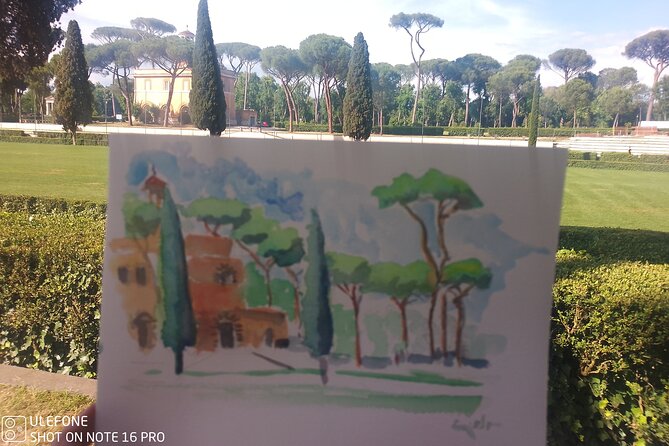
At $72.01 per person, the price makes sense if you compare it to the real costs of a guided art session with supplies. The biggest value is that everything necessary for sketching is included, from pens and markers to watercolor and paper.
You are also paying for a private, instructor-led route through multiple points, plus step-by-step guidance. Instead of one “look at the view” moment, you get repeated practice across garden landmarks, which is exactly how people improve.
One more value point is time. You get a focused 2.5-hour block where your attention is guided. For many visitors, that is the difference between collecting photos and collecting something personal.
Practical tips to get the best results
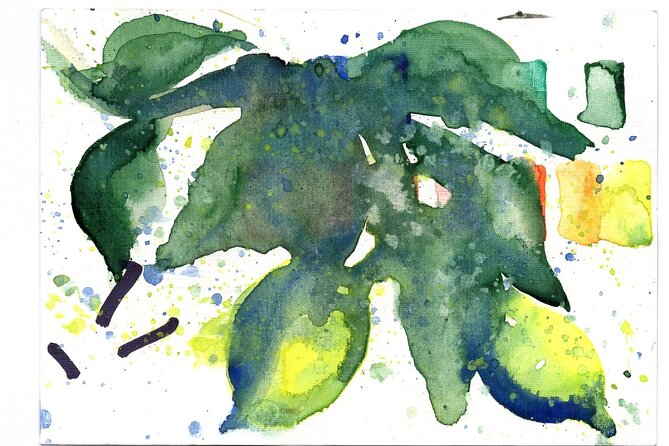
A few things can help you leave with sketches you actually want to keep.
First, arrive ready to try more than one tool. Beginners often feel they need to pick one favorite and stick with it, but the lesson works best when you experiment. Switching tools based on Guido’s suggestions helps your drawing look more intentional fast.
Second, do not aim for perfect. The guided exercises are designed to build confidence. If you treat it like a learning session instead of a test, you will enjoy it more and finish more pages.
Third, plan for the fact that the lesson is outdoors across several stops. Bring what you need for sun or comfort, and since bottled water is not included, grab water before you meet.
Who should book this sketching lesson in Villa Borghese?
This works best if you want a creative activity that feels genuinely Roman, not a generic craft workshop. It is also ideal if you like walking at an easy pace and learning by doing.
You should strongly consider it if:
- you want a private, instructor-led experience rather than a large group tour
- you are a beginner or returning to drawing and want structured practice
- you want to see Villa Borghese through sketching instead of only sightseeing
You might skip it if:
- you only want indoor museum time
- you dislike being outdoors for a multi-stop route
Because the lesson is private and in English, it can also suit couples, friends, or small families who want their own pace and personal coaching.
Should you book with Guido for Sketching on Rome?
If you want a calm, creative break from the usual Rome routine, I think this is a smart booking. You get a private session, a guided route through Villa Borghese landmarks, and the materials to actually make art, not just watch someone else do it. Most importantly, the lesson style seems built for real progress, from first lines to perspective practice.
One last nudge: if you are nervous about drawing, that is exactly when Guido’s step-by-step approach tends to help. And since free cancellation is available up to 24 hours before the experience starts, you can book with some peace of mind.
FAQ
Where is the meeting point, and where do we end?
You meet at the Fountain of Venus, Piazzale Scipione Borghese, 5, 00197 Roma RM, Italy. The activity ends back at the meeting point.
Is this lesson inside the Borghese Gallery?
No. This sketching activity is not inside the Borghese Gallery. It is done in the Villa Borghese park area.
What’s included in the lesson?
Included are drawing tools and materials such as pens, markers, brushes, drawing paper, a support tablet, watercolor paints, and everything necessary for sketching.
How long is the private lesson?
The duration is about 2 hours 30 minutes.
Is the tour offered in English, and is it private?
Yes, it is offered in English. It is also private, so only your group participates.
Do I need to bring bottled water, and are tips mandatory?
Bottled water is not included. Tips are not mandatory and are at your discretion, though they are welcome.
More Workshops & Classes in Rome


More Private Tours in Rome
More Tour Reviews in Rome






Not for you? Here's more nearby things to do in Rome we have reviewed












Borghese Gallery Tours, compared.
 ★ 4.8Borghese Gallery Guided Tour with Skip-the-Line EntryFrom $842,649 reviews
 ★ 4.6Borghese Gallery Skip-the-Line Tickets with AudioguideFrom $532,562 reviews
 ★ 4.5Borghese Gallery Entry Ticket & Optional Guided TourFrom $512,237 reviews
 ★ 4.9Borghese Gallery Guided Tour with TicketsFrom $571,880 reviews
 ★ 4.7Skip-the-Line Borghese Gallery Guided TourFrom $100933 reviews
★ 4.9Borghese Gallery Guided Tour with Skip-the-Line EntryFrom $83891 reviews
 ★ 4.1Borghese Gallery Entry TicketFrom $31780 reviews
 ★ 4.8Borghese Gallery Guided Tour with priority entranceFrom $73546 reviews
Browse the lists this tour appears in