

Reviewed · CITY TOURS
Rome Self-Guided City Experience
Rome feels huge without help. This app adds offline navigation and recorded narration so you can tackle big sights at your own pace. It is also built for quick wins, with a route that strings together major landmarks across central Rome and the Vatican area.
I like that it is genuinely flexible: you can walk or use public transportation as you prefer, and the map keeps you oriented. One key consideration, though, is app reliability. A chunk of people report install or map issues, including cases where the purchased service was not recognized on arrival.
Offline navigation you can use without data
Geo-tagging to help you avoid getting turned around
130+ points of interest beyond the main route
Audio stories that act like an always-available guide
A dense route that works well for a first Rome trip or a second one
Admission mostly marked as free, with Vatican Museums the one exception
How This App-Guided Rome Route Fits Your Schedule

This is for you if you want Rome info without the fixed group tempo. The idea is simple: open the app, follow the on-screen guidance, and listen as you walk from stop to stop. Instead of waiting for a guide or lining up for group narration, you control the pace, stop for photos, and move when you are ready.
I especially like that the experience is time-friendly. The route is designed for about 2 to 3 hours, and each featured stop is roughly 3 minutes inside the plan. That makes it a solid option for a day when you already have plans later, or when you want to see several icons without turning the whole day into a marathon.
The other upside is coverage. The route hits classic Rome highlights across different neighborhoods, so you are not bouncing between just one cluster. You get a mix of grand churches, famous squares, and major historical sites, with narration aimed at history and culture as you go.
Price and What You Actually Get for $11.58

At about $11.58 per person, you are not paying for a guided group. You are paying for the app, its map and navigation, and the audio content tied to a set of points. That is a different value proposition than a traditional tour, and it can be a good deal if you like self-direction.
What you get includes:
- A mobile app (used with a mobile ticket)
- Walking itineraries
- 130+ points of interest
- Free Wi-Fi spots listed as part of the experience
What you should expect to handle yourself:
- Earphones (not included)
- Entry tickets (mostly marked as free on the route, but not all)
- Public transportation tickets if you use transit
- Any hotel pickup or drop-off (not included)
This pricing makes the most sense if you are the kind of traveler who already knows you want the big sights, but you also want explanations while you wander. If you need someone to manage lines, timing, and tickets in person, you might find a guided tour less stressful.
You can also read our reviews of more guided tours in Rome



Offline Navigation and Geo-Tagging, the Real Game Changer
Rome is a city that can chew up time if you are constantly checking maps. The app is designed to reduce that stress by working offline, meaning you can avoid expensive roaming charges and still get navigation when your phone signal is weak.
Two practical features matter most on the ground:
- The app can operate offline
- You are geo-tagged, so you are not just staring at a static map and hoping you are on the right street
In plain terms, that means less time lost and more time actually looking up at the buildings. It also helps when you are switching between walking and public transportation, because your phone is doing the orientation work for you.
One more helpful note: the experience includes free Wi-Fi spots. Even if offline mode is supported, having a Wi-Fi option can be smart for setup, especially if the app needs to download anything before you head out.
Your 2 to 3 Hour Rome Route, Stop by Stop
The route is built as a sequence of major sites with narrated audio. The plan lists 20 stops, and each stop is allotted around 3 minutes inside the app. That is not meant to be how long you stand at each place, it is more like a trigger for when to start listening, look around, and then move on.
Below is what to expect at each stop, plus the one big admission note to keep in mind.
Pantheon
This is the first big anchor point on the route. The app gives you recorded stories while you are in the area, which helps you connect what you see with why it matters.
The plan shows admission as free for this stop, so you can focus on the experience rather than ticket logistics.
Vatican Museums
This is the standout for ticket planning. The route clearly indicates that admission for Vatican Museums is not included, so you should be ready to secure your own entry if you want to go in.
Even if you are not entering right away, the stop still works as a narrated orientation moment, since it cues you into what you are approaching.
You can also read our reviews of more city tours in Rome






St. Peter’s Basilica
After the Vatican Museums area, you move to St. Peter’s Basilica. The app provides narration as you visit the site, helping you put the place in context while you’re looking around.
Admission is marked as free on this route, which is useful if you want a low-friction stop here.
Piazza Navona
This is one of the most visually rewarding squares on the plan. Expect the app to drive the timing, so you are not just wandering without any “what am I looking at” guidance.
The route lists this stop as free, so it is easy to keep flowing.
Piazza Di Spagna
This stop is another classic square moment, perfect for a quick listen and then a longer look if you want. The app narration helps you connect the scene to Rome’s wider story.
Admission is shown as free for this stop.
Fontana di Trevi
A famous landmark where the audio component can make the wait (or the crowds) feel more worthwhile. The app gives you facts and stories right as you arrive.
The route lists admission as free, which keeps it in line with the low-ticket approach for most stops here.
Piazza Cavour
This is a smaller pivot stop in the middle of the route. It works well when you need a breather between major sights, and the app narration keeps the walk from feeling empty.
The plan lists it as free.
Piazza del Popolo
Another square on your path, and a good place to slow down for a minute. This is where the self-guided style shines because you can pause, take photos, and then start the next narration when you feel ready.
Admission is marked free.
Via Della Conciliazione
This segment is more about the walk itself than a single “ticketed” site. The app turns the route transitions into part of the story, so you are not just moving blindly.
The stop is listed as free in the route notes.
Museo Nazionale di Castel Sant’Angelo
This museum stop is included with narration, and it is one of the more substantial points on the route. The app’s role here is to give you something to listen to while you figure out how much time you want.
Admission is marked as free on the plan.
Villa Borghese
A park and monument area that works nicely in a self-guided format because you can choose how you want to spend your minutes. The app gives the stories while you take in the setting.
Admission is marked free for this stop.
Piazza della Repubblica
This stop helps you continue threading through central Rome instead of staying locked in one pocket. The audio gives you a reason to pay attention to what you pass.
The route lists it as free.
Via Nazionale
This is a street stop, and it is included for a reason: to keep your route moving smoothly while still giving you context. If you like walking with a purpose, this is a good kind of stop.
Admission is shown as free.
Abbazia di San Paolo Fuori Le Mura
A church and abbey stop that gives the route a calmer, more reflective pace. The app narration is helpful here because it turns a “quick stop” into a moment you can actually learn from.
Admission is marked free on the plan.
Piazza Venezia
A major square stop that is ideal for a short audio briefing plus a visual pause. The self-guided structure makes it easy to move on when you have your fill.
This stop is listed as free.
Via dei Fori Imperiali
This is another story-led walking segment. It is the kind of place where looking around without context can make you feel like you are just passing stone and street signs.
The route lists the stop as free.
Via Del Corso
A classic Rome street stop that is perfect for regrouping. You can listen, walk, and then slow down if the mood hits.
Admission is marked free.
Circo Massimo
A large-area historical stop where timing matters less than keeping momentum. The audio helps you understand the setting as you move through the space.
The plan lists it as free.
Bocca della Verità
This is one of those Rome stops that many people recognize instantly by name. The app gives you stories so you can enjoy it beyond just doing the photo moment.
Admission is marked free.
Insula dell’Ara Coeli
A final historical stop that closes out the route with narration. This one is a good choice for a last listen, because the app tends to guide you toward an easy finish without needing a ticketed attraction.
Admission is marked free.
Walking or Using Public Transportation: What to Expect
The route is designed for on-foot sightseeing, but it also supports public transportation options. The key benefit here is flexibility. If your legs are fresh, walking keeps the day feeling like Rome. If you get tired, switching to transit can help you keep the 2 to 3 hour window realistic.
One caution: public transportation tickets are not included. So if you plan to use transit during the route, budget for it separately.
Also, the plan notes that the start is near public transportation. That matters if you are arriving to Rome by train or you are already exploring and want to hop onto the route quickly.
The Good Value Pitch, When the App Actually Delivers
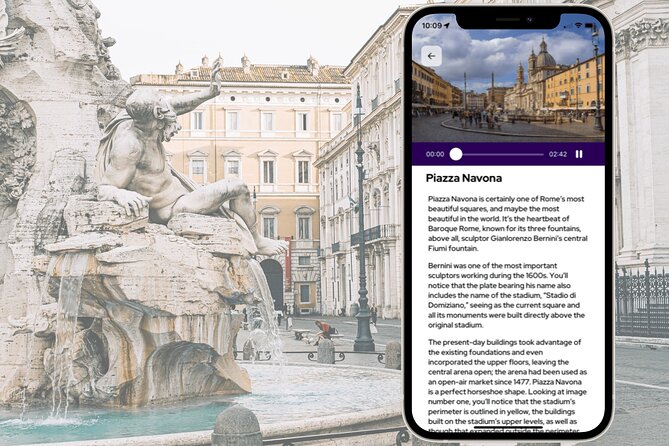
When this kind of product works well, it is hard to beat for value. For roughly $11.58, you get an always-on guide format that fits into your day. You are not paying for an escort, you are paying for audio and navigation that you can use wherever you feel like pausing.
The best-case scenario is simple:
- You install beforehand
- You keep your phone charged
- You use offline mode when you need it
- You listen and walk, then repeat when you want more Rome facts
There is also a smart review pattern behind the scenes. Some people loved the low cost and found it easy to manage. That lines up with the core design: a phone-based guide should be simple to start, and the route should make you feel like you are not guessing.
If you like independent travel but still want context, this can be a very practical compromise.
When App-Based Tours Go Wrong, and How to Protect Your Plan
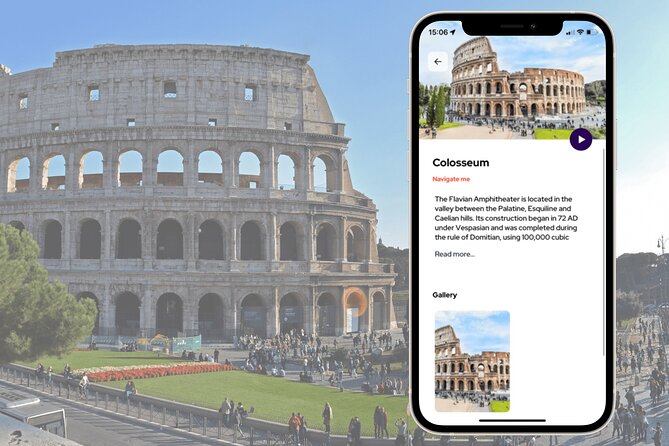
This is the part you cannot ignore. Some reported problems point to one theme: the phone app has to be working correctly in your exact situation. Issues include the service not being recognized after purchase, the app freezing, and map problems that made the experience unusable.
You do not need to panic, but you should plan like you are the quality-control team. A few practical steps:
- Test the app setup before you rely on it outdoors
- Make sure you can access the purchased service on your device
- Keep your phone battery from dropping too low
- If maps need downloading, use available Wi-Fi in advance
Also, bring earphones. The experience says earphones are not included, and audio is the point of the whole product.
Finally, go in with realistic expectations. This is not a human guide who can troubleshoot on the spot. If the app stumbles, you may need to switch to a manual plan.
Who This Self-Guided Rome Experience Suits Best
This works best for you if:
- You want to see many major sights in a short window
- You like independent strolling with audio stories
- You can handle using your phone as the main guide tool
- You already plan to manage any separate tickets you might need
It may be less ideal if:
- You need a guaranteed, no-fuss experience where someone else fixes problems for you
- You expect the app to work perfectly without any setup time
- You want a tour that includes attraction entry as a single bundle
The route is also a nice match for a repeat Rome visitor. If you have already been to the big sites before, the audio explanations and quick itinerary structure can still feel fresh without forcing brand-new logistics.
Should You Book This Rome App Tour?

Yes, but with conditions.
Book it if you want flexible sightseeing, you like audio guidance, and you are comfortable using offline maps on your own. At this price point, it can be a strong way to turn walking time into learning time, and the mostly free admission stops make the plan easier to manage.
Skip it or look at alternatives if you are the type of traveler who cannot tolerate app glitches, or if you are traveling with a low-tolerance attitude for troubleshooting. The cost is low enough that you can treat it like a tech-backed experiment, but not low enough that you want disappointment.
If you do book, prepare like a pro: install early, test access, charge up, and bring headphones. Then Rome is just you, your route, and the city talking back in your language.
FAQ
How long does the Rome self-guided experience take?
The experience is listed as about 2 to 3 hours.
Is this experience fully guided by a live person?
No. It is an app-based self-guided experience with recorded narration.
Do I need a data connection to use the app?
The app can operate offline, which helps you avoid expensive roaming charges.
Are admission tickets included for all stops?
Entry is not included for Vatican Museums. For the other listed stops, the route indicates admission ticket free.
Do I need to buy public transportation tickets separately?
Yes. Public transportation tickets are not included.
What devices can I use?
You can use it on any Android or Apple mobile device.
Does the experience include earphones?
No. Earphones are not included.
How many points of interest are included?
The app includes 130+ points of interest in the city.
What happens if I cancel?
This experience is non-refundable and cannot be changed for any reason. If you cancel or request an amendment, the amount you paid will not be refunded.
More City Tours in Rome
More Guided Tours in Rome



More Tour Reviews in Rome

Not for you? Here's more nearby things to do in Rome we have reviewed












City Tours, compared.
 ★ 4.0City Sightseeing Hop-on Hop-off Bus with AudioguideFrom $1516,045 reviews
 ★ 4.8Fettuccine Pasta Cooking Class in Rome’s City CenterFrom $462,414 reviews
 ★ 4.3Vatican City: Vatican Museums & Sistine Chapel Entry TicketFrom $392,185 reviews
 ★ 4.1City Highlights Open-Top Bus Night TourFrom $222,038 reviews
 ★ 4.8Imperial City Tour by Golf Cart with Optional TransferFrom $1241,024 reviews
 ★ 4.4Guided City Center Evening Sightseeing Walking TourFrom $46953 reviews
 ★ 5.0Golf Cart Small-Group Guided Tour: Rome City HighlightsFrom $104907 reviews
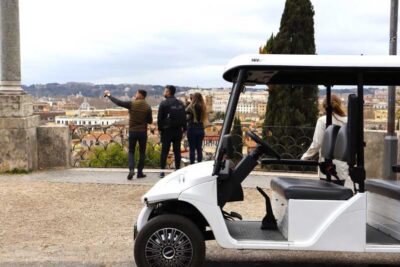 ★ 4.8City Highlights Golf Cart TourFrom $45857 reviews
Browse the lists this tour appears in