
Reviewed · CATACOMBS & UNDERGROUND TOURS
Rome: Trevi Fountain District and Underground Domus Guided Tour
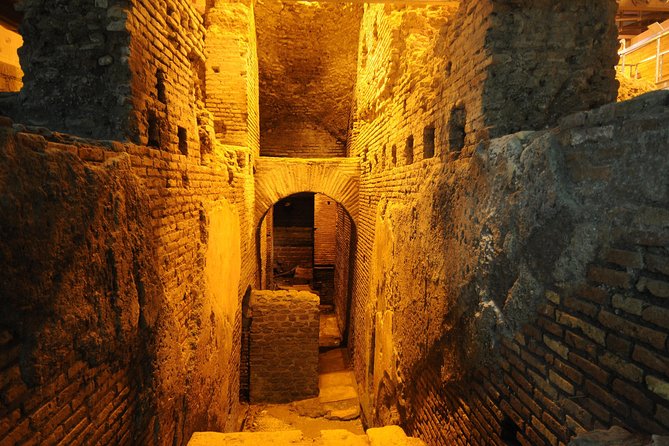
Trevi Fountain has an underground twin. This guided visit to Vicus Caprarius is interesting because it shows how Rome’s water worked, using real Roman remains found right under your feet. I love the small-group feel and how the guide turns water history into stories you can picture. The main drawback is that the Trevi Fountain part is short, and the underground space is compact, so set expectations accordingly.
You meet near Trevi and head underground fast, which is a real win when the heat and crowds hit at street level. You also get a guided walkthrough of the artifacts, including the kind of details that usually stay trapped in museum labels.
If you’re hoping for a long, maze-like underground adventure, this may feel too brief. If you want the best possible Roman water-system stop in the shortest time, this is a smart choice.
Key Highlights You’ll Care About

- Meet at Vicus Caprarius and go straight to the underground site just steps from Trevi
- 30 feet down to see how Roman water infrastructure was built and connected
- Artifacts with real pull, including polychrome marble, a head of Alessandro Helios, coins, and oil amphorae
- Small group (max 15) for better pacing, easier questions, and a more personal experience
- Trevi Fountain access at the end, with a quick, practical window for photos and the coin-throw legend
- Gelato included, because Rome tours should end on a sweet note
Where You Meet Near Trevi (And How This Tour Flows)
Your tour starts at Vicolo del Puttarello, 25, at the Vicus Caprarius entrance area. From there, you redeem your ticket and meet your guide right at the site, so you avoid the usual scramble of hunting for a meeting spot in the middle of a busy plaza.
The overall timing is about 55 minutes, including the underground visit and the short Trevi stop at the end. The day runs like a simple sequence: go below first, then return to street level for Trevi and wrap up.
One more practical detail that matters in Rome: the underground part is not for people with mobility impairments. If walking stairs or moving through uneven underground paths is an issue for you, plan around that from the start.
You can also read our reviews of more guided tours in Rome



Vicus Caprarius Underground: The City of Water, 30 Feet Down
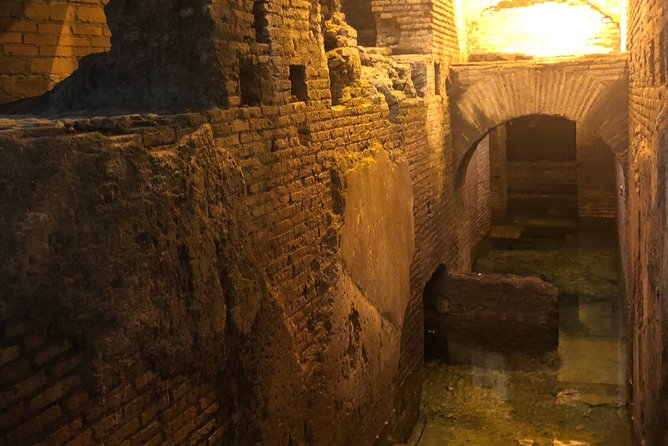
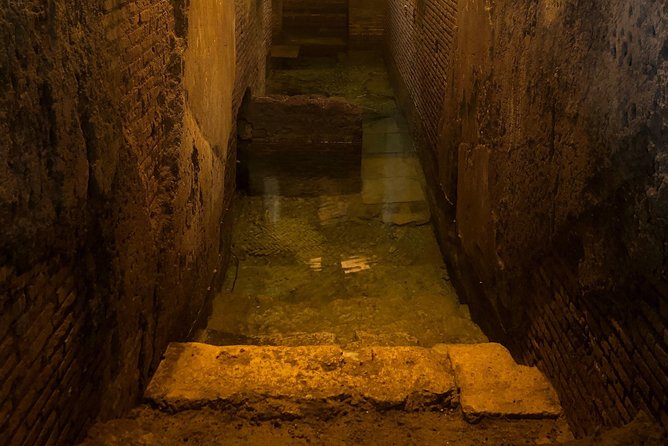
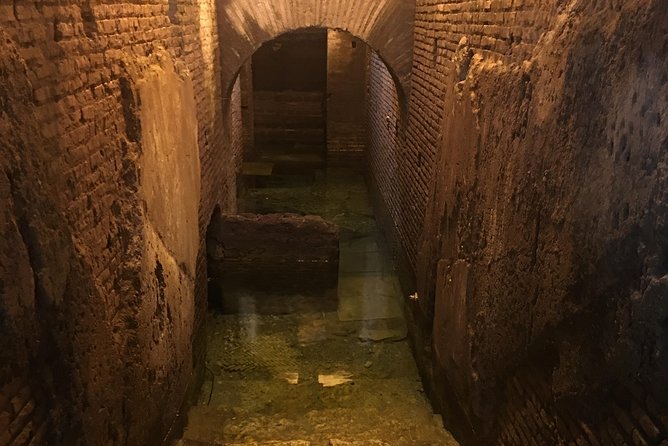
Stop one is the Vicus Caprarius archaeological site, a place most visitors never even realize exists. The setup is what makes it so memorable: you head about 30 feet (nine meters) below the streets to explore a Roman-era water-related space.
Here’s the kicker. This site was discovered in 1999 in the basement of a cinema, so the modern world literally helped uncover Rome’s old plumbing. Inside, you can see a water tank connected to the Vergine aqueduct, and that connection is what ties everything together.
The underground remains were excavated only a few decades ago, and the tour focuses on the Roman villa elements and an ancient cistern. That means you’re not just looking at a wall, you’re learning what the Romans built to keep water moving and usable.
The Roman Relics You Actually Get to See (Not Just Hear About)
This tour does a good job of turning “ancient water” into concrete objects. You spend time looking at what was found at Vicus Caprarius, including polychrome marble coverings that signal how carefully this space was finished.
You’ll also hear about a famous artifact: the head of Alessandro Helios. Alongside that, the guide points out a major find made during the discovery, including a collection of 800 coins, which gives the site a very human, very physical feel.
Another artifact topic that makes the stop click is the spatheia, described as African amphorae used for transporting oil. Even if amphora shapes are common in archaeology, hearing how these containers relate to daily supply chains makes the underground story feel practical, not abstract.
A key theme of the tour is why this area earned the nickname City of Water. The guide connects the infrastructure to the surrounding fountains you see later, so you understand Trevi as part of a system, not just a pretty landmark.
Stop Two: Trevi Fountain in 10 Minutes, With a Plan for the Crowds
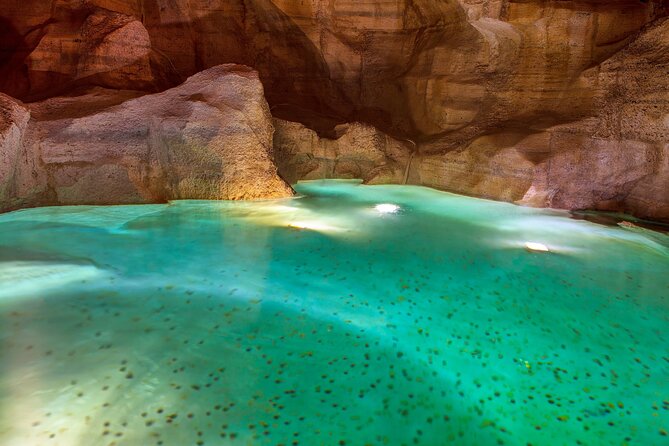
After you come up from underground, the tour ends at Trevi Fountain. Your Trevi time is about 10 minutes, and admission is included, but the bigger reality is crowd control.
Trevi is famous for a reason, and it can also be hard to hear or frame a good photo when the space gets packed. Use those 10 minutes like a mini mission: look fast, choose your angle, and if you want a close photo, be ready to wait for a gap.
If you want to follow the legend, you can throw a coin. It’s the classic promise about returning to Rome someday, and for many visitors it becomes a quick ritual at the end of the tour.
One important consideration: this is not a long Trevi sightseeing block. If your priority is extended Trevi time, multiple photos, or a deep dive into every sculptural detail above ground, this may feel short. The tradeoff is that you’re spending your real effort underground, where this tour has its main point of difference.
Guide Energy Makes or Breaks This Tour
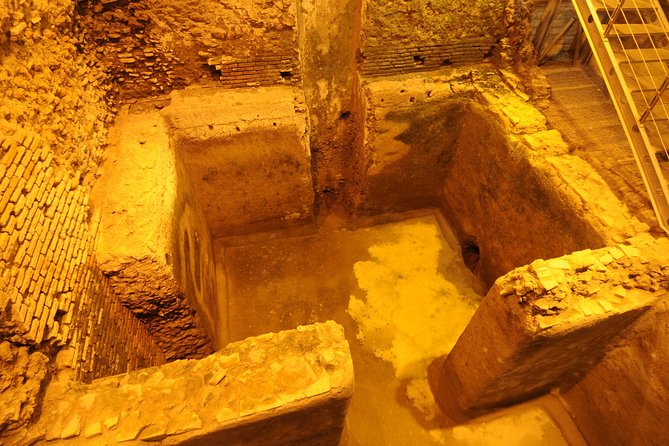
The underground site is compact, so what you get from the guide matters a lot. Across recent experiences, the standout theme is high energy and clear storytelling, plus strong English that keeps the group moving at a pace that feels natural.
Guides named in feedback include Erika, Erica, Michelle, and Noemi/Neomi. In different ways, they’re described as friendly and energetic, with a talent for turning layers of Roman time into stories instead of a list of facts.
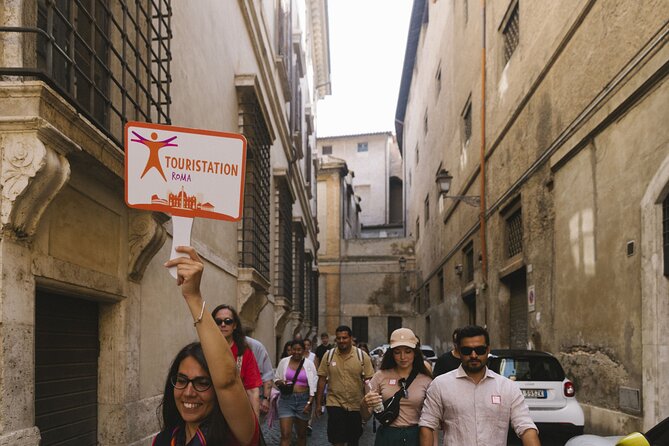
If you like tours where you can ask questions and get direct answers, the small-group setup helps. With a maximum of 15 travelers, the guide can spend more time explaining what you’re looking at rather than rushing everyone through.
And if your group includes kids or a mix of ages, that smaller format tends to work better. A short tour also reduces the chance of everyone losing patience before the best part.





How Much Is $53.10 Worth for This Mix?
At $53.10 per person, you’re paying for three things: reserved entry, a guided visit underground, and Trevi access plus a small bonus.
Let’s look at the value honestly. The underground stop is the whole point, and it includes the reserved ticket and guided interpretation of the Vicus Caprarius remains and artifacts. That’s the part most people cannot replicate easily on their own because the value is in the story and connections, especially the way the guide links the underground water infrastructure to the fountains you see above ground.
You also get Italian gelato included, which is small in cost but useful on timing. When a tour is short, a treat at the end is exactly what you want.
Could someone do it independently? Maybe, depending on what they’re trying to accomplish and how comfortable they feel reading the site on their own. But for most visitors, paying for a guide is a fast way to get meaning from a site that would otherwise be easy to overlook.
The main “value warning” is expectations. If you expect a sprawling network of underground tunnels, you may feel disappointed by how compact the visit is. If you expect Trevi to be the main event, you may also feel underwhelmed because the Trevi portion is brief. If you match your expectations to the design, the price-to-time ratio feels fair.
Who Should Book This Tour (And Who Might Skip It)
This works best if you:
- Want a Roman water-system story tied to real remains and real objects
- Prefer a short, efficient tour when your Rome schedule is packed
- Like off-the-radar stops near big landmarks, especially when it’s hot outside
- Enjoy small groups and guides who keep things lively and easy to follow
You might skip or rethink it if you:
- Need full accessibility, since it’s not suitable for mobility impairments
- Are mainly focused on a long Trevi Fountain experience
- Want lots of underground space to explore beyond a single compact set of areas
It also helps if you already saw the major Rome sights and you’re looking for one distinctive add-on that doesn’t feel like another photo stop.
Quick Logistics Tips Before You Go
Because the tour starts at a specific spot near Trevi, arrive a few minutes early so you can redeem and settle. The tour is offered in English, and you should get confirmation at booking time.
The group size is capped at 15 travelers, and it’s close to public transportation, which makes it easier to fit into a day of walking. Also, this kind of tour tends to sell out, so booking ahead is wise. An average booking window of about 39 days in advance suggests lots of people plan it in advance, especially during peak travel seasons.
Should You Book This Trevi and Underground Vicus Caprarius Tour?
Book it if your favorite Rome experiences are the ones where you understand how things work, not just how they look. The underground Vicus Caprarius portion gives you a rare look at how Romans handled water, and the guide style, especially the names you’ll hear in recent feedback like Erika and Noemi, is a big reason the tour lands well.
Skip it if you want a long Trevi deep dive or if you picture sprawling underground tunnels. For the right match, it’s a clever, memorable use of time, and it’s one of those tours that makes Trevi feel connected to something much older than the fountain itself.
FAQ
Where is the meeting point for the tour?
You meet at Vicolo del Puttarello, 25, 00187 Roma RM, Italy, at the Vicus Caprarius site area to redeem your ticket and begin.
How long is the tour?
The tour runs about 55 minutes (approx.).
Is the tour offered in English?
Yes, this experience is offered in English.
What can I expect at the underground site?
You go about 30 feet (nine meters) below street level to explore Vicus Caprarius, including a water tank connected to the Vergine aqueduct, Roman villa and cistern remains, and artifacts such as polychrome marble coverings, coins, and amphorae used for oil transport.
Is the Trevi Fountain part included?
Yes. You have access to Trevi Fountain at the end of the tour for about 10 minutes, and an access ticket is included.
Is gelato included?
Yes. Italian gelato is included.
What is the group size?
The tour has a maximum of 15 travelers.
Is it suitable for people with mobility impairments?
No. It is not suitable for people with mobility impairments.
Can I cancel for a full refund?
Yes. You can cancel up to 24 hours in advance for a full refund.
More Guided Tours in Rome

More Tours in Rome

More Tour Reviews in Rome
Not for you? Here's more nearby things to do in Rome we have reviewed












Catacombs & Underground Tours, compared.
 ★ 4.7Colosseum: Underground and Ancient Rome TourFrom $16012,691 reviews
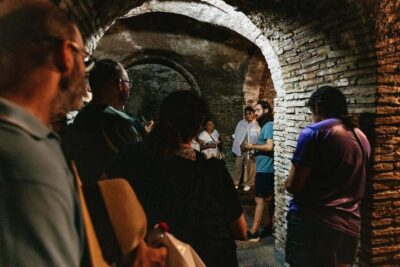 ★ 4.6Crypts and Catacombs Underground Tour with TransfersFrom $745,341 reviews
 ★ 4.7Colosseum Underground Small Group Guided TourFrom $1054,844 reviews
 ★ 4.8St. Peter’s Basilica, Dome Climb, and Underground TourFrom $383,404 reviews
 ★ 4.7Colosseum Underground, Arena & Forum TourFrom $1573,272 reviews
 ★ 4.3Trevi Fountain and Underground Guided TourFrom $411,664 reviews
 ★ 4.6Catacombs and Capuchin Crypt Guided Tour with TransferFrom $411,606 reviews
 ★ 4.7St. Peter’s Basilica Priority Access Tour with Dome & CryptFrom $831,476 reviews
Browse the lists this tour appears in