
Reviewed · WINE TOURS
Authentic Roman Pizza, Suppli & Gelato Workshop with Italian Wine
A Roman pizza night is a great change of pace. In this hands-on 3-hour class you’ll make pizza, supplì, and gelato from scratch, then sit down to eat with bottomless Italian wine. The small group size (max 10) is a big plus for asking questions. One catch to plan around: there’s no gluten-free option, and there’s a risk of traces of gluten and nuts.
You’ll start with a warm welcome and a chef-led intro to the flavors that define Roman food, so you know what you’re aiming for before your hands ever touch dough. Then it becomes pure action, kneading, shaping, frying, and churning. If you’re hoping for a strict Neapolitan-style chewy crust, you may have slightly different preferences depending on how you like your pizza texture.
Key Points at a Glance
- Three dishes, one class: Roman pizza, classic supplì, and artisan gelato made in the same session
- Hands-on help: You’re guided step-by-step, even if you’re starting from zero
- Small group, max 10: More attention and easier Q and A time than big classes
- Bottomless Italian wine with your meal: Eat what you make and keep the drinks flowing
- Take-home recipes: You leave with chef-approved instructions for recreating the dishes at home
- Colosseum-area convenience: The meeting point is in Rome near major sights and public transit
Why This Roman Pizza, Supplì and Gelato Class Works So Well
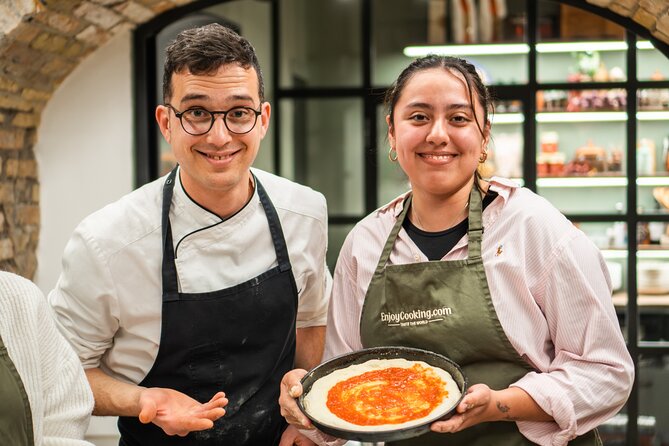
Rome can be nonstop walking, museum hours, and snack stops that never quite hit your craving. This class gives you a different kind of souvenir: you learn a few signature dishes and then actually eat them, right there at the end. It’s not just watching, it’s doing.
I like the way the menu is built for Rome. Pizza, supplì, and gelato may sound basic on paper, but in Roman cooking they’re all about technique, timing, and simple ingredients treated with care. You also get a bottomless wine meal, so the experience naturally turns into a relaxed dinner with the people in your class.
The other big advantage is the format. You’re capped at 10 travelers, and the reviews repeatedly mention patient chefs who answer questions and keep the class moving without making beginners feel slow. That matters because pizza dough, frying, and gelato texture each have little “gotchas,” and you want someone there to help when your first attempt is a little off.
You can also read our reviews of more wine tours in Rome


Your 3-Hour Workflow: Supplì, Pizza, Gelato
The session runs about 3 hours, and the pacing is practical. You start with Roman cooking essentials, then move into making the dough and fillings, and finish with gelato, which is a perfect close to a savory meal.
Here’s how the session typically flows:
You begin with a warm welcome and meet your chef instructor. You’ll also get a quick sense of what makes Roman versions distinct, so when you shape your pizza or assemble supplì, you understand what success looks like.
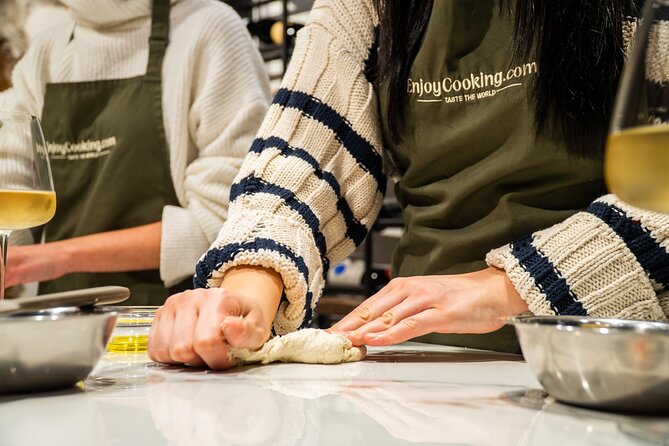
Then you jump into the savory half of the experience. You make your own Roman-style pizza and learn the process from dough to toppings. After that, you master classic supplì, the crispy rice croquette with melted mozzarella in the middle. It’s a crowd-pleaser because it’s interactive and you can see the texture shift as you cook.
Finally, you end with dessert: artisan gelato from scratch using natural ingredients and time-honored methods. If you’ve never made gelato before, the payoff is huge, because you get something that tastes noticeably different from store-bought ice cream, and you learn the fundamentals of getting it smooth.
Before You Cook: Roman Flavors and What Makes Them Different
Before any dough gets kneaded, the chef brings you up to speed on Roman cooking basics. That part isn’t fluff. Roman food often favors straightforward flavors, and small ingredient choices matter.
You’ll get an overview of the ingredients and traditional flavor direction behind local pizza, supplì, and gelato. The practical value for you is confidence. When the class moves quickly, it’s easier to follow directions if you know what you’re building.
A chef also sets expectations for the steps. In the reviews, you’ll see names like Chef Alex, Alessandro, Chef Max, Chef Marco, and Chef Jacob described as entertaining and patient. I can’t promise who you’ll have, but the consistent theme is clear: chefs explain each step in plain language and answer lots of questions without rushing you.
Making Your Roman Pizza: Dough, Shape, and Toppings
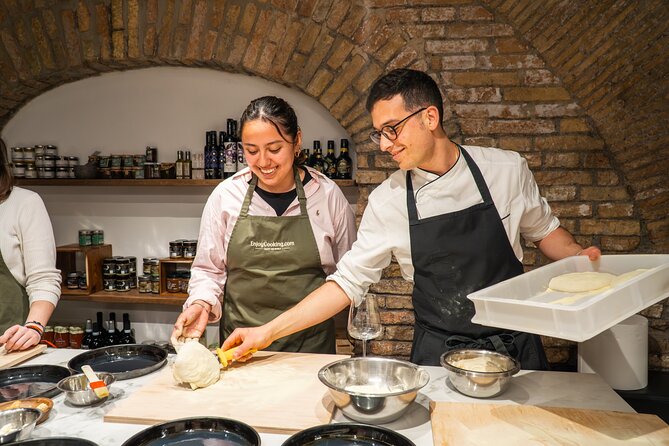
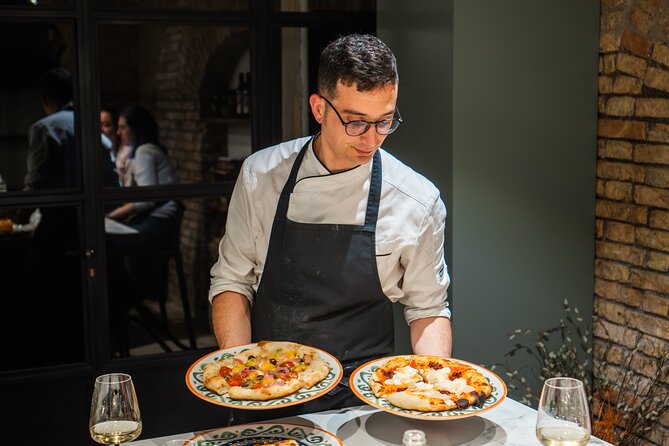
This is the main event. You’ll knead, shape, and top a handmade Roman-style pizza, and you’ll bake what you make. For beginners, that’s a big deal. Pizza-making sounds intimidating until someone walks you through the dough stage and helps you avoid common mistakes, like overworking the dough or rushing the shaping.
Roman-style pizza isn’t just about toppings. It’s also about dough behavior, thickness, and how the bake affects the final crust. You’ll likely work with ingredients chosen for classic Roman flavor, and you’ll learn how to assemble so it cooks evenly.
One small consideration: a review noted a preference for a chewier, Neapolitan-style crust. That doesn’t make the class “wrong,” it just means your personal crust preference matters. If you love Neapolitan chew, go in knowing Roman pizza can feel different in texture and structure.
Supplì: Crispy Rice Croquettes With a Melty Center
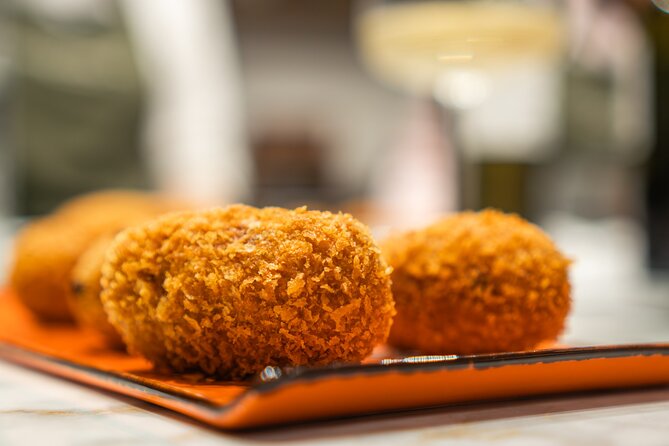
If you want a Rome comfort food moment, this is it. Supplì are crispy on the outside and designed for that satisfying pull when the mozzarella melts inside.
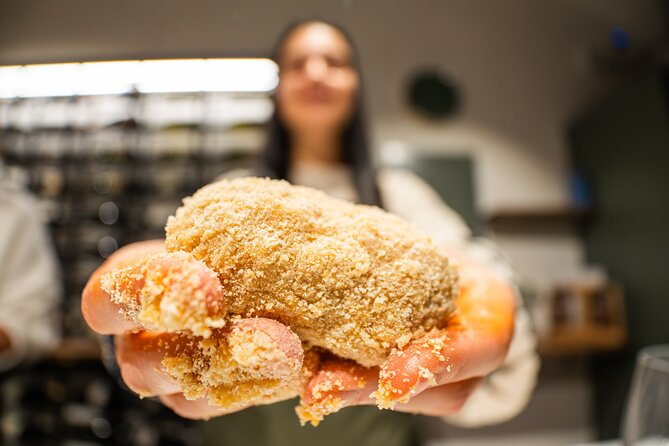
In the class, you’ll learn the method for classic Roman supplì, which are crispy rice croquettes filled with melted mozzarella. The technique matters because you’re building something that has to hold together while still frying crisp. That’s why hands-on guidance is so valuable here.
This portion is also one of the most fun sections for groups. It’s tactile and visual, and you can see progress fast. Even if you’re a total beginner, supplì feel like a “confidence builder” because you get immediate feedback: shape, coating, fry, done.
A few more Rome tours and experiences worth a look


Gelato From Scratch: Natural Ingredients and Real Technique
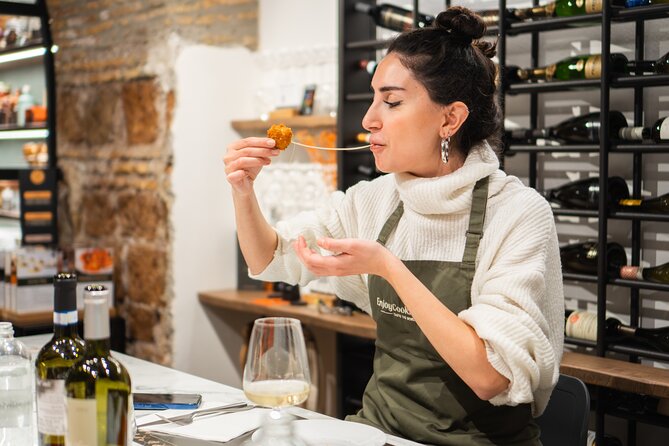
Then comes the sweet finish. You’ll make artisan gelato from scratch with natural ingredients, using traditional methods. The gelato section is valuable because it teaches you how texture is created, not just how to follow a recipe.
Gelato is easy to mess up in your home kitchen if you only copy ingredients and skip method. In a classroom setting, you get real-time coaching and the chance to understand what you’re aiming for, like smoothness and consistent structure.
Reviews highlight that people love learning specific gelato flavors, such as strawberry and lemon in some sessions. You’ll generally get two seasonal flavors made in class, so the experience feels connected to what’s available rather than a one-size-fits-all menu.
The Feast Part: Eat Your Pizza and Supplì With Bottomless Wine
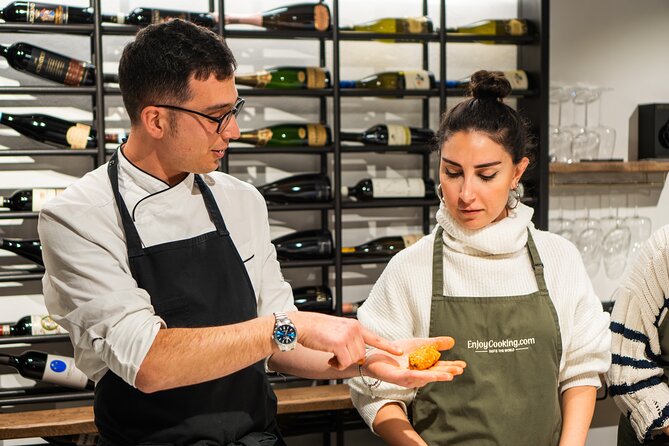
The best part of cooking classes is the moment you sit down and realize you made everything. Here, the meal is part of the experience. After cooking, you eat what you created together.
Wine is included throughout, with bottomless Italian wine during the experience. Reviews also mention water being provided, which helps if you’re having wine with pizza and fried snacks back-to-back. You’ll also get light Italian snacks while you cook, so you’re not waiting hungry for your food.
This is where the small group size pays off again. With max 10 people, the room stays social but not chaotic. Many reviews describe the vibe as relaxed and even family-like by the end. If you’re traveling solo, it’s one of the easiest ways to meet people without forcing conversation, because everyone is focused on the same tasks and then sharing the same meal.
Location, Getting There, and What to Do Before Class
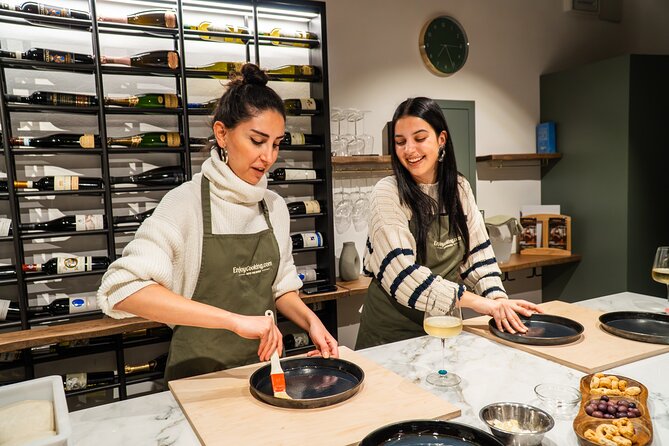
The meeting point is Via della Polveriera, 9, 00184 Rome. It’s near public transportation, and the class ends back at the same starting point. There’s no hotel pickup or drop-off, so plan to arrive under your own steam.
One more practical detail: the location is in the Colosseum area. Reviews mention it’s close enough to revisit sights afterward. That’s useful because it helps you shape your day. You can do a sightseeing morning or early afternoon, then head over for a hands-on session that feels like a reset.
Timing tip: since it’s about 3 hours, you’ll want to schedule it when you’re not rushing to catch a train right after. You’ll be eating and drinking, so treat it like a real dinner plan, not a quick activity.
Price and Value for 3 Hours of Real Cooking
At $119.48 per person for about 3 hours, this is not a budget class. But it’s also not “tourist-only tasting.” You’re learning three full dishes, using quality ingredients, getting chef guidance, and then eating a meal with drinks.
The value comes from the mix:
You get personalized instruction during the cooking steps.
You get hands-on cooking rather than passive observation.
You get a meal with bottomless Italian wine, plus your gelato and your pizza.
The take-home recipes are another value lever. You’re not just tasting Rome for a night, you’re leaving with instructions that can help you repeat at home, which stretches your value beyond the dinner table.
If you compare it to paying for a multi-course meal in Rome plus a separate workshop, this class often stacks up pretty well. The all-in format is the point. You’re paying for time with a chef, a small group, and a full production of three dishes.
Who This Class Is Best For
This workshop is designed to work for both total beginners and more experienced cooks, because the teaching style is step-by-step and the group stays small. If you’ve never made pizza dough or gelato, this is a smart way to start because you’ll get direct feedback as you go.
It also suits families. Multiple reviews mention that teens and adults enjoyed it together, mainly because the food is approachable and the chef keeps things lively. It’s also a great solo travel pick because the format naturally creates conversation.
If you have dietary needs, check the fine print first. There are no gluten-free options, and the class notes trace risks of gluten and nuts. They say they can accommodate most dietary restrictions, but severe allergies are a concern. If gluten intolerance affects you strongly, this is probably not your best match.
Quick Advice to Get the Most From Class
Show up a little hungry and in comfortable clothes. You’ll knead and shape, so plan for the kind of mess that comes with dough work.
Ask questions early. The class is small, and the chef will have the rhythm of teaching down. If you wait until the end, you lose the best chance to correct technique while it still matters for your current dish.
If you drink wine, pace yourself. The wine is included throughout, so you can enjoy it without feeling like you’re shopping for drinks. But you’ll also be frying and baking, so slow down if you’re sensitive to alcohol.
Finally, treat your pizza and gelato like learning tools. Your first version at home might not be perfect right away, but you’ll understand the method, and that’s what helps you improve.
Should You Book This Workshop in Rome?
Yes, if you want a hands-on, high-reward experience that ends with a real meal. The pizza, supplì, and gelato combination is a smart way to learn three core Roman tastes in one sitting. Add in the small group limit, step-by-step help, and bottomless wine, and you get a class that feels fun and practical, not stiff.
Skip it (or at least think twice) if gluten-free is a must for you, since there’s no gluten-free option and there can be traces. Also consider your pizza preference. Roman pizza can differ in texture from Neapolitan styles, so if chew is your top priority, keep expectations flexible.
Overall, this is one of those Rome experiences that gives you both the story and the skills. You leave with food, memories, and recipes you can use later, which is about as good a return on time as you can ask for.
FAQ
How long is the workshop?
It lasts about 3 hours.
What dishes will I learn to make?
You’ll learn to make Roman supplì, pizza, and gelato.
Is wine included?
Yes. Italian wine is included throughout the experience and is described as bottomless.
Is the class a small group?
Yes. The maximum group size is 10 travelers.
Is there gluten-free option?
No gluten-free options are listed. The class also notes there may be traces of gluten and nuts, so it may not be suitable for people with severe gluten or nut allergies.
Is the class offered in English?
Yes, it’s offered in English.
Where does the class start and end?
It starts at Via della Polveriera, 9, 00184 Roma RM, Italy and ends back at the same meeting point.
Is hotel pickup provided?
No hotel pickup and drop-off are included. You’ll meet at the listed location.
What is the cancellation window for a full refund?
You can cancel up to 24 hours in advance for a full refund.
More Workshops & Classes in Rome


More Wine Tours in Rome



More Tour Reviews in Rome





Not for you? Here's more nearby things to do in Rome we have reviewed










Wine Tours, compared.
 ★ 4.9Pasta & Tiramisu Class with Fine Wine by the VaticanFrom $414,852 reviews
 ★ 4.9Pasta Making Class with Wine, Limoncello, and DessertFrom $483,177 reviews
 ★ 4.8Fettuccine and Tiramisu Cooking Class with WineFrom $672,013 reviews
 ★ 4.8Food Tour with Unlimited Food and Barolo WineFrom $861,883 reviews
 ★ 4.9E-Bike Night Tour with Food and Wine TastingFrom $891,131 reviews
 ★ 4.6From Rome: Bagnoregio & Orvieto Day Trip with Wines & LunchFrom $931,075 reviews
 ★ 4.9Trastevere Guided Food and Wine Tour with 20+ TastingsFrom $1461,022 reviews
 ★ 4.9Pasta Making with Wine Tasting and Dinner in FrascatiFrom $35979 reviews
Browse the lists this tour appears in