
Reviewed · ROME GOLF CART TOURS
Rome: Private Golf Cart Tour
Rome is huge, and the streets move fast. This private golf cart tour lets you see the big landmarks without turning your day into an endurance test. I love the way wraparound views keep every turn interesting, and the stops make it easy to get your bearings fast. Guides like Giulia and Fabio are often praised for making the route feel tailored, not canned.
The second thing I really like is the built-in convenience: pickup and drop-off in central Rome means you skip the metro shuffle and start sightseeing immediately. You’ll get short, well-timed external visits at places like the Colosseum, St. Peter’s Square, Castel Sant’Angelo, Trevi Fountain, Piazza Navona, the Pantheon, the Spanish Steps, and Circus Maximus. One possible drawback: with lots of stops and only about 2 hours 30 minutes total, you need to accept quick look-and-photo time rather than long museum-style visits.
Key highlights at a glance
- Private tour for just your group, so pacing and route can match your interests
- Pickup and drop-off in central Rome, so you spend less time figuring out transit
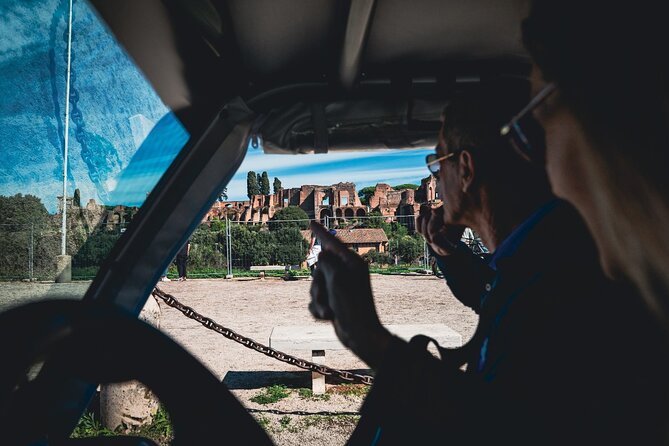
- Airy wraparound views from the cart, great for photos and first-day orientation
- Short external visits at top sights like the Colosseum, Pantheon, and Trevi Fountain
- Driver-guide storytelling in English, with context that makes landmarks click
- Mobile ticket plus confirmation at booking for an easy start
Why a private golf cart tour makes sense in Rome
Rome rewards you for slowing down, but it punishes you for trying to do everything on foot in one day. This tour is built for the middle ground: enough time to hit the headline sights, without the heavy walking grind or the guesswork of where to go next.
The biggest win is the feel of the experience. Being in an open, airy cart means you naturally scan the street life, the architecture, and the way neighborhoods transition as you move. When you later plan your own day trips, you’ll recognize sight lines you might have otherwise missed. That early clarity matters, especially if you only have a couple days in town or you land already tired.
You’ll also like the “private” part if you value control. Many groups choose this because it is not a bus herd. That usually translates to practical perks: pausing when you want a photo, adjusting timing when your group needs a moment, and having a guide who can steer you toward what interests you most rather than forcing one standard route.
You can also read our reviews of more private tours in Rome


Pickup and the calm start in central Rome
Rome logistics can turn exciting plans into stress. Here, the tour includes pickup offered in the city center, and if you do not have a specific pickup point, you can contact the operator and agree on one. That kind of flexibility is useful, because Rome hotels vary wildly in how close you can get and how easy it is to navigate streets.
The goal is simple: you ride out of the “how do we get there?” phase and into the fun phase fast. Since the tour also includes drop-off, you avoid that second round of figuring out transport after your sightseeing.
A small note on timing: the tour runs about 2 hours 30 minutes, so pickup time and the order of stops matter. If you have jet lag, kids, or mobility limits, this format helps you keep a steadier energy level. The cart also reduces the repeated climbs and uneven pavement you deal with when you do a classic walking loop.
Stop by stop: how the cart viewing works at Rome’s icons
Colosseum quick look, then context that clicks
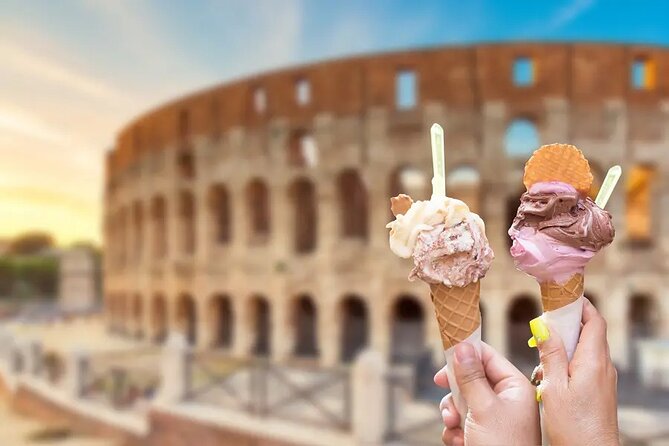
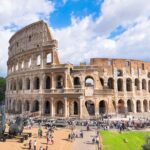
The day opens with the Colosseum, also known historically as the Flavian Amphitheatre. You get an external visit, and the time is set at about 15 minutes. That is not enough to do it like a deep-dive site visit, but it is plenty time to get the shape and scale in your head.
Here’s what the guide angle does for you: it connects the monument to real Roman crowd culture. Under the motto often summarized as Bread and Circourses, the Colosseum hosted spectacles for tens of thousands of people. That includes exotic animal displays, executions of prisoners, large-scale battle reenactments, and gladiator fights. Once you hear that framing, the stone stops being just stone. You start noticing the monument as a designed stage.
One practical takeaway: even if you cannot linger, you can still get photos that help you later when you decide whether you want a longer visit. In your next Rome plan, you’ll know where you stood and what view angle you liked.
St. Peter’s Square from the cart, with Bernini’s grand geometry
Next comes St. Peter’s Square (Piazza San Pietro), again with an external stop and about 15 minutes. This is a perfect match for a cart tour because the space is visually dramatic. From your seat, you can take in the broad layout without fighting the flow of foot traffic for every angle.
The key details your guide should point out are the engineering of the square. Designed by Bernini in the 17th century, it is massive enough to hold over 300,000 people. Look for the colonnade effect, built from four rows of columns. The scale is meant to funnel you toward the center, and the statuary layer adds to the feeling of being inside a grand theater set.
Also worth noting: the square has an obelisk and two fountains, and the obelisk is about 25 meters tall. It was transported from Egypt to Rome in 1586. Those facts help your brain connect the square to Rome’s habit of reusing, repurposing, and layering older civilizations into newer power symbols.



Castel Sant’Angelo, the “Hadrian’s Tomb” story in plain terms
Then you reach Castel Sant’Angelo, sometimes described as Hadrian’s Tomb. This is a fortress on the right bank of the Tiber, near Vatican City, with another short stop of about 15 minutes.
The tour framing here is excellent because the castle has many identities. Construction began in 135 under Emperor Hadrian, planned as a mausoleum for himself and his family, then finished in 139. It later became military in function, and by the year 403 it was integrated into the Aurelian Walls.
The guide also ties the building to the famous story of Pope Gregory I. During a plague in 590, he reportedly had a vision of Saint Michael the Archangel on top of the castle, signaling the end of the epidemic. In memory of that apparition, the castle is crowned with an angel statue.
In a short stop, you will not “tour the whole thing,” but you will understand what you are looking at. You’ll walk away knowing the castle is not just scenic. It is a Rome survival story, from emperor plans to defensive walls to spiritual symbolism.
Trevi Fountain in daylight or at night, and why it matters
Next is Trevi Fountain, with about 15 minutes. The stop is designed for the classic moment: standing close enough to appreciate the size and myth behind the tradition of tossing a coin into Fontana di Trevi.
Trevi’s name links to the idea of three streets, from the Italian Tre Vie. That helps explain why this spot always feels like a crossroads, even when you stand still and just watch the crowd. The fountain itself measures roughly 20 meters wide and 26 meters high, making it one of Rome’s largest.
A cart tour shines here because you can reach the fountain area efficiently and still take in nearby street views. You’ll also benefit from your guide’s storytelling, because Trevi is as much about the surrounding legend and urban rhythms as it is about the sculpture.
Piazza Navona, fountains first, then the street life
At Piazza Navona, the focus is on atmosphere. You get an external visit with another short stop of about 15 minutes.
The big draw is the three fountains designed during the papacy of Gregory XIII. The square’s design is meant to feel alive, and during the day you’ll see the terrace culture take over, plus street performers. The tour format works because you can enjoy the energy without trying to do a long sit-down meal before you’ve even started your day.
If you prefer photos over crowds, Navona is a good place to practice picking your moment. Your guide can help you find an angle that looks great without you needing to fight everyone else for the same backdrop.
The Pantheon, a fast stop that actually teaches you how to look
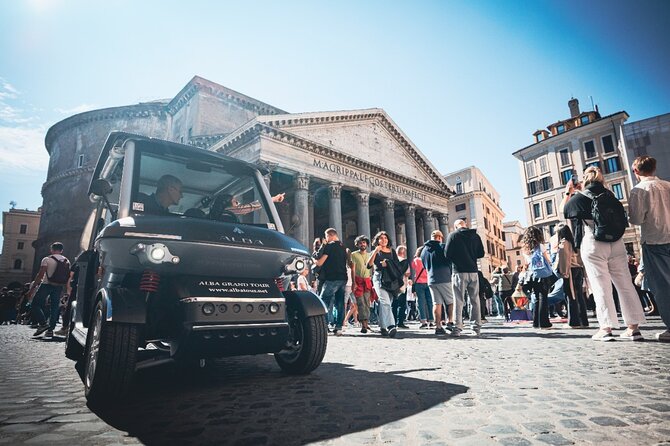
Then you reach the Pantheon, also with an external visit. This one is a favorite for cart touring because it is so visually “readable” from a short distance. Even in about 15 minutes, you can grasp what makes it special.
Here are the architectural numbers your guide should emphasize. The Pantheon’s dome sits over a circle where the diameter matches the height, both at 43.5 meters. The opening at the top is about 9 meters across, letting natural light pour into the interior.
It is also one of the best-preserved buildings from ancient Rome, and the interior connects you to Renaissance and Italian political culture. The Pantheon includes tombs of numerous Italian kings, and Raphael is famously buried there.
A quick stop can work if you use it correctly. Don’t rush. Spend your 10 minutes scanning for the proportions your guide highlights. Then decide whether you want to come back later for a longer interior visit on a different day.
Spanish Steps, a neighborhood stop not just a photo stop
Next are the Spanish Steps, connected to Piazza di Spagna. You get about 15 minutes and, again, an external viewing style.
The square is famous for its position in a major shopping and historic zone, near Via dei Condotti, Via Frattina, and Via del Babuino. But the tour’s job is to give you the “why” behind the name. Piazza di Spagna takes its name from the Palazzo di Spagna, which served as the seat of the Spanish Embassy for the Vatican starting in the 17th century.
If you like wandering after a tour, Spanish Steps is a smart landing spot. You can use what you learn to choose your next walk, whether that means browsing the streets around the stairs or heading toward nearby viewpoints.
Circus Maximus, where scale feels huge even after centuries
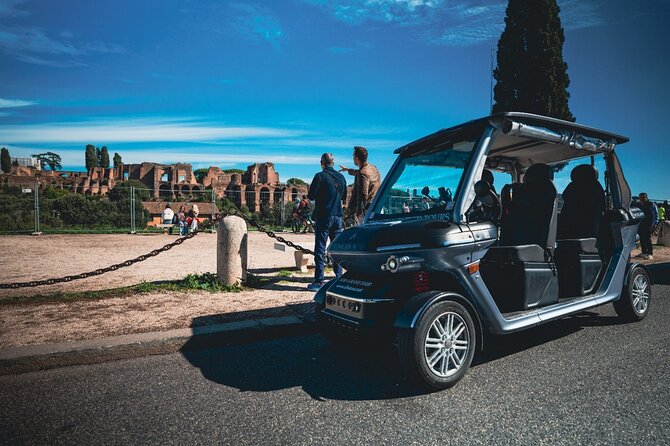
The final big historic stop is Circus Maximus, the ancient chariot-racing stadium and entertainment venue. This is in the valley between the Aventine and Palatine hills, with about 15 minutes for the external look.
What makes Circus Maximus worth your time is the sheer scale. It was the first and largest stadium in ancient Rome and later empire periods. It measured about 621 meters long and 118 meters wide, and in its fully developed form it could hold over 150,000 spectators.
Today the site functions as a public park, but the Roman design logic still shows. Your guide’s narration helps you picture speed, crowd motion, and the way entertainment drove political energy.
Who this tour suits best
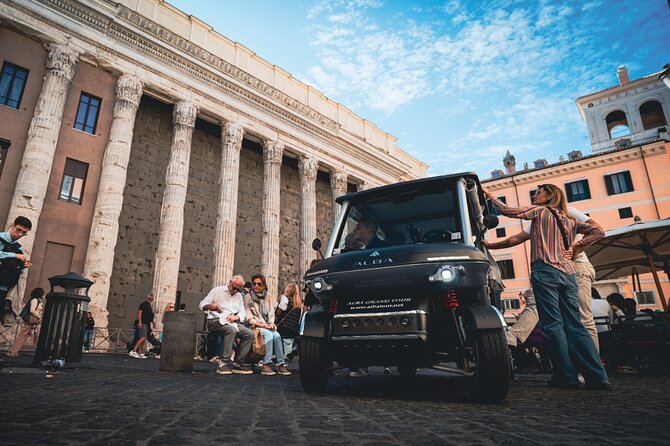
I see this working especially well for:
- First-time visitors who want a fast orientation before planning walking days
- Families with kids who need movement but not constant stair battles
- People who want to see major monuments with less walking
- Anyone arriving with jet lag who wants a smoother, calmer first outing
It can also be a good “second-chance” tour. If you already saw one landmark and want the rest without starting from scratch, the cart format helps you build a coherent overview quickly.
The value question: is $119.48 per person worth it?
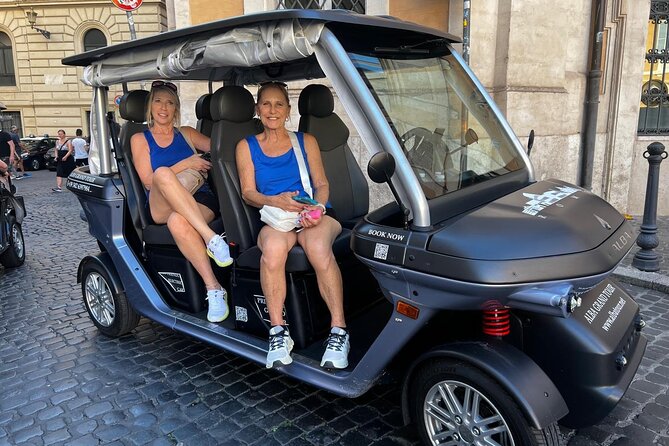
For many visitors, the sticker price sparks the right question: am I paying for convenience, or am I paying for something genuinely worthwhile?
Here’s how to think about it. You are paying for four things that add up fast in Rome:
- Private pacing so you do not lose time waiting for a large group.
- Transport in the form of a golf cart, so you cover more ground in less effort.
- A driver-guide, which matters when you want context at each stop, not just a photo.
- Pickup and drop-off, which removes a lot of friction on Day 1.
Also, the stop model is efficient. Admission ticket details are listed as free in the tour description for the stops. That means your cost is mainly buying time, route planning, and explanation, not separate entry payments per attraction in this specific format.
If you were going to spend your day bouncing between far-flung areas by metro or taxi, the total friction and fatigue can erase the savings quickly. This tour is often a better fit for short stays, tired arrivals, and anyone who wants to leave with a clear map of what matters next.
How to get the most from your 2.5-hour ride
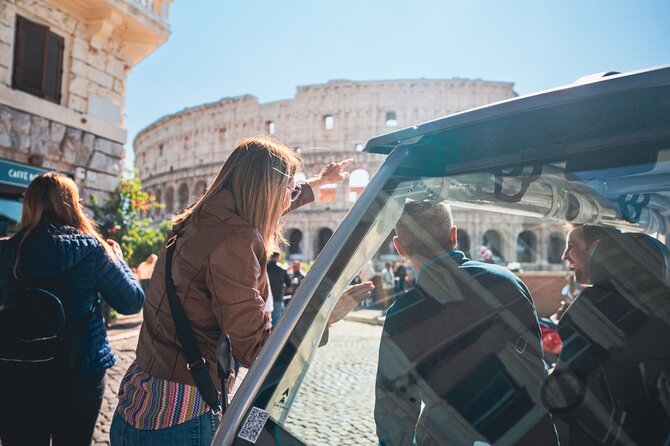
Since time is tight, you’ll get better results by having a plan for your photo moments and your questions. A few practical tips:
- Decide what you want most: architecture facts, street-level views, or quick photo angles.
- Ask your guide to focus on the “what to notice” detail at each stop, not just the dates.
- If you are visiting early in the day, you may get a quieter experience at some photo spots, which helps the cart pauses feel more productive.
- Bring a little flexibility. Even with a set list of stops, a private guide can steer the order or emphasis toward your interests.
The best guides also handle the small reality of Rome, crowded sidewalks, sudden changes in foot traffic, and the need to keep your group comfortable. You’ll feel that difference, especially if your day is driven by energy levels rather than pure stamina.
Should you book this Rome golf cart tour?
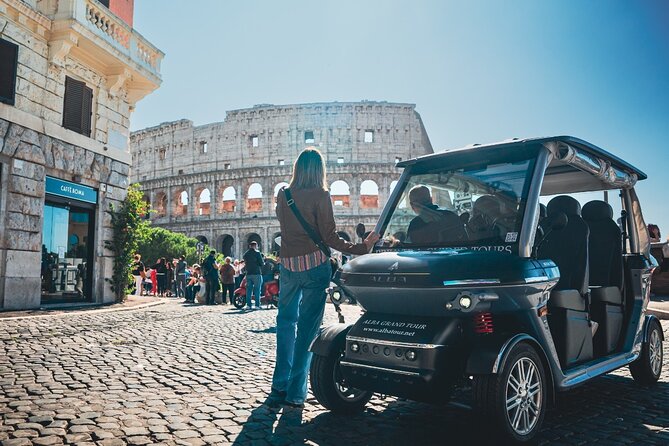
Book it if you want an easy, guided overview of Rome’s headline sights with low effort and high payoff. It is a smart choice for first-timers, short stays, families, and anyone who prefers seeing more without walking every kilometer.
Skip it or consider alternatives if you want long, in-depth time inside major monuments. This is an external stop style tour, so it works best as orientation and context, not as a full replacement for museum days.
If your goal is to get your bearings fast, understand what you are looking at, and then spend the rest of your trip exploring under your own steam, this private golf cart format is hard to beat.
FAQ
How long is the Rome private golf cart tour?
It lasts about 2 hours 30 minutes.
Is this tour private or shared?
This is a private tour. Only your group participates.
Do you get pickup and drop-off in central Rome?
Yes. Pickup is offered in central Rome, and drop-off is included. If you do not have a pickup point, you can contact the operator to agree on one in the city center.
What language is the tour guide?
The tour is offered in English.
Do you use a mobile ticket?
Yes, a mobile ticket is included.
Are there admission tickets included for the main stops?
Admission tickets are listed as free for the stops described in the itinerary.
What is the cancellation policy?
Free cancellation is available. You can cancel up to 24 hours in advance for a full refund.
More Private Tours in Rome
More Tours in Rome

More Tour Reviews in Rome
Not for you? Here's more nearby things to do in Rome we have reviewed







Rome Golf Cart Tours, compared.
 ★ 4.8Imperial City Tour by Golf Cart with Optional TransferFrom $1241,024 reviews
 ★ 5.0Golf Cart Small-Group Guided Tour: Rome City HighlightsFrom $104907 reviews
 ★ 4.8City Highlights Golf Cart TourFrom $45857 reviews
 ★ 5.0Private/Group 4 Hours Golf Cart SightseeingTourFrom $168780 reviews
 ★ 5.0Explore Rome on a Golf Cart: Private TourFrom $83757 reviews
 ★ 4.8City Highlights Golf Cart Tour with Local GuideFrom $71752 reviews
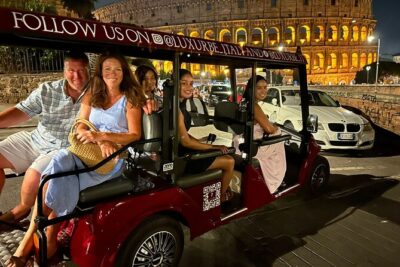 ★ 4.5Rome by Night: Golf Cart TourFrom $108688 reviews
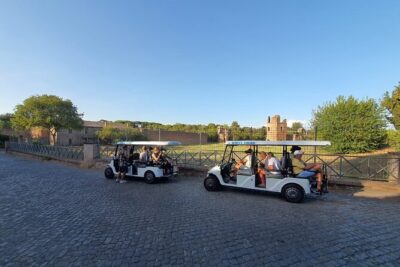 ★ 5.0Rome Catacomb & Appian Way Small-Group Tour by Golf CartFrom $107681 reviews
Browse the lists this tour appears in