
Reviewed · MUSEUMS
Private Tour – Doria Pamphilj Gallery
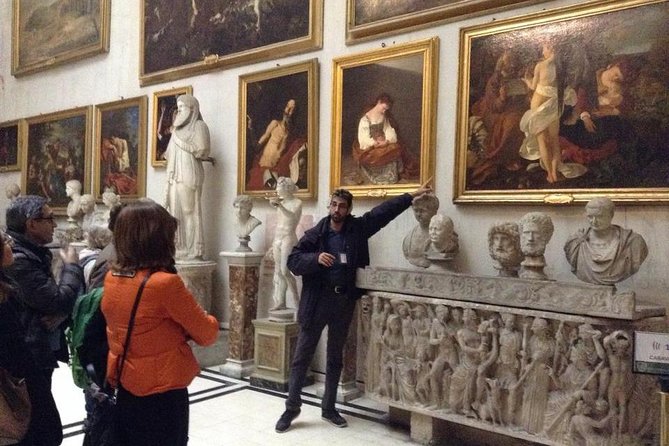
Four wings of art, and zero time wasted. This private English tour at the Doria Pamphilj Gallery is built around a palace layout that follows an 18th-century placement plan, not random wall vibes. I love that admission tickets are included, and I also love the way your guide uses the gallery’s founding documents to explain how and why the paintings are arranged. One possible drawback: the 2-hour timeframe moves, so if you want deep analysis of only one or two artists, you may wish you had longer.
You’ll meet at Galleria Doria Pamphilj on Via del Corso, with the tour starting at 2:00 pm and ending back at the same spot. In that short window, you get access to standout works by Raphael, Titian, Caravaggio, Velazquez, and others, plus architecture that helps you read the collection like a coherent room-by-room story.
Key highlights at Doria Pamphilj in about 2 hours
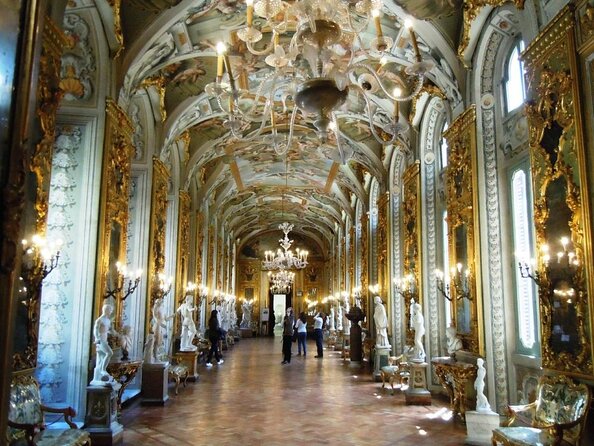
- Four-wing palace layout with a documented placement plan that follows symmetry and related styles
- Admission tickets included, so you skip the most annoying part of museum day
- Founding documents in the guide talk, which makes the gallery feel more purposeful than just a hangout
- Major names on the walls, including Caravaggio, Velazquez, Raphael, and Titian
- A private format, so you can ask questions and set your own pace within the time limit
- Guides like Vincenzo stand out for animated explanations and smart answers to follow-ups
Why the Doria Pamphilj Gallery feels different from other Rome art stops
Rome has a lot of art, but it often feels like a checklist. This tour is different because you’re not just seeing famous paintings. You’re seeing how they were organized inside a real noble palace, Villa Doria Pamphilj, and you’re learning that layout has rules.
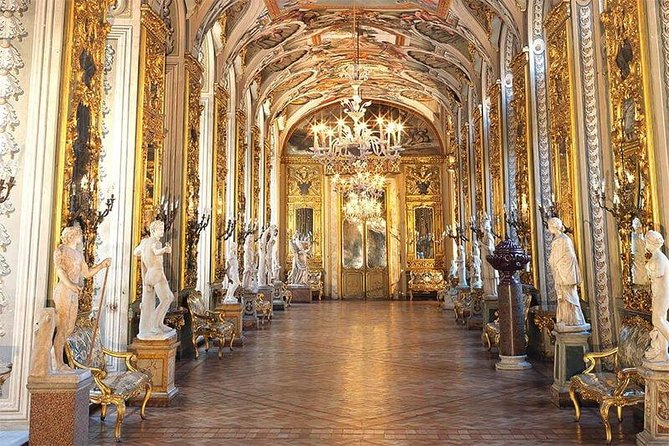
That matters because the collection is distributed over four wings and follows indications from an 18th-century document, including a symmetry-based arrangement. When a guide explains what you’re looking at in that structure, the gallery starts to make sense faster. You spend less time thinking where to look next, and more time looking closely at why the paintings sit where they do.
Also, the lineup is strong enough that even if you are picky, you’ll likely find at least a few must-sees. You get key works by Raphael, Titian, Domenichino, Caravaggio, the Carracci brothers (Annibale and Ludovico), Mattia Preti, Guercino, Guido Reni, and Velazquez.
You can also read our reviews of more private tours in Rome

Meeting on Via del Corso at 2:00 pm, and how the timing works
This experience starts at 2:00 pm at Galleria Doria Pamphilj, Via del Corso, 305, 00186 Roma RM, Italy. The tour ends back at the same meeting point, so you’re not dealing with a drop-off mystery.
You also do not get hotel pickup or private transportation included. That means the best strategy is simple: get yourself to Via del Corso, arrive a few minutes early, and go in with a clear plan. Since the tour is about 2 hours, you should avoid building in extra buffer for delays that are not part of the schedule.
One more practical note: the meeting point is near public transportation. If you are using transit, give yourself time for walking the last stretch. Rome can be quick on foot when you know where you’re going, slow when you are second guessing street corners.
Villa Doria Pamphilj’s four-wing layout: what you’ll actually learn
Your main stop is Villa Doria Pamphilj, where the Doria-Pamphilj Gallery is housed in the palace of the same name. Construction spans from the middle of the 15th century to the beginning of the 18th century, so the setting is not a modern museum box. It’s part of the experience.
The guide focus is especially useful here. You’re not only told what paintings are famous. You’re also guided through the gallery’s founding documents and the logic behind the hanging arrangement. The document used for placement specifies where each work is located based on symmetry. It also sometimes groups works by typological and stylistic affinity.
That means you can look at the rooms like an argument, not a random hang. For you, that translates to a better memory of what you saw. Afterward, you can usually say, I remember the room because of how the paintings relate, not just because of one title.
The only drawback with a layout-heavy talk is that you need to stay attentive. If you get distracted by your phone or you’re hungry and zoned out, the whole “why this arrangement” element can slip past. Keep it simple: arrive rested enough to pay attention for the full 2 hours.
The must-see artist moments: Caravaggio to Velazquez (and why order matters)
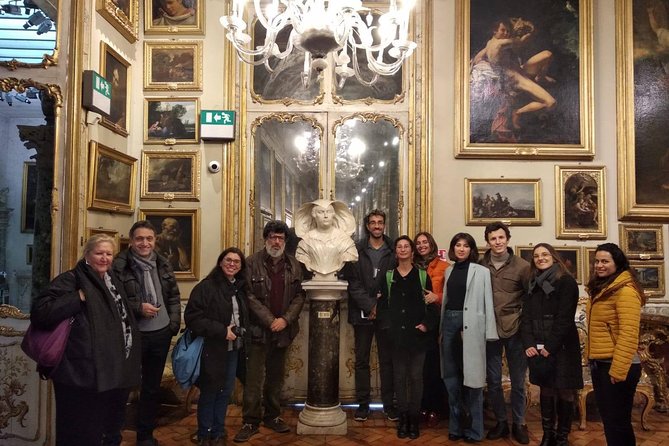
The gallery’s strength is that it hits several painting giants in one organized visit. Instead of chasing one masterpiece to another museum, you get a focused walk through major artists and big artistic contrasts.
Here are some specific works you can expect to see:
- Raphael: Portrait of Andrea Navagero
- Titian: Salome with the head of St. John the Baptist
- Domenichino: Susan and the old men
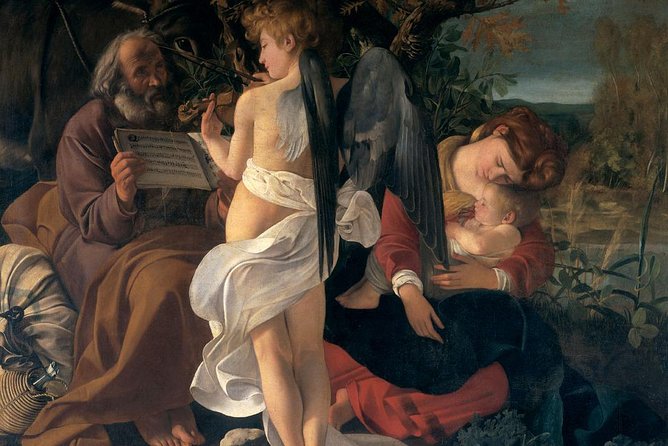
- Caravaggio: Rest during the flight to Egypt, St. John the Baptist, and Magdalene
- Annibale and Ludovico Carracci: Satyr and shepherd, Madonna with the Infant, St. Sebastian
- Mattia Preti: Magdalene repentant, St. John the Baptist, Christ conducted on the Scala Santa
- Guercino: Erminia finds Tancred wounded, Allegory of springtime, Return of the prodigal son, St. Joseph
- Guido Reni: Madonna adoring the Infant, St. Peter repentant, Sacred and profane love
- Velazquez: portrait of Innocent the Tenth
Now, here’s the practical part of why this lineup is valuable. With names like Caravaggio and Velazquez in the same visit, you can compare approaches quickly. Caravaggio’s works are dramatic and intense. Velazquez’s portrait work is more controlled and observational. Titian brings a different painterly weight and energy. And Raphael gives you a different kind of polish.
When a guide connects the hanging logic to what you’re seeing, you don’t just read a list of names. You start noticing patterns: how subject and style can echo each other across a room, and how the placement plan supports that.
If you’re short on time in Rome, this is one of those tours that can pay off. You get several top-tier stops under one roof with a guide keeping the experience organized.
Vincenzo (and the guide team) make the art click fast
A big reason this tour gets strong praise is how the guide explains what you’re seeing. One guide you may encounter is Vincenzo, and the standout trait is how animated and warm the explanations can feel, with a knack for answering questions on the spot.
That’s not just a nice-to-have. In art museums, questions are often the fastest path to understanding. Should you focus on composition or expression? Why does this work feel different from that one? Why is this painting paired with that room’s vibe? A guide who can handle those questions makes the short 2 hours feel more like a 3-hour visit.
I also appreciate that your tour includes professional guidance, not just someone reading a script. The best moments tend to be when your guide connects the paintings to the gallery’s documents and arrangement rules, since that is what makes this collection unique.
One small word of caution from a past experience: there can be occasional meeting coordination problems if instructions get mixed up. The fix is easy, but you have to do it. I recommend having your phone ready, double-checking your meeting address at Via del Corso 305, and saving the organizer contact info so you can reach the guide quickly if anything seems off.
You can also read our reviews of more museum experiences in Rome



Price and value: is $138.16 per person worth it for a private, ticketed tour?
At $138.16 per person, the headline number looks high if you compare it to a cheap group tour. But you’re not really buying the art alone. You’re buying three things that change the day:
1) Private format
You get your own group experience rather than blending into a crowd. That matters in smaller galleries where you want to ask questions and stop where the art actually interests you.
2) Tickets included
Admission tickets are part of the price. In practical terms, that helps you avoid a separate line item and keeps the schedule smoother.
3) A guide focused on the collection’s structure
This isn’t only about listing famous painters. The tour includes context tied to founding documents and the layout plan for the collection. For you, that turns famous names into something you can interpret.
What I like about the value here is that the tour is short enough to fit into a busy Rome schedule, and focused enough to feel like you got something specific. If you love art and you want a guided reading of one major collection, this is a reasonable splurge.
One planning tip: it’s often booked well ahead, with an average booking window of 79 days in advance. If you’re traveling in peak seasons or you want the 2:00 pm slot, don’t wait until the last minute.
Who this private Doria Pamphilj tour is best for
This tour fits art lovers who like their museum visits organized. If you’re the type who wants context, not just selfies and head nods, you’ll probably enjoy how the guide uses the gallery’s documents and the palace layout to frame what you see.
It also suits people traveling in a small group who want flexibility without leaving the comfort of a guided structure. Since it’s a private tour where only your group participates, you don’t have to compete with other voices for attention.
If you have very specific preferences, think about your priorities ahead of time. The paintings list is impressive, but in a 2-hour window you won’t spend the same amount of time on every single work. Decide whether you want to focus on one artist like Caravaggio or whether you want a broader overview of several.
FAQ
FAQ
What time does the Doria Pamphilj private tour start?
It starts at 2:00 pm.
How long does the tour last?
The tour lasts about 2 hours.
Where do we meet for the tour?
You meet at Galleria Doria Pamphilj, Via del Corso, 305, 00186 Roma RM, Italy.
Is this tour private?
Yes. It is a private tour/activity, and only your group will participate.
Is the admission ticket included in the price?
Yes. The price includes admission tickets.
What languages is the tour offered in?
The tour is offered in English.
What is included, and what is not included?
Included: tickets, a local guide, and a professional guide, plus the private tour. Not included: hotel pickup and drop-off, and private transportation.
Should you book this private Doria Pamphilj Gallery tour?
If you want a guided, ticketed intro to a major Rome collection, I think this is a smart booking. The four-wing palace layout and the guide’s focus on founding documents give you a way to understand the gallery, not just walk past it. With admission included and a private format, it also feels efficient for a 2-hour slot.
I would only hesitate if you need long, slow time with art, or if you are hoping for a very flexible meeting plan and zero chance of coordination issues. For most people who care about art and want guidance that makes sense, this one is worth it.
More Private Tours in Rome

More Tours in Rome
More Tour Reviews in Rome
Not for you? Here's more nearby things to do in Rome we have reviewed



Museums, compared.
 ★ 4.5Vatican: Museums & Sistine Chapel Entrance TicketFrom $38144,003 reviews
 ★ 4.3Vatican Museums & Sistine Chapel Tour with Optional BasilicaFrom $7967,413 reviews
 ★ 4.5Vatican Museums, Sistine Chapel & St Peter’s Basilica Guided TourFrom $2239,149 reviews
 ★ 4.3Vatican Museums, Sistine Chapel & Basilica TourFrom $13013,872 reviews
 ★ 4.4Vatican Museums & Sistine Chapel Skip-the-Line Entry TicketFrom $4313,838 reviews
★ 4.7Vatican Museums, Sistine Chapel & Basilica TourFrom $7213,217 reviews
Vatican Museums & Sistine Chapel Guided TourFrom $11812,117 reviews
★ 4.4Vatican Museums & Sistine Chapel Skip-the-Line Entry TicketFrom $4313,838 reviews
★ 4.7Vatican Museums, Sistine Chapel & Basilica TourFrom $7213,217 reviews
Vatican Museums & Sistine Chapel Guided TourFrom $11812,117 reviews
 ★ 4.2Vatican Museums & Sistine Chapel Skip-The-Line TicketFrom $4111,708 reviews
Browse the lists this tour appears in