
Reviewed · COOKING CLASSES
Cooking Class with Lidia YoungGrandma in Jewish area
Pasta lessons beat tourist photos. In Rome, I love the hands-on pace of Lidia YoungGrandma’s six-person cooking class, set in the Jewish quarter near Via del Portico d’Ottavia. It feels personal right from the start.
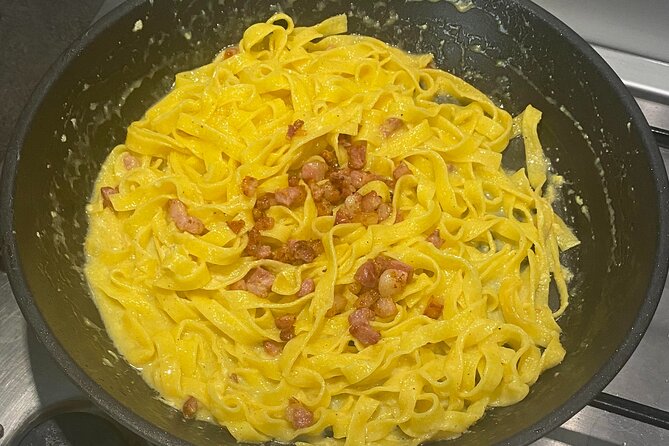
I especially like that the menu is classic Roman food with clear, practical technique. You’ll work with fresh pasta dough and then cook two different styles of handmade pasta, including fettuccine carbonara made with pork cheek, eggs, pecorino romano, and black pepper.
The main thing to consider is that you are in a private home setup with a small group. If you want a big, loud group experience with lots of sightseeing built in, this format will feel more like a dinner-focused workshop than a roaming tour.
Key Points Worth Knowing Before You Go
- Six people only, private home energy: small group means real attention at each step, not a quick show-and-tell.
- Aperitivo first, with Italian wine: you start with tomato bruschetta, olives, cheese, and wine before you cook.
- Two homemade pastas, two different lessons: carbonara and cacio e pepe each teach different skills.
- Roman-Jewish neighborhood location: you meet near Portico d’Ottavia, in the area many visitors associate with Rome’s Jewish quarter.
- English, French, Spanish, and German: language support is built in, so the instructions land.
- Mobile ticket and free cancellation up to 24 hours: easy to manage, with some flexibility if plans shift.
A Small-Group Class in Rome’s Jewish Quarter
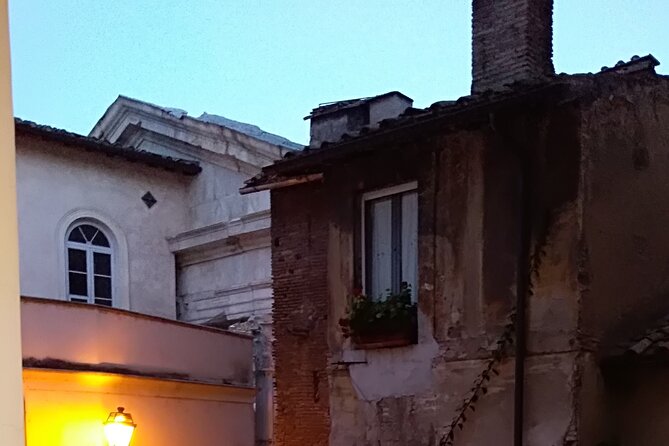
Rome can be a lot. Big sights, long lines, nonstop motion. This experience slows you down in a good way, because you are learning food the Roman way, in a place that feels lived-in. You meet in the Portico d’Ottavia area, on Via del Portico d’Ottavia at Torre Soricara. That puts you in the Jewish quarter neighborhood, close to the atmosphere of everyday Rome rather than the view-only zones.
What I like most is how the small group changes everything. With up to 6 people, Lidia YoungGrandma can slow down when you need it, and she can correct technique before you repeat the same mistake twice. Cooking classes can turn into a blur when the group is large. Here, the pace stays human.
You also get a guide experience that is more than recipes. You are not just watching someone else cook. You’ll be shaping, mixing, rolling, and seasoning with direction. That is where the value shows, because the skills transfer to your kitchen later.
You can also read our reviews of more cooking classes in Rome
Meeting Near Piazza Venezia, Then Getting Into Kitchen Mode
Your start is at Torre Soricara, Via del Portico d’Ottavia, 25, 00186 Roma RM. The plan includes a first stop in the Piazza Venezia and Ancient City area, which makes sense as a way to get your bearings before you focus on food. Even if the time outside is brief, it helps you connect Rome the landscape to Rome the cuisine.
After that, the experience shifts into the main event: the cooking in Lidia’s home kitchen. The format matters here. A private home setting usually means you are working around real kitchen habits and real tools, not a demo stage with safe distance and bright spotlights. In a small group, you also tend to feel more comfortable asking questions, and you can learn why a step is done, not just how.
Practical tip: plan to arrive a few minutes early. With a private class, you want to start on time so you do not feel rushed when everyone begins prepping the same components.
Aperitivo First: Tomato Bruschetta, Olives, Cheese, and Wine
In many Rome food experiences, you jump straight into cooking. Here, the aperitivo comes first. That is a smart move, because you settle in and focus. You start with tomato bruschetta, olives, and cheese. You also get Italian wine as part of the aperitivo pairing.
This matters because it sets the rhythm for what comes next. You taste the flavors that define Roman simplicity: tomatoes, salt, fat, and bite. Then, when you begin working with dough and sauces, you already have the taste map in your head. If you are the type who thinks in flavors rather than recipes, this sequence will feel natural.
It also gives you a light social start. You will have time to ask basic questions, watch how Lydia explains things, and get comfortable with the small group setting before hands-on cooking begins.
Fresh Pasta Dough Skills You Can Actually Use
The class is hands-on from the start, with fresh pasta dough as a core skill. The goal is not just to end up with a plate of food. You want to understand how the dough behaves, how it changes when it is worked, and what you should look for when it feels right.
Even if you have never rolled pasta before, this format tends to work because Lidia can guide you step by step. With only 6 people, you do not have to wait for long group instructions. You get the kind of correction that helps you fix technique while you are still learning.
Roman pasta is often about texture. The dough needs to be flexible enough to roll and shape, then sturdy enough to hold sauce. That is why making dough matters. When you know how it should feel, you cook with more confidence later, whether you are making fettucine, tagliolini, or something similar at home.
Fettuccine Carbonara: Pork Cheek, Eggs, Pecorino Romano, Black Pepper
One of the best parts of this class is that it does not treat carbonara as a vague concept. You specifically cook fettuccine carbonara with pork cheek, eggs, pecorino romano, and black pepper.
This is classic Roman carbonara logic: rich, salty, peppery, and egg-based. But the pork cheek detail is a nice upgrade in specificity. It signals the intended flavor profile, and it helps you understand that carbonara is not just eggs and cheese. It is the balance of fat, salt, and seasoning.
When you make carbonara, you also learn a technique that many home cooks struggle with: getting the sauce to turn silky, not scrambled. Carbonara often feels mysterious until someone explains the timing and heat control. A class like this is valuable because you practice in real time, rather than guessing later.
Also, carbonara is a great skill-builder because it teaches you how sauce behaves with pasta shape. Fettucine is wide and holds sauce differently than thinner noodles. You learn that pairing, then you see the difference in the second pasta dish.
A few more Rome tours and experiences worth a look


Tagliolini Cacio e Pepe: Black Pepper and Cheese Without Fuss
After carbonara, you move to tagliolini cacio and pepper, which is basically cacio e pepe style pasta. This dish is the reason Roman cooking has such a loyal following. It is simple on paper, but it demands technique.
Cacio e pepe is not about adding lots of ingredients. It is about making cheese and seasoning act like sauce. Black pepper provides the kick, and the cheese provides body. Done well, it tastes effortless. Done poorly, it can feel heavy or grainy.
Because you cook it after carbonara, you get a contrast lesson. Carbonara is egg thickening plus cheese plus cured meat. Cacio e pepe is cheese and pepper working together. The class design is smart because it teaches you two different “how to get sauce” paths in one sitting.
Tagliolini is also a small detail that helps. It is thinner than fettucine, so the sauce distribution feels different. You will get a clearer sense of how pasta thickness changes the eating experience, not just the look of the plate.
Tiramisù Lesson: The Creamy Italian Dessert Finale
If you have ever had tiramisù that tastes like either too much coffee or too much sugar, you know why a good tiramisù matters. In this class, dessert is Tiramisù served as the final course.
The most practical part of finishing with tiramisù is that you end on something that is hard to recreate from memory unless you learned the process. Even if dessert seems less “technical” than pasta, tiramisù has its own rules. The cream needs the right texture, and the layers need balance.
As a closer, it also makes the whole meal feel complete. You started with an aperitivo, worked through two pasta styles, then ended with Italy’s most famous creamy dessert. For many people, that is what they came for: a full Rome-flavored meal they also helped create.
Price and Value: Why $118 Can Be a Fair Deal
At $118 per person for about 3 hours, the price can seem steep at first glance, especially in a city where you can find cheaper cooking demos. The key is what you are buying.
You are not paying for a big group ticket. You are paying for a limited group size of up to 6 people, a private home setting, and bilingual instruction support across multiple languages (English, French, Spanish, and German). That increases the amount of real coaching each person receives.
You are also getting multiple components included: aperitivo with tomato bruschetta, olives, cheese, Italian wine, two homemade pastas, and tiramisù. The ingredients alone can run high, especially when you use Roman staples like pecorino romano and keep the menu focused on traditional dishes.
If you compare this to booking a cooking class where you cook one dish only, this feels like better value because it teaches two different pasta approaches plus a dessert finale. For many travelers, that is the difference between a nice meal and a lasting skill memory.
Who This Cooking Class Fits Best
This experience is a strong match if you want hands-on Roman cooking in a small group. It is also ideal if you care about food details like correct seasoning and texture, not just the final plate.
I’d steer you toward this class if:
- You enjoy traditional Roman flavors and want to learn the method, not just eat it
- You like smaller settings where you can ask questions and get feedback
- You want a day in Rome that is not all monuments and photo stops
It might be less ideal if:
- You prefer a full day of guided walking and major sightseeing, since the focus is the class meal
- You want a large, social atmosphere with lots of strangers chatting the whole time
The Bottom Line: Should You Book?
I think you should book if you want a real Rome meal with real technique, in a small-group setting that feels welcoming. The combination is hard to beat: Roman aperitivo with wine, two homemade pastas including carbonara with pork cheek plus cacio e pepe style tagliolini, and a classic tiramisù finish.
One last practical note: make sure you are comfortable with the meeting point in the Portico d’Ottavia area and the idea that this is a private home experience. If that suits you, this class is a high-value way to learn pasta you can actually make again.
If your goal is to leave Rome with both full stomach memories and kitchen confidence, this is one of the better bets in the city.
FAQ
How many people are in the class?
The experience is limited to just 6 people, so you get more personalized attention.
What is the total duration of the cooking class?
It lasts about 3 hours.
Where do I meet for the experience?
You meet at Torre Soricara, Via del Portico d’Ottavia, 25, 00186 Roma RM, Italy. The activity ends back at the meeting point.
What food and drinks are included?
You start with tomato bruschetta, olives, and cheese paired with Italian wine. You then make and eat two homemade pastas: fettuccine carbonara and tagliolini cacio and pepper. Dessert is tiramisù.
Which pastas will I learn to make?
You will learn to make fettuccine carbonara and tagliolini seasoned with black pepper and cheese (cacio and pepper).
What languages are supported during the class?
The class is offered in English, French, Spanish, and German.
Is this a private tour or shared group?
This is a private tour or activity, and only your group participates.
Do I get a mobile ticket?
Yes, you get a mobile ticket.
Are service animals allowed?
Yes, service animals are allowed.
What is the cancellation policy?
You can cancel for a full refund up to 24 hours in advance of the experience start time. If you cancel less than 24 hours before, the amount paid is not refunded.
More Workshops & Classes in Rome
More Cooking Classes in Rome
More Tour Reviews in Rome






Not for you? Here's more nearby things to do in Rome we have reviewed












Cooking Classes, compared.
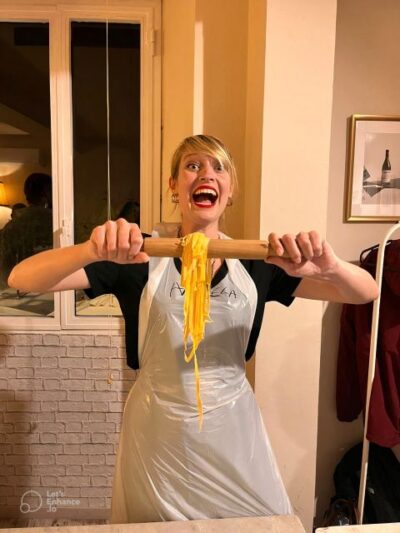 ★ 4.9Pasta Making Class with Wine, Limoncello, and DessertFrom $483,177 reviews
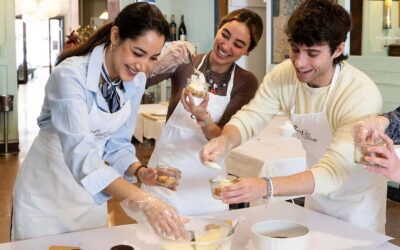 ★ 4.93-in-1 Fettuccine, Ravioli, and Tiramisu Cooking ClassFrom $812,704 reviews
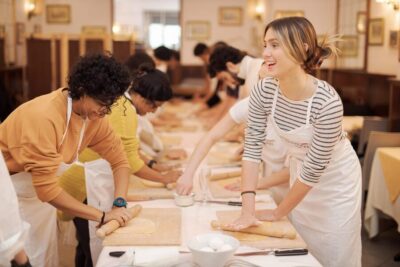 ★ 4.8Fettuccine Pasta Cooking Class in Rome’s City CenterFrom $462,414 reviews
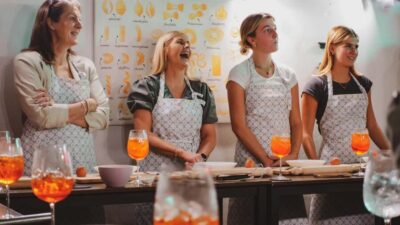 ★ 5.0Traditional Pasta with Cocktails Cooking ClassFrom $1002,374 reviews
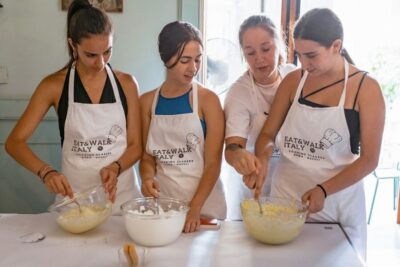 ★ 4.8Fettuccine and Tiramisu Cooking Class with WineFrom $672,013 reviews
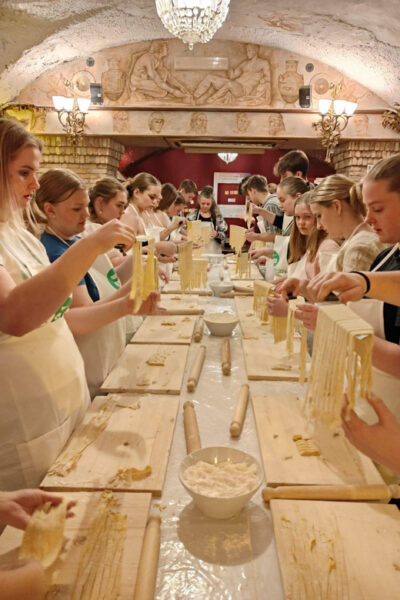 ★ 4.8Pasta & Tiramisu Cooking Class near the Spanish StepsFrom $581,395 reviews
 ★ 4.7Traditional Pizza Cooking Class near Piazza NavonaFrom $461,241 reviews
 ★ 4.9Pasta Making with Wine Tasting and Dinner in FrascatiFrom $35979 reviews
Browse the lists this tour appears in