
Reviewed · ANCIENT ROME TOURS
German port city of Ostia Antica
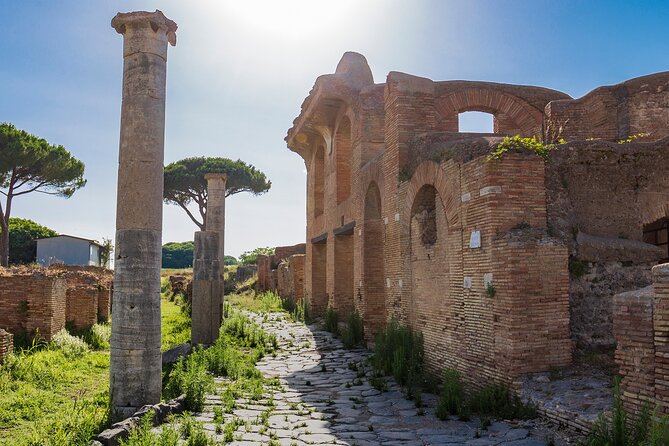
Rome’s real port city is quieter than you expect. This tour takes you to Ostia Antica, ancient Rome’s inland port, where the Tiber and coastline have shifted over millennia, leaving you a remarkably walkable slice of everyday city life.
I love how the visit feels like Roman life in layers, not just stone labels. Two things especially land for me: seeing the multi-storey apartments and public buildings in context, and learning how goods from across the Mediterranean moved here, then onward into the capital.
One possible drawback: you get about 2 hours, so the pace is brisk. If you want super deep, technical archaeology all the time, you may need to ask lots of questions or plan extra time on your own afterward.
Key things to know before you go
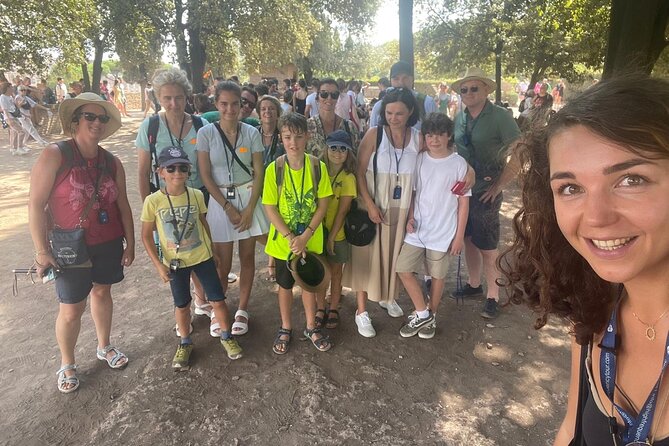
- German-speaking city guides explain what you’re looking at in plain language.
- Headsets are included, so you can hear clearly even in open-air areas.
- Free entrance tickets make this one of the best value archaeological visits near Rome.
- You’ll focus on daily life, with stops like the theatre, shops, bakeries, baths, and latrines.
- Small group size (max 20) usually helps you keep up and ask questions.
- Tour ends inside the archaeological park, with an easy option to head toward Ostia Lido.
Ostia Antica: Rome’s port city, built for movement
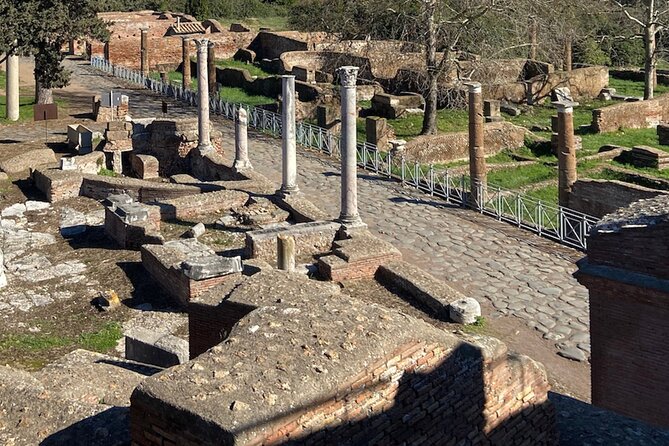
Ostia Antica is one of those places where you quickly understand why Rome mattered. Long before modern logistics, this city functioned as the capital’s inland port. Ships and goods arrived from around the Mediterranean, then continued inland toward Rome. That role shaped the buildings and the rhythm of daily life, from warehouses to shops, and from taverns to public spaces.
What makes this site extra interesting is how the location changed. Over thousands of years, the Tiber and the sea coast shifted, so the Ostia you see today is not exactly the coastline ancient Romans knew. In practice, that means your visit is a bit of a time and geography puzzle, and it’s a fascinating one when your guide explains how the landscape and city functioned together.
Compared with the more famous Pompeii, Ostia tends to feel more like a real town that kept going. Pompeii’s story ends abruptly in 79 AD. Ostia, by contrast, continued into late antiquity, and you can feel that longer timeline in the range of remains you walk past, including buildings that reflect different periods of Roman life.
If you like historical sites that show people doing ordinary things, you’ll probably enjoy Ostia Antica more than you expect. The theatre, apartments, forum area, thermal baths, and even the latrines bring daily routines into view. This isn’t just monuments. It’s how a port city lived.
You can also read our reviews of more city tours in Rome


Getting there: a simple day trip with a clear start point
The tour starts at Viale dei Romagnoli, 717, 00119 Roma RM, Italy at 10:00 am. The end point is Ostia Antica archaeological area, and from there you can head back to Rome or go one stop further to the beach of Ostia (Ostia Lido).
What I like about this setup is that it’s straightforward. You don’t need a complicated puzzle of transfers to make it work. The experience is also marked as near public transportation, which matters because you want energy for walking, not for stressing about schedules.
Plan to dress for a typical outdoor archaeological visit. You’ll be walking through an exposed park, and you’ll want comfortable shoes. Bring water if you think you’ll get thirsty. Snacks are not included, so you will want to handle that yourself.
Also note the maximum group size of 20. That’s big enough to create a lively tour but small enough that the guide can keep things moving.
How the guided tour runs in about 2 hours
This is an approximately 2-hour guided experience. The format is designed for people who want real understanding without burning half a day.
You’ll get headsets, which is a smart inclusion. Even outdoors, you can hear the guide clearly, and you won’t have to keep repositioning to catch every sentence. That matters most at larger open areas like the theatre and forum spaces, where wind and ambient noise can otherwise make listening harder.
The tour is led by German-speaking city guides, and the overall focus stays on what those spaces meant to people. You’re not just collecting facts. You’re building an image of a port city: who lived there, what they used, where they gathered, and how they handled daily needs.
As you walk, expect the guide to tie the buildings together: apartments above the street, public areas below, and infrastructure that supported trade. If you like asking questions, this format usually makes it easy, especially in a small group.
Stop 1: the theatre, where city life gathered
A highlight is the theatre. For many first-time visitors, this is the moment when Ostia Antica stops feeling like a ruin field and starts feeling like a functioning city. The reason is simple: theatres are about people. They show where the community gathered for entertainment, social events, and public life.
In a port city, that social layer is important. A place built for commerce still needs culture, routine, and shared spaces. A theatre signals that Ostia wasn’t only about shipping and storage. It was also about being Roman, together.
Even if you’ve seen theatres elsewhere in Italy, the Ostia theatre hits differently because the surrounding remains give you clues about the city’s layout and density. Instead of imagining the crowd, you can mentally reconstruct the nearby streets and daily pathways the guide points out as you move.
If you’re a photo person, this is also where you get strong angles, because the theatre structure often creates a natural frame for what comes next. Just remember, this is not a museum stop where everything is behind glass. Look closely, then keep walking.
Apartments and streets: daily living in multi-storey buildings
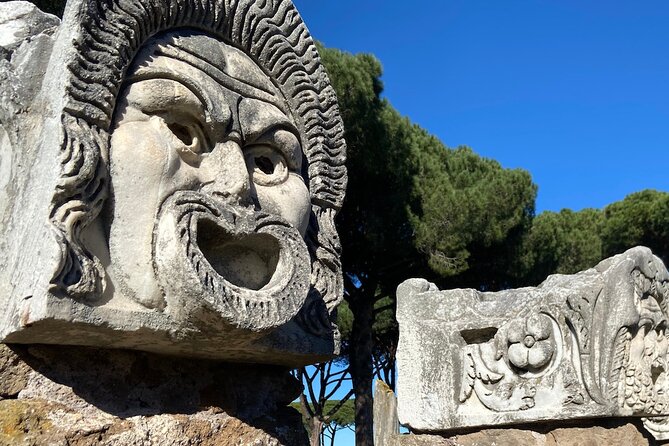
Next, you’ll encounter multi-storey apartment buildings. This part is especially valuable because it answers a question many people have too late. You’ll wonder, where did everyone live, really? In Ostia, you can see how density worked.
Multi-storey housing tells you a lot about social mix and urban planning. It suggests a city that housed workers and residents close to the economic engine. In other words, people lived near the port infrastructure and the commercial areas. That makes the city feel practical and real, not distant.
The guide’s job here is key. Without explanation, apartments can look like repetitive walls and doorways. With guidance, you start to understand how the spaces functioned, how movement worked through the city, and how the city’s layout supported port life.
If you enjoy “how things worked” history, this is one of the best sections of the walk.





Forum time: public spaces and the logic of a Roman city
You’ll also visit the forum area. Think of this as the city’s public center, where civic life, commerce, and community presence converged. In a place like Ostia, the forum doesn’t feel like a separate world. It feels connected to the city’s trade function.
The forum helps you make sense of the nearby buildings. Once you understand where people gathered, you can better interpret the surrounding structures and the flow of the day. You also get a clearer picture of why the city’s economy required so many public-facing spaces, not just storage and shipping.
One nice detail is how your guide can link the forum to everyday stops later on, like bakeries, inns, and baths. That connection is what turns a site visit into understanding.
Antique bakeries and inns: food, trade, and quick stops
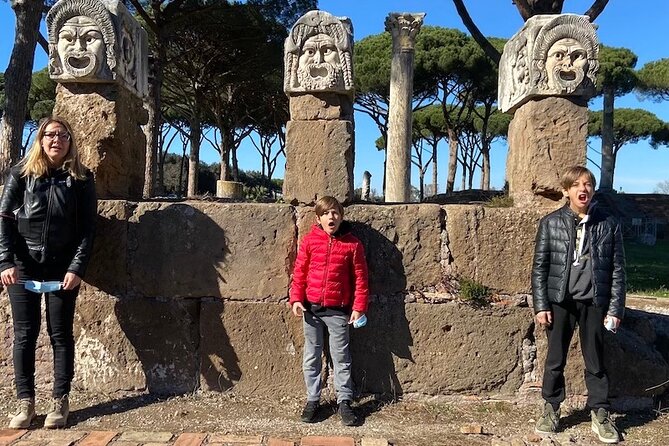
A standout stop includes antique bakeries and inns. These aren’t just decorative. Food and hospitality kept the wheels turning in a port city.
Bakeries matter because bread and basic food routines were daily necessities. Inns and similar businesses matter because travellers and workers needed places to eat, rest, and meet. In a commercial center, these locations become part of the city’s “meeting infrastructure”.
This is where you get a strong sense of the tempo of life. Ostia was built for ongoing arrival and departure, so services had to work repeatedly, every day. When your guide explains the function of these spaces, the remains become more than archaeology. They become a picture of routine.
Neptune thermal baths: where people handled both body and politics
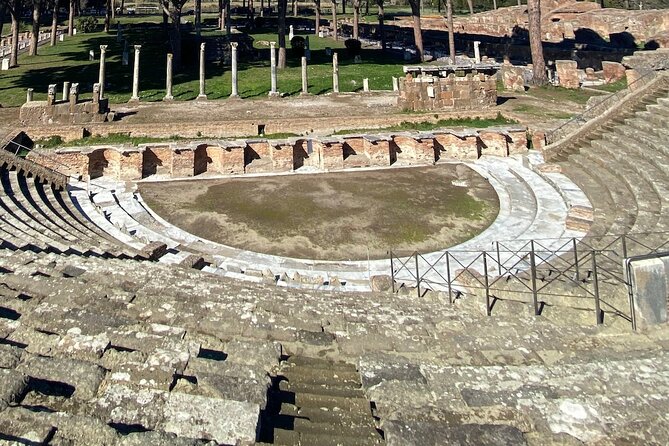
Another highlight is the Neptune thermal baths. Thermal baths are one of the best ways to understand Roman life because they weren’t only about washing. Baths were social hubs, places to talk, relax, and be part of public culture.
At Ostia, the baths also underline something practical. In a city built for work and commerce, people still needed time to recover and connect. Baths offered that in a large shared setting.
If you’re someone who likes to understand how daily comfort was engineered, baths are a big win. The guide’s explanation helps you read the layout and understand the purpose behind different areas, rather than just seeing corridors and rooms.
Even if you’ve seen other baths in Rome, Neptune’s version at Ostia feels grounded in an active city, not a distant landmark.
Latrines: the most honest look at daily life
Yes, the tour includes latrines. And no, that isn’t just a shock factor. Latrines are one of the most human stops because they show how Romans managed daily needs in public spaces.
This section is powerful for two reasons. First, it makes the city feel lived in. Second, it illustrates how Roman planning handled sanitation in ways that were normal to people at the time.
It’s not a glamorous stop, but it’s a memorable one because it anchors the city in realistic routines. When a guide points out how the latrines worked and why they were placed where they were, the site becomes easier to understand as a system.
The overall value: free entrance, included headsets, and a focused story
This experience lists a price of $0.00 per person, and it also includes entrance tickets to Ostia Antica. If you’ve ever paid separately for entry at big archaeological parks, you’ll immediately feel the value here. You’re essentially getting the guiding plus the site access without the usual add-ons.
Add to that the headsets, and the experience becomes easier for language comprehension. That’s a big deal in Italy, where guides often have to speak outdoors and across varying distances.
The duration also matters for value. Two hours is enough to see the major anchors, but short enough that you can still return to Rome or continue toward Ostia Lido afterward. That flexibility can turn one tour into a full half day.
The small group size (max 20) is another value element. It can make the tour feel less like a conveyor belt. You’re more likely to get an answer when you ask.
Who this tour suits best, and who might want a different plan
This tour is a great fit if you want a practical, guided introduction to a less crowded Roman archaeological site. It’s also ideal for people who want to understand daily life, not just big-name monuments.
You’ll likely enjoy it if you appreciate:
- A city that connects geography and history, especially how the coastline and Tiber changed over time
- Guided explanations in German
- Stops that show everyday buildings like apartments, bakeries, baths, and latrines
You might consider pairing it with extra independent time if:
- You love detailed archaeology and want to spend longer reading every inscription
- You prefer to linger at each area without a strict time window
A real-world tip: ask questions where you can see the function
Because this is a structured tour, your best strategy is to use the stops to ask “how did this work” questions while you’re still standing in place. When you’re in front of the apartments, ask how the density shaped daily movement. When you’re in front of the baths, ask what made it a social hub. When you’re near the latrines, ask about how Romans handled sanitation as part of city life.
Your guide, one example being an archaeologist named Philip, can make those moments click. The guides here tend to explain with enthusiasm and clarity, and the headsets help you catch everything without straining.
Should you book Ostia Antica with Deutsche Römerin?
I’d book this if you want an efficient day trip that feels like Roman city life, not a rushed stop for photos. The free entrance, included headsets, and German-speaking guides create strong value, especially for first-time visitors to the region.
I’d think twice only if you need a long, deeply technical session. The tour is about 2 hours, so you will see the key highlights, but not everything at the level of a slow museum experience.
If you want a calmer alternative to the biggest Roman archaeological crowds, this is a smart move. You get the theatre, the city housing, the forum area, daily services like bakeries and inns, plus the Neptune thermal baths and latrines, all tied together by a guide who helps you understand what you’re actually looking at.
FAQ
Where does the tour start?
The tour starts at Viale dei Romagnoli, 717, 00119 Roma RM, Italy.
What time does the tour begin?
The start time is 10:00 am.
How long is the tour?
The duration is approximately 2 hours.
Is admission to Ostia Antica included?
Yes. Entrance tickets to Ostia Antica are included.
Are headsets provided?
Yes. Headsets are included so you can hear the guide well.
Is the tour near public transportation?
Yes, it is listed as near public transportation.
How many people are in the group?
The tour has a maximum of 20 travelers.
What is not included?
Snacks and transport are not included.
Can the tour be canceled for a refund?
No. The experience is non-refundable and cannot be changed for any reason. If the minimum number of travelers is not met, you’ll be offered a different date or a full refund.
More City Tours in Rome


More Tour Reviews in Rome



Not for you? Here's more nearby things to do in Rome we have reviewed












Ancient Rome Tours, compared.
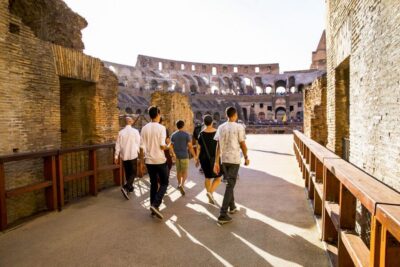 ★ 4.7Colosseum: Underground and Ancient Rome TourFrom $16012,691 reviews
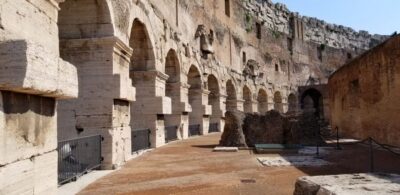 ★ 4.4Colosseum, Ancient Rome Tour or Self AudioGuided TourFrom $392,866 reviews
 ★ 4.9Appian Way, Catacombs, & Roman Aqueducts E-bike TourFrom $851,421 reviews
 ★ 4.9Appian Way E-bike Tour with Catacombs, Aqueducts & FoodFrom $961,210 reviews
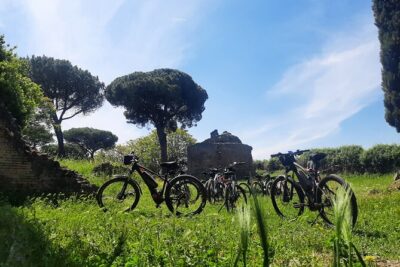 ★ 5.0Appian Way Aqueducts Bike Tour (Catacombs & Lunch Option)From $78975 reviews
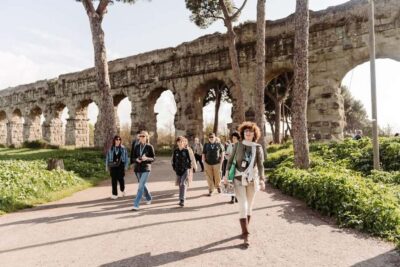 ★ 4.7Appian Way, Aqueducts, and Catacombs TourFrom $64942 reviews
 ★ 4.7Caracalla Baths & Circus Maximus — Private or SharedFrom $77835 reviews
 ★ 4.7Colosseum Arena Access and Ancient Rome Guided TourFrom $94774 reviews
Browse the lists this tour appears in